Why Backdraft Kills: The Physics of a Predictable Disaster
A backdraft is not a random event. It is the predictable consequence of specific, observable fire conditions — an oxygen-depleted compartment holding superheated unburned gases that ignite explosively the moment fresh air is introduced. The mechanism kills firefighters not because it is unpredictable, but because the indicators are missed, dismissed, or unknown to the crew making entry.
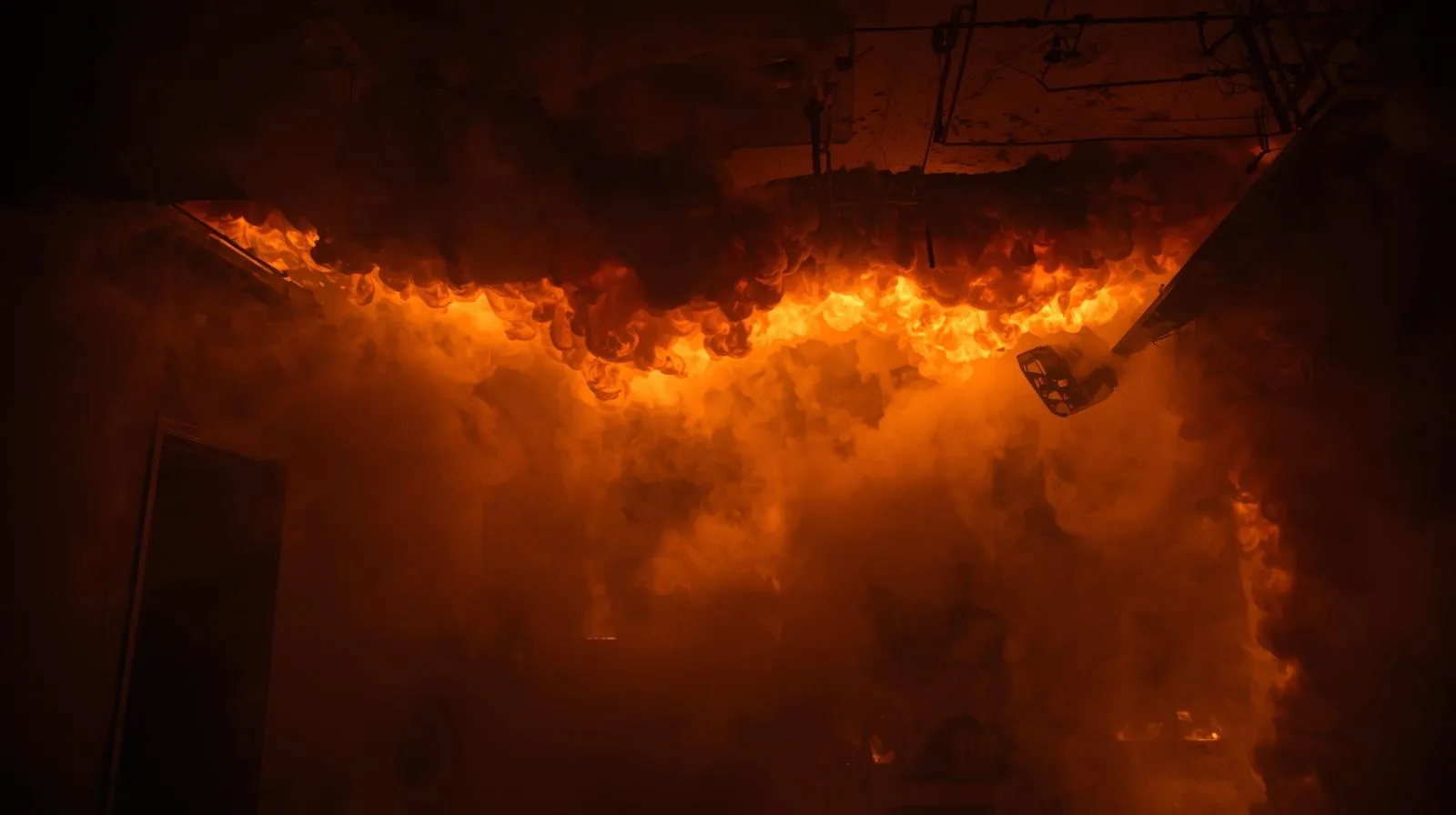
Every backdraft event follows the same sequence: fire consumes available oxygen and shifts to incomplete combustion, producing large volumes of carbon monoxide, unburned hydrocarbons, and pyrolysis products; these gases accumulate under pressure at extreme temperatures; a door is opened, a window breaks, or a wall is breached; fresh air mixes with the fuel-rich gas layer; the heat already present ignites the mixture; the resulting pressure wave and fireball expand outward toward the air source — toward the crew that just opened the door.
The critical distinction between backdraft and other dangerous fire conditions is that backdraft is survivable when identified. The indicators are observable. The tactical response is established. What kills firefighters is the failure to read those indicators before making entry. This guide covers every observable sign — smoke behavior, building conditions, air movement, sensory cues — and maps each to the appropriate tactical response.
The Science: What Creates Backdraft Conditions
Backdraft requires a specific convergence of three conditions, all of which must be present simultaneously:
| Condition | How It Develops | Observable Sign |
|---|---|---|
| Oxygen depletion | Fire burns in a sealed or poorly ventilated compartment; available O₂ consumed below ~16%; combustion becomes incomplete | Little or no visible flame from exterior; heavy smoke under pressure; pulsing air movement at gaps |
| Fuel accumulation | Incomplete combustion produces CO, unburned hydrocarbons, and pyrolysis gases that accumulate in the compartment at high concentration | Dense, oily, dark smoke; smoke-stained windows; yellowed or blistered glass; strong chemical smell if detectable |
| Extreme retained heat | Despite reduced combustion, structural materials, contents, and gases retain the heat of earlier fire stages — often above auto-ignition temperature of accumulated gases | Intense radiant heat from wall and door surfaces; heat felt through PPE; TIC showing extreme temperatures with no visible flame |
When all three conditions are present and an opening is introduced, the mixture of accumulated gases and fresh oxygen reaches its flammable range almost instantly. The heat already present acts as the ignition source. The result is a deflagration — a subsonic but extremely rapid combustion event that generates both a pressure wave and a rapidly expanding fireball.
Backdraft vs. Flashover: Understanding Both Threats
Firefighters must distinguish between these two deadly events because they require different tactical responses and occur under different fire conditions. Confusing them leads to wrong decisions at the worst possible moment.
🔥 Flashover
- Occurs during fire growth stage — oxygen still available
- Driven by radiant heat feedback from hot gas layer
- All combustible surfaces ignite near-simultaneously
- Produces massive heat and flame throughout compartment
- Pre-indicator: rollover, smoke banking to floor, rapid heat rise
- Tactical response: exit, or apply water fog to cool ceiling layer
- Can occur with crew inside — rapid recognition is survival
💥 Backdraft
- Occurs in oxygen-depleted compartment — fire smoldering or suppressed
- Driven by sudden air introduction to fuel-rich gases
- Explosive ignition directed toward the new air source
- Produces concussive pressure wave + expanding fireball
- Pre-indicator: pulsing smoke, inward air draw, heat without flame
- Tactical response: vertical vent before entry; do not open lower openings first
- Almost always triggered at the entry point — the door crew is in the blast path
For a complete treatment of flashover recognition, pre-flashover indicators, and the four stages of compartment fire development, see our complete fire behavior guide for U.S. fire science students.
The Backdraft Risk Scale: Reading Escalating Conditions
Backdraft conditions do not appear all at once — they develop progressively as a fire consumes available oxygen. Understanding which stage of oxygen depletion a fire has reached helps officers calibrate risk and tactical urgency.
Stage 1 — Oxygen Present
Active flaming; smoke normal color and movement; no pulsing; fire is fuel-controlled. Low backdraft risk.
Stage 2 — Depleting
Flames reducing; smoke thickening and darkening; beginning to bank to floor level; heat building. Elevated risk — monitor closely.
Stage 3 — Oxygen-Starved
Little or no visible flame; dense turbulent smoke under pressure; pulsing begins; intense heat. High backdraft risk — stop, reassess, vent plan required.
Stage 4 — Critical
No flame; smoke drawn inward at gaps; yellow-brown smoke; extreme heat through surfaces; inward air on door crack. Imminent backdraft — do not open. Vertical vent only.
Indicator Category 1: Smoke Behavior
Smoke is the most information-rich indicator available at the exterior. In a backdraft scenario, smoke behavior communicates the state of the fire inside — its oxygen level, temperature, and gas accumulation — to anyone who knows how to read it. Training firefighters to read smoke is the single highest-value pre-entry skill for backdraft risk assessment.
| Smoke Indicator | What It Means | Risk Level |
|---|---|---|
| Dense, heavy, turbulent smoke — dark gray to black | High concentration of unburned carbon particles and pyrolysis products; incomplete combustion; large fuel load still present | 🟡 Elevated — monitor for additional indicators |
| Pulsing or "breathing" smoke | Pressure equalization cycles — fire briefly ignites, raises pressure, pushes smoke out; combustion drops, pressure falls, air is drawn in; repeats rhythmically | 🔴 High — stop entry; vent plan required before proceeding |
| Yellowish-gray or brown tint | Presence of nitrogen dioxide, carbon monoxide, and specific pyrolysis products from synthetic materials; highly flammable gas mixture | 🔴 High — combined with heat, indicates critical backdraft conditions |
| Smoke under pressure from small gaps | Internal compartment pressure exceeds atmospheric; gases accumulating; building is acting as a pressure vessel | 🔴 High — structure is in late-stage oxygen depletion |
| Smoke-stained, oily, or blistered windows | Prolonged inefficient combustion has coated the glass with unburned hydrocarbon residue; indicates extended oxygen starvation | 🟡 Elevated — look for pulsing and heat signs to confirm |
| Smoke being drawn back into gaps (inward movement) | The structure is inhaling — it needs oxygen desperately; introducing a large opening at this point will supply the ignition condition | 🔴 Critical — do not open any door or window; vertical vent only |
Indicator Category 2: Building and Structural Cues
Heat Without Visible Flame
- Intense radiant heat from exterior surfaces
- Heat felt through PPE at exterior
- TIC shows extreme wall/door temperatures
- No flame visible from any exterior opening
Window Conditions
- Glass crazed (spiderweb cracking)
- Yellow-brown staining on interior face
- Glass bulging slightly outward
- Condensation on outer surface from hot gases inside
Door Conditions
- Door hot to back-of-hand test
- Smoke seeping from all edges under pressure
- Resistance felt when attempting to open
- Smoke drawn back in when door is cracked
High-Risk Occupancy Types
- Modern energy-efficient construction (tight envelope)
- Basement compartments
- Storage buildings with heavy synthetic fuel load
- Long-burning fire reported before arrival
Indicator Category 3: Air Movement at the Opening
Air movement at door and window openings is the most definitive observable indicator of imminent backdraft — and it is the last warning available before entry triggers ignition. Every crew should assess air movement before fully opening any door to a suspect compartment.
| Air Movement Observed | Interpretation | Action |
|---|---|---|
| Smoke flowing steadily outward at upper gap | Normal fire conditions — fire is oxygen-sufficient and venting smoke normally | Proceed with normal entry precautions; line charged; monitor for changes |
| No movement; neutral pressure at gap | Transition state — monitor closely; conditions may be shifting toward depletion | Do not enter without TIC assessment and charged line; re-evaluate smoke conditions |
| Smoke pulsing out and then drawing back in rhythmically | Intermittent ignition cycling — oxygen nearly depleted; fire trying to sustain itself | Stop entry; communicate to IC; establish vertical ventilation before any door opening |
| Air rushing inward when door is cracked | Compartment is oxygen-starved and in pressure deficit — immediate backdraft risk | Close door immediately; back away from door; vertical vent only before any further entry |
High-Risk Locations: Where Backdraft Is Most Likely
While any sealed, burning compartment can develop backdraft conditions, certain building types and locations present consistently elevated risk based on their physical characteristics and typical fire development patterns.
| Location | Why Backdraft Risk Is Elevated | Specific Precaution |
|---|---|---|
| Basements | Inherently limited ventilation; single access point (stairway door) is also the only air intake; heat and gases accumulate with nowhere to rise; opening the door creates a direct downward flow path onto accumulated gases | Check door temperature and smoke behavior before opening; consider horizontal vent through any available basement windows first; have charged line in position before door is opened |
| Modern energy-efficient buildings | Tight building envelope with minimal air infiltration; fire depletes O₂ rapidly; vinyl windows seal tightly until they melt; HVAC systems may be sealed or off | Treat any heavily smoking modern structure as potential backdraft candidate; TIC exterior assessment before any door opening |
| Commercial storage/warehouses | High fuel load; large volume allows significant gas accumulation; personnel-sized doors often the only openings; fire may have burned for extended time before detection | Roof ventilation before entry; do not use loading dock doors as primary entry without prior vertical vent |
| Attic spaces | Limited ventilation; fire spreads through rafter bays and accumulates fuel gases; opening attic hatch or pulling ceiling can introduce air to accumulated gases | Open roof ventilation before pulling ceilings; use TIC to assess attic temperature before cutting |
| Any compartment with long fire history | A fire burning for 20–30 minutes in a sealed space has had sufficient time to deplete O₂ fully; extended burning = greater gas accumulation | Time of fire before arrival is a critical size-up data point; adjust risk assessment accordingly |
Tactical Response: Ventilation Before Entry
When backdraft indicators are identified, the tactical response follows a clear principle: relieve the pressure and exhaust the gases before introducing air at crew level. This means vertical ventilation from above — creating an opening at the highest accessible point above the fire compartment so that buoyant gases escape upward and dissipate before any lower entry is made.
- Communicate backdraft indicators immediately to the incident commander — this is a tactical priority, not a secondary observation
- Do not open any lower-level doors or windows until a ventilation plan is in place
- Position crews outside and away from any potential blast path (sides of building, not directly in front of doors or windows)
- Ladder company or roof crew establishes vertical ventilation opening at highest accessible point above the fire
- Allow gases to vent and conditions to stabilize before approaching lower openings
- Position charged attack line before any lower entry is made — if ignition occurs during entry, water must be immediately available
- When opening lower door for entry, stand to the side of the frame — never directly in front
- Crack the door slowly and assess air movement; if inward draw persists, close and reassess
- Interior crews advance with fog nozzle set to combination pattern — fog can absorb radiant heat and create a protective curtain
- Continuous radio communication between roof/vent crew and interior crew throughout operation
Coordinated Attack: Suppression and Ventilation Together
The tactical failure mode in backdraft scenarios is uncoordinated action — a crew opens a door without knowing the roof crew has not yet cut, or the roof is vented while crews are directly below the opening without a line. Coordination between ventilation crews and attack crews is the mechanism that converts a dangerous backdraft scenario into a controlled suppression operation.
| Action | Sequence | Coordination Requirement |
|---|---|---|
| Roof opening (vertical vent) | First — before any lower entry | Roof crew confirms opening made and gases venting before IC authorizes lower entry |
| Attack line charged and positioned | Simultaneous with roof vent | Attack crew in position at entry door, line charged, nozzle firefighter ready before door is opened |
| Lower entry door opened | After roof vent confirmed | Door opened slowly from side of frame; air movement reassessed; IC coordinates timing |
| Water application | Immediate on entry if conditions warrant | Fog application at door level to cool gases; straight stream directed at fire seat as crew advances |
| RIC staged | Before any entry — non-negotiable | RIC crew in position, equipped, and briefed on structure layout before roof crew begins |
The flow path principles that apply to all structural fire operations are especially critical in backdraft scenarios. For a complete treatment of flow path management — including how every door and window opening affects where fire, heat, and gases travel — see our guide on modern fire suppression tactics in the United States.
Training for Backdraft Recognition
Classroom knowledge of backdraft indicators is necessary but not sufficient. The ability to recognize a pulsing smoke pattern, correctly interpret an inward air draw, or read the heat signature on a door through a TIC requires repetition under conditions that simulate the time pressure of the fireground. The following training modalities are most effective for building backdraft recognition competency:
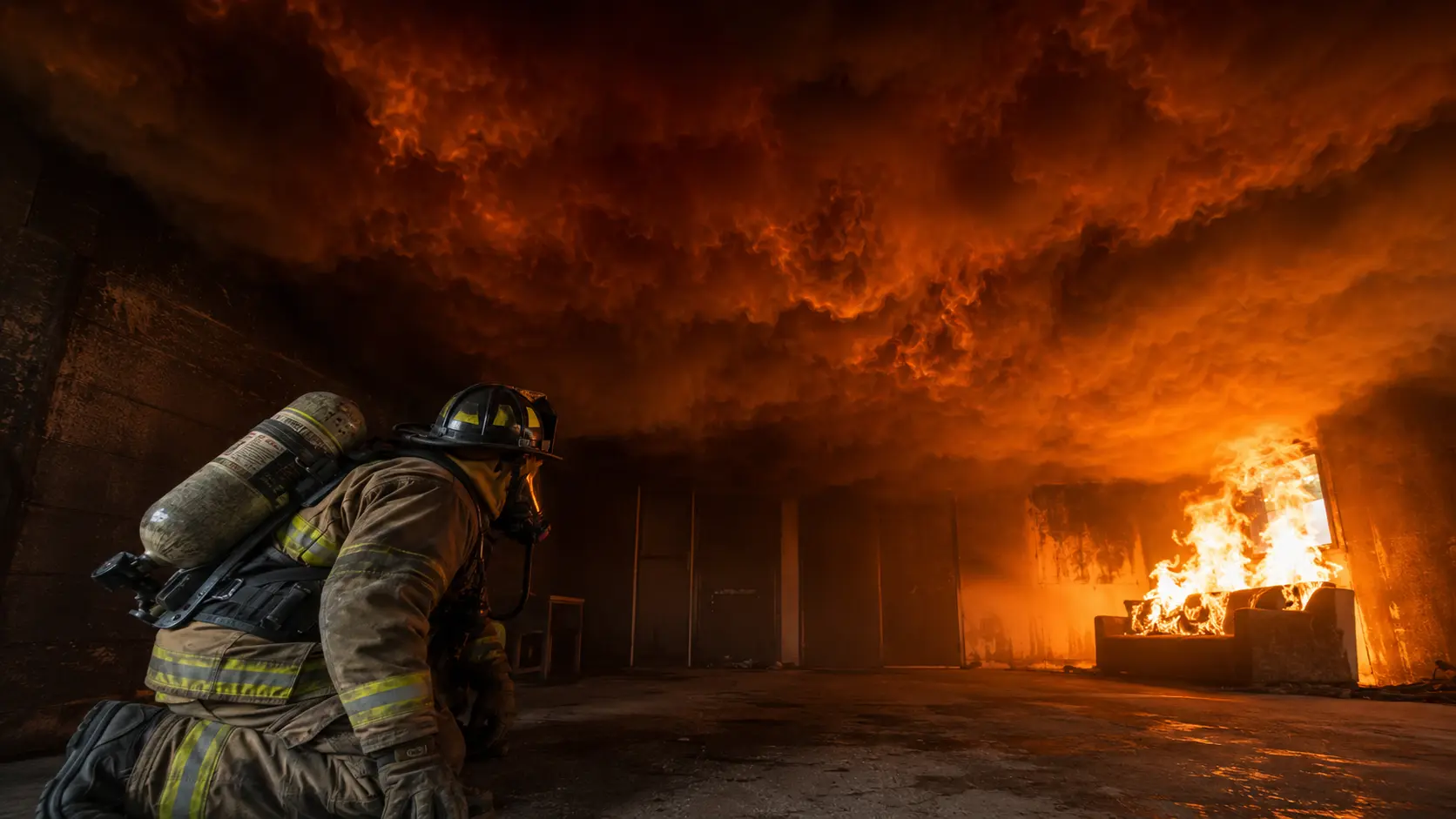
- Ventilation-limited burn props: Enclosed burn chambers where O₂ can be controlled allow students to observe actual pulsing, smoke behavior changes, and the visible difference between oxygen-rich and oxygen-depleted combustion conditions — the most effective experiential training available
- Smoke behavior observation exercises: Using non-toxic theatrical smoke in controlled buildings or props to train smoke-reading without live fire hazard; focuses purely on movement pattern recognition
- Door control and TIC assessment drills: Practical scenarios requiring students to perform the door crack test, interpret TIC readings at exterior surfaces, and make go/no-go entry decisions before being shown the correct assessment
- NIOSH fatality report review: Several documented firefighter fatalities in backdraft events are extensively analyzed in NIOSH Fire Fighter Fatality Investigation reports; reviewing these as case studies builds institutional memory and pattern recognition
- Post-incident analysis participation: Any structure fire with indicators of ventilation-limited conditions should be debriefed with specific attention to what backdraft indicators were or were not present and how they were interpreted by arriving crews
For fire science students building foundational knowledge, understanding where backdraft fits within the full spectrum of compartment fire behavior — alongside flashover, flow path events, and smoke explosion — is essential. Our fire behavior guide for U.S. fire science students covers the complete theoretical framework, and our home fire hazards guide applies these principles to common residential fire scenarios. For fireground operational reference including SCBA air time calculators and fire flow tools, see the AllFirefighter Tools section.


Comments 0
No comments yet. Be the first to share your thoughts!
Leave a Comment