
📅 Recruit training guide.Fire academy structure varies by department, state, training center, certification system, and class schedule. Use this as a preparation overview and always follow your academy's official rules, instructors, SOPs, and safety procedures.
Fire Academy Training: What New Recruits Should Expect
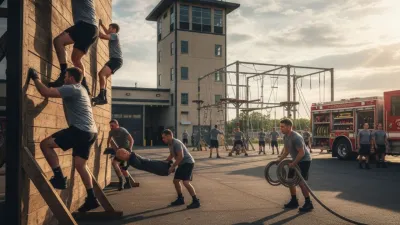
The fire academy is one of the most demanding phases of a firefighter's career. It combines physical training, classroom learning, hands-on skills, team accountability, safety discipline, and repeated testing under stress. New recruits learn how to operate in protective gear, stretch hose, raise ladders, use SCBA, search structures, perform rescue movements, understand fire behavior, and work as part of a crew.
This guide explains what new recruits should expect before walking into recruit school: daily PT, classroom study, hose line operations, ladder training, SCBA confidence courses, search and rescue, live fire burns, written and practical testing, teamwork, discipline, and the transition from academy graduate to probationary firefighter.
Jump to:Academy overview · Typical daily schedule · Physical training · Classroom learning · Hose drills · Ladder training · SCBA confidence · Search and rescue · Live fire burns · Testing · Common mistakes · FAQ
What the Fire Academy Is Designed to Teach
The academy does not simply teach isolated skills. It teaches recruits how to think, move, communicate, and operate safely as part of a crew. Firefighting is a team profession. A recruit who is strong but unsafe, confident but uncoachable, or knowledgeable but unreliable will struggle. The best recruits are physically prepared, mentally alert, disciplined, humble, and consistent.
| Academy area | What recruits learn | Why it matters |
|---|---|---|
| Physical training | Stairs, carries, drags, circuits, strength endurance | Builds the work capacity needed for fireground tasks. |
| Classroom study | Fire behavior, safety, building construction, hazmat, tools, procedures | Creates the knowledge base behind safe decisions. |
| Hose operations | Stretching, advancing, flowing, backing up, communication | Attack line control is central to structural firefighting. |
| Ladder operations | Carries, raises, placement, climbing, commands | Ladders support rescue, access, ventilation, and firefighter egress. |
| SCBA | Checks, donning, air management, emergency procedures | SCBA is life-support equipment in IDLH atmospheres. |
| Live fire | Fire behavior observation, heat, hose streams, crew movement | Builds supervised exposure to realistic fire conditions. |
Recruit mindset: The academy is not the place to prove that you already know everything. It is the place to listen, learn the department's method, ask safe questions, accept correction, and improve every day.
Typical Fire Academy Daily Schedule
Every academy runs differently, but most recruit days are structured and intense. Recruits are expected to arrive early, have gear ready, maintain uniform standards, participate in PT, attend classroom instruction, perform hands-on skills, clean equipment, study, and prepare for the next day. The schedule is designed to build stamina and discipline.
| Time block | Typical activity | Recruit expectation |
|---|---|---|
| Early arrival | Gear check, uniform inspection, accountability | Be early, organized, and ready before formation. |
| Morning PT | Run, stairs, circuit, calisthenics, team workout | Give effort while maintaining safe form and attitude. |
| Classroom | Fire behavior, safety, hazmat, EMS, building construction | Take notes, stay alert, ask relevant questions. |
| Skills block | Hose, ladders, SCBA, search, tools, knots | Listen to commands and repeat skills correctly. |
| Scenario training | Team evolutions and timed practicals | Communicate clearly and work as a crew. |
| End of day | Cleanup, debrief, equipment reset, study assignment | Leave gear better than you found it and prepare for tomorrow. |
Physical Training: PT and Work Capacity
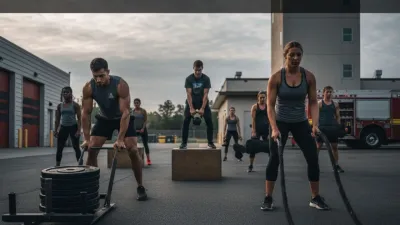
Physical training is a major part of recruit school because firefighting is physically demanding. PT may include running, push-ups, burpees, stair climbs, sled drags, dummy drags, partner carries, hose bundles, core work, and circuit training. Some academies emphasize military-style discipline; others use performance-based tactical fitness programs. Either way, recruits need durability.
What PT is testing
- Cardiovascular endurance: Can you keep working after stairs, drills, and repeated evolutions?
- Strength endurance: Can you move equipment repeatedly without form breaking down?
- Grip strength: Can you hold tools, hose, ladders, and rescue loads under fatigue?
- Mobility: Can you crawl, kneel, climb, and reach overhead without restriction?
- Recovery: Can you return the next day ready to perform again?
For preparation, see the firefighter fitness training guide and use the CPAT pacing calculator if your academy or hiring process includes CPAT-style testing.
PT survival tip: Do not confuse soreness with progress. The recruits who last are the ones who train consistently, hydrate, sleep, stretch, and avoid preventable injuries.
Classroom Learning and Written Exams
Many recruits underestimate the academic side of the academy. Fire behavior, building construction, hazardous materials awareness, incident command, ventilation, rescue, EMS basics, tools, water supply, and department procedures may all appear in written testing. A recruit can be physically strong and still fail if they do not study.
Study habits that help
- Review every night. Ten pages reviewed daily is easier than cramming before an exam.
- Use flashcards. They work well for terminology, tool names, acronyms, and safety rules.
- Study with your crew. Explain concepts to each other and quiz one another.
- Track weak topics. Do not keep rereading what you already know.
- Connect classroom to skills. Fire behavior matters when you are advancing a line or ventilating.
If you are still before the academy stage, start with the Fire Academy Prep Guide for candidate-level study planning.
Hose Line Operations
Hose drills are among the most physically demanding and important academy modules. Recruits learn to stretch attack lines, flake hose, manage couplings, prevent kinks, control nozzle reaction, back up the nozzle firefighter, communicate water needs, and move as a team. A hose line is not a solo tool; it is a coordinated crew operation.
Skills recruits usually practice
- Pulling preconnected attack lines from the engine.
- Advancing charged and uncharged hose.
- Controlling nozzle reaction safely.
- Moving hose around corners, stairs, and doorways.
- Communicating with nozzle, backup, officer, and pump operator.
- Understanding stream patterns and basic water application.
| Position | Role in hose advancement | Common recruit error |
|---|---|---|
| Nozzle firefighter | Controls nozzle, stream direction, and movement pace | Moving too fast or losing body position |
| Backup firefighter | Absorbs nozzle reaction and supports forward progress | Standing too far back or failing to communicate |
| Door / control firefighter | Manages door, hose movement, and flow path awareness | Allowing kinks or losing control at pinch points |
| Officer / instructor | Controls objectives, safety, and crew movement | Recruits failing to listen before acting |
For deeper preparation, expand your study with the hose advancement training guide.
Ladder Training
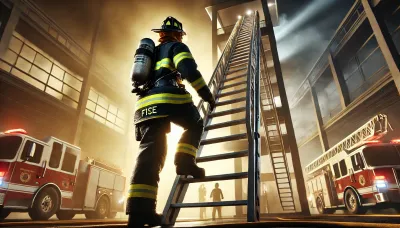
Ladder work tests coordination, communication, balance, upper-body endurance, and respect for safety. Recruits learn ladder parts, carries, raises, placement, climbing angle, footing, heeling, climbing commands, and safe operation near buildings and overhead hazards. Ladders are essential for rescue, access, ventilation, and emergency egress.
Common ladder academy skills
- Single-firefighter and team ladder carries.
- Flat raises and beam raises.
- Extension ladder halyard control and fly section awareness.
- Roof ladder placement and hook awareness.
- Climbing with tools while maintaining points of contact.
- Communication during raises, lowers, and repositioning.
Ladder safety: Never practice ladder raises, roof work, climbing with tools, or rescue movements without qualified supervision. Ladder errors can seriously injure recruits and instructors.
For more detail, see the firefighter ladder training guide.
SCBA Confidence Course
The SCBA confidence course is one of the most memorable academy modules. Recruits learn to trust their air supply, control breathing, manage stress, move through restricted spaces, follow hose lines, identify problems, and communicate when conditions become difficult. The goal is not to scare recruits. The goal is to build calm, disciplined movement while wearing life-support equipment.
What SCBA training may include
- Daily SCBA inspection and cylinder pressure checks.
- Donning and doffing under time limits.
- Facepiece seal checks and regulator connection.
- Low-profile movement and crawling.
- Following a hose line or search rope.
- Emergency procedures and Mayday basics.
- Air management, work rate awareness, and exit discipline.
SCBA mindset: Slow is smooth, smooth is efficient. Rushing through an obstacle usually wastes air, increases panic, and causes mistakes. Calm breathing and deliberate movement matter.
Search and Rescue Training
Search training teaches recruits how to move through limited visibility, maintain orientation, communicate findings, and locate victims while staying connected to the crew. Early academy drills may focus on movement patterns, room orientation, wall contact, sweeping techniques, and victim removal. Later scenarios may combine search with hose lines, ladders, ventilation, and live fire objectives.
Search skills recruits learn
- Primary vs secondary search concepts.
- Left-hand and right-hand search patterns.
- Oriented search and crew integrity.
- Thermal imaging camera limitations.
- Victim drags and carries.
- Communication of room status and hazards.
For a deeper skill breakdown, see the search and rescue training guide.
Live Fire Burns
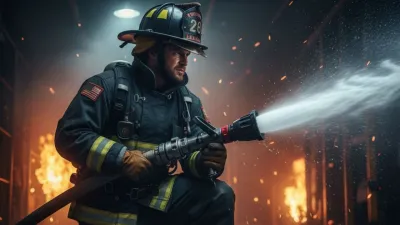
Live fire training is where recruits begin connecting classroom fire behavior with real heat, smoke movement, water application, nozzle control, communication, and crew discipline. Live burns are controlled evolutions conducted by qualified instructors under strict safety procedures. Recruits may observe fire growth, practice interior movement, operate hose streams, and learn how ventilation and water application affect conditions.
What recruits should focus on during live fire
- Listen to instructor commands before acting.
- Stay with the crew and maintain orientation.
- Control breathing and avoid rushing.
- Observe heat movement, smoke conditions, and flow path changes.
- Communicate clearly and confirm instructions.
- Respect the difference between training fire and uncontrolled structure fire.
Important: Live fire training must be conducted only under approved academy conditions, qualified instructors, department safety rules, and applicable standards. Recruits should never attempt unsupervised fire behavior or live fire practice.
Written and Practical Testing
Academies usually test recruits in two ways: written exams and practical skills evaluations. Written exams measure knowledge. Practical tests measure whether you can perform the skill correctly, safely, and consistently under observation. Both matter. A recruit who performs well on the drill ground but ignores books can fail. A recruit who studies hard but cannot perform safe skills can also fail.
| Test type | Examples | How to prepare |
|---|---|---|
| Written exams | Fire behavior, tools, safety, building construction, hazmat | Daily review, flashcards, group study, practice questions |
| Skills check-offs | Knots, SCBA, ladders, hose, PPE, search | Practice exact steps, verbalize safety points, accept correction |
| Scenario evolutions | Team hose stretch, search, rescue, live fire | Communicate clearly, move as a crew, follow assignments |
| Physical benchmarks | Stairs, runs, drags, carries, circuits | Train consistently and recover properly |
Teamwork, Discipline and Fire Service Culture
The academy teaches more than technical tasks. It teaches fire service culture: accountability, punctuality, clean gear, respect for the chain of command, attention to detail, and trust. Recruits are often evaluated not only on skill performance but also on attitude, reliability, and how they respond to pressure.
Habits that instructors notice
- Arriving early and prepared.
- Keeping gear clean, organized, and ready.
- Helping classmates without showing off.
- Owning mistakes immediately.
- Listening before asking questions.
- Maintaining composure during correction.
- Putting crew success ahead of personal ego.
Academy rule of thumb: Be early, be coachable, be safe, be useful. Recruits who live by those four habits usually earn trust quickly.
Common Mistakes New Recruits Make
- Underestimating academics: Fire academy is not only PT and hose drills. Written exams can remove unprepared recruits.
- Overtraining before class: Showing up injured is worse than showing up slightly undertrained but healthy.
- Trying to act experienced: Instructors value humility and coachability more than false confidence.
- Ignoring recovery: Poor sleep, hydration, and nutrition make learning and performance harder.
- Losing equipment discipline: Missing gloves, hoods, notebooks, or tools creates unnecessary stress.
- Breaking crew integrity: Fireground training depends on staying with your crew and communicating.
- Not asking safety questions: If an instruction affects safety and you truly do not understand it, ask respectfully.
Recruit Readiness Checklist
| Area | You are ready when... |
|---|---|
| Fitness | You can handle repeated stairs, carries, drags, and circuits without excessive recovery problems. |
| Study habits | You can review material every night and explain basic concepts clearly. |
| Gear organization | You keep required items packed, clean, labeled, and ready. |
| Communication | You can speak clearly, confirm instructions, and admit when you do not understand. |
| Mindset | You accept correction, avoid excuses, support classmates, and prioritize safety. |
Fire academy training is intense, demanding, and transformative. Recruits who succeed usually share the same habits: they prepare physically, study consistently, listen closely, protect their classmates, and stay humble. Graduation is not the end of learning. It is the beginning of becoming a reliable probationary firefighter.
Frequently Asked Questions
How hard is fire academy training?
Fire academy training is physically and mentally demanding. Recruits complete PT, classroom study, hands-on skills, practical testing, and team evolutions under stress. The difficulty depends on the department, academy length, instructor style, and recruit preparation.
What should I expect on the first week of fire academy?
The first week usually includes orientation, rules, uniform expectations, gear issue, baseline PT, classroom introductions, safety briefings, and early skills such as PPE, SCBA checks, knots, tools, and academy discipline.
Do recruits do live fire training?
Many academies include supervised live fire training after recruits complete prerequisite safety and skills modules. Live fire training is conducted under strict instructor control and should never be attempted outside approved academy conditions.
What is the hardest part of fire academy?
For many recruits, the hardest part is the combination of physical fatigue, academic pressure, skill testing, sleep disruption, and constant accountability. SCBA confidence courses, hose advancement, ladders, and live fire can also be challenging.
How can I prepare before recruit school starts?
Build firefighter-specific fitness, study basic fire service terminology, practice reading and math, organize required paperwork, improve sleep habits, and learn to be coachable. Do not attempt dangerous skills such as live fire, roof work, or SCBA drills without qualified supervision.
Comments 0
No comments yet. Be the first to share your thoughts!
Leave a Comment