📅 2025 candidate guide. Fire academy requirements vary by department, state, testing vendor, and hiring cycle. Always confirm current CPAT dates, medical requirements, academy rules, and equipment policies with your hiring department.
Fire Academy Prep Guide USA 2025: Physical Tests, Skills & Study Checklist
Preparing for a U.S. fire academy is not just about being strong. Successful recruits arrive with a balanced foundation: cardiovascular capacity, loaded stair endurance, grip strength, mobility, basic mechanical reasoning, calm communication, and the humility to learn department procedures from day one. The academy compresses physical stress, classroom learning, team accountability, and skills testing into a demanding schedule. Candidates who wait until the first week to start training are already behind.
This guide gives future firefighters a practical preparation path for 2025 hiring cycles: CPAT readiness, academy workouts, hose and ladder fundamentals, SCBA confidence, written exam study habits, oral board preparation, gear familiarization, and a six-week checklist you can use before reporting to recruit training.
Jump to:What the academy tests · CPAT preparation · 6-week prep plan · Core fireground skills · Written exam study · Oral board interview · Gear familiarization · Common mistakes · Final checklist · FAQ
What the Fire Academy Actually Tests
Fire academy performance is built on four pillars: physical readiness, technical learning, mental discipline, and team behavior. A recruit may be able to run fast but still fail under gear weight, hose drag fatigue, SCBA stress, or repeated skills testing. Another recruit may be physically average but succeed because they recover well, listen closely, study every night, and perform consistently under pressure.
| Academy demand | What it looks like | How to prepare |
|---|---|---|
| Physical endurance | Stair climbs, hose drags, long drill days, repeated evolutions in PPE | Loaded carries, intervals, stair work, zone 2 cardio |
| Strength and grip | Tool carries, ladders, victim drags, forcible entry props | Farmer carries, sled drags, rows, deadlifts, pull exercises |
| Technical skills | Knots, ladders, hose handling, SCBA checks, radio discipline | Practice basics before day one; learn terminology |
| Classroom study | Written quizzes, fire behavior, safety rules, SOPs, EMS basics | Daily review blocks, flashcards, notes, study groups |
| Character | Accountability, attitude, teamwork, stress response | Show up early, own mistakes, communicate clearly |
Training note: Academy expectations differ widely. Some departments run their own recruit academy; others send recruits to a regional or state academy. Treat this guide as preparation, not a replacement for your department's official instructions.
CPAT Physical Test Requirements
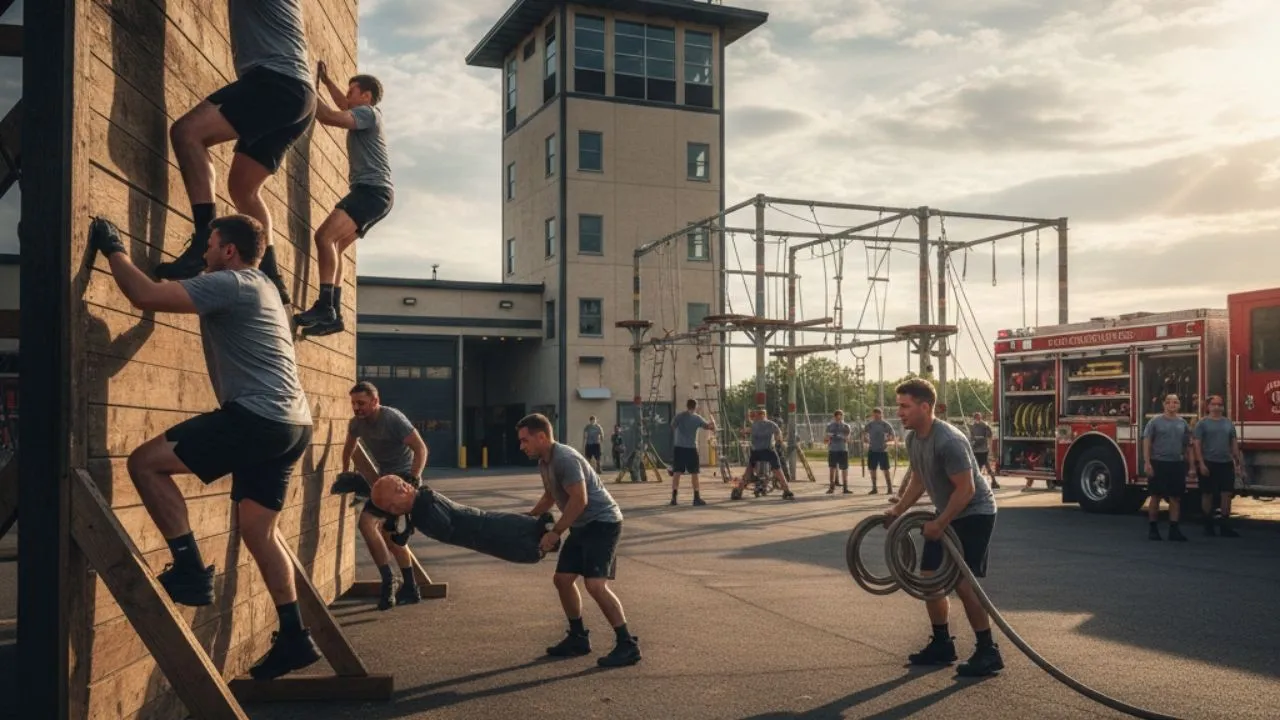
The Candidate Physical Ability Test, commonly called CPAT, remains one of the most recognized entry-level firefighter ability tests in the United States. Even departments that do not use the official CPAT often test similar movement patterns: climbing stairs under load, dragging hose, carrying equipment, raising ladders, striking a forcible entry simulator, searching, dragging a victim, and breaching or pulling ceilings.
Common CPAT-style stations
- Stair climb: Tests leg endurance, breathing control, and loaded work capacity.
- Hose drag: Tests acceleration, grip, upper-body pulling strength, and leg drive.
- Equipment carry: Tests loaded carry mechanics and grip endurance.
- Ladder raise and extension: Tests coordination, shoulder endurance, and safe body positioning.
- Forcible entry simulator: Tests repeated power output and tool control.
- Search evolution: Tests crawling, orientation, and movement under restricted visibility.
- Victim drag: Tests posterior chain strength, grip, and the ability to work while fatigued.
- Ceiling breach and pull: Tests overhead endurance and core stability.
Best preparation: Do not train only by running. Fireground work is loaded, awkward, repetitive, and usually performed while wearing gear. Combine cardio with loaded carries, stairs, sled drags, grip work, crawling, and mobility.
6-Week Fire Academy Preparation Plan
This plan is for candidates who already have basic fitness and want to sharpen academy readiness. If you are returning from injury, have a medical condition, or are new to training, get medical clearance and scale the workload. The goal is not to destroy yourself before the academy. The goal is to arrive durable, conditioned, and confident.
| Week | Physical focus | Skill focus | Study focus |
|---|---|---|---|
| Week 1 | Baseline cardio, mobility, bodyweight strength | Fire service terminology, PPE names | Reading comprehension and basic math review |
| Week 2 | Stair intervals, farmer carries, grip work | Basic knots and radio discipline | Mechanical reasoning and tool recognition |
| Week 3 | Hose-drag style sled pulls, loaded carries | Hose movement, coupling awareness, nozzle terminology | Fire behavior basics and safety rules |
| Week 4 | Ladder raise simulation, overhead endurance | Ladder parts, commands, safe footing | Practice written exam under time limit |
| Week 5 | CPAT-style circuit practice | SCBA familiarization and low-profile movement concepts | Oral board questions and scenario answers |
| Week 6 | Taper, mobility, moderate intensity only | Gear layout, checklist, weak-skill review | Final review, sleep schedule, academy logistics |
Weekly training template
- 2 strength days: Squat or hinge pattern, push, pull, core, loaded carry.
- 2 conditioning days: Stairs, intervals, sled drag, or circuit work.
- 1 longer aerobic day: Easy run, bike, ruck, or incline walk.
- 2 recovery blocks: Mobility, stretching, walking, hydration, sleep.
Useful site tools for this stage include the CPAT pacing calculator and firefighter BMI calculator. Use them as planning references, not as medical advice.
Core Firefighter Skills to Study Before Day One
You do not need to arrive as a fully trained firefighter. In fact, trying to act like you already know everything is one of the fastest ways to damage your reputation. But learning basic terms and movement concepts before the academy makes the first weeks less overwhelming.
Hose management basics
Learn the difference between supply line, attack line, preconnect, coupling, nozzle, bail, and nozzle reaction. Watch how hose kinks form around corners and stairs. Practice safe lifting mechanics and team communication. You do not need to perform live fire hose advancement before the academy, but you should understand the vocabulary.
Ladder basics
Study the parts of an extension ladder: beams, rungs, halyard, fly section, bed section, pawls, dogs, butt, tip, and roof hooks. Learn why ladder angle, footing, heeling, overhead hazards, and communication matter. If your department offers a candidate orientation, pay close attention to ladder commands.
SCBA confidence
Self-contained breathing apparatus training is one of the most stressful parts of the academy for many recruits. You can prepare by building calm breathing habits, improving mobility, and becoming comfortable working in confined or awkward body positions. Do not practice with actual SCBA unless supervised by qualified instructors and approved by your department.
Knots and hand tools
Basic knots such as the figure eight, clove hitch, bowline, overhand safety, and water knot may appear early in training. Hand tool names and uses also matter: halligan, flat-head axe, pike pole, roof hook, irons, hydrant wrench, spanner wrench, and salvage tools.
Safety warning: Do not attempt live fire, roof work, ladder operations, forcible entry, smoke drills, or SCBA drills without qualified supervision. Pre-academy preparation should build familiarity and fitness, not create unsafe self-training.
Written Exam Preparation
Fire academy written testing may include department policies, textbook material, fire behavior, safety procedures, building construction basics, hazardous materials awareness, EMS foundations, and scenario-based decision making. Entry hiring exams often include reading comprehension, math, mechanical aptitude, map reading, memory, and judgment questions.
Study habits that work
- Use short daily blocks. Thirty to forty-five focused minutes beats cramming once per week.
- Make flashcards. Use them for terms, tool names, fire behavior concepts, and safety rules.
- Teach the material. If you can explain a concept simply, you probably understand it.
- Practice timed tests. Many candidates know the material but lose points under time pressure.
- Review mistakes. Do not just count your score. Identify the pattern behind wrong answers.
| Topic | What to review | Why it matters |
|---|---|---|
| Reading comprehension | Procedures, short passages, policy excerpts | Academy exams are often built around instructions and scenario details. |
| Math | Basic arithmetic, percentages, fractions, unit conversion | Useful for hydraulics, medication basics, and equipment calculations. |
| Mechanical reasoning | Levers, pulleys, gears, pressure, force | Helps with tools, ladders, extrication, and pump concepts. |
| Fire behavior | Heat transfer, flow path, flashover, ventilation | Core safety knowledge for structural firefighting. |
| Hazmat awareness | Placards, isolation, ERG basics, recognition | Many academies include awareness-level hazmat material. |
Interview and Oral Board Tips
Oral boards evaluate more than confidence. They are looking for judgment, maturity, ethical decision-making, communication, teamwork, and whether you understand the responsibility of wearing the department's badge. A good answer is clear, honest, structured, and specific.
Questions to practice
- Why do you want to become a firefighter?
- Tell us about a time you made a mistake and corrected it.
- How do you handle conflict with a teammate?
- What would you do if you saw another recruit violating a safety rule?
- How have you prepared for the physical demands of this academy?
- What does public trust mean in the fire service?
Oral board formula: Answer the question directly, give one real example, explain what you learned, and connect it back to fire service values: safety, teamwork, accountability, integrity, and service.
Gear and Equipment Familiarization
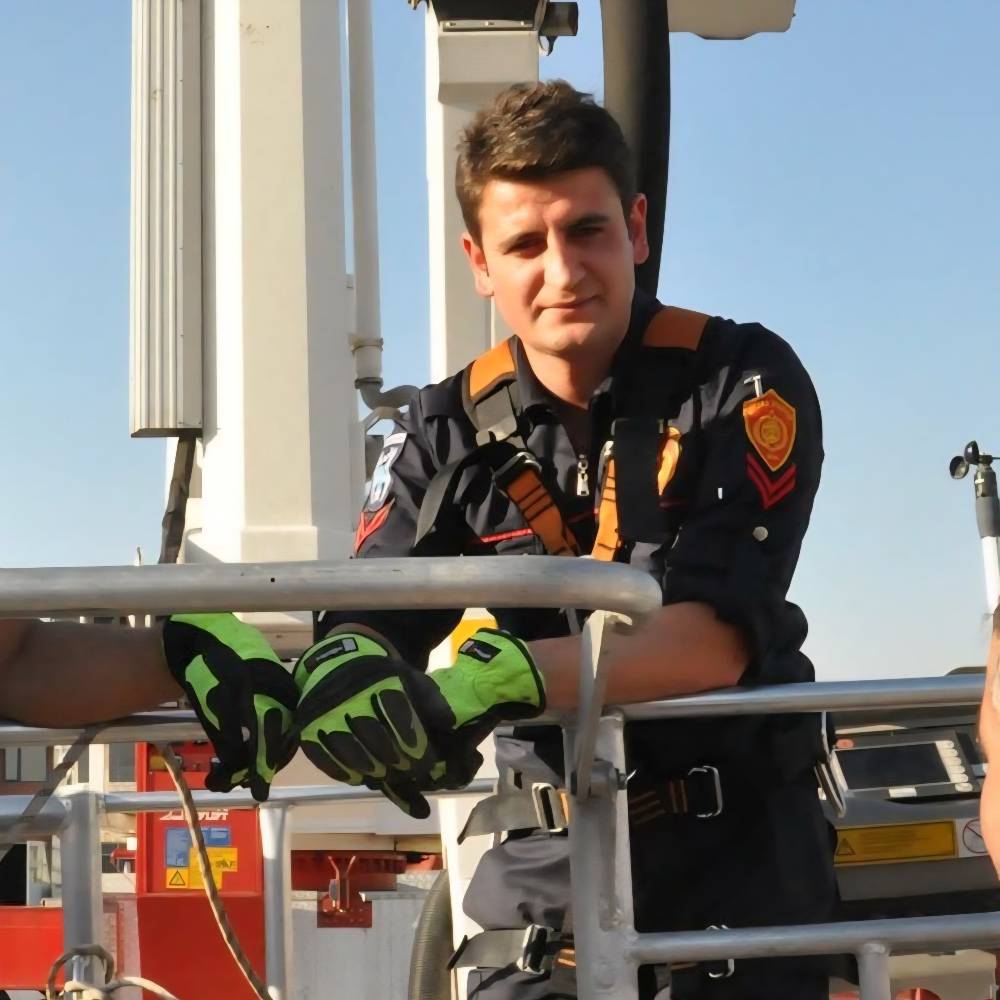
Academy recruits spend a lot of time learning to move efficiently in protective equipment. Bunker gear changes your balance, reduces dexterity, traps heat, and makes simple movements harder. Gloves make knots harder. Boots change footwork. SCBA changes posture and breathing. Your goal before the academy is not to master equipment, but to reduce the surprise factor.
What to learn before day one
- Names of turnout gear components: helmet, hood, coat, pants, boots, gloves, SCBA facepiece.
- How to keep gear organized and ready for quick donning.
- Basic hydration and heat-stress prevention habits.
- How to protect your knees, back, and shoulders during repetitive drills.
- How to clean and inspect equipment according to department policy.
For gear-specific reading, see the firefighter boots guide and related training articles on hose, ladders, and SCBA.
Common Mistakes That Hurt Recruits
- Training only for running. Fireground work is loaded and task-based. Include strength, grip, carries, stairs, and mobility.
- Ignoring recovery. Poor sleep, dehydration, and overtraining reduce performance and increase injury risk.
- Showing up with an ego. The academy rewards coachability, not pretending to know everything.
- Waiting to study. Written exams can remove physically strong recruits who do not prepare academically.
- Poor gear organization. Lost gloves, missing hoods, and sloppy equipment habits create unnecessary stress.
- Not asking safe questions. If you do not understand a safety-critical instruction, ask respectfully and early.
Final Fire Academy Readiness Checklist
| Area | Ready when... |
|---|---|
| Physical | You can complete stair intervals, loaded carries, sled or hose-drag style work, and recovery sessions without excessive soreness. |
| Academic | You have a daily study habit and can pass timed reading, math, and mechanical reasoning practice. |
| Skills | You know basic fire service terminology, common tools, ladder parts, hose parts, and several basic knots. |
| Interview | You can clearly explain why you want the job, how you handle stress, and how you respond to mistakes. |
| Logistics | Your paperwork, medical forms, academy instructions, transportation, uniform items, and schedule are organized. |
The best candidates do not simply train harder; they prepare smarter. Build your engine, protect your joints, study consistently, learn the vocabulary, and arrive ready to be coached. The academy will teach you the department's methods. Your job is to show up fit, humble, prepared, and reliable.
Frequently Asked Questions
How early should I start preparing for the fire academy?
Most candidates should begin focused preparation at least 6 to 12 weeks before academy start. If you are not already training regularly, start earlier. The academy is easier to survive when your base fitness, mobility, and study habits are already established.
Is running enough for fire academy fitness?
No. Running helps aerobic conditioning, but fireground tasks are loaded, awkward, and strength-based. Include stairs, carries, sled drags, grip work, crawling, core training, and mobility alongside cardio.
What should I study before the academy?
Start with fire service terminology, basic fire behavior, tool names, PPE components, knots, reading comprehension, math, and mechanical reasoning. Do not try to self-teach dangerous live fire skills before formal instruction.
How do I prepare for the oral board?
Practice clear answers about motivation, teamwork, accountability, ethics, stress, and public service. Use specific examples from your life and connect your answers to fire service values.
Should I buy my own gear before the academy?
Usually no. Most departments or academies issue required PPE and have specific rules about approved equipment. You may buy fitness gear, study materials, or basic boots only if your department allows it. Always follow official instructions.



Comments 0
No comments yet. Be the first to share your thoughts!
Leave a Comment