ICS Incident Command System for Firefighters: Structure, Roles & Fireground Application
The Incident Command System (ICS) is the standardized management framework used by every fire, EMS, law enforcement, and emergency management agency in the United States. Understanding ICS is required for Firefighter I certification, NIMS compliance, and effective fireground operations at any incident involving more than one company. This guide covers the ICS structure, key positions, span of control principles, and how ICS translates from a bureaucratic framework to a practical fireground tool.
Jump to:Why ICS exists · Five major functions · Command · Operations · Planning · Logistics · Finance/Admin · Span of control · Unified command · ICS on the fireground · FAQ
Why ICS Exists
ICS was developed in the 1970s in California following a series of catastrophic wildland fires where the lack of a common command structure resulted in resource waste, communication failures, and preventable deaths. The specific problems ICS was designed to solve:
- Lack of common terminology: Agencies used different terms for the same functions; personnel from different departments could not communicate effectively
- Non-integrated communications: Multiple incompatible radio systems on the same incident with no coordinated communications plan
- Span of control problems: Supervisors managing too many personnel, leading to critical missed assignments and unsafe conditions
- Unclear chain of command: Multiple commanders with overlapping authority and no clear accountability
- Resource management failures: Resources arriving without assignments; duplicate resource requests; no accountability for who was on scene
ICS solves all of these with a scalable, modular command structure that works for a single-engine company response and for a multi-agency disaster with thousands of personnel.
The Five Major ICS Functions
Every ICS organization, regardless of size, has five potential functional areas. At a small incident, one person (the Incident Commander) handles all five. At a large incident, each function may have a Section Chief and dozens of subordinate positions.
| Function | Responsible for | Section Chief title |
|---|---|---|
| Command | Overall incident management; strategy; safety; information; liaison | Incident Commander (IC) |
| Operations | All tactical operations; direct management of resources doing the work | Operations Section Chief (OSC) |
| Planning | Situation status; resource tracking; documentation; Incident Action Plan | Planning Section Chief (PSC) |
| Logistics | Resources, services, and support; communications; medical; food and facilities | Logistics Section Chief (LSC) |
| Finance/Administration | Cost tracking; contracts; claims; time records | Finance/Admin Section Chief (FSC) |
Expand ICS only as needed. The most common mistake is building a full ICS organization for a small incident. A house fire handled by 4 companies needs an IC and sector assignments — not five section chiefs and a planning unit. ICS expands to meet the needs of the incident, not the other way around.
Command: The Incident Commander
The Incident Commander is responsible for everything on the incident. Every function that is not delegated remains with the IC. At a small incident, the IC handles command, operations, planning, logistics, and finance simultaneously — this is the default and appropriate configuration for most fire company responses.
Command staff (IC's direct reports)
Three staff positions report directly to the IC at the command level and are not part of any section:
Safety Officer (SO)
Responsibility: Monitor all operations for safety hazards. The Safety Officer has the authority to stop any unsafe operation immediately, without going through normal chain of command. This is the only ICS position with stop-work authority.
Fireground application: At working structure fires, a designated Safety Officer monitors the exterior for collapse indicators, fire behavior changes, and crew fatigue. At multi-company incidents, this is often a chief officer from a mutual aid company.
Public Information Officer (PIO)
Responsibility: Single point of contact for media and public information release. All media inquiries go through the PIO; no other personnel speak to media without authorization.
Fireground application: Activated at incidents with media presence or significant public interest. Ensures consistent, accurate information and prevents operational details from reaching media before tactical operations are complete.
Liaison Officer (LNO)
Responsibility: Point of contact for cooperating and assisting agencies. Manages interagency coordination without burdening the IC with individual agency communications.
Fireground application: Activated when multiple agencies (fire, EMS, law enforcement, utilities, public works) are operating on the same incident and require coordination.
Operations Section
The Operations Section manages all tactical operations — everything that directly addresses the incident objectives. At a fireground, this is where the work happens.
Operations organizational elements
| Level | Span | Title | Fireground equivalent |
|---|---|---|---|
| Section | 2–5 branches or direct supervision | Operations Section Chief | Large incident only; not typical for most fires |
| Branch | 2–5 divisions or groups | Branch Director | Multi-sector operations at a large complex fire |
| Division | 2–5 resources | Division Supervisor | Geographic sector (Division A, Division B, etc.) |
| Group | 2–5 resources | Group Supervisor | Functional sector (Search Group, Suppression Group) |
| Strike Team / Task Force | 5 single resources + leader | Strike Team/Task Force Leader | 5 engines of the same type, or mixed resources with a defined mission |
| Single Resource | Individual company | Company Officer (Captain/Lieutenant) | Engine 3, Ladder 1, Rescue 2, etc. |
Division vs. Group
The distinction between Divisions and Groups is important:
- Division: Geographic designation — everything operating in a specific area. Division A = all companies working the Alpha side of the building.
- Group: Functional designation — companies performing a specific function regardless of location. Rescue Group = all companies performing victim search and rescue, wherever that takes them.
Planning Section
The Planning Section collects and analyzes information about the incident, tracks resources, and produces the Incident Action Plan (IAP). At small incidents, the IC handles planning functions. The Planning Section is formally activated when the incident complexity requires:
- Multiple operational periods (incidents lasting beyond a single shift)
- Complex resource tracking with many companies
- Formal written IAP development
- Technical specialists (structural engineers, hazmat specialists, meteorologists)
Logistics Section
The Logistics Section provides resources, services, and support to Operations. At a fireground, logistics functions are often handled informally by apparatus crews and the IC. Formal Logistics Section activation is appropriate for:
- Extended operations requiring food, rehabilitation, and crew rotation management
- Large equipment and supply requirements (foam, special equipment, generators)
- Formal staging area management with significant inbound resources
- Incident communications management (multiple radio channels, communications unit)
Span of Control: The Foundation of ICS
Span of control is the number of subordinates one supervisor can effectively manage. ICS defines the optimal span as 3–7, with 5 as the ideal. When a supervisor has more than 7 direct reports, span of control is exceeded and a new supervisory level must be created.
Why span of control matters
A supervisor managing 12 companies cannot give adequate attention to any of them. Critical information gets missed. Assignments are unclear. Firefighters operate without adequate supervision. Incidents where ICS span of control is ignored consistently show higher rates of tactical confusion, resource misuse, and fireground accidents.
Applying span of control
At a working structure fire with 8 companies operating:
- The IC cannot directly supervise all 8 company officers — span is exceeded
- Create geographic sectors: Division A (3 companies), Division B (3 companies), and 2 companies directly under IC (total: 3 supervisory levels)
- Now the IC supervises Division A supervisor, Division B supervisor, and 2 companies directly — span of 4, within range
Unified Command
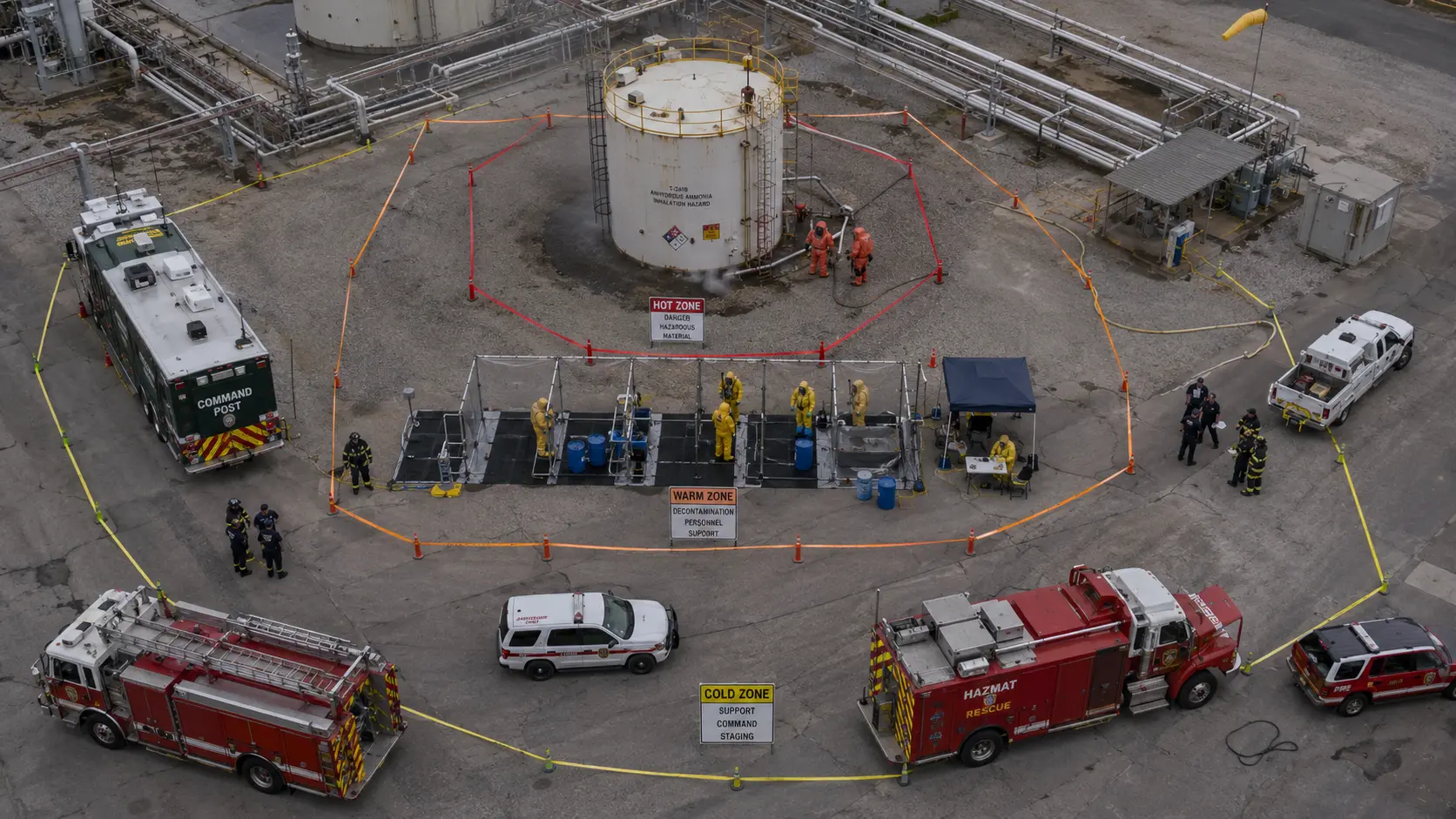
Unified Command is used when multiple agencies with jurisdiction or functional responsibility share command of an incident. Instead of one IC, a Unified Command team shares command authority and decision-making.
Common unified command situations in fire service:
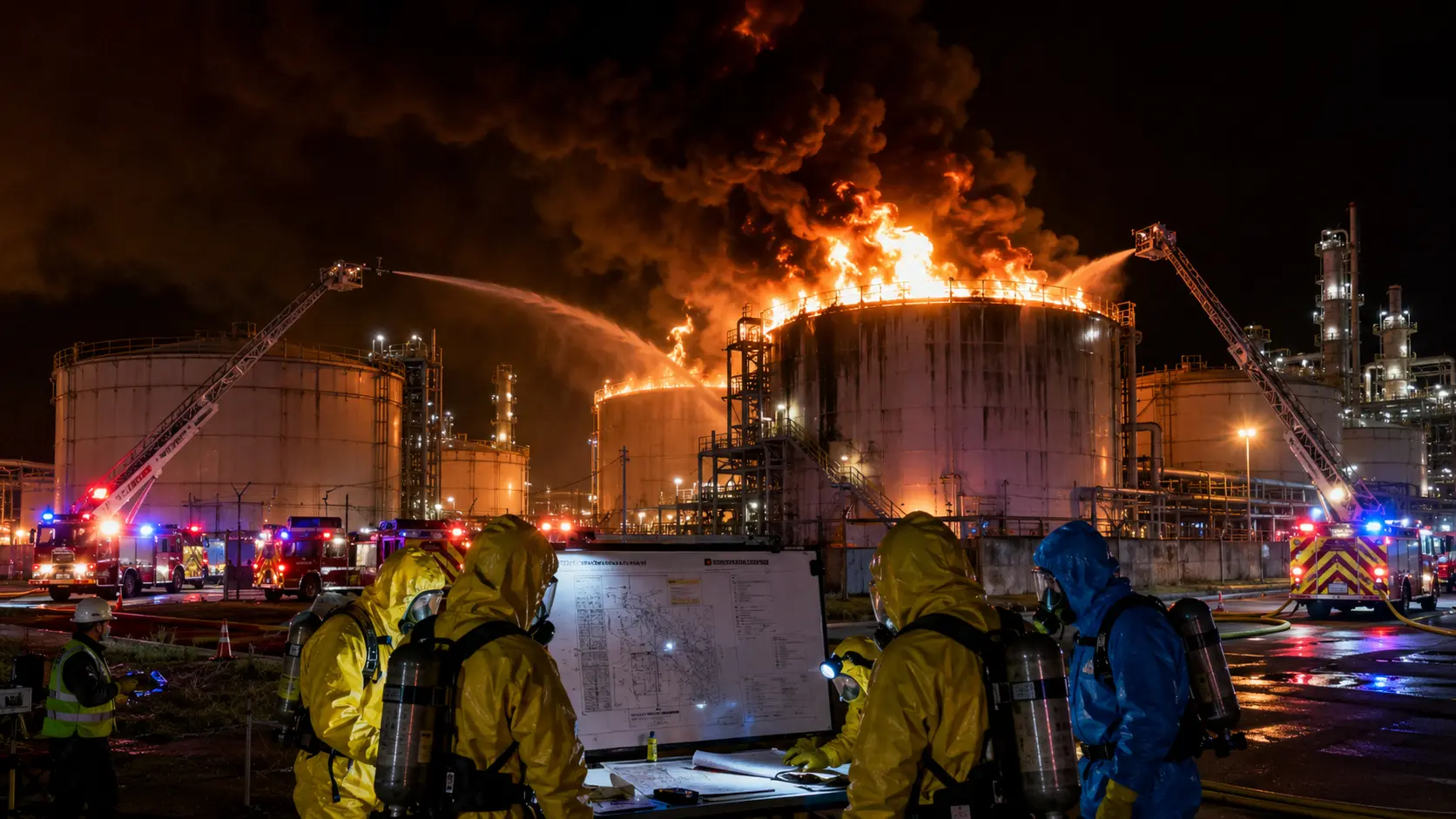
- Structure fire with hazmat release: Fire IC and Hazmat IC in unified command
- Wildland-urban interface fire: Local fire department and state/federal wildland agency in unified command
- Mass casualty incident: Fire IC and EMS Medical Director in unified command
- Building collapse: Fire IC and search/rescue agency IC in unified command
Unified Command does not mean no one is in charge. It means the designated agencies share command, speak with one voice, and produce a single IAP. There is still one Operations Section Chief managing tactical operations.
ICS on the Fireground: What It Looks Like in Practice
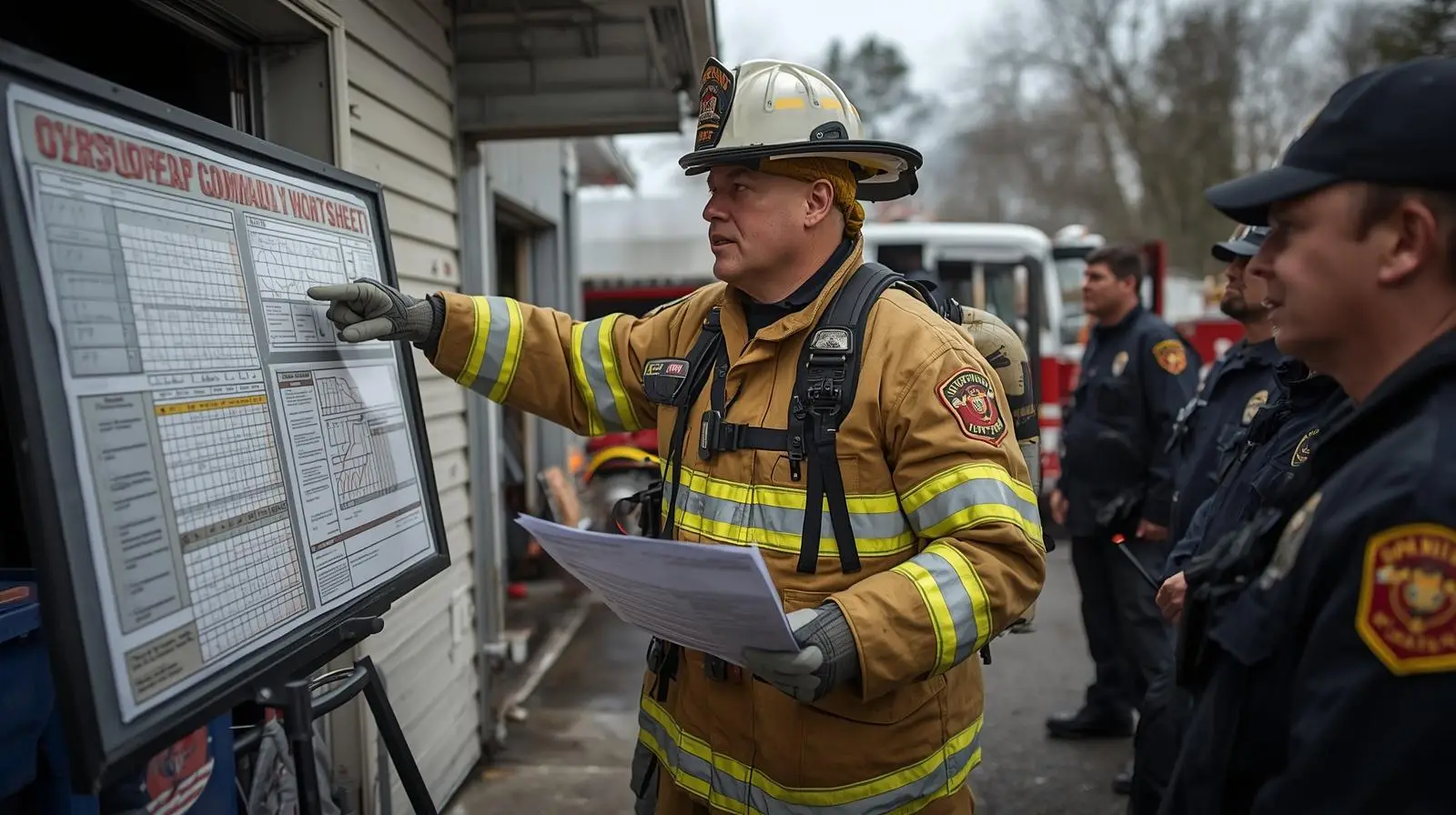
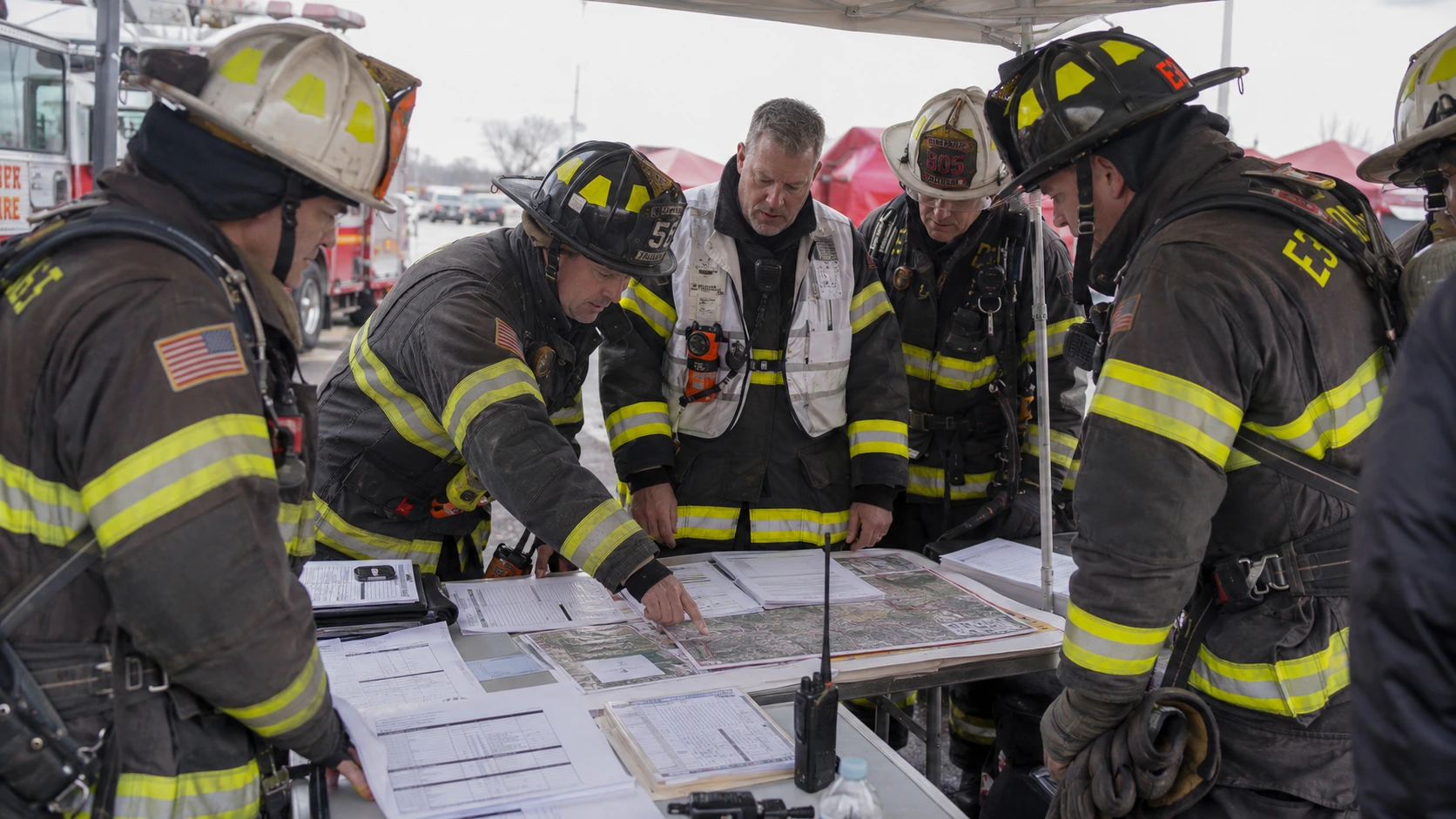
ICS can sound like a bureaucratic framework with no relationship to the pace of a working fire. In practice, every well-run fireground uses ICS principles even if the terms are not explicitly stated:
| ICS principle | Fireground equivalent |
|---|---|
| Incident Commander established | "Engine 3 establishing Oak Street Command" |
| Span of control managed | IC assigns sectors when more than 5 companies are operating |
| Common terminology | All companies use the same sector designations: Division A/B/C/D for sides; roof, interior, RIT |
| Integrated communications | All companies on the same command channel; tactical channel for sector operations |
| Unity of command | Every firefighter reports to one supervisor; no competing orders |
| Accountability | Passport/tag system or electronic tracking; IC knows who is where |
| Management by objectives | IC states the strategy (offensive, defensive); all tactical assignments support it |
Frequently Asked Questions
What is ICS in firefighting?
ICS (Incident Command System) is a standardized management framework used to organize all emergency response operations in the United States. It provides a scalable command structure with clear roles, unified terminology, and span-of-control principles that work for a single-company response or a multi-agency disaster. ICS compliance is required for NIMS certification and Firefighter I certification.
What are the five sections of ICS?
Command (Incident Commander), Operations, Planning, Logistics, and Finance/Administration. At most fireground incidents, the Incident Commander handles all five functions. Sections are formally activated only when the incident complexity requires dedicated section leadership.
What is span of control in ICS?
Span of control is the number of subordinates one supervisor can effectively manage. ICS defines the optimal range as 3–7 with 5 as the ideal. When a supervisor has more than 7 direct reports, a new supervisory level must be inserted to maintain manageable workloads and situational awareness.
What is the difference between a Division and a Group in ICS?
A Division is a geographic assignment — all resources operating in a specific area (Division A = Alpha side of the building). A Group is a functional assignment — all resources performing a specific task regardless of location (Rescue Group = all companies doing victim search wherever that takes them).
What is unified command?
Unified Command is used when multiple agencies share jurisdiction or responsibility for an incident. Instead of one IC, a Unified Command team shares decision-making authority. There is still one Operations Section Chief managing tactical operations, and a single IAP governs the incident. All participating agencies speak with one coordinated voice.

Comments 0
No comments yet. Be the first to share your thoughts!
Leave a Comment