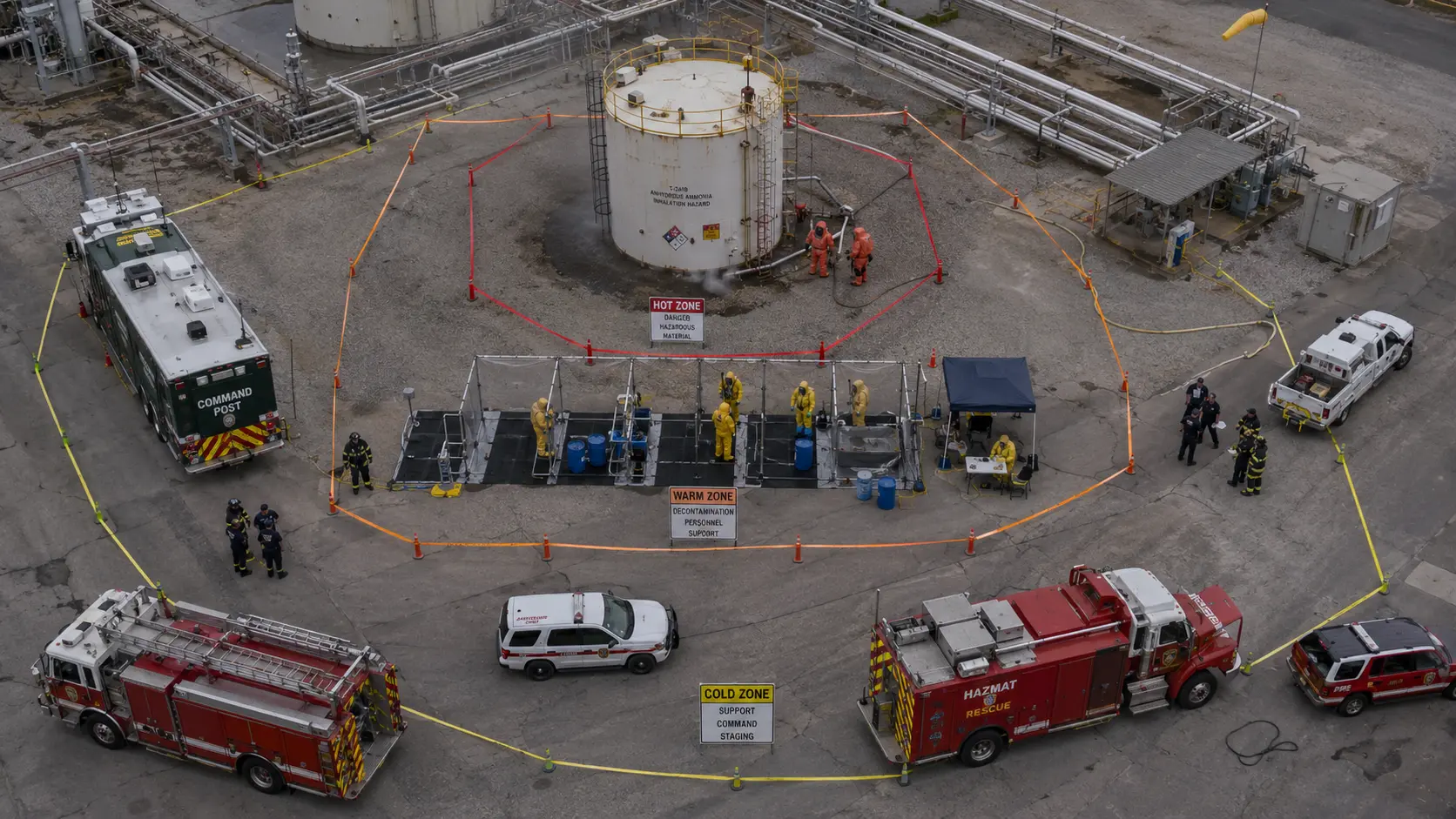
At a structural fire, the distinction between "inside the building" and "outside the building" is the primary safety boundary. At a hazmat incident, the physical structure of the building — if there is one — is secondary to the atmospheric contamination that may extend well beyond it. The three-zone structure exists to create the safety boundaries that physical structures provide at a fire but that hazmat incidents require to be established artificially, based on measured atmospheric conditions rather than visible walls.
The zones are not static. They move as the incident develops — as the source is controlled, as atmospheric dispersion reduces concentrations, as monitoring data clarifies where the actual hazard boundary is. An incident commander who sets zone boundaries at arrival and does not reassess them as conditions change is managing zones based on initial assumptions rather than current conditions. The zones are useful only as long as they reflect where the hazard actually is.
In this article:
The Hot Zone: The Exclusion Zone
The hot zone — also called the exclusion zone or the restricted zone — is the area of known or suspected hazardous contamination. Everyone in the hot zone is at risk from the hazard and must wear appropriate PPE as a minimum. No unprotected personnel enter the hot zone for any reason. No equipment leaves the hot zone without processing through the decontamination corridor. The hot zone boundary is defined by atmospheric monitoring that identifies where the contamination concentration drops below the immediately dangerous level, adjusted outward by a safety margin.
The hot zone boundary is not a guess or an estimate. It is established based on monitoring data: the hazmat team deploys atmospheric monitors on poles or via remote sensing before any personnel enter, reads the concentrations at multiple distances from the source, and identifies the point at which concentrations drop below the IDLH (or below the threshold for the specific hazard). The hot zone boundary is drawn to encompass all areas above this threshold, plus a buffer.
In the initial phase of a hazmat incident, before monitoring data is available, the hot zone is established conservatively based on the ERG isolation distances for the identified or suspected material. As monitoring data becomes available, the zone boundary is refined — typically expanding if monitoring shows the hazard extends further than the initial estimate, or contracting if monitoring shows the initial estimate was too conservative.
The Warm Zone: The Contamination Reduction Zone
The warm zone — also called the contamination reduction zone — is the area between the hot zone and the cold zone. It is the functional space of the hazmat operation: entry teams form up here before entering the hot zone, the decontamination corridor operates entirely within the warm zone, and the hazmat team personnel managing the operation work here in appropriate PPE. The warm zone is not contamination-free — it is the zone where contamination is reduced and managed, not where it is assumed to be absent.
Personnel in the warm zone wear PPE appropriate to the warm zone exposure level — typically Level B or Level C depending on what monitoring shows at the warm zone boundary. The warm zone is not the same exposure level as the hot zone, but it is not the unrestricted access of the cold zone either. Every person who enters the warm zone has been briefed on the hazard, is wearing appropriate PPE, and is subject to the zone control that governs the warm zone.
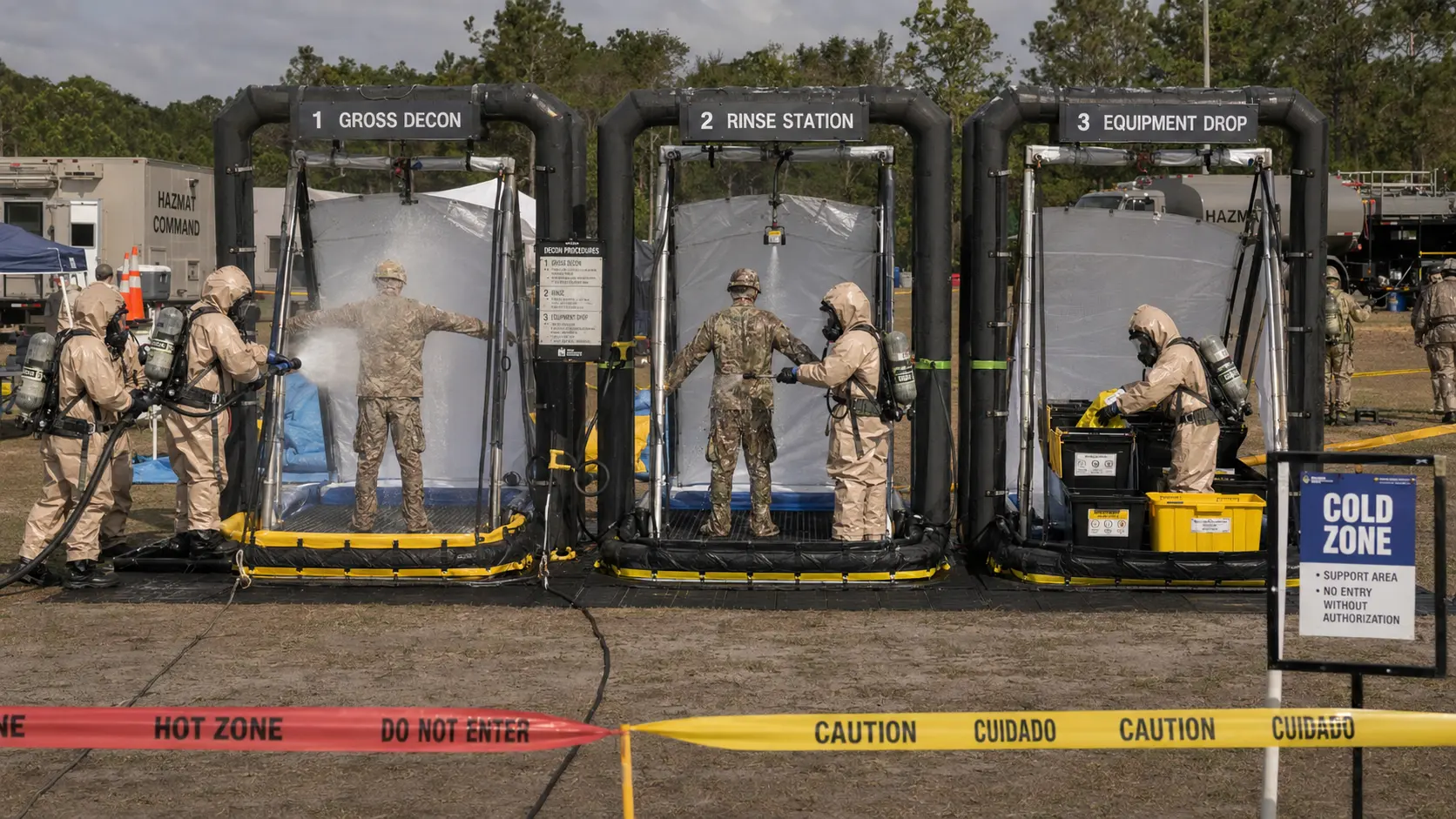
The decontamination corridor — the subject of a dedicated article elsewhere on this site — is positioned in the warm zone with its entry point at the hot zone boundary and its exit at the cold zone boundary. Everything and everyone who exits the hot zone passes through the decon corridor in the warm zone before entering the cold zone. The warm zone is wide enough to contain the complete decon corridor, safety zone for backup entry teams, and staging for entry team equipment preparation.
The Cold Zone: The Safe Working Area
The cold zone is the area outside the warm zone boundary where contamination is either absent or at levels that do not require respiratory or skin protection. The incident command post, the staging area for apparatus, media briefing areas, and general public exclusion zones are all in the cold zone. Personnel in the cold zone do not require respiratory or chemical protective equipment, but they are still within the incident perimeter.
The cold zone is not public access — it is the working area for personnel who are not in the contamination reduction or exclusion zones. Law enforcement establishes the outer perimeter of the cold zone at a distance that keeps the public and unauthorized personnel outside the entire incident area. The cold zone is the area within the outer perimeter and outside the warm zone boundary.
The command post is always in the cold zone. Placing the incident command post inside the warm zone — or worse, inside the hot zone — would require command personnel to wear PPE that limits their communication capability and would potentially expose them to the hazard that they are directing others to manage. The incident commander needs unrestricted communication, clear visibility of incoming resources, and the ability to interface with agency liaisons, media, and elected officials — all of which require cold zone access.
Setting and Moving Zone Boundaries
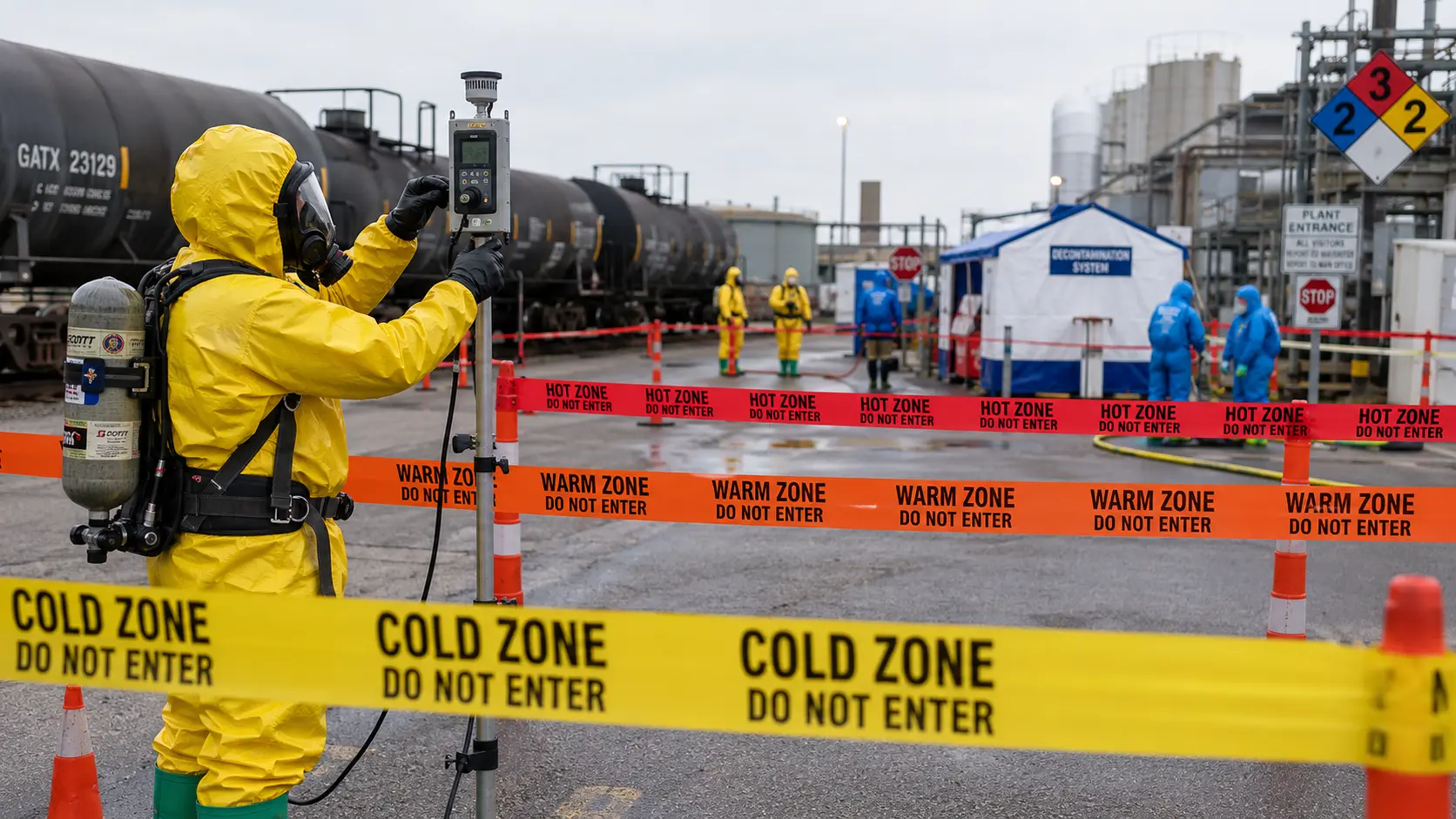
Zone boundaries are established physically with tape, cones, rope, or vehicles, and managed by personnel assigned to boundary control. The standard color convention is red tape for the hot zone boundary, orange or yellow for the warm zone boundary, and yellow or green for the cold zone outer perimeter. The color convention is not universal — different regions and different jurisdictions use different color assignments — but the three-tier structure is consistent.
Zone boundaries move when monitoring data changes. A source that has been controlled — a valve closed, a leak plugged — causes atmospheric concentrations to decrease over time. As concentrations drop, the hot zone boundary can contract toward the source. Personnel who were in the warm zone can transition to lesser PPE. The monitoring that initially established the zone boundaries must continue through the incident to validate that the boundaries remain appropriate for current conditions.
Zone boundaries also expand when conditions worsen: a release that increases in volume, a wind shift that carries contamination to a previously unaffected area, or a secondary release from a different part of the facility all require re-evaluation and potential expansion of zone boundaries. The boundary control personnel and the monitoring team must communicate continuously so that zone changes are made before personnel or resources are exposed to conditions the current zone boundaries do not account for.
The Entry Control Point
The Entry Control Point (ECP) is the single managed crossing between the warm zone and the hot zone — the only point at which personnel and equipment may cross the hot zone boundary. The ECP is staffed by a dedicated entry control officer whose sole function is managing who goes in and who comes out, tracking the time each entry team spends in the hot zone, and initiating emergency response if an entry team fails to check in or calls a distress signal.
Every person who enters the hot zone through the ECP is logged with their entry time, their PPE level, the amount of air supply they carried in (for SCBA), and their expected work duration. The entry control officer maintains this log and triggers the entry team recall when their planned work time is nearly elapsed or when air supply calculations indicate they should exit. The ECP log is the accountability system for hot zone operations — it tells the incident commander who is in the hot zone at any moment and how long they have been there.
No person enters the hot zone without going through the ECP. No person exits the hot zone without going through the decontamination corridor. The ECP and the decon corridor are the two control mechanisms that make the zone structure work — they are not optional elements that are established when convenient. An entry that bypasses the ECP is an unaccounted entry; an exit that bypasses the decon corridor is a potential secondary contamination event.
Who Belongs Where
| Zone | Who belongs here | PPE required | Who does NOT belong here |
|---|---|---|---|
| Hot zone | Entry team (hazmat technicians), backup entry team staged at ECP | Level A or Level B minimum, per monitoring data | Command officers, EMS, media, law enforcement, unprotected personnel of any kind |
| Warm zone | Decon corridor operators, hazmat team support, backup entry team, safety officer, rehab station | Level B or Level C per warm zone monitoring data | Command post personnel, apparatus operators, media, public, any unprotected personnel |
| Cold zone | Incident command post, staging, law enforcement perimeter, EMS staging, media briefing area, elected officials | None required — standard work attire or turnout gear for fire personnel | Public, unauthorized personnel, decontaminated personnel who have not been medically cleared |
How Zones Evolve During an Incident
A hazmat incident does not maintain the same zone configuration from start to finish. The zones evolve through identifiable phases:
Initial response phase: ERG-based conservative zone establishment before monitoring data is available. Zone boundaries are set at ERG isolation distances or at maximum conservative estimates for the suspected material. This phase ends when the hazmat team arrives and begins systematic atmospheric monitoring.
Assessment phase: Monitoring-driven zone refinement. The hazmat team conducts perimeter monitoring, hot zone entry for source identification, and atmospheric measurement at multiple distances and heights. Zone boundaries are adjusted to reflect measured concentrations. PPE requirements for warm zone personnel are updated based on monitoring data.
Operations phase: Active source control, victim rescue (if applicable), and decontamination operations. The zone structure is at full operational status — ECP staffed, decon corridor operating, monitoring ongoing. Zone boundaries may contract as source control reduces atmospheric concentrations.
Recovery phase: Following source control and initial cleanup, concentrations drop toward acceptable levels. Zone boundaries contract progressively. Monitoring confirms that areas previously in the warm zone are now at cold zone concentrations. Personnel and resources are released from the inner zones as they are cleared. Final monitoring certifies that the area is safe for re-entry by general personnel.
Zone Structure Across Different Hazmat Scenarios
The three-zone structure applies across different hazmat incident types, but its physical configuration differs substantially between them:
Transportation incident (road or rail): The hot zone is typically the vehicle or car and a surrounding radius defined by monitoring or ERG distances. The warm zone is established upwind in a strip adjacent to the hot zone, with the decon corridor oriented upwind. The cold zone includes the command post, apparatus staging, and the approach road that was closed to through traffic.
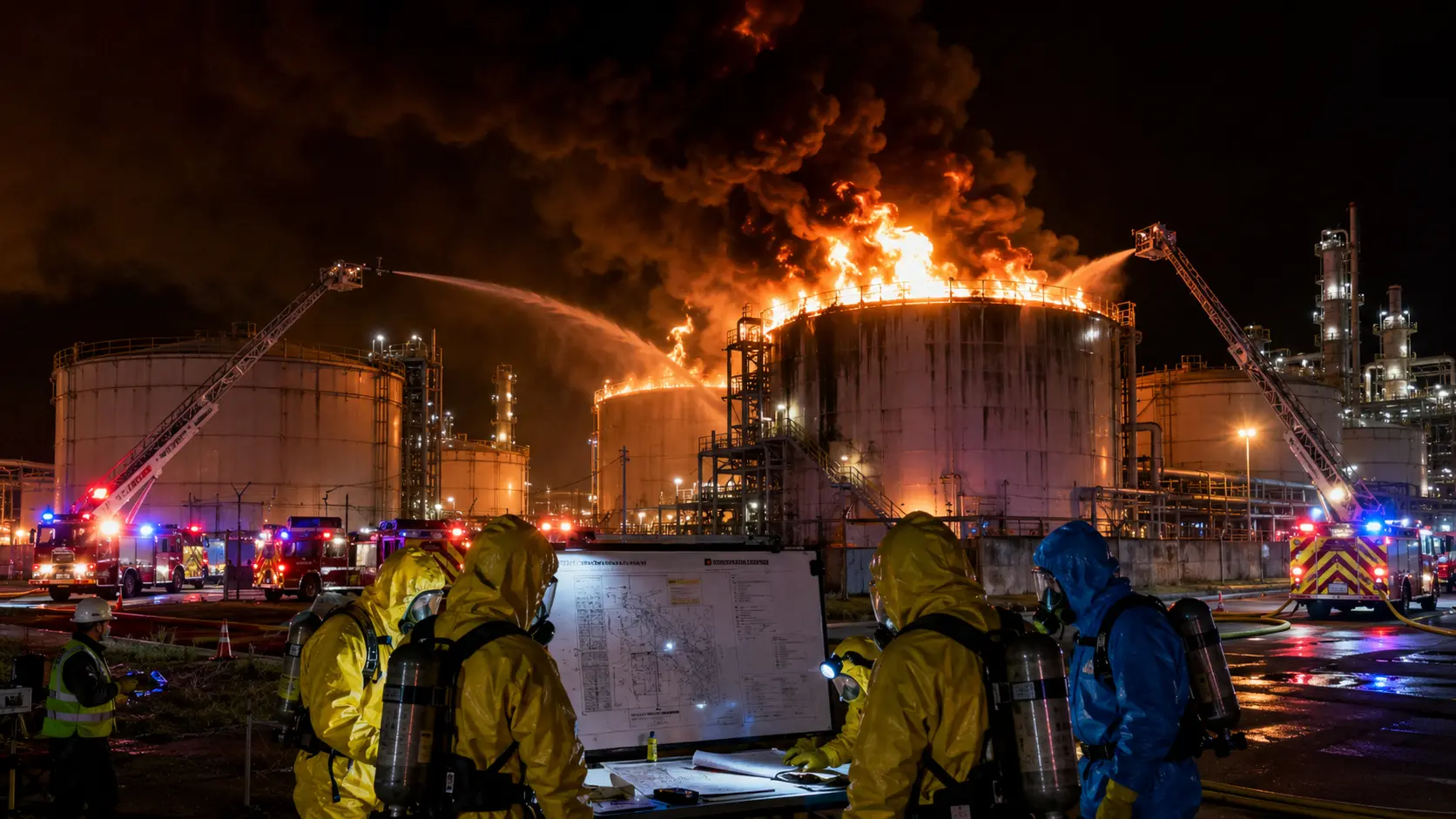
Fixed facility incident: The hot zone may be an entire building, a specific process unit, or a defined area around a tank. The warm zone is adjacent to the facility boundary, with access control points at facility entry points. The decon corridor is established at the facility perimeter. The cold zone extends into the surrounding property and adjacent streets.
Unknown substance release (powder, liquid, or odor): The initial hot zone may be conservative and large until monitoring identifies the material and its actual dispersal pattern. As the substance is identified, the zone boundaries are refined. In some cases — an unknown powder in an office building — the entire building is the initial hot zone until monitoring clears areas for warm zone designation.
Why Zones Fail
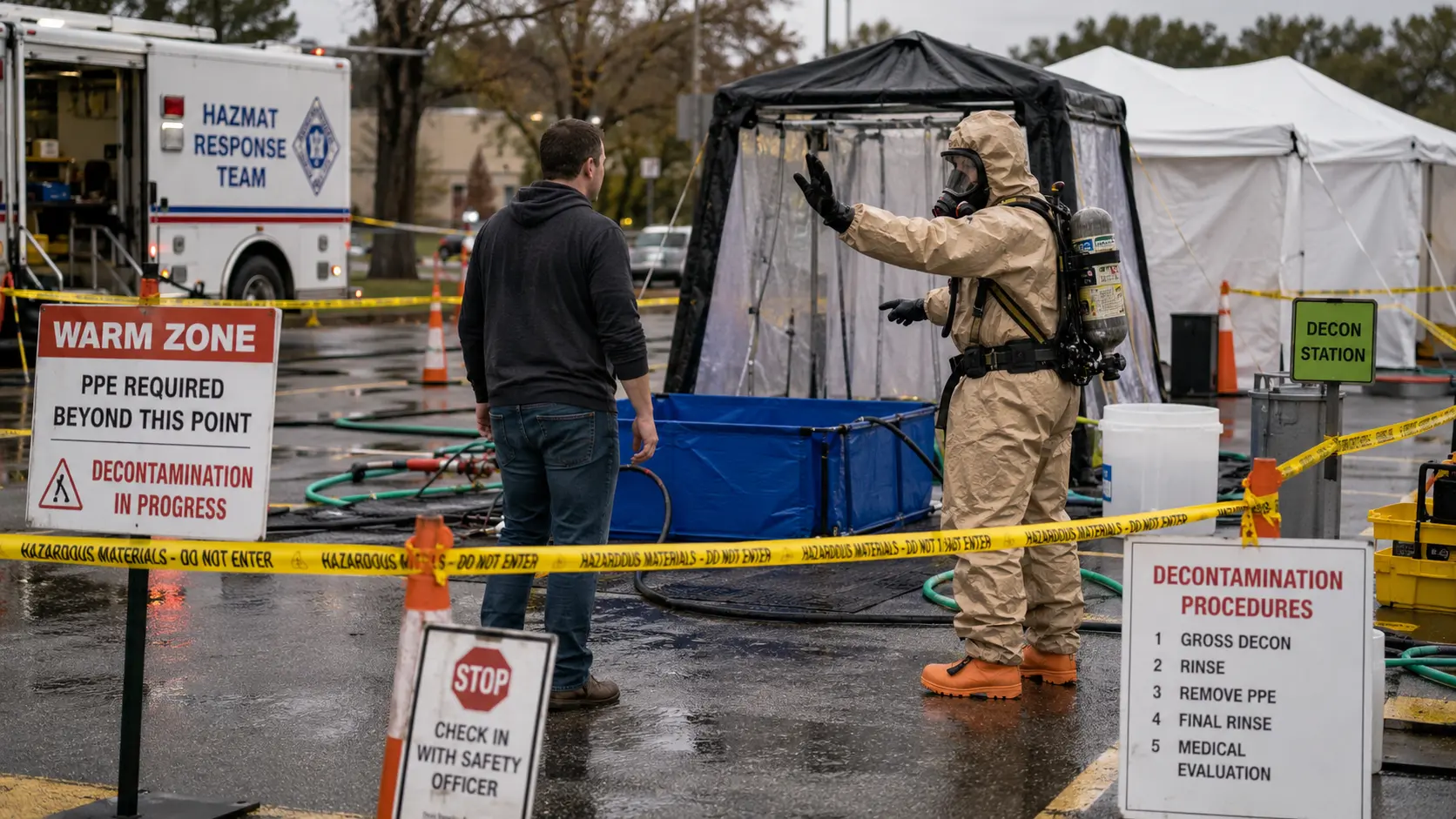
Zone failures happen through predictable mechanisms:
- Inadequate staffing of zone boundaries: A boundary that is established with tape but has no one assigned to enforce it is not a controlled boundary. The first person who does not know what the tape means, or who decides to cross it anyway, passes into the warm zone undetected and unprotected. Boundary control requires dedicated personnel, not just physical markers.
- Senior personnel bypassing control: An agency executive, an elected official, or a senior officer who insists on approaching the hot zone "just for a look" and is not stopped because of their rank represents a different kind of boundary failure — one where the social pressure to accommodate authority overrides the safety requirement to enforce the zone. Zone control applies to everyone without exception.
- Decon bypass under time pressure: An entry team that exits the hot zone and walks directly to the cold zone because "we weren't in there long enough to get contaminated" has produced a secondary contamination pathway regardless of their subjective assessment of their exposure. The decon protocol applies to every exit from the hot zone, every time.
- Equipment contamination transfer: Equipment that was in the hot zone — atmospheric monitors, cameras, tools — that is carried to the cold zone without decontamination carries the contamination with it. Every item that exits the hot zone goes through the same decon process as the people.


Comments 0
No comments yet. Be the first to share your thoughts!
Leave a Comment