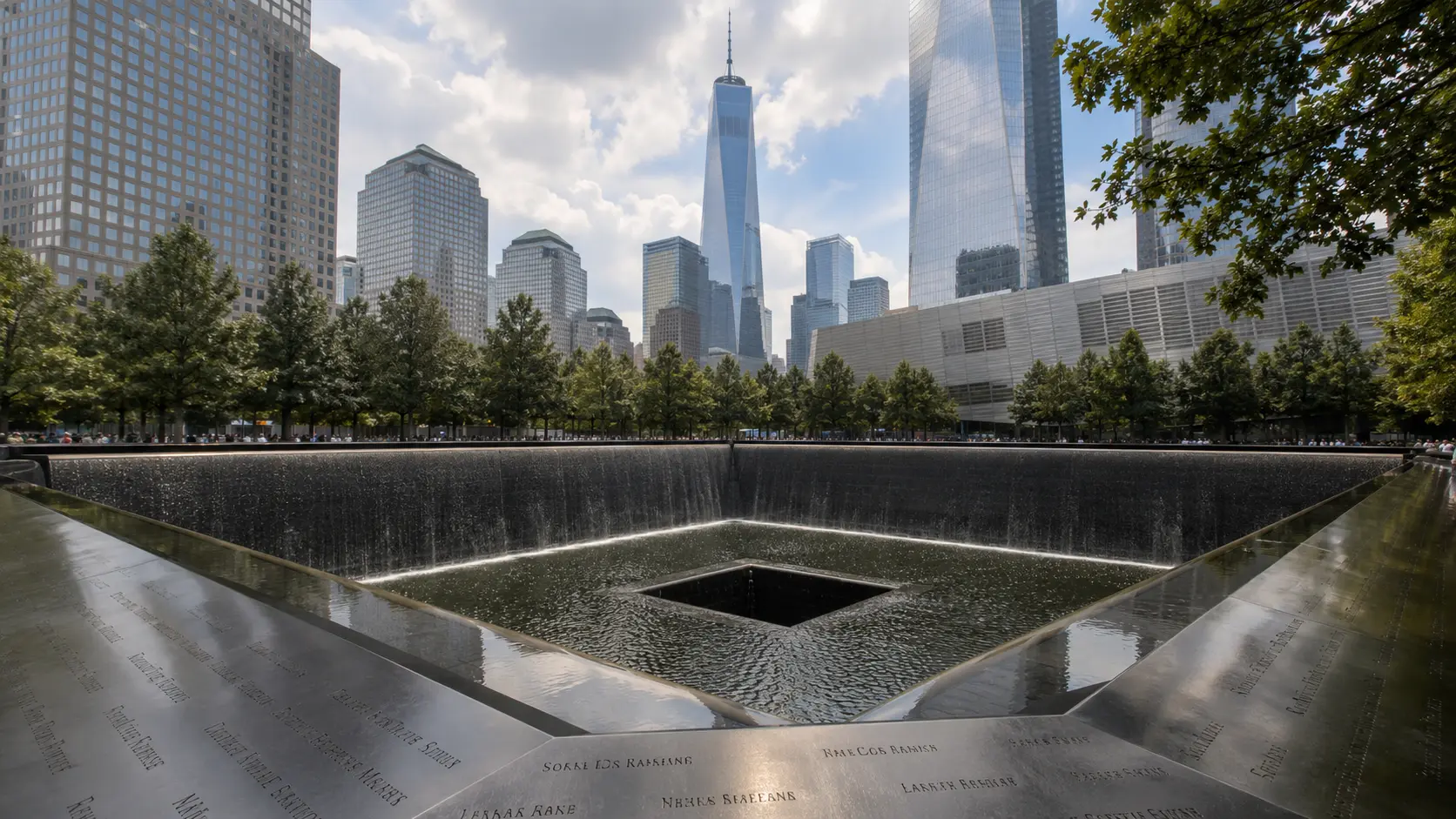
The fire service does not learn from successes. It learns from failures, and it has formal mechanisms — investigation reports, after-action reviews, NIOSH fatality investigation reports — for converting those failures into training and protocol changes. The September 11, 2001, World Trade Center attack produced the largest body of investigative findings in the history of the American fire service, the largest single-day casualty count in the history of the American fire service, and — directly because of those two facts — the most extensive set of operational reforms the fire service has implemented in a single decade.
The reforms were not responses to an unprecedented situation. They were responses to failures in systems that were understood to be imperfect before September 11, that were tolerable when the scale of incidents was manageable, and that catastrophically failed at a scale that was not managed. The radio system that could not communicate reliably inside the towers had been a known problem. The accountability system that could not track hundreds of members at two simultaneous incidents was adequate for single-building incidents. The ICS structure that fractured under multi-agency, multi-building, mass-casualty pressure had not been exercised at anything close to that scale.
In this article:
The Radio Failure: What Happened and Why
The World Trade Center towers had a known radio communications problem for high-rise interior operations that had been identified after the 1993 bombing. A repeater system was installed to boost radio signal inside the towers — this system was tested successfully in 2000. On September 11, 2001, the repeater system was not activated at the start of operations. Even when it was eventually activated, its coverage was incomplete, and significant radio traffic from firefighters inside the towers was not being received at the command post or at the dispatch center.
Investigators determined that radio communications between firefighters inside the towers and the command posts outside were frequently not received, particularly in the upper floors and stairwells where crews were operating. The NYPD aviation unit — operating on a different radio system with better high-altitude communication — was observing the South Tower deterioration from helicopters and transmitting warnings that were not reaching FDNY interior crews because the agencies were on incompatible radio systems with no interoperability.
The specific outcome: NYPD helicopter crews were warning of imminent South Tower collapse at a time when FDNY interior crews were still advancing and when some crews were in the building when it fell. Whether different radio communications would have changed the outcome is not knowable — but the communication failure was a contributing factor in the inability to transmit an effective evacuation order to interior crews before the collapse.
The Missing MAYDAY Calls
A MAYDAY — the radio call by a firefighter who is trapped, lost, or in immediate danger — is the activation of the emergency rescue system. It initiates a response that redirects resources to the transmitting firefighter's location, activates the RIT (Rapid Intervention Team), and establishes priority communications for the firefighter in distress. In structural fire operations, the MAYDAY protocol is drilled regularly and its use is expected and trained.
The 9/11 investigation found no documented MAYDAY calls from FDNY members trapped in the towers before the collapses. Given the number of members who were killed in the towers, many of whom were in positions where they were unable to evacuate before the collapses, the absence of MAYDAY calls is not because no one needed rescue. The investigations identified several possible contributing factors:
- Radio communication failure meant that transmissions from inside the towers may not have been received even if made
- The MAYDAY protocol in 2001 was less formalized and less consistently drilled than it became after 9/11
- The scale of the incident — with hundreds of members in operations across two towers — may have created communication channel saturation that made individual MAYDAY calls difficult to transmit effectively
- The extremely fast collapse timeline of both towers (56 minutes for the South Tower, 102 minutes for the North) may have left insufficient time for the protocol to be used in many cases
Post-9/11, FDNY significantly revised and intensified MAYDAY training across the department. The MAYDAY protocol is now a formalized, regularly tested procedure with dedicated radio channel protocols and specific activation triggers. The recognition that no MAYDAY calls were transmitted — despite the existence of members who could have benefited from the rescue response that a MAYDAY would have initiated — drove training emphasis on MAYDAY as a non-optional response to any entrapment or distress condition.
Accountability at Scale
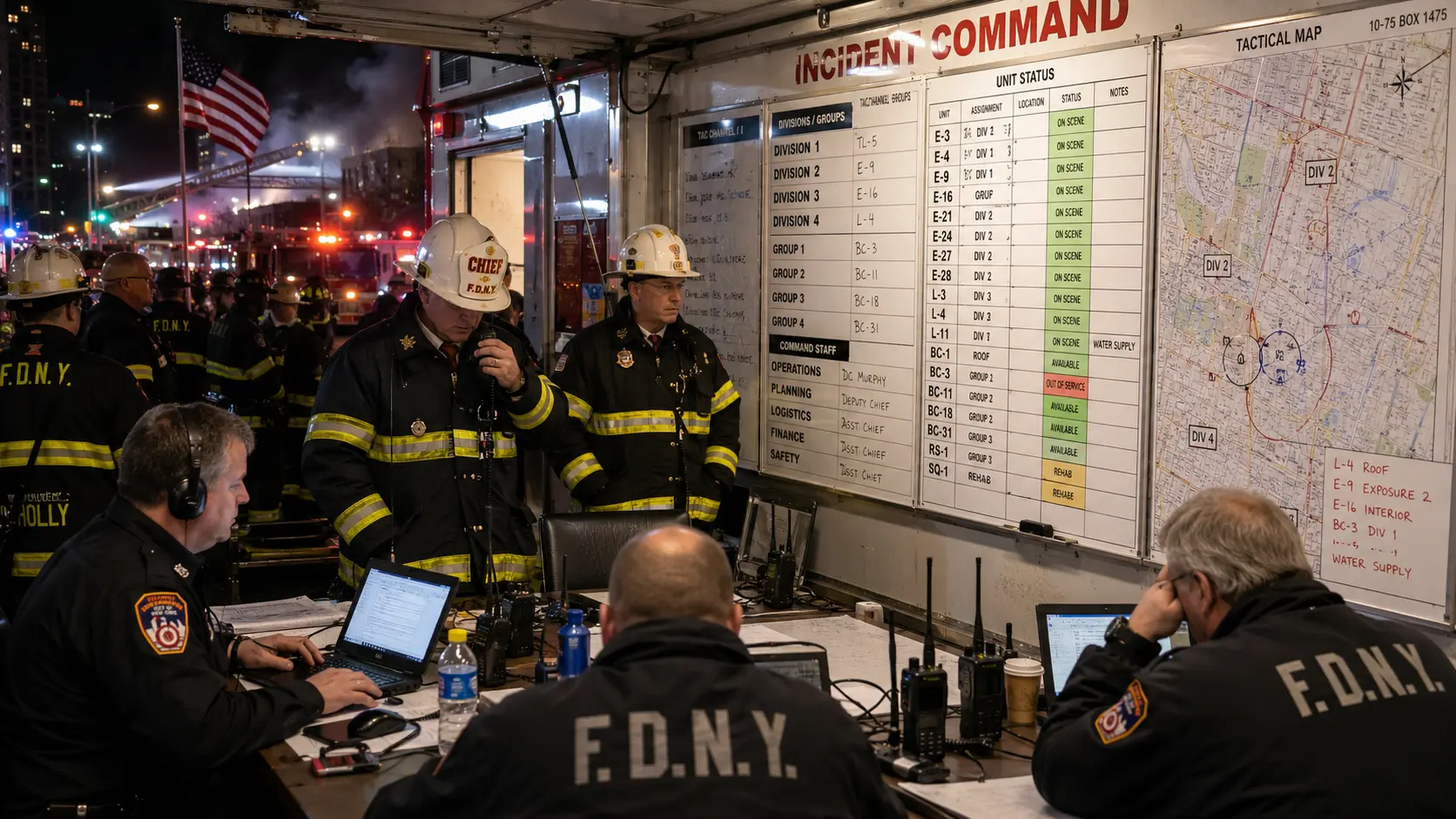
FDNY's personnel accountability system in 2001 was designed around the scale of incidents the department routinely managed — working structure fires in buildings up to about ten stories, with dozens of companies in operation at most. The system used passport tags (name tags from each member's SCBA facepiece), collected at the entry control point, to track who had entered the hot zone. At a normal working fire, this was manageable.
At the World Trade Center, the accountability system faced a scenario it had not been designed for: hundreds of members from dozens of companies operating across two massive towers simultaneously, with no single unified command post that had visibility into the complete operational picture. Companies self-dispatched to the incident when they heard radio traffic. Members from off-duty companies arrived and joined operations informally. The formal accountability system lost track of the complete operational picture in the early stages.
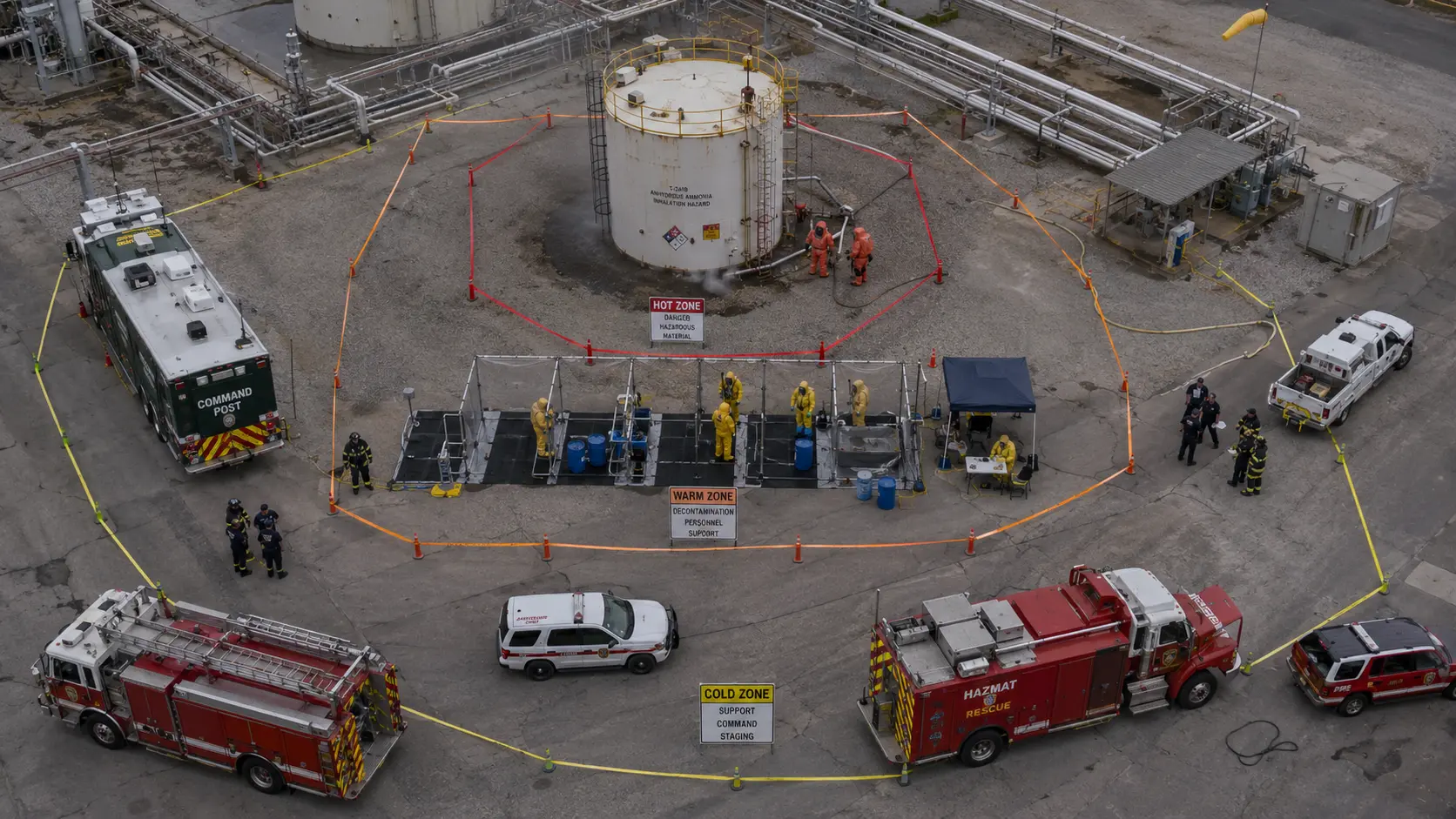
The post-9/11 accountability reforms included: stricter entry control procedures requiring passport collection at a formally established and staffed entry control point before any member enters the hot zone, formalized company check-in and check-out procedures at the incident command post, electronic accountability systems that supplement the passport system with real-time radio tracking, and formal ICS structure requirements that create a dedicated accountability officer position at any incident above a defined size threshold.
Command Structure Breakdown
ICS — the Incident Command System — existed in 2001 and FDNY used it. The issue at the World Trade Center was not the absence of ICS but its application under conditions that exceeded any previous FDNY experience: two simultaneous major incidents, multi-agency response with incompatible communication systems, casualty numbers that immediately began affecting the command structure itself, and a physical scale that made unified command from a single location impractical.
Multiple command posts were established. Operational coordination between them was inconsistent. The NYPD and FDNY were operating in the same geographic area on incompatible radio systems with no established unified command structure for simultaneous large-scale operations. The FDNY command structure at the towers was significantly disrupted by the loss of senior command officers — including Chief of Department Peter Ganci, First Deputy Commissioner William Feehan, and Special Operations Command Chief Ray Downey — in the collapses.
Post-9/11 reforms included: mandatory unified command protocols for any incident involving multiple agencies, pre-established communications interoperability procedures for FDNY and NYPD that allow both departments to monitor each other's critical channels, formal ICS training requirements for all officers, and large-scale tabletop and functional exercises that test the command structure under mass-casualty conditions before those conditions are encountered in reality.
Collapse Zone Protocols
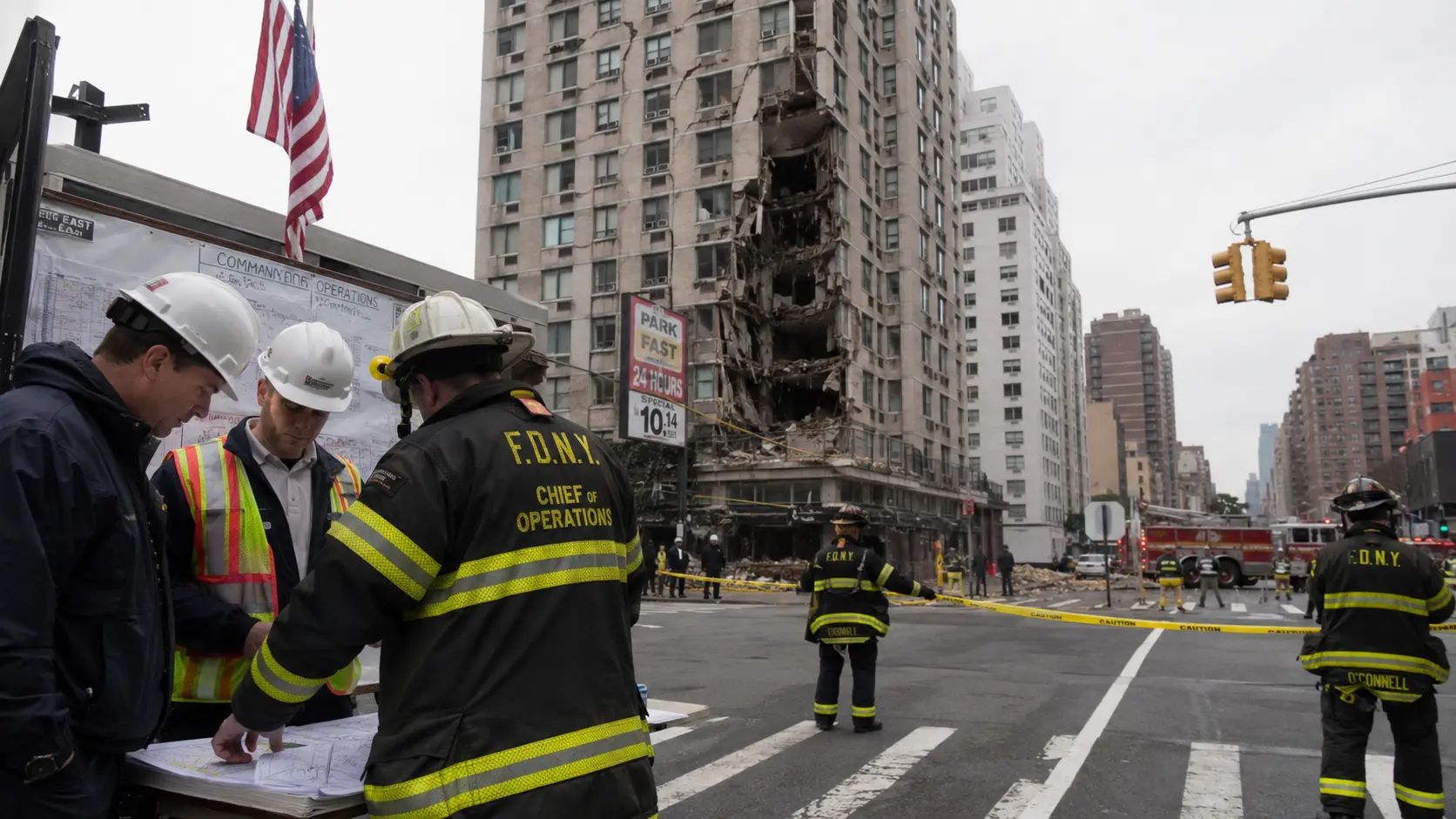
The collapses of the World Trade Center towers demonstrated that large modern steel-frame buildings could fail catastrophically and without extended warning periods that would allow complete evacuation. The investigation documented the timeline: the South Tower collapsed 56 minutes after aircraft impact, the North Tower at 102 minutes. During those intervals, FDNY was conducting operations on the assumption — reasonable given everything previously known about steel-frame building collapse timelines — that the buildings would remain standing long enough for rescue operations to continue.
Post-9/11, FDNY's collapse risk assessment protocols were significantly revised. For any high-rise or large-structure incident involving fire damage, structural damage, or unknown load conditions, a structural engineer consultation is now part of the command team decision-making process before offensive interior operations are committed to. The collapse zone radius around any structurally compromised tall building is calculated more conservatively, accounting for the potential of progressive collapse — the kind of catastrophic top-down failure that the WTC towers exhibited.
The Specific Reforms That Followed
The formal recommendations from the 9/11 investigation reports — NIST's report on the WTC collapses, the McKinsey management study commissioned by the City of New York, and FDNY's internal after-action review — produced specific reforms:
- Radio system replacement: The entire FDNY radio system was replaced at a cost exceeding $1.4 billion. The new system uses a digital infrastructure with building repeater compatibility and trunked radio channels that allow simultaneous communication across the department without the channel congestion and coverage gaps of the analog system.
- MAYDAY protocol formalization: Mandatory MAYDAY training is now incorporated into officer certification programs and is regularly tested in live-fire training scenarios. Dedicated radio channel protocols for MAYDAY transmissions are established and maintained across the department.
- ICS implementation requirements: Formal ICS is now required at all FDNY incidents above a threshold size, with documented command organization and sector assignments that the incident commander must maintain throughout the incident.
- USAR team expansion: FDNY's urban search and rescue capability was significantly expanded, and the department's FEMA USAR Task Force was formalized and expanded to meet federal certification requirements for deployment outside New York City.
- Interagency communications: Protocols for FDNY-NYPD-OEM unified command and communications interoperability were formally established and regularly exercised.
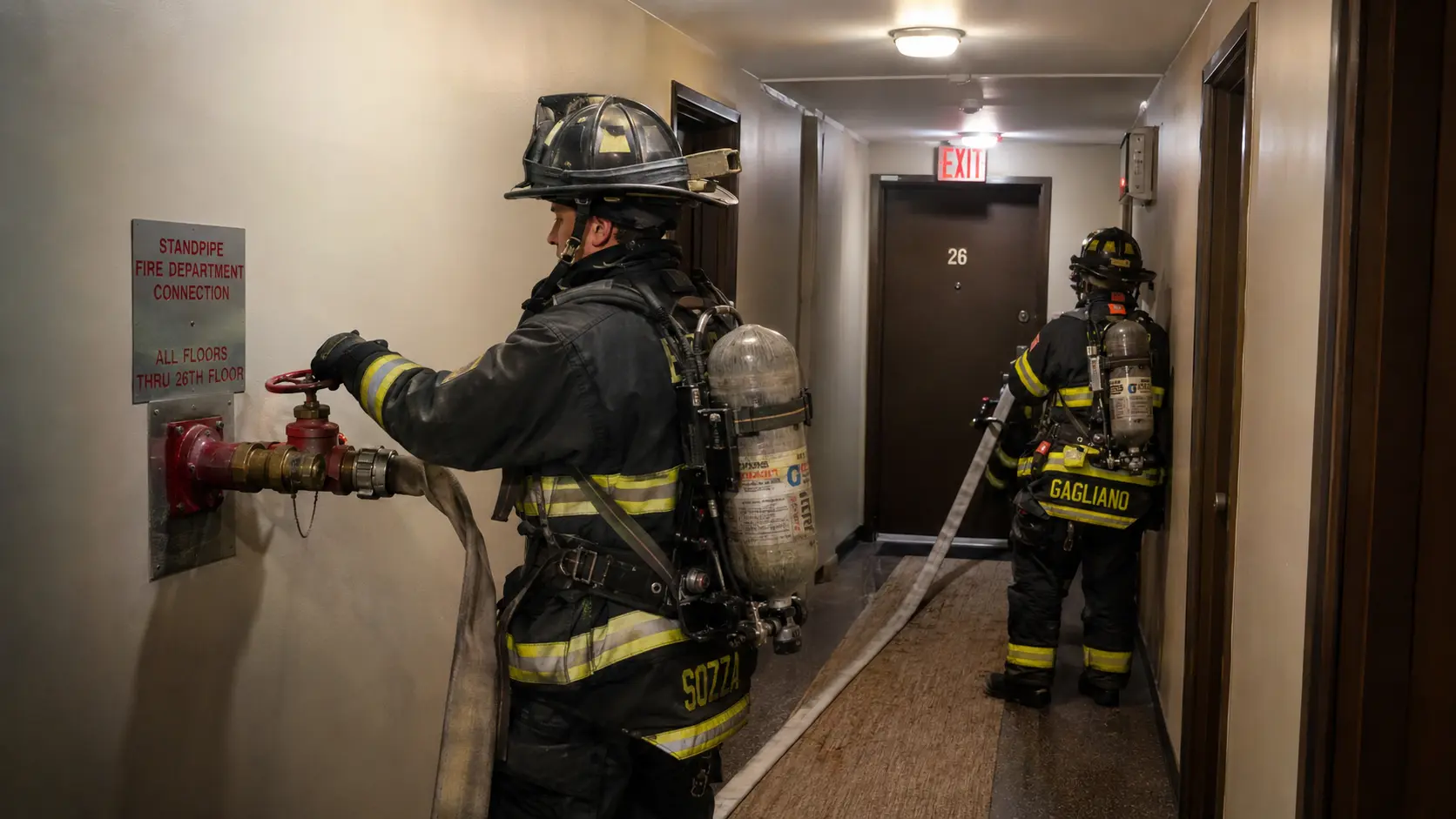
- High-rise training requirements: High-rise fire operations, including collapse zone management, standpipe operations, elevator protocols, and evacuation coordination, became mandatory training elements for all FDNY officers.
How 9/11 Changed Firefighting Nationally
The NIST investigation of the World Trade Center collapses produced recommendations that addressed not just FDNY operations but building codes, occupant egress systems, firefighter radio communications requirements, and high-rise fire operations protocols nationally. Several of these recommendations became the basis for code changes that apply to every high-rise building constructed after the investigation.
The national fire service adopted post-9/11 lessons through NFPA standards revisions, IAFF training programs, and the development of the National Fire Operations Reporting System (NFORS) that allows departments to share incident data. Radio interoperability — the ability for fire departments from different jurisdictions to communicate on compatible systems — became a national priority funded through the Department of Homeland Security, with specific grant programs supporting radio system upgrades for fire departments that could not fund them independently.
The accountability and MAYDAY reforms that FDNY implemented became model protocols adopted or adapted by departments across the country. The recognition that accountability at scale requires different systems than accountability at normal-incident scale, and that MAYDAY training must be treated as a mission-critical skill rather than a pro forma curriculum item, spread through the fire service in the years following 9/11 through training programs, conference presentations, and NIOSH fatality investigation reports that explicitly referenced the WTC lessons in cases involving accountability or MAYDAY failures.
The human cost of September 11 was not converted into protocol changes through any mechanistic process. It was converted by the people who survived it, who investigated it, and who committed to ensuring that the specific failures that made it worse — the radio that did not transmit, the MAYDAY that was not called, the accountability system that lost track — would not be permitted to fail the same way again.

Comments 0
No comments yet. Be the first to share your thoughts!
Leave a Comment