FDNY High-Rise Firefighting: Inside the Tactics, Challenges, and Strategies of New York's Bravest
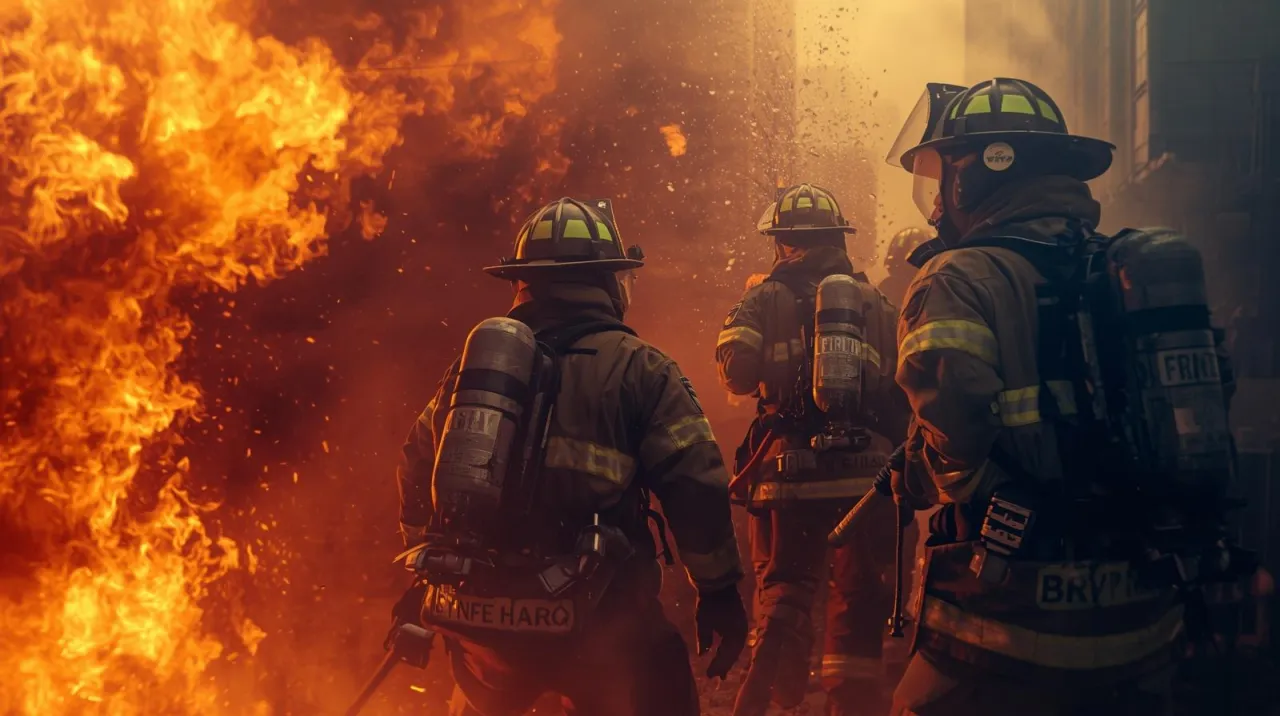
New York City is one of the most vertical environments in the world. With more than 6,000 high-rise buildings, FDNY faces challenges unlike any other fire department. High-rise firefighting requires advanced training, strict procedures, specialized equipment, and coordination at a level few agencies ever experience. Because of this, FDNY has become the global standard for high-rise operations.
This article explores how FDNY approaches high-rise firefighting—from initial size-up and stairwell selection to standpipe operations, search procedures, ventilation challenges, and large-scale incident management. Whether you're a firefighter, instructor, or someone fascinated by FDNY's legendary reputation, this guide provides a deep look into what makes their tactics so effective.
Why High-Rise Fires Are So Dangerous
High-rise buildings create extreme complexity during emergencies. Firefighters may have to climb dozens of floors with gear, face unpredictable smoke movement, and operate in an environment where evacuation is slow and often impossible without assistance. Key challenges include:
- Stairwell congestion during evacuation and fire attack
- Wind-driven fires intensified by broken windows or exterior openings
- Standpipe dependency for all hose operations above the first few floors
- Endless fuel sources from modern furniture and office contents
- Delayed access due to vertical travel time
FDNY trains relentlessly for these scenarios because mistakes in high-rise environments can escalate rapidly.
FDNY’s High-Rise Operational Philosophy
High-rise firefighting prioritizes three core principles:
- Control the building – elevators, stairwells, ventilation systems, fire pumps
- Control the occupants – evacuation, shelter-in-place, protected areas
- Control the fire – coordinated attack, water supply, ventilation
FDNY emphasizes that firefighting inside skyscrapers is not simply “interior attack on the 20th floor”—it is an entire system that must be stabilized.
Arrival and Size-Up
The first-arriving officer establishes command and gathers information from building security, fire control panels, witnesses, and 911 callers. The officer immediately wants to know:
- What floor is the fire on?
- Is the fire room, hallway, or multiple units?
- Are occupants evacuating or sheltered?
- Are elevators safe to use to designated staging floors?
- What type of construction and fire protection systems are present?
FDNY crews often use elevators but never to the fire floor—only to two or three floors below, ensuring a safe launching point for operations.
The Firefloor and the Floor Above
In FDNY high-rise strategy, these two floors determine all decisions:
- The fire floor dictates attack strategy
- The floor above is typically where victims are trapped
FDNY often assigns a dedicated search team for the floor above because heat and smoke naturally rise, threatening occupants who may not even know a fire exists.
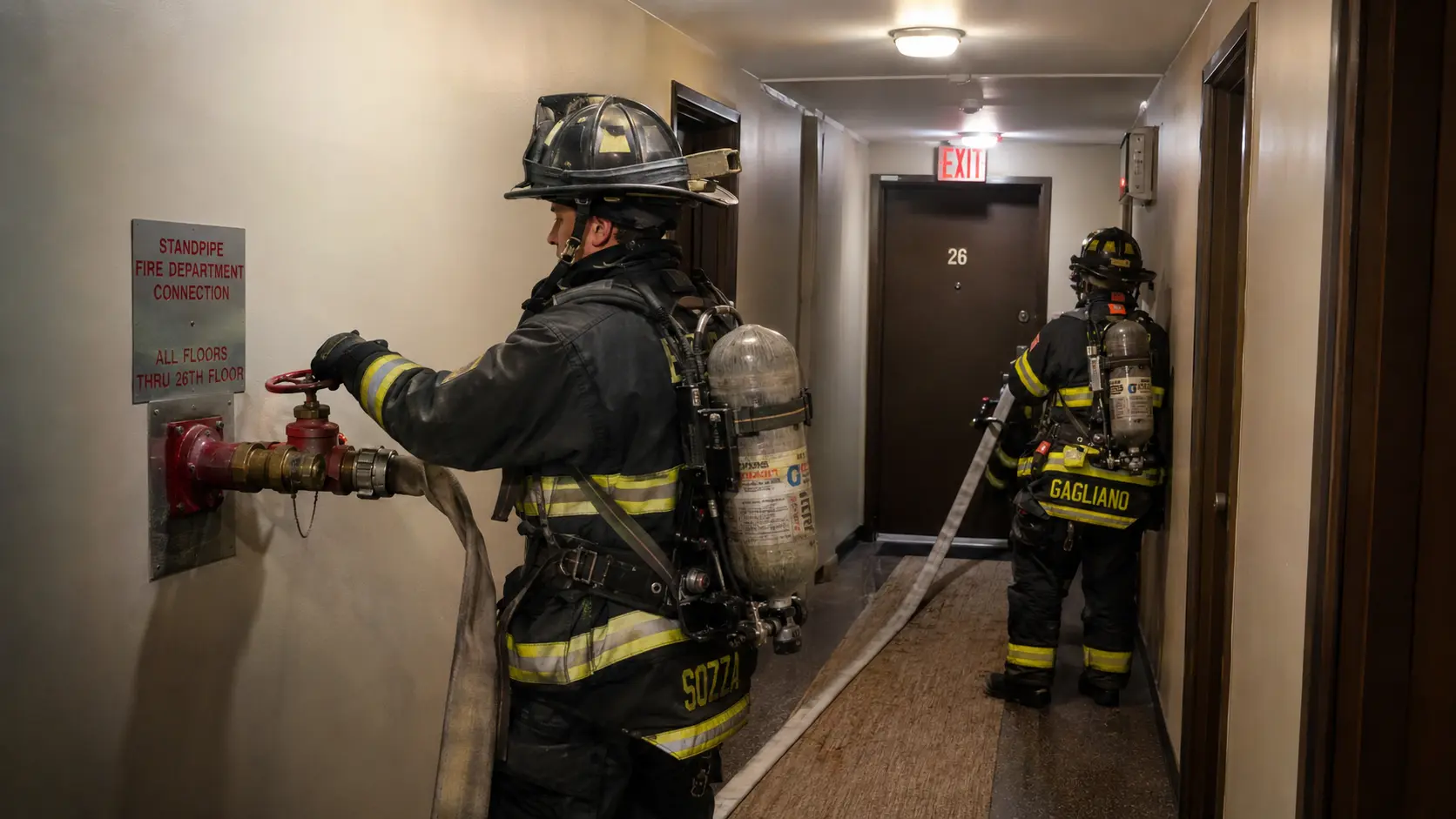
Standpipe Operations: The Lifeline of FDNY
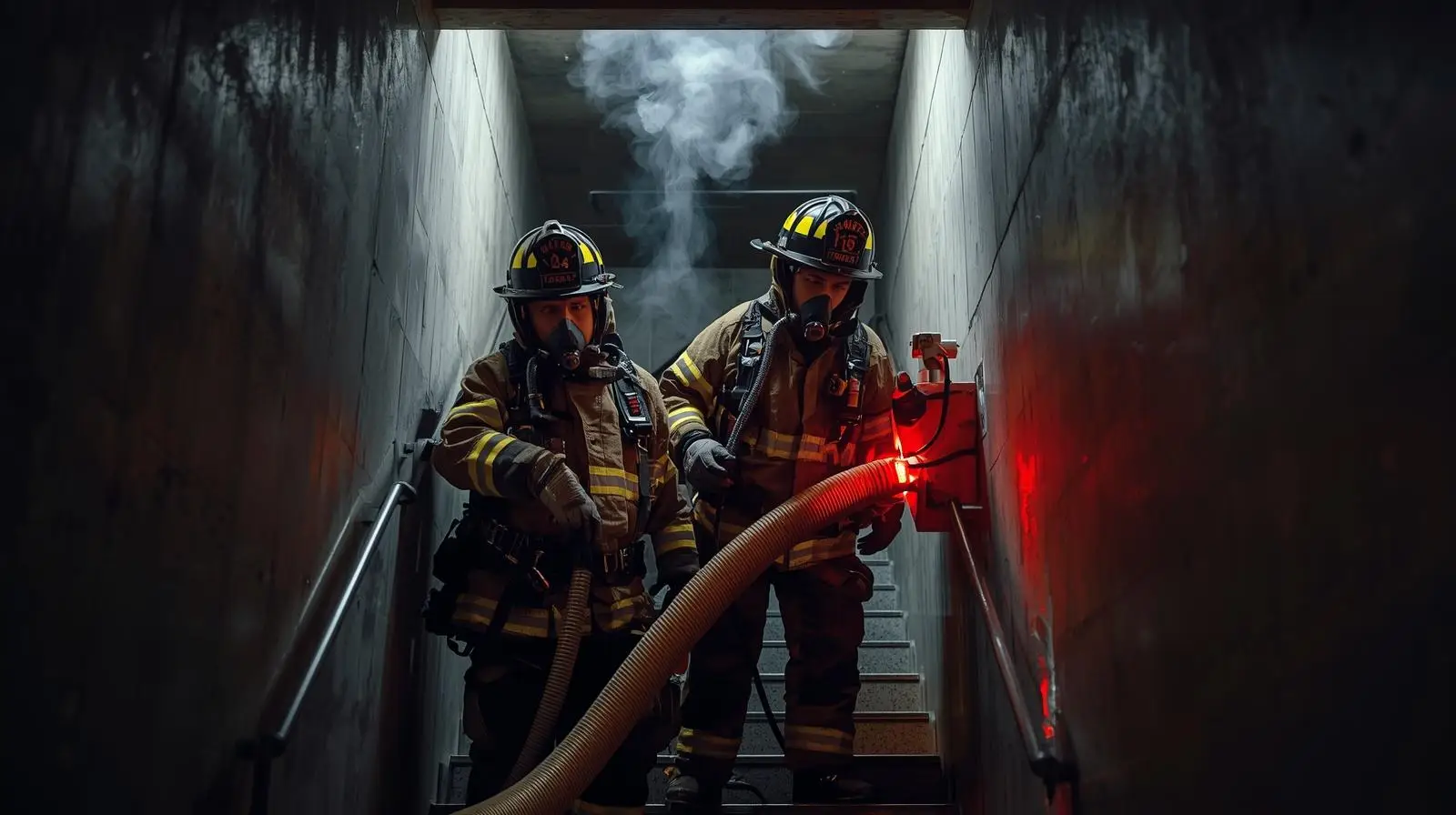
At high-rise fires, firefighters rely on the building's standpipe system for water supply. FDNY mandates members carry:
- High-rise hose (lightweight, low-friction)
- Nozzles specifically selected for standpipe pressure
- Inline pressure gauges
- Door chocks and forcible-entry tools
Engine companies stretch from the standpipe outlet on the floor below the fire, then advance upward, ensuring hose management and communication are tight and controlled.
Search and Rescue Challenges
Visibility in high-rises can deteriorate quickly due to pressurized smoke movement. FDNY teaches firefighters to:
- Search in pairs and maintain contact at all times
- Identify refuge areas for trapped occupants
- Control doors to limit fire spread and smoke travel
- Use thermal imaging cameras to navigate hallways
Victim removal is physically demanding because even a single stairwell evacuation can take several minutes per floor.
Wind-Driven Fires: FDNY’s Most Dangerous Scenario
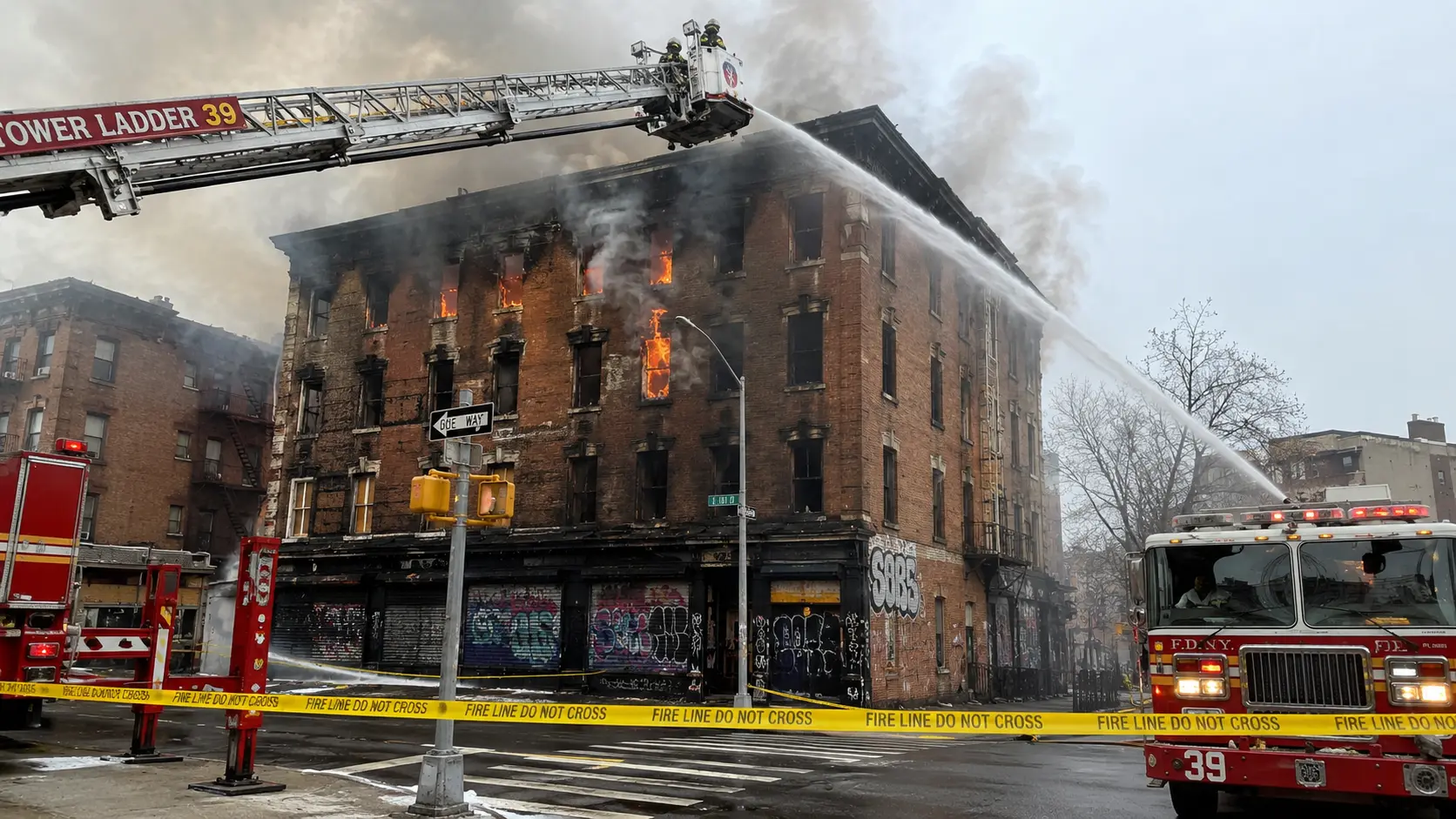
New York City’s high-rises are notorious for wind-driven fires. When a window fails due to heat, wind can push flames horizontally with incredible force. These fires have killed firefighters even when they operated behind closed apartment doors.
FDNY Countermeasures Include:
- Wind-control devices (WCDs) placed over exterior window openings
- Door control to slow fire growth
- Coordinated ventilation with exterior teams
- Nozzle positioning to battle the horizontal flame push
Wind-driven fire behavior is so dangerous that FDNY helped develop national research and standards for combating it.
Ventilation and Smoke Movement
Ventilation in high-rises is complex, influenced by stack effect, building height, HVAC systems, and temperature gradients. FDNY members are trained to recognize:
- Positive stack effect – smoke rises rapidly in winter conditions
- Negative stack effect – smoke may be pulled downward in summer
- Mechanical ventilation systems that may spread smoke between floors
This makes ventilation a carefully coordinated operation, not a simple task of opening windows.
Logistics: Elevators, Tools, and Staging
FDNY designates a resource floor for staging tools, spare cylinders, EMS gear, and relief crews. Firefighters often carry 60–80 pounds of equipment while climbing floors, so staging and rotation are essential for maintaining operational strength.
Members also use fire service mode in elevators, but only under strict rules—elevators involved in fire shaft conditions are immediately removed from service.
Incident Command Structure
Large high-rise fires activate a massive, multi-company FDNY response. Command roles may include:
- Operations Section Chief
- Branch directors
- Stairwell control officers
- Search and evacuation groups
- Lobby control
Coordination is key. FDNY’s incident command structure is designed to scale quickly for major fires involving multiple floors or hundreds of occupants.
Case Studies from FDNY History
FDNY’s reputation is built on decades of challenging incidents including:
- The 23rd Street Fire (1966)
- Hotel Vandam explosion (1979)
- The Deutsche Bank Building fire (2007)
- Countless wind-driven apartment fires
Each tragedy shaped the tactics used today, solidifying FDNY as a world leader in high-rise operations.
Conclusion
FDNY’s approach to high-rise firefighting is the result of unmatched experience, rigorous training, and the unique vertical challenges of New York City. Their tactics—standpipe operations, stairwell management, wind-driven fire control, and large-scale incident command—have become national and international standards.
High-rise firefighting remains one of the most demanding and dangerous environments for firefighters. But through preparation, discipline, and constant learning, FDNY continues to set the benchmark for departments worldwide.
Comments 0
No comments yet. Be the first to share your thoughts!
Leave a Comment