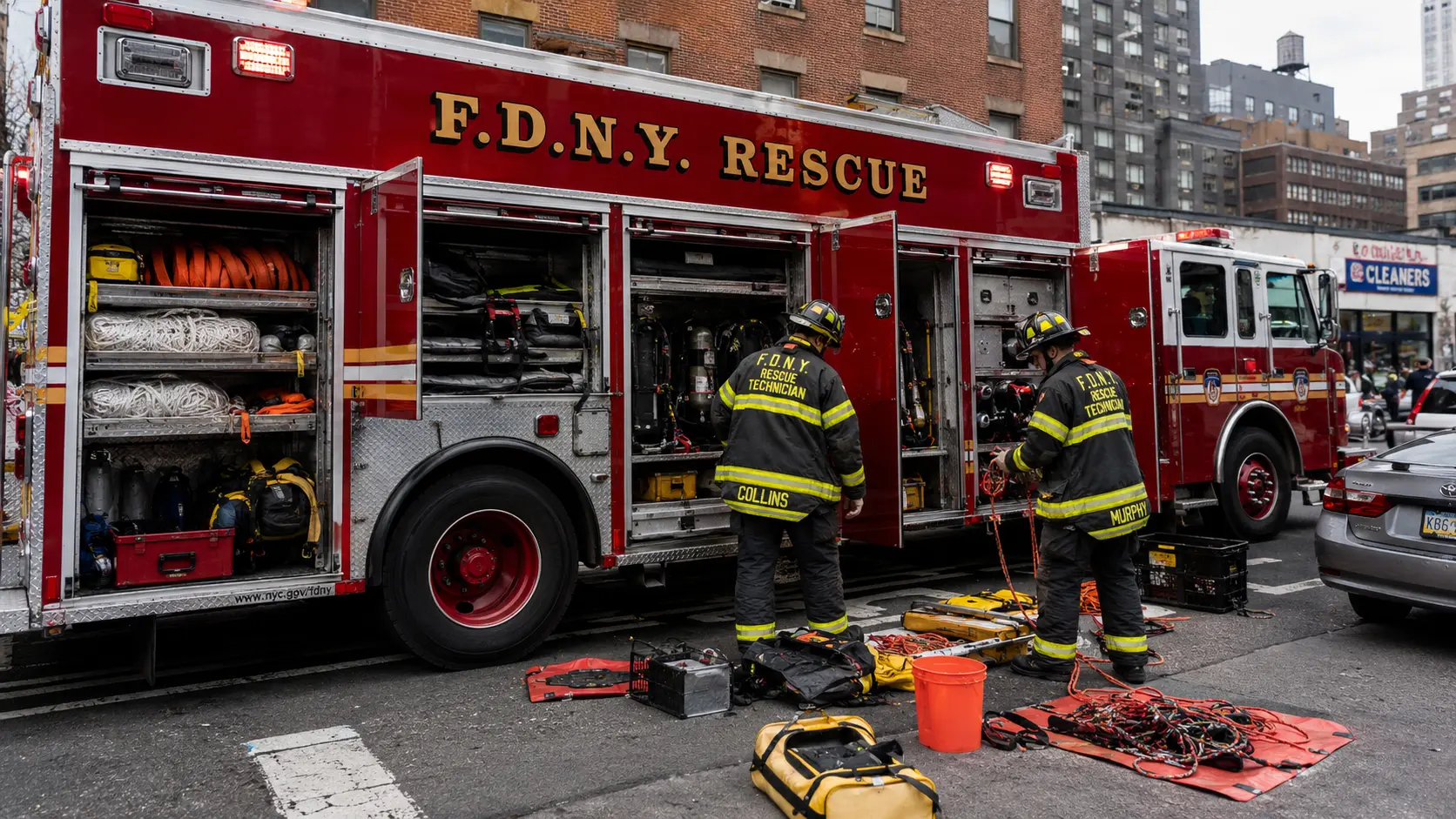
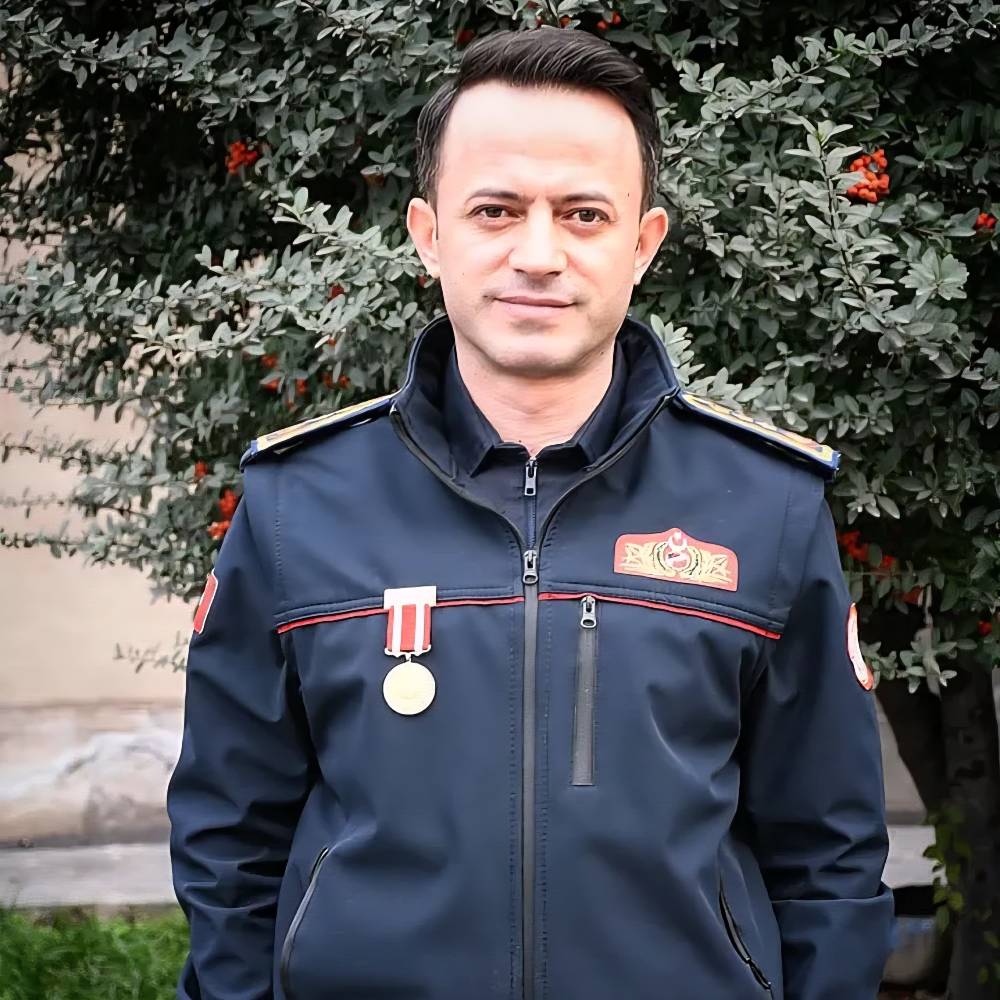
When an FDNY engine or ladder company encounters something outside their training and equipment — a worker trapped in a collapsed trench, a person in the water under a pier, a vehicle accident with a victim pinned in a position that requires hydraulic tools plus medical intervention, a building collapse with multiple victims under rubble — they call for SOC. Special Operations Command is not a separate fire department. It is the specialized tier of FDNY that handles the incidents where standard training and standard equipment are insufficient.
SOC comprises five distinct unit types: the Rescue Companies, the Squad Companies, Hazmat Battalion 1, the Marine Division, and the Technical Rescue units. Each has a specific capability profile, specific dispatch triggers, and specific training requirements that make them, in some cases, the most demanding assignments in the department.
In this article:
The Rescue Companies: What They Do and Why They Are Different
FDNY operates five Rescue Companies — Rescue 1 through Rescue 5, one assigned to each borough — as citywide special operations units that respond to technical rescue incidents beyond the capability of engine and ladder companies. They are not geographically assigned in the same way as regular companies: their dispatch is based on incident type, not on proximity to the incident box.
What Rescue Companies respond to:
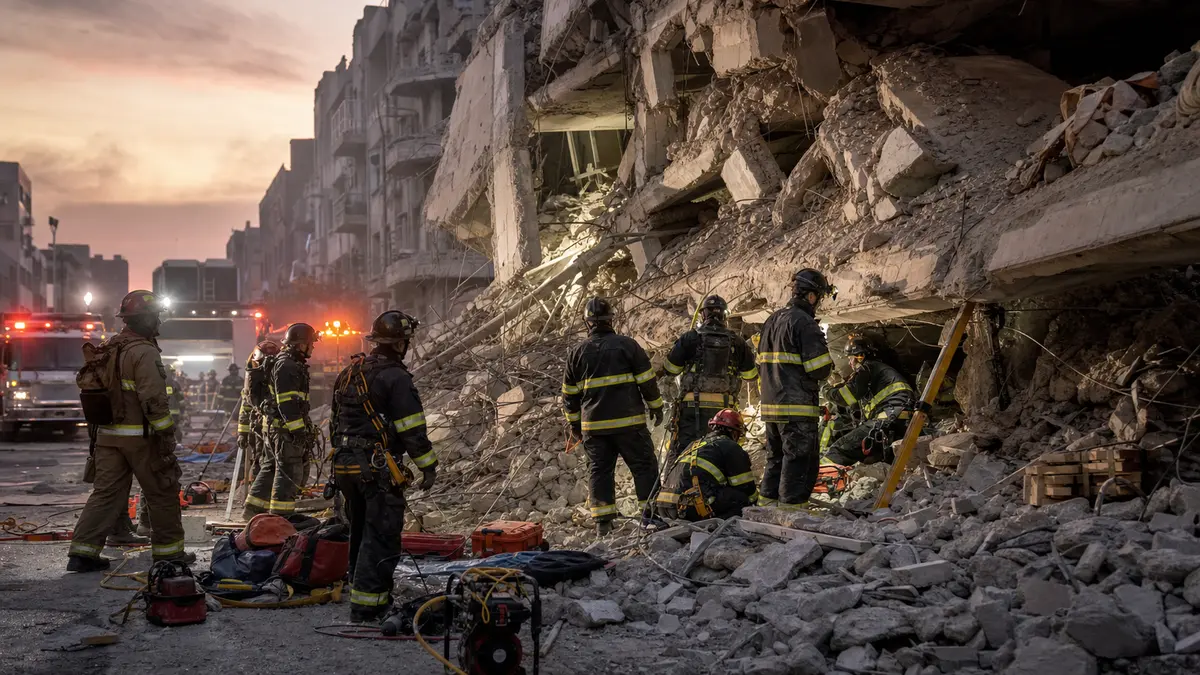
- Structural collapse — partial or full building collapse with victims buried or trapped in void spaces
- Confined space — permit-required confined space rescues in manholes, tanks, and utility vaults
- Trench rescue — cave-in incidents requiring shoring and soil management
- High-angle rescue — rope rescue from heights not accessible by aerial apparatus
- Elevator emergencies — victims trapped in elevator cars between floors or in machine rooms
- Water rescue — surface and subaqueous rescue when standard resources are inadequate
- Vehicle and machinery extrication — complex entrapments requiring capabilities beyond standard hydraulic tools
- All working structural fires — Rescue Companies respond to all 10-75 transmittals in their borough as an additional resource, conducting searches and performing technical operations alongside the assigned engine and ladder companies
The last point distinguishes FDNY Rescue Companies from rescue companies in many other departments: they respond to all working fires, not only to technical rescue incidents. At a 10-75, the Rescue Company performs the most difficult search and rescue work — the spaces other companies cannot reach, the victims who cannot self-rescue, the structural elements that require specialized assessment. They are not held in reserve for complex incidents; they are part of the standard working fire response.
Squad Companies: The Hazmat-Capable Engine Companies
FDNY's four Squad Companies — Squad 1, 41, 61, and 288 — are a hybrid unit type that combines a standard engine company function (they pump water and advance hoselines) with a hazardous materials response capability that regular engine companies do not have. Squad Companies carry Level A and Level B protective suits, chemical detection equipment, decontamination equipment, and hazmat reference materials, and their members receive hazmat technician-level training in addition to standard firefighter certification.
At a hazmat incident, the Squad Companies provide the initial responder capability: they are the first units to conduct atmospheric monitoring, initiate decontamination corridors, and perform initial product identification. Hazmat Battalion 1 provides the command and advanced technical capability; the Squads provide the initial entry and operational manpower.
At a structural fire, Squad Companies function as engine companies with additional search and rescue capability. The combination makes them unusually versatile — a Squad Company assignment covers the hazmat response profile and the structural fire profile with one unit.
Hazmat Battalion 1
Hazmat Battalion 1 is FDNY's primary hazardous materials response command unit — a dedicated battalion chief and staff assignment specifically for hazmat incidents, carrying advanced monitoring equipment, chemical reference libraries, and command infrastructure for managing large-scale hazmat events. Hazmat 1 is dispatched on confirmed or suspected hazardous materials releases, chemical facility fires, and any incident where product identity is unknown and atmospheric hazards are suspected.
The Hazmat Battalion does not perform entry operations — that is the Squad Companies' function. The Hazmat Battalion provides the technical expertise and command structure: product identification, hazard assessment, protective action decisions, decontamination protocols, and coordination with CHEMTREC, state environmental agencies, and chemical manufacturer emergency response teams. At a major chemical release event, the Hazmat Battalion officer is the incident commander's primary technical advisor on hazardous materials decisions.
FDNY's Hazmat 1 unit is one of the most experienced hazmat response organizations in the country by volume, given New York City's density of chemical storage, transportation, and manufacturing. The unit responds to hazmat incidents that range from household chemical reactions in apartment buildings to major industrial releases that require multi-agency coordination and shelter-in-place decisions affecting thousands of residents.
Marine Division
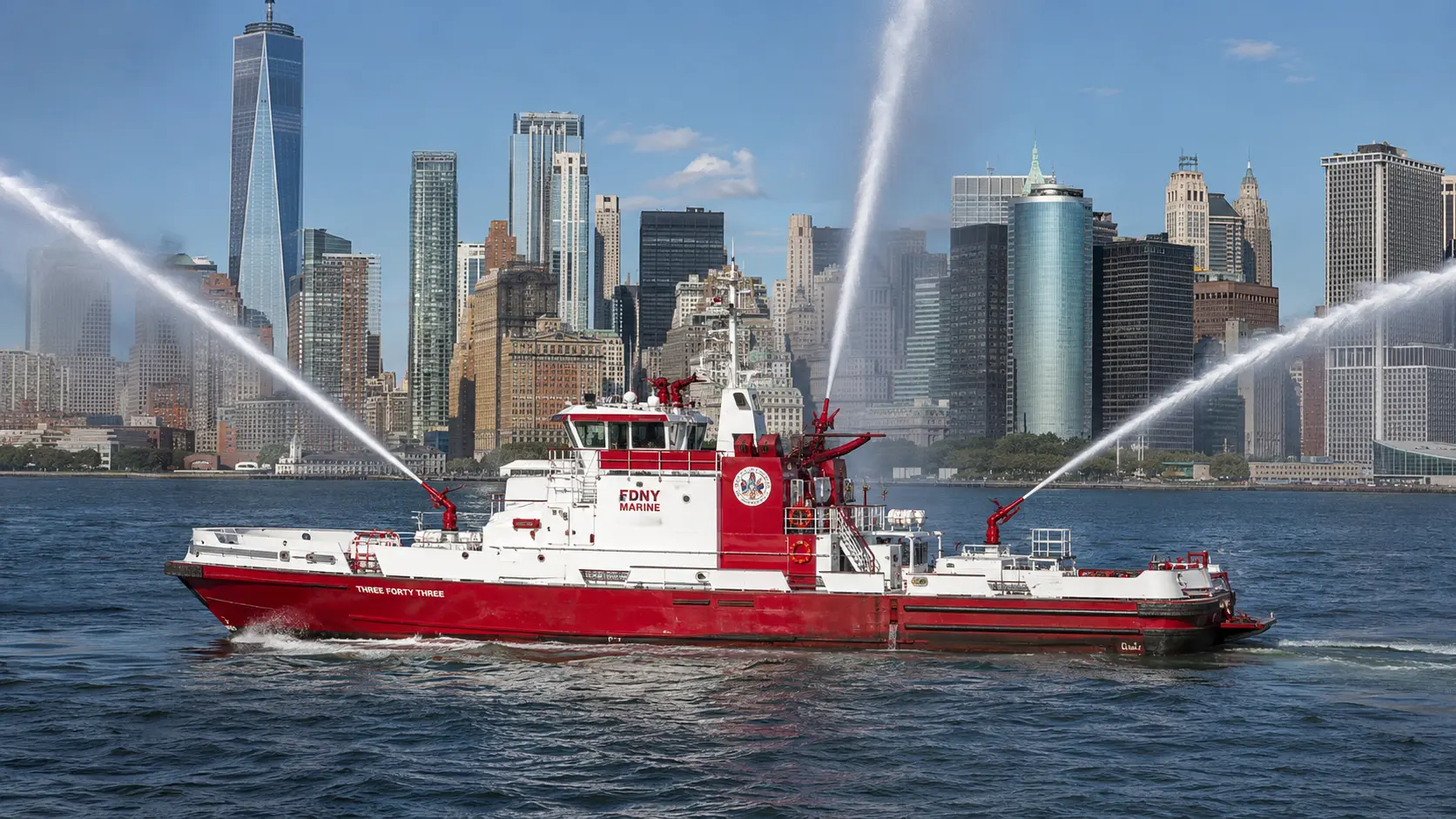
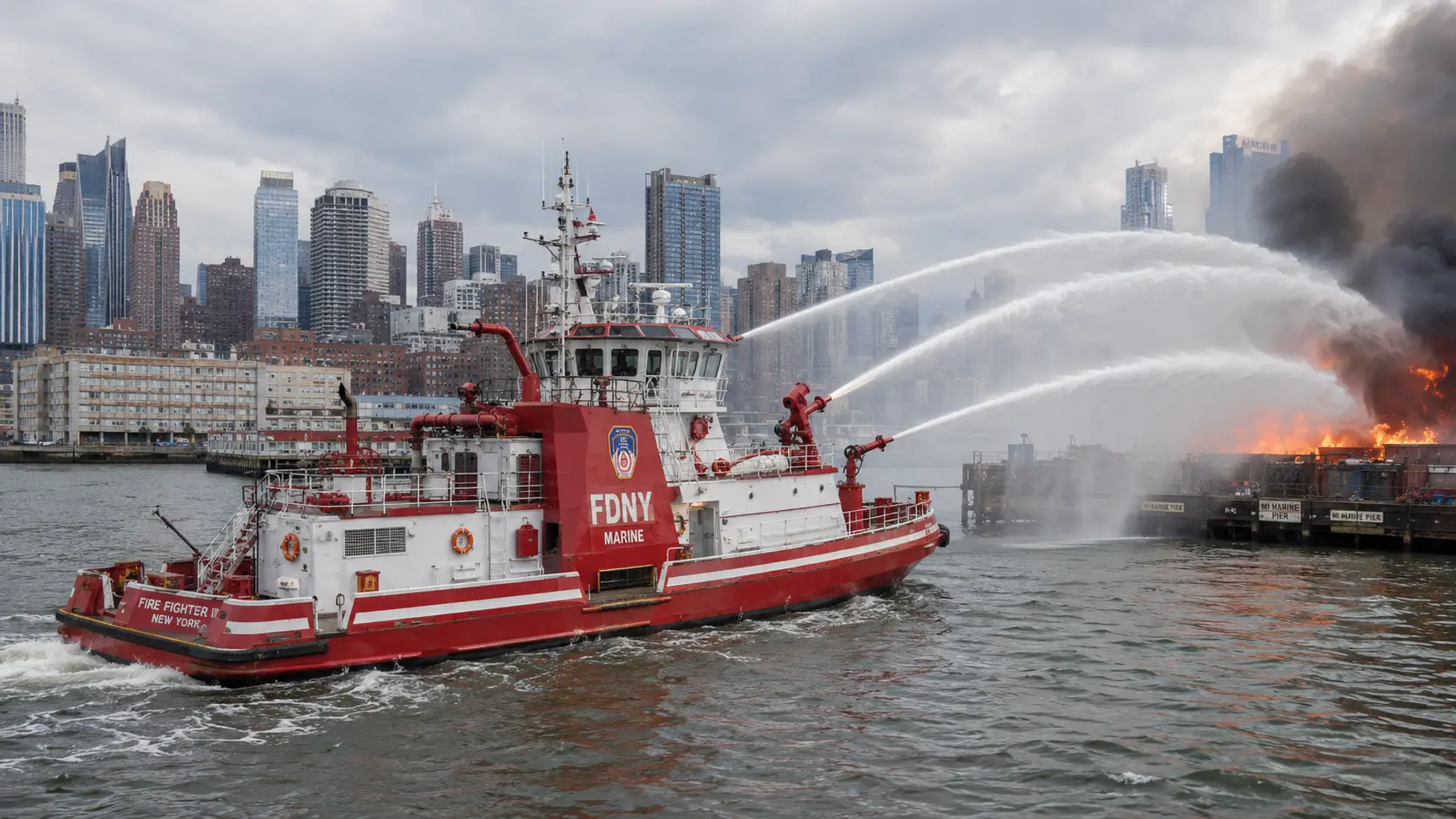
The Marine Division operates seven vessels: several large fireboats and smaller marine rescue and support craft covering New York Harbor, the East River, the Hudson River, and the surrounding tidal waterways. FDNY's waterfront coverage area includes hundreds of piers, terminals, and waterfront structures that are accessible from the water side and often impossible to approach from the land side with conventional fire apparatus.
Fireboats serve three primary functions. Water supply: the largest FDNY fireboats can pump volumes of water that no land apparatus can match, drawing directly from the harbor without the limitations of the land-based hydrant system. At a major pier fire or waterfront structure fire, a fireboat on the water side provides suppression capability from a direction that land apparatus cannot reach. Vessel fire suppression: burning vessels in port or at anchorage are accessible to fireboats while remaining inaccessible to land apparatus. Water rescue: the Marine Division responds to all drowning and vessel emergency calls in their coverage area.
Technical Rescue Units
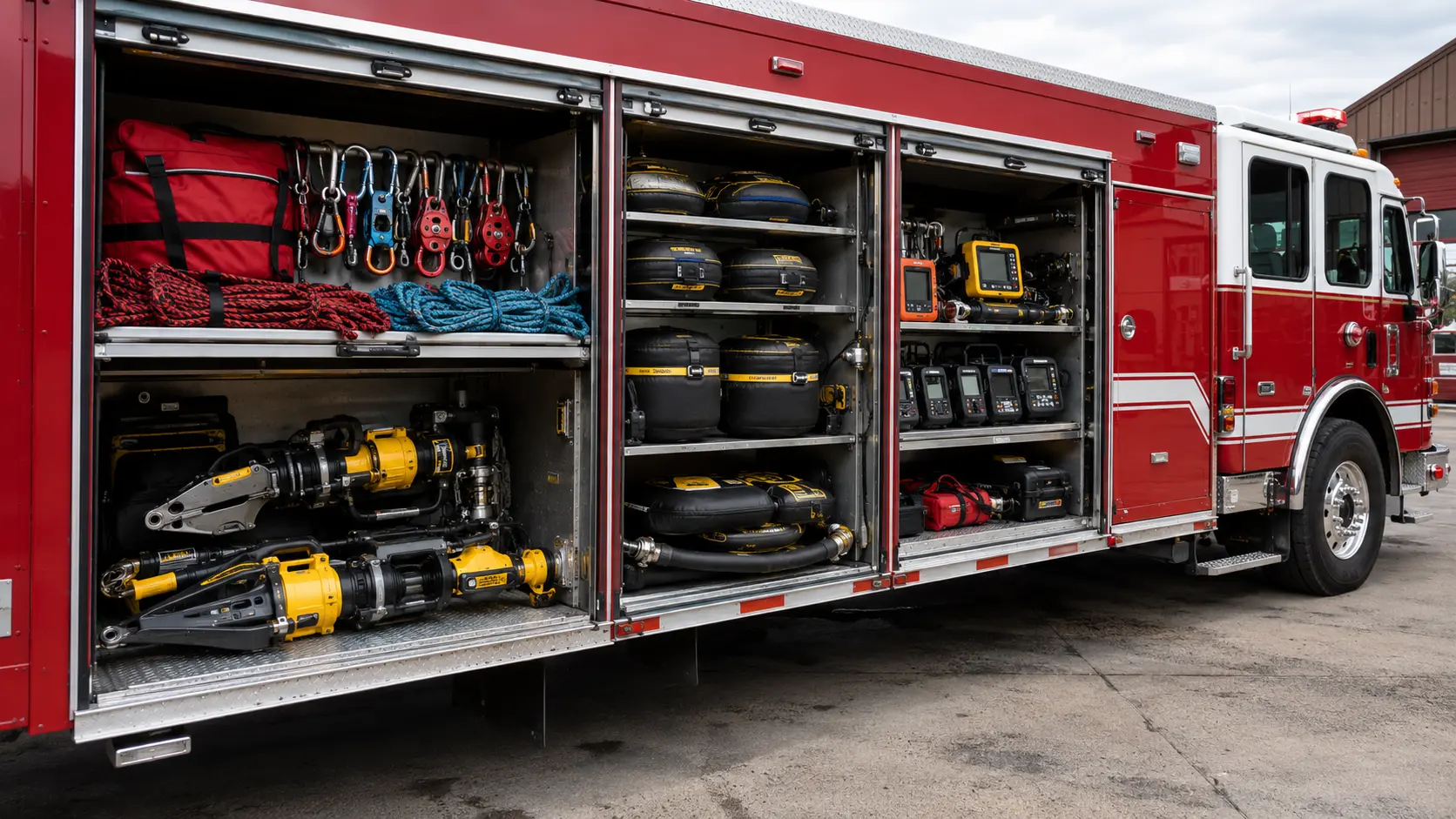
Beyond the five Rescue Companies, FDNY maintains specialized technical rescue capability in several dedicated units. The Tactical Support Unit (TSU) carries additional decontamination equipment, mass casualty supplies, and specialized apparatus that supports large-scale operations. The Collapse Rescue Unit carries specific urban search and rescue (USAR) equipment — search cameras, listening devices, void space sensors — that augments the Rescue Company's capability at major structural collapse incidents.
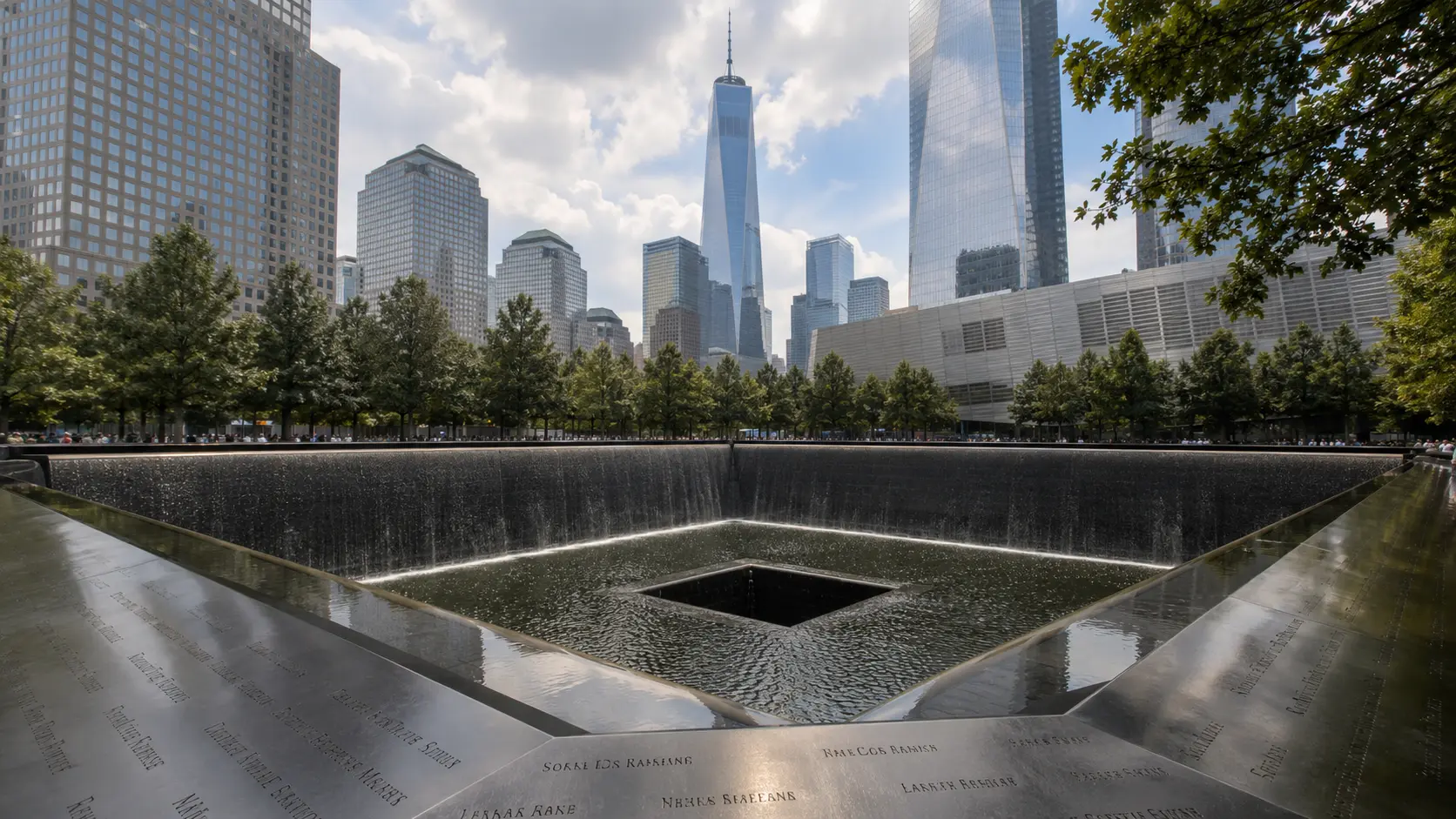
FDNY's USAR capability was formally evaluated and certified as a federal FEMA USAR Task Force — one of the 28 federally sponsored urban search and rescue teams that can be deployed to major disasters anywhere in the United States. FDNY's task force has deployed to disaster responses including the 1995 Oklahoma City bombing, the 9/11 attacks, and multiple hurricane and earthquake responses.
How SOC Units Are Dispatched
SOC units are dispatched by the borough dispatcher or citywide dispatcher based on incident type coding rather than geographic box assignment. The dispatch triggers include:
- Structural collapse reported: Rescue Company for the borough, Tactical Support Unit, Hazmat if chemical involvement suspected
- Confirmed working fire (10-75): Rescue Company for the borough responds automatically on all working fires
- Water emergency / drowning: Marine Division vessel for the waterway involved, Rescue Company if confined space or complex rescue
- Hazardous materials release: Squad Company covering the area, Hazmat Battalion 1, Rescue Company on standby
- Confined space: Rescue Company, Squad Company, Hazmat if atmospheric hazard suspected
SOC units cross borough lines routinely — their coverage is citywide, not limited to the borough they are quartered in. Rescue 1 in Manhattan responds to incidents in any borough when it is the closest available Rescue Company. The citywide dispatcher manages SOC unit availability and assignment across all boroughs simultaneously.
Training and Selection for Rescue Companies
Assignment to a Rescue Company is a competitive process in FDNY that typically requires a minimum of 5 years of operational experience, demonstrated performance in several ladder company assignments, and completion of a prescribed list of specialized training courses before a member is eligible to apply. The training list includes confined space rescue, rope rescue (both low-angle and high-angle), structural collapse, hazardous materials technician, swift water rescue, and dive rescue certification.
The application process includes a skills evaluation and oral interview. Selection rates are low — openings in Rescue Companies are few, candidates are many, and the evaluation is designed to identify the members who have both the technical capability and the judgment for operations that regularly put them in situations where the standard protocols require adaptation.
Once assigned to a Rescue Company, training is continuous. Technical rescue disciplines evolve, equipment changes, and the Rescue Companies' mandate to respond to all working fires means their structural fire operations knowledge must remain current alongside their technical rescue skills. The combination produces some of the most broadly trained firefighters in the department.
SOC at a Major Incident
At a major incident — a building collapse, a large chemical release, a vessel fire in the harbor — SOC operates within the incident command structure rather than running a parallel operation. The Rescue Company officers report to the operations section chief. Hazmat Battalion 1 functions as the hazmat group supervisor within the ICS structure. Marine Division vessels report to a marine operations group.
The integration is important because the tendency at complex incidents is for specialized units to operate semi-independently based on their specific technical knowledge. In practice, a Rescue Company conducting a void space search at a collapse needs to know what the structural assessment team has determined about collapse risk in that area. The hazmat monitoring team needs to communicate product concentrations to the rescue team before they enter. Marine units coordinating with land-based operations need to use the same communications channels and command reporting structure.
Major incidents that involve multiple SOC unit types — a collapse with hazmat involvement, for example — require a SOC branch within the ICS structure: a dedicated branch director managing all SOC resources under the incident commander, coordinating between the Rescue, Hazmat, and support units so that the information each unit has is shared with the others who need it.

Comments 0
No comments yet. Be the first to share your thoughts!
Leave a Comment