Correction — October 15, 2026: Removed the unsupported universal low-air pressure; maintenance test points must match the actual apparatus instructions.
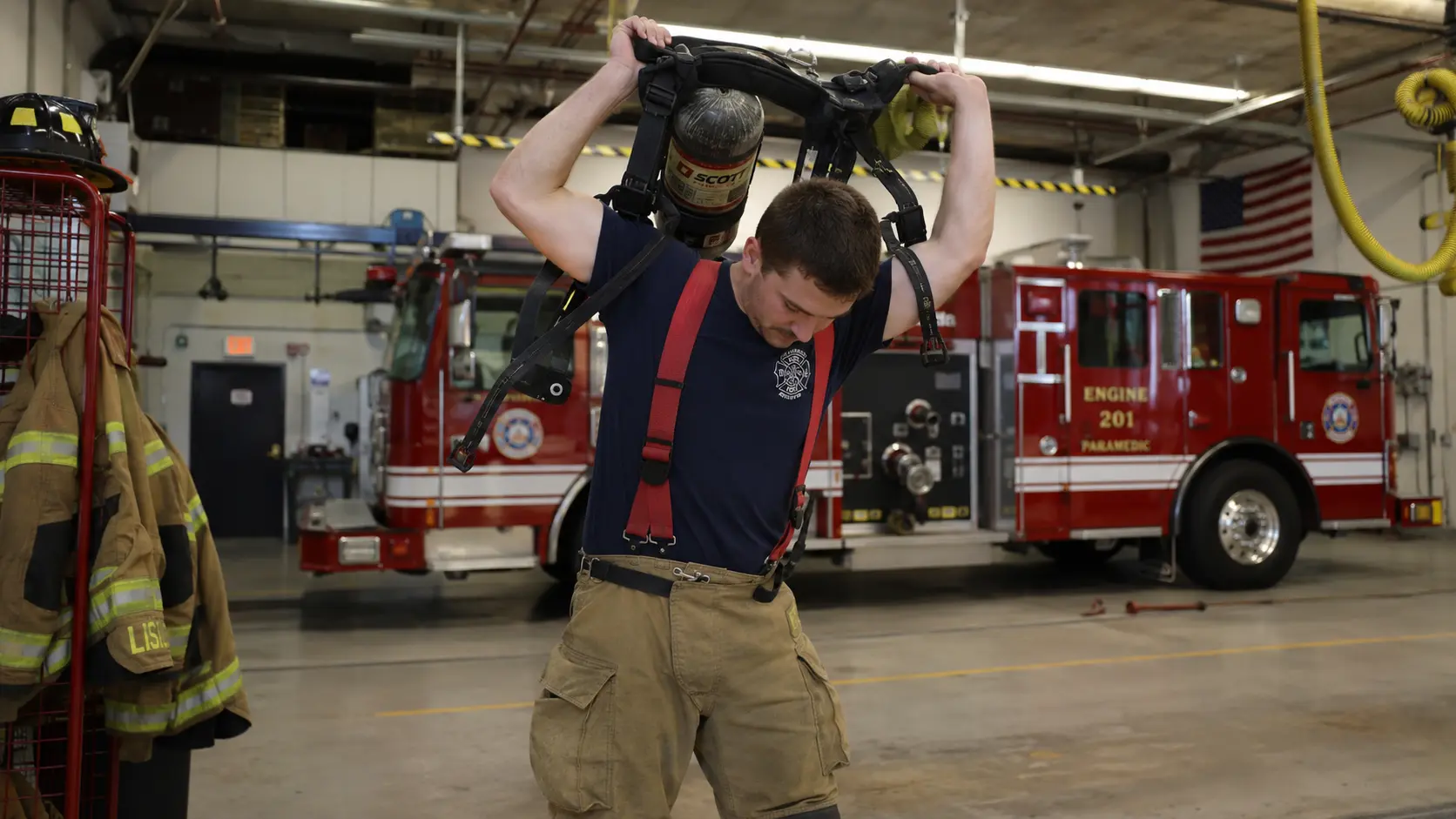
Most fire departments assign SCBA maintenance to their equipment officer, a committee of trained members, or an outside service contractor. At a department with 30 units in service, this is manageable. FDNY has over 11,000 SCBA units distributed across 218 firehouses in five boroughs, plus specialized apparatus, training facilities, and reserve inventory. The maintenance problem is not scaled up from what smaller departments do — it is a fundamentally different operation that requires a dedicated division with specialized personnel, specialized vehicles, and a maintenance tracking system that accounts for every cylinder, every facepiece, and every regulator in the department's inventory.
The Mask Service Unit is that division. It exists because the SCBA is the equipment failure that kills firefighters, and at FDNY's scale, the probability of a failure occurring in an undetected SCBA unit is too high to manage through the methods that work for smaller departments.
In this article:
What the MSU Does Day-to-Day
The MSU's core functions run on a continuous cycle:
- Scheduled firehouse visits: MSU vehicles visit each firehouse on a regular schedule — typically annually for comprehensive inspection, more frequently for cylinders that require more regular service. At each visit, the MSU team conducts flow testing on every SCBA at that location, inspects facepieces for seal integrity, checks regulator function, verifies cylinder pressure and hydrostatic test date, and replaces any components that do not pass inspection.
- Emergency service: When an FDNY member reports an SCBA issue — a facepiece that does not seal, a regulator that flows improperly, a PASS device that malfunctions — an MSU unit responds to that firehouse to assess and repair or replace the unit outside the normal service cycle.
- Cylinder exchange: Cylinders that have been used in operations are exchanged for freshly filled cylinders through the MSU distribution system. The department does not rely solely on in-house fills for all cylinders — the MSU manages a cylinder pool that provides freshly tested, filled units to operational companies on an exchange basis.
- Facepiece cleaning and sanitation: After any use in a contaminated atmosphere — fire, hazmat, or medical operation — SCBA facepieces require cleaning and sanitization. The MSU provides centralized cleaning capability and maintains inventory of clean, ready-to-use facepieces for exchange.
The Testing and Inspection Cycle
Each SCBA in the FDNY inventory undergoes a standardized inspection cycle. NFPA 1852 — the standard for selection, care, and maintenance of open-circuit SCBA — provides the framework, with FDNY's MSU applying department-specific protocols that may exceed the NFPA minimum.
The inspection sequence for each SCBA unit includes:
- Visual inspection of the cylinder body, valve, and connections for damage, corrosion, or mechanical compromise
- Cylinder pressure verification — every cylinder must be within its rated pressure range or is removed from service for refilling
- Hydrostatic test date verification — cylinders must not be in service past their hydrostatic test expiration (every 5 years for most composite cylinders)
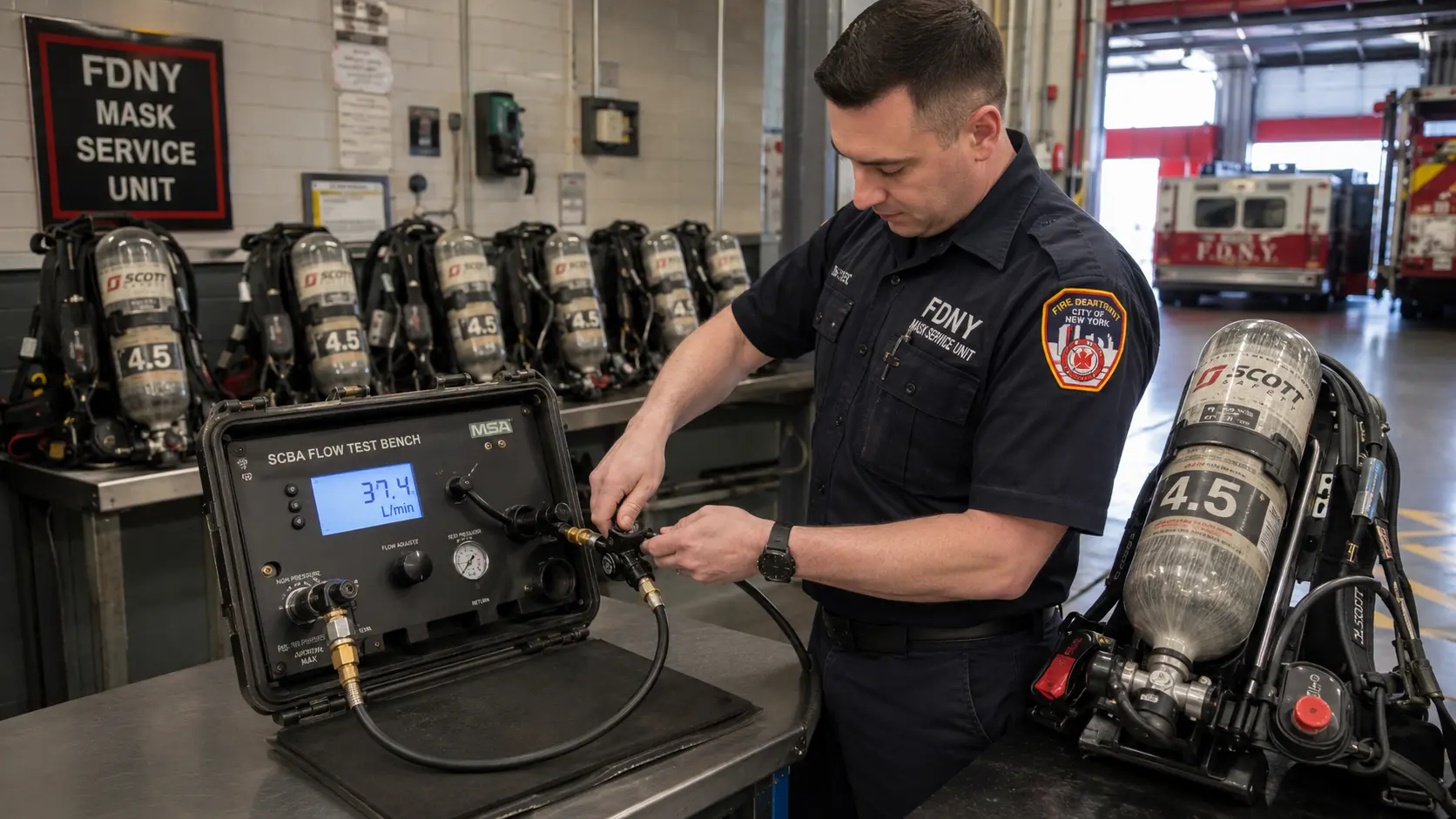
- Regulator flow test — the regulator is connected to a test bench that measures delivered flow rate and verifies that it meets specifications across the cylinder pressure range
- Facepiece seal integrity test — every facepiece is tested for seal integrity using a quantitative fit test machine rather than relying on user-reported fit
- PASS device function test — the PASS device is activated and its alert and alarm functions verified
- Low-pressure alarm test — the alarm is triggered at the appropriate cylinder pressure level and its audibility verified
- Bypass valve function — the bypass valve is operated and its flow verified
Cylinder Management and Hydrostatic Testing
SCBA cylinders have a finite service life defined by both age and hydrostatic test intervals. NFPA 1852 and DOT regulations require composite cylinders (carbon fiber wrapped) to undergo hydrostatic testing every 5 years and to be retired 15 years from the date of manufacture, regardless of condition. The 15-year service life is not a recommendation — it is a hard requirement. A composite cylinder that reaches its 15-year mark is removed from service.
Managing hydrostatic test scheduling and service life tracking for thousands of cylinders — each with its own manufacture date and last test date — requires a database management system that alerts the MSU when cylinders are approaching their test date or retirement date. At FDNY's scale, cylinder retirements and new cylinder procurement happen continuously — the inventory is always in a cycle of retirements at one end and new unit commissioning at the other.
Hydrostatic testing itself is performed by specialized facilities that subject the cylinder to water pressure significantly exceeding its working pressure, verifying that the cylinder wall can withstand the test pressure without permanent deformation or failure. A cylinder that fails its hydrostatic test is destroyed — it is never returned to service. A cylinder that passes is re-stamped with the test date and returned to the pool.
Facepiece Maintenance and Fit Testing Records
The SCBA facepiece is a personal protective device — in FDNY, each member is assigned a specific facepiece sized to their face. The facepiece record includes the member's fit test results (the quantitative fit test that verifies the specific facepiece size produces an adequate seal on that member's face), the facepiece serial number, and its inspection history.
Facepiece fit testing must be redone when a member's facial structure changes significantly — major weight change, facial surgery, or significant scarring that affects the seal area. The MSU maintains records that connect each member to their assigned facepiece and to the test that certified the fit. When a member's facepiece requires replacement (damage, seal degradation, or end of service life), the new facepiece must be the same size or a new fit test must be conducted before the replacement is authorized for operational use.
Mobile Service Vehicles
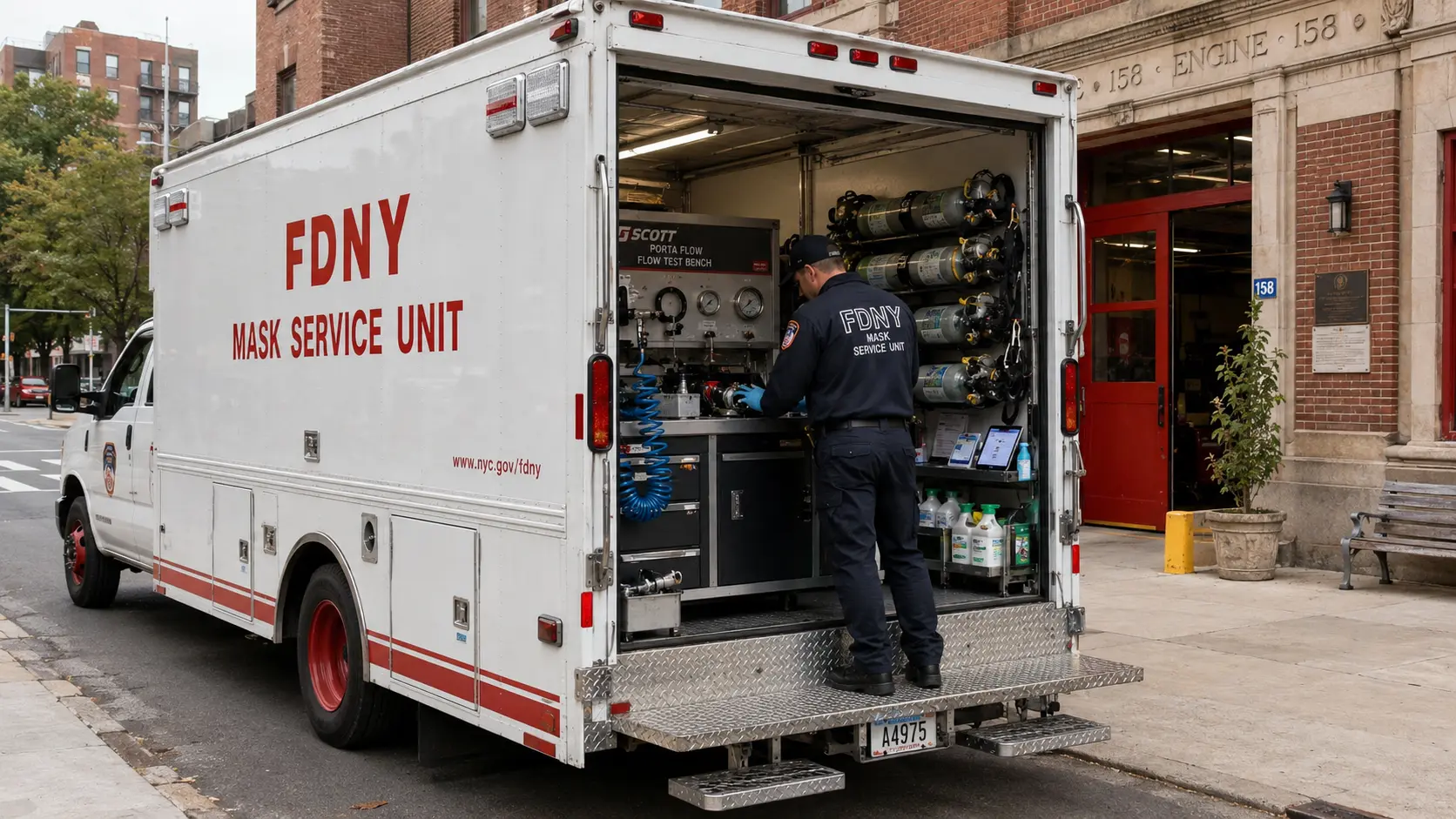
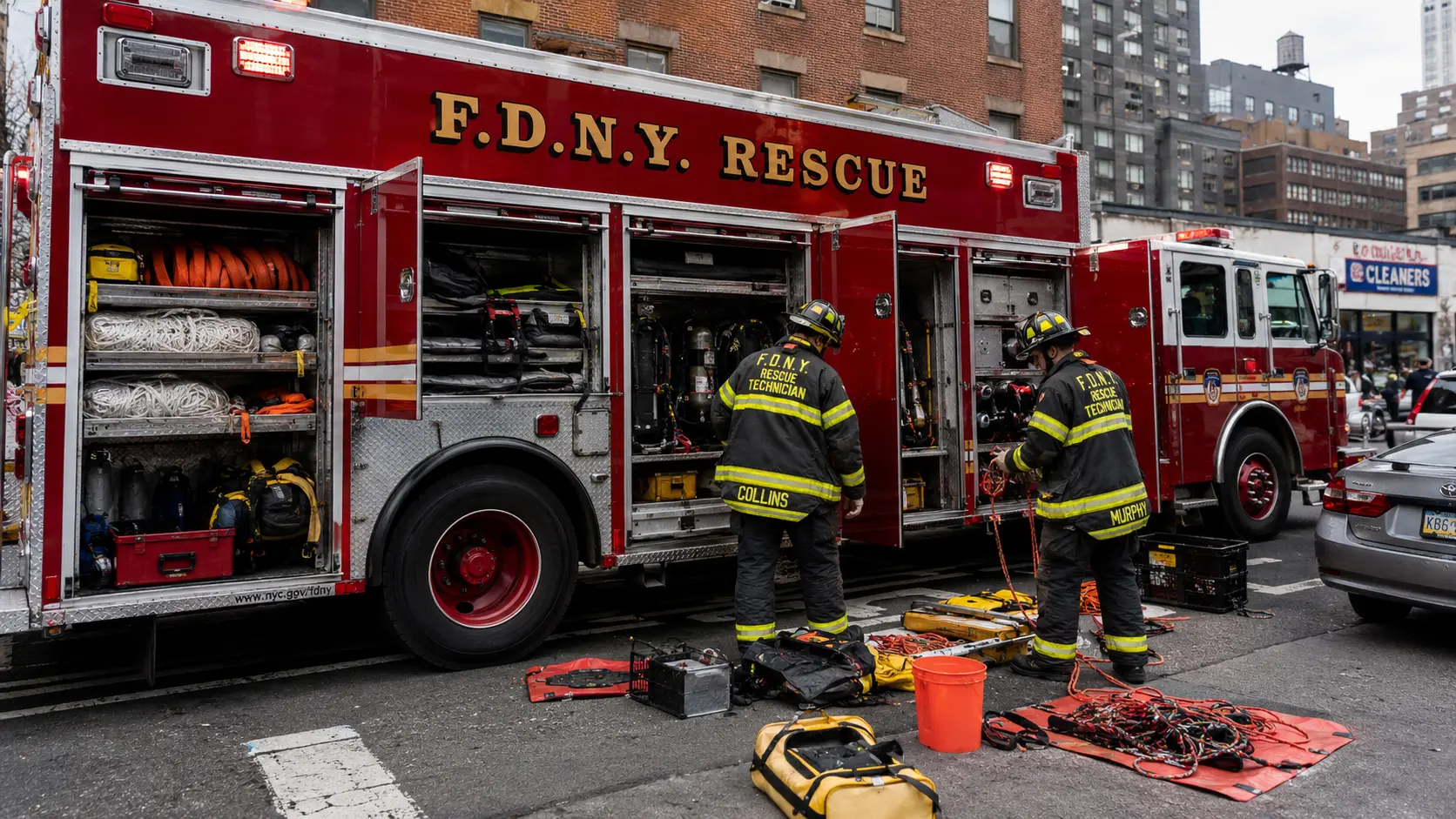
The MSU's operational model depends on mobile service capability — bringing the testing and maintenance function to the firehouse rather than requiring apparatus-based SCBA to be transported to a central shop. The mobile service vehicles are purpose-built or purpose-converted to carry the testing equipment, spare parts, replacement units, and documentation systems needed for field service visits.
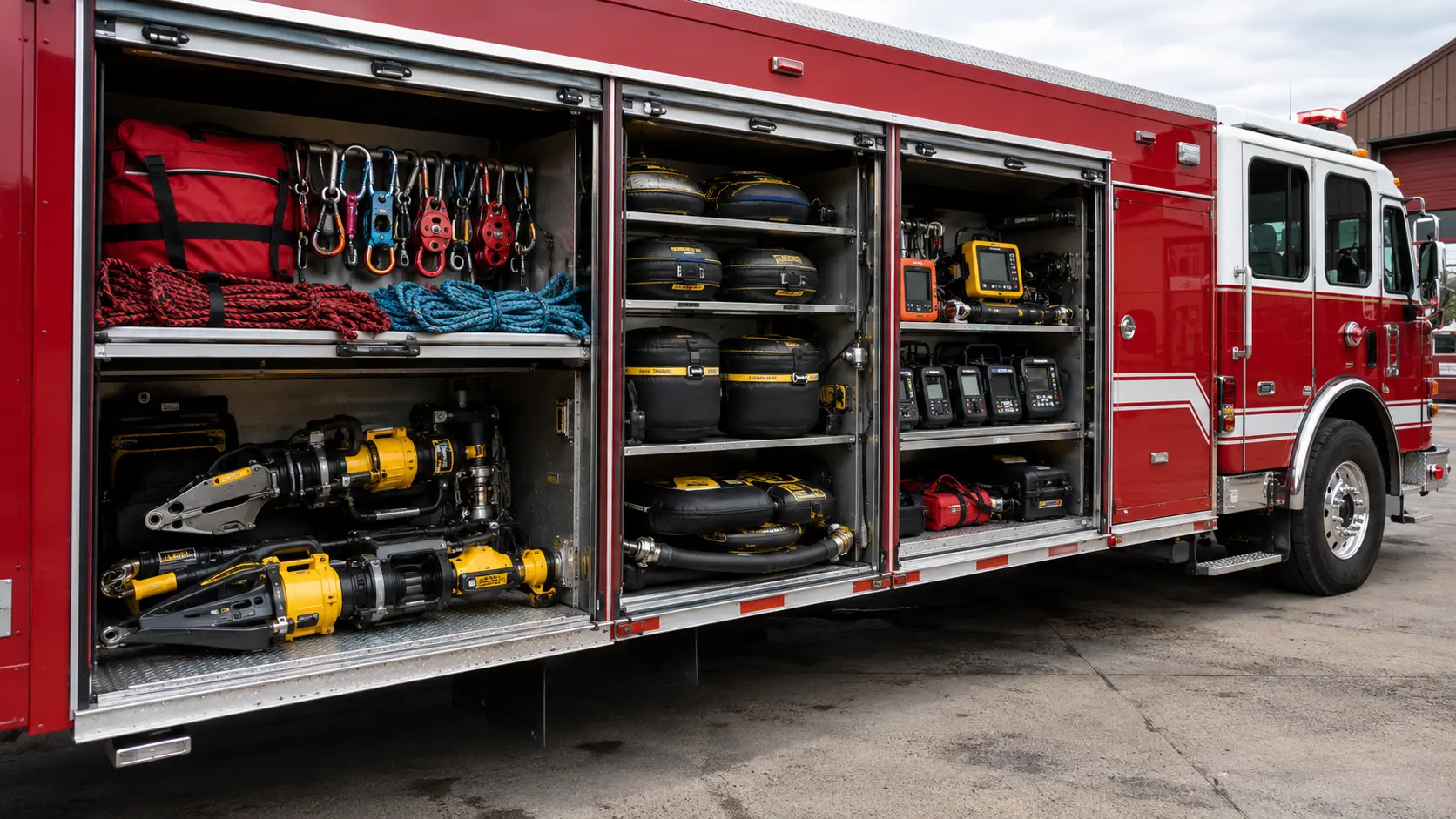
A typical MSU service vehicle carries: a portable SCBA flow test bench, facepiece testing equipment, a supply of cleaned and tested spare facepieces in multiple sizes, spare regulators and components for common repairs, fully charged cylinders for exchange, cleaning and sanitization supplies, and the electronic records system for documenting each unit serviced during the visit.
The mobile model allows the MSU to serve all 218 firehouses without requiring each firehouse to have its own maintenance capability — the economies of scale of centralized specialized expertise, delivered to the point of use. It also allows the MSU to respond to emergency equipment issues within a manageable time frame, since the service vehicle can be dispatched to a firehouse reporting an equipment problem rather than requiring the firehouse to bring the SCBA to a facility.
What Routine Inspections Find
Routine MSU inspections consistently find failure modes that would not be detectable without testing equipment:
- Regulator flow degradation: Regulators that pass visual inspection but deliver below-specification flow on the bench test, typically from internal seal wear that progresses gradually without external indicators.
- Facepiece seal degradation: The silicone facepiece seal material hardens with age and with repeated exposure to fire atmosphere, reducing its compliance and sealing ability. Quantitative fit testing detects seal leakage that the user cannot identify through normal donning.
- PASS device failures: PASS devices that do not alarm at the correct no-motion interval, or whose alarm volume has degraded below audibility standards, are found in a percentage of units at every inspection cycle.
- Cylinder pressure discrepancies: Cylinders that show lower pressure than expected for their time since last fill, indicating either a slow valve leak or a fill that was logged but not completed at full pressure.
- Hydrostatic test date discrepancies: Cylinders that are approaching or have exceeded their hydrostatic test date without having been scheduled for testing — identification that prevents an out-of-test cylinder from remaining in service.
MSU Operations at Major Incidents
At major incidents — large working fires, building collapses, hazmat operations, or any incident that consumes SCBA cylinders faster than apparatus inventory can supply — the MSU deploys mobile service vehicles to the incident staging area to provide on-site cylinder exchange, SCBA repair, and facepiece sanitation.
Without MSU support at a major incident, the limiting factor on crew rotation through the hot zone becomes cylinder availability — used cylinders must be transported back to a fill station and refilled before they can be redeployed. With the MSU on site, clean, filled exchange cylinders are available at the staging area, and used cylinders are collected for service, reducing the rotation cycle time significantly.
The MSU also provides SCBA units for personnel who arrive from other agencies as mutual aid and who do not have compatible equipment. FDNY's SCBA inventory and the MSU's mobile service capability allow the department to equip mutual aid personnel rather than excluding them from operations due to equipment incompatibility — a function that becomes particularly valuable at extended operations drawing resources from across the metropolitan region.
Record Keeping at Scale
Every SCBA unit in the FDNY inventory has a record that travels with it through its service life: manufacture date, cylinder serial number, hydrostatic test dates, service visit history, any repairs performed, facepiece assignment history, and the member records associated with each facepiece. This record system allows the MSU to answer several critical questions at any time: when does each cylinder next require hydrostatic testing, when does each cylinder retire, which member is assigned to which facepiece, and what is the complete maintenance history of any unit that has been involved in an operational failure.
The record system also provides accountability for units removed from service — documentation that a failed unit was removed from the inventory rather than returned to an apparatus without repair, and that the replacement unit was tested and certified before being placed in service. At a department with 11,000 units, the probability that an untracked unit re-enters service without passing inspection is high enough to require systematic documentation to prevent it.


Comments 0
No comments yet. Be the first to share your thoughts!
Leave a Comment