
A tractor-trailer fire is never a routine vehicle fire. By the time flames take hold of a large commercial vehicle, crews may be dealing with heavy fire, thick smoke, diesel fuel, unknown cargo, traffic hazards, and possible exposure risks all at the same time.
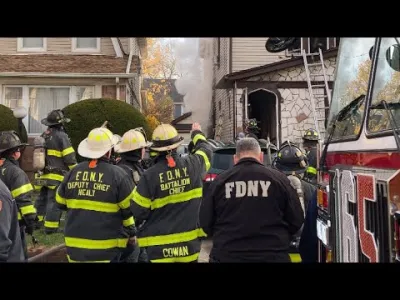
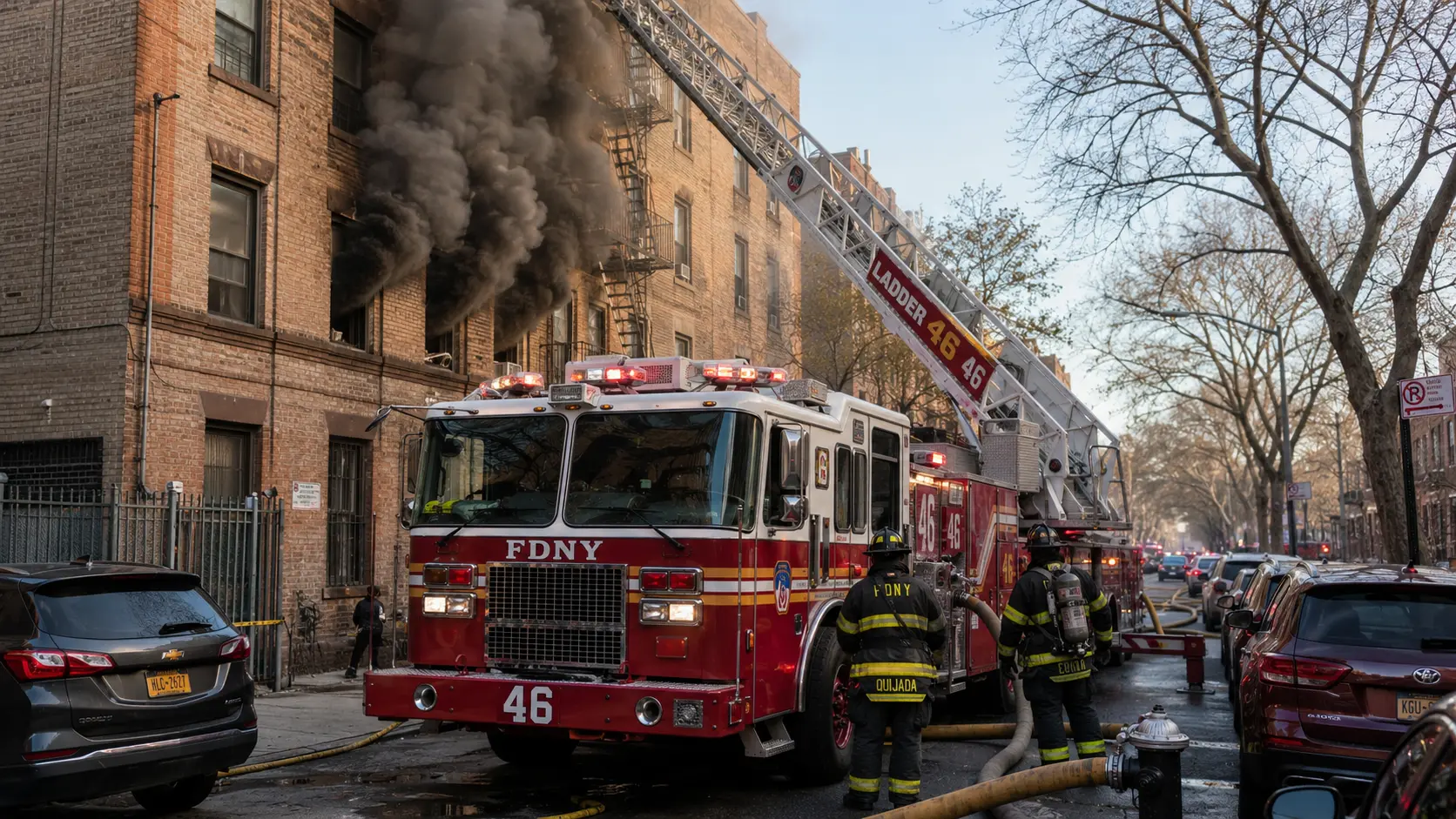
In this FDNY response, firefighters arrive to find a tractor-trailer heavily involved in fire. The first few minutes are critical. Crews must quickly decide where to position apparatus, how to secure water, where to stretch hose lines, and how to protect the surrounding area from heat, smoke, and spreading fire.
A fast, organized initial attack can make the difference between a contained vehicle fire and a larger incident that threatens nearby vehicles, structures, or roadway users.
Initial Size-Up
When firefighters arrive at a fully involved tractor-trailer fire, the first priority is size-up. Crews need to understand what is burning, where the fire is moving, and what hazards are present around the vehicle.
A tractor-trailer can carry many different types of cargo, and that uncertainty makes the response more complex. Firefighters must consider whether the trailer contains ordinary goods, flammable materials, pressurized containers, batteries, chemicals, or other hazards. Even when the cargo is not immediately known, crews operate with caution and maintain a safe working distance until conditions are better understood.
At the same time, the incident commander must evaluate the roadway, wind direction, smoke movement, nearby exposures, and access for additional units.
Establishing Water Supply
A reliable water supply is one of the most important parts of the operation. Large vehicle fires can require more water than a standard passenger vehicle fire, especially when the trailer, cargo, tires, fuel tanks, and surrounding materials are involved.
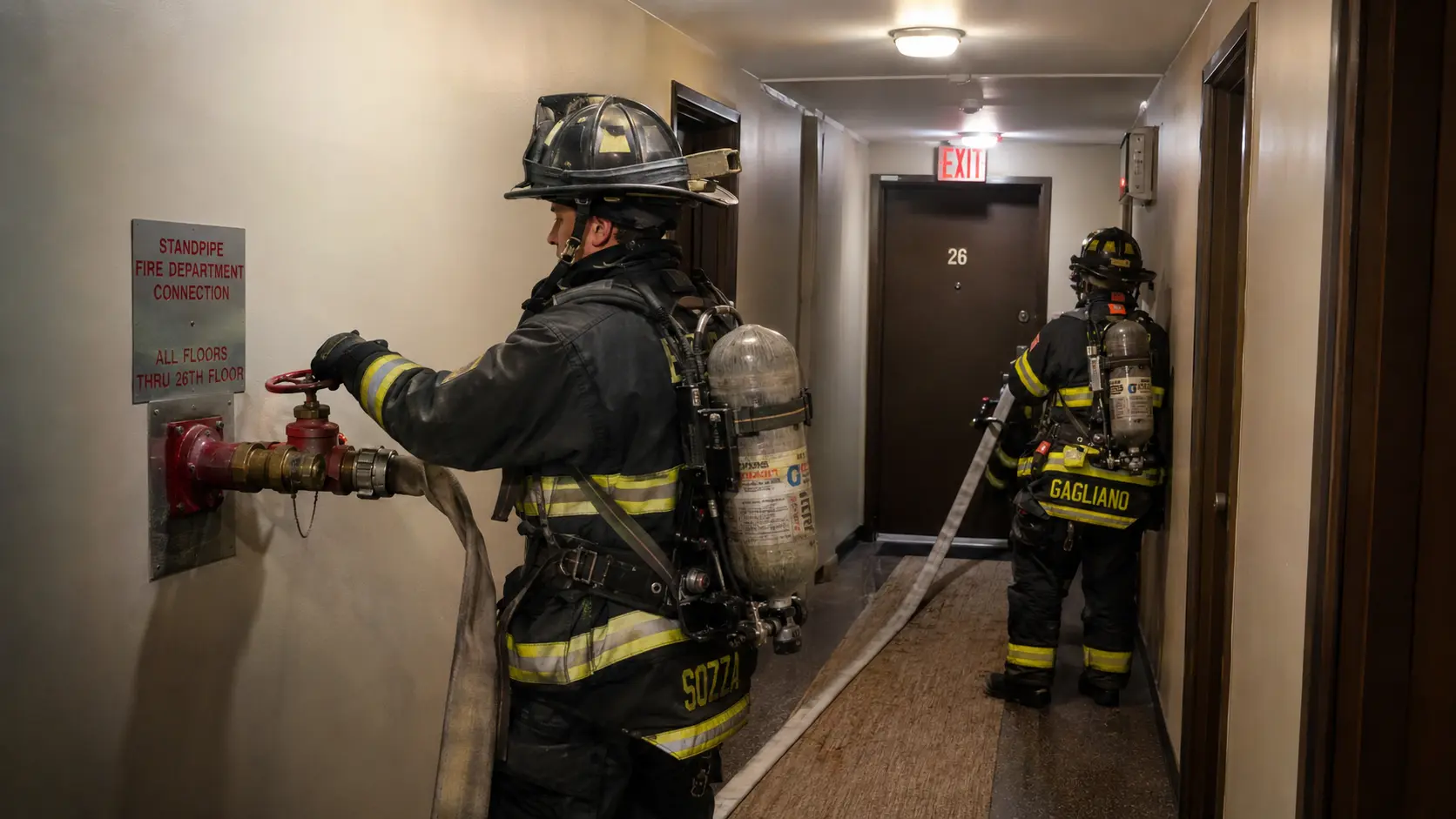
Firefighters may stretch handlines from the first-arriving engine while other crews secure a hydrant or prepare for additional water support. The goal is to get water on the main body of fire quickly while making sure crews do not run short during the attack.
In incidents like this, timing matters. Delays in water supply can allow the fire to grow, weaken the trailer structure, spread to nearby exposures, or create additional hazards for crews working close to the vehicle.
Fire Attack and Exposure Protection
Once water supply and hose lines are in place, firefighters begin the fire attack. Crews work to knock down the visible fire while also cooling fuel tanks, tires, the cab, and the trailer body. Heat from a tractor-trailer fire can be intense, and burning tires or cargo can continue to produce heavy smoke even after the main flames are reduced.
Exposure protection is also a key part of the operation. If the fire is near other vehicles, buildings, utility poles, brush, or roadway infrastructure, crews must prevent the incident from spreading. A trailer fire can radiate enough heat to damage nearby property before direct flame contact occurs.
The attack often requires patience. Fire can hide inside cargo compartments, under the trailer, around wheels, or deep inside packed materials. Firefighters may need to open sections of the trailer, overhaul debris, and check for rekindle risks before the scene is considered under control.
Scene Safety
A fully involved tractor-trailer fire affects more than the burning vehicle. Smoke can reduce visibility for drivers, radiant heat can endanger bystanders, and traffic can create serious risks for firefighters operating on or near the roadway.
That is why scene control is so important. Firefighters and supporting agencies may close lanes, redirect traffic, establish a safety perimeter, and keep civilians away from the hazard area. Police, EMS, transportation crews, and utility companies may also be needed depending on the location and severity of the incident.
For firefighters, apparatus placement is part of the safety plan. Engines and trucks may be positioned to shield crews from traffic while still leaving enough room for hose lines, additional units, and emergency access.
Why These Fires Are Challenging
Tractor-trailer fires are difficult because the hazards can change quickly. Tires can fail, fuel tanks can rupture, cargo can shift, and smoke conditions can worsen without warning. If hazardous materials are involved, the incident may require specialized resources and a more defensive approach.
Even when the cargo is not hazardous, the size of the vehicle creates a larger fire load. The trailer itself, packaging materials, pallets, plastics, rubber, diesel fuel, and contents can all contribute to a longer, hotter fire.
This is why firefighters approach these incidents with a combination of aggressive fire attack and careful risk management.
Final Takeaway
This FDNY tractor-trailer fire response highlights the importance of early arrival, strong command, fast water supply, and coordinated scene control. Large vehicle fires demand more than simply applying water to visible flames. Crews must manage traffic, protect exposures, evaluate cargo hazards, and continue checking for hidden fire after the main body of flames is knocked down.
For firefighters, incidents like this are a reminder that commercial vehicle fires can escalate quickly and require disciplined operations from the first alarm to final overhaul.
Comments 0
No comments yet. Be the first to share your thoughts on this video!
Leave a Comment