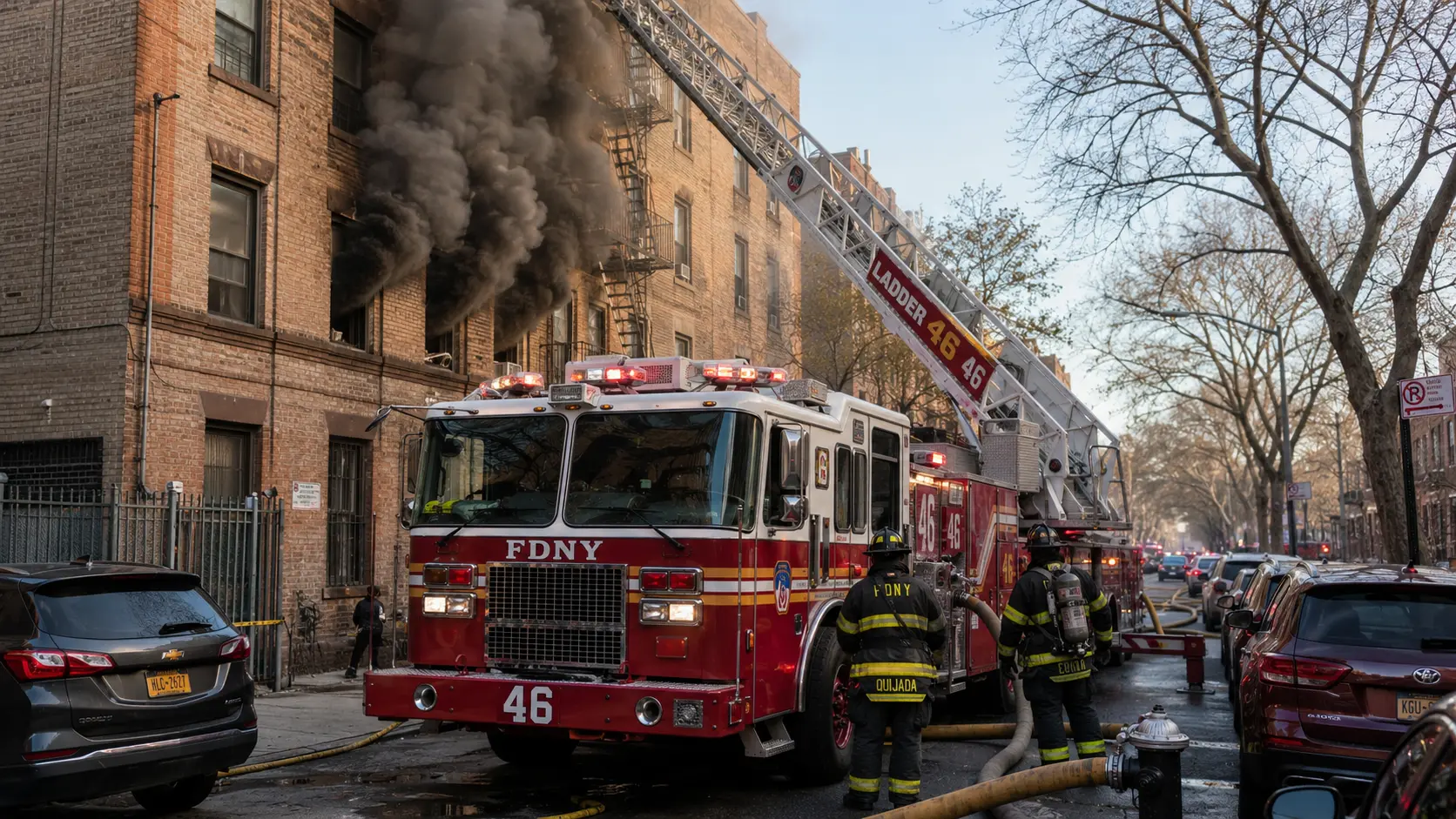
FDNY has 143 ladder companies. Each one carries more specialized tools than most fire departments in the country carry in total, and each one responds to the same working structural fires that the engine companies respond to — doing a completely different job. In FDNY operations, the engine fights fire. The ladder enables the engine to fight fire and makes sure nobody dies in the building while that's happening.
The FDNY ladder company has a specific set of functions that are formalized in department training, protocol, and tradition. These functions are not suggestions — they are the operational framework that every FDNY member of a truck company executes, in a specific sequence, every time a working fire box comes in. Understanding them is understanding how the most operationally experienced fire department in the world manages the task of getting people out of burning buildings.
In this article:
- LOVERS: the six functions of a ladder company
- The chauffeur: the most consequential positioning decision at the fire
- Forcible entry in New York City's specific building stock
- FDNY search: the outside vent position
- Roof operations and vertical ventilation
- How FDNY ladder and engine operate together
- Tower ladders vs. straight sticks: what FDNY uses and why
LOVERS: The Six Functions of a Ladder Company
FDNY uses the acronym LOVERS to organize the ladder company's six core functions. It is not a hierarchical list — the functions run concurrently, assigned to specific crew positions:
- L — Ladders: Placing ground ladders to all windows on the fire floor and the floor above for rescue and egress. The ladder company carries ground ladders — typically 20-foot, 28-foot, and 35-foot extension ladders — and they go up on every working fire regardless of whether the aerial is deployed.
- O — Overhaul: After knockdown, the ladder company opens walls and ceilings to find hidden fire extension, ensuring nothing smolders behind finished surfaces and reignites after the crews leave.
- V — Ventilation: Opening the building — windows on upper floors, skylights, bulkhead doors to the roof — to allow heat and toxic gases to escape and create tenable conditions for interior crews.
- E — Entry (Forcible): Getting through locked or barricaded doors without destroying the structural integrity of the entry point.
- R — Rescue: Removing occupants from the building, including those who cannot self-rescue — mobility-impaired occupants, unconscious victims, children.
- S — Search: The systematic search of every occupiable space for victims — primary search (fast, before or during active suppression), and secondary search (thorough, after knockdown).
The Chauffeur: The Most Consequential Positioning Decision at the Fire
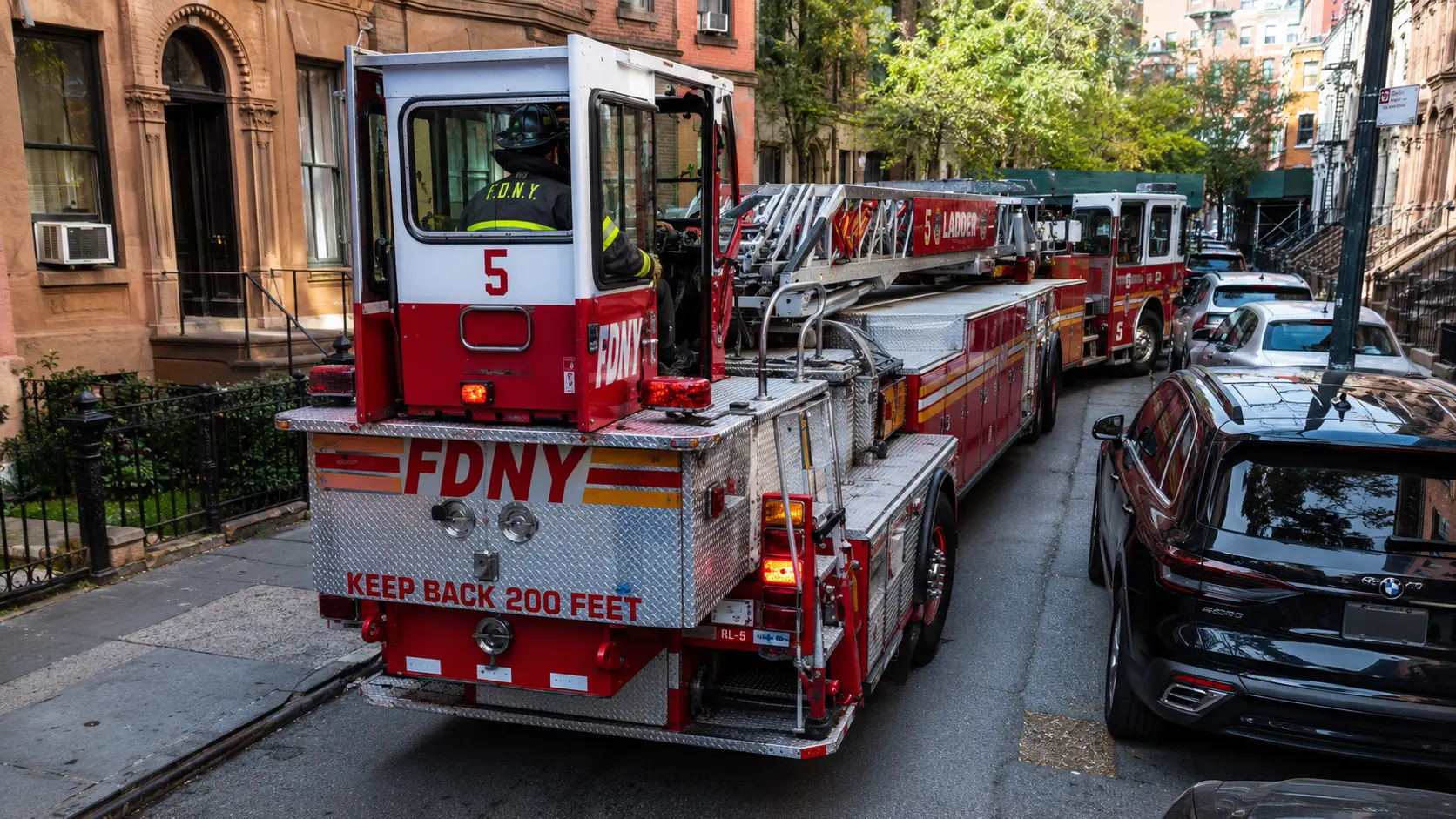
The chauffeur — FDNY's term for the apparatus driver-operator — has a single job that determines the effectiveness of everything the rest of the ladder company does: position the truck correctly before the aerial goes up. Once the aerial is raised and stabilized, repositioning requires lowering and restowing it — a process that takes several minutes. If the aerial is in the wrong position, the crew cannot reach the fire floor window, the roof, or the rescue point they need to reach. The chauffeur's decision is final and has to be made fast, in a city with parked cars, double-parked trucks, and streets designed in the 18th century.
FDNY uses tractor-drawn aerials — the tiller trucks — in large part because New York City's street grid requires the ability to thread a 50-plus-foot aerial apparatus around corners that a single-unit truck of the same length cannot navigate. The tiller operator controls the rear axle independently from the front cab, allowing the trailer to swing independently in tight turns. The skill required to drive a tiller efficiently through city streets is trained and tested separately from the rest of ladder company operations.
Forcible Entry in New York City's Specific Building Stock
New York City's building stock presents forcible entry challenges that are qualitatively different from the suburban residential buildings that most fire service forcible entry training is built around. A New York City apartment building may have steel-clad fire doors with multiple deadbolts, pivot locks, police locks (a bar braced against the floor), and security gates over the door frame itself. A brownstone in Brooklyn may have original 19th-century hardware that requires entirely different tool placement than a hollow-core door with a spring latch.
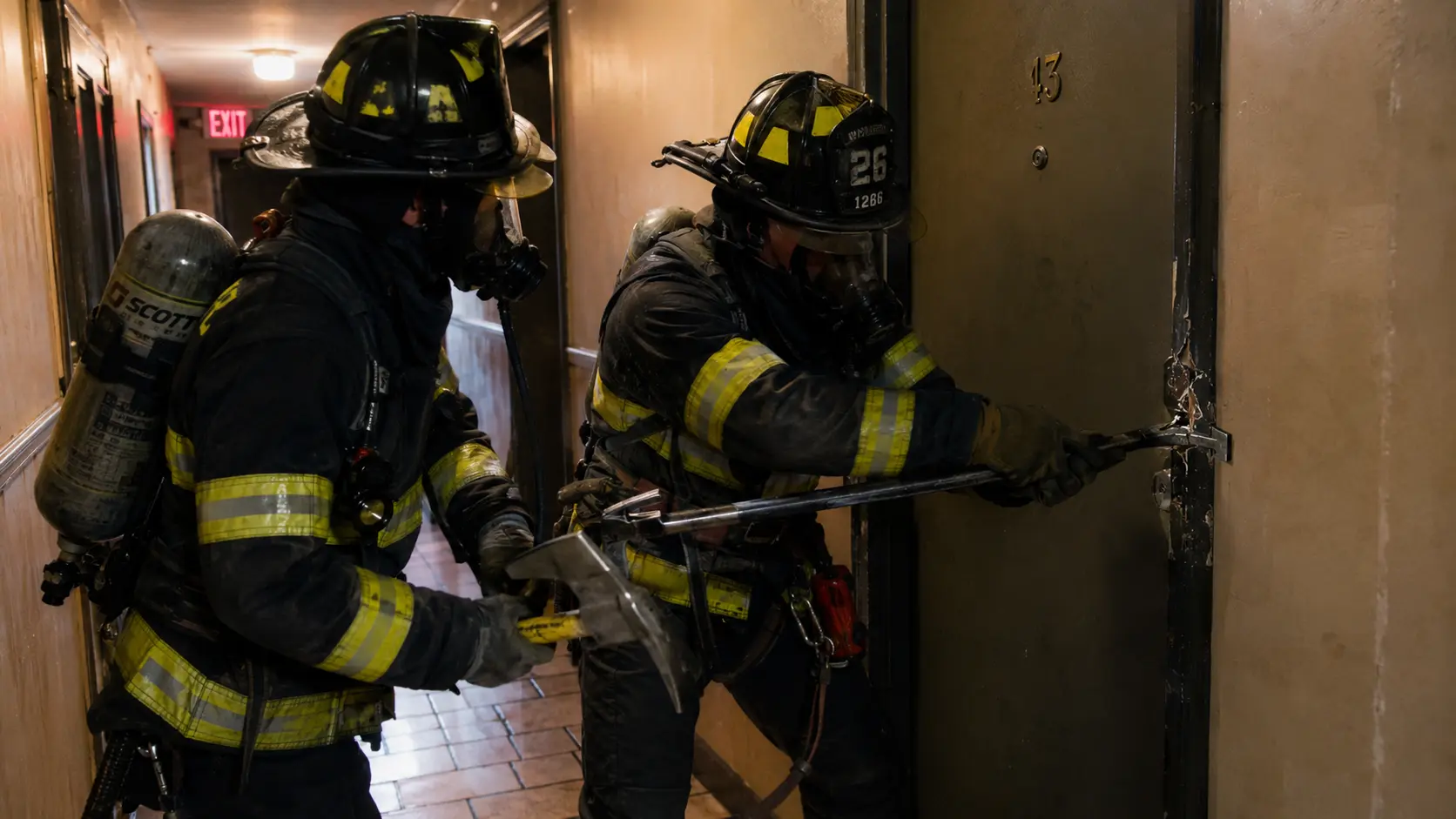
FDNY ladder companies carry the "irons" — a Halligan bar and a flathead axe — as their primary forcible entry tools, along with through-the-lock tools (a key tool and a picking tool for conventional cylinder locks), hydraulic door openers for heavily reinforced doors, and in some companies, a K-12 rotary saw for steel bars and security gates. The choice of tool depends on the door construction, assessed in the seconds before entry begins.
Forcing entry incorrectly has consequences beyond just taking longer. A door frame that has been destroyed by poor tool technique cannot serve as a fire barrier after the entry crew passes through. A door that falls off its hinges into the apartment creates a hazard for the interior crew and eliminates the door as a smoke and heat barrier between the apartment and the corridor — affecting conditions for everyone on that floor.
FDNY Search: The Outside Vent Position
In FDNY ladder company organization, crew positions at a working fire are assigned by function. The outside vent (OV) firefighter has a specific mission: go directly to the fire floor via the exterior — using the aerial ladder or ground ladders — and search the fire apartment from the window side while the inside team is entering from the door side.
The OV position exists because the fire apartment may have victims who cannot reach the door — in a bedroom cut off from the exit by fire in the main living space, for example. The inside team advancing from the front door is working against fire direction. The OV firefighter coming in through the window on the fire floor is working from the opposite direction and may reach a trapped victim faster. It is also a ventilation function — the OV firefighter opens windows on the fire floor, which improves conditions for the inside team advancing the hoseline from the engine.
Roof Operations and Vertical Ventilation
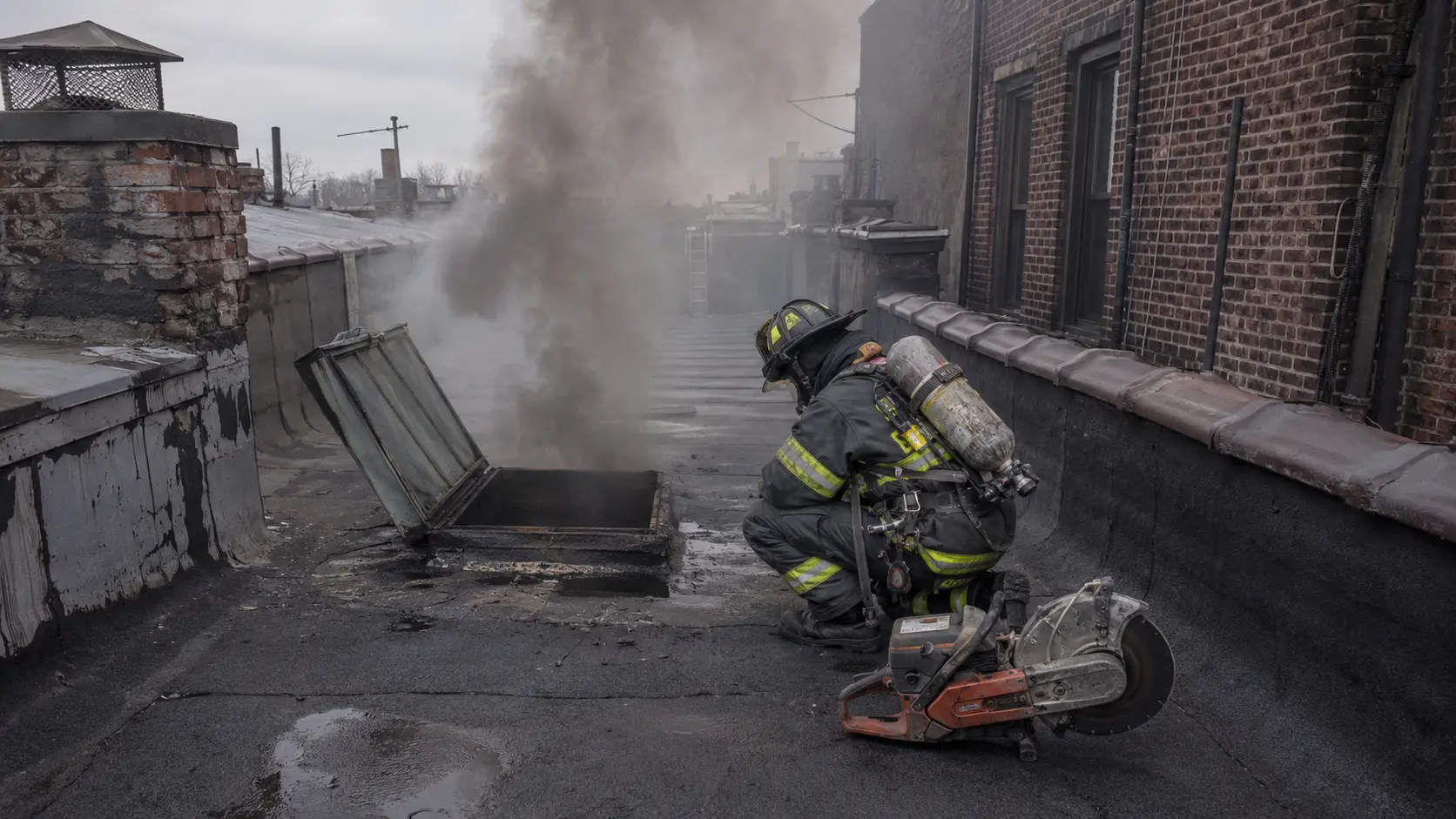
On a New York City brownstone or tenement with a flat roof, the roof firefighter's job is to get to the roof — via the aerial ladder or fire escape — and open the building above the fire. The primary objectives are the skylight (a glass-covered opening in the roof over the stairwell, common in pre-war buildings), the bulkhead door (the door from the interior stairwell to the roof), and if needed, a roof cut directly above the fire apartment.
Vertical ventilation changes the fire's thermal balance. A fire burning in a closed apartment with no upward ventilation creates a pressurized thermal layer that banks down to floor level. When the roof is opened above the fire, the column of rising hot gas finds an exit, the thermal layer lifts, and the conditions in the apartment become survivable — briefly — for a search crew or an engine crew advancing a hoseline. The window for this improvement is short and must be exploited immediately by the coordinated operations below.
How FDNY Ladder and Engine Operate Together
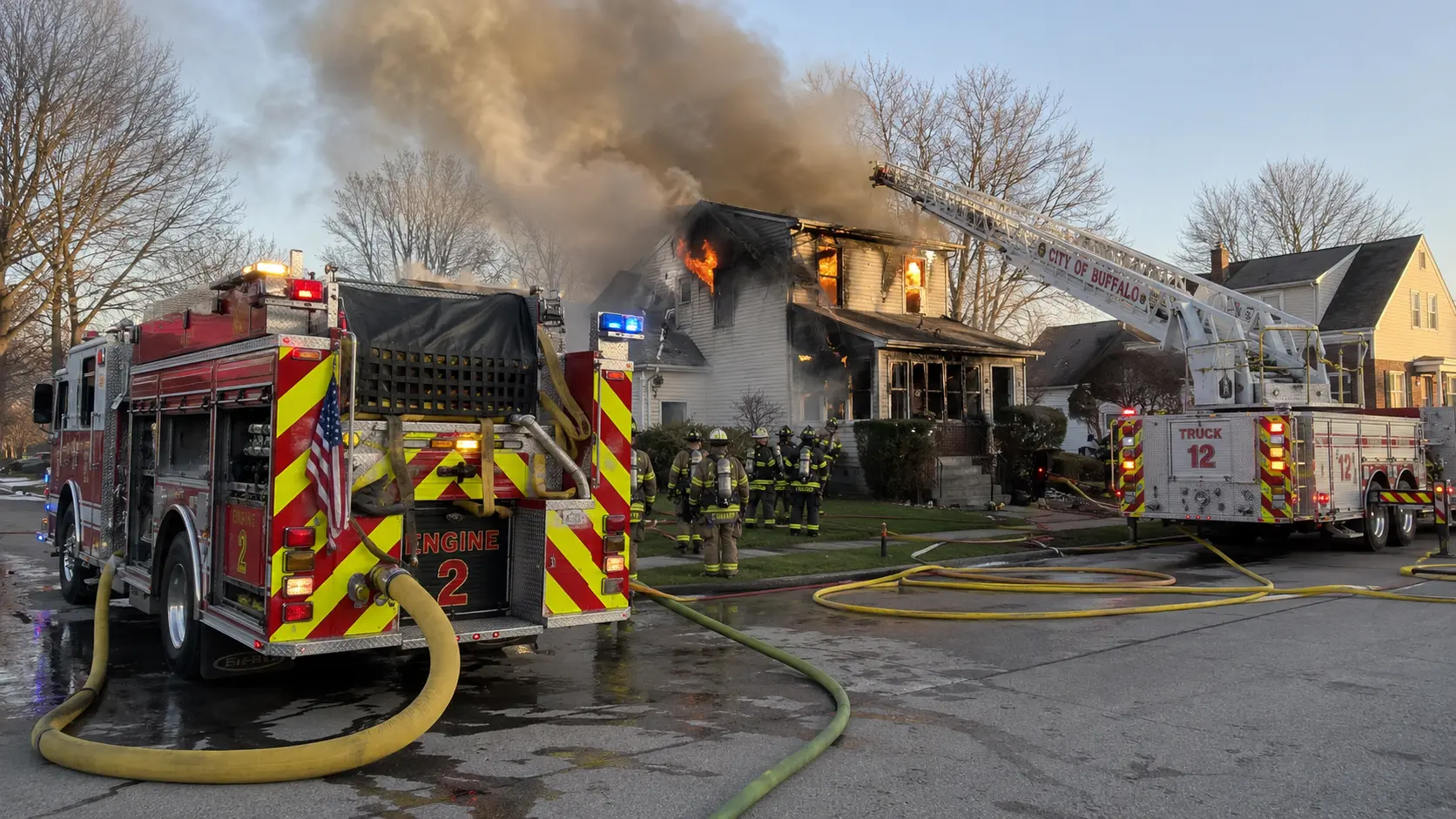
At a standard FDNY box alarm assignment — a working residential fire — the response includes two engines and one ladder. The sequence at the scene looks like this:
The first engine connects to the hydrant and stretches the attack line to the fire floor. The ladder company positions the apparatus, assigns the roof position, assigns the OV position, and the inside team prepares to force entry. Entry and hoseline advance happen simultaneously — the ladder officer is at the door with the irons when the engine crew arrives with the hoseline. They go in together.
The engine officer may also serve as the initial incident commander until additional resources arrive. On a second alarm, a battalion chief assumes command. The operational coordination between engine and ladder — who goes in first, how the hoseline advances relative to search operations, when the roof team opens ventilation — is managed by the inside ladder officer and the engine officer in real-time communication on the fireground channel.
Tower Ladders vs. Straight Sticks: What FDNY Uses and Why
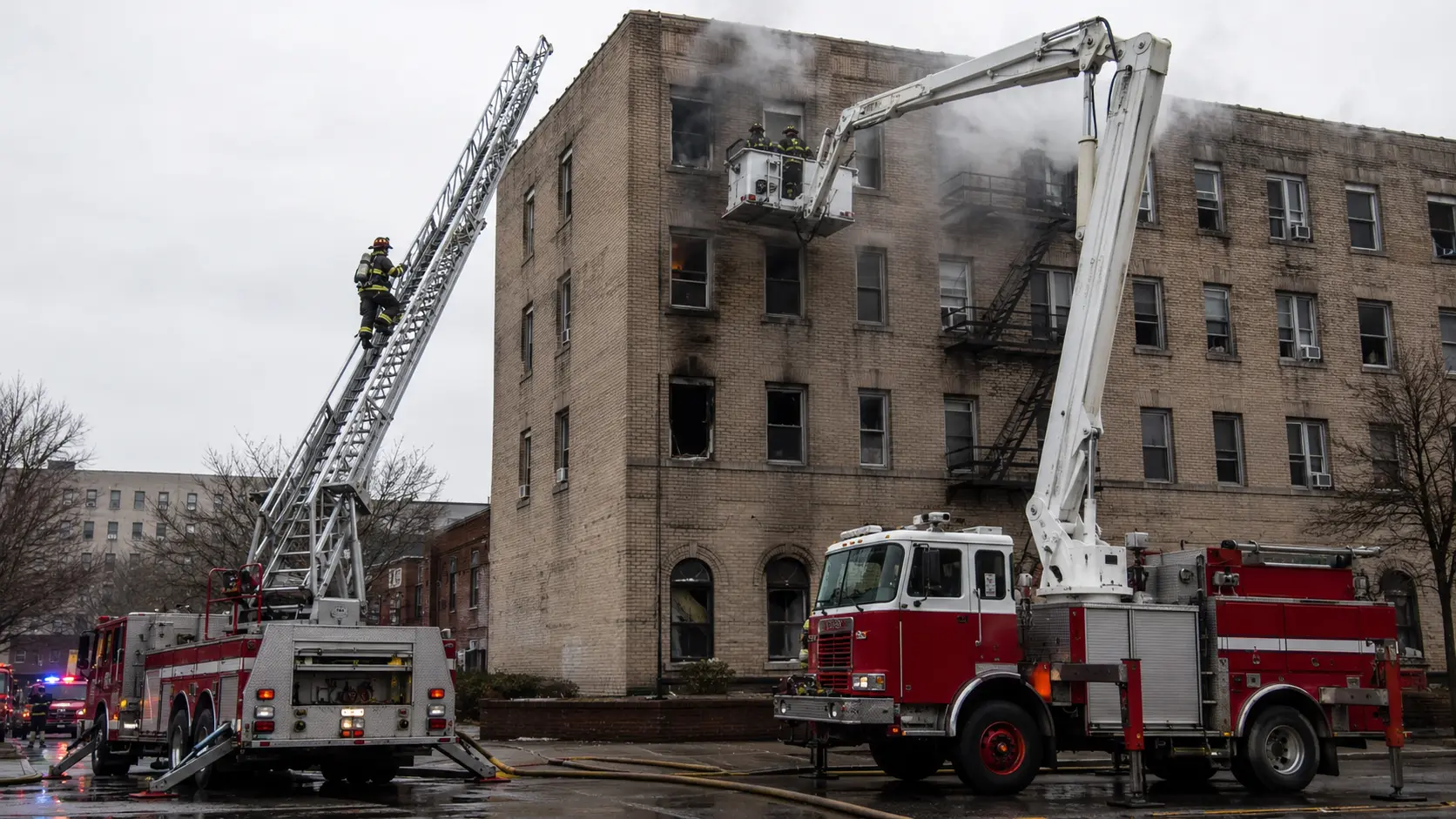
FDNY operates both conventional aerial ladders (straight sticks) and tower ladders (articulating platforms with a bucket at the tip). The two provide different capabilities:
The straight aerial ladder reaches up to 100 feet, provides a climbing path from the street to upper floors, and is the primary vehicle for roof access and upper-floor rescue. It can reach floors that a ground ladder cannot and positions a firefighter at the face of the building with both hands free once they stop climbing.
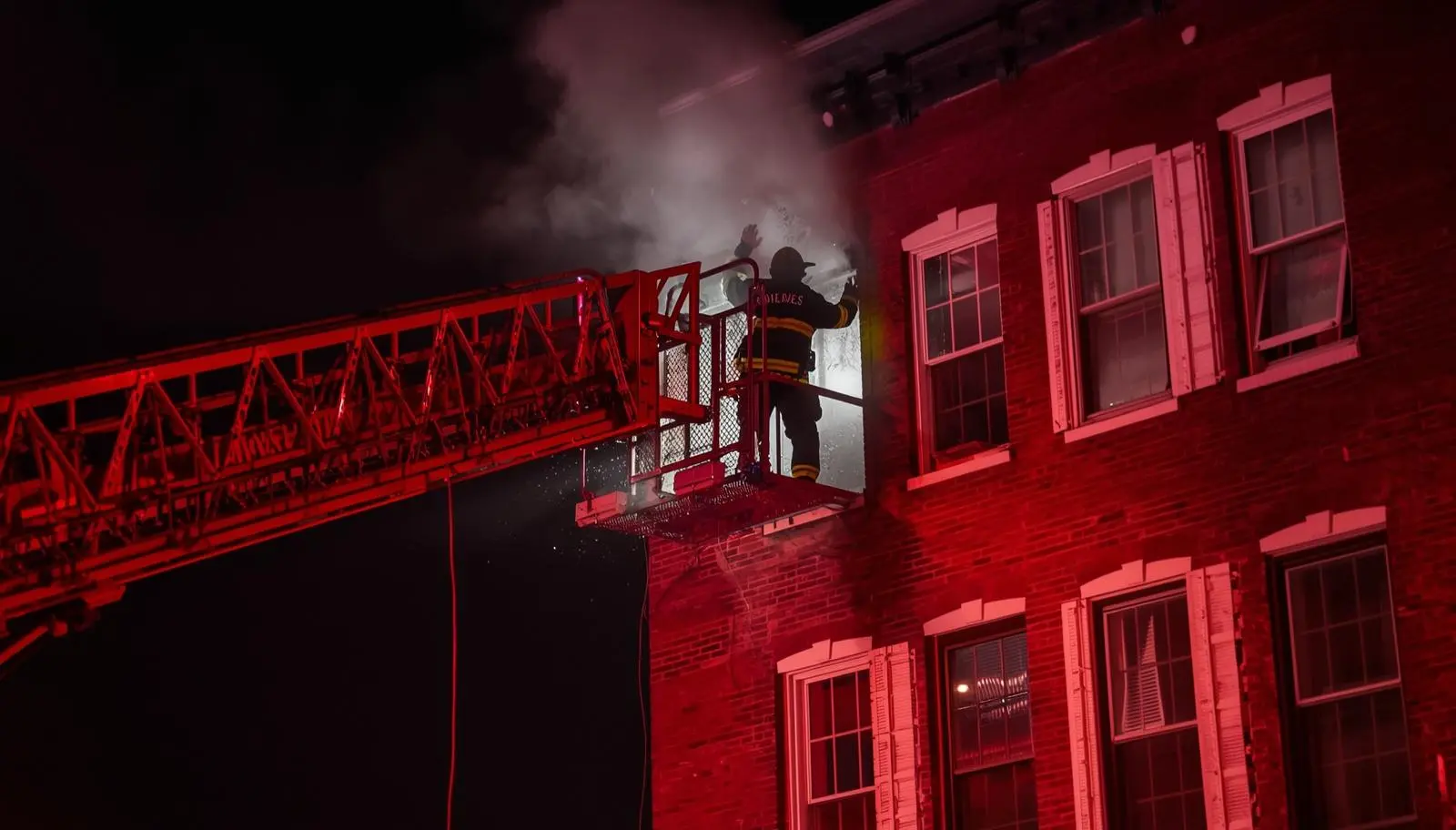
The tower ladder provides an elevated platform — a basket at the tip — that can position two or three firefighters at height with tools, stretchers, and equipment. For high-rise window rescue of immobile victims, the tower ladder platform is far more practical than a ladder rail. For elevated master stream operations above the structure, the tower's monitor (mounted on the basket) delivers large-volume water from a stable elevated platform. FDNY's tower ladders are deployed to working fires in higher-density districts where multi-story rescue operations are statistically more frequent.

Comments 0
No comments yet. Be the first to share your thoughts!
Leave a Comment