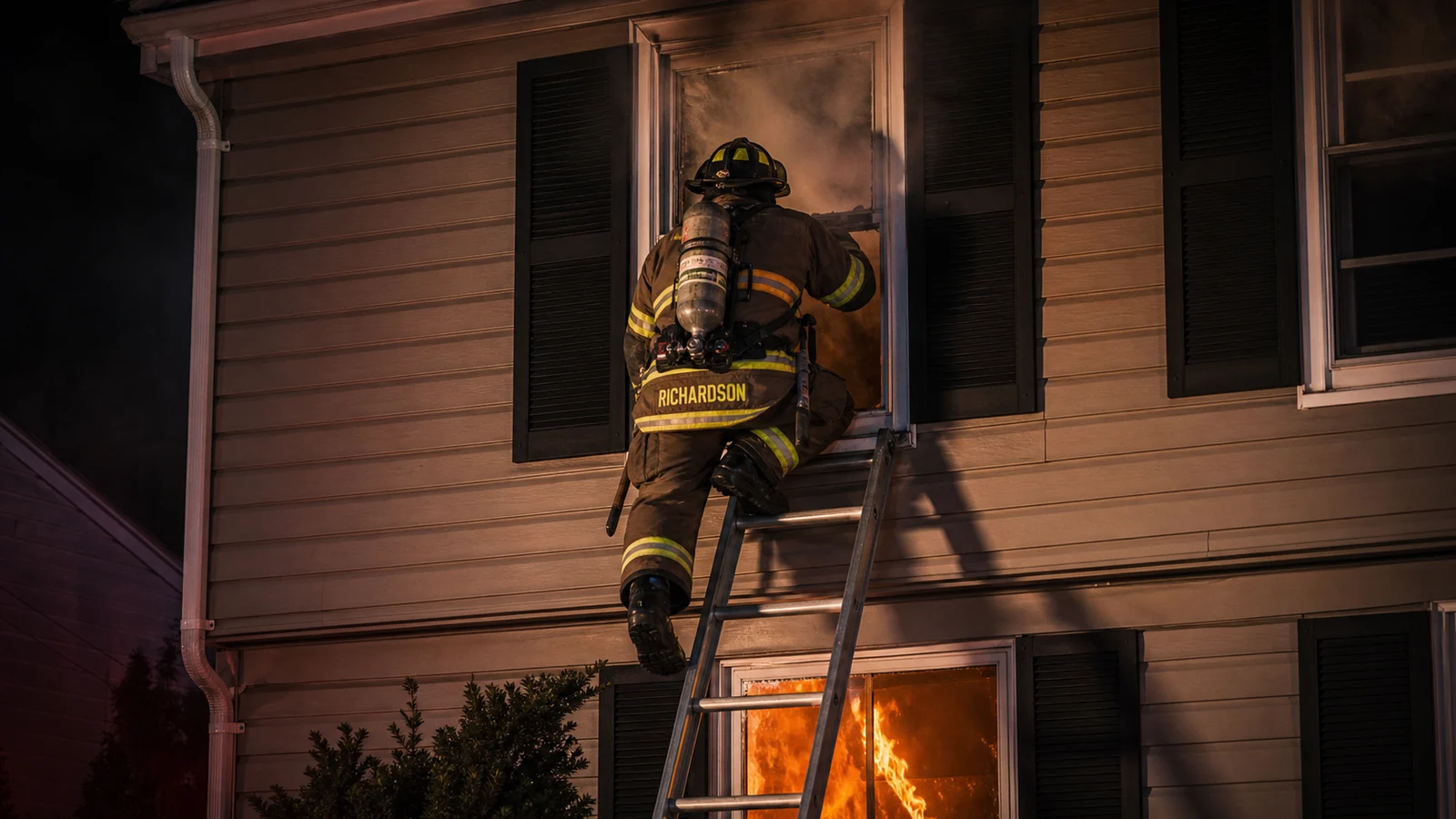
VEIS Technique Explained: Vent-Enter-Isolate-Search
VEIS — Vent, Enter, Isolate, Search — is a targeted primary search technique designed to get a firefighter directly to a specific room where a victim is likely located, without requiring the attack line to be advanced first. It is one of the highest-risk single-firefighter fireground skills, and also one of the most effective rescue tools when the conditions are right and the procedure is executed correctly.
VEIS is not an aggressive shortcut — it is a deliberate, calculated technique with specific indications and a step that is non-negotiable: the door must be closed before the search begins. Skipping isolation turns a rescue technique into a death trap.
Jump to:What VEIS is · When to use VEIS · Step-by-step procedure · The isolation step — why it's critical · Exit methods · VEIS vs interior attack · FAQ
What VEIS Is
VEIS is a targeted, room-specific rescue technique. Unlike a primary search, which sweeps the entire structure systematically, VEIS goes directly to one specific room — typically a bedroom — where a victim is likely to be found based on:
- Occupant report ("my child is in the second-floor front bedroom")
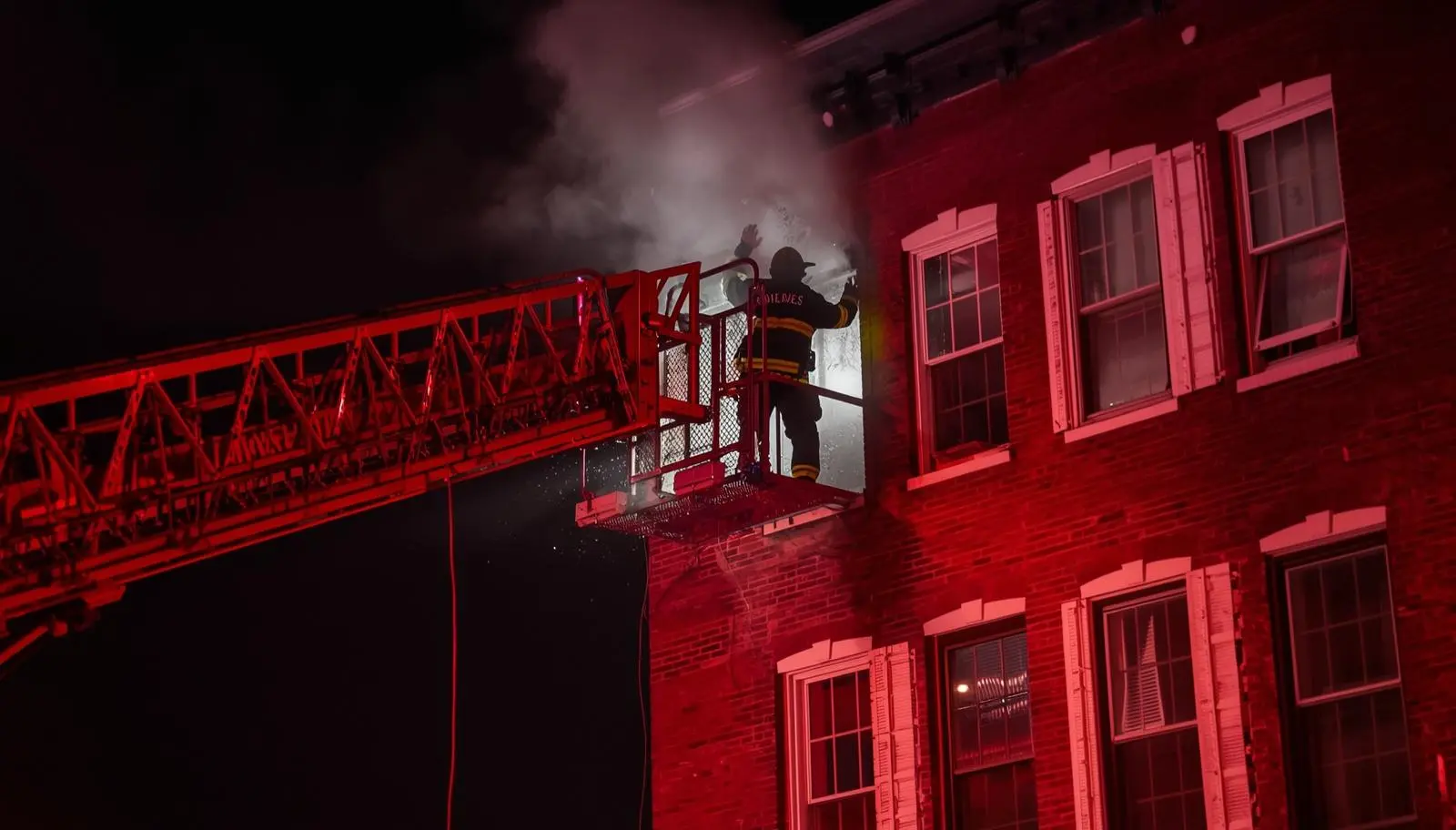
- Visible indicators at a specific window (waving arms, calls for help, visible victim)
- Life safety priorities based on structure layout and fire location
The technique involves four sequential steps: Vent the window, Enter the room, Isolate the room from the fire by closing the door, then Search the isolated space. Each step has a specific purpose, and the sequence is not optional.
When to Use VEIS
VEIS is indicated when all of the following conditions are present:
- A specific victim location is known or strongly suspected
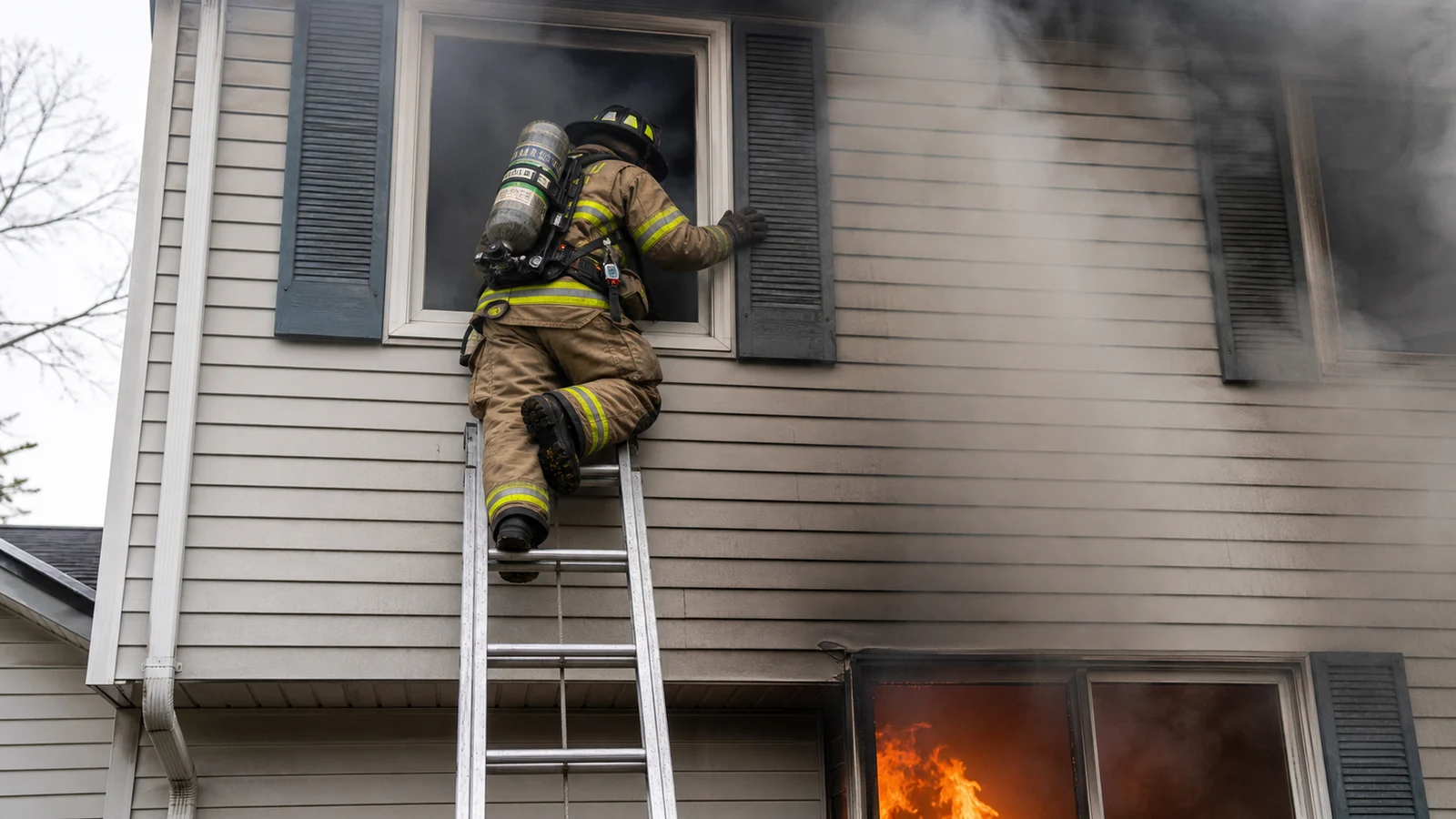
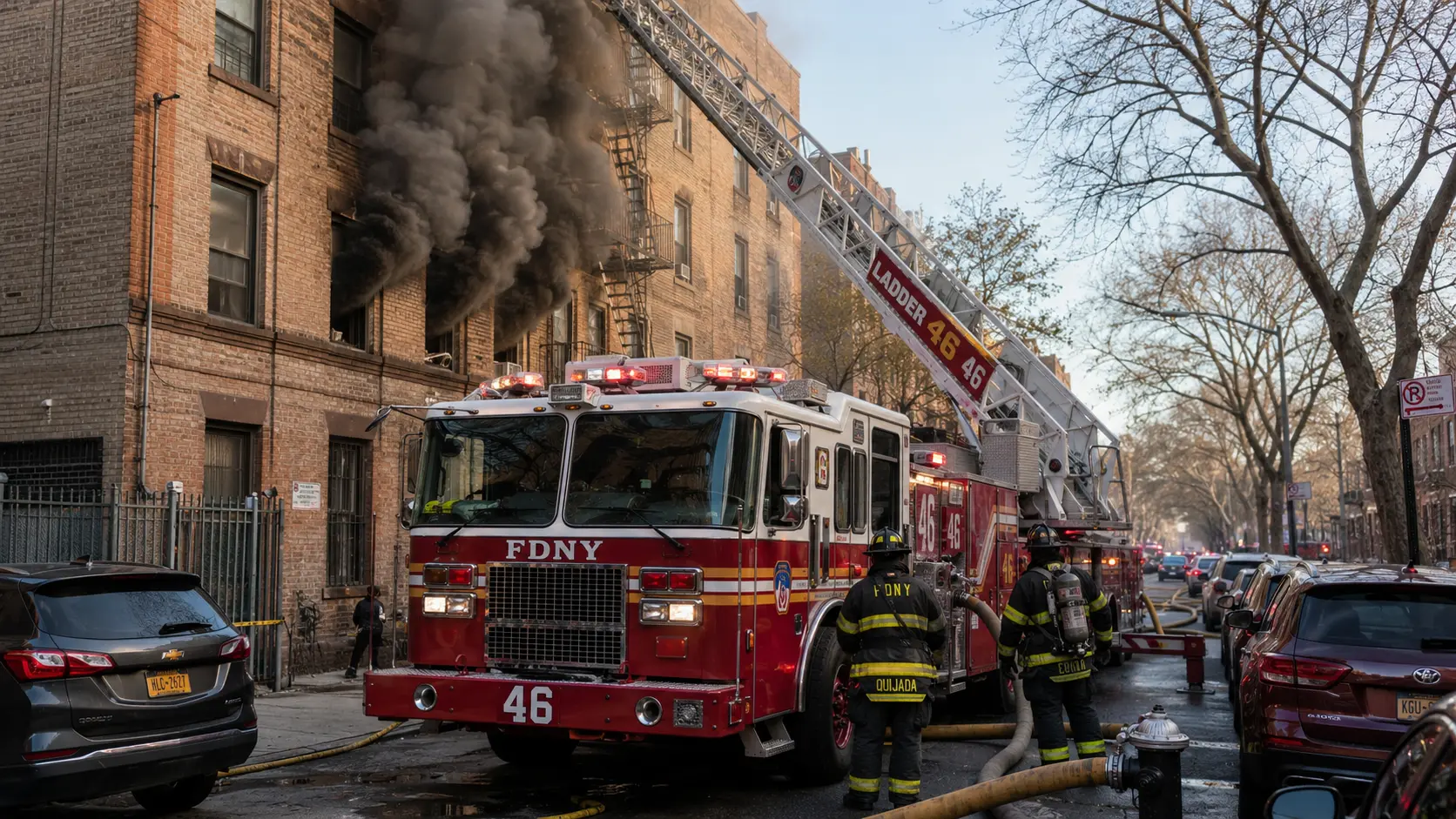
- The target room is accessible by ground ladder or aerial
- Interior conditions do not yet allow a hoseline to advance to that room
- The fire has not yet entered the target room (tenable conditions for a victim)
- The room has a closeable door separating it from the fire
VEIS is not indicated when: fire is already in the target room, no closeable door exists, or conditions in the room are clearly unsurvivable for a victim (heavy fire, no smoke stratification).
The window condition tells you a lot. Clear or lightly smoky glass with smoke stratification visible inside = potentially survivable conditions. Thick black smoke or fire showing = conditions are likely unsurvivable for a victim, and VEIS will not save anyone.
Step-by-Step Procedure
Step 1: Vent
Take out the window from the outside before entering. Use the butt of a tool, a halligan, or a knee strike to break the glass cleanly. Clear all glass from the sill. Remove the sash or frame if it will obstruct entry or exit. Venting the window serves two purposes: it provides an entry point and improves conditions in the room by releasing trapped smoke and heat.
Step 2: Enter
Enter feet-first from a ground ladder, staying low. Get off the ladder and onto the floor as quickly as possible — do not linger on the sill. As you enter, immediately scan the room: note the door location, assess smoke conditions, look for the victim.
Step 3: Isolate
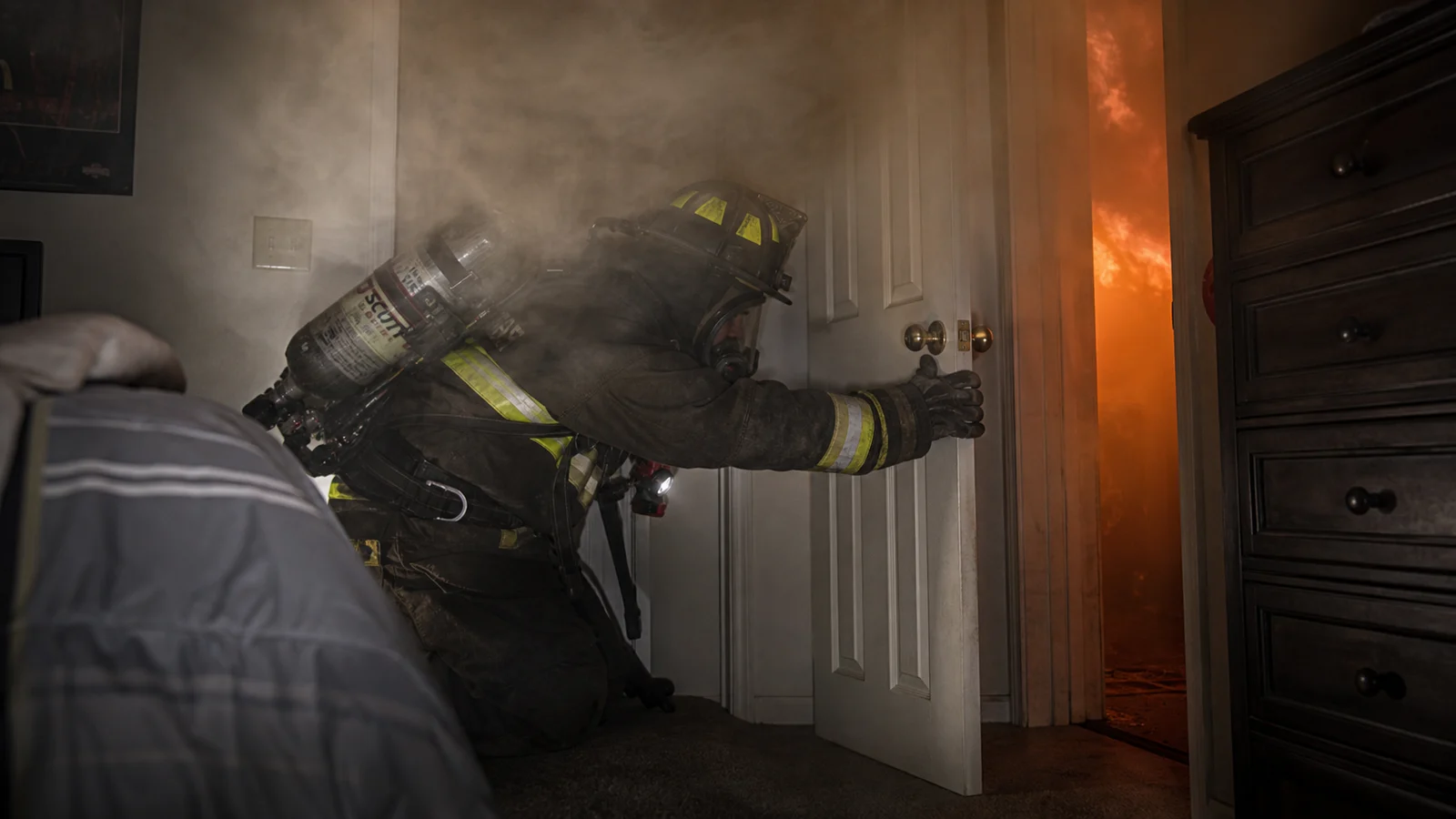
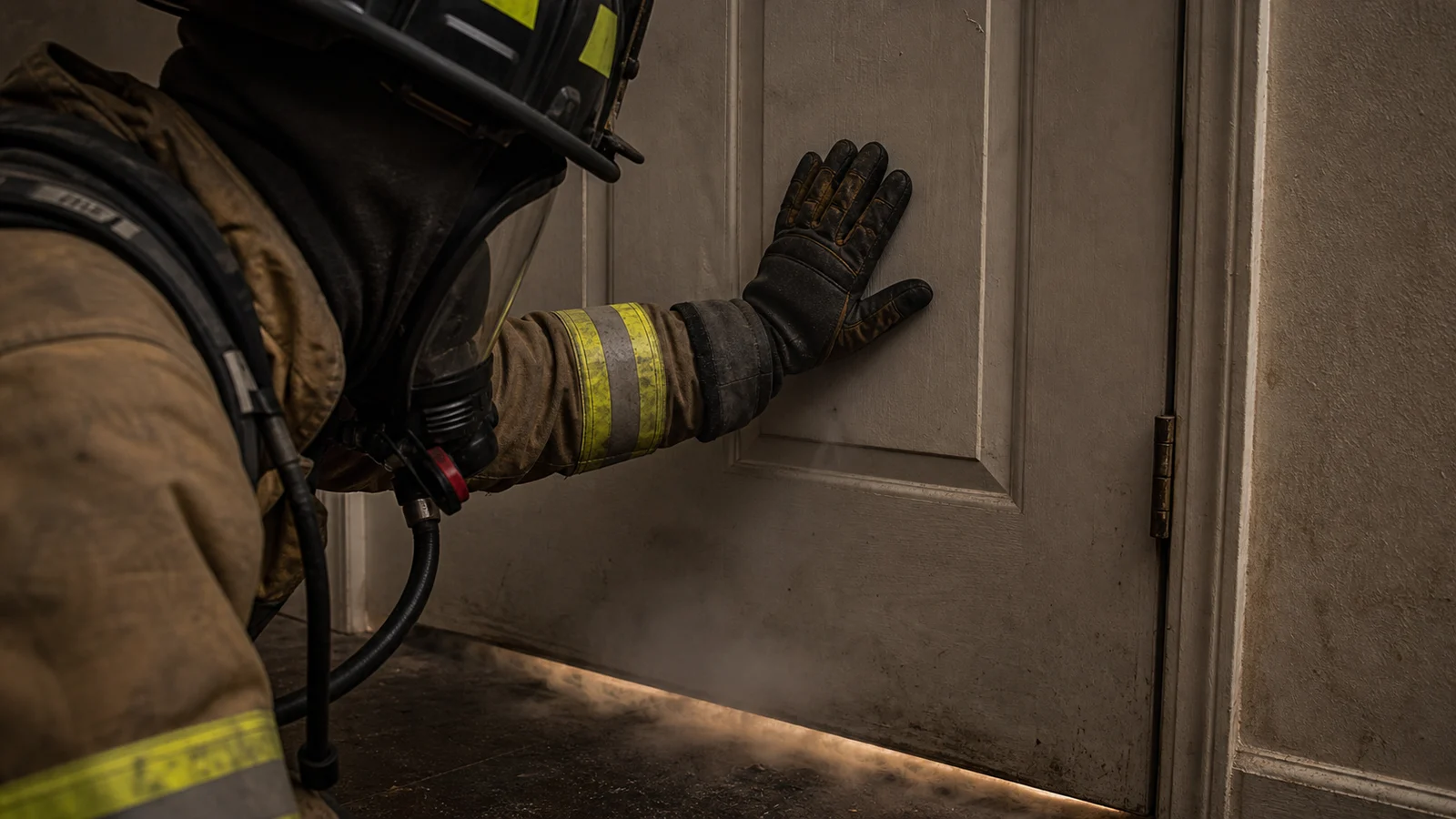
Close the door to the room before you search. This is the step that is most frequently skipped and most frequently fatal when skipped. See below.
Step 4: Search
Conduct a targeted search of the isolated room. Move to the door first (to close it if you have not already), then search the room systematically — under the bed, in the closet, behind the door. Call out to the victim. Keep one hand on the wall to maintain orientation and keep the window at your back as your exit reference point.
Why Isolation Is Non-Negotiable
This is the defining difference between VEIS and its predecessor VES (Vent-Enter-Search, without the isolation step). Here is the physics:
When you vent the window, you create a new flow path in the structure — air enters from outside through the window and must exit somewhere. Without the door closed, that flow path runs directly through the room you are in and into the hallway toward the fire. You have just created a direct air supply pathway to the fire, which can accelerate fire spread toward the window you just opened — and toward you and the victim.
With the door closed, you create a protected, isolated compartment. The room's air supply is now separate from the fire's air supply. You can search and exit without the fire drawing toward you through your entry point.
Closed door = protected room. Open door = flow path to fire. Multiple firefighter fatalities have been associated with failure to isolate during search operations. The door closes before the search begins — always.
Exit Methods from VEIS
- Victim found — ambulatory: Assist victim out through the window onto the ladder. You exit last.
- Victim found — non-ambulatory: Signal for additional resources. Consider lowering victim by rope or improvised means. Do not attempt to carry an unconscious adult down a ground ladder alone without additional support.
- No victim found: Exit the way you entered. Communicate to IC that the room is clear.
- Conditions deteriorate: Exit immediately via the window. Do not attempt to re-open the door into deteriorating conditions.
Frequently Asked Questions
What does VEIS stand for?
Vent, Enter, Isolate, Search. It is a targeted rescue technique that goes directly to a specific room where a victim is likely located, entering through a window, isolating the room by closing the door, then searching the protected space.
What is the difference between VEIS and VES?
VES (Vent-Enter-Search) is the older version of the technique without the isolation step. Current fire service training standards include isolation because closing the door before searching prevents creating a fire flow path through the room and dramatically improves survivability for both the victim and the firefighter.
Can VEIS be done without a ladder?
VEIS requires access to the target window, which typically means a ground ladder or aerial device for above-grade windows. First-floor windows may be accessible without a ladder. The technique is not feasible for windows that cannot be reached safely.

Comments 0
No comments yet. Be the first to share your thoughts!
Leave a Comment