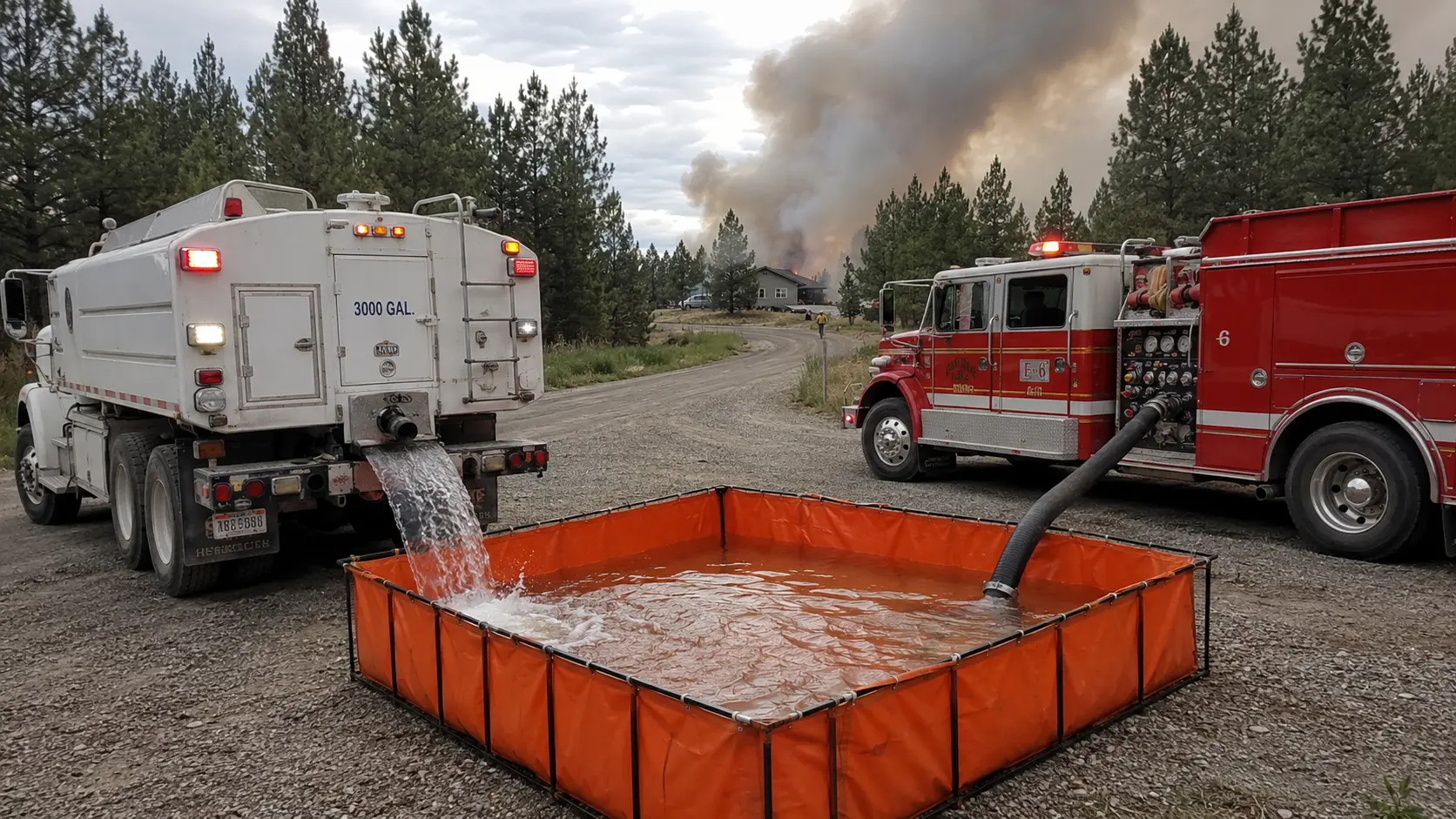
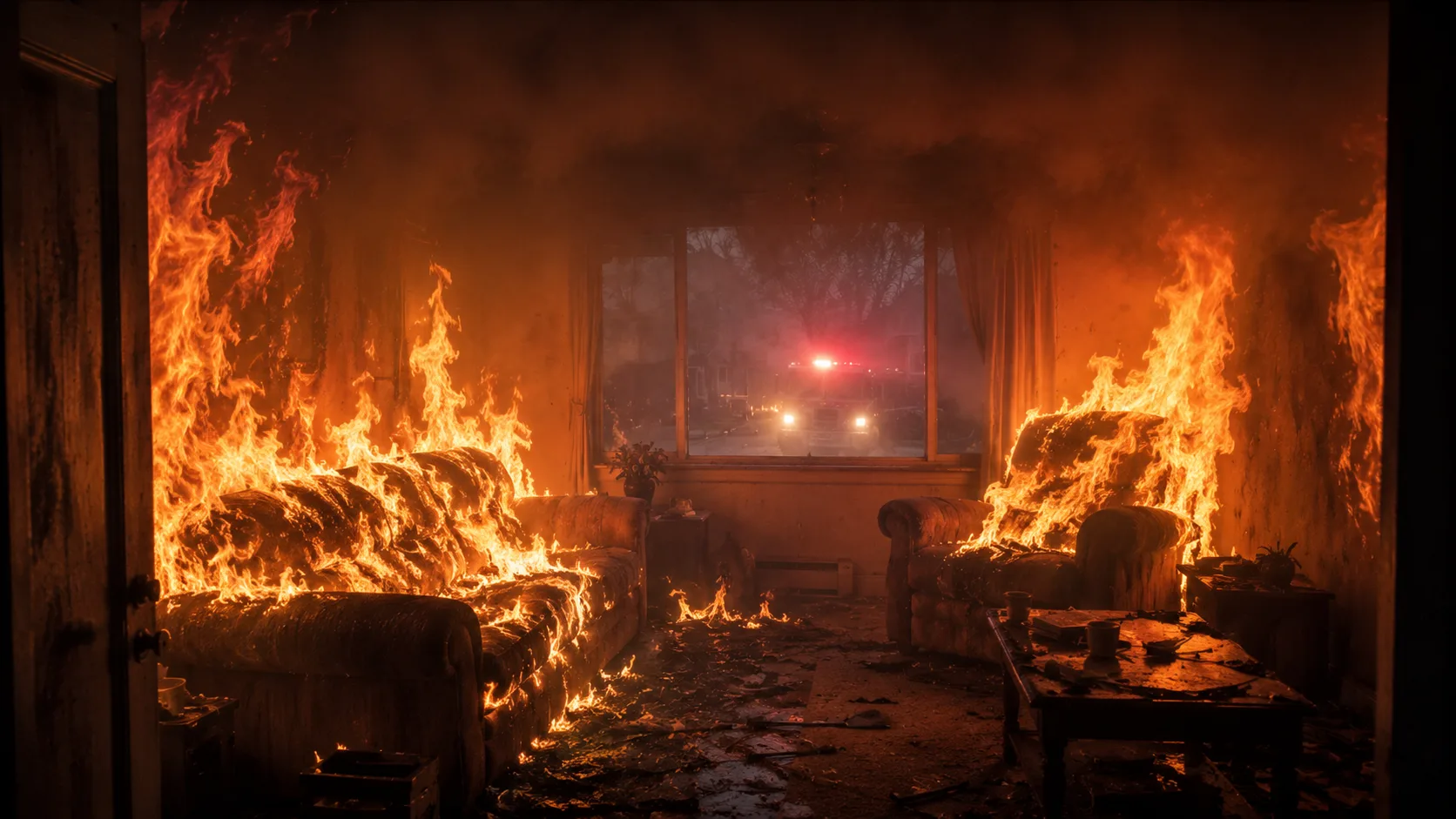
When a house fire in a rural area is reported and the first engine arrives, it pulls its booster tank — typically 500 to 1,000 gallons — and starts suppression. The booster tank runs dry in three to five minutes at standard attack flow rates. At that point, if no additional water has arrived, the attack stops. The engine sits at the scene with empty tanks while the fire continues. The next water arrives when the first tanker does, which may be five to fifteen minutes later in a rural department with volunteer staffing.
This is not a failure of planning — it is the baseline condition for rural fire operations, and every rural department manages it through tanker shuttle operations designed to maintain continuous water supply to the attack pumper by cycling multiple water tenders between a fill site and the fire scene. Understanding how that system works — and where it breaks down — explains why rural fire outcomes differ from urban outcomes even when rural departments have excellent response times.
In this article:
Water Tenders vs. Nurse Tankers
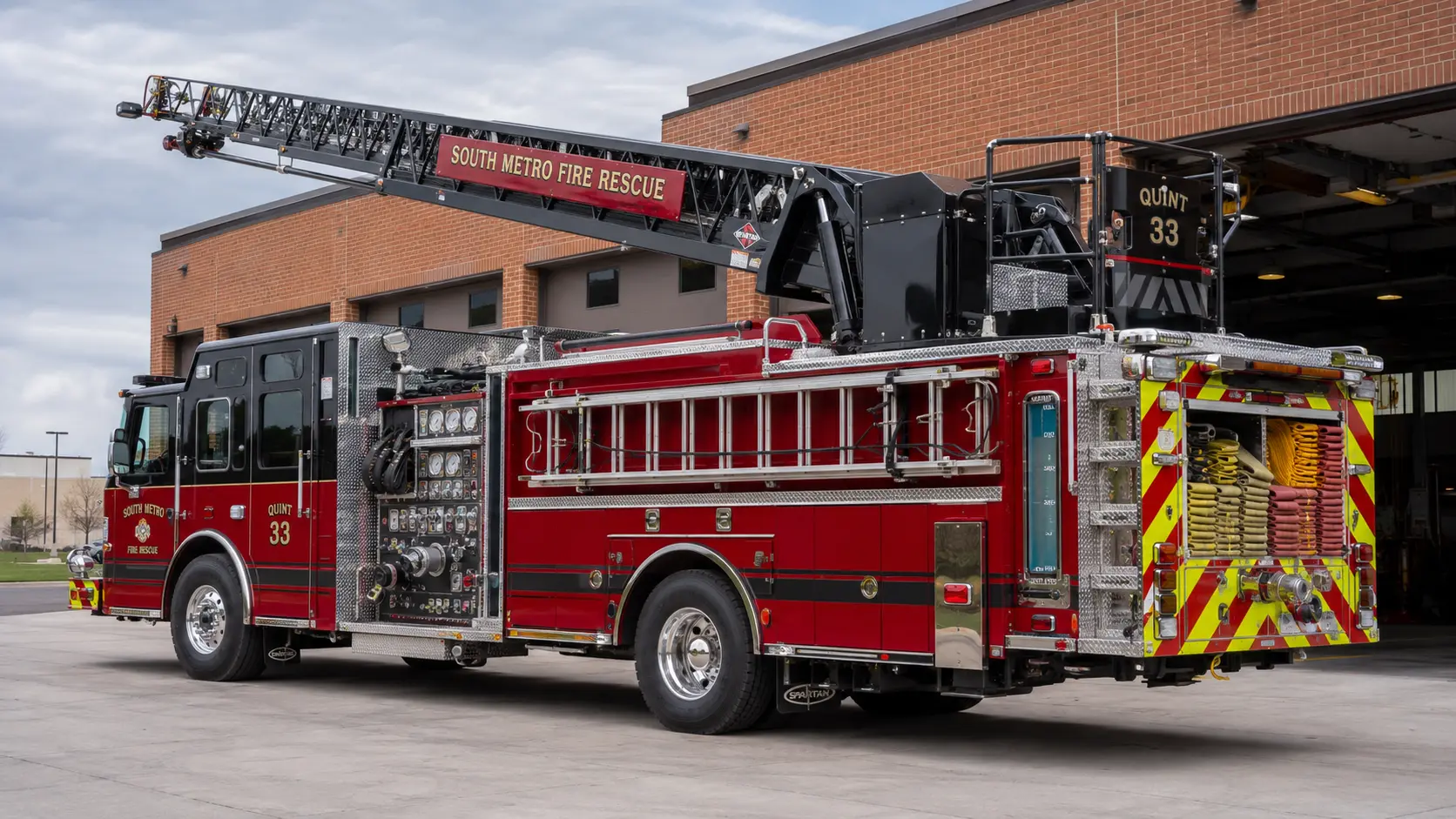
A water tender — also called a tanker, though the term "tanker" is used for aircraft in some regions — is an apparatus whose primary function is transporting large quantities of water to a fire scene. The minimum capacity that NFPA standards consider useful for shuttle operations is 1,000 gallons; most rural departments operate tenders in the 2,500 to 5,000-gallon range. Modern tenders have a gravity dump or powered pump dump capability that allows them to empty their load at a portable tank in one to two minutes.
A nurse tanker operates differently — rather than dumping into a portable tank, it parks near the attack pumper and feeds it directly through a large-diameter supply line. The pumper drafts from the nurse tanker, the tender stays on scene as a mobile water supply, and the system works well when only one or two tenders are in the rotation. For larger fires requiring higher flow rates over longer durations, the portable tank shuttle system is more efficient because tenders can come and go without the pumper being dependent on any single tender.
How Shuttle Operations Work
A tanker shuttle is a continuous cycle: tenders fill at a water source (a hydrant, a pond, a stream, or a municipal fill station), drive to the fire scene, dump into a portable tank, and return to the fill site. The attack pumper draws from the portable tank, which is continuously replenished by arriving tenders.
The cycle has three time components: fill time (how long to refill the tender at the source), travel time (round trip from fill site to dump site), and dump time (how long to empty into the portable tank). The sum of these is the total cycle time per tender. To maintain continuous supply at a given flow rate, you need enough tenders in rotation that at least one arrives before the portable tank runs dry.
The calculation:
- Required flow rate: 500 gal/min for a residential structure fire
- Target supply duration before next tender arrives: 2 minutes at 500 gal/min = 1,000 gallons minimum in the portable tank at all times
- Tender capacity: 3,000 gallons
- Dump rate: 3,000 gallons in 2 minutes = 1,500 gal/min dump rate
- Fill time: 5 minutes
- Round trip travel: 10 minutes
- Total cycle: 5 + 10 + 2 = 17 minutes per tender
- Tenders needed to maintain 500 gal/min supply: 17 minutes ÷ (3,000 gal ÷ 500 gal/min = 6 minutes of supply per tender) = approximately 3 tenders
Three tenders, each cycling independently, can maintain continuous 500-gal/min supply with a 5-minute fill site distance. Each additional minute of fill site distance or each reduction in tender capacity increases the number of tenders required to maintain the same supply rate.
The Water Supply Math
A residential structure fire — a fully involved two-story wood-frame house — typically requires 500 to 750 gallons per minute for effective suppression. A 30-minute suppression operation requires 15,000 to 22,500 gallons. An engine booster tank of 750 gallons covers about 90 seconds of that requirement. The entire suppression operation depends on the shuttle delivering water continuously from a source that may be miles away.
This is the fundamental disadvantage of rural operations: the water that a suburban department gets from a hydrant at 1,000+ gallons per minute on a 4-inch main requires the rural department to transport by road in multiple trips. Transport by road is slower and lower-volume than transport by pipe. A rural department with five tenders, excellent shuttle discipline, and a fill site three miles away can sustain approximately 400 to 500 gallons per minute of effective water supply at a residential structure fire. A suburban department with two hydrants can sustain 2,000 gallons per minute from the moment the first line is charged.
Portable Tanks and the Dump Site
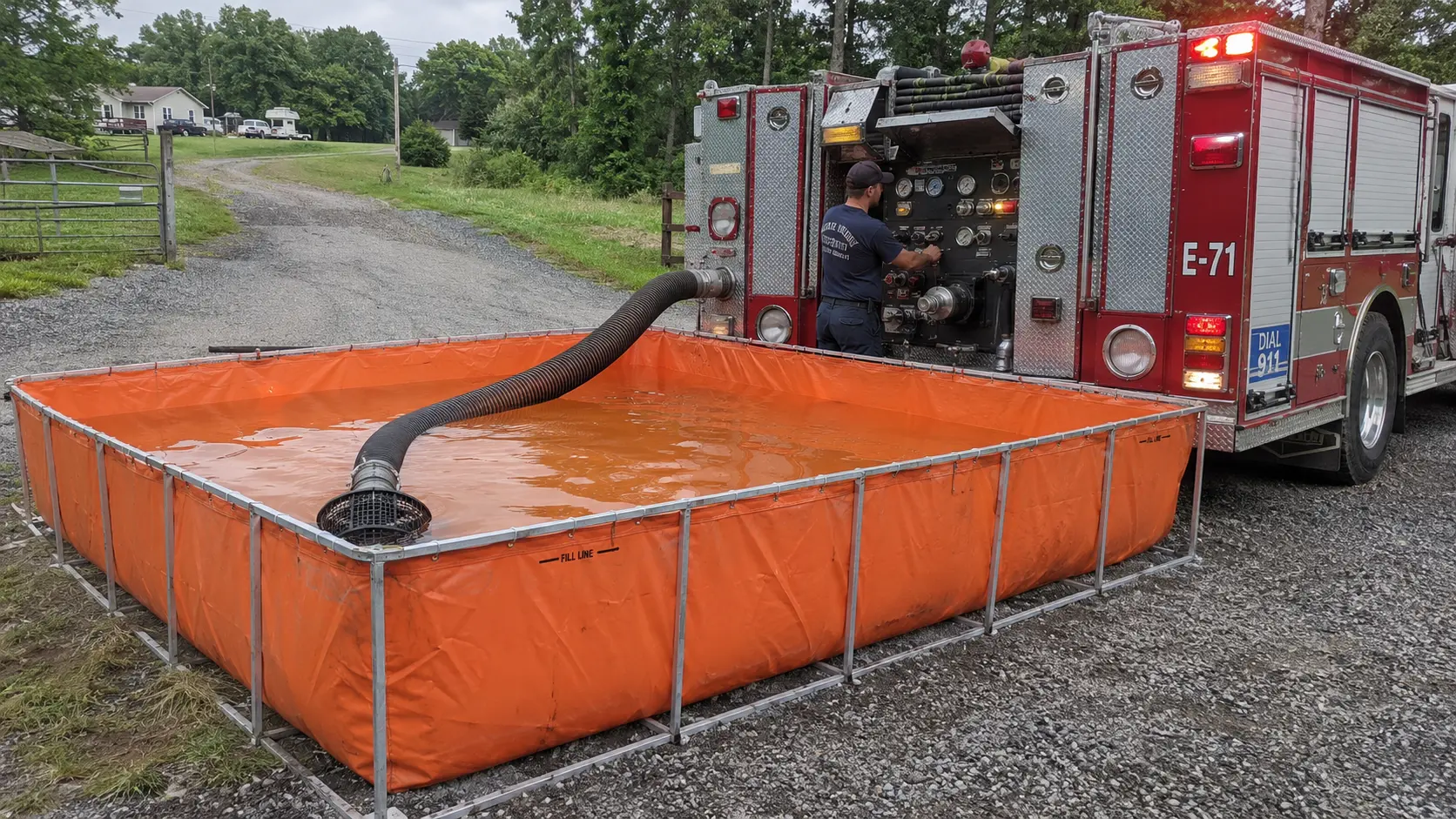
Portable folding tanks — fabric reservoirs supported by collapsible aluminum frames — are the operational center of tanker shuttle logistics. They range from 1,000 to 3,000 gallons in capacity, fold into a bag for apparatus storage, and can be deployed by two people in under two minutes. The portable tank is the buffer that smooths out the gaps between tender arrivals: if tenders arrive faster than the pumper consumes water, the tank level rises; if there is a gap in tender arrivals, the tank level drops. The system continues working as long as the tank level does not fall below the hard suction intake — at which point air enters the pump and supply is interrupted.
Multiple portable tanks can be connected in series at the dump site, increasing total buffer volume and extending the window before a gap in tender arrivals causes supply interruption. Departments managing large or extended rural fires often deploy two to three interconnected portable tanks with a combined capacity of 6,000 to 9,000 gallons as a buffer against the timing variations of a large shuttle operation.
Drafting from Ponds and Streams
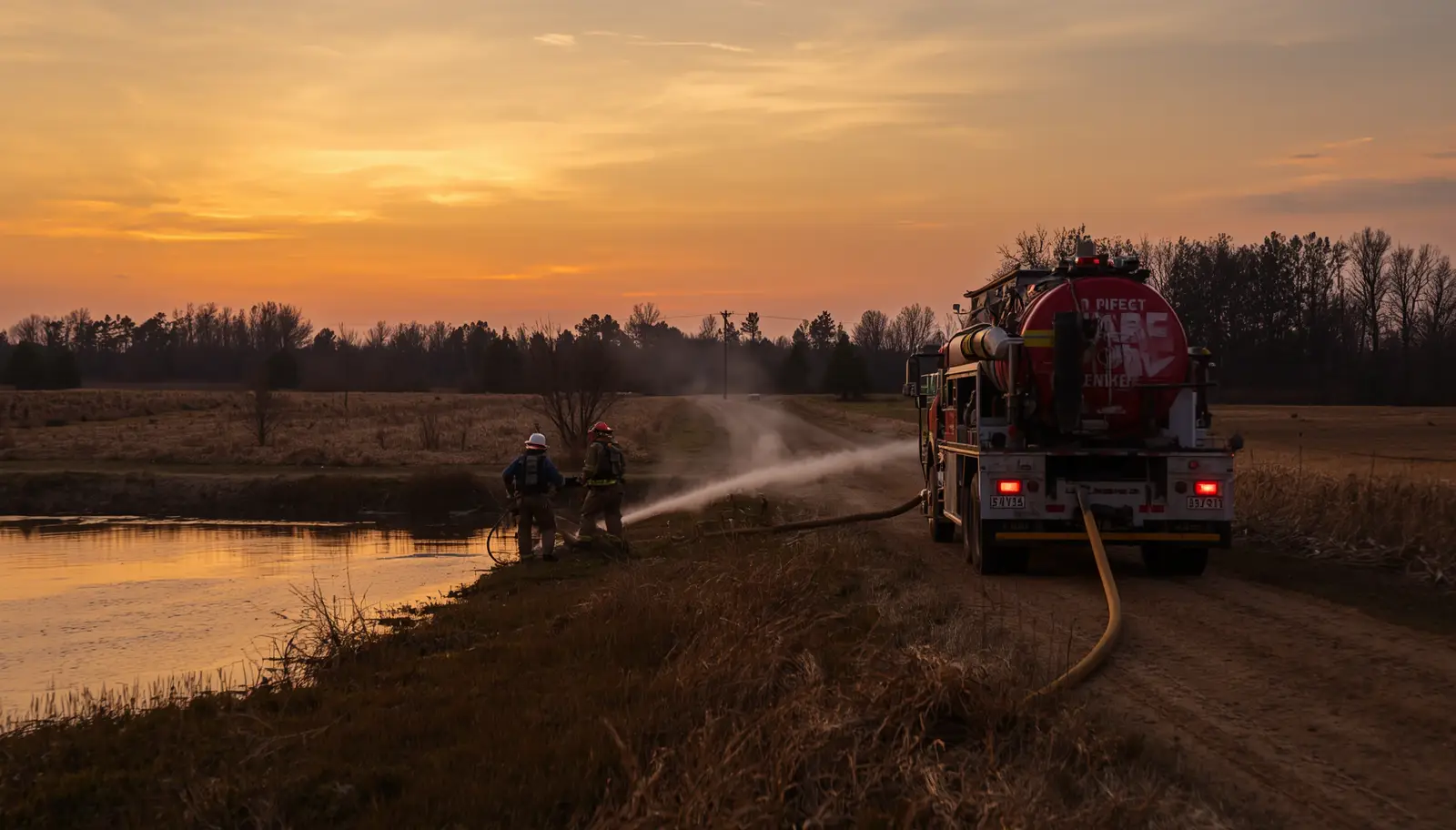
When a fill site is not a hydrant but a natural water source — a pond, a stream, a swimming pool, an irrigation reservoir — tenders fill by drafting: the tender's pump creates suction through a hard suction intake hose submerged in the water source. Drafting has a maximum effective lift of approximately 20 feet — the height above the water surface from which the pump can pull water — and requires the tender to be positioned close enough to the water source to get the hard suction hose submerged.
Not all ponds and streams are reliable draft sources. A stream that is 10 inches deep at the crossing does not provide sufficient intake depth for a hard suction hose without a portable draft strainer set in a pool or collected basin. A pond at the bottom of a steep bank may be within 20 feet of the road but impossible to position the tender adjacent to without driving into the bank. Pre-incident knowledge of draft sites — their location, depth, access, and yield — is part of rural pre-fire planning and is maintained in department records for use during incident response.
Fill Sites and Fill Time
Fill time is the most controllable variable in the shuttle calculation. A dedicated fill site with a large-diameter fill connection, a charged line, and a trained fill site operator can fill a 3,000-gallon tender in 3 to 4 minutes. A fill site where the tender has to wait for the connection to be made, where the fill rate is limited by pipe diameter, or where the operator has not done it many times takes 8 to 12 minutes — doubling the cycle time and halving the effective supply rate for the same number of tenders.
Municipal water systems in rural areas sometimes have fill stations — dedicated large-diameter fill connections at specific points on the distribution system — specifically to support tanker operations for rural fires. These are more reliable and faster than pulling from a fire hydrant (which often has a lower flow rate than a dedicated fill station) and eliminate the need to find a draft site. Pre-established fill stations are maintained by some rural water districts as part of their fire protection service agreement with the local department.
ISO Ratings and What They Mean for Rural Coverage
The Insurance Services Office (ISO) rates fire protection in every community on a scale from 1 (best) to 10 (essentially no protection). Rural communities with no hydrants and volunteer departments are typically rated 8, 9, or 10 depending on their tanker capacity, response times, and staffing. The ISO rating directly affects homeowner insurance premiums — a Class 10 community may pay 3 to 5 times more for homeowner fire insurance than a Class 4 community with equivalent home values, because the insurer's actuarial data on fire loss reflects the actual suppression capability difference.
The ISO rating for tanker operations specifically evaluates whether the department has sufficient tanker capacity to deliver an equivalent flow rate to a hydrant system. ISO considers tankers as an alternative water supply if they can demonstrate a sustained 250-gallon-per-minute equivalent supply for two hours — requiring approximately 30,000 gallons of delivered water. Departments that document their shuttle capability and demonstrate adequate tanker capacity can achieve improved ISO ratings that reduce insurance costs for residents in their coverage area.
Where the System Fails
The tanker shuttle system works well when it has been planned, trained on, and resourced adequately. It fails predictably in specific scenarios. A fill site that runs dry — a small pond, a shallow stream in a dry summer — leaves the shuttle without a source mid-operation. A traffic delay on a single road route that all tenders share can create a 10-minute gap in arrivals that the portable tank cannot buffer. A tender that breaks down mid-shuttle removes one-third or one-quarter of the total supply capacity without warning.
The largest single failure mode is staffing. Rural departments are predominantly volunteer, and their tanker shuttle capability assumes a certain number of drivers available at any time of day or night. A 2am weeknight fire with three tenders available and two drivers available is a 2-tender shuttle — and the supply math changes accordingly. Pre-dawn rural structure fires, when staffing is most likely to be at minimum, are the fires where the shuttle system is most likely to be operating below its designed capacity.


Comments 0
No comments yet. Be the first to share your thoughts!
Leave a Comment