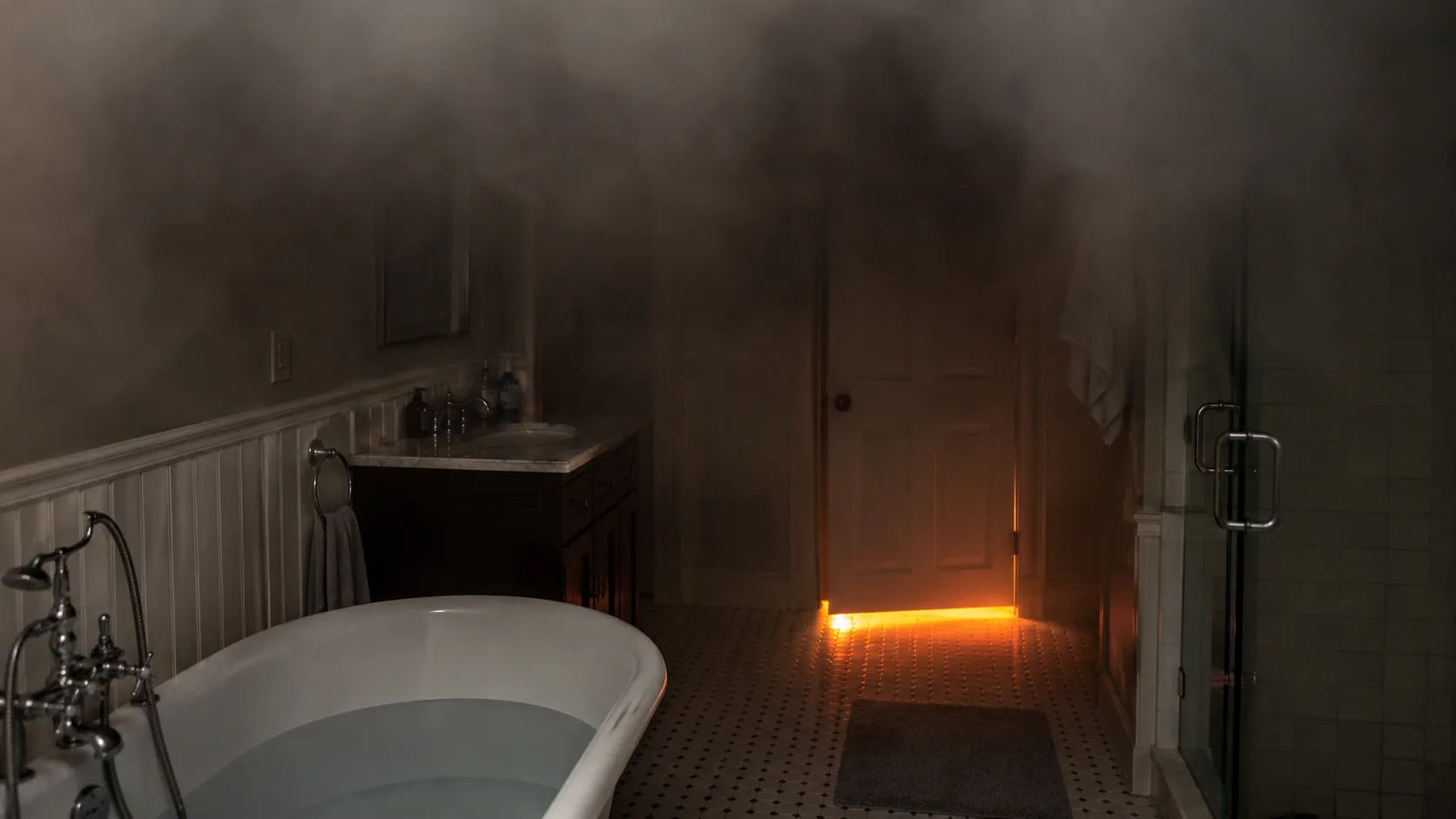
The idea surfaces every few years on social media: if you are trapped in a house fire, get in the bathtub and fill it with water. The bathtub is porcelain, it cannot burn, the water will keep you cool, and you will survive until firefighters reach you. It is a compelling piece of logic. It is also wrong in almost every way that matters.
The bathtub does not protect you from the thing that kills most house fire victims. Roughly 75 percent of residential fire deaths are caused by smoke inhalation — not flames, not burns, not heat. A bathroom with smoke seeping under the door and carbon monoxide accumulating from the rest of the house does not become survivable because you are sitting in water. You are breathing the same air as everyone else in that structure. The porcelain is irrelevant.
In this article:
- Why people believe the bathtub myth
- What smoke actually does in a closed bathroom
- Carbon monoxide and why water does not stop it
- Bathtub vs. sealed bedroom: what the comparison actually looks like
- What to actually do when you cannot escape
- Where firefighters actually find survivors
- The window signal and what it does
Why People Believe the Bathtub Myth
The bathtub idea has a logic to it, and that logic is worth unpacking — because understanding why it feels right is part of understanding why it fails.
Porcelain is non-combustible. That part is true. A bathtub will not burn, and water will not burn. In a fire scenario where the primary danger is direct flame contact, being surrounded by non-combustible material and water sounds like sound thinking. The problem is that direct flame contact is not how most people die in house fires. They die from the byproducts of combustion — carbon monoxide, hydrogen cyanide, and a mix of toxic gases — that travel through air long before any flame reaches them.
The second part of the logic is that water cools things down. Also true, as far as it goes. But the heat threat in a residential fire is not typically a radiation burn from a distance — it is hot gas moving through the structure. Water in a bathtub does not cool the air you are breathing. It cools the surface of the tub.
The myth persists because it sounds like problem-solving under pressure, and humans remember confident-sounding advice. It gets shared because it feels like useful information. It is not useful. In the sequence of events that actually kills people in house fires, the bathtub does not interrupt any of them.
What Smoke Actually Does in a Closed Bathroom
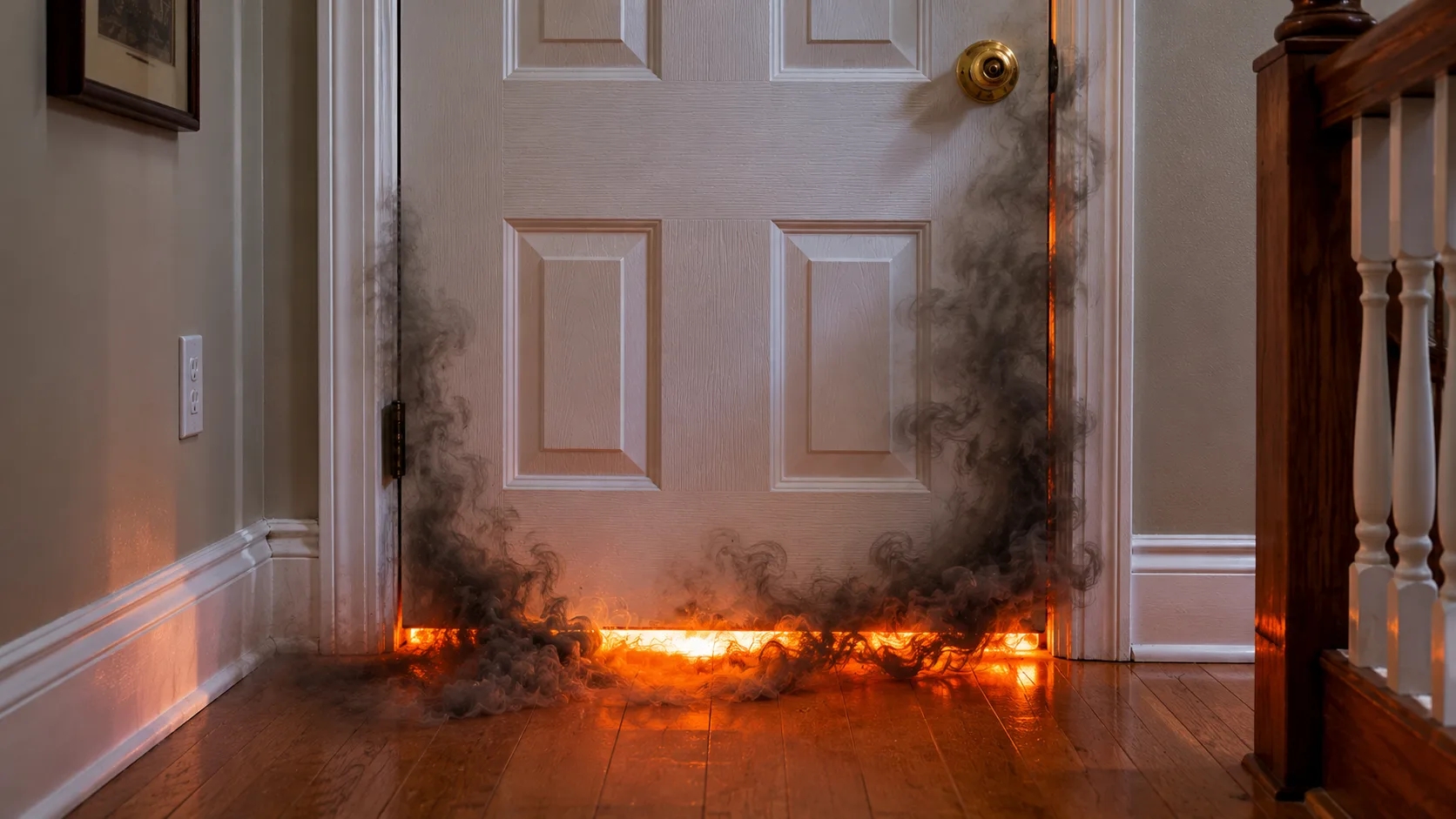
A standard interior bathroom door is not a fire door. It has no fire rating, no self-closing mechanism, and no door sweep. The gap at the bottom of a typical interior door is between a quarter and three-quarters of an inch — enough for smoke to begin flowing through within seconds of hallway concentrations reaching dangerous levels.
Smoke stratifies initially — the heaviest toxic layer settles near the ceiling and the floor layer is relatively cleaner for a period. But that stratification collapses as smoke concentration increases. In a bathroom where the door gap is allowing continuous smoke infiltration, the air quality at floor level degrades within minutes. A person lying in a bathtub at floor level is not below the smoke layer — they are at the level where the densest, coolest smoke settles.
The bathroom also has no natural air supply once smoke is in the hallway. Crack a window and you may draw more smoke from outside if the fire has extended to that face of the structure. A standard bathroom exhaust fan moves air from inside to outside — it does not supply fresh air, and in a fire, running the fan accelerates the draw of smoke-laden air into the space. The bathroom is not a refuge. It is a sealed box with a leaking lid.
Carbon Monoxide and Why Water Does Not Stop It
Carbon monoxide is produced whenever carbon-containing material burns with insufficient oxygen — which is most of the time in a residential fire once the fire has been burning for more than a few minutes. CO is colorless, odorless, and moves through a structure at the same speed as the air carrying it. It passes through every gap that air passes through.
At 200 parts per million, CO causes headache and dizziness within two to three hours. At 800 ppm, symptoms appear within 45 minutes. At 3,200 ppm — a concentration that a working house fire can produce in an adjacent room within minutes — loss of consciousness occurs in 5 to 10 minutes, and death within 25 to 30 minutes. These are not extreme scenarios. They are documented from residential fire investigations.
Water does not absorb carbon monoxide. Sitting in water does not reduce your CO exposure. The only protection from CO in a fire is fresh air — either because you have exited the structure, or because you are in a sealed room with a window cracked to the outside on a face of the building not yet affected by fire and smoke. The bathtub provides neither of those things.
CO is the reason people are found unconscious in rooms where the fire never reached. A person who went to the bathroom during a fire, closed the door, and sat in the tub did not die from flames. They died from CO accumulation in a room that felt like a refuge. The tub being porcelain was not relevant to any part of that sequence.
Bathtub vs. Sealed Bedroom: What the Comparison Actually Looks Like
| Bathtub / Bathroom | Sealed Bedroom (correct shelter) | |
|---|---|---|
| Door fire rating | None — standard interior door | None — but typically better gap seal than bathroom |
| Gap sealing possible | Difficult — usually no materials available at the door | Yes — use bedding, clothing to seal the gap immediately |
| Window access | Small frosted window, usually fixed or very small opening | Full-size operable window for fresh air and signaling |
| Signal visibility | Frosted or obscured — not visible to exterior crews | Full window — white sheet visible to arriving firefighters |
| Phone signal | Same as rest of house | Same — but you can call 911 and give floor/room number clearly |
| CO protection | None — same air as the rest of the structure | Marginally better with sealed door gap; window crack provides fresh air |
| Rescue time | Firefighters must search — bathroom may not be first priority | Window signal brings crews directly to your location |
The bedroom wins on every operational dimension. The one thing the bathroom has — a non-combustible tub — is not relevant to any of the factors that determine survival. A bedroom with a sealed door, a cracked window on the non-fire side, and a phone to call 911 is categorically a better shelter position than a bathroom with a bathtub.
What to Actually Do When You Cannot Escape
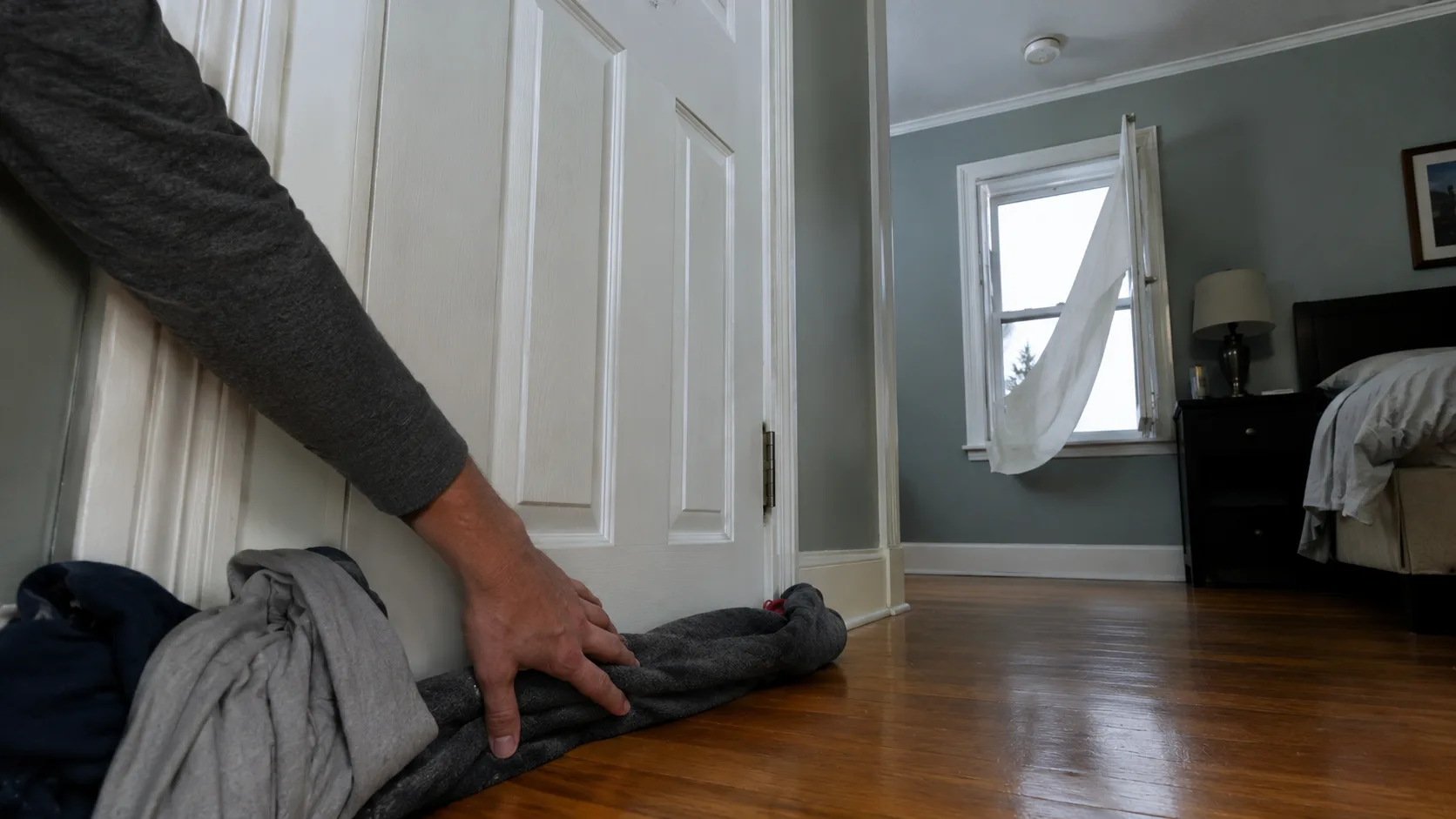
If you are in a house fire and cannot safely reach an exit, here is the sequence that gives you the best chance:
- Go to a bedroom — not a bathroom. A room with a full-size operable window. Ground floor if possible; second floor is workable if the window can be opened.
- Close the door. Do not lock it — firefighters need to open it — just close it. A closed door between you and the fire buys time measured in minutes.
- Seal the door gap immediately. Use anything available — clothing, bedding, towels. Push it firmly against the bottom of the door and along the sides. This is not a perfect seal, but it extends the survivable air quality in the room significantly.
- Call 911. Give them the address, your floor, your room number, and the fact that you are shelter-in-place and cannot exit. Stay on the line. Dispatchers track your location and pass it directly to the crew commander.
- Open the window slightly on the side away from the fire and smoke. You are not trying to escape through it — you are getting fresh air into the room and creating a visual for rescuers.
- Signal from the window. A white sheet, a pillowcase, any light-colored item visible from the exterior. Hang it from the window or wave it. Arriving firefighters scanning for victims go to signals first.
- Stay low and stay calm. The air at floor level is the last to be compromised. Sit or lie near the window. You are waiting for the fire department, which is already on the way.
Where Firefighters Actually Find Survivors
Fire investigators and search team leaders track where survivors are found in residential fires. The pattern is consistent: survivors are found near windows, near exterior doors, and in rooms with sealed doors where they sheltered in place and signaled. Survivors are rarely found in interior rooms with no window access and no way to signal their position.
When the bathroom comes up in post-incident reviews, it is almost always in a different context — a victim found in a bathroom who went there and could not get to a better location, not a survivor who chose it as a deliberate strategy. The bathtub specifically is a search location, not a survival story.
The firefighters searching a burning house are working systematically — typically along walls from the entry point, checking every room on a floor before moving to the next. A signal from a window tells the search team exactly where to go. A person in a bathroom with no window and no way to signal is found when the systematic search reaches that point — and the systematic search takes time that smoke inhalation does not wait for.
The Window Signal and What It Does
Incident commanders arriving at a working residential fire are managing multiple priorities simultaneously — water supply, crew deployment, exposure protection, and victim location. A visible signal from a window collapses the search problem. Instead of searching every room on every floor, the crew goes directly to the signaling room. In a house fire where conditions are deteriorating, the difference between a 4-minute search and a 90-second direct rescue can be the difference between a viable victim and one who is not.
The signal does not need to be elaborate. A white or light-colored item hung from a window, or a person visible at the window, is sufficient. Flashlights work at night. Shouting from the window works if the window is open and you are on a floor where your voice carries over the fire noise. Any of these is better than no signal from a closed interior room.
The window itself is the last resort if the room becomes untenable before firefighters reach you. Hanging from a window ledge and dropping reduces fall distance. A knotted bedsheet tied to a heavy piece of furniture lowers you further. Neither of these is the preferred outcome — the preferred outcome is that the fire department reaches you in the sealed room. But having the window available as an option is why the bedroom beats the bathroom on every count.

Comments 0
No comments yet. Be the first to share your thoughts!
Leave a Comment