Chimney Fire Response: What Firefighters Do on Scene
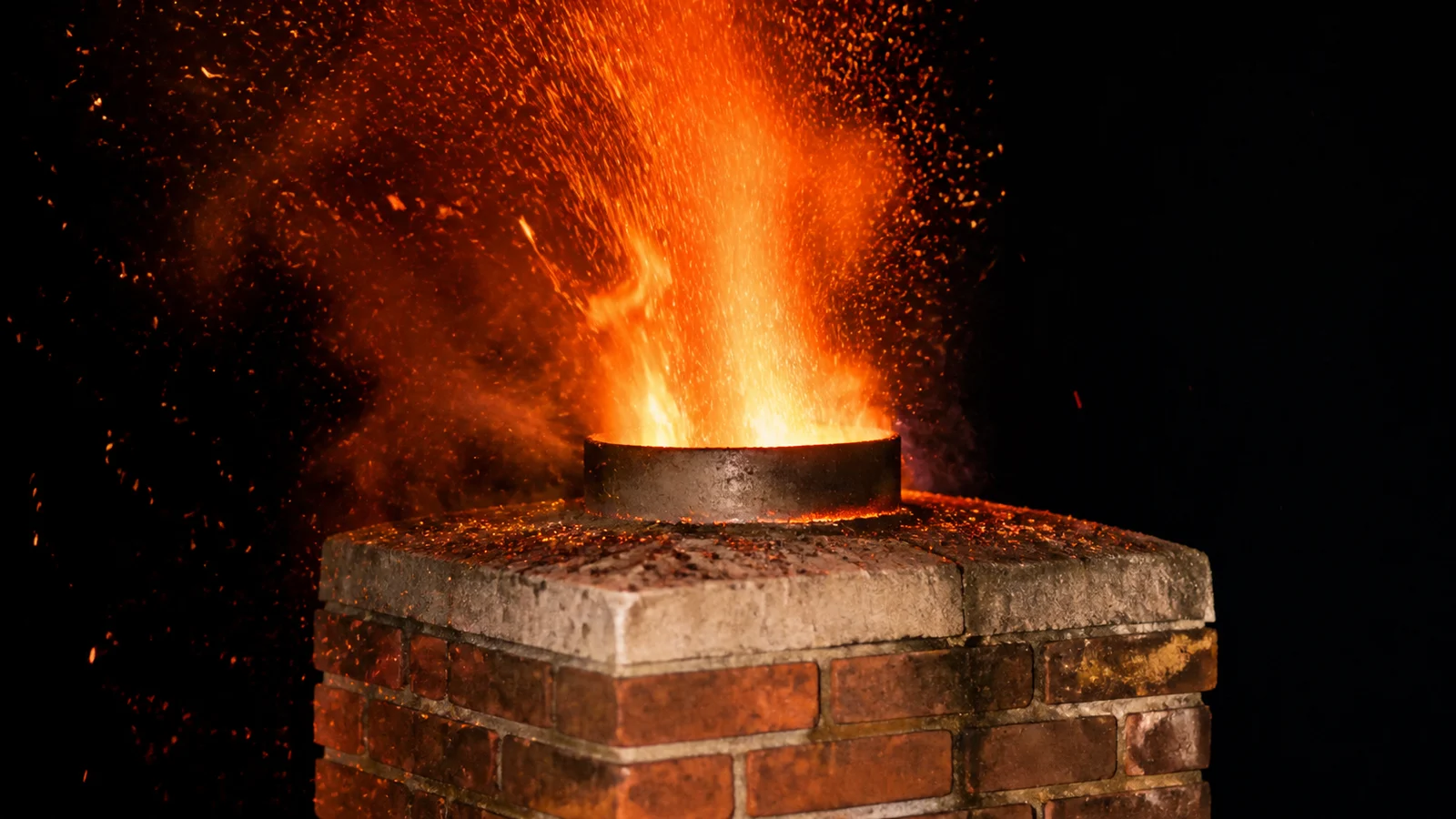
Chimney fires generate calls year-round but peak in fall and winter when wood-burning fireplaces and stoves see heavy use. Most chimney fires are caused by creosote — a highly flammable residue that accumulates on flue walls — igniting inside the flue. What looks like a contained chimney problem from the street can be extending into combustible structural framing around the firebox, smoke shelf, or flue liner within minutes of ignition.
Jump to:Recognizing active chimney fire · Fireground response steps · Thermal imaging inspection · Checking for extension · Extinguishment methods · When it becomes a structure fire · FAQ
Recognizing an Active Chimney Fire
Active chimney fires have a distinctive presentation that distinguishes them from normal fireplace operation:
- Roaring or rumbling sound — described by residents as similar to a freight train or jet engine coming from the chimney
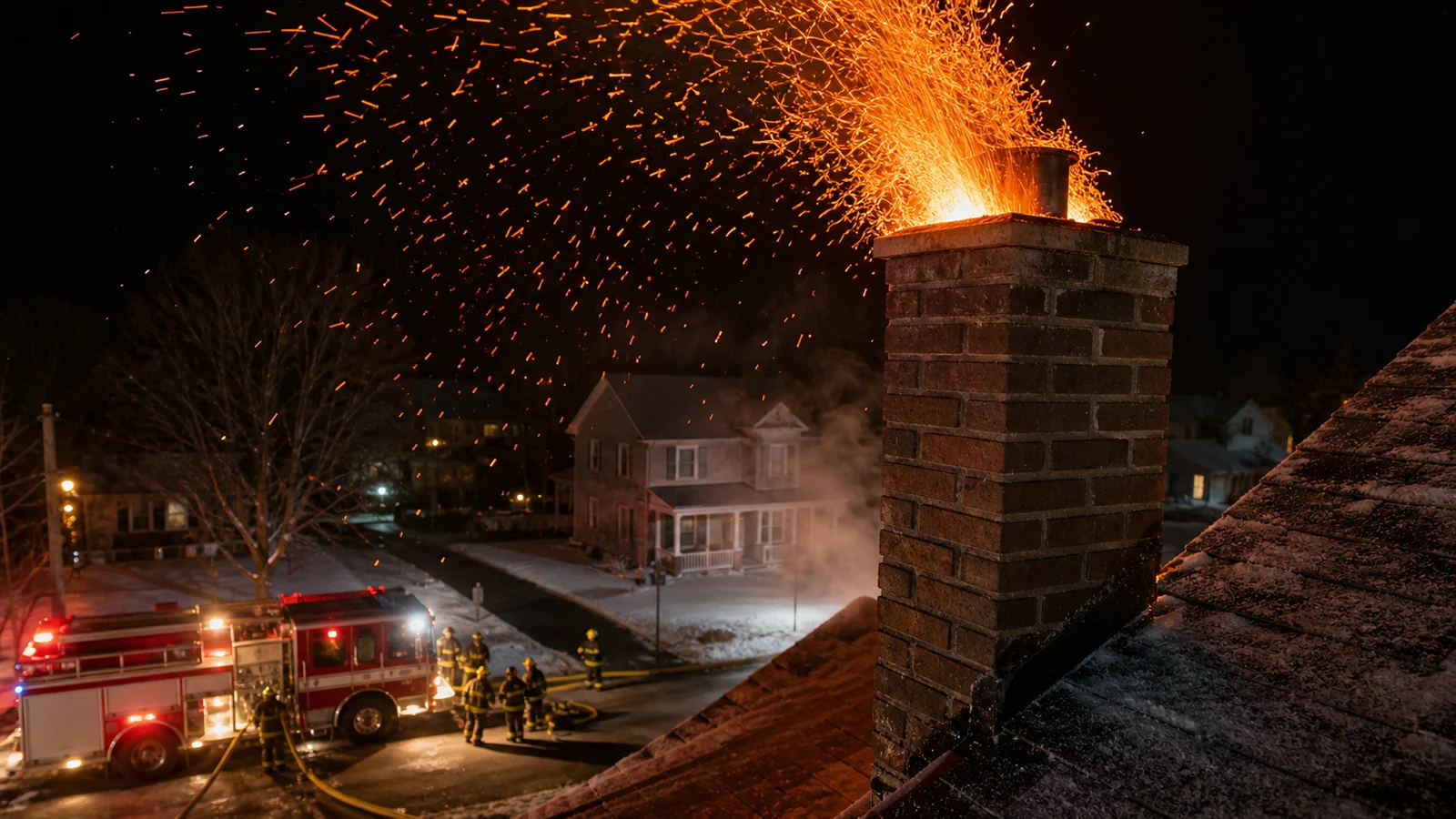
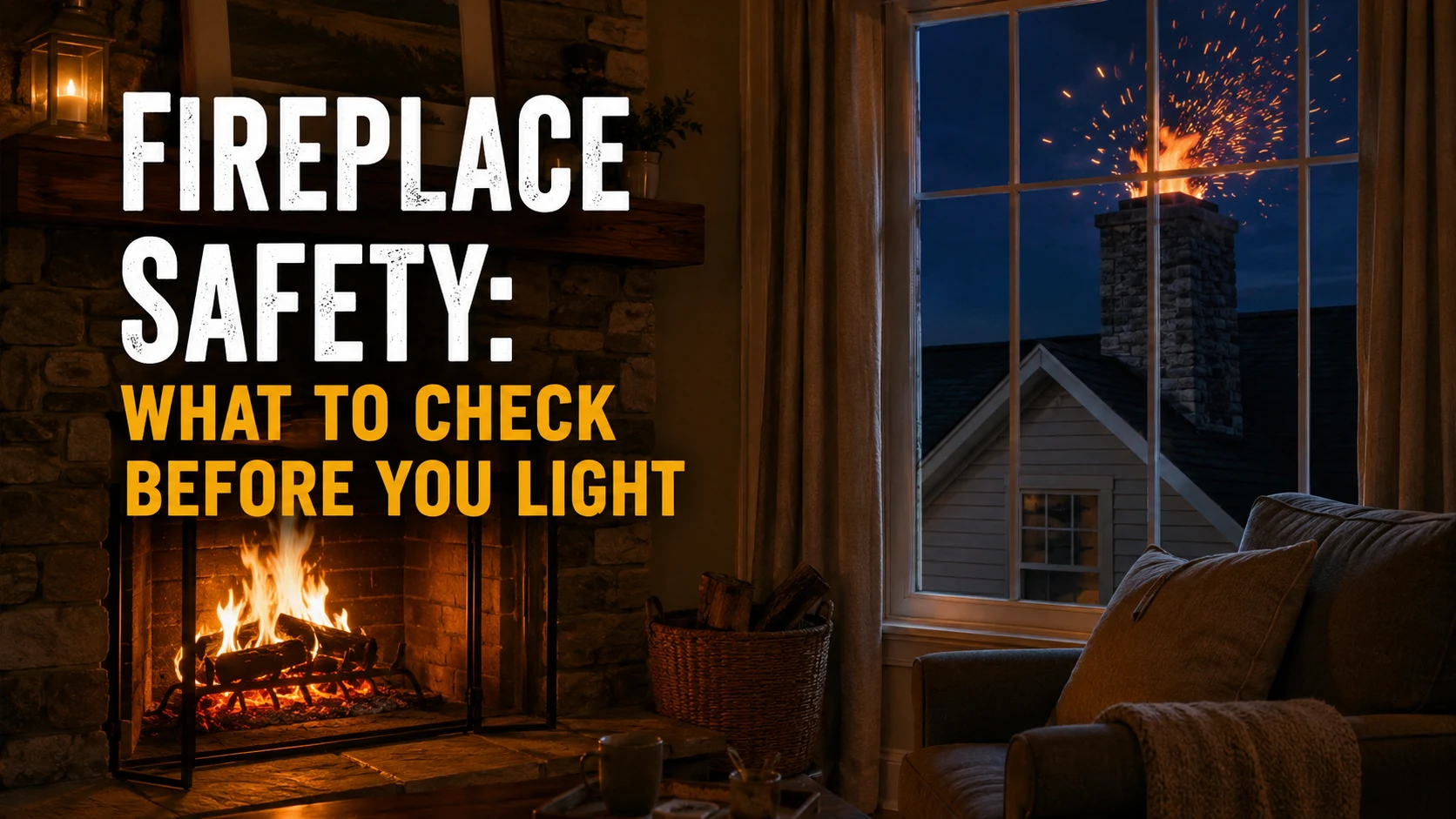
- Dense black or gray smoke from the chimney top, often with visible sparks or embers
- Flames or glowing material visible at the top of the flue when viewed from outside
- Intense heat from the fireplace insert or stove body that exceeds normal operating temperature
- Cracking sounds from the chimney as clay flue tiles crack under thermal stress
Fireground Response Steps
- Scene size-up from the exterior. Observe chimney top, roof, and all exterior walls for smoke, sparks, or signs of extension. Note construction type and chimney material (masonry vs. prefabricated metal).
- Interview the occupant. How long has the fire been burning? What was burning in the fireplace? Was there any unusual smell or sound before the fire department was called? When was the chimney last swept?
- Close the damper if safe to do so. Closing the fireplace damper reduces the air supply to the chimney fire and can help contain it to the flue. Only do this if the firebox is not already extending fire into the room.
- Assign a roof crew. A two-person team on the roof (with fall protection where required) monitors the chimney top and can pour dry chemical or water down the flue if needed. This crew should not be on the roof if sparks are actively shooting out.
- Assign an interior inspection crew. Two firefighters with a thermal imaging camera and hand tools inspect all areas adjacent to the chimney — firebox, smoke chamber, attic space around the flue, wall cavities — for signs of extension.
- Protect the floor in front of the fireplace. If the firebox is actively throwing sparks or burning embers into the room, a charged line should be positioned inside.
Prefabricated metal chimneys (zero-clearance fireplaces common in homes built after the 1970s) are more vulnerable to permanent damage from chimney fires than masonry chimneys. Even a single chimney fire can warp the metal liner and combustion chamber, making the unit unsafe for future use. This should be documented in your incident report and disclosed to the homeowner.
Thermal Imaging Inspection Protocol
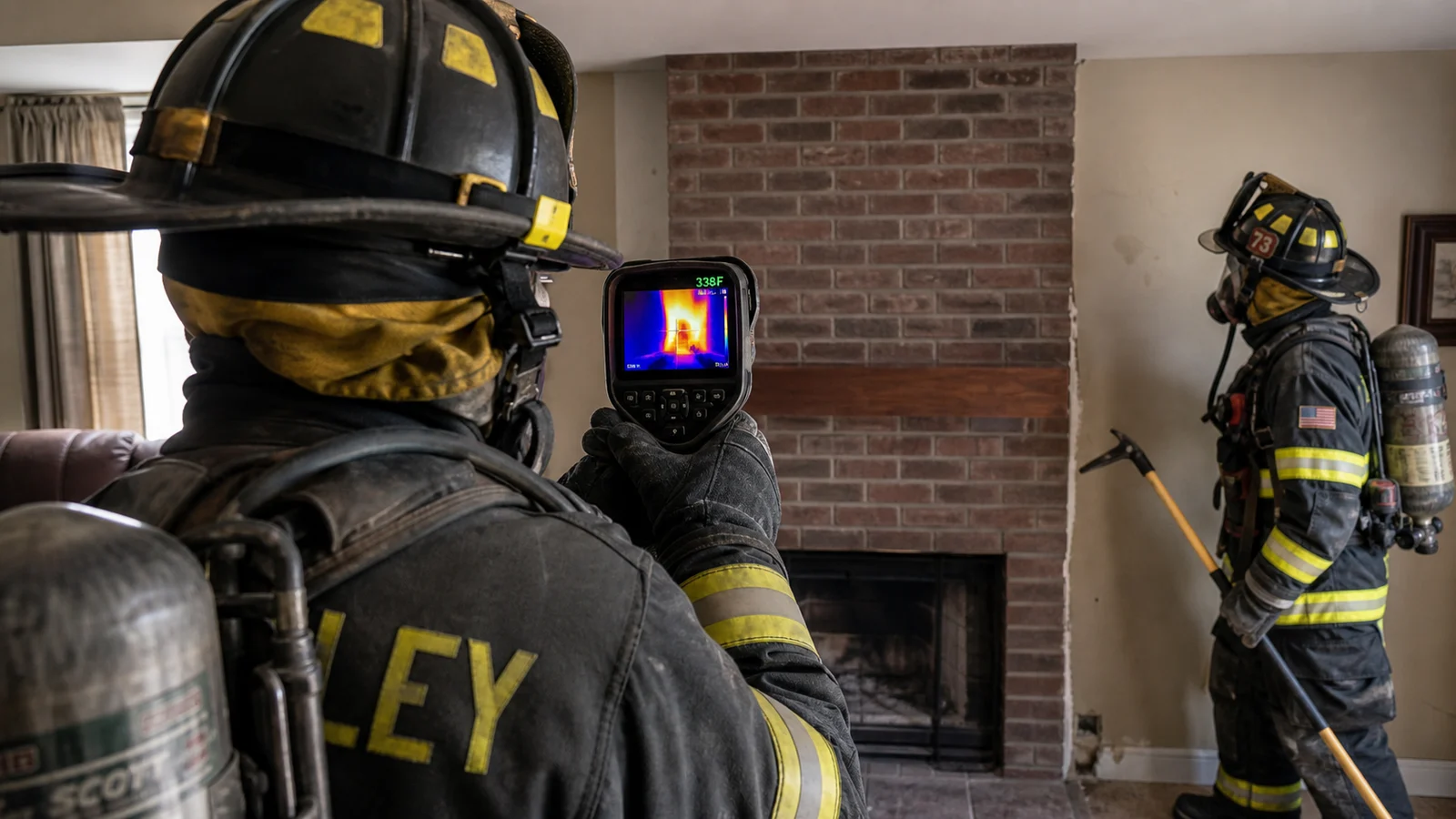
Thermal imaging is the most important tool for chimney fire inspection. Scan protocol:
- Scan the full height of interior walls adjacent to the chimney on all floors
- Scan the ceiling directly above the fireplace and around the chimney penetration
- In the attic, scan all framing within 24 inches of the flue
- Scan the exterior chimney face and cap for thermal anomalies
- Rescan all areas after any extinguishment to confirm cooling
Document TIC readings. Any reading showing elevated heat in combustible framing adjacent to the flue requires physical inspection — opening the wall or ceiling to visually confirm no extension.
Checking for Extension
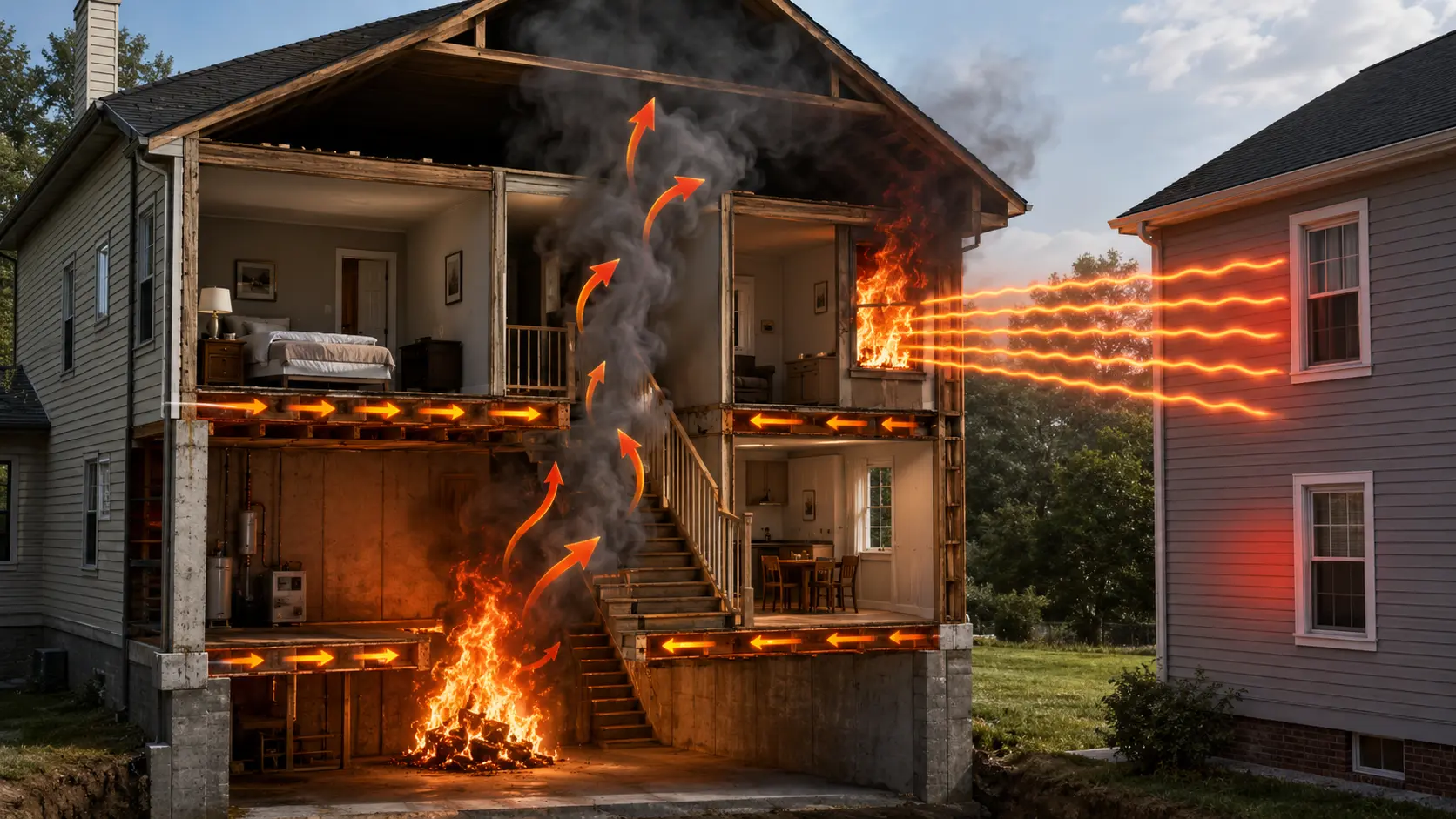
Extension of fire from the flue into the building structure is the primary life safety concern at any chimney fire. Extension pathways include: cracked or failed clay flue tiles allowing direct heat transfer to adjacent framing, loose or missing mortar joints in masonry chimneys, the smoke shelf and smoke chamber area above the firebox, and attic framing in direct contact with or too close to the flue pipe.
When TIC shows elevated readings in framing areas, do not assume it is residual radiant heat from the flue. Open the wall or ceiling with hand tools and physically inspect. The cost of patching drywall is far lower than the cost of missing a smoldering extension that flares up after crews leave.
Extinguishment Methods
| Method | Application | Notes |
|---|---|---|
| Close damper | First action for any active chimney fire | Reduces O₂ supply; effective for self-limiting the fire |
| Dry chemical (chimney bomb) | Pour or drop into flue from chimney top | Commercial chimney fire suppressants; fast knockdown |
| Small water application from roof | Minimal water down the flue | Risk of steam production and thermal cracking of clay tiles; use sparingly |
| Charged line through firebox | Only if fire is extending into firebox/room | Avoid flooding the firebox; focus on extension, not the flue |
Avoid large volumes of water into an active chimney. Rapidly cooling a superheated clay tile flue with water causes thermal shock cracking of the liner, which creates extension pathways and makes the chimney permanently unsafe.
When a Chimney Fire Becomes a Structure Fire
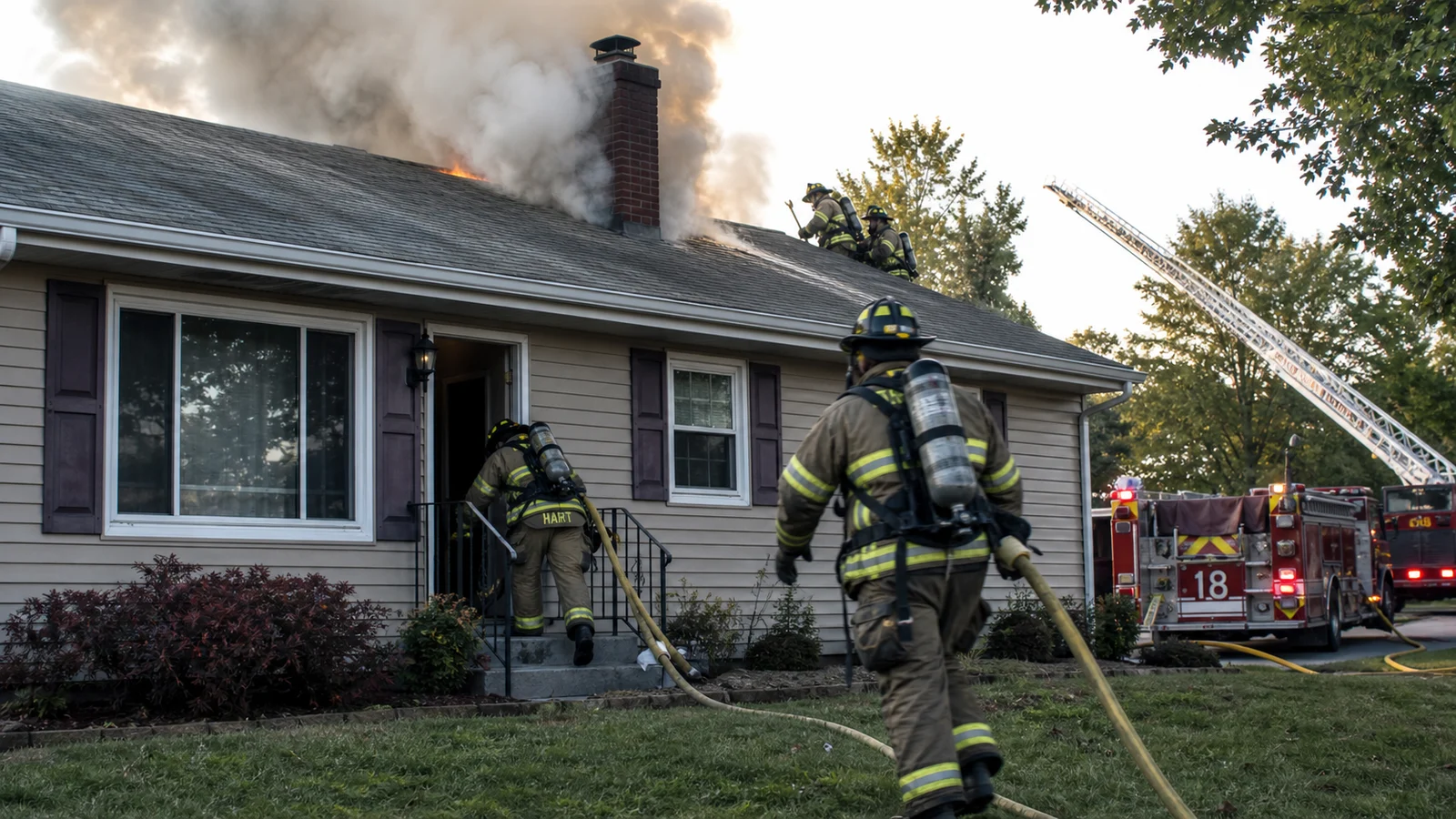
Escalate from chimney fire operations to full structure fire operations when:
- TIC confirms elevated heat or visible smoke in attic framing, wall cavities, or ceiling above the firebox
- Opening of any wall or ceiling reveals active flame or glowing embers in structural framing
- Smoke is showing from areas of the structure not directly adjacent to the firebox
- Any crew member reports visible fire outside the flue
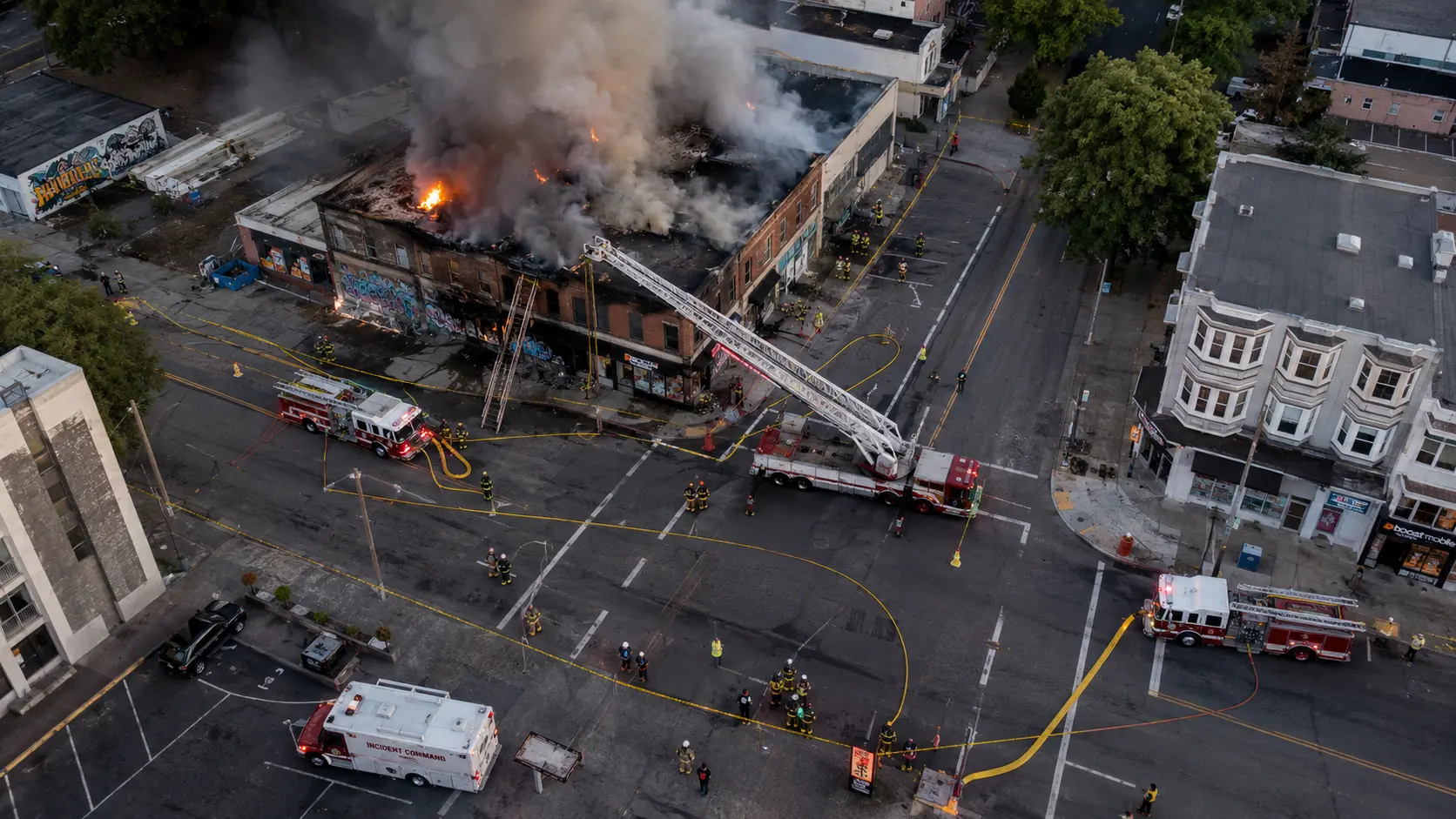
At this point transmit a working structure fire, request additional resources, establish incident command, and transition to appropriate structural firefighting tactics for the area of involvement.
Frequently Asked Questions
How do you put out a chimney fire?
The first step is closing the fireplace damper to restrict oxygen supply. Dry chemical suppression agents dropped into the flue from the chimney top provide fast knockdown. Avoid large water applications into the hot flue. The primary fireground concern is checking for extension into combustible structural framing, not extinguishing the flue fire itself.
Can a chimney fire cause a house fire?
Yes. Cracked flue tiles, failed mortar joints, and direct contact between the superheated flue and combustible framing are common extension pathways. Any chimney fire that has burned for more than a few minutes requires thorough inspection of all adjacent structural areas with a thermal imaging camera.
How long does a chimney fire burn?
Creosote chimney fires typically burn for 5–30 minutes depending on the amount of accumulated creosote. However, even a fire that self-extinguishes may have cracked the flue liner and left embers in adjacent framing — which is why a full post-fire inspection is required even when the active fire appears to have stopped.
Comments 0
No comments yet. Be the first to share your thoughts!
Leave a Comment