Attic Fire Operations: Tactics, Hazards, and Entry Decisions
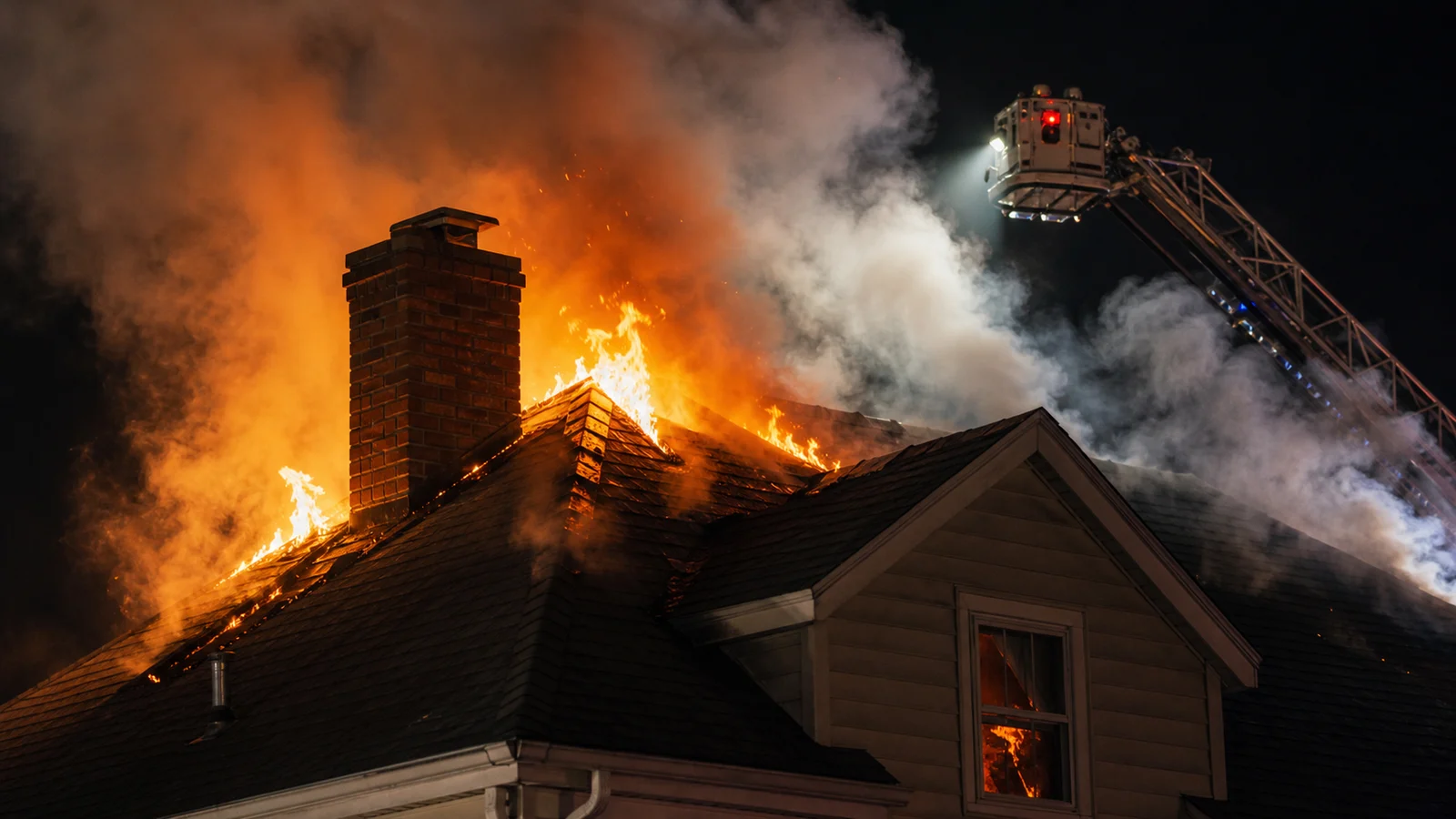
Attic fires combine three dangerous characteristics: difficult or impossible access for direct attack, rapid spread through interconnected rafter bays, and catastrophic collapse potential from truss assemblies under fire load. A fire that has been burning undetected in an attic for 20 minutes before crews arrive may have already compromised the structural integrity of the entire roof system — meaning operations that would be routine in a room-and-contents fire become life-threatening the moment a crew goes under that roof.
Jump to:Recognizing attic fire on arrival · Construction hazards · Attack options · Ventilation · Thermal imaging · Going defensive · FAQ
Recognizing Attic Fire on Arrival
Attic fires often present subtly in early stages, then transition to catastrophic conditions faster than crews expect. Key arrival indicators:
- Smoke pushing from soffit vents, ridge vents, gable ends, or around roof penetrations with no visible flame below the ceiling line
- Discoloration or blistering of roofing materials with no fire showing on the exterior
- Ceiling plaster or drywall sagging, cracking, or showing water staining from suppressed heat
- Residents report smoke but no visible fire inside — often from a slow-developing ignition (electrical fault, improperly installed recessed lighting, chimney extension)
- Thermal camera showing hot ceiling plane with no visible room fire below
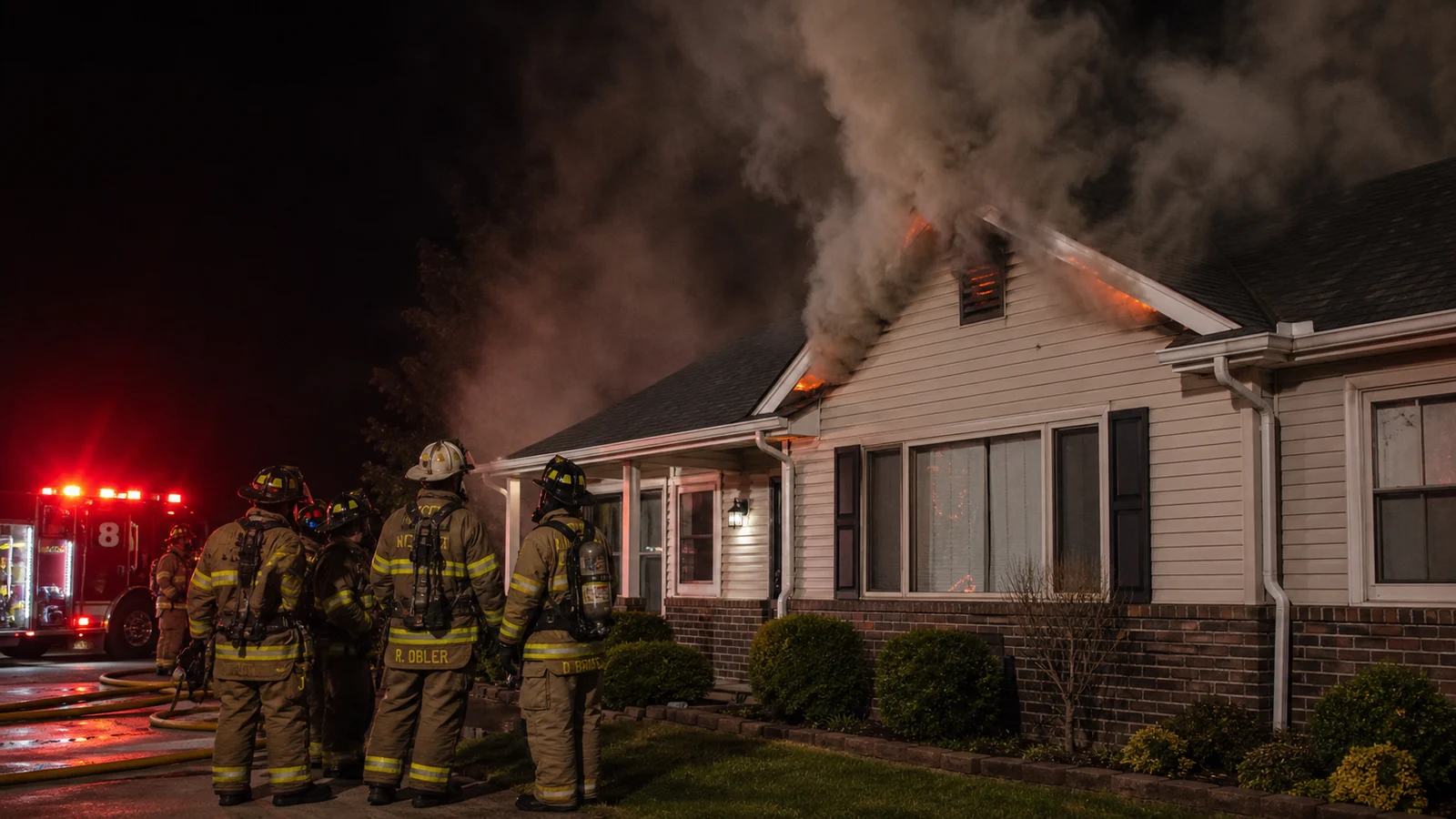
Attic fires lie. The absence of visible flame below the ceiling or on the exterior does not mean the fire is small. A fire that has burned for 10–15 minutes in an attic with gable vents may have spread across the entire attic space and begun compromising the roof structure — while appearing as nothing more than "smoke showing" from the street.
Construction: The Critical Hazard Factor
| Attic construction | Collapse risk | Key hazard |
|---|---|---|
| Dimensional rafter construction (pre-1970s) | Moderate; slower failure | Individual rafter failure; more warning signs |
| Metal-plate connected wood trusses | High; rapid failure | Single truss failure triggers progressive collapse across span |
| Lightweight parallel chord trusses | Very high; catastrophic failure | Thin chord members fail quickly; entire roof drops with no warning |
Truss roof construction — now the standard in residential construction built after approximately 1980 — is the dominant collapse hazard in attic fire operations. Metal gang nail plates hold the truss assembly together; under direct fire, those plates lose their grip and the entire roof section can fail suddenly and completely. Unlike rafter construction where one member failing affects only its local span, a truss failure propagates laterally.
If construction type is uncertain: Check the age and style of the structure. Homes built after 1980 almost certainly have truss roofs. Look at the roofline — smooth, uniform pitch with no visible rafter tails often indicates truss construction. When in doubt, treat it as truss construction.
Attack Options for Attic Fires
Ceiling entry (interior attack)
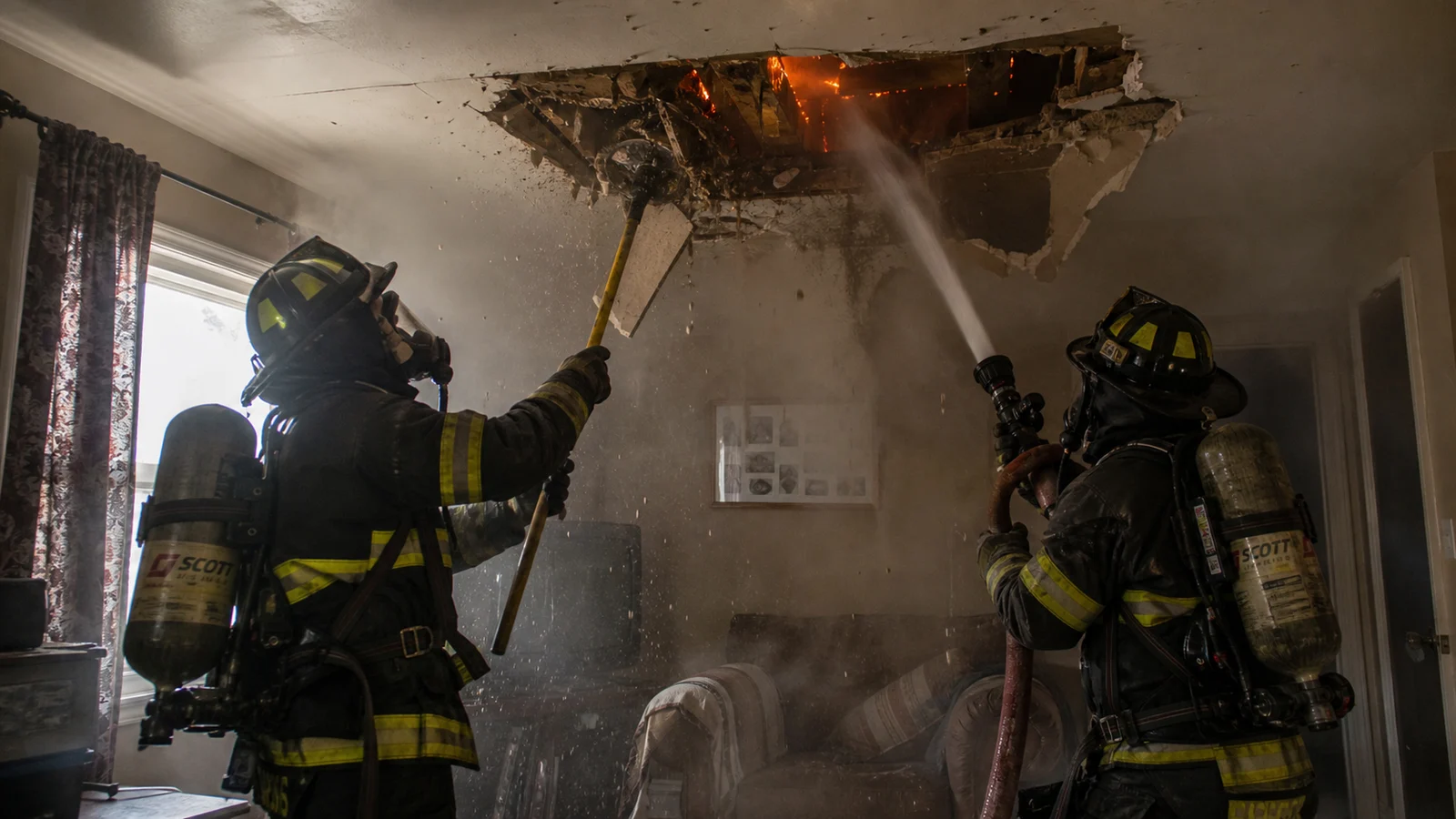
A crew inside the structure opens the ceiling with a pike pole or halligan, inserts a cellar nozzle or straight stream, and applies water upward into the attic space. This can be effective in early-stage attic fires where the attic access is limited and the ceiling is still intact. Requirements: confirmed sound ceiling and floor assembly, construction assessed as non-truss or truss with minimal fire time, charged line, RIT in place.
Scuttle hatch or pull-down stair entry
Direct entry into the attic through the access hatch with a firefighter and hoseline. Provides the most direct attack on the fire but places a firefighter in the most dangerous position — inside a burning attic space, often unable to stand, with a compromised structure overhead. Reserve for early-stage, limited fires confirmed by thermal imaging as small and contained.
Exterior roof operations (cautiously)
Opening the roof with an axe or power saw provides ventilation and direct attack access. However, operations on a burning truss roof are extremely dangerous — the structural member you are standing on may be the one that fails. Many departments now prohibit roof operations on confirmed truss construction under fire conditions. Evaluate this decision against the benefits very carefully.
Defensive exterior operations
Master streams or large-caliber handlines directed at the attic through gable ends or ventilation openings from the exterior, without interior crew commitment. When fire has significant attic involvement or truss construction is confirmed with unknown fire duration, this is often the correct tactical choice.
Ventilation
Attic fires are often ventilation-limited because the attic space itself acts as a sealed compartment with small openings. Effective ventilation options include opening both gable ends to create cross-ventilation, opening ridge vents or cutting a ridge opening, and coordinating any opening with the water application — do not ventilate without an active line in position.
PPV fans are generally ineffective for direct attic ventilation but can be useful for clearing the living space below after the attic fire is knocked down and the ceiling is opened.
Thermal Imaging for Attic Fires
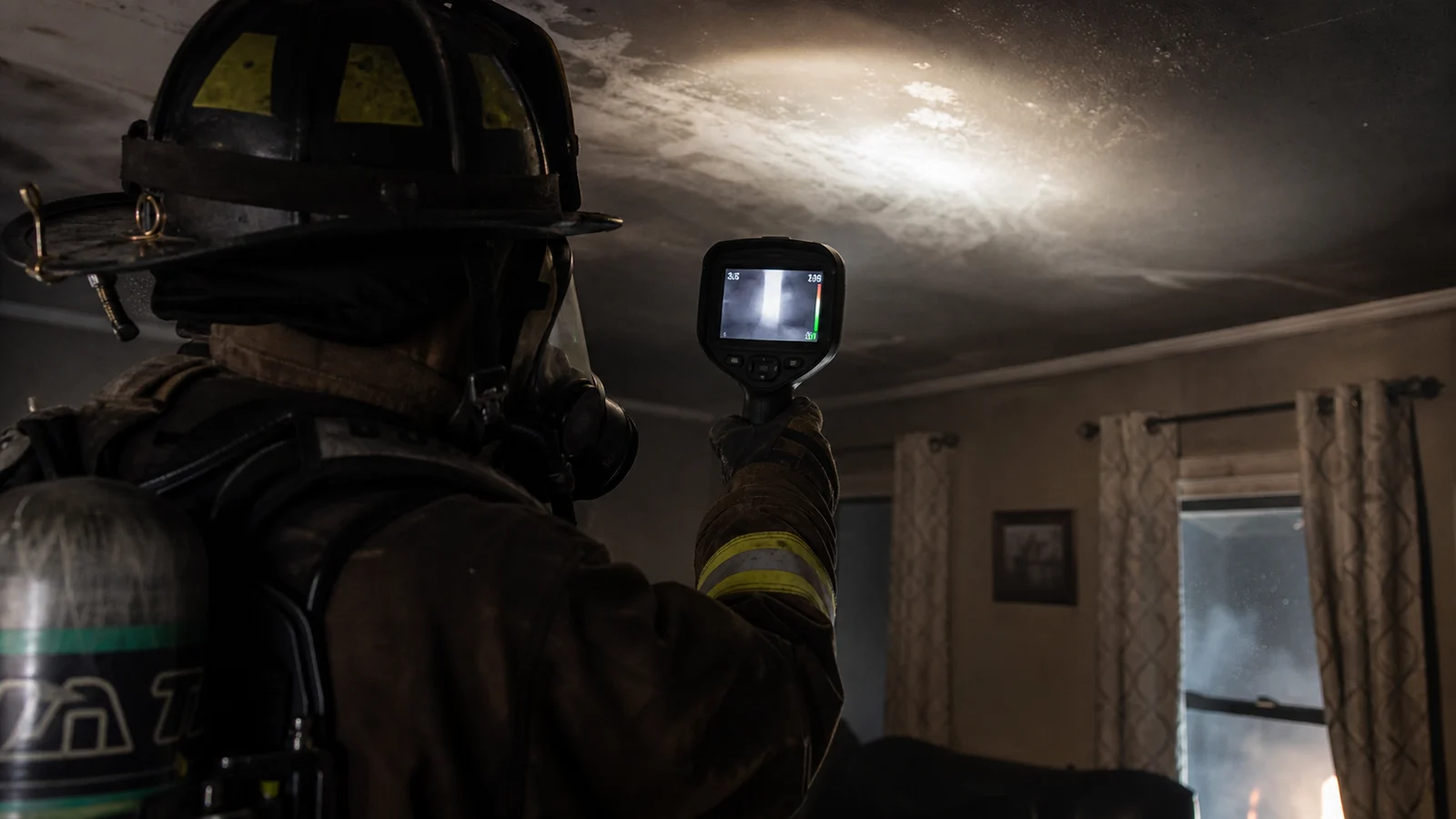
Thermal imaging cameras are critical tools for attic fire operations. Key uses:
- Confirming fire location: Scan the ceiling plane from below to identify the hot zone before committing to ceiling opening location
- Tracking fire spread: Map how far heat has traveled across the attic before and during operations
- Post-knock down verification: After apparent extinguishment, scan the entire ceiling and wall tops for hidden heat pockets before crews are released from overhaul
- Exterior scan: Scanning roofline from the exterior can reveal fire spread and hot zones before entry
When to Go Defensive
Transition to defensive operations when any of the following are present: confirmed truss construction with unknown or significant fire duration, visible roof sagging or deflection, multiple truss bays showing fire involvement on TIC, exterior flame through roof materials, or any crew reporting structural sounds (cracking, popping) from above. Pulling crews from beneath a burning truss roof is always the right call when conditions indicate it is near failure.
Frequently Asked Questions
How fast can an attic fire spread?
Extremely fast. An attic fire with air supply from gable or soffit vents can spread the full width of a residential attic in 10–15 minutes. Fires burning undetected — started by an electrical fault or improperly installed fixture — may have extensive involvement before any crew arrives on scene.
Are truss roof attics more dangerous than rafter attics?
Yes, significantly. Truss assemblies can fail catastrophically in as little as 5–8 minutes of direct fire involvement, with the entire roof section dropping at once. Dimensional rafter construction gives more warning and fails more locally. Always identify construction type as part of your size-up.
Can you fight an attic fire from inside the structure?
Yes, in early-stage fires with confirmed sound construction and limited fire spread. Opening the ceiling and applying water upward can be effective when done with a charged line and proper assessment. The longer the fire has been burning and the more extensive the attic involvement, the less viable interior operations become.
Comments 0
No comments yet. Be the first to share your thoughts!
Leave a Comment