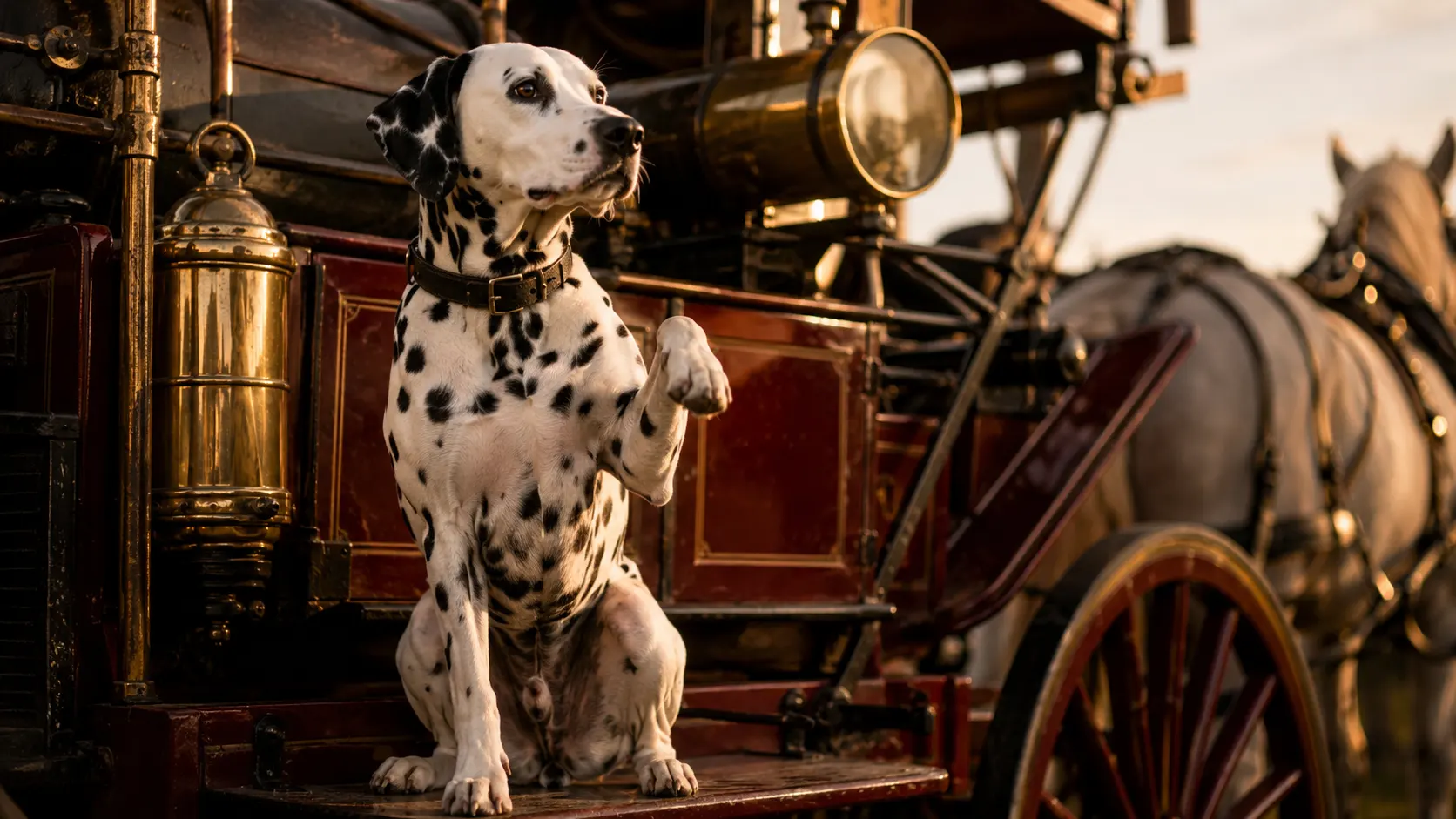

The first time I saw a real Dalmatian sitting on the running board of a fire engine — not in a cartoon, an actual dog at an actual station during a visit years ago — I asked the crew the same question every kid asks: why this breed, and not, say, a German Shepherd or a Lab? The answer the engineer gave me stuck with me: "Because a hundred years ago, this dog could run next to our horses all day and never fall behind." That's the whole story in one sentence, and almost nobody knows it anymore because the horses disappeared a century before the tradition did.
Dalmatians weren't chosen because they look sharp next to red paint. They were bred, for centuries before fire apparatus existed, as coach dogs — animals whose entire job was to run beside horse-drawn carriages, matching their pace for hour after hour. When fire departments were running horse-drawn steam pumpers through crowded city streets, that specific skill turned out to solve three real operational problems at once.
In this article:
The Coach Dog Job That Came Before Fire Trucks Existed
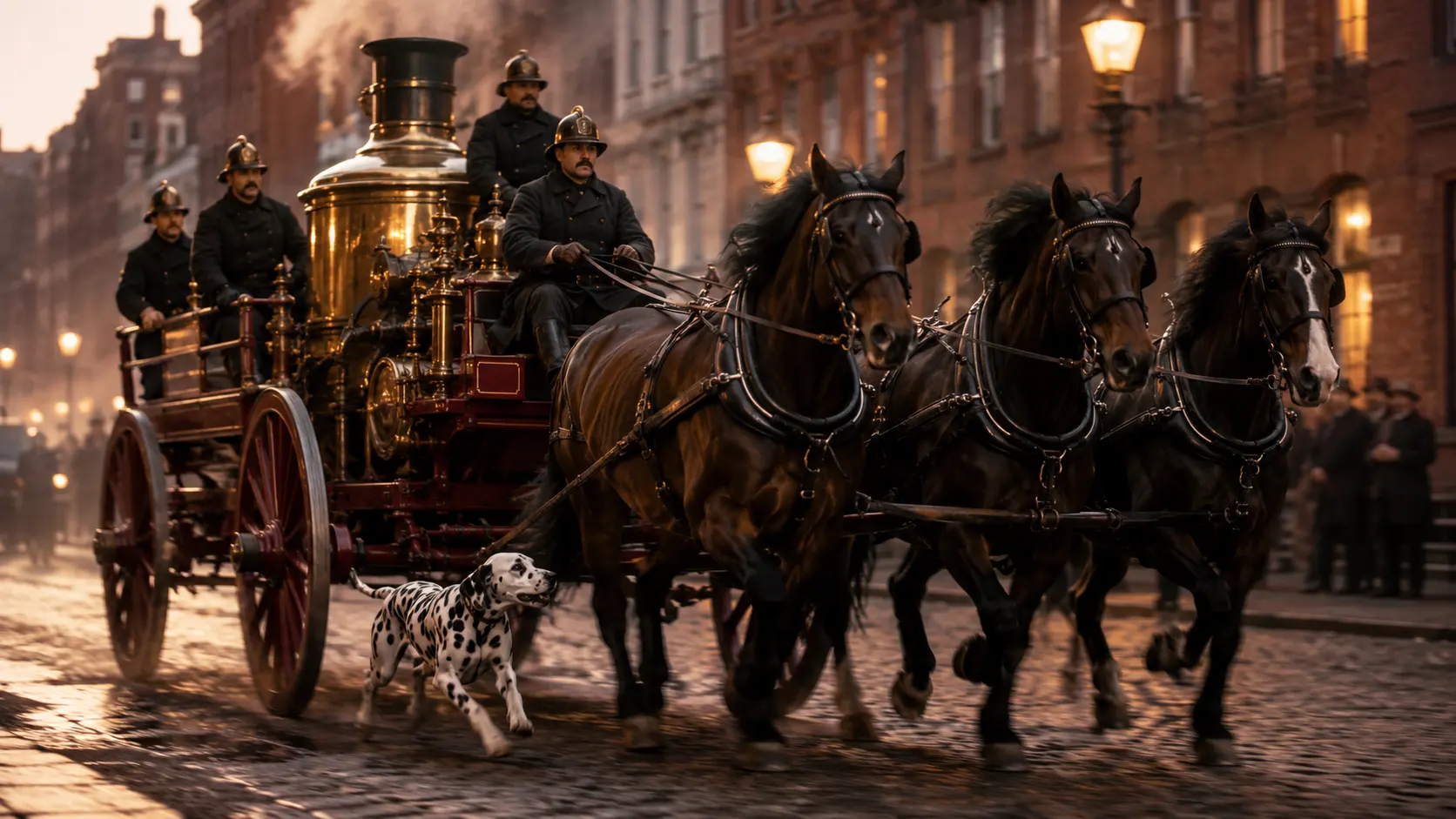
Centuries before anyone connected Dalmatians to firefighting, European coachmen used them as coach dogs — animals bred specifically for an unusual combination of traits: high endurance, comfort around horses, and a natural instinct to run in formation alongside a moving vehicle rather than darting around it. A well-trained Dalmatian could hold pace with a carriage for well over a dozen miles, weaving underneath the horses' legs or running just ahead of the lead horse's nose to help clear a path through crowds.
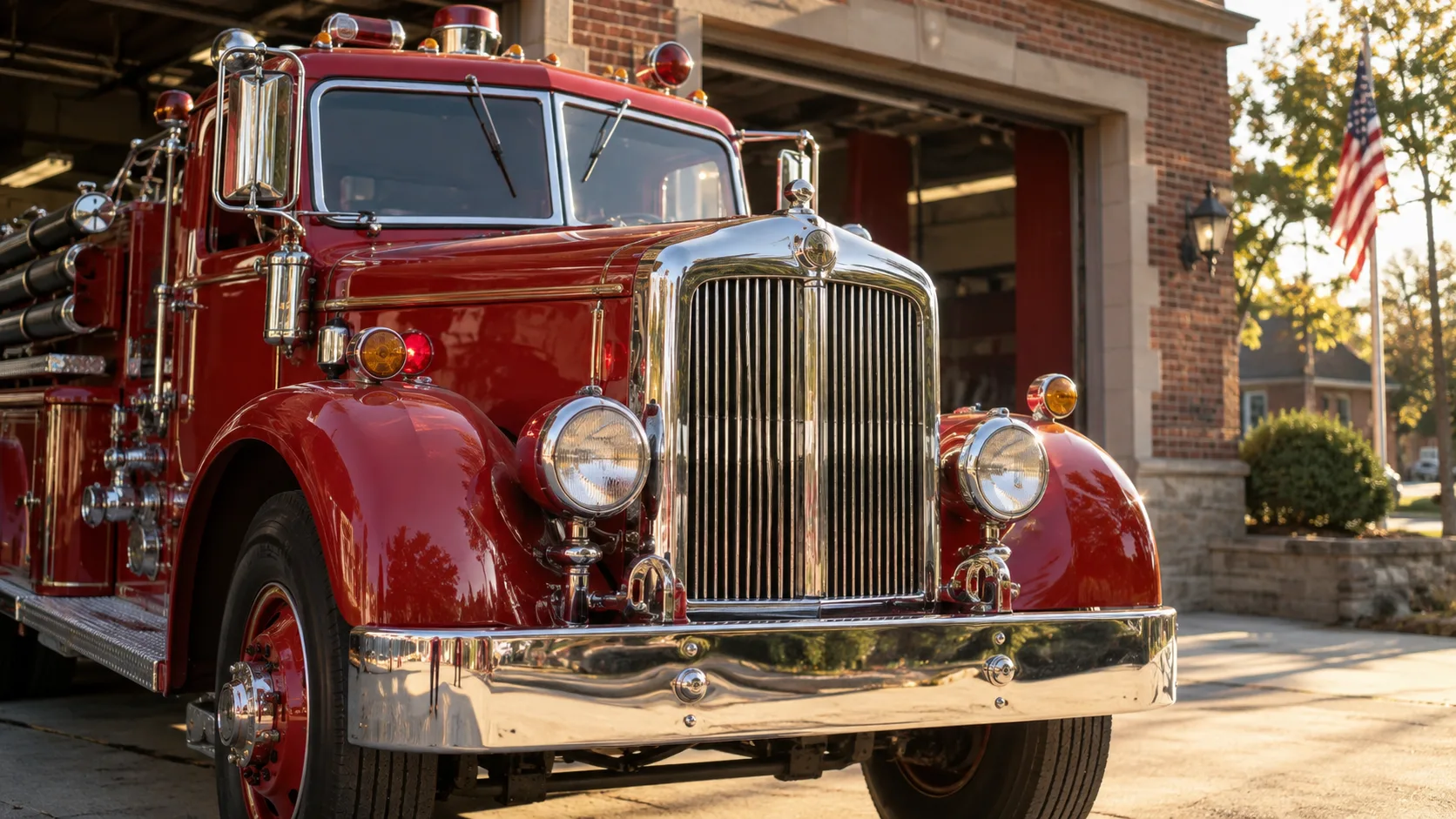
When American and European fire departments still relied on horse-drawn steam pumpers and hose wagons — roughly the mid-1800s through the early 1900s — that same skill set transferred directly. A dog that already knew how to run flat-out next to spooked, exhausted horses through crowded streets was a dog a fire company could actually use, not just keep around for looks.
The Three Jobs a Dalmatian Actually Did at a Fire Scene
This wasn't a mascot arrangement. In the horse-drawn era, the dog had actual work to do, and it broke down into three parts.
- ✓Clearing the route. Running ahead of and alongside the lead horses, barking to warn pedestrians and other traffic that a fire rig was coming through — there were no sirens yet, and city streets were genuinely chaotic.
- ✓Calming the horses. Fire horses were kept in a near-permanent state of readiness and could bolt or spook badly around smoke, crowds, and other frightened animals. A Dalmatian that had lived alongside the same horses in the same stable from puppyhood became a familiar, steadying presence they trusted, even in chaos.
- ✓Guarding the rig. Once the crew dismounted and went to work, someone had to watch the horses and the apparatus — parked, unattended, often with valuables in the wagon and startled animals still in harness. The dog stayed with the rig for exactly that reason, which is also the root of why Dalmatians are still associated with "guarding" the firehouse.
None of that involved smoke, flames, or rescue work directly. The dog's entire value was in the run to the fire and the wait once the crew got there — which is a detail that gets lost every time the story gets simplified into "the fire dog."
Why This Specific Breed, and Not Any Dog
| Trait | Why it mattered on the road |
|---|---|
| Bred for stamina, not speed | Could hold a steady running pace for hours, matching a carriage over long distances rather than sprinting and falling behind |
| Natural affinity for horses | Historically kept in stables from birth, comfortable running under and around horses' legs without spooking them |
| High visibility coat | The spotted pattern was easy to spot moving through crowds and low light, useful for a dog whose job depended on being seen and heard |
| Territorial, alert temperament | Made them reliable at guarding a parked, unattended rig and horses while the crew worked the fire |
Other breeds could run, and other breeds could guard. What made the Dalmatian the standard choice was that it already did both, plus tolerated horses better than most dogs, before fire departments ever needed the combination. Fire companies didn't invent this dog for the job — they recruited an existing specialist.
What Happened When the Horses Were Retired
Most American fire departments phased out horses in favor of motorized apparatus between roughly 1910 and the mid-1920s — a shift that happened faster than most people realize. Once the horses were gone, the dog's original job simply stopped existing. A Dalmatian can't outrun a motorized pumper, and there was no longer a team of horses to calm or guard.
Logically, that should have ended the tradition entirely — and at most departments, it functionally did. But the dog had become part of firehouse life by then: raised in the station, fed by the crew, a fixture the firefighters had grown attached to independent of whether it still had a working function. Some departments kept a Dalmatian on anyway, purely as a companion and station mascot, and that emotional continuity is what carried the image into the 20th century and eventually into cartoons, toy trucks, and children's books — where most people encounter it today, completely disconnected from the original horse-era job.
Departments That Still Keep One Today
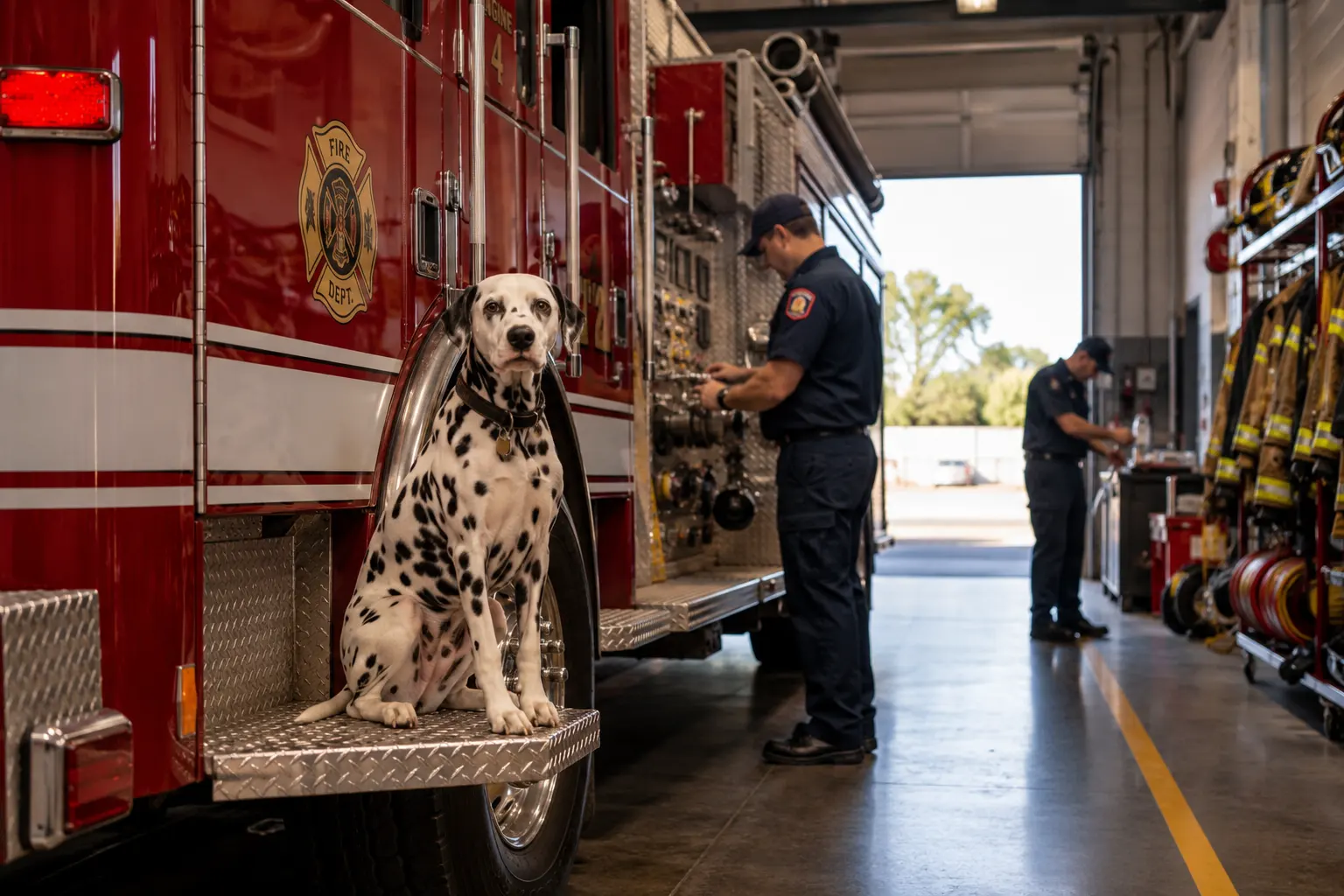
Today, keeping a Dalmatian at a firehouse is entirely a matter of tradition and choice rather than function. Fire museums that preserve horse-drawn apparatus often keep a Dalmatian on site as a living piece of the exhibit. A handful of career and volunteer departments — often ones with a long, documented history dating back to the horse era — keep one as an official station mascot, usually cared for informally by whichever shift is on duty. National Dalmatian rescue and breed organizations occasionally partner with departments for adoption events built around exactly this history.
What none of them do anymore is put the dog anywhere near an actual working fire scene. Modern apparatus, traffic, and scene safety protocols make that impractical and unsafe for the animal — the dog's role today is entirely firehouse life, not fireground operations.
Myths Worth Retiring
Myth: Dalmatians were chosen because they're calm around fire and smoke. Not accurate — their value was around horses, not flames. Any calmness around fire scenes was a side effect of firehouse life, not the reason the breed was selected.
Myth: The tradition started in America. The coach dog role predates American fire departments by generations and traces back to European carriage culture; American fire companies adopted an already-established practice, they didn't originate it.
Myth: Every fire department historically had one. It was common in departments that ran horse-drawn apparatus, particularly in larger cities, but it was never universal — plenty of departments, especially smaller or rural ones, never kept a dedicated fire dog at all.
The short version, if you only remember one thing: the dog and the horse are the same story. Once one disappeared, the other's job went with it — and everything that's survived since is affection, not necessity.

Comments 0
No comments yet. Be the first to share your thoughts!
Leave a Comment