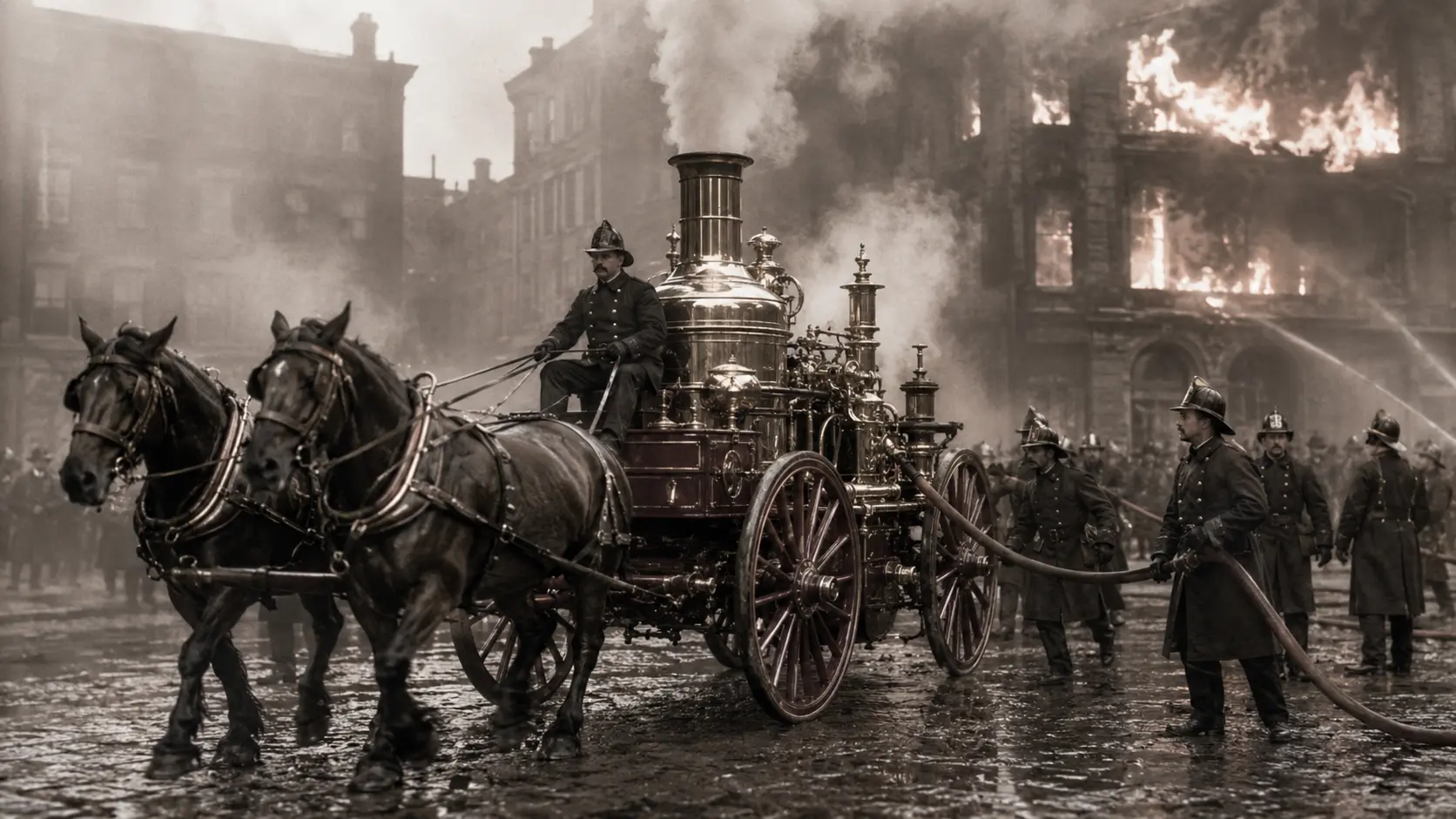

The history of fire apparatus is the history of the specific problem that was killing people and burning cities in each era, and the specific engineering response that addressed it. The bucket brigade was replaced by the hand-pump engine not because someone had an abstract insight about efficiency but because the great city fires of the 17th and 18th centuries demonstrated that manual bucket chains could not deliver enough water fast enough to matter. The horse-drawn steam pumper replaced the hand engine not because steam power was philosophically superior but because the Cincinnati fire of 1853 demonstrated that a steam pumper operated by three men could outperform a hand engine operated by thirty. Each development was driven by documented failure in an era when the cost of failure was measured in city blocks.
In this article:
- Bucket brigades: the first organized fire response
- Hand-pump engines: the first mechanical advantage
- Horse-drawn steam pumpers: the industrial revolution arrives at the fire
- Motorized apparatus: the transition that took two decades
- The aerial ladder: reaching what ground ladders couldn't
- Post-WWII standardization
- Modern apparatus: electronics, CAFS, and integration
- Electric apparatus: the next transition
Bucket Brigades: The First Organized Fire Response
Before any mechanical apparatus existed, fire response in colonial-era cities relied on two resources: leather buckets and manual labor. Every household in cities like Boston and New York was required by law to maintain a prescribed number of leather buckets on the premises. When a fire alarm was raised — first by church bells, later by watchmen — a human chain formed from the nearest well or water source to the fire, with buckets passed hand to hand toward the fire and empty buckets returned on a parallel chain.
The bucket brigade was not ineffective — it was the best available technology for its era. But it had a hard ceiling: the flow rate of water it could deliver was bounded by the number of people available and the distance from the water source. The great city fires of the 17th and 18th centuries — London's Great Fire of 1666, Boston's fire of 1760, New York's fire of 1776 — demonstrated that ceiling repeatedly. When fire reached multiple buildings simultaneously, no bucket brigade had the supply chain length or depth to address the spread. Cities burned.
Hand-Pump Engines: The First Mechanical Advantage
The hand-pump fire engine — a wooden or metal box containing a piston pump, operated by crews working long handles on either side — appeared in Europe in the late 17th century and reached American cities by the early 18th. The design was simple: men pumped the handles up and down, driving pistons that pressurized a water chamber, and the pressurized water exited through a nozzle that could project a stream significantly further than a bucket could throw.
The hand engine solved the throw-distance problem that bucket brigades faced — instead of needing the water to reach the fire, the engine could be positioned near but not at the fire and project a stream onto the burning structure. But the hand engine's limitation was its pump rate: it required 20 to 30 men working the handles continuously to maintain useful pressure and flow, and those men tired quickly. A crew of 30 could sustain effective operation for 10 to 15 minutes before fatigue degraded performance.
Volunteer fire companies organized around the hand engine — the company was the social unit that owned and operated the engine, trained together, and competed against other companies at muster events that were as much civic ritual as practical training. The competition between companies for the best engine, the fastest response, and the most skilled operators drove improvements in hand engine design throughout the early 19th century.
Horse-Drawn Steam Pumpers: The Industrial Revolution Arrives at the Fire
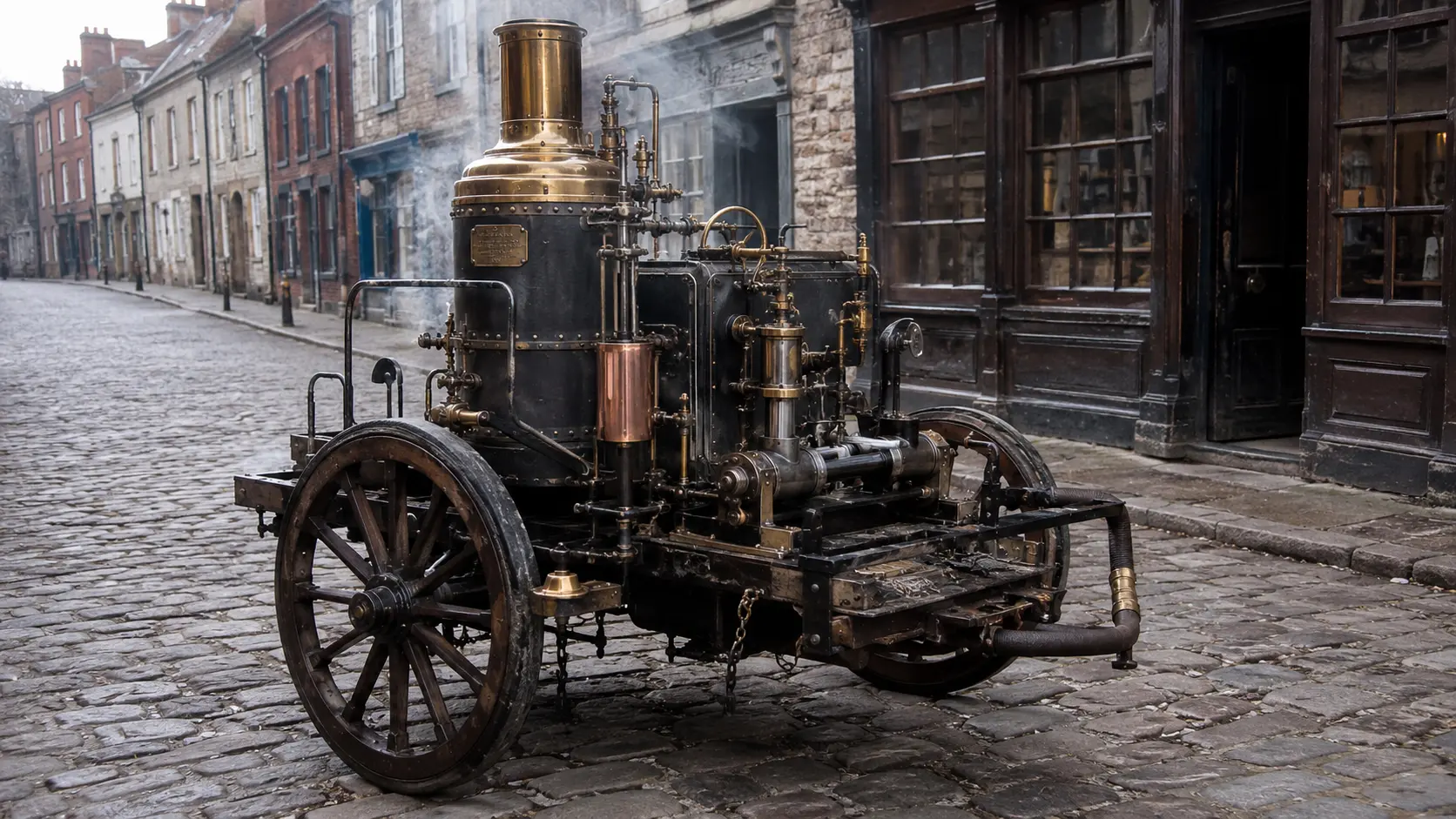
The first practical steam fire engine was built by John Braithwaite and John Ericsson in London in 1829. The apparatus demonstrated at London fires that a steam-powered pump could deliver 150 gallons per minute — more than twice the output of the best-crewed hand engine — with a crew of three rather than thirty. The technology existed. The adoption did not follow immediately.
Volunteer fire company opposition delayed steam adoption in American cities for two decades. The companies' organizational identity, social standing, and political influence were built around the hand engine and the large crews that operated it. Steam engines required only a small professional crew — a stoker, an engineer, and a driver — eliminating the need for the large volunteer companies that were also significant political organizations. Cincinnati became the first American city to adopt steam fire engines operationally in 1853, when the city council overcame volunteer company resistance and ordered the new apparatus.
The performance advantage was immediate and undeniable: a steam engine with a three-person crew outperformed the largest hand engine with 30 men. By the 1870s, horse-drawn steam pumpers were standard equipment in American cities. The volunteer companies had not disappeared, but they were now operating steam engines, not hand pumps. The social organization of the volunteer company survived; the hand engine did not.
The steam pumper's limitation was its startup time. The firebox had to be lit when the alarm sounded, and steam pressure — the condition for pumping — took 5 to 8 minutes to build from a cold boiler. Apparatus that kept a banked fire ready for quick lighting reduced this to 2 to 3 minutes, but no steam engine could arrive and immediately pump. This limitation was not resolved until the internal combustion engine arrived.
Motorized Apparatus: The Transition That Took Two Decades
The first motorized fire apparatus appeared in American cities in the early 1900s. The Knox Automobile Company delivered a self-propelled chemical engine to the Springfield, Massachusetts fire department in 1906 — typically cited as one of the first American motorized fire apparatus deliveries. The transition from horse-drawn to motor-driven apparatus took approximately 15 years for most major American cities, with the final horse-drawn units retired by the early 1920s. FDNY retired its last horse-drawn apparatus in 1921.
The motorized apparatus solved two problems simultaneously: it arrived faster (a motorized engine could reach 35 miles per hour compared to a horse team's 12 to 15 mph sustained run), and it could pump immediately upon arrival — the internal combustion engine that drove the apparatus also drove the pump, without any startup delay. The fire companies that arrived with a charged line in minutes rather than 10 to 15 minutes saw their effective suppression window expand significantly.
The early motorized apparatus had its own failure modes: tires that were inadequate for the apparatus weight (blowouts were frequent in the early years), engines that were unreliable by modern standards, and body designs that were direct translations of horse-drawn apparatus onto a powered chassis rather than purpose-designed motor apparatus. The purpose-designed motorized pumper — with a centrifugal pump driven by a dedicated power takeoff, a water tank, compartmentalized body storage, and a chassis designed for the specific load — evolved through the 1910s and 1920s into a form that would be recognizable to a modern fire officer.
The Aerial Ladder: Reaching What Ground Ladders Couldn't
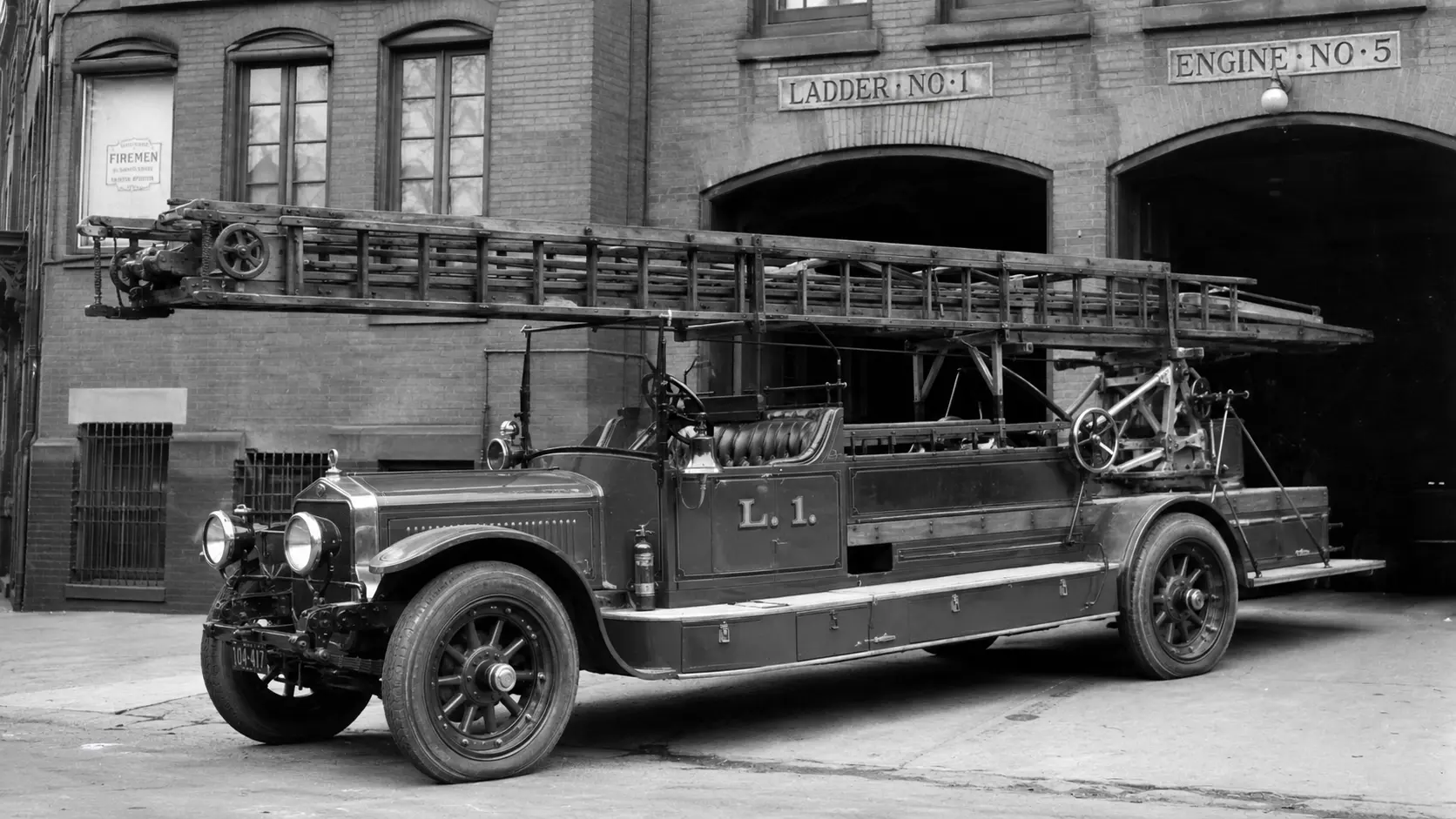
The aerial ladder — a mechanically raised and extended ladder mounted on a vehicle turntable — preceded motorization but evolved significantly with it. The earliest aerial ladders were spring-raised wooden structures on horse-drawn apparatus, reaching 65 to 75 feet. As building heights increased in the 19th century, the demand for greater aerial reach grew correspondingly.
The Daniel D. Hayes spring-raised aerial ladder of the 1870s was one of the most significant pre-motorization aerial developments — a 85-foot wooden ladder that could be raised by two men using the stored energy of a spring mechanism. San Francisco and other major cities adopted it. The apparatus reached heights that ground ladders could not approach and provided access to upper floors of the taller commercial buildings of the era.
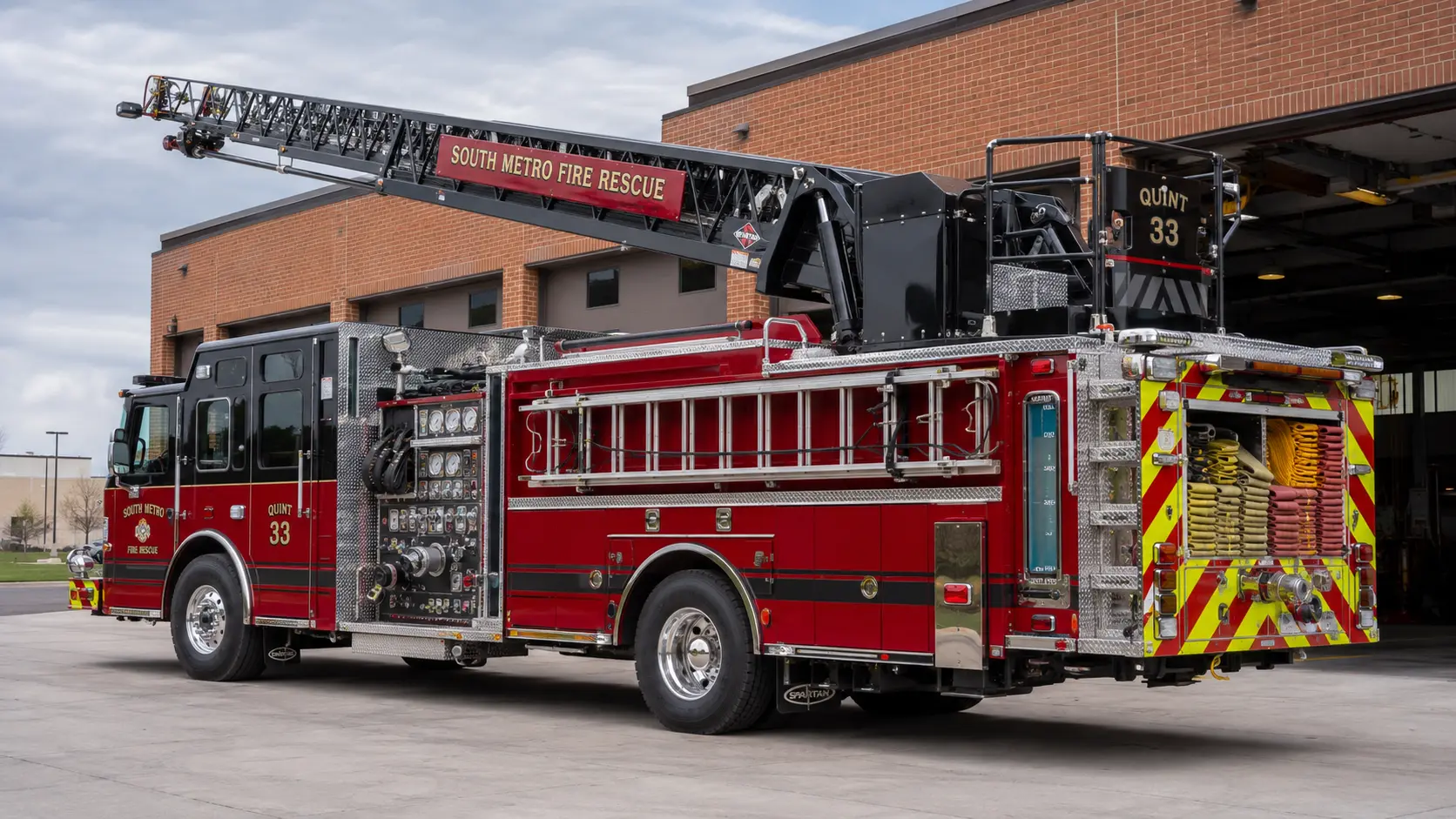
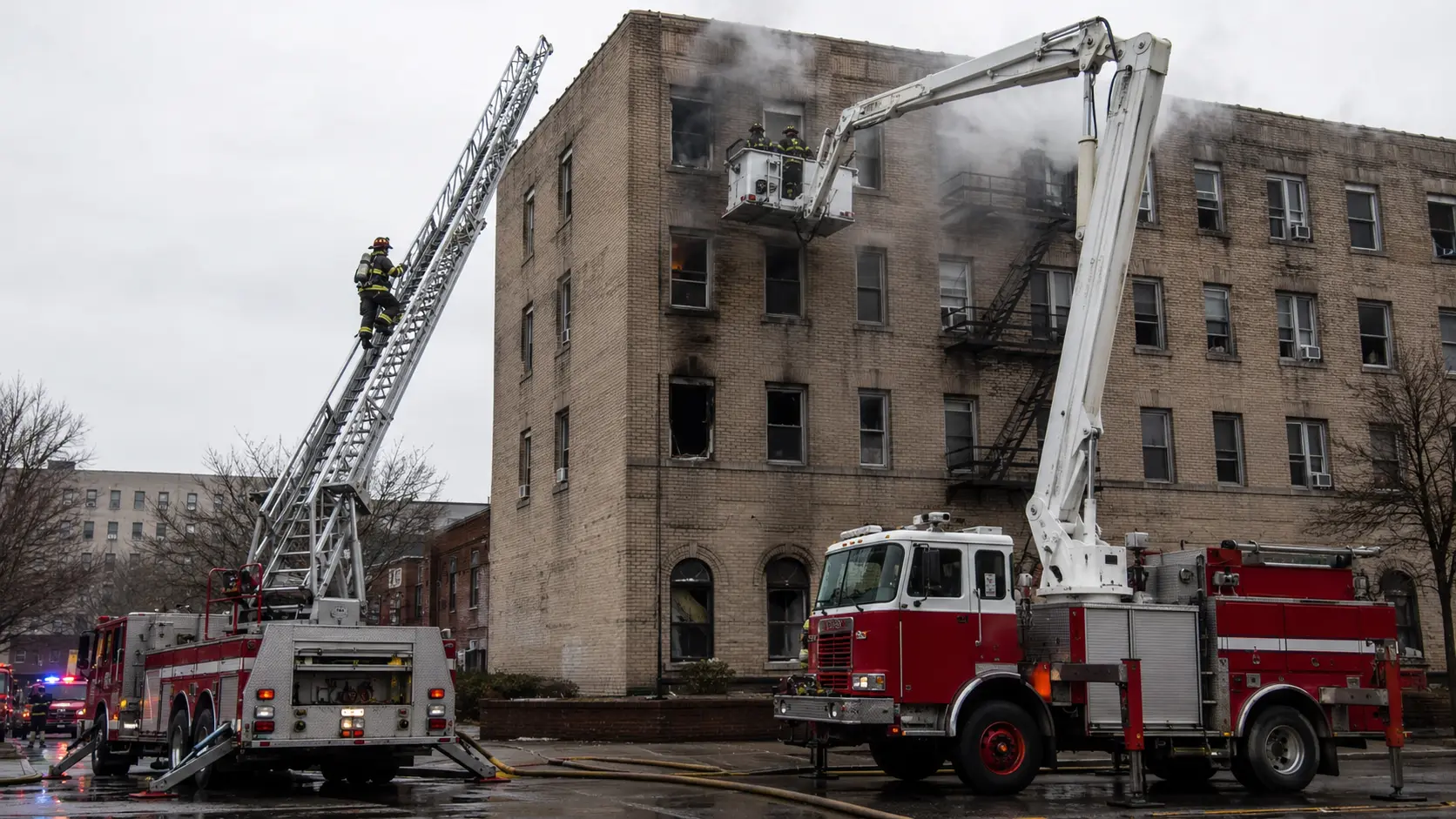
Motorization allowed aerial ladders to become heavier, stronger, and longer. Steel construction replaced wood in the 1930s. Hydraulic operation replaced manual and spring-raise mechanisms. Hydraulic platforms — baskets rather than ladder tips — arrived in the 1950s and provided the stable working position at height that the ladder tip could not offer. The tractor-drawn tiller configuration — with a separate rear axle driver — allowed long aerial ladder trucks to navigate the narrow streets of cities that could not accommodate single-unit apparatus of the same overall length.
Post-WWII Standardization
The decade following World War II produced significant changes in fire apparatus design, driven partly by the manufacturing capacity that had been developed during the war effort and partly by the NFPA's increasing standardization efforts. NFPA 1901 — the standard for automotive fire apparatus — was developing into a comprehensive document that defined minimum specifications for pump capacity, water tank volume, hose complements, and body construction. Manufacturers who built to NFPA 1901 produced apparatus that met a common performance baseline rather than proprietary specifications.
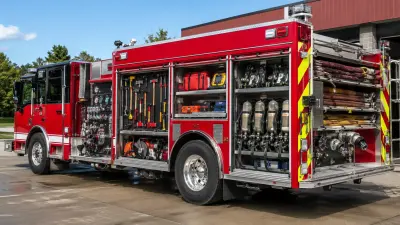
The post-war period also saw the emergence of the modern pumper's characteristic shape: a low-profile cab over engine or conventional cab design, a mid-ship pump, a water tank ahead of the rear axle, compartmentalized body storage on both sides, and a rear hose bed. This configuration — refined from the pre-war apparatus but now standardized — became the template for the American structural pumper that persisted through the remainder of the 20th century with incremental improvements.
Cab enclosure — providing weather protection and temperature-controlled seating for crew members — became standard in the post-war era. The open-cab apparatus where firefighters rode external running boards or open seating exposed to the weather gave way to fully enclosed crew cabs, first in cold-climate cities and progressively across all departments. Enclosed cabs improved crew comfort during response and allowed personnel to don SCBA during transit rather than on arrival.
Modern Apparatus: Electronics, CAFS, and Integration
The apparatus delivered by major manufacturers today — Pierce, Rosenbauer, E-One, Ferrara, and others — incorporates capabilities that their 1970s predecessors could not have included. Electronic engine management produces power-on-demand with significantly better fuel efficiency than the carbureted engines of earlier generations. Mobile data terminals in the cab receive building information, hydrant data, and incident history before arrival. Electronic pressure governors maintain pump discharge pressure automatically, reducing pump operator workload. Aerial ladders have load sensors and operation limit systems that prevent overload or unsafe positioning. Camera systems on the apparatus exterior eliminate blind spots during reversing and positioning.
Compressed Air Foam Systems (CAFS) inject compressed air into foam-water mixtures at the pump, producing expanded foam that adheres better to vertical surfaces and penetrates into structural voids more effectively than standard water. CAFS apparatus can suppress fires with significantly less water than conventional apparatus, which matters in rural water supply scenarios and in the conservation of limited booster tank water for initial attack.
The materials of modern apparatus bodies have shifted toward aluminum and composites rather than the steel bodies of earlier generations, reducing apparatus weight significantly. A modern apparatus that carries the same equipment load as its 1980s predecessor weighs several thousand pounds less, improving road performance and reducing wear on apparatus and infrastructure.
Electric Apparatus: The Next Transition
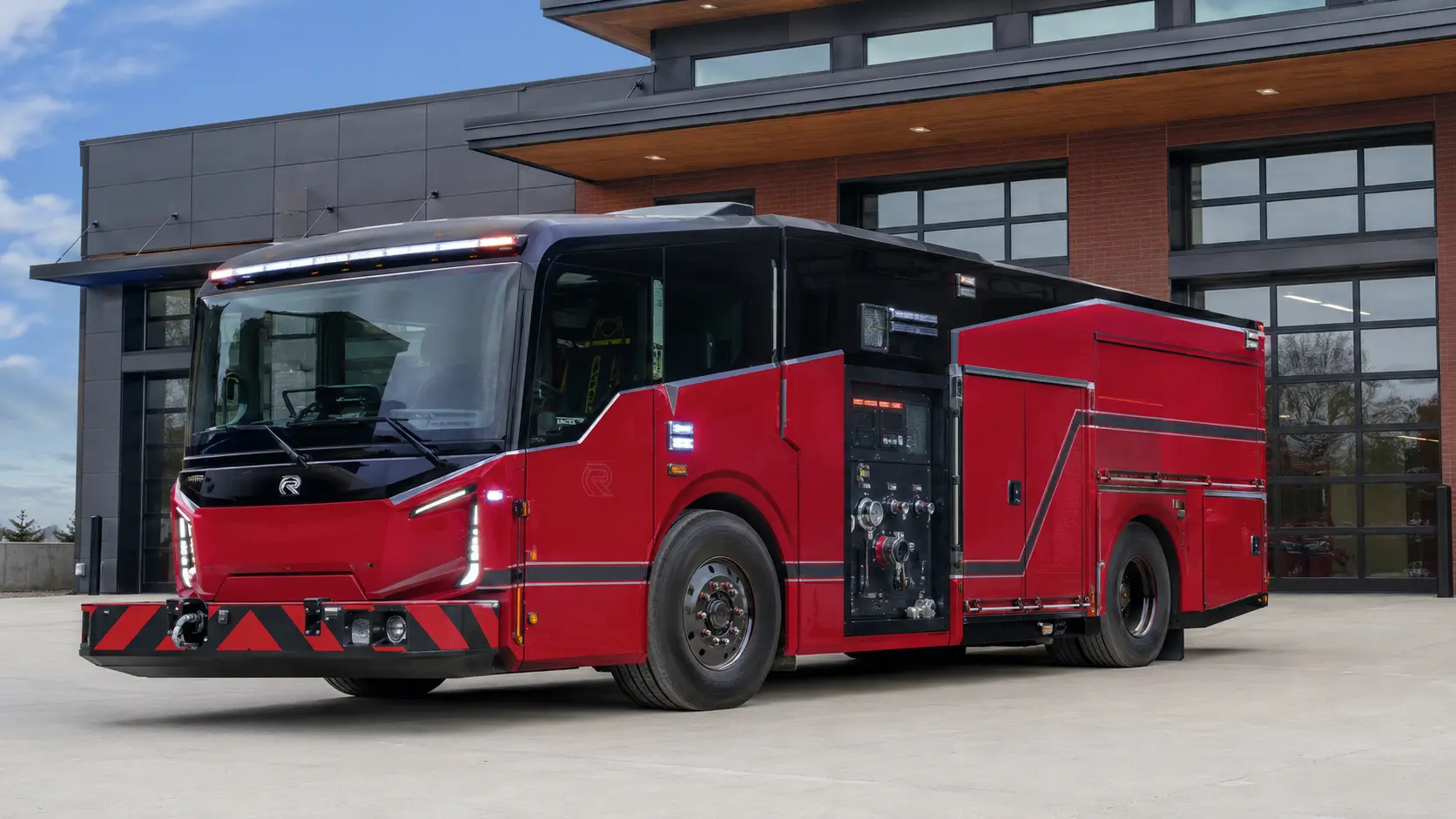
The transition to electric fire apparatus is underway, following the same pattern as every previous apparatus transition: the new technology demonstrates performance advantages in specific scenarios, encounters institutional resistance, and progressively displaces the incumbent technology as reliability is demonstrated and manufacturing scale reduces cost.
Several manufacturers — Rosenbauer with its Concept Fire Truck and commercial "Lion" electric pumper, Pierce with its Volterra hybrid platform, and others — have delivered electric or hybrid-electric apparatus to fire departments. The advantages are not primarily about range or charging convenience — they are about the specific operational characteristics of electric motors (immediate full torque, no warm-up required, regenerative energy recovery) and the occupational health improvement of eliminating diesel exhaust from apparatus bays.
The current limitations mirror those of early motorized apparatus in 1906: adequate for moderate operations but not yet proven for the longest, highest-demand incidents. A fully electric pumper with current battery technology can support 4 to 6 hours of typical operations, which covers the majority of calls. A major working fire requiring 8 to 12 hours of continuous pump operation may exceed current battery capacity — the same way early motorized apparatus could not yet match the sustained capability of a well-maintained horse-drawn steamer at the longest incidents.
The trajectory is clear. Battery energy density is improving. Charging infrastructure is expanding. The occupational and environmental arguments for electric apparatus are unambiguous. The fire service spent 15 years transitioning from horse to motor power a century ago. The transition from diesel to electric is already in progress and will not be slower than that one.

Comments 0
No comments yet. Be the first to share your thoughts!
Leave a Comment