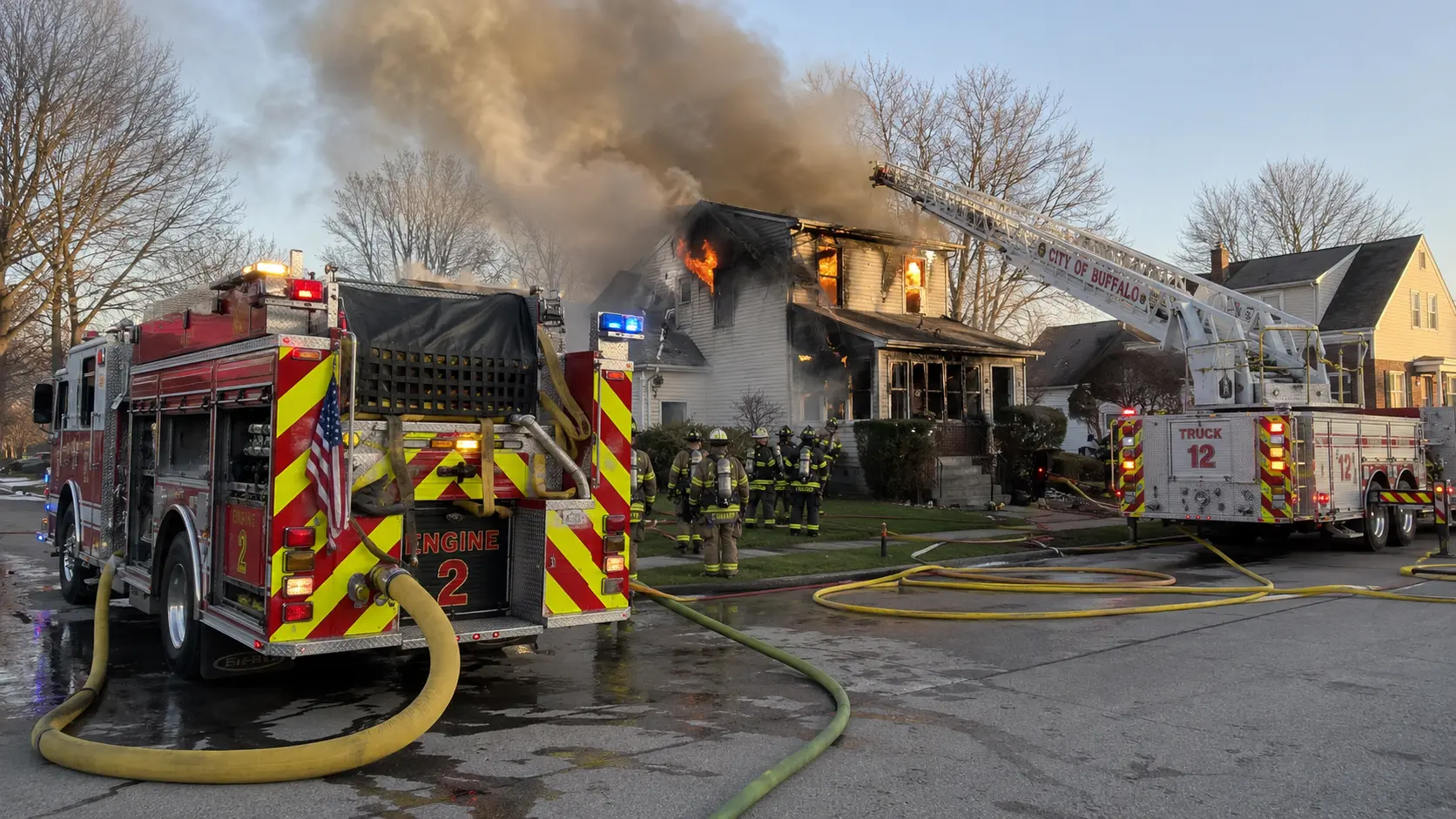
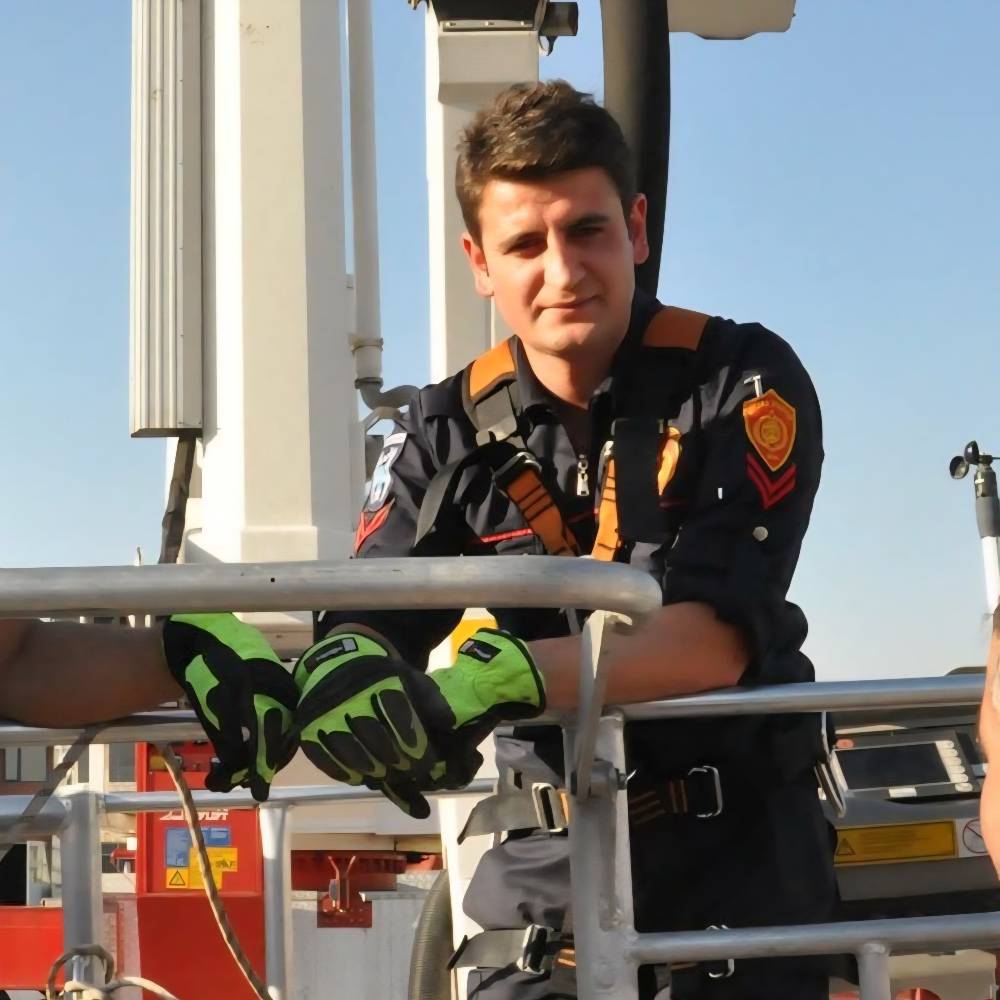
Ask most people what a fire truck does and they will describe something that pumps water on a fire. That describes an engine company — one type of fire apparatus. The ladder company, which is the other type dispatched to every working structural fire, does not pump water on anything. It carries no hose for fire attack. Its job is everything else: getting in, getting people out, opening the building up so the engine can work, and making sure nobody is trapped. The two units do completely different jobs and both are needed simultaneously from the moment fire is confirmed.
Departments that operate a single company responding to fires — smaller departments running combination apparatus — manage both functions with the same crew. The trade-off is real: you cannot be advancing a hoseline and conducting a primary search at the same time with two people. Understanding what each company does independently clarifies why staffing and apparatus configuration have such direct effects on fire outcomes.
In this article:
What the Engine Company Does
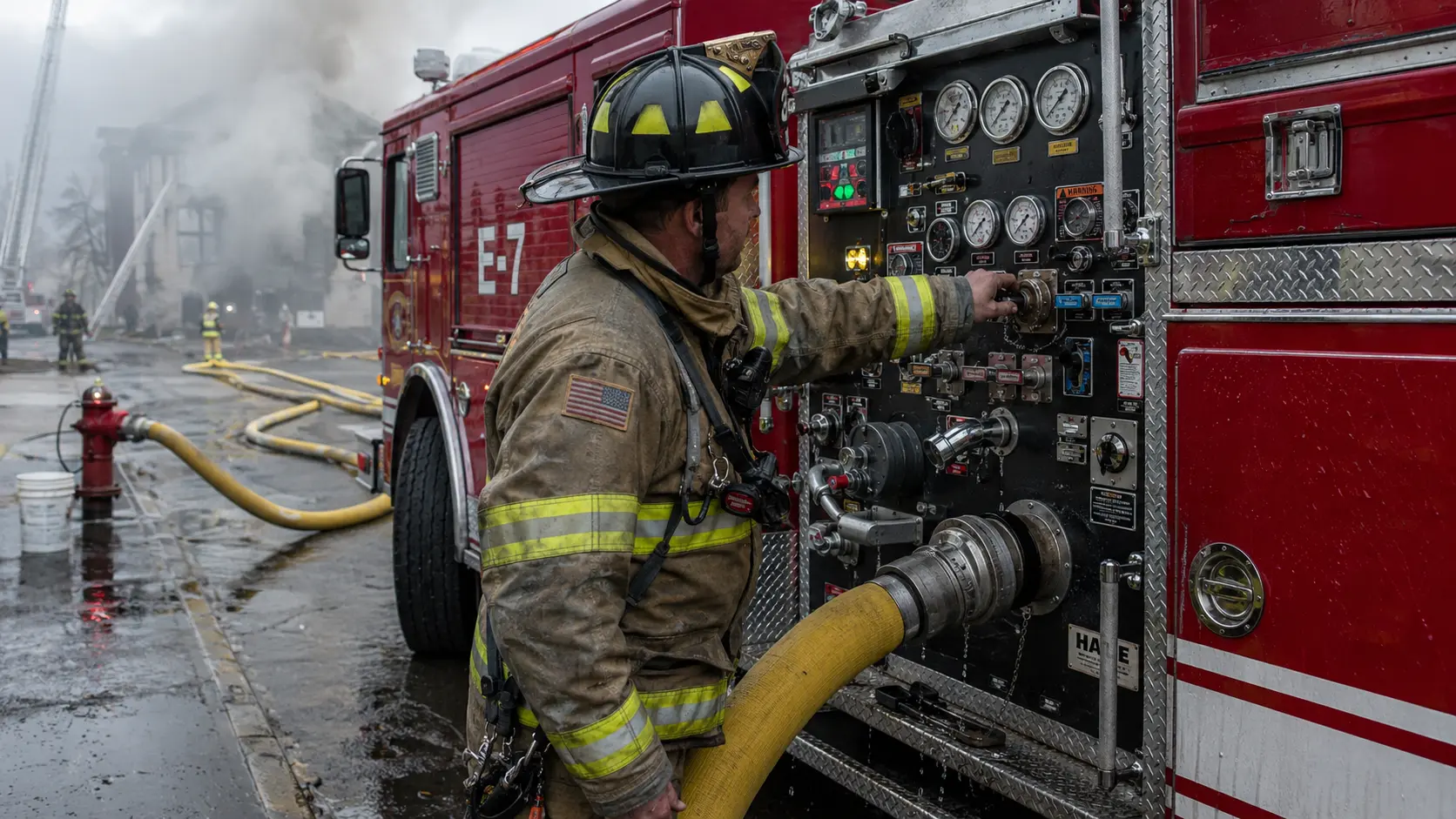
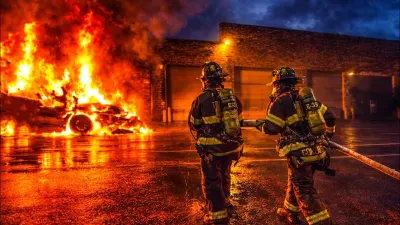
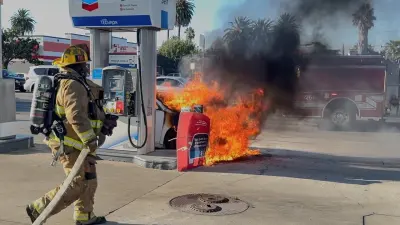
The engine's primary mission is water on fire. Everything the engine company does builds toward that outcome: securing a water supply, connecting to a hydrant, advancing a charged hoseline to the fire, and applying water at the right flow rate and pressure through the right nozzle for the conditions.
Water supply
Before anything else works, the engine needs water. In urban and suburban areas this means connecting to a fire hydrant — either a forward lay (laying hose from the hydrant to the fire) or a reverse lay (from the fire back to the hydrant). Which method depends on apparatus positioning, the distance to the hydrant, and whether additional supply lines will be needed. The pump operator's job begins the moment the apparatus stops: connect the supply, charge the pump, manage pressures, and maintain water supply to every hoseline being operated for the duration of the incident.
Fire attack
The attack crew — typically two firefighters on a minimum-staffed engine — pulls the attack line, advances it to the fire, and applies water. This sounds straightforward. It is physically demanding work done in zero visibility, in heat, on air supply, in a building that may have compromised floors and inadequate egress. The hoseline itself weighs roughly 1.5 to 2 pounds per foot when charged with water — a 150-foot advance with 1¾-inch hose is carrying and moving approximately 225 to 300 pounds of charged hose.
Pump operations
The pump operator stays at the engine throughout the incident. They are the water supply manager — monitoring hydrant pressure, maintaining discharge pressure to each active line, adding or adjusting supply if needed. A pump operator who loses track of residual hydrant pressure during a high-demand operation can inadvertently collapse the water supply to the interior crew mid-attack. This is a documented cause of firefighter fatalities. It is not a secondary job.
What the Ladder Company Does
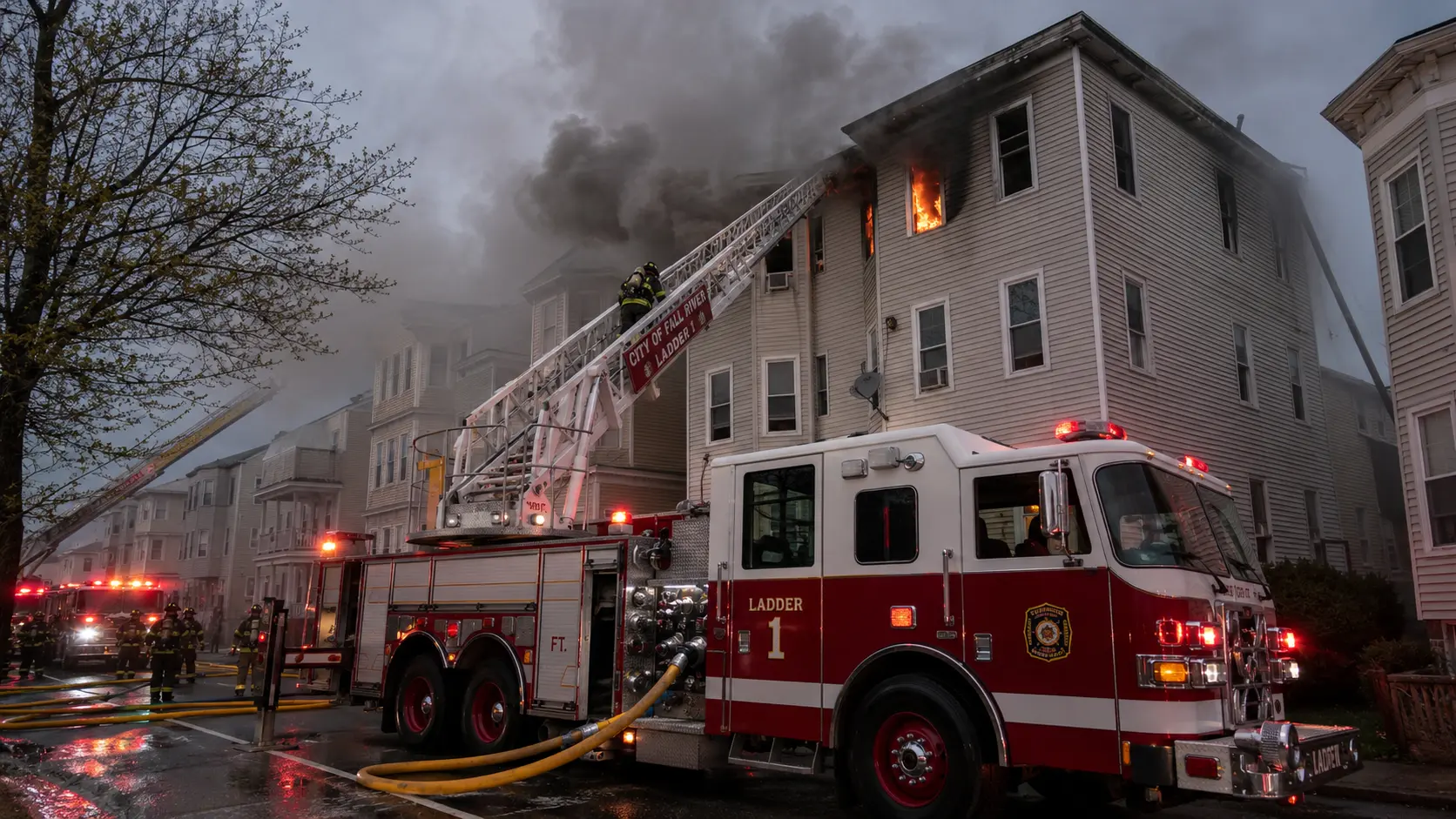
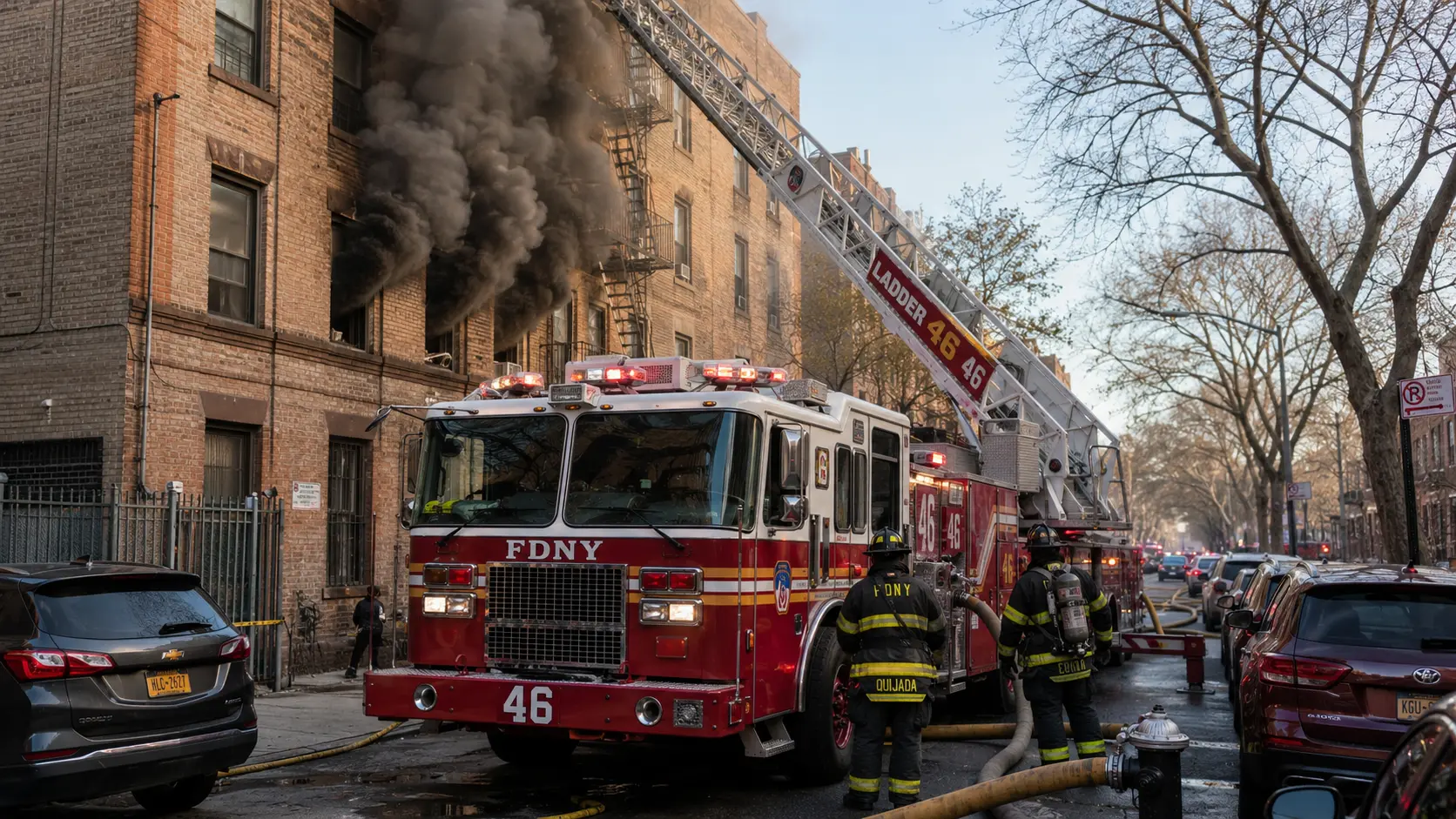
The ladder company's mission is broken down under the acronym LOVERS, used by many departments: Ladders, Overhaul, Ventilation, Entry, Rescue, Search. None of these involve advancing a hoseline. All of them are prerequisites for the engine to work effectively and for occupants to survive.
Forcible entry
The interior attack crew cannot advance a hoseline through a locked door. The ladder company forces entry using a Halligan bar and a flathead axe, often called the irons, or saws and hydraulic tools when the building requires heavier access work.
Search and rescue
While the engine crew is suppressing fire, the ladder crew searches the structure for victims. This is the critical difference between engine work and ladder work: the ladder company is often operating ahead of complete fire control, where visibility is poor and conditions can change quickly.
Ventilation
Ventilation allows heat and smoke to escape. Done correctly, it improves visibility, reduces heat, and supports interior crews. Done too early or without coordination, it can accelerate fire spread. That is why ventilation must be coordinated with the engine company's attack line.
Utilities
Gas, electricity, and water need to be controlled at working fires. The ladder company commonly handles utility control, including locating the gas meter, shutting off power when appropriate, and controlling building hazards that affect interior operations.
The Tools That Define Each Role
| Engine | Ladder |
|---|---|
| Attack hoselines: 1¾-inch and 2½-inch | Halligan bar and flathead axe |
| Supply hose: 4-inch or 5-inch LDH | Aerial ladder or tower ladder |
| Centrifugal pump | Ground ladders |
| Nozzles and foam system | Rotary saw, chain saw, pike poles |
| SCBA and EMS equipment | Thermal imaging camera and rescue tools |
The tool list is not arbitrary. It reflects each company's mission. An engine without a pump and hose cannot fight fire. A ladder without forcible entry tools, ladders, and ventilation tools cannot get crews in, get victims out, or make the building tenable.
How Engine and Ladder Coordinate on a Working Fire
- Engine positions for water supply and begins the supply connection.
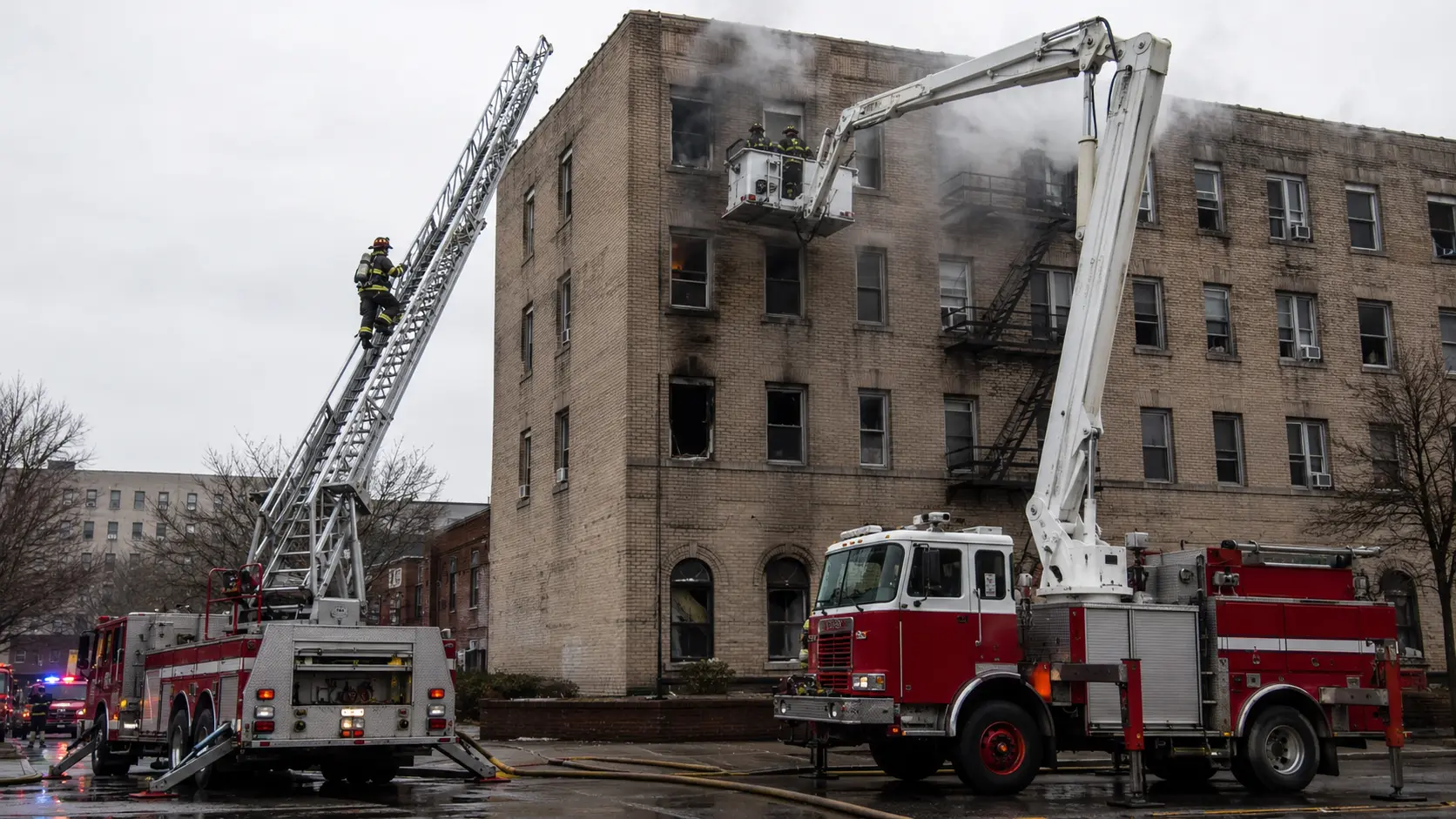
- Ladder positions for aerial coverage and access to the structure.
- Engine officer sizes up the fire and orders attack line deployment.
- Ladder crew forces entry and supports access for the engine crew.
- Engine crew advances the attack line to the fire area.
- Ladder crew initiates search, ventilation, utility control, and ladder placement.
The key point is that search and attack should happen simultaneously. When staffing is too low, the crew must choose which life-safety task happens first. That is not an apparatus problem. It is a staffing problem.
Why Staffing Levels Determine What Actually Happens
Apparatus capability matters, but staffing determines whether those capabilities can be used at the same time. A two-person engine can begin water supply and stretch a line, but it cannot also conduct a primary search, control utilities, ventilate, and maintain command accountability.
When departments respond with limited staffing, crews triage operations. They decide what must happen first and what must wait. Sometimes that means water goes first and search waits. Sometimes it means rescue goes first and fire attack is delayed. Neither is ideal; both are consequences of staffing limits.
The Quint: One Apparatus That Tries to Do Both
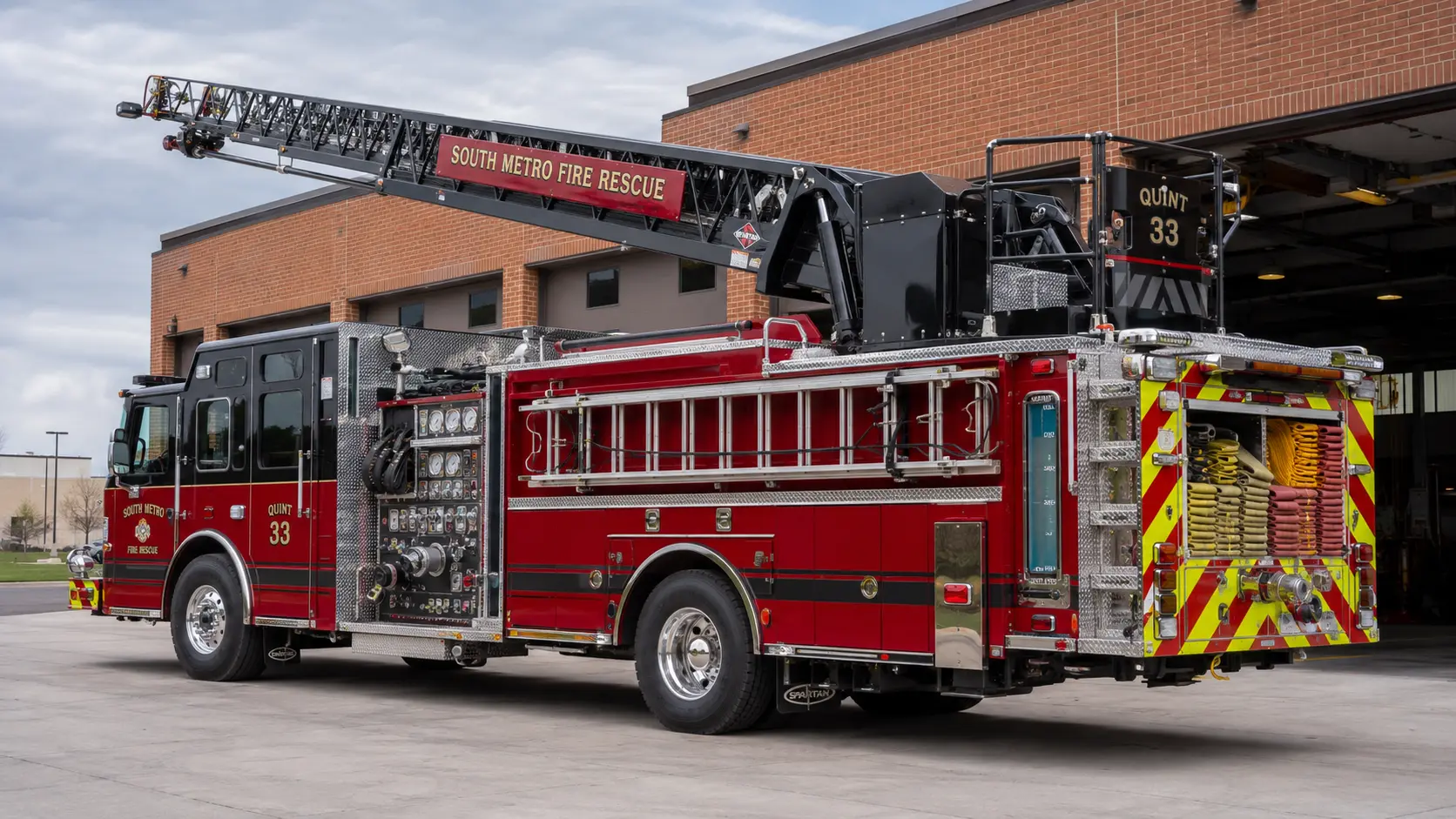
A quint combines five capabilities on one apparatus: pump, water tank, hose, aerial ladder, and ground ladders. It gives one unit the equipment profile of both an engine and a ladder company.
The limitation is staffing. A quint can carry the tools for both jobs, but one crew cannot perform engine and ladder functions simultaneously. It is useful where budgets or call volume do not support separate companies, but it does not replace the operational value of two staffed companies working together.
Bottom line: an engine brings water to the fire. A ladder company creates access, searches for victims, ventilates, controls utilities, and supports rescue. A quint can carry both sets of equipment, but it cannot make one crew perform two simultaneous missions.
Related apparatus guides
Fire engine types Aerial vs tower ladder Pump panel explained Quint apparatus


Comments 0
No comments yet. Be the first to share your thoughts!
Leave a Comment