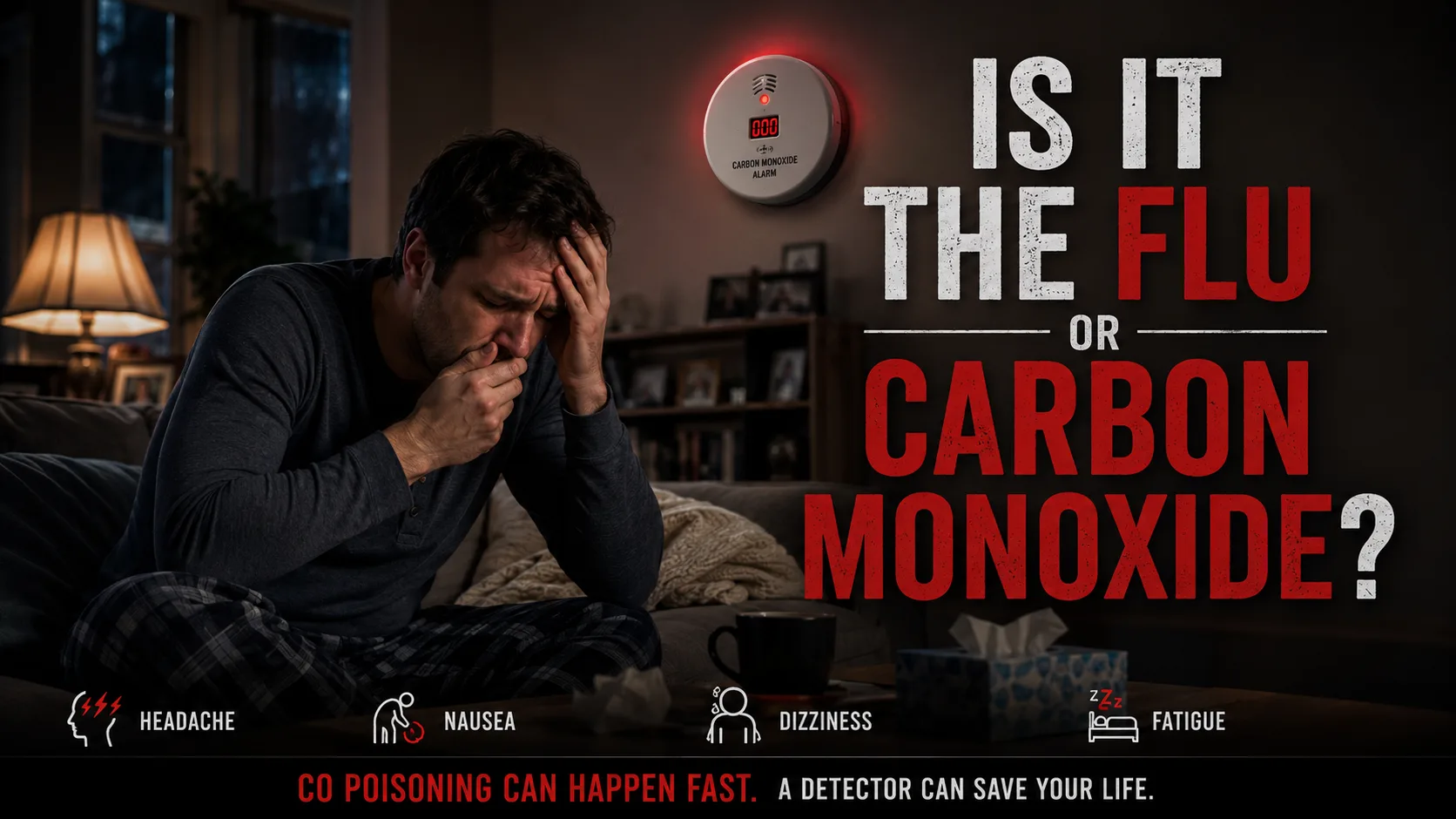

Carbon monoxide is called the silent killer for a reason that goes beyond its being odorless. The reason is that its symptoms — headache, nausea, dizziness, fatigue — are identical to half a dozen common illnesses. People who are experiencing CO poisoning routinely believe they have the flu, a stomach bug, a migraine, or food poisoning. They go to bed to sleep it off. And because the source of their poisoning is in the home they are sleeping in, they do not get better. Some of them do not wake up.
CO poisoning causes approximately 400 accidental deaths per year in the United States and sends more than 100,000 people to emergency rooms annually. The vast majority of these incidents involve a working CO source in the home — a malfunctioning furnace, a gas appliance with incomplete combustion, a car running in an attached garage, a generator used indoors — and occupants who did not identify the symptoms for what they were until it was too late to identify them at all.
In this article:
How Carbon Monoxide Affects the Body
Carbon monoxide binds to hemoglobin — the protein in red blood cells that carries oxygen — with an affinity approximately 200 to 250 times greater than oxygen does. When CO enters the bloodstream through the lungs, it displaces oxygen from hemoglobin, forming carboxyhemoglobin. The blood continues circulating, but it is carrying CO instead of oxygen. The body's tissues starve for oxygen while the blood looks — and tests on standard pulse oximetry — like it is saturated normally.
This mechanism explains why CO poisoning feels like so many other things. The brain, which is the organ most sensitive to oxygen deprivation, experiences headache and confusion. The stomach experiences nausea. The muscles experience fatigue and weakness. The cardiovascular system, under stress from the impaired oxygen supply, can cause chest tightness. These are the same presentations as influenza, food poisoning, migraine, and generalized viral illness — which is exactly why CO poisoning is so routinely misidentified.
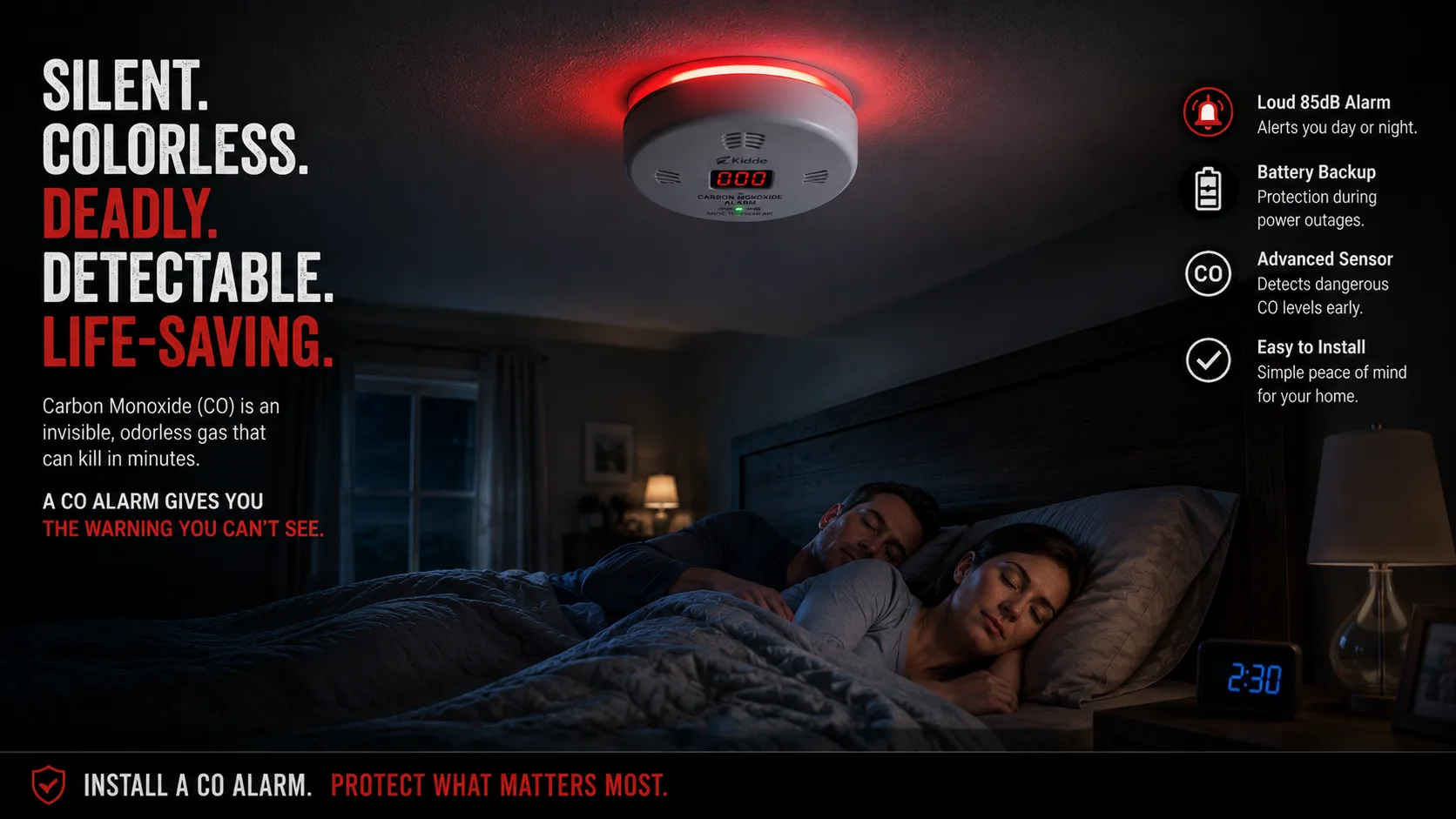
CO vs. Flu: The Symptom Comparison
⚠️ Carbon Monoxide Poisoning
- Dull, pressure headache — often described as a tight band around the head
- Nausea, sometimes vomiting
- Dizziness and lightheadedness
- Shortness of breath, especially with exertion
- Confusion, difficulty thinking clearly
- Extreme fatigue and weakness
- Blurred vision
- Loss of consciousness in severe cases
- No fever
- No sore throat, no runny nose
✓ Influenza (Flu)
- Headache — typically more diffuse
- Nausea, sometimes vomiting
- Dizziness
- Fever — usually present and often significant (101–104°F)
- Muscle aches and body pain
- Fatigue
- Sore throat
- Runny or congested nose
- Cough
- Symptoms worsen over 1–3 days
The symptom overlap is substantial. Both cause headache, nausea, dizziness, and fatigue. The differences that distinguish them — and the pattern of the symptoms within the household — are where CO poisoning reveals itself.
Red Flags That Point to CO, Not Illness
Multiple people in the home become ill at the same time. Influenza and most illnesses spread person to person over days. If your partner, your children, and you all develop the same symptoms on the same day, or even within hours of each other, this is not how viral illness spreads. CO affects everyone in the shared air environment simultaneously. Multiple people sick at once — especially in the same building — is CO until proven otherwise.
Symptoms improve when you leave the building and return when you go back inside. Viral illness follows you when you leave the house. CO poisoning does not — it requires continued exposure to maintain or worsen symptoms. If your headache and nausea improve noticeably when you go outside, and return or worsen when you return indoors, you are describing CO exposure, not influenza. This is the most reliable single indicator available without a detector.
Pets are also behaving abnormally or are ill. Animals are affected by CO at lower concentrations than humans, and they cannot verbalize symptoms. A cat that is lethargic and unsteady, a dog that is vomiting or disoriented alongside human household members who feel unwell — this pattern points strongly toward an environmental source of illness rather than a person-to-person illness. Pets will not catch your flu. They will be poisoned by the same CO you are breathing.
Symptoms appear or worsen at specific times — when the furnace runs, when the car is in the garage, after using a gas appliance. CO from a malfunctioning furnace tends to spike when the furnace cycles on. CO from an attached garage peaks when a car is started. If your symptoms correlate with times when a combustion appliance is operating, the source and the cause may be directly connected.
No fever. CO poisoning does not cause fever. Influenza almost always does. If your symptoms include headache, nausea, and fatigue but your temperature is normal — CO is a more consistent explanation than flu. This is not definitive alone but combined with any of the above patterns it is significant.
Symptoms are worse in the bedroom or a specific room than in others. CO accumulates where the source is closest and where ventilation is lowest. A bedroom at the end of the hallway near the furnace room, or a ground floor bedroom below an attached garage, may have higher CO levels than other parts of the home. If one family member sleeping in a specific room feels significantly worse than others sleeping elsewhere, this pattern has an environmental explanation.
What to Do If You Suspect CO Exposure
Do not wait for certainty. If any combination of the red flags above is present — multiple people sick simultaneously, symptoms that improve outdoors, pets behaving abnormally — act on the suspicion immediately. The cost of being wrong is an unnecessary 911 call. The cost of being right and not acting is potentially fatal.
- Get everyone out of the building immediately. People, pets, everyone. Into the open air, away from the building. Do not stop to investigate the source, do not take a few minutes to feel better, do not go back in for anything.
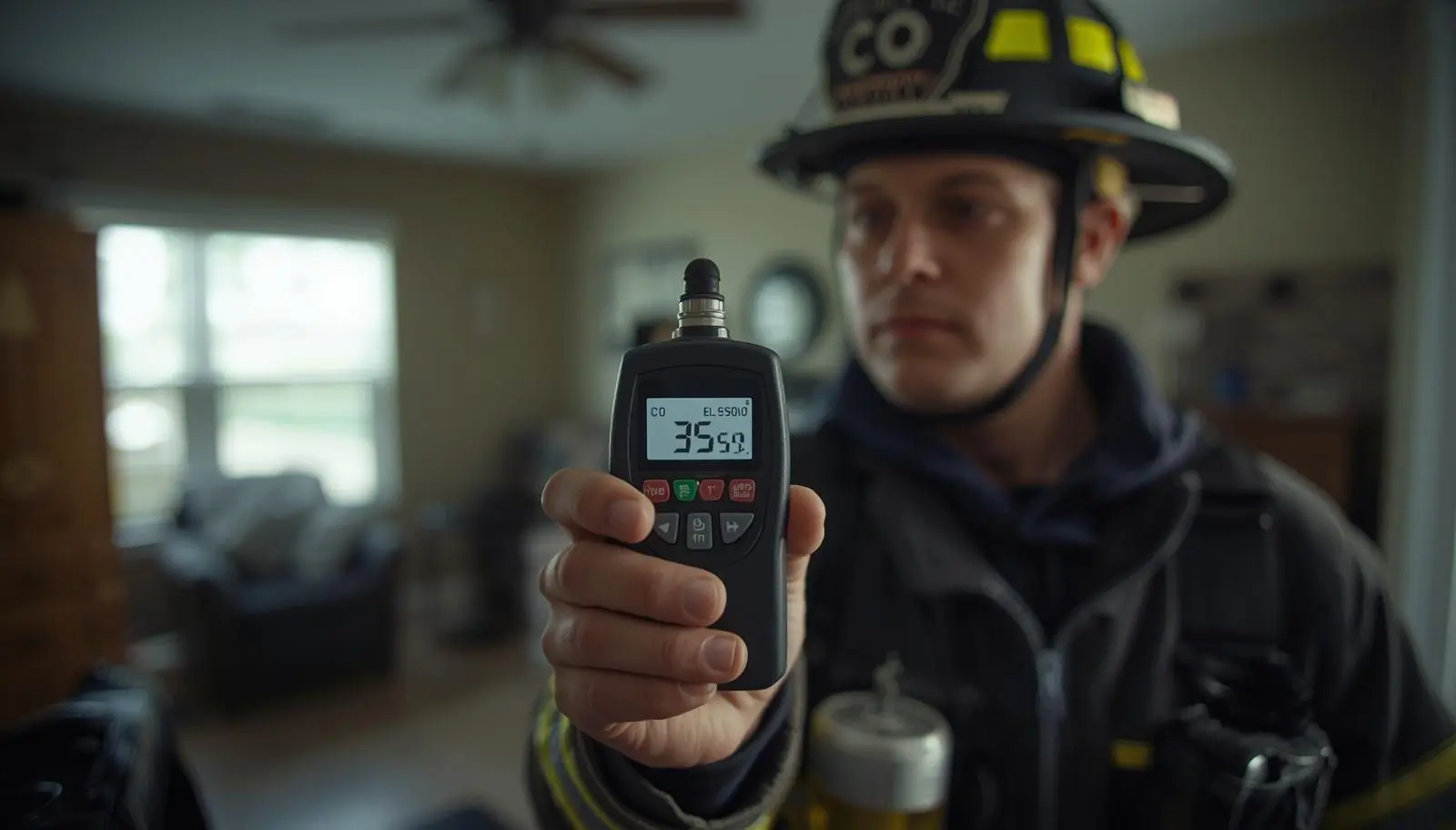
- Call 911 from outside. Tell them you suspect carbon monoxide poisoning and give your address. Fire department personnel have CO meters that can measure the exact concentration in each room. They can identify the source and confirm when the building is safe.
- Do not go back inside until the fire department has cleared the building. Even if symptoms improve quickly outside, the source is still in the building. CO concentration drops rapidly in open air — feeling better does not mean the building is safe.
- Seek medical evaluation if symptoms were significant. Carboxyhemoglobin levels can be measured from a blood test. Anyone who experienced confusion, loss of consciousness, or significant symptoms should be evaluated — CO exposure has long-term neurological effects that are not apparent at the time of exposure.
Do not go to sleep if you suspect CO exposure. This is the decision that kills people. The fatigue from CO poisoning is real — your body is oxygen-deprived and exhausted. Going to sleep in a building with a CO source increases your exposure, deepens the poisoning, and may result in you not waking up. The instinct is to rest. The correct action is to get outside.
Where CO Comes From in a Home
| CO Source | Why It Produces CO | Prevention |
|---|---|---|
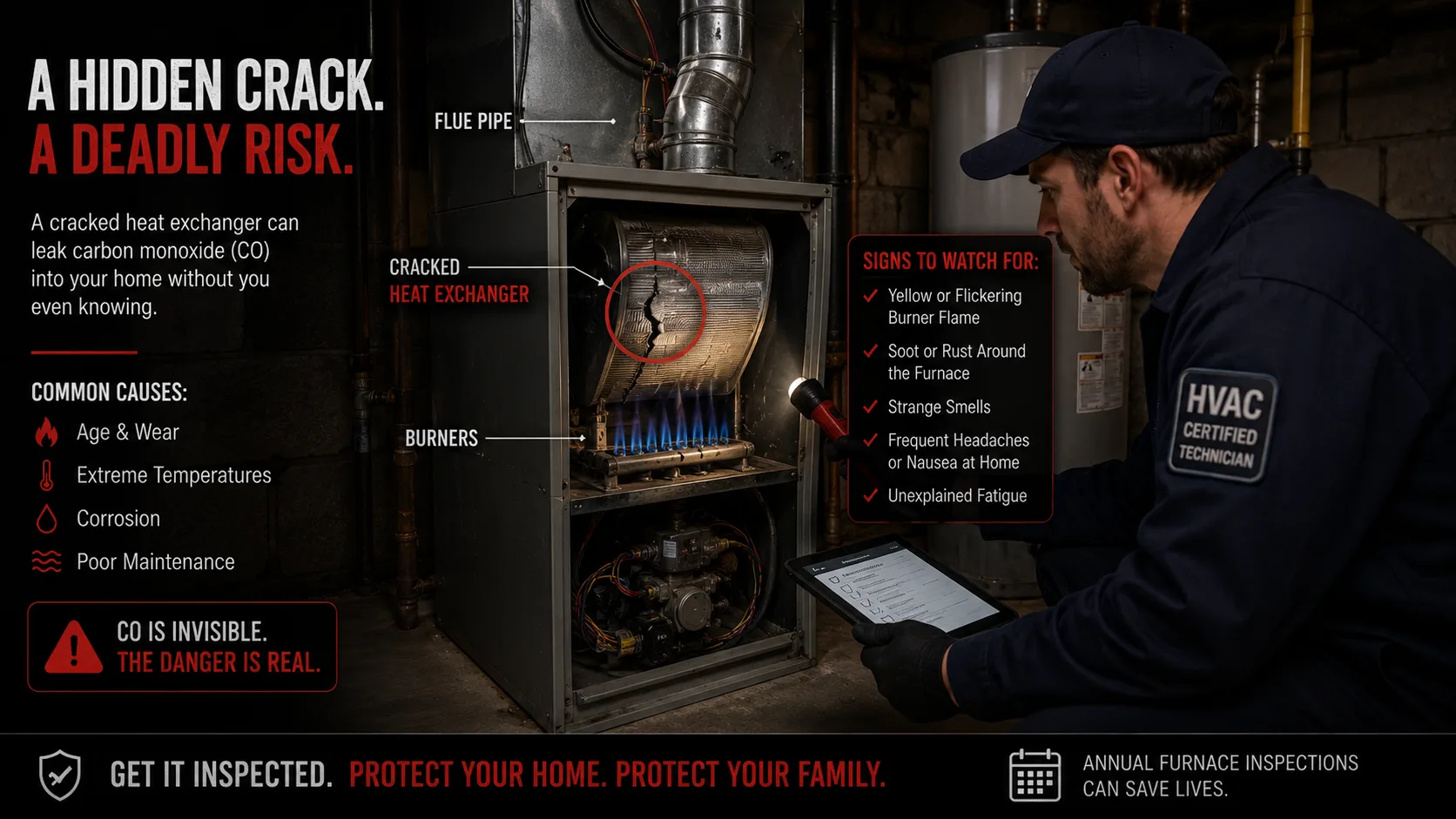
| Gas furnace — cracked heat exchanger | A crack in the heat exchanger allows combustion gases to mix with circulated household air instead of exhausting up the flue. The furnace appears to function normally. This is the most common household CO source. | Annual furnace inspection by a licensed HVAC technician. Heat exchangers crack from age and thermal cycling — no inspection means no detection. |
| Blocked flue or chimney | A bird nest, debris, or ice dam in a furnace or water heater flue prevents combustion gases from exhausting. They backflow into the home instead. | Annual flue inspection. Note that flue blockages can develop mid-winter from ice formation or sudden animal nesting. |
| Car idling in attached garage | Vehicle exhaust contains high CO concentrations. An attached garage shares air with the home through door gaps and shared walls. Even 30 seconds of idling with the garage door closed can produce dangerous CO levels in the adjacent home. | Never idle a car in an attached garage, even with the garage door open. Open the door, start the car, and move it immediately. |
| Portable generator indoors | Generators produce massive quantities of CO. Running a generator in a garage, basement, or enclosed porch — even with doors open — has killed entire families. | Generators run outdoors only, minimum 20 feet from any window, door, or vent. No exceptions. |
| Gas stove or oven used for heating | Gas stoves are designed for cooking, not space heating. Operating a stove burner or oven to heat a room produces CO in an unventilated space. | Do not use gas stoves or ovens for heating. Ever. |
| Charcoal or propane grill indoors | Charcoal grills produce extreme CO concentrations. A charcoal grill inside a home or garage, regardless of apparent ventilation, is one of the fastest CO poisoning scenarios possible. | Grills operate outdoors only. |
CO Detectors: What They Tell You and What They Don't
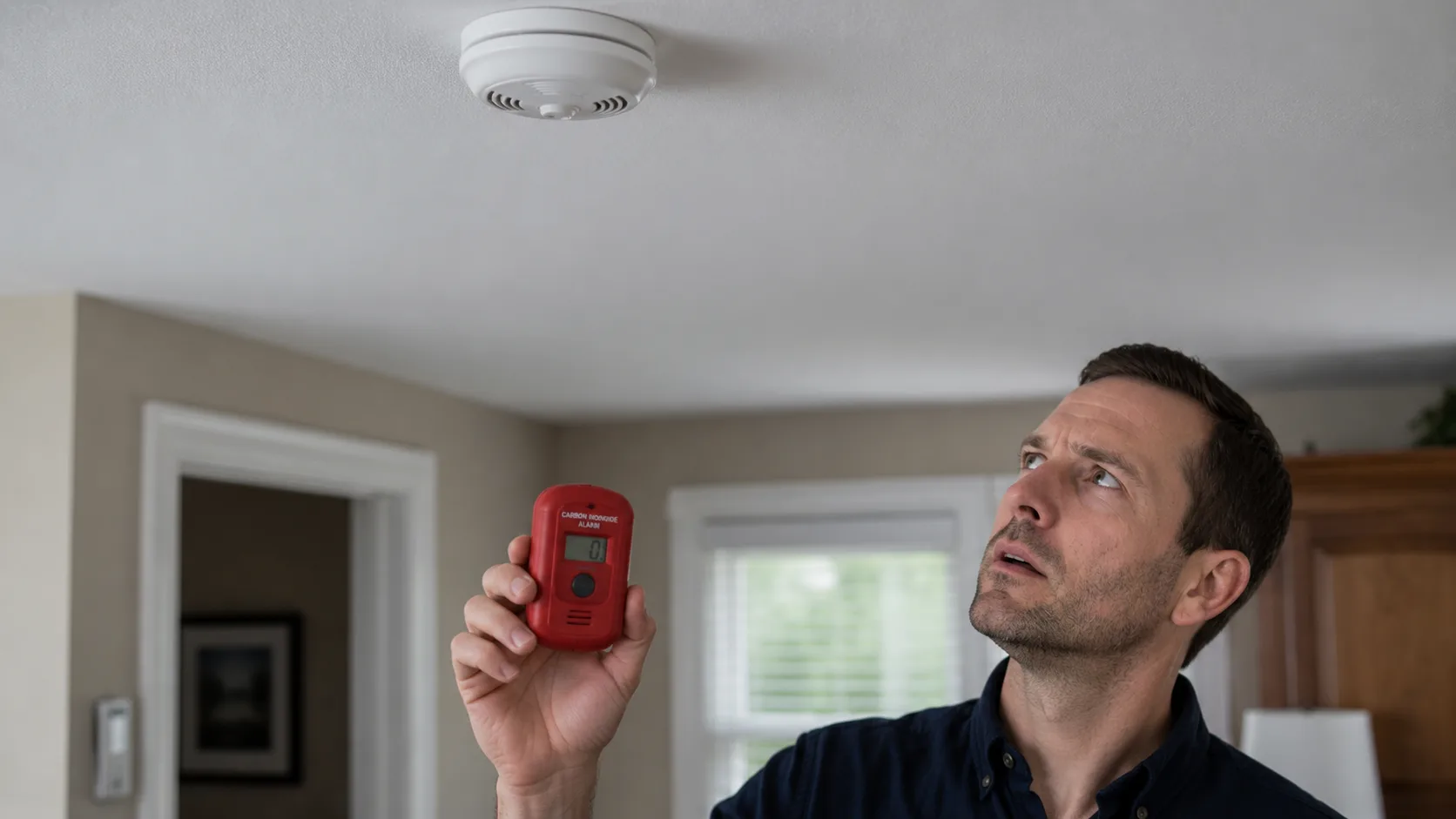
A CO detector is the most important tool for detecting CO before symptoms begin — but understanding what it measures helps you use it correctly and interpret its alarms accurately.
What a CO detector actually measures
Residential CO detectors measure the time-weighted average concentration of CO in the air around the detector. Most are calibrated to alarm based on a combination of concentration and duration — a low concentration sustained for a long time, or a high concentration sustained for a shorter time. This is intentional: it prevents false alarms from brief, minor CO exposure (someone starting a car near an open window) while detecting the sustained exposure that causes poisoning.
The implication: a CO detector that has not alarmed does not guarantee the CO concentration is zero. It means the concentration has not reached the alarm threshold sustained for long enough to trigger the algorithm. In a home with a slowly leaking CO source, concentration builds gradually — the detector may alarm well after exposure has begun.
Where to place CO detectors
- On every floor of the home, including the basement
- Outside each sleeping area — ideally inside each bedroom
- Near the furnace room and near an attached garage
- Not directly adjacent to fuel-burning appliances — 5 to 20 feet away prevents false alarms from brief startup emissions
When the CO alarm goes off
Treat it as real. The two most common responses to a CO alarm are the wrong ones: investigating the source before evacuating, and assuming it is a malfunction and resetting it. If the alarm sounds: get everyone out, call 911, do not go back in. If the fire department finds no CO source, the alarm may have been triggered by a brief spike — but you had no way of knowing that from inside the building, and the correct response was the same either way.
Why Winter Is the Most Dangerous Season
CO poisoning incidents peak sharply in the winter months — November through February — for interconnected reasons that all trace back to cold weather and closed buildings.
- Heating systems are running. Furnaces, boilers, and space heaters operate continuously in winter. A cracked heat exchanger that is dormant in summer becomes an active CO source the first time the furnace cycles on in October.
- Buildings are sealed. Windows and doors stay closed. Natural ventilation that dilutes CO in summer is absent. CO that would disperse harmlessly in a ventilated summer home accumulates in a sealed winter home.
- Power outages prompt dangerous improvisation. Winter storms cause power outages. People respond by bringing generators indoors, running gas stoves for heat, and using charcoal grills inside. Winter storm-related CO poisoning incidents are documented every year following major storms.
- Chimney and flue issues emerge. Ice damming, animals seeking warmth in unused flues, and the first firing of chimneys that were not cleaned in fall — all create CO backflow scenarios that are specifically winter events.
Long-Term Effects of CO Exposure
CO poisoning does not always end when you get outside and breathe fresh air. Significant CO exposure — exposure that caused symptoms, particularly confusion, loss of consciousness, or severe headache — can cause delayed neurological effects that appear days to weeks after the acute incident:
- Memory problems and cognitive impairment
- Personality changes and emotional instability
- Difficulty concentrating
- Movement disorders
- Parkinsonism-like symptoms in severe cases
These delayed effects are not universal — they depend on the severity and duration of exposure. But they are sufficiently documented that any person who experienced significant CO poisoning symptoms — particularly loss of consciousness or prolonged confusion — should seek medical evaluation, not just fresh air and rest. Emergency hyperbaric oxygen treatment is available for severe CO poisoning and reduces the risk of delayed neurological complications when given promptly.
The practical takeaway: CO poisoning that is recognized early — because of a working detector, because someone connected the symptom pattern to the building rather than to an illness — is a medical emergency that can be fully treated. CO poisoning that is mistaken for the flu, and the person goes back to bed in the same building, can be fatal. The difference between those two outcomes is recognizing what the symptoms are telling you before it is too late to act on that recognition.





Comments 0
No comments yet. Be the first to share your thoughts!
Leave a Comment