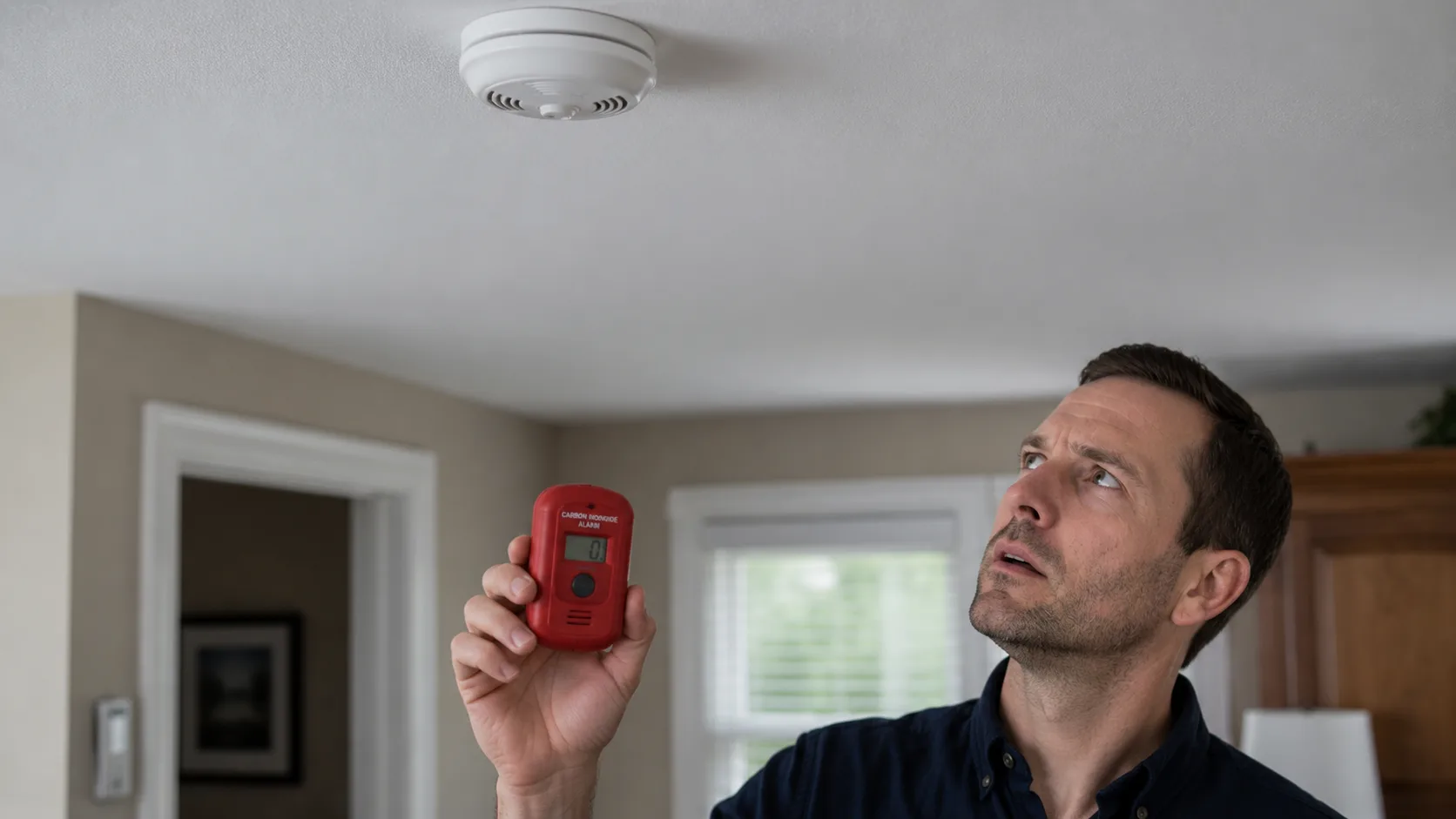

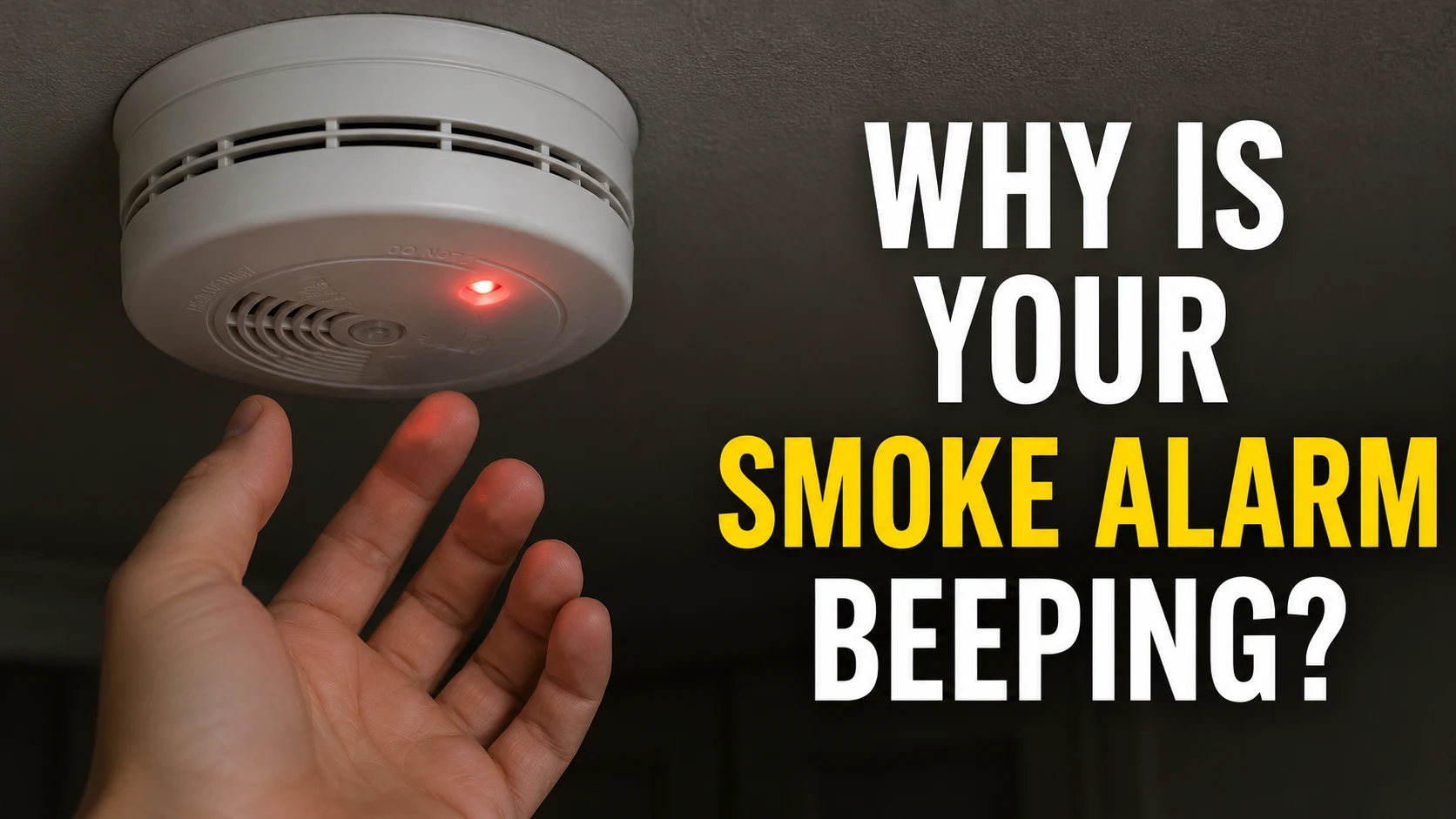
A standard smoke alarm cannot detect carbon monoxide. The two devices look similar, mount on the ceiling similarly, and sound the same alarm tone when triggered — but they detect completely different things using completely different technologies. A home protected only by smoke alarms has no carbon monoxide protection at all, and the people inside it have no way of knowing CO is accumulating until symptoms begin, which may be after cognitive impairment has already occurred.
This distinction kills people every year. CO poisoning from heating equipment, attached garages, and cooking appliances sends an estimated 50,000 Americans to emergency rooms annually and kills roughly 400 outside of fire-related incidents. Many of those deaths occur in homes with working smoke alarms — which detected nothing, because smoke alarms are not designed to detect carbon monoxide.
In this article:
- Why smoke alarms cannot detect CO
- What carbon monoxide is and why it is so dangerous
- CO concentrations: what happens at what level
- Sources of CO in a home
- CO detectors: what to buy and where to put them
- Combination detectors: do they actually work?
- When the CO alarm sounds: what to do
- Symptoms of CO poisoning
Why Smoke Alarms Cannot Detect CO
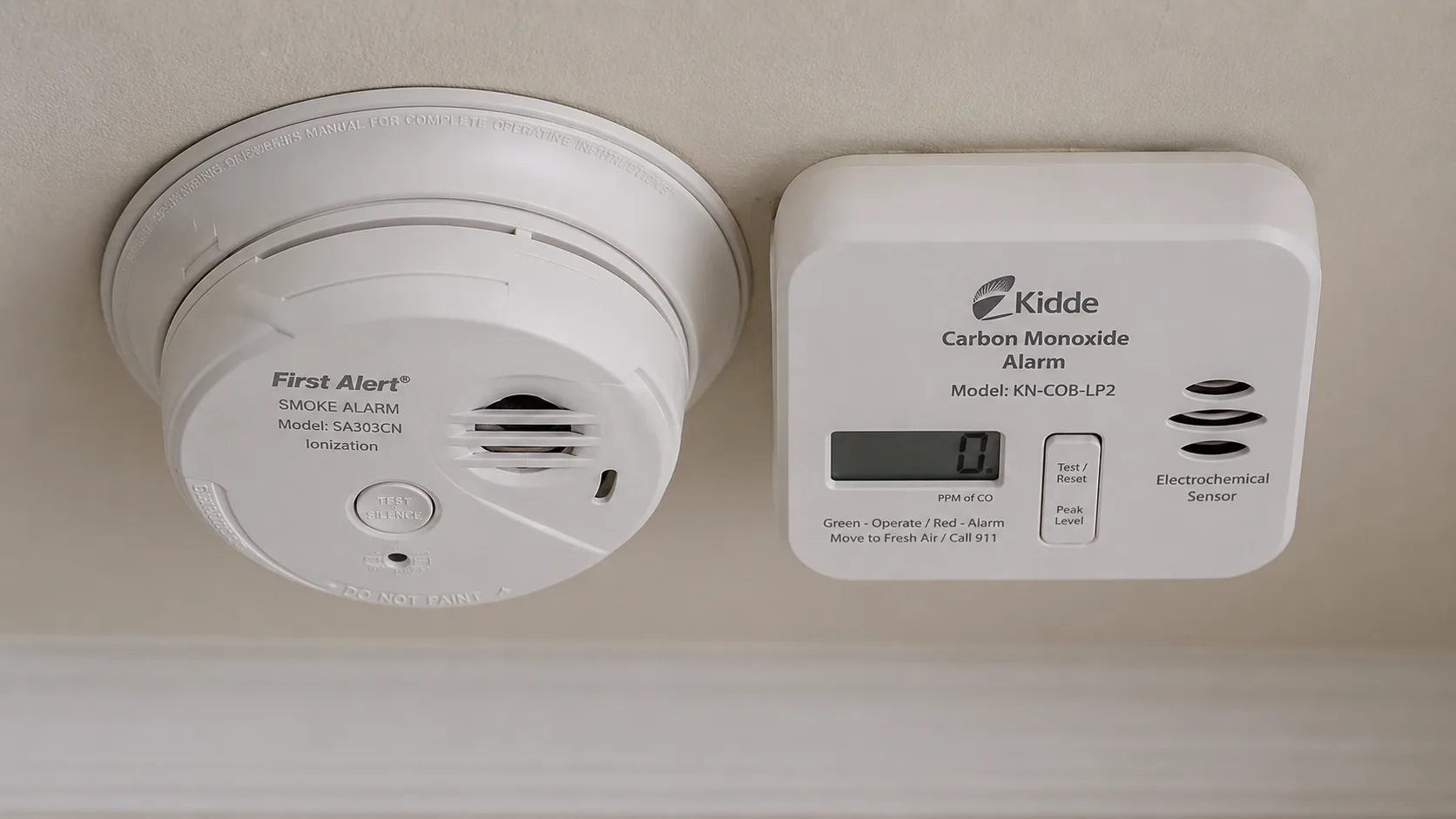
Smoke alarms detect combustion products — particles in the air from burning material. Ionization-type smoke alarms use a small radioactive source to ionize air in a sensing chamber; smoke particles disrupt the ion flow and trigger the alarm. Photoelectric smoke alarms shine a light beam through a sensing chamber; smoke particles scatter the light onto a detector and trigger the alarm. Both technologies are responsive to what fire produces: particles.
Carbon monoxide is not a particle. It is a gas — colorless, odorless, and chemically distinct from smoke. It does not scatter light, does not disrupt ion flow in an ionization chamber, and does not trigger any smoke detection technology. A room filling with lethal concentrations of carbon monoxide produces no response whatsoever from a smoke alarm. The alarm sits on the ceiling, functioning perfectly, detecting nothing, while CO accumulates to dangerous levels in the air below it.
Carbon monoxide detectors use electrochemical sensors — a chemical reaction between the CO molecule and the sensor produces a measurable electrical current, and the alarm triggers when that current exceeds the threshold. This technology is specifically responsive to CO and only to CO. It detects nothing about smoke or fire, and a CO detector alone provides no protection against fire.
What Carbon Monoxide Is and Why It Is So Dangerous
Carbon monoxide is produced when carbon-containing fuel — natural gas, propane, wood, charcoal, gasoline, diesel — burns with insufficient oxygen. Complete combustion of these fuels produces carbon dioxide (CO₂). Incomplete combustion produces carbon monoxide (CO). The difference is one oxygen atom, but the toxicological difference is enormous: CO₂ is a normal component of the air we breathe; CO binds to hemoglobin in the blood with approximately 200 times more affinity than oxygen, displacing oxygen from the red blood cells and preventing oxygen delivery to tissues.
The insidious quality of CO poisoning is that it impairs the brain before the person is aware anything is wrong. Early symptoms — headache, nausea, dizziness — are easily attributed to other causes (a cold, too much to drink, tiredness). At moderate concentrations, cognitive function is impaired before the person reaches the point of feeling seriously unwell. A person who is moderately CO-poisoned may not be capable of making the decision to leave the building, even if they feel something is wrong. They may simply fall asleep.
CO Concentrations: What Happens at What Level
| CO level (PPM) | Exposure time | Effects |
|---|---|---|
| 35 ppm | 8 hours | OSHA maximum permissible 8-hour occupational exposure; headache and dizziness after prolonged exposure |
| 70 ppm | 1–3 hours | Headache, fatigue, nausea — UL 2034 requires CO alarms to trigger within 60–240 minutes at this level |
| 150 ppm | 2–3 hours | Severe headache, disorientation, loss of fine motor control |
| 400 ppm | 3 hours | Life-threatening; loss of consciousness possible |
| 800 ppm | 45 minutes | Convulsions, loss of consciousness; death within 2–3 hours |
| 1,600 ppm | 20 minutes | Headache, dizziness, and nausea within 20 minutes; death within 1 hour |
| 3,200 ppm | 5–10 minutes | Headache and dizziness within 5–10 minutes; death within 25–30 minutes |
| 12,800 ppm | Immediate | Immediate physiological effects; death within minutes |
Note that UL 2034 — the standard for residential CO alarms — requires alarms to trigger at 70 ppm within 60 to 240 minutes, and at 150 ppm within 10 to 50 minutes. An alarm that triggers within those windows is functioning correctly. The practical implication is that a CO alarm may not trigger immediately when CO is present — it is calibrated to avoid nuisance alarms at very low concentrations while still alerting before exposure becomes dangerous. This is a feature of the standard, not a malfunction.
Sources of CO in a Home
Any fuel-burning appliance or equipment can produce CO under the wrong conditions:
- Gas furnaces and boilers — the most common source of residential CO incidents. A cracked heat exchanger, a blocked flue, or a backdrafting condition can direct CO into living spaces. Annual professional inspection of gas heating equipment is the primary prevention.
- Attached garage with idling vehicle — a car idling in an attached garage for 2 to 3 minutes can produce CO concentrations in the adjacent living space that exceed safe levels. Even with the garage door open, significant CO can migrate into the house.
- Gas ranges and ovens — produce CO during normal operation, but ventilation typically prevents dangerous accumulation. Using a gas range for extended heating of a home — a practice that occurs during power outages — bypasses normal ventilation assumptions and can produce dangerous accumulation.
- Generators — portable generators produce extremely high CO concentrations. Documented fatalities occur every year from generators operated in garages, basements, or too close to open windows and doors. A generator must be operated at least 20 feet from any opening to the living space.
- Charcoal grills and hibachis indoors — a documented cause of CO fatalities, particularly in cold weather when people bring outdoor grills inside. There is no safe indoor use of charcoal.
- Blocked or damaged chimneys — a flue blocked by debris, ice, or a bird nest redirects combustion gases including CO back into the living space. Chimney inspection before each heating season is standard prevention.
CO Detectors: What to Buy and Where to Put Them
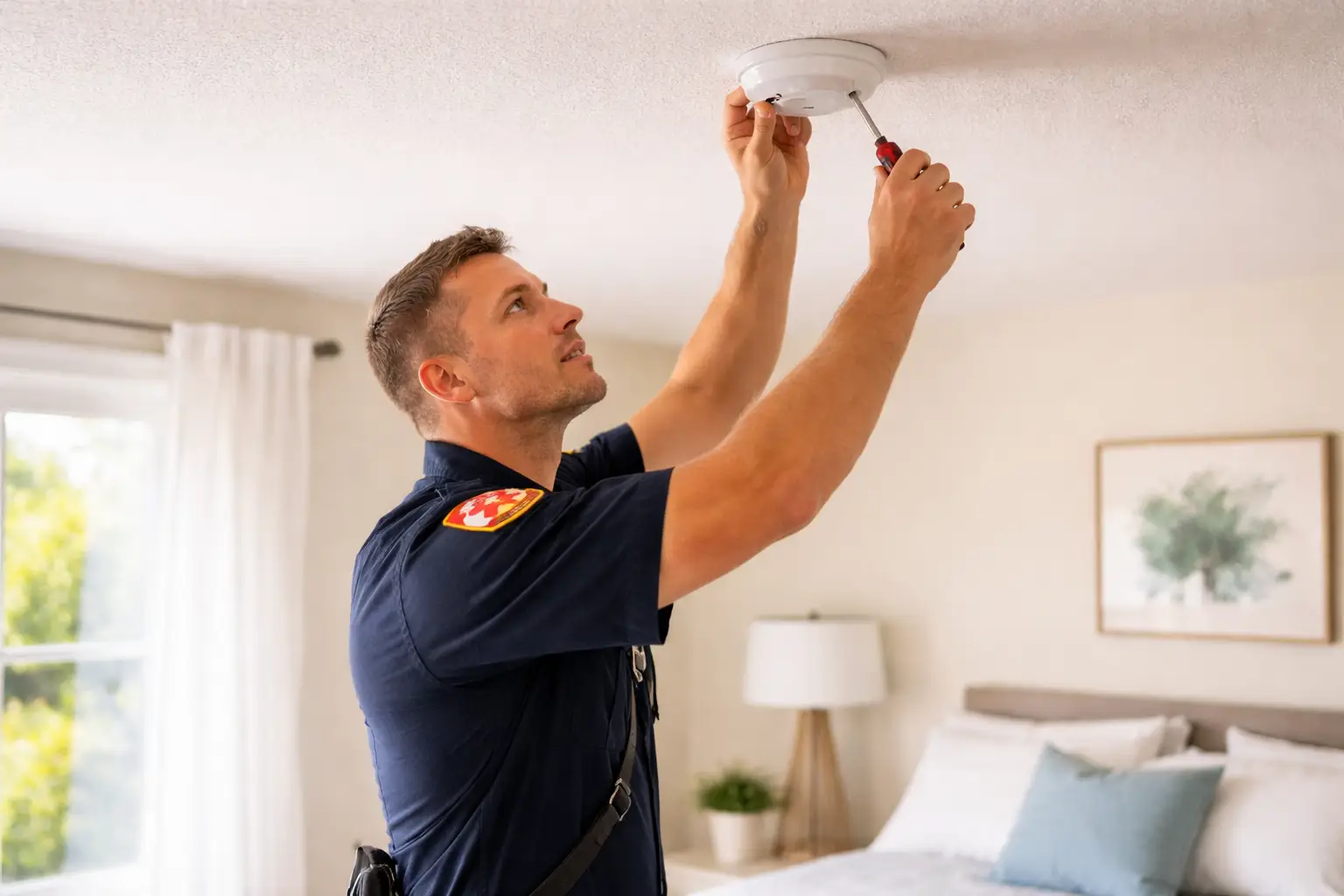
CO detectors should be installed on every level of the home and outside every sleeping area. The inside-sleeping-area placement is critical: because CO poisoning can impair cognition before waking, a detector that sounds in the hallway may not be loud enough to wake someone who is already experiencing mild CO effects. A detector inside the bedroom provides the best chance of waking a sleeping person before impairment is severe.
CO detectors should not be installed directly adjacent to fuel-burning appliances, in garages, or near cooking surfaces — these locations produce brief, low-level CO during normal operation and can cause nuisance alarms. The manufacturer's installation instructions specify minimum distances from appliances; follow them.
CO detectors have a limited service life — typically 5 to 7 years, though some models are rated for longer. Unlike smoke alarms (10-year lifespan), the electrochemical sensor in a CO detector degrades over time and becomes less responsive at lower concentrations. Check the manufacture date on the unit and replace it at or before the manufacturer's specified end-of-life date. A CO detector that is 8 years old and has never alarmed may not be functioning adequately at the CO concentrations it was designed to detect.
Combination Detectors: Do They Actually Work?
Combination smoke/CO detectors — single units that contain both ionization or photoelectric smoke detection and an electrochemical CO sensor — are available from major manufacturers and are tested and listed under both UL 217 (smoke alarms) and UL 2034 (CO alarms). They work. Both sensors operate independently within the same housing.
The important caveat is verification. Because smoke alarms and CO detectors are sold in the same store aisle and look similar, it is entirely possible to own what you believe is a combination unit but is actually only a smoke alarm — or vice versa. Check the label on the back of every device in your home. Look for both the UL 217 listing (smoke) and UL 2034 listing (CO). If a device carries only one of those listings, it detects only the hazard that listing covers.
The combination unit is a reasonable choice for homes that want simplified installation. The separate-unit approach allows optimal placement for each hazard independently — CO detectors can be positioned near sleeping areas and at lower heights (CO is slightly lighter than air and distributes relatively evenly in a room, unlike smoke which rises, making ceiling placement versus 5-foot height a less critical variable for CO than it is for smoke).
When the CO Alarm Sounds: What to Do
The CO alarm sounds differently from a smoke alarm in most units — a different tone pattern or a voice announcement. Know which alarm is which before an emergency. The response to a CO alarm:
- Get everyone out of the building immediately — including pets. Do not stop to locate the source, do not stay to investigate, do not open windows first. Get out.
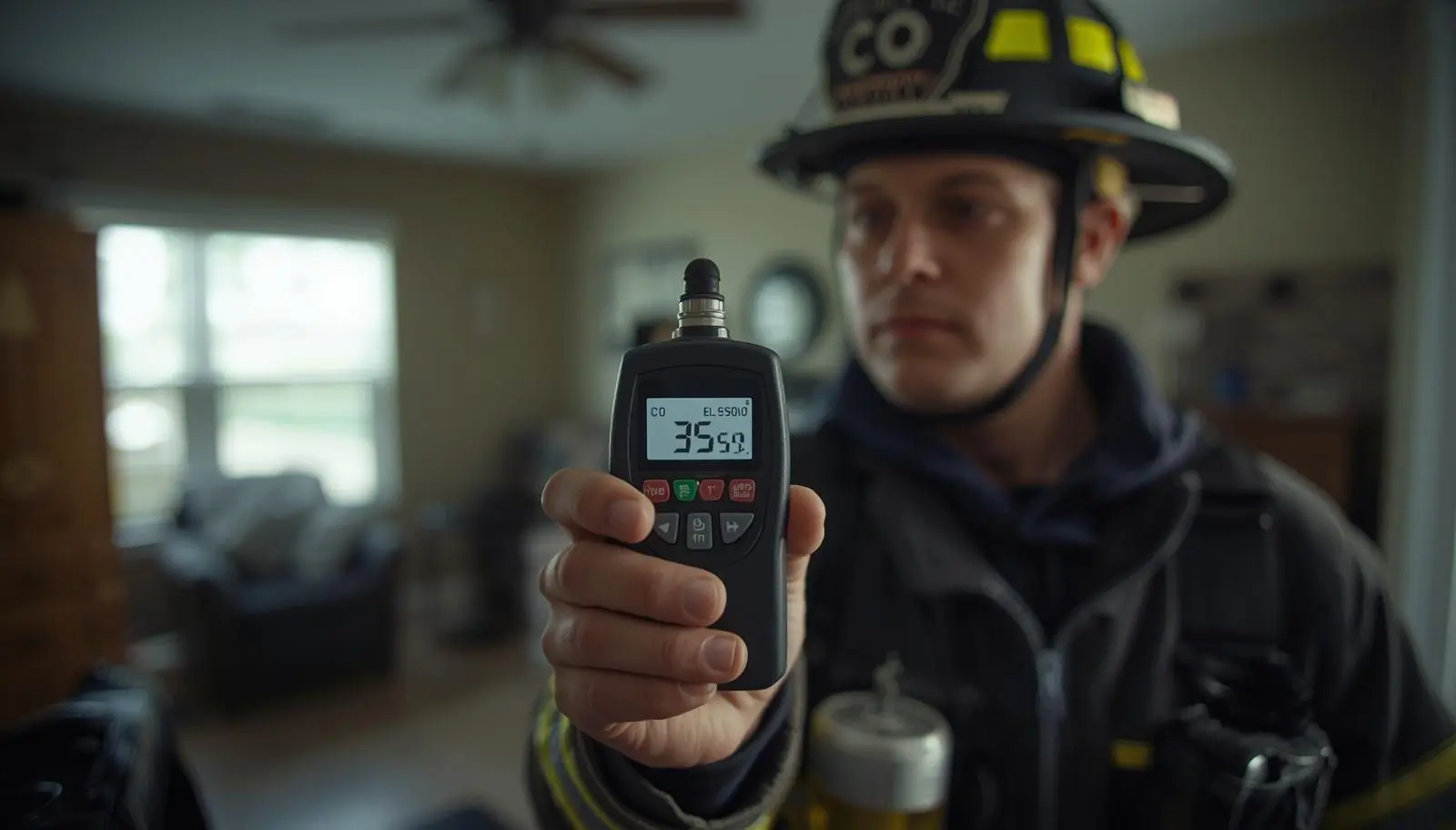
- Call 911 from outside. The fire department will enter with air monitoring equipment, locate the source, and confirm it is safe to re-enter. Do not re-enter until the fire department gives clearance.
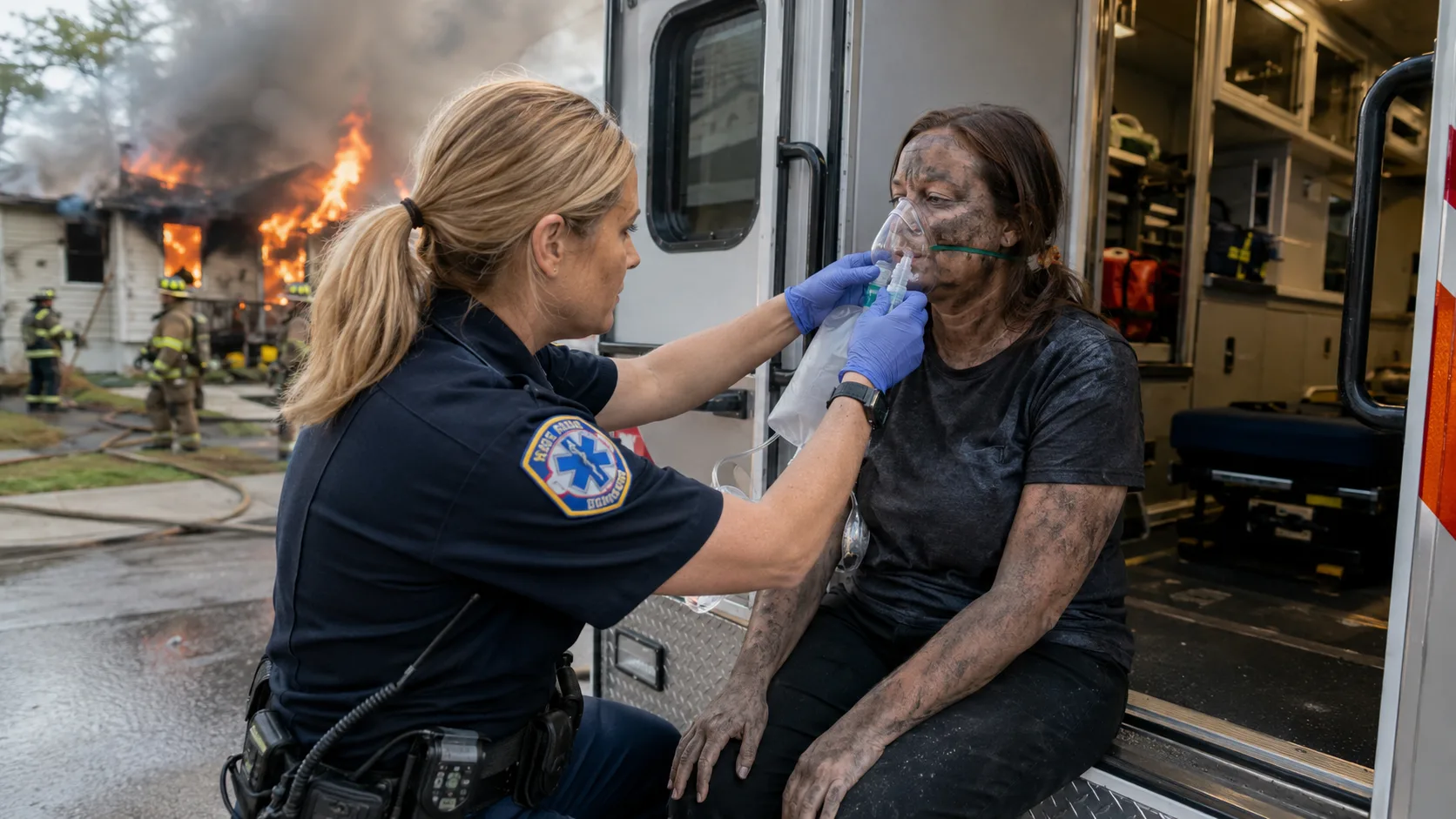
- If anyone has symptoms — headache, nausea, dizziness, confusion — they need medical evaluation. CO poisoning that has produced symptoms requires treatment, not fresh air and rest at home. Inform the paramedics that CO alarm activation occurred and that symptoms are present.
- Do not re-enter until the source is identified and corrected. A CO alarm that triggered because of a faulty furnace sends everyone back into a home with a faulty furnace if they re-enter without correction. The alarm will trigger again, and the source continues to produce CO.
A CO alarm that sounds while everyone is asleep and nobody wakes up is a scenario that produces deaths. This is why CO detectors inside sleeping areas — not just outside them — are the recommended placement. The extra few seconds of alarm proximity can be the difference between a person waking with a headache and a person not waking at all.
Symptoms of CO Poisoning
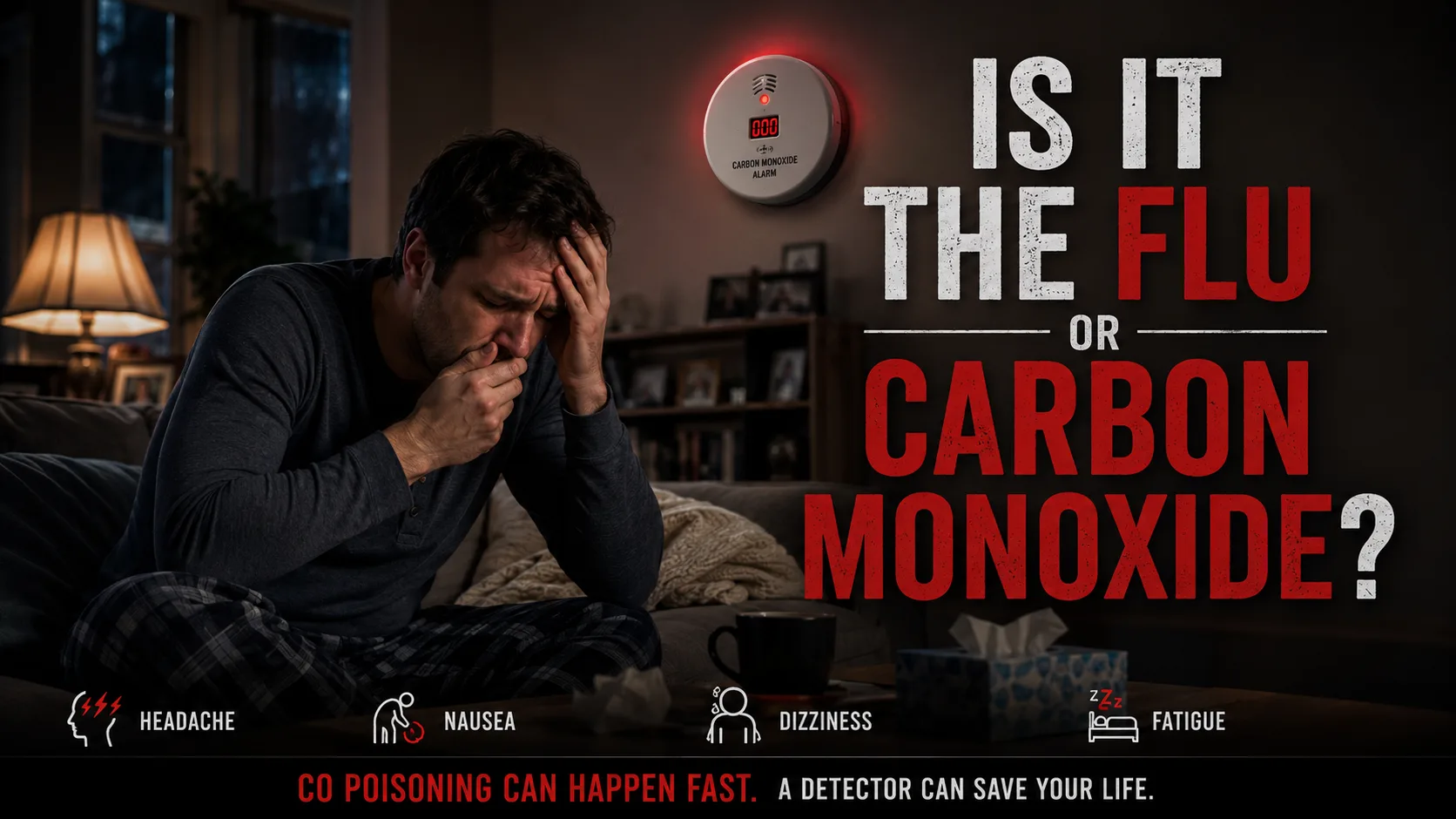
CO poisoning symptoms mimic several common illnesses, which is part of why it is underdiagnosed. The specific pattern that suggests CO rather than flu or food poisoning: symptoms that affect multiple people in the same household simultaneously, symptoms that improve when the person leaves the home and return when they come back, and symptoms without fever (CO poisoning does not cause fever; influenza typically does).
- ✗Headache — the most common early symptom; described as dull and persistent, typically across the forehead
- ✗Nausea and vomiting — often attributed to food poisoning when combined with headache
- ✗Dizziness and confusion — cognitive impairment that the affected person may not recognize in themselves
- ✗Shortness of breath on exertion — the reduced oxygen-carrying capacity of the blood becomes apparent during activity
- ✗Blurred vision — at moderate exposure levels
- ✗Loss of consciousness — at higher exposure levels; may be the first obvious sign in sleeping victims
Anyone suspected of CO poisoning should be moved to fresh air immediately and evaluated by emergency medical services. Carboxyhemoglobin — the compound formed when CO binds to hemoglobin — can be measured with a blood test, and the level guides treatment decisions. Moderate and severe poisoning is treated with high-flow oxygen; severe cases may require hyperbaric oxygen therapy, which accelerates CO elimination from the blood significantly faster than breathing normal-concentration oxygen.

Comments 0
No comments yet. Be the first to share your thoughts!
Leave a Comment