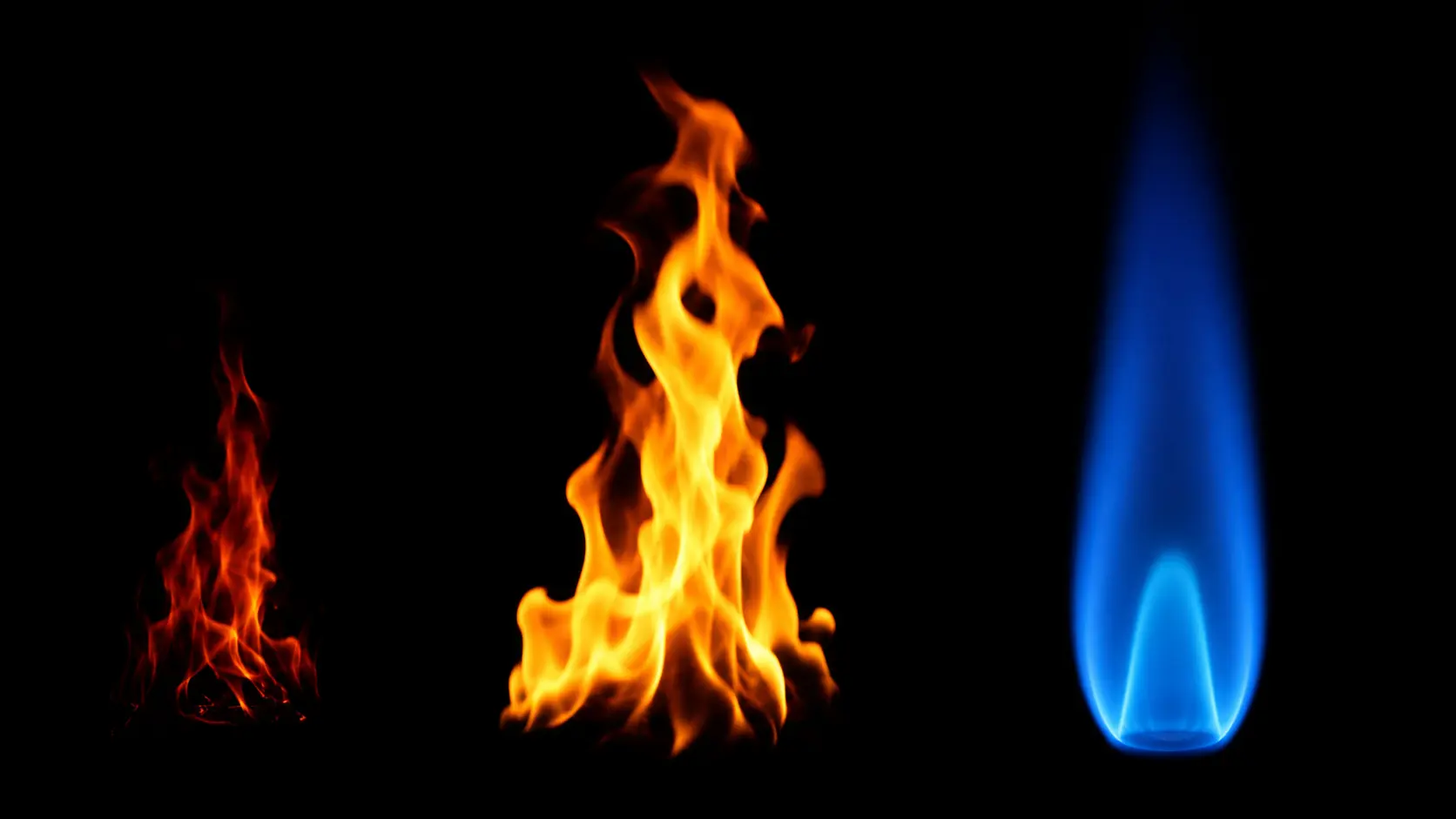

Fire is not one color. The orange glow of a wood fire in a fireplace, the blue cone at the base of a gas stove burner, the yellow-white of a magnesium flare, and the dark red of smoldering charcoal are all fire — but each color is telling you something specific about the temperature and chemistry of the combustion happening in that exact spot. This is not random variation. It follows laws of physics that are precise enough to be used as measurement tools in laboratory settings and practical enough to inform tactical decisions at a fire scene.
The two mechanisms that determine flame color are temperature-dependent light emission from incandescent particles, and chemistry-dependent light emission from excited molecules in the gas phase. These operate simultaneously and sometimes produce surprising results — a cold flame that is not orange, a chemical fire that burns green regardless of its temperature. Understanding both mechanisms makes sense of color variations that otherwise seem arbitrary.
In this article:
- Temperature and color: the blackbody radiation relationship
- Why most wood fires are orange: soot particle incandescence
- Blue flames: what makes them blue and why they are hotter
- Chemical emission colors: when the fuel determines the color
- What smoke color tells you
- What firefighters read from flame and smoke on approach
Temperature and Color: The Blackbody Radiation Relationship
Any object heated to a high enough temperature emits light. The color of that light shifts with temperature in a predictable way described by Wien's displacement law: as temperature increases, the peak wavelength of emitted light shifts toward shorter wavelengths — from infrared (invisible), to red, to orange, to yellow, to white, to blue-white. A piece of steel heated in a forge goes through exactly this sequence as it gets hotter.
Flames follow the same physics, but through two different mechanisms. The first is the incandescence of solid particles — primarily soot — suspended in the flame. Soot particles in a flame are solid carbon particles heated to high temperature by the combustion reaction around them. They glow exactly as a heated solid would, with color determined by their temperature. This is why wood fires and candles, which produce abundant soot, glow orange to yellow-white depending on how hot the combustion zone is.
The second mechanism is molecular emission — excited molecules in the gas phase releasing photons at specific wavelengths determined by their electron energy levels. This produces the sharp, chemistry-specific colors that override temperature in some flames, covered in the chemistry section below.
Why Most Wood Fires Are Orange: Soot Particle Incandescence
Wood combustion is inherently sooty. The complex organic molecules in wood produce abundant carbon particles during incomplete combustion — the same soot that deposits on chimney walls and in the lungs of people who breathe wood smoke. In a typical wood fire, the flame zone contains a dense population of soot particles heated to roughly 900 to 1,100°C. At those temperatures, the blackbody radiation peak falls in the orange-yellow range of the visible spectrum, which is why wood fires appear orange-yellow.
The candle flame illustrates this well. The bright yellow luminous zone of a candle flame is soot particles heated to incandescence. The dim blue base of the same candle flame — visible when you look closely — is the gas-phase combustion zone near the wick where the combustion is more complete and soot particles are absent. Two different colors, same candle, at the same moment: the outer yellow zone is soot radiation, the inner blue zone is gas-phase molecular emission from combustion intermediates.
Blue Flames: What Makes Them Blue and Why They Are Hotter
A gas stove burner produces blue flames in normal operation. The blue color has two sources. One is the emission from excited molecular species in the flame — primarily carbon monoxide intermediates and the CH radical (a carbon-hydrogen fragment produced in combustion) emit in the blue-violet range of the spectrum. The second is the higher combustion temperature of a well-mixed gas flame: natural gas burning with sufficient oxygen produces temperatures above 1,400°C at the flame front, which shifts the incandescent emission of any particles present toward the blue end of the spectrum.
More practically: blue flames indicate more complete combustion. A gas burner with orange tips — visible on many older gas appliances — is burning incompletely, producing soot at the flame boundary where fuel and oxygen are not well mixed. Adjusting the air intake to provide more oxygen shifts the flame back to blue and the combustion back to complete. In the context of a fire investigation, blue flames visible in a structure fire can indicate specific gas-phase fuels — natural gas, carbon monoxide accumulation, or certain chemical vapors — burning separately from the main fuel load.
Chemical Emission Colors: When the Fuel Determines the Color
| Chemical / element | Flame color | Common sources |
|---|---|---|
| Sodium (Na) | Intense yellow-orange | Salt, sodium compounds, seawater-wetted materials — why driftwood fires are yellow |
| Copper (Cu) | Blue-green to green | Copper wire insulation burning, copper-containing pesticides, some building materials |
| Potassium (K) | Violet-lilac | Wood ash (potassium carbonate), potassium-based fertilizers, potassium salts |
| Lithium (Li) | Crimson red | Lithium-ion batteries burning — one visual indicator of a lithium battery fire |
| Barium (Ba) | Pale green | Barium compounds in fireworks; some industrial chemicals |
| Strontium (Sr) | Bright red | Fireworks, flares, emergency signal fires |
| Magnesium (Mg) | Intense white | Magnesium metal fires — incendiary devices, some aircraft construction |
| Calcium (Ca) | Orange-red | Calcium compounds, some building materials |
These chemical colors are produced by atomic emission spectroscopy — the same physical process used in analytical chemistry laboratories to identify elements. When an atom is heated to a high energy state in a flame, its electrons jump to higher energy levels. When they fall back to lower energy levels, they release photons at wavelengths specific to that element. Sodium always produces 589-nanometer yellow light when excited in a flame, regardless of what else is burning or what the temperature is. This is why the presence of sodium — even trace amounts from salt on hands, on tools, or in the material being burned — produces a yellow tint in flames that would otherwise be a different color.
The practical significance: a fire in a building with copper wiring that shows green-blue flame color is burning the copper wire insulation and the copper itself. A battery storage fire with crimson-red flame has lithium involvement. A structure fire that produces an unusual bright green flame from a specific location may indicate chemical storage. These color signals are not definitive identifications — they require atmospheric monitoring and investigation to confirm — but they are information that an approaching crew or fire investigator can read without any equipment.
What Smoke Color Tells You
Smoke color is not the same thing as flame color, but it carries equally useful information.
Black smoke indicates heavy carbon particle production from incomplete combustion of organic material — typically petroleum-based products, rubber, plastics, or a fire that is oxygen-limited. Black smoke from a structure fire early in its development suggests a fuel-rich, oxygen-limited condition that may be building toward a backdraft or smoke explosion when fresh air is introduced.
Gray or white smoke early in a fire typically indicates water vapor and partially combusted material — a fire that is just establishing itself, or combustion of wood and paper with relatively good oxygen supply. Late in a fire, white smoke can indicate a steam-dominant condition as remaining water in the material evaporates.
Brown smoke specifically indicates unfinished wood — raw lumber, wood framing — burning, particularly in the early stages of structural fire involvement before the wood surface chars to black. Brown smoke from a roof or attic suggests the structural framing is involved.
Yellow or greenish smoke is a hazmat indicator. Chlorine gas is yellow-green. Some nitrogen oxide compounds produce yellowish-brown smoke. Burning sulfur compounds produce yellow-white smoke with a distinct acidic smell. Any fire producing colored smoke other than white, gray, or black should be approached with respiratory protection and hazmat protocols in mind.
What Firefighters Read from Flame and Smoke on Approach
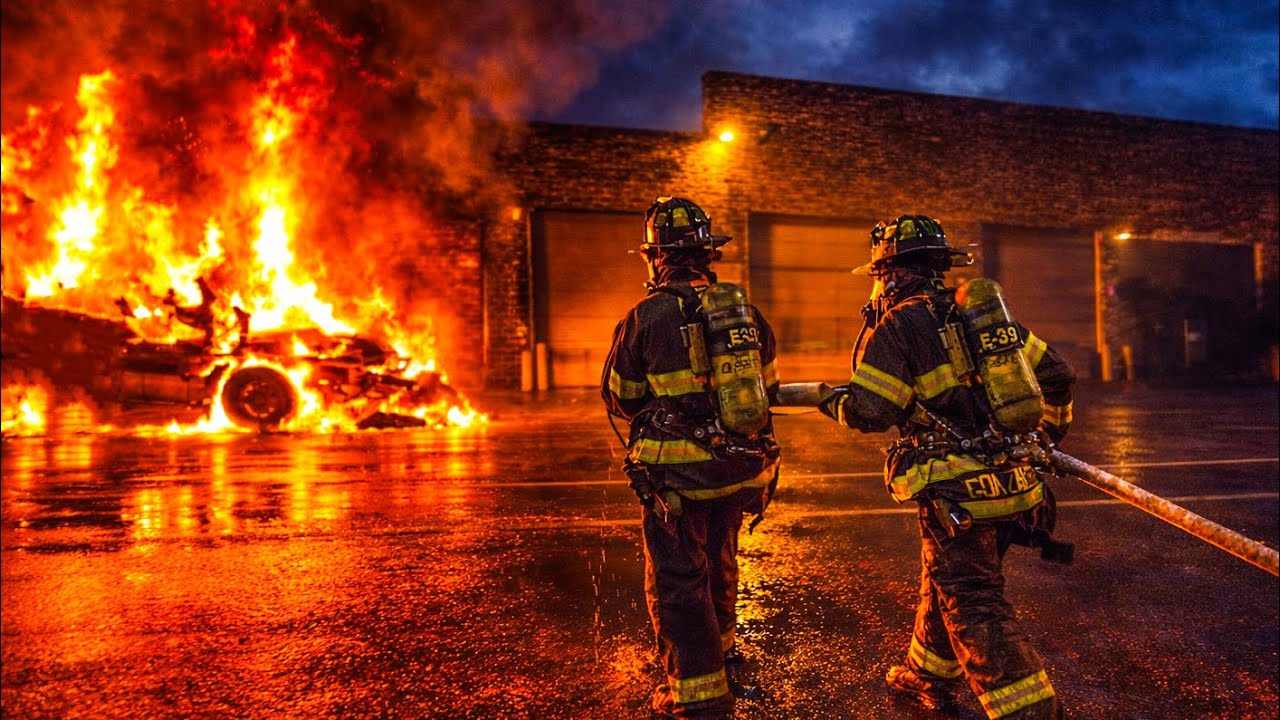
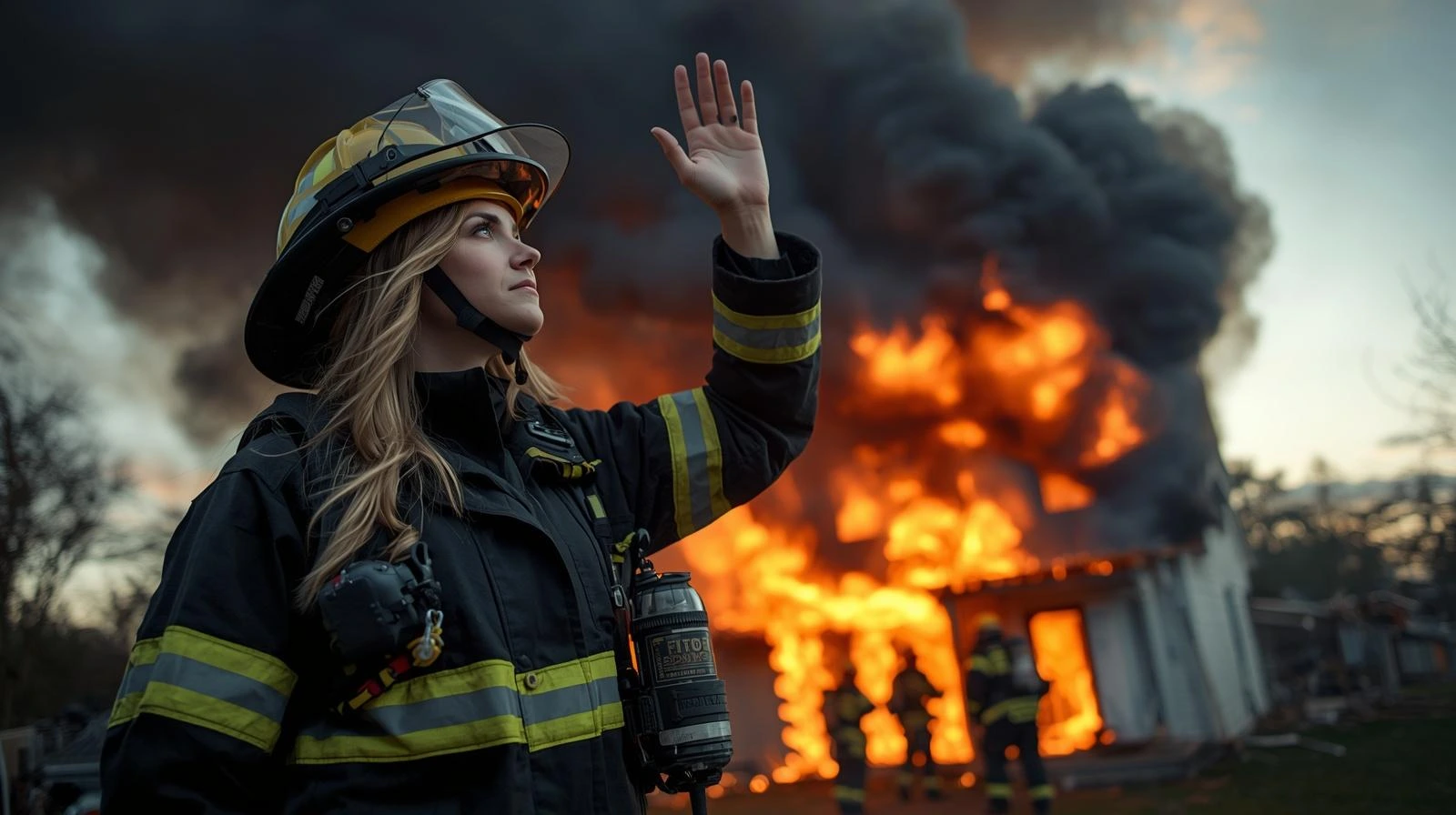
The size-up that an experienced firefighter conducts on approach to a working structure fire includes a continuous assessment of flame and smoke color, volume, and movement. This assessment informs tactical decisions made in the first 60 seconds on scene.
Dense, turbulent black smoke pushing under pressure from multiple openings — particularly when it appears to be looking for air rather than venting freely — is a backdraft indicator. The fuel-rich, oxygen-starved atmosphere inside may ignite explosively when fresh air is introduced at an opening. This changes the ventilation approach entirely: the standard tactic of opening the structure to improve visibility is contraindicated, and vertical ventilation at the highest point before any ground-level openings is the appropriate sequence.
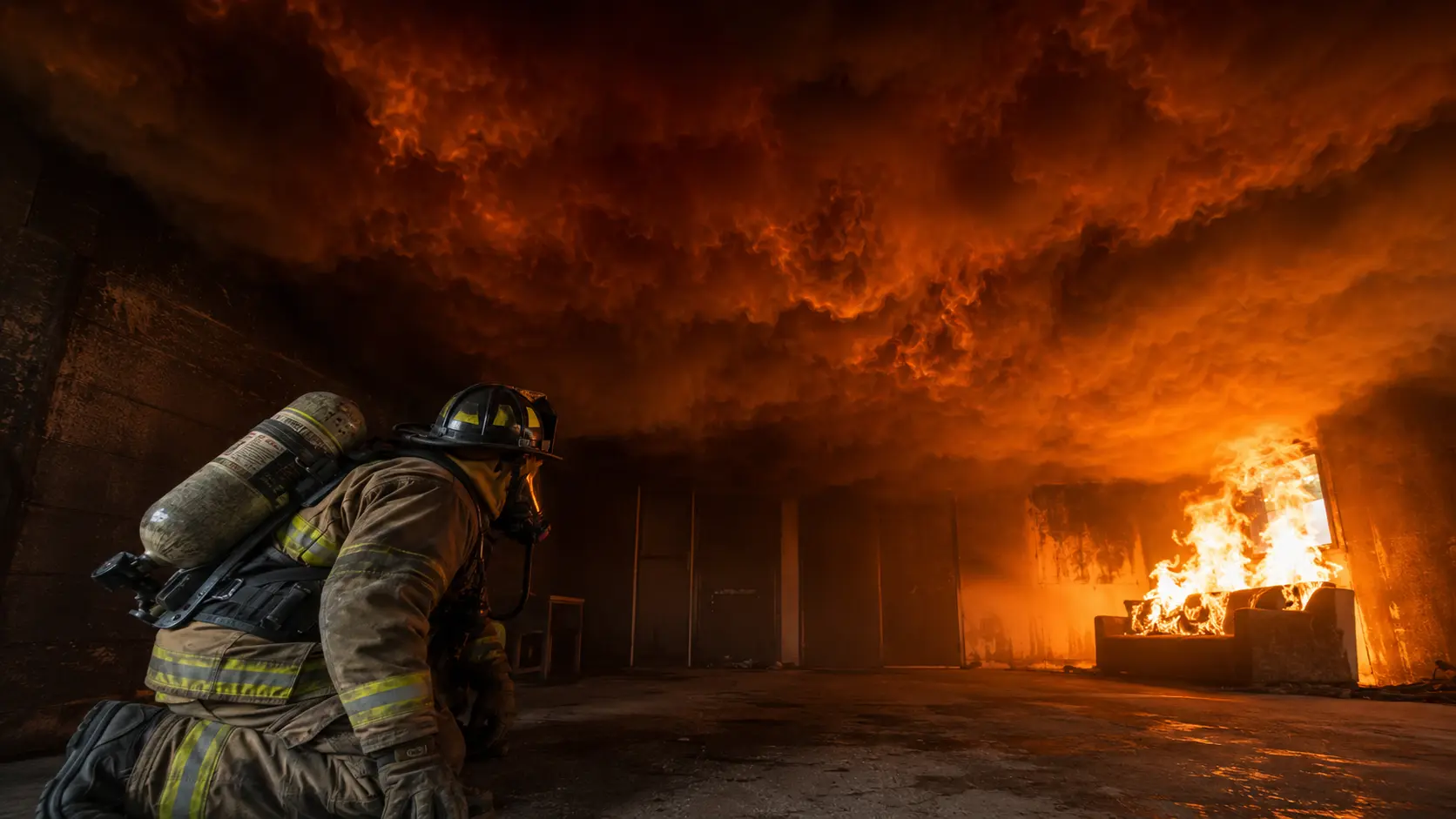
Flames showing blue at the base in a room fire where the fuel load is ordinary combustibles may indicate accumulated carbon monoxide burning — a sign that the room has already flashed or is approaching flashover conditions. Orange flames rolling across the ceiling indicate rollout of unburned pyrolysis gases accumulating in the thermal layer — a pre-flashover indicator that gives the interior crew a warning of deteriorating conditions that is visible from several feet away if they know what they are looking at.
The information in flame and smoke color is not a lookup table — it requires integration with everything else observed: building construction, occupancy type, time of day, bystander reports of fire origin. But color is one of the fastest and easiest signals to read on approach, and it carries information that is not available from any other source at that distance.
Comments 0
No comments yet. Be the first to share your thoughts!
Leave a Comment