Phosgene (COCl₂) killed more people in World War I than all other chemical weapons combined — approximately 85 percent of chemical warfare fatalities between 1914 and 1918. The reason it was so effective as a weapon was the same reason it is dangerous in fire scenarios today: at lethal concentrations, it produces minimal immediate symptoms. The victims felt mild irritation, perhaps some coughing, and walked away from the exposure. Six to twenty-four hours later, they developed pulmonary edema that was often fatal before they reached medical care.
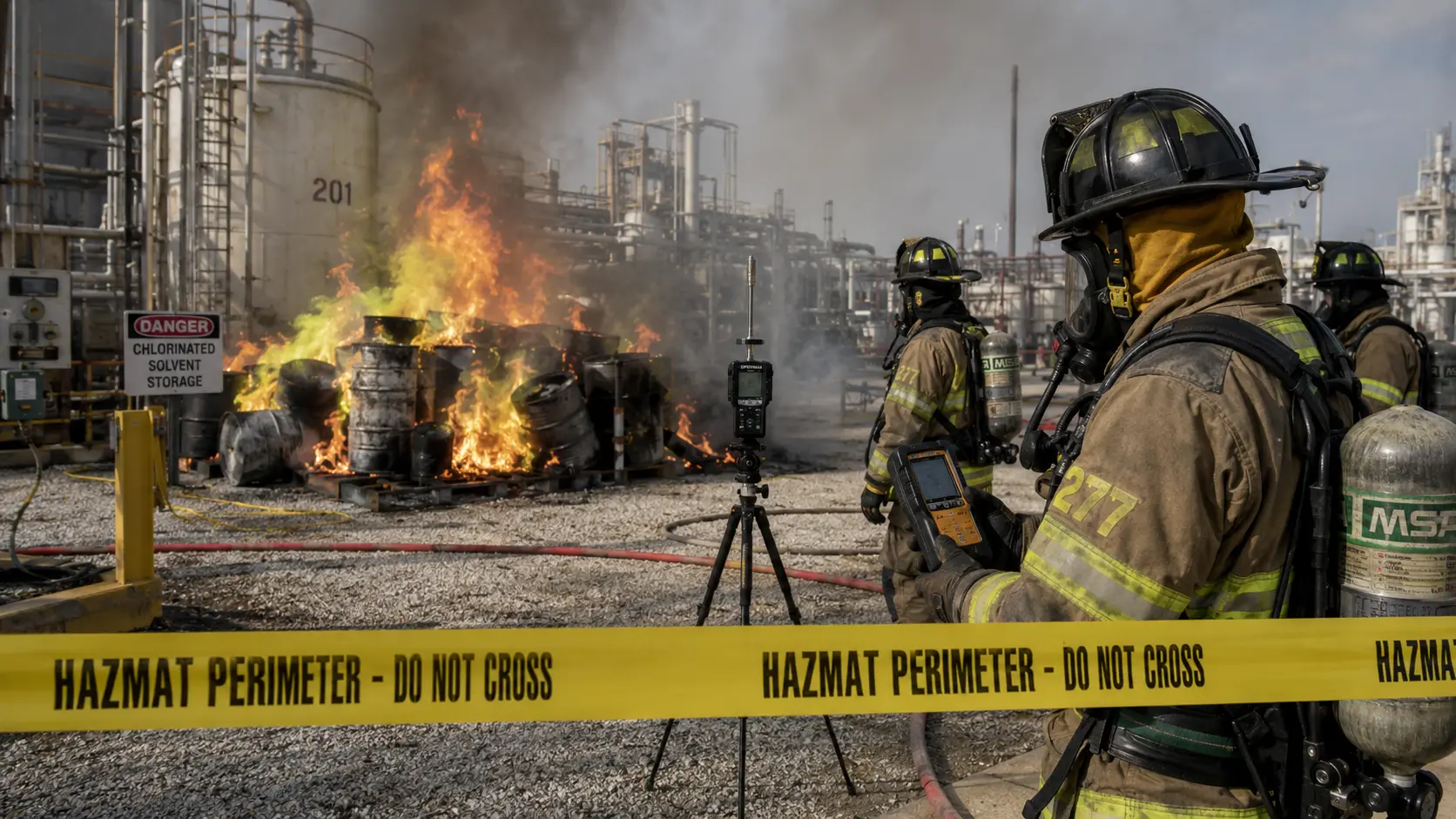
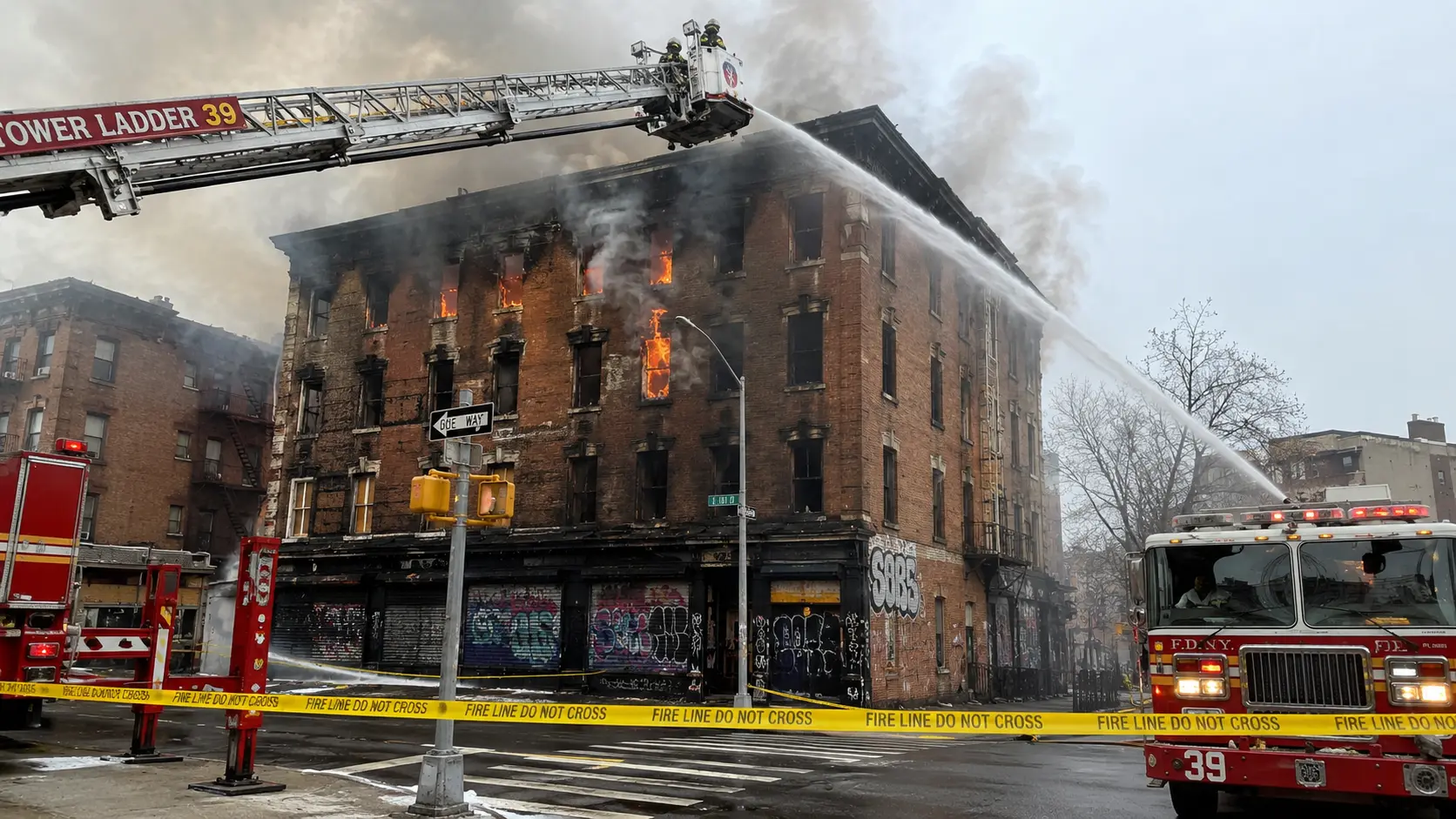
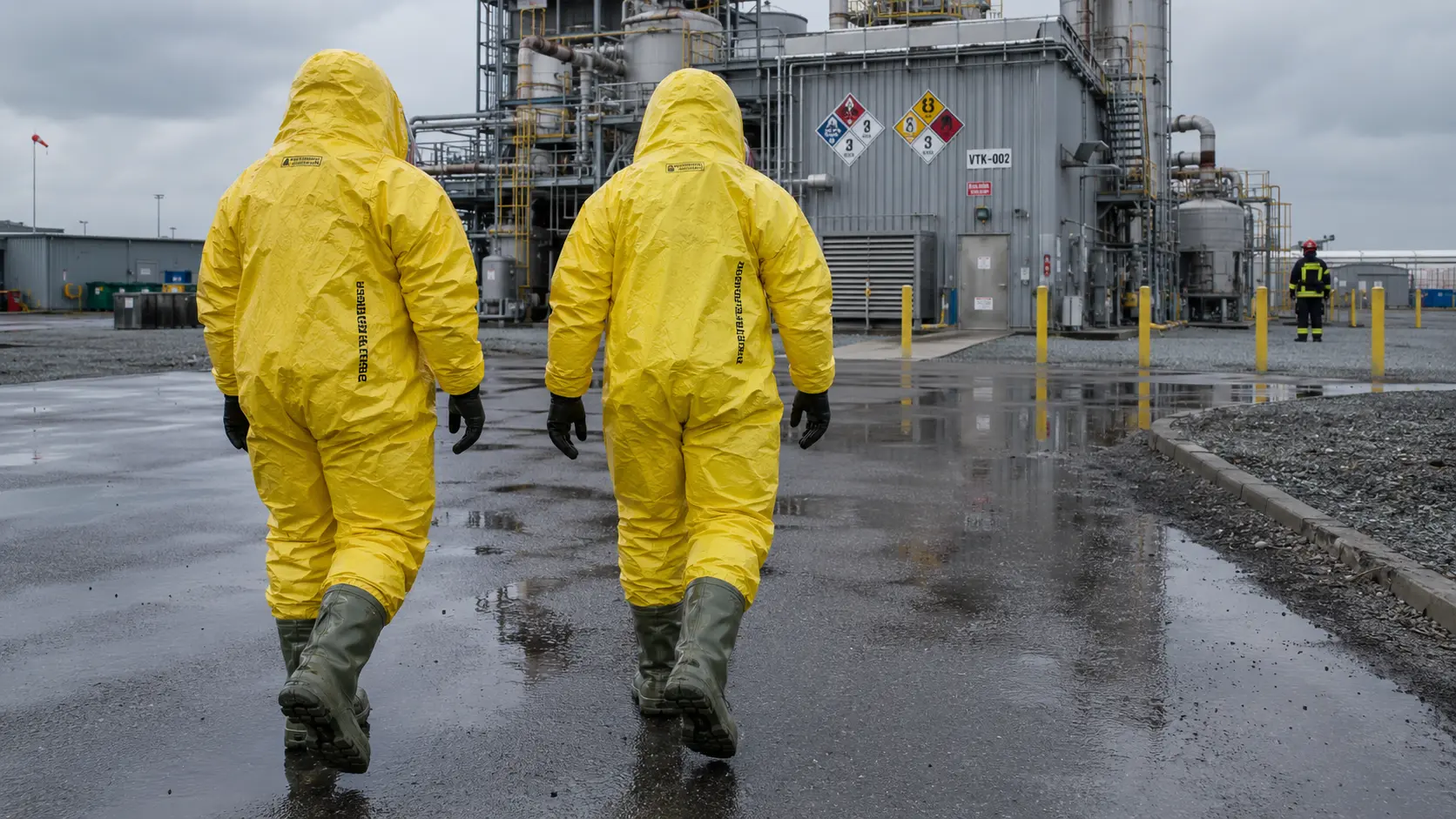
Phosgene is not manufactured for use in modern fires. It is produced as a combustion byproduct when certain chlorine-containing compounds are exposed to heat or flame. Carbon tetrachloride, chlorinated solvents used in industrial cleaning and degreasing, some refrigerants, and certain plastic materials all generate phosgene when they burn or are thermally decomposed. Firefighters working fires in industrial facilities, auto body shops, metal cleaning operations, or anywhere chlorinated solvents are used may receive phosgene exposure without knowing it — and without immediate symptoms to trigger a medical response.
In this article:
- Carbon tetrachloride: the fire extinguisher that created the hazard
- What phosgene is and where it comes from at fires
- The hay smell — detecting phosgene
- The delayed-onset mechanism
- Which burning materials produce phosgene
- Refrigerant fires
- Recognizing potential phosgene exposure at a fire
- Medical monitoring requirements
Carbon Tetrachloride: The Fire Extinguisher That Created the Hazard
Carbon tetrachloride (CCl₄) was used as a fire suppressant from the early 1900s through the mid-20th century. It was effective at extinguishing fires through vapor displacement and had properties that made it appealing as a portable extinguisher agent — it was not flammable, it was liquid at room temperature, and it could be projected from a pump sprayer. Small brass carbon tetrachloride extinguishers were standard equipment in many homes, automobiles, and commercial establishments.
The problem that eventually eliminated CCl₄ from fire suppression: when carbon tetrachloride contacts a fire or hot surface, it decomposes to produce phosgene. A firefighter who used a carbon tetrachloride extinguisher on a fire — spraying it into the flames — was generating phosgene at the point of suppression, in a confined space, directly in their breathing zone. Deaths from carbon tetrachloride extinguisher use were documented and eventually accumulated enough to drive the product from the market. By the 1970s, CCl₄ extinguishers had been replaced by CO₂, dry chemical, and Halon systems.
The residual hazard: carbon tetrachloride extinguishers are still found occasionally in old buildings, in legacy industrial facilities with outdated equipment inventories, and in antique or surplus collections. Any building fire that involves a fire extinguisher of unknown type or age should be assessed for carbon tetrachloride involvement, particularly in older industrial or commercial facilities.
What Phosgene Is and Where It Comes From at Fires
Phosgene (carbonyl chloride, COCl₂) is a colorless gas at standard temperature and pressure, heavier than air (density 3.4 times air), and is formed when chlorine-containing compounds are oxidized at elevated temperature. The specific chemistry involves chlorinated organic compounds reacting with oxygen in the presence of heat:
CCl₄ + O₂ → COCl₂ + Cl₂ (simplified)
Similar reactions occur with many chlorinated hydrocarbons — chlorinated solvents, some refrigerants (particularly older CFC refrigerants), PVC (polyvinyl chloride) when burned, and chlorinated flame retardants in textiles and plastics. The phosgene yield from different chlorinated compounds varies, but the potential for phosgene generation from any significant chlorinated organic fire is real enough to require monitoring.
The Hay Smell — Detecting Phosgene
Phosgene has a characteristic odor described as freshly cut hay, newly mown grass, or green corn. This is actually a slightly pleasant, mild odor — which is one reason it was so dangerous as a warfare agent. Victims did not find the smell alarming. They associated it with a pleasant outdoor smell and did not immediately recognize it as indicating a life-threatening chemical exposure.
The odor threshold for phosgene (approximately 0.5 ppm) is at the OSHA ceiling limit. Any detectable hay-like odor in a fire environment with chlorinated materials present should be treated as phosgene exposure at or above the OSHA limit. However, odor detection is not a reliable monitoring method — olfactory fatigue occurs with phosgene as with most chemical odors, and the concentration at which the odor is detectable is already the limit of acceptable exposure. Instrumental monitoring (photoionization detectors, specific phosgene detection tubes, or direct-reading instruments calibrated for COCl₂) is the only reliable field detection method.
The Delayed-Onset Mechanism
Phosgene reacts with moisture in the lungs to form carbon dioxide and hydrochloric acid. The reaction rate at low concentrations is slow enough that the immediate symptoms — mild cough, eye irritation, slight chest tightness — do not communicate the severity of the injury that is developing. The chemistry continues in the lung tissue after exposure ends, progressively damaging the alveolar membrane.
The resulting injury — chemical pneumonitis progressing to pulmonary edema — develops over the 4 to 24-hour period after exposure. During this interval, the affected person may feel relatively well — the immediate symptoms resolve, they may attribute what they felt to ordinary smoke exposure, and they may not seek medical evaluation. By the time pulmonary edema becomes symptomatic (increasing shortness of breath, frothy sputum, cyanosis), the injury is already advanced and may be life-threatening.
The dose-response relationship: low-level phosgene exposure produces sub-clinical injury that resolves without treatment. Moderate exposure produces pulmonary edema that may resolve with supportive care (supplemental oxygen, positive-pressure ventilation if needed). High-level exposure produces fatal pulmonary edema that does not respond to supportive care. The specific concentration-duration product (measured in ppm-minutes) that divides these outcomes has been established from World War I data and animal studies.
Which Burning Materials Produce Phosgene
| Material | Phosgene generation potential | Common locations |
|---|---|---|
| Carbon tetrachloride (CCl₄) | High — direct phosgene precursor | Old buildings, legacy industrial equipment, antique fire extinguishers |
| Chlorinated solvents (TCE, PCE, DCM) | High — major industrial use still ongoing | Auto body shops, metal cleaning facilities, dry cleaners, electronics manufacturing |
| PVC (polyvinyl chloride) | Moderate — produces HCl primarily, phosgene at higher temperatures | Electrical insulation, plumbing, flooring, wall coverings — ubiquitous in modern buildings |
| Freon-based refrigerants (R-12, R-11, CFC refrigerants) | High when exposed to open flame | Old refrigeration equipment, pre-1994 vehicle A/C systems, old commercial refrigeration |
| Chlorinated flame retardants in textiles/plastics | Low to moderate | Upholstered furniture, carpeting, electronics, some vehicle interior materials |
Refrigerant Fires
Modern hydrofluorocarbon (HFC) refrigerants — R-134a, R-410A — do not produce phosgene when burned. They produce hydrogen fluoride (HF), which is also a serious respiratory and chemical burn hazard but through a different mechanism. The older chlorofluorocarbon (CFC) refrigerants — R-12, R-11, R-113 — which were phased out under the Montreal Protocol after 1994 in the United States but are still present in legacy equipment — do produce phosgene when exposed to heat or open flame.
Auto service facilities that work on older vehicles (pre-1994 models still using R-12 in air conditioning), cold storage facilities with older CFC-based refrigeration equipment, and any facility that stores legacy refrigerants for servicing older systems are potential phosgene-generation locations in a fire. The HVAC system in a building with a refrigerant leak can distribute phosgene throughout the building if the refrigerant contacts a heat source in the system.
Recognizing Potential Phosgene Exposure at a Fire
The factors that should trigger phosgene exposure concern at a fire scene:
- ✗Known or suspected chlorinated solvents involved in the fire: Any facility using industrial solvents, degreasing chemicals, or dry cleaning chemicals should trigger phosgene monitoring before any unprotected personnel enter the smoke area.
- ✗Old refrigeration equipment involved: Pre-1994 commercial refrigeration or any refrigeration equipment with unknown refrigerant type should be assessed for CFC content before firefighting operations that may expose refrigerant to heat.
- ✗Fire extinguisher of unknown type involved in or near the fire: Old or unidentified extinguishers should be assumed to potentially contain CCl₄ until identified otherwise.
- ✗Sweet or pleasant hay-like odor in the fire area: Any detected phosgene-like odor is an immediate indicator to withdraw all unprotected personnel and begin atmospheric monitoring.
- ✗PVC-intensive fire with high temperatures: Major fires in buildings with extensive PVC (particularly old electrical insulation fires) may produce phosgene at higher fire temperatures even without dedicated chlorinated solvent involvement.
Medical Monitoring Requirements
Any firefighter or responder who has been in or downwind of a fire involving known or suspected phosgene-generating materials — with or without SCBA use — should be medically evaluated and monitored for a minimum of 24 hours after exposure. The monitoring period reflects the delayed-onset characteristic: symptoms that are absent at the time of exposure may develop up to 24 hours later.
The specific monitoring protocol for potential phosgene exposure:
- Immediate removal from the exposure area and fresh air
- Pulse oximetry monitoring — early pulmonary edema may be detected as declining SpO2 before clinical symptoms develop
- Chest X-ray at the time of exposure and at 4 to 6 hours post-exposure — early pulmonary edema changes may be visible on imaging before they are clinically symptomatic
- Continued monitoring for 24 hours — any person who develops dyspnea, decreased SpO2, or abnormal breath sounds during the monitoring period requires immediate respiratory support and intensive care evaluation
- No strenuous physical activity during the monitoring period — exertion increases oxygen demand and may accelerate the progression of subclinical pulmonary edema to symptomatic respiratory failure
The critical mistake with phosgene exposure: allowing a person to leave medical supervision because they feel well at the time of evaluation. Feeling well at 30 minutes post-exposure is not reassuring with phosgene. The 24-hour monitoring requirement is not precautionary excess — it is calibrated to the documented onset timeline of phosgene pulmonary edema.
Comments 0
No comments yet. Be the first to share your thoughts!
Leave a Comment