Why Suppression Tactics Had to Change
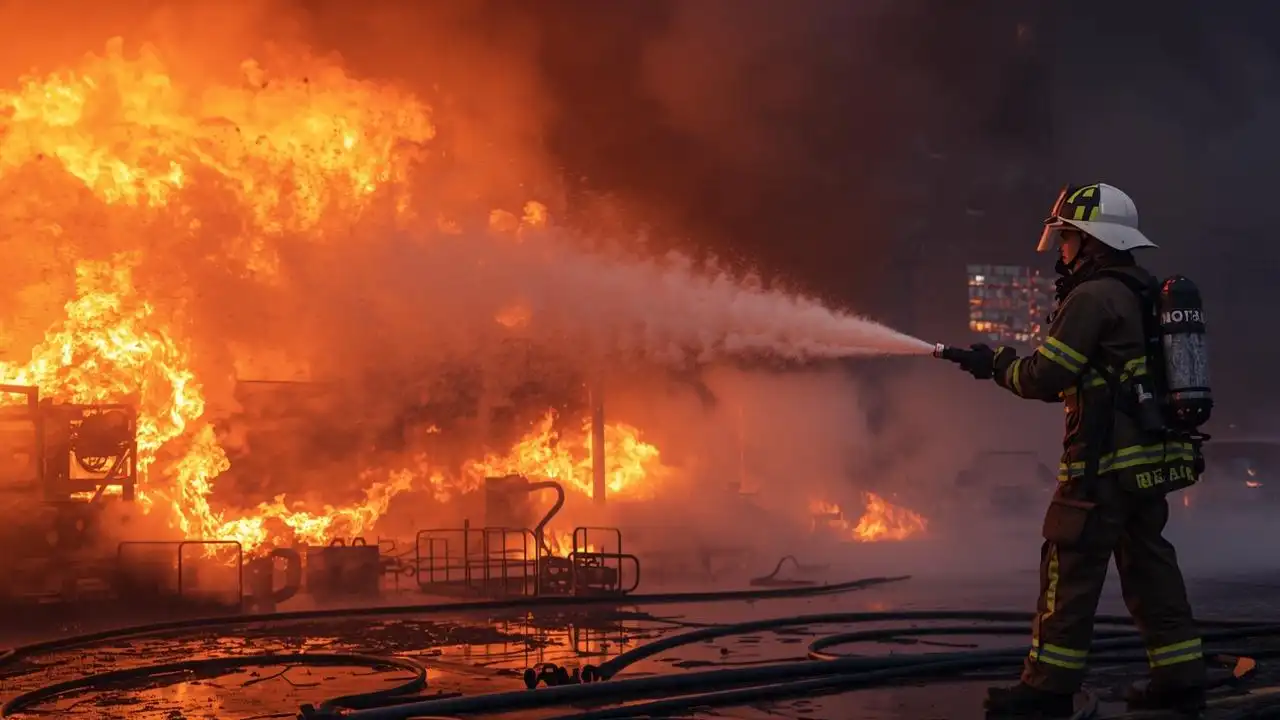
The firefighting tactics taught in U.S. fire academies for most of the 20th century were developed in an era when residential buildings were constructed primarily of wood, plaster, and natural materials — wool upholstery, cotton bedding, solid wood furniture. Those materials burned more slowly, generated less heat per unit mass, and gave suppression crews a time window that no longer exists in modern structures.
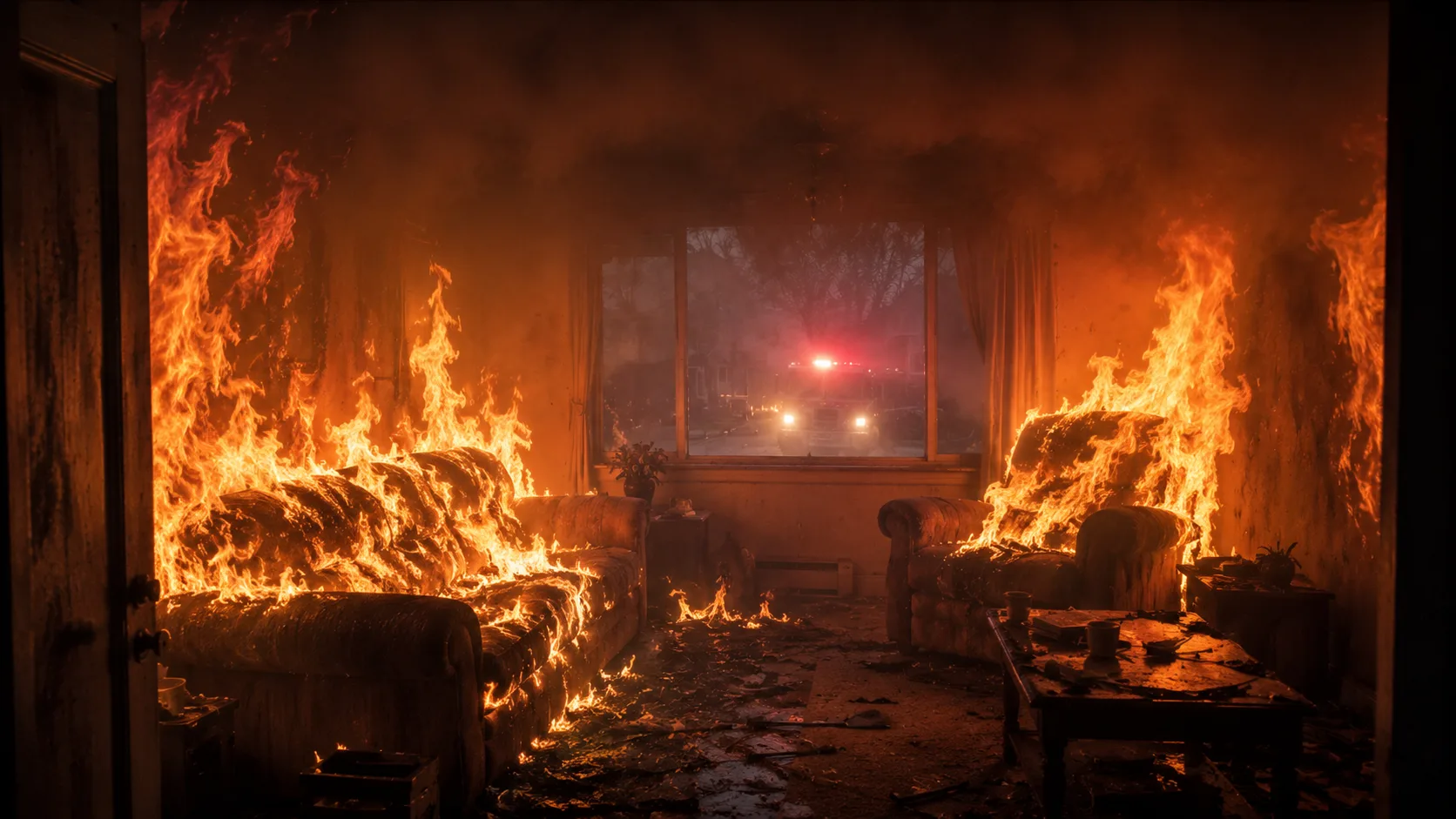
Research by UL's Fire Safety Research Institute (FSRI) and the National Institute of Standards and Technology (NIST), conducted through controlled burns in real structures, has documented a fundamental shift in fire behavior: modern synthetic furnishings and engineered building materials produce fires that reach flashover in 3–5 minutes rather than 25–30. The tenability window for trapped occupants has collapsed. The margin for tactical error has shrunk to near zero.
The response from U.S. fire science has been to rebuild suppression doctrine around data. Tactics that were accepted practice as recently as 15 years ago — including the belief that exterior water application would "push fire onto victims," or that ventilation should precede water application — have been tested and in many cases disproved by controlled research. This guide covers the current evidence-based doctrine that fire science students and entry-level firefighters should understand before stepping onto the fireground.
The Science Foundation: What Changed and Why
Before covering individual tactics, it is essential to understand the research that drove changes in doctrine. Three findings from UL FSRI research are the most operationally significant:
| Research Finding | Old Assumption | Evidence-Based Revision |
|---|---|---|
| Exterior water application before entry | Water from outside "pushes" fire toward victims inside | Exterior application reduces interior temperature by hundreds of degrees within 30 seconds without driving fire toward victims; improves crew and victim survivability |
| Door control | Doors are opened as needed; their state during fire operations was not a primary tactical consideration | Closing doors to uninvolved rooms reduces fire spread rate dramatically; closed bedroom doors cut CO and heat exposure, extending victim survival time by minutes |
| Ventilation timing | Vent early to improve visibility and reduce smoke conditions for search | Ventilation before a charged attack line is in position creates a flow path that accelerates fire growth and directs heat/gases toward crews and victims; water first, then coordinate ventilation |
| Modern fuel load timeline | Firefighters have 17+ minutes before conditions become unsurvivable | Modern furnished rooms: 3–5 minutes to flashover; tenability for victims collapses before crews can complete a thorough search without rapid suppression |
Understanding fire behavior principles is the prerequisite for understanding why these tactical decisions matter. For a complete foundation in combustion chemistry, heat transfer, flashover, and backdraft, see our fire behavior guide for U.S. fire science students.
The Three Suppression Attack Modes
Modern U.S. suppression doctrine recognizes three primary attack modes, each appropriate under specific conditions. Understanding when to use each — and when to transition between them — is one of the foundational tactical decisions on the fireground.
Interior (Direct) Attack
Crews enter the structure and advance a charged line to the seat of the fire. Most effective when fire is in a single compartment, building is structurally sound, the attack line can reach the fire before conditions deteriorate, and a RIC is established. The classic "aggressive interior attack" model — appropriate when conditions support it.
Transitional Attack
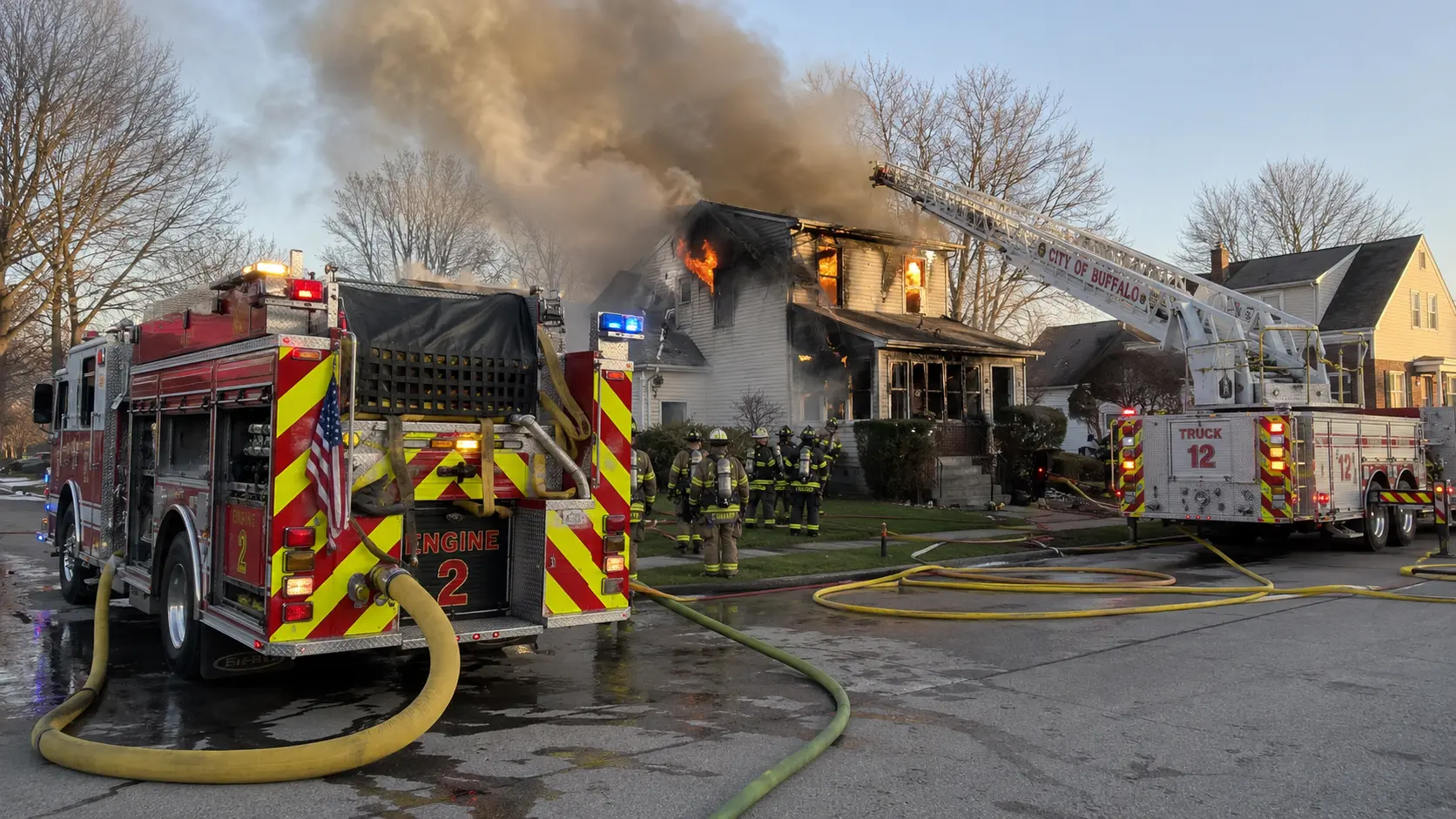
Water is applied from an exterior position first — through a window or doorway — to knock down the visible fire and reduce thermal conditions before crews enter. Supported by UL FSRI research. Most effective when the fire is visible from the exterior, conditions are deteriorating rapidly, and crews are not yet committed to interior positions. Not a permanent exterior strategy — it sets up interior attack.
Exterior (Defensive) Attack
Crews operate entirely from outside the structure — master streams, deck guns, aerial devices. Appropriate when structural integrity is compromised, fire has progressed beyond the point where interior attack is survivable, or the exposure protection of adjacent structures is the priority. A defensive declaration means no crews inside the structure.
Flow Path Management: The Most Critical Variable
Flow path is the air track through a burning structure: fresh air flows in toward the fire at lower openings; hot gases and combustion products flow out at higher openings away from the fire. Every door or window opened by firefighters or occupants creates or modifies a flow path. The flow path determines where fire, heat, and toxic gases travel.
When a flow path is created between the fire and the location of operating crews or trapped victims — for example, when the front door is opened for entry on the same side as the fire room — it directs a stream of superheated gases, often exceeding 500°F, directly toward personnel and any conscious victims in that path. This is the mechanism responsible for rapid firefighter fatalities in flow path events.
Size-Up
Identify fire location, likely flow path direction, and victim locations before opening any door
Control Entry
Open entry door on side away from fire where possible; crack door and assess before full opening
Line in Position
Attack line charged and crew in position before any ventilation opening is created
Coordinate Vent
Ventilation opens created in coordination with attack — exhaust on fire side, not between fire and crews
Water On Fire
Suppression applied to interrupt the flow path — water removes the heat that drives gas movement
The practical application of flow path management includes the "door control" practice: when a crew makes entry through a door, one firefighter manages the door, keeping it as nearly closed as possible without obstructing hose movement. This prevents an uncontrolled flow path from being established behind the advancing crew.
Ventilation: Coordinated, Not Independent
Ventilation — the planned movement of air and combustion gases through a structure — is one of the most tactically powerful actions available to an incident commander. It is also one of the most dangerous if applied at the wrong time or in the wrong sequence. The core principle from current research is clear: ventilation without water is acceleration, not suppression.
| Ventilation Type | Method | Correct Timing | Risk if Mistimed |
|---|---|---|---|
| Horizontal (HV) | Opening windows/doors on opposite side from fire to create cross-flow | After attack line is in position and water is on the fire | Creates flow path through structure; accelerates fire growth if no suppression in place |
| Vertical (VV) | Roof opening cut above fire compartment; allows buoyant hot gases to escape upward | Coordinated with interior attack; crew must not be above fire during cut | Structural failure risk; uncoordinated timing can rapidly worsen interior conditions |
| Positive Pressure (PPV) | Fan at entry pressurizes structure; exhaust opening at opposite end removes smoke | Post-knockdown smoke removal; some agencies use pre-entry with strict protocols | If fire not controlled, PPV fans fire growth dramatically; never use before knockdown without strict SOP |
| Door control | Managing the state (open/closed) of interior and exterior doors during operations | Continuous throughout operation — not a single-point action | Uncontrolled open door creates permanent flow path; closed doors protect uninvolved rooms and victims |
Hose Operations and Nozzle Selection
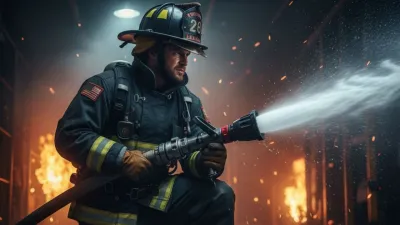
The attack line is the primary suppression tool. Line size, length, flow rate, and nozzle type all affect how effectively a crew can control a fire — and how safely they can operate in deteriorating conditions. U.S. departments generally operate 1¾-inch or 2-inch attack lines for residential fires, with 2½-inch lines deployed for large volume requirements, commercial structures, or defensive operations.
🔴 Smooth Bore Nozzle
- Solid coherent stream; low nozzle pressure (50 psi tip)
- High reach and penetration; ideal for long throws
- High flow rate per unit of friction loss
- Less steam production in enclosed spaces
- No pattern variation — stream only
- Preferred by many departments for interior attack
- Less effective for wide-area surface coverage
🔵 Fog / Combination Nozzle
- Variable pattern: straight stream to wide fog
- Higher nozzle pressure (100 psi); more friction loss
- Wide fog maximizes heat absorption surface area
- Can create water curtain for crew protection
- Wide fog can disturb thermal layer if used in enclosures
- More versatile across varied scenarios
- Straight stream setting approaches smooth bore performance
| Scenario | Recommended Nozzle/Line | Rationale |
|---|---|---|
| Single-family residential interior attack | 1¾" line, smooth bore or combination on straight | Maneuverability; 150–200 GPM adequate for most residential compartment fires |
| Large volume knockdown (commercial, defensive) | 2½" line, smooth bore or master stream | Higher flow rate (250–325 GPM) required to match BTU output of large fire |
| Transitional attack (exterior to interior) | 1¾" combination, fog-to-straight sequence | Wide fog for initial cooling, switch to straight stream once interior entry is made |
| Wildland-Urban Interface (WUI) structure protection | 1¾" combination; wildland nozzles for brush | Mixed structural and fine fuel environment requires pattern flexibility |
| Class K (grease) fire | Wet chemical system or Class K extinguisher — not water | Water on cooking oil causes explosive vaporization and fire spread |
Search and Rescue: Oriented Search and TIC Integration
Primary search — conducted in conditions that may still be survivable for trapped occupants — is one of the highest-risk operations in structural firefighting. Modern search doctrine has moved toward oriented search techniques that keep crews connected to a known reference point (the entry door, a hoseline, a wall) to prevent disorientation in zero-visibility smoke conditions.
Key elements of modern search doctrine:
- Oriented search: Search pattern is anchored to a fixed reference — typically the charged hoseline or the entry door — with at least one crew member maintaining contact with the reference throughout the search. Prevents the disorientation that has contributed to firefighter fatalities when thermal conditions deteriorate rapidly.
- Thermal Imaging Camera (TIC) integration: TICs allow crew leaders to assess compartment conditions (temperature gradient, hot gas layer height, fire location) before committing the team, locate victims through smoke, and monitor structural temperature changes that indicate deteriorating conditions. TIC operation is now a core competency in NFPA 1001 Firefighter II curricula.
- Survivability profiling: Before committing to a primary search in deteriorating conditions, officers assess whether the thermal environment is survivable for any unprotected occupant. This is not abandoning the victim — it is preventing a rescue from becoming a body recovery that also kills the rescuers. FSRI research on victim survivability in modern fire conditions informs this assessment.
- Door-closed survival: Research has confirmed that victims behind closed doors in structures with well-advanced fires have significantly better survival probability than those in open floor-plan areas. Search prioritization now accounts for this — closed-door rooms are searched with the understanding that conditions there may be far better than conditions in the hall or common area.
Rapid Intervention: RIC/RIT Operations
The Rapid Intervention Crew (RIC) or Rapid Intervention Team (RIT) is a dedicated standby crew whose sole function is the rescue of firefighters who become lost, trapped, or incapacitated during interior operations. NFPA 1710 requires a RIC to be assembled before interior operations begin — not after. This is a non-negotiable safety requirement, not a resource allocation preference.
| RIC Component | Requirement |
|---|---|
| Minimum staffing | 2 firefighters minimum; 4 recommended for effective rescue packaging operations |
| Equipment | RIC air supply pack (RAS or EEBA), TIC, hand tools (halligan, flat-head axe), extra SCBA, rescue rope, guide rope |
| Positioning | Staged at the entry point; in full PPE and SCBA; not assigned other tasks |
| Activation trigger | Mayday transmission from interior crew; PASS device activation; crew non-responsive to radio check |
| Entry protocol | RIC enters on Mayday; locates downed firefighter via radio, TIC, PASS signal; packages and removes — one firefighter stays with victim, one maintains exit path |
| Training standard | NFPA 1407 covers RIC training; Firefighter II programs include Mayday transmission, self-survival, and RIC entry drills |
Mayday: Transmission and Survival
A Mayday is a radio transmission indicating a firefighter is in life-threatening distress — lost, trapped, low on air, injured, or disoriented with deteriorating conditions. Training firefighters to transmit a Mayday without hesitation — overcoming the psychological reluctance to call for help — is one of the most important behavioral objectives in modern firefighter training. Studies have found that significant delays in Mayday transmission are common and directly reduce survival probability.
The standard Mayday transmission uses the LUNAR acronym:
- L — Location: Floor, wing, room, last known position
- U — Unit: Company or crew identifier
- N — Name: Firefighter's name
- A — Assignment: What the firefighter was doing when the emergency occurred
- R — Resources needed: RIC entry, air supply, medical
After transmitting, the distressed firefighter activates their PASS device, switches to emergency radio channel if required by local protocol, begins controlled breathing to extend air supply, and uses self-survival techniques (wall follow, controlled breathing, protective position) while awaiting RIC.
NFPA Standards That Govern U.S. Suppression Operations
Firefighter Professional Qualifications
Firefighter I and II baseline qualification; covers fire behavior, hose operations, search, ventilation, and suppression fundamentals. The standard for entry-level firefighter credentialing in the U.S.
Career Department Staffing & Response
Sets response time benchmarks: 4-minute travel time, 8-minute total response, 15-person first-alarm assignment for residential structure fires. The staffing benchmark standard for career fire departments.
Volunteer Department Staffing & Response
Equivalent of NFPA 1710 for volunteer and combination departments; recognizes different staffing models while establishing survivable response benchmarks based on community risk.
Live Fire Training
Governs acquired structure burns and all live fire training exercises; mandatory instructor-to-student ratios, structure assessment requirements, and safety officer roles. Significantly reduced training fatalities since adoption.
Fire Department Occupational Safety
Comprehensive safety program standard: PPE requirements, SCBA use mandates, rehabilitation (rehab) sector requirements, incident accountability, and two-in/two-out rule for interior operations.
RIC Training
Standard for Rapid Intervention Crew training programs; covers team assembly, equipment requirements, entry protocols, firefighter packaging, and air supply operations for downed crew rescue.
Putting It Together: The Fireground Decision Framework
Modern fire suppression doctrine does not prescribe a single sequence — it provides a decision framework that experienced officers apply based on what they observe. The sequence below represents the current best-practice framework for a residential structure fire on arrival of first companies:
| Step | Action | Key Consideration |
|---|---|---|
| 1 | 360° size-up | Identify fire location, flow path, victim probability, structural conditions, and access points before committing resources |
| 2 | Establish water supply | Second-due engine establishes hydrant supply; first-due engine stretches attack line to entry position |
| 3 | RIC established | RIC assembled and staged before any interior entry is made — not after |
| 4 | Attack mode decision | Interior, transitional, or defensive — based on fire location, structural integrity, victim probability |
| 5 | Water on fire | Suppression initiated; flow path from fire to entry point managed by door control |
| 6 | Coordinated ventilation | Ventilation opened in coordination with suppression — not before, not independently |
| 7 | Primary search | Oriented search conducted simultaneously with or immediately following fire knockdown |
| 8 | Overhaul | Systematic hidden fire search after knockdown; structural hazard assessment before allowing crews in unsupported areas |
Resources for Continued Learning
The study of fire suppression tactics is never finished — doctrine continues to evolve as new research is published and new building challenges emerge. High-value resources for fire science students include:
- UL FSRI Training Resources — free online courses, research reports, and video series on modern suppression research; specifically the Study of the Effectiveness of Fire Service Positive Pressure Ventilation and Residential Structural Collapse series
- NFPA Fire Protection Handbook — comprehensive reference covering suppression systems, tactics, and building fire protection
- IFSTA Essentials of Fire Fighting (6th edition) — the primary curriculum text for NFPA 1001 Firefighter I/II in most U.S. programs
- NIOSH Firefighter Fatality Investigation Reports — real incident analyses that identify tactical errors, communication failures, and equipment issues that contributed to firefighter fatalities; invaluable for understanding how doctrine gaps kill
For the fire behavior science that underlies every tactic covered in this guide, see our complete fire behavior guide for U.S. fire science students — covering combustion chemistry, heat transfer, flashover, backdraft, and how modern fuel loads have changed time parameters on the fireground.
For students interested in the investigation side of fire science — applying fire behavior knowledge to determine origin, cause, and responsibility after a fire — our guides on electrical fire investigations and arc mapping and wildland fire investigations cover NFPA 921-based methodology in detail. Operational reference tools for the fireground — including friction loss calculators, SCBA air time calculators, and fire flow tools — are available in the AllFirefighter Tools section.

Comments 0
No comments yet. Be the first to share your thoughts!
Leave a Comment