Why Fire Behavior Is the Foundation of Everything in Fire Science
Every decision made on the fireground — where to position a line, when to ventilate, whether to initiate an interior attack, how long a search can safely continue — flows from an understanding of fire behavior. Tactics that appear instinctive in experienced firefighters are actually the product of deeply internalized fire dynamics: a reading of smoke color, movement, and volume; a feel for the heat signature in a compartment; an assessment of ventilation conditions and probable fire location.
For Fire Science students in the United States, fire behavior is typically introduced in introductory coursework aligned with NFPA 1001 (Firefighter I/II) and deepened through programs referencing NFPA 1035 (Fire Inspector), NFPA 921 (Fire Investigation), and college-level fire science curricula. This guide covers the core concepts from the ground up — combustion chemistry, heat transfer, compartment fire development stages, flashover and backdraft, and modern fuel load impacts — with specific attention to how these concepts translate to fireground practice.
Combustion Chemistry: What Fire Actually Is
Fire is not a substance — it is a process. Specifically, it is a rapid, self-sustaining oxidation reaction that releases energy in the form of heat and light. Understanding combustion at the chemical level helps explain why fires behave the way they do, why certain suppression agents work, and what the products of combustion mean for occupant and firefighter safety.
Complete combustion occurs when a fuel reacts with sufficient oxygen to fully oxidize all combustible elements. For a hydrocarbon fuel (wood, natural gas, gasoline), complete combustion produces primarily carbon dioxide (CO₂) and water vapor (H₂O). In practice, complete combustion is rare in structural fires — the mixing of fuel and oxygen is uneven, temperatures vary throughout the compartment, and fuel composition is complex. The result is incomplete combustion, which produces:
| Product | Source | Hazard to Occupants and Firefighters |
|---|---|---|
| Carbon monoxide (CO) | Incomplete combustion of any carbon-containing fuel | Binds to hemoglobin 200× more strongly than oxygen; rapidly incapacitating and lethal at concentrations above 1,200 ppm; colorless, odorless |
| Hydrogen cyanide (HCN) | Burning of nitrogen-containing materials: wool, nylon, polyurethane foam, ABS plastics | Inhibits cellular oxygen use; acts faster than CO; increasingly recognized as a major cause of rapid incapacitation in modern structure fires |
| Carbon dioxide (CO₂) | Both complete and incomplete combustion | Acts as respiratory stimulant at low concentrations — accelerates breathing rate and increases intake of CO and HCN; asphyxiant at high concentrations |
| Acrolein | Burning of wood, plastics, and vegetation | Extreme respiratory irritant; damages airway tissue rapidly; one of the most toxic components of wood smoke |
| Particulate matter (soot) | All combustion processes | Carries toxic compounds deep into lung tissue; long-term cancer risk for firefighters is significantly elevated compared to general population |
The Fire Tetrahedron
The fire triangle — fuel, heat, oxygen — accurately describes the requirements for ignition. The fire tetrahedron adds the fourth element that sustains combustion: the self-sustaining chemical chain reaction. Each side of the tetrahedron represents both a necessary element and a suppression strategy.
Fuel
Any combustible material. Remove by fuel removal, foam blanketing, or separation tactics.
Heat
Energy that raises fuel to ignition temperature. Remove by water application — primary structural suppression method.
Oxygen
Required at ≥16% concentration. Remove by CO₂, foam, or inert gas flooding — effective in enclosed spaces.
Chain Reaction
Free radical oxidation sustains flame. Interrupt with halogenated agents (halon, clean agents) or dry chemical.
Understanding the tetrahedron explains why water is not always the right suppression agent. Class D (metal) fires, for example, cannot be suppressed with water — water reacts exothermically with burning metals, potentially explosively. Class B (flammable liquid) fires require foam or dry chemical to either exclude oxygen or interrupt the chain reaction, since water application can spread the burning liquid. Knowing which side of the tetrahedron each agent attacks is fundamental to agent selection on the fireground.
The Three Modes of Heat Transfer
Heat does not stay where the fire is — it moves. Understanding how heat transfers through a building determines where fire will spread, how quickly conditions will deteriorate in remote compartments, and where suppression water must be applied to have maximum effect.
| Mode | Mechanism | Fireground Significance | Tactical Response |
|---|---|---|---|
| Conduction | Heat transfer through direct molecular contact in a solid material | Structural steel conducts heat rapidly — a beam or column heated on one face transfers heat to connected assemblies; masonry conducts slowly but retains heat long after fire is suppressed | Cool structural elements with direct water application; be aware of heat storage in concrete and masonry that can reignite contents after apparent knockdown |
| Convection | Heat transfer through movement of heated gases or liquids | The dominant mode of heat transfer in compartment fires; drives the hot gas layer formation at ceiling level; carries heat, smoke, and toxic gases through HVAC, stairwells, and open floor plans at speeds occupants cannot outrun | Ventilation tactics (horizontal, vertical, PPV) manage convective flow; position attack lines to intercept convective plume between fire and victims; avoid opening doors that direct convection toward crews or victims |
| Radiation | Transfer of thermal energy via electromagnetic waves through space — no medium required | Radiates in all directions from flame and hot surfaces; responsible for igniting combustibles across open spaces and for the thermal feedback that drives compartment pre-flashover conditions; dominant mechanism in wildfire structure ignition via ember transport | Water fog can absorb radiant heat; positioning crews behind solid objects provides radiant shielding; thermal imaging cameras detect radiant heat signatures indicating fire location and pre-flashover buildup |
Stages of Compartment Fire Development
A fire in a closed compartment (a room, a floor, a building) progresses through four recognized stages. Firefighter tactics and survival depend on recognizing which stage a fire has reached and predicting where it is heading.
Stage 1 — Ignition
Heat source contacts fuel above its ignition temperature. Flame is small, localized, and fuel-controlled. Oxygen is abundant. Smoke is minimal. This is the window in which residential sprinklers are most effective — suppression at this stage prevents all subsequent stages.
Stage 2 — Growth
Fire grows as it consumes fuel and generates its own heat feedback. Smoke and hot gases accumulate in the upper layer. Radiant heat feedback begins to heat all combustible surfaces. Conditions are survivable but deteriorating. Convective plumes spread heat. Time to flashover is shortening.
Stage 3 — Fully Developed
All combustible surfaces are involved. Temperature peaks — commonly 1,100–2,000°F in structural fires. Fire becomes ventilation-controlled: the rate of burning is limited by oxygen availability. Structural components begin to fail. Conditions are not survivable for unprotected occupants.
Stage 4 — Decay
Available fuel is consumed or oxygen is depleted. Temperature drops. Smoldering may continue in deep-seated fuels. Risk of backdraft increases if compartment has been oxygen-depleted. Structural compromise risk remains high during overhaul operations.
Flashover and Backdraft: The Two Critical Transitions
Among all fire behavior events, flashover and backdraft claim the most firefighter lives. Both represent rapid, extreme transitions in fire conditions — and both are preceded by observable indicators that trained responders must recognize in real time.
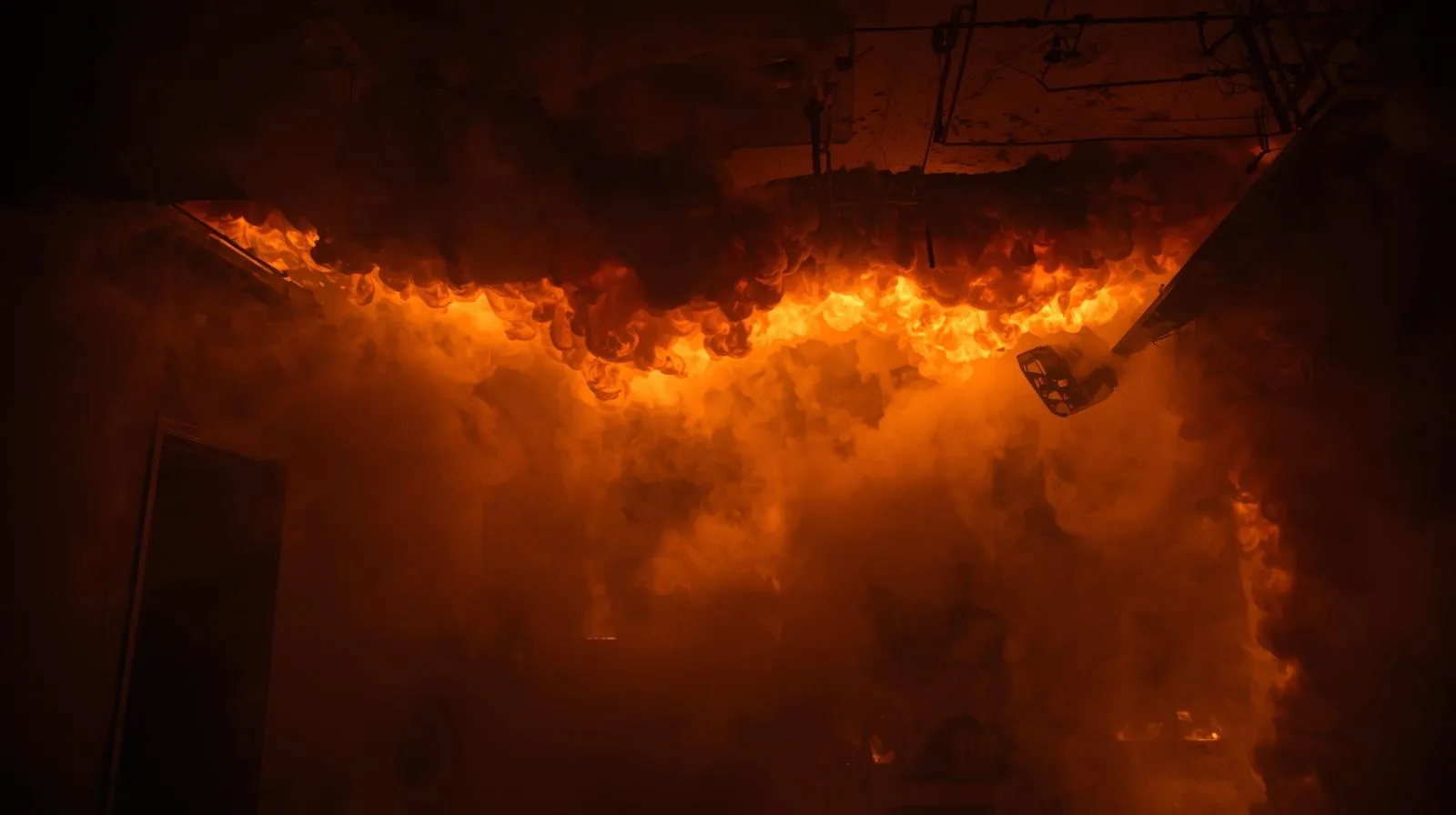
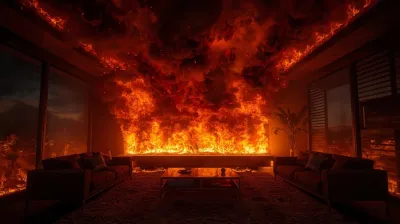
🔥 Flashover
- Near-simultaneous ignition of all combustibles in compartment
- Driven by radiant heat feedback from upper gas layer
- Typically occurs during Stage 2 → Stage 3 transition
- Temperature at floor level reaches 600°F+ at flashover
- Pre-indicators: Rollover/flameover in upper gas layer; rapid heat increase; smoke banking to floor level; neutral plane dropping
- Survival tactic: Recognize early indicators, exit or apply ceiling-level water fog to cool upper layer
💥 Backdraft
- Explosive ignition of accumulated fuel-rich gases when oxygen is introduced
- Occurs in oxygen-depleted (Stage 3–4) compartments
- Introduction trigger: opening a door or window
- Explosion directed toward new air source — toward entry crews
- Pre-indicators: Pulsing or breathing smoke; smoke drawn back through gaps; dark, dense smoke under pressure; blistered or stained windows; hot door with no visible flame
- Survival tactic: Ventilate from above (roof or upper opening) before making entry; do not open lower entry points first
Modern Fuel Loads: How Synthetic Materials Changed the Game
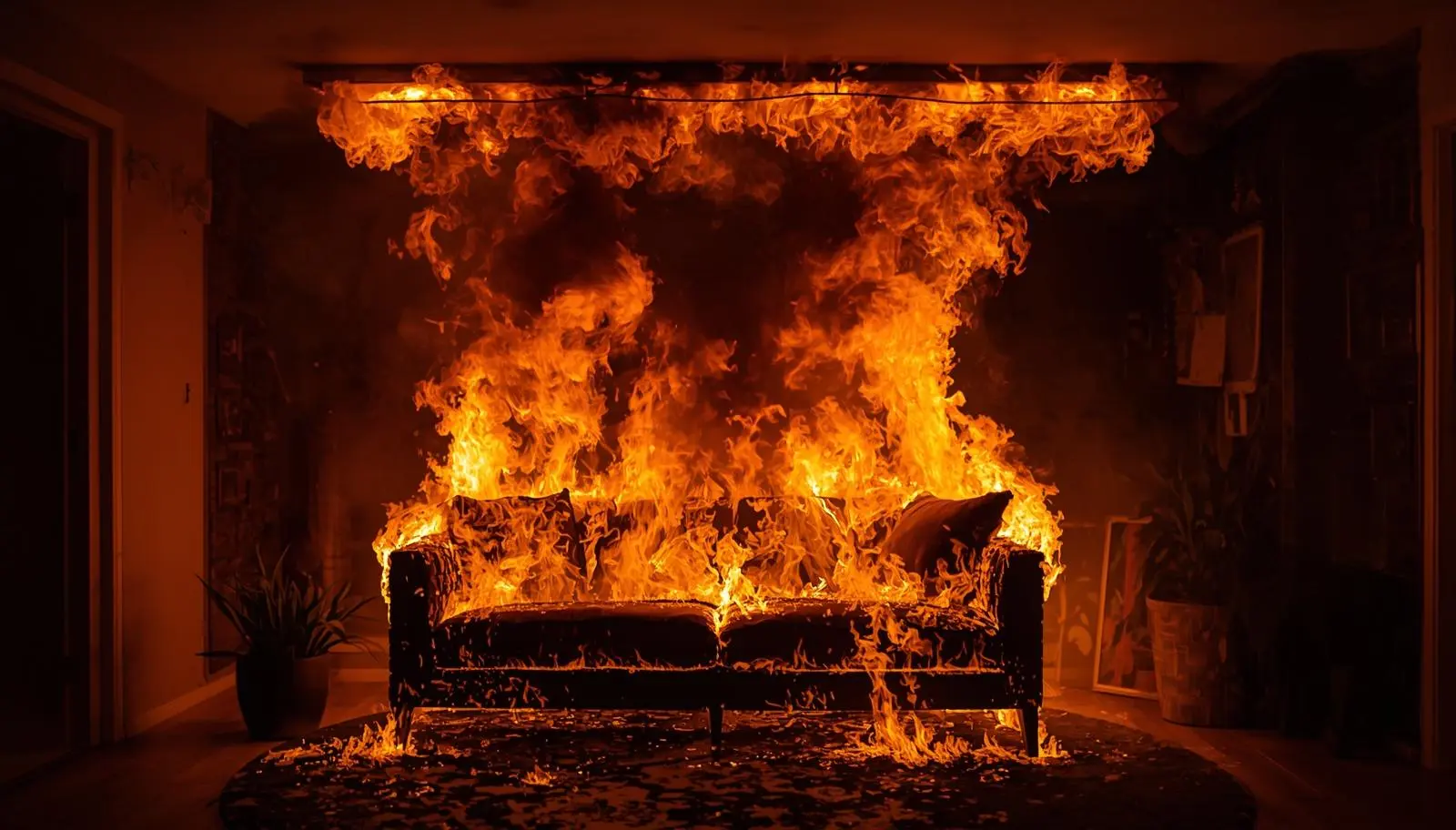
The shift from natural materials (wood, cotton, wool, leather) to synthetic materials (polyurethane foam, ABS plastic, nylon, vinyl, engineered wood composites) in American home furnishings has fundamentally changed the fire behavior parameters that structural firefighters operate within. This is not theoretical — it is documented in controlled burn research by UL's Fire Safety Research Institute (FSRI) and NIST.
| Parameter | Legacy Furnishings (pre-1980s) | Modern Furnishings (synthetic) |
|---|---|---|
| Time to flashover (single room) | 25–30 minutes | 3–5 minutes |
| Peak Heat Release Rate | ~1,000–1,500 kW | 3,000–8,000+ kW |
| Tenability window for victims | 17+ minutes | 3–4 minutes |
| HCN production | Low (natural fibers) | High (nitrogen-containing synthetics) |
| Smoke toxicity | Moderate | Significantly higher; multi-compound |
| Tactical implication | Time for search before conditions deteriorate | Aggressive, rapid search — conditions degrade in minutes |
Ventilation: How Air Movement Controls Fire Behavior
Ventilation — the planned, coordinated movement of air and combustion gases into, through, and out of a burning structure — is one of the most powerful tools available to incident commanders. It also carries some of the highest risk if applied incorrectly. The core principle is simple: ventilation changes where the fire goes. Applied in coordination with suppression, it improves conditions and improves victim survivability. Applied in isolation, without a charged attack line in position, it can accelerate fire growth toward trapped victims and operating crews.
| Ventilation Type | Method | Best Application | Risks |
|---|---|---|---|
| Horizontal (HV) | Opening windows and doors to create cross-ventilation flow path | Single-story structures; removing smoke after knockdown; coordinated with attack line in position | Creates flow path that can direct fire toward victims or crews if attack line is not controlling the fire |
| Vertical (VV) | Cutting roof opening above fire compartment to allow hot gases to vent upward | Attic and top-floor fires; improving visibility and tenability on floors below; classic ladder company function | Structural integrity of roof; working above fire; wind direction can redirect gases; requires coordination with interior crews |
| Positive Pressure (PPV) | Fan pressurizes structure from entry point; exhaust opening on opposite end removes smoke | Post-knockdown smoke removal; also used tactically in some departments prior to search | If fire is not controlled, PPV accelerates fire growth rapidly; must not be used before knockdown without careful coordination |
| Hydraulic (water fog) | Fog pattern at doorway or opening creates air movement via Venturi effect | Basement fires; situations where other ventilation is not feasible | Can push fire products toward victims in adjacent areas; requires careful nozzle positioning |
Environmental Factors: Regional Fire Behavior in the U.S.
Fire behavior does not occur in a vacuum — it is shaped by the environment in which it occurs. Regional climate, construction practices, and topography create distinct fire behavior challenges across different parts of the United States.
- Western states (CA, OR, WA, CO, MT): Wildland-Urban Interface fires dominate; low humidity, high wind, and drought conditions create extreme fire weather; ember transport and spotting ignite structures ahead of the flame front; see our guide on why wildfires are getting worse in the U.S. for detailed analysis
- Northeastern U.S. (NY, MA, PA, NJ): Dense urban construction with attached row homes and older balloon-frame structures; vertical fire spread in balloon-frame walls is a primary concern; high occupancy density increases life safety complexity
- Southeastern U.S. (FL, GA, SC, LA): High humidity generally moderates structure fire behavior; wildfire risk in Florida pine flatwoods is significant year-round; post-hurricane fire scenarios (ruptured gas lines, downed power lines) present combined hazard profiles
- Midwest and Great Plains (TX, OK, KS, NE): High-wind grass fires with extreme rates of spread; flat terrain allows rapid fire movement; agricultural equipment and grain elevator fires present unique fuel load characteristics
Fire Behavior on the Fireground: Applying the Science
Fire Science knowledge only creates value when it translates into fireground decisions. The following table maps core fire behavior concepts to the tactical decisions they inform — connecting the classroom directly to the operational environment.
| Fire Behavior Concept | Fireground Decision It Informs |
|---|---|
| Compartment fire stage identification | Interior vs. defensive attack; survivability profile for primary search |
| Pre-flashover indicators (rollover, smoke layer) | Crew egress decision; ceiling-level water application timing |
| Backdraft indicators (pulsing smoke, hot door) | Ventilate above before entry; delay opening lower entry points |
| Heat transfer mode analysis (conduction, convection) | Ventilation placement; attack line positioning relative to fire flow path |
| Synthetic fuel load (high HRR) | Aggressive initial attack timeline; rapid search with suppression simultaneous |
| Products of combustion (CO, HCN) | SCBA donned early; victim rescue priority over fire attack in occupied structure |
| Ventilation-controlled vs. fuel-controlled fire | Flow path management; coordination of ventilation with suppression |
| Thermal imaging reading | Locating hidden fire, victim location, pre-flashover hot gas layer detection |
Resources for Fire Science Students
Building a strong fire behavior foundation requires both classroom study and hands-on reinforcement. Key resources used in U.S. fire science programs include:
- IFSTA Essentials of Fire Fighting (6th edition) — the most widely used textbook in U.S. fire science programs; covers all NFPA 1001 Firefighter I/II content
- NFPA 921 — Guide for Fire and Explosion Investigations; essential for students entering fire investigation or insurance roles; covers fire dynamics in the investigation context
- UL FSRI Fire Research — free research reports and training videos on modern fuel load behavior, residential fire dynamics, and flow path management; widely used in progressive fire departments
- NIST Fire Research Program — technical papers on compartment fire dynamics, suppression effectiveness, and structural response to fire
- S-190 Introduction to Wildland Fire Behavior — NWCG online course; foundational for any student working in or adjacent to wildland fire environments
For students preparing for fire investigation roles specifically, our guide on electrical fire investigations and arc mapping covers the application of fire behavior principles — including cause-related vs. fire-induced arcing — in the investigation context. For wildland fire behavior fundamentals applied to origin and cause determination, see our wildland fire investigation guide.
Fire Science is a discipline that bridges chemistry, physics, building construction, human behavior, and emergency operations. The students who build the deepest understanding of fire behavior — not just memorizing definitions but genuinely internalizing why fire does what it does — are the ones who make the best decisions under pressure, keep their crews safe, and advance the profession. Use the operational tools and reference resources at AllFirefighter Tools to reinforce your training with practical, field-ready calculators and reference materials.


Comments 0
No comments yet. Be the first to share your thoughts!
Leave a Comment