Fire Investigation Basics: Origin & Cause Determination, Burn Patterns & Arson Indicators
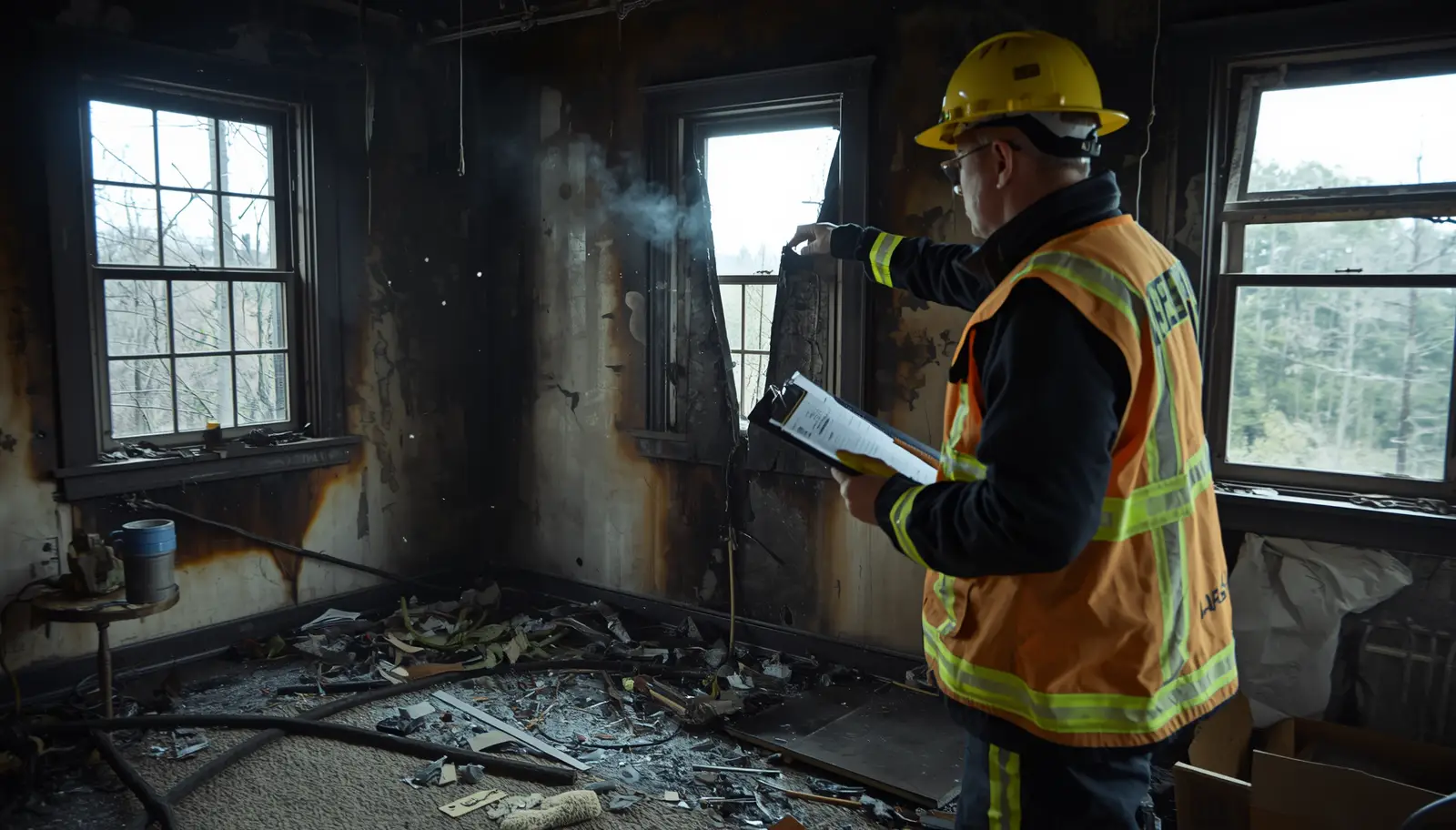
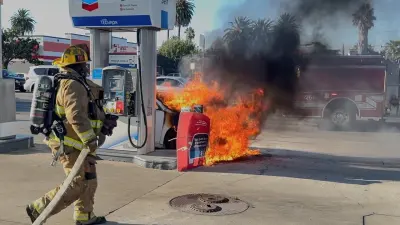
Every structure fire has an origin and a cause. Most firefighters will never become certified fire investigators, but every firefighter who conducts overhaul, mops up, or is first on scene influences the investigation that follows. Understanding fire investigation basics — how fire burns, what burn patterns mean, how evidence is preserved, and what makes a fire suspicious — makes you a better responder and a better witness to the investigation process.
Jump to:Why firefighters need to know this · Fire origin determination · Fire cause classification · Burn patterns · How fire spreads · Arson indicators · Scene preservation · Firefighter documentation · FAQ
Why Firefighters Need to Understand Fire Investigation
Firefighters are the first people inside a burning structure and the last people out during overhaul. Their actions during suppression and overhaul can preserve or destroy the physical evidence that determines origin and cause. A firefighter who understands fire investigation:
- Knows not to overhaul the origin area more than necessary
- Recognizes patterns that suggest an unusual or suspicious fire
- Preserves evidence that can support or refute claims about the fire
- Provides accurate documentation that investigators depend on
- Understands what investigators will ask about in the weeks after the fire
Fire Origin Determination: Finding Where It Started
The origin is the three-dimensional area where the fire started. Identifying the origin is the first objective of every fire investigation because everything else — cause determination, evidence collection, and legal conclusions — flows from knowing where the fire began.
The methodology: work backward from the damage
Fire burns upward and outward from the origin. The area of most complete combustion, lowest burn, and most intense damage typically points toward the origin. Investigators work from areas of lesser damage toward areas of greater damage to reconstruct the fire's travel path back to its starting point.
What determines origin location
- Depth of char: Deeper charring on structural members indicates longer exposure to heat. The deepest char is typically closest to the origin.
- Low burn indicators: Fire that burned low (close to the floor) or below normal furniture height may indicate an origin at floor level, which can be significant in arson investigations.
- Char patterns on structural members: Beams, joists, and studs burn more heavily on the side facing the origin. The angle of char on a vertical member can indicate the direction of the fire source.
- Glass fracture patterns: Heavily crazed glass (fine cracking network) indicates rapid, intense heat exposure. Location of glass cracking can help identify areas of high heat concentration.
- Witness statements: Where smoke was first seen, where flames were first visible, and what occupants observed can narrow the origin area significantly.
Fire Cause Classification
Once the origin is established, the cause is determined — the event or condition that initiated the fire. NFPA classifies fire causes into four categories:
| Classification | Definition | Examples |
|---|---|---|
| Accidental | Cause involves no human act intended to start an unwanted fire; not a mechanical failure | Candle left burning, cooking fire, electrical arc in damaged wiring |
| Natural | Fire ignited by a natural event without human intervention | Lightning strike, spontaneous ignition of organic materials |
| Incendiary | Fire intentionally set; also called arson when set for criminal purposes | Intentionally set fire with or without accelerant; deliberate fire setting |
| Undetermined | Cause cannot be determined with available evidence to a reasonable degree of certainty | Fire with extensive damage, compromised evidence, or insufficient investigation resources |
Undetermined is a legitimate conclusion. If the evidence does not support a specific cause determination with reasonable certainty, "undetermined" is the correct classification. Investigators are not required to determine arson to avoid classifying a fire as undetermined. Forcing a cause conclusion from insufficient evidence produces unreliable results.
Burn Patterns: Reading the Fire's Story
Burn patterns are the physical marks left on surfaces by fire. They provide a record of how the fire traveled, how intense it was, and from what direction heat came. Understanding burn patterns helps both investigators and firefighters interpret what happened.
V-pattern (char pattern on walls)
The most recognized fire investigation pattern. Fire burning near a wall produces a V-shaped or cone-shaped char pattern on the wall surface, with the point of the V at the lowest point of flame contact and the pattern widening as it rises. The apex (bottom) of the V points toward or below the fire's origin on that surface.
Important: a wide V indicates slower fire growth or lower heat release; a narrow, steep V indicates rapid intense burning. Multiple V-patterns on the same wall may indicate multiple ignition points or complex fire flow paths.
U-pattern
A rounded, U-shaped burn pattern at floor level or on a lower wall suggests burning at or near floor level for an extended period. U-patterns may indicate a long-burning heat source at floor level (a burning pile of materials, a low ignition source) or fire that was introduced at floor level and burned in place.
Alligator char
A deep, scaly char pattern on wood surfaces that resembles alligator skin. Deep alligator char with large, raised scales indicates prolonged burning or high heat intensity. Shiny alligator char (blistered finish still visible) may indicate rapid burning of an accelerant. The depth and texture of char provides information about both duration and intensity of heat exposure.
Hourglass pattern on structural members
When a post or structural column burns from a fire on one side, it may produce an hourglass shape — wider char at the top and bottom, narrower in the middle. The narrowing occurs where the fire burned most intensely. The direction of the hourglass narrows toward the heat source.
Floor patterns
Burn patterns on floors are particularly significant because most common ignition sources (electrical, smoking materials, accidental cooking) begin above floor level. Burning that originated at or near floor level, producing floor char that is heavier than the char on walls above it, may indicate a floor-level ignition source or introduced accelerant.
How Fire Spreads: The Science Behind the Patterns
Fire spreads by three mechanisms: conduction (through solid materials), convection (through air movement), and radiation (through space without a medium). Understanding which mechanism dominates in a specific situation explains the patterns left behind:
- Convection is the primary spread mechanism in most structural fires. Hot gases rise and spread horizontally at the ceiling, transferring heat to surfaces they contact. This is why the ceiling and upper walls are the most damaged areas in a fire that has been burning for any duration.
- Radiation becomes dominant in large fires where radiant heat from a large flame front ignites adjacent materials across open space. Radiant ignition can occur at distances of several feet from the flame, producing a fire pattern that appears to have "jumped."
- Conduction through structural elements (pipes, beams, reinforced concrete) can ignite materials in adjacent rooms or floors without visible fire travel across the space.
Fire travels the path of least resistance. Void spaces in walls, open stairwells, elevator shafts, and HVAC ductwork provide channels for rapid fire spread that produce burn patterns that can appear inconsistent with a single origin. Understanding the building's internal pathways is essential to interpreting the patterns correctly.
Arson Indicators: What Makes a Fire Suspicious
No single indicator confirms arson. Arson is determined by the totality of physical evidence, witness statements, financial information, and the elimination of all accidental and natural causes. However, certain observations should prompt preservation of evidence and notification of investigators:
Physical fire scene indicators
- Multiple separate origin points: A single fire event with one heat source produces one origin. Multiple unconnected origins suggest multiple ignition points, which strongly indicates intentional fire setting.
- Low burn patterns without an accidental explanation: Burn patterns that are heaviest at floor level, below where normal ignition sources would be, particularly in areas away from appliances or electrical equipment, may indicate an accelerant was applied to the floor.
- Presence of accelerants: Accelerant residue is detected by investigators using hydrocarbon sniffers or laboratory analysis of debris samples. In the field, an unusual fuel odor (gasoline, lighter fluid) that persists after fire suppression may indicate accelerant use.
- Irregular burn patterns: V-patterns that point in directions inconsistent with gravity-driven fire spread, or burn patterns that suggest fire traveled against natural convection paths, may indicate fire was set in an irregular way.
- Lack of expected fire damage: If a fire in a room with significant fuel load produced less damage than expected, fire may have been deliberately set elsewhere and this room avoided, or valuable property may have been removed before the fire.
- Forced entry or unusual access: Windows or doors forced from outside in a fire with no occupants, or fire that started in a locked area with no access explanation.
- Disabled fire protection systems: Sprinkler valves closed, detectors removed or disabled, suggesting pre-fire preparation.
Circumstantial indicators (for investigators, not firefighters)
Firefighters may observe and document, but should not draw conclusions about: financial stress of the property owner, recent insurance changes, removal of valuables before the fire, or prior fire history. These are investigative matters that fire investigators and law enforcement assess. Firefighters document what they observe; investigators draw conclusions from the totality of evidence.
Scene Preservation: What Firefighters Must Not Do
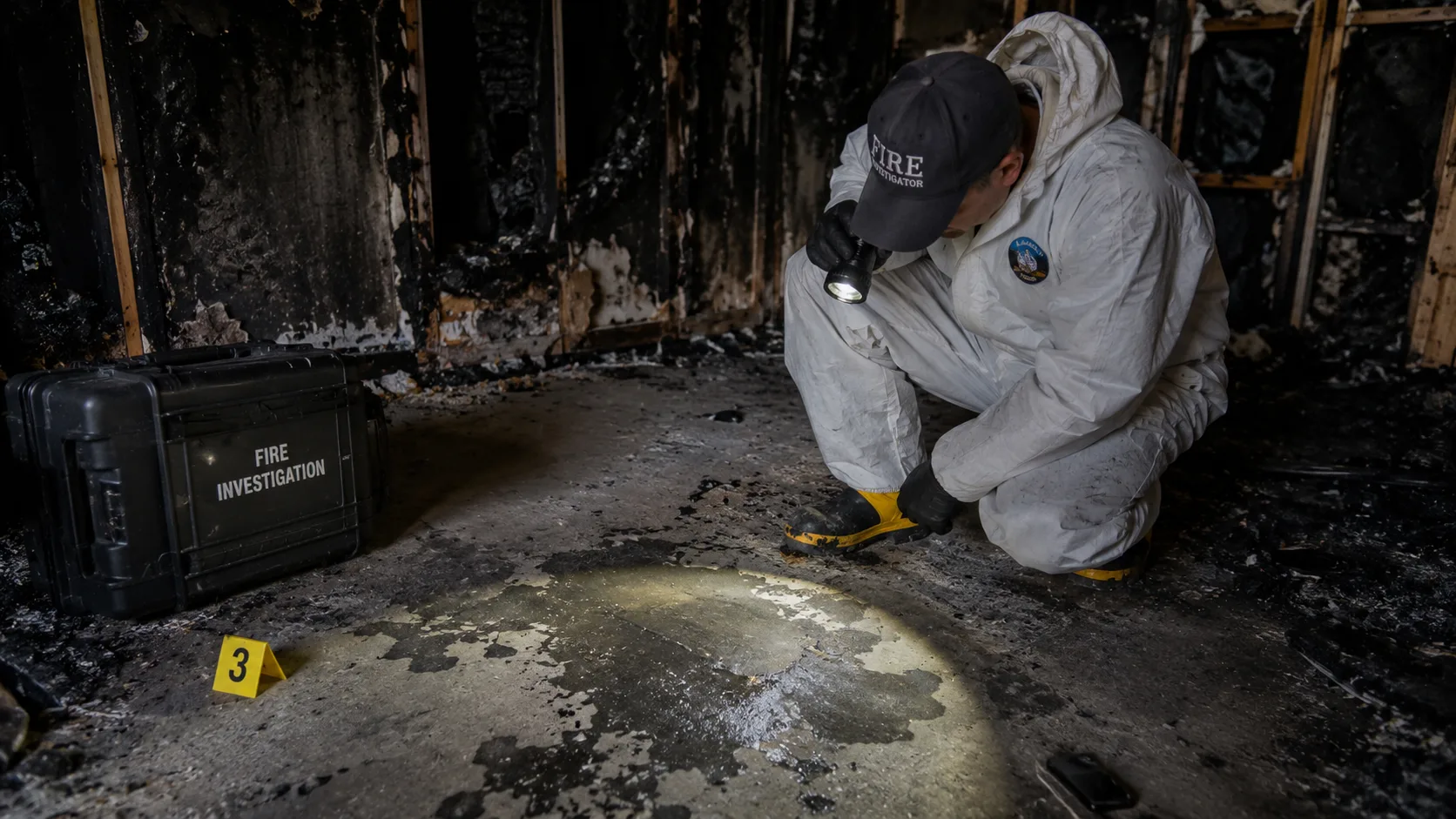
Physical evidence in a fire scene can be destroyed in seconds by overhaul operations conducted without awareness of the investigation that follows. Key preservation actions:
- Do not overhaul the origin area more than required for safety. Once the fire is out in the area of suspected origin, leave the debris in place. Do not move, pile, or scatter debris from the most heavily burned area.
- Do not use excessive water in the origin area during overhaul. Water dissolves and disperses accelerant residue. If accelerant is suspected, use minimum water in the area and notify investigators before any debris is disturbed.
- Document what you see before you change it. Photograph or note the position of debris, the location of burn patterns, and any unusual observations before overhaul begins.
- Do not allow unnecessary personnel into the origin area. Every person who walks through the origin area introduces contamination (track patterns, footwear residue) and destroys fine evidence.
- Preserve evidence of entry/egress. If doors or windows were forced before the fire, note their condition. If they were not forced, note that too.
- Do not remove items from the scene without investigator direction. Even items that appear to be the cause (a heater, a lamp) should not be removed without investigator documentation of their position and condition.
Firefighter Documentation: What Investigators Need
Investigators will contact the first-arriving companies days or weeks after the fire to gather information that can only be known from the incident itself. Document while the memory is fresh:
- Conditions on arrival: Location and color of smoke and flames visible on arrival; which openings were showing conditions; whether any doors or windows were open that should not have been
- Fire behavior during operations: Did the fire respond normally to water? Did it rekindle in unexpected locations? Were there unusual explosions or flare-ups?
- Entry conditions: Which doors were locked, unlocked, or forced? Which windows were open, broken outward, or broken inward? Was the fire alarm system functioning?
- People observed: Who was at the scene before, during, and after? Anyone who appeared to be watching the fire, left before fire companies arrived, or attempted to enter the building?
- Odors: Any unusual odors at any point during the operation — not just at the origin, but throughout the building
- Contents removed: Any evidence that contents had been removed before the fire (empty shelves, missing items from hangers, unusual absence of expected property)
Frequently Asked Questions
What is the difference between fire origin and fire cause?
The origin is the specific location (three-dimensional area) where the fire started. The cause is the event or condition that initiated the fire at that origin. A fire investigation determines origin first, then works to establish the cause at that location. Origin and cause are separate determinations that require separate analysis.
What are the four fire cause classifications?
Accidental (no intentional act; not mechanical failure), Natural (lightning or spontaneous ignition without human involvement), Incendiary (intentionally set), and Undetermined (evidence insufficient to support a specific cause to a reasonable degree of certainty). Undetermined is a legitimate conclusion when evidence does not support a more specific finding.
What does a V-pattern in a fire indicate?
A V-shaped char pattern on a wall indicates fire burning near that surface, with the apex of the V pointing toward the lowest point of flame contact. The apex generally points toward or below the origin on that surface. Multiple V-patterns may indicate multiple ignition points or complex fire flow paths through the building.
How should firefighters preserve a fire scene for investigation?
Limit overhaul in the most heavily burned area (likely origin). Use minimum water in suspected origin areas. Photograph conditions before moving anything. Keep unnecessary personnel out of the origin area. Document entry and egress conditions, fire behavior during operations, and any unusual observations. Do not remove items without investigator direction.
Comments 0
No comments yet. Be the first to share your thoughts!
Leave a Comment