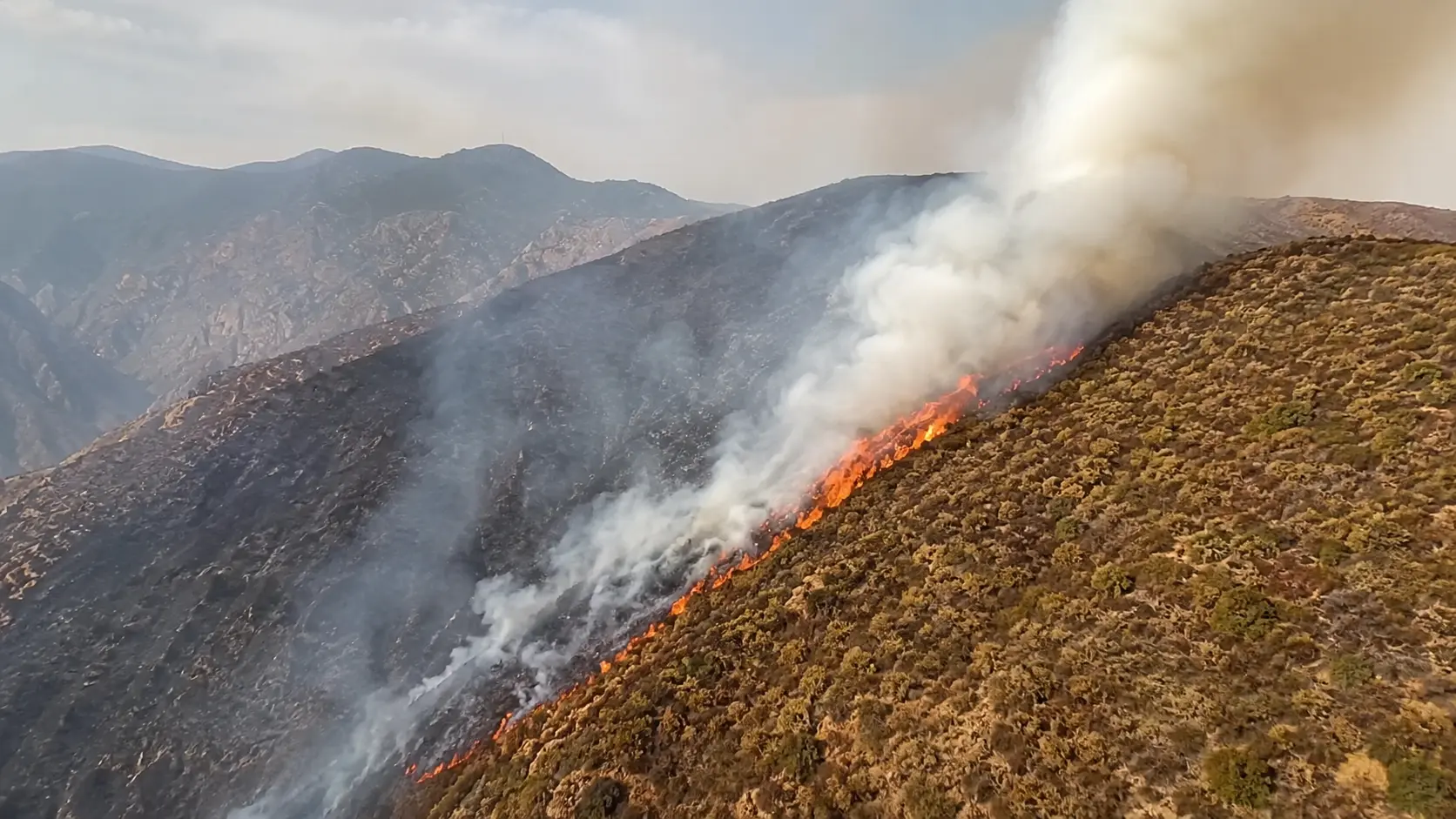
The morning report on a wildfire often reads like a different incident from the afternoon report. A fire that was 50 acres at 9am and holding on three sides can be 4,000 acres and uncontained by 3pm. The change is not random. It is the product of specific, predictable factors — slope, wind, and fuel — that interact in ways the fire environment triangle describes precisely. What is less understood is how quickly those interactions compound and why the window for suppression closes so fast once conditions shift.
Most people who die in wildland fires, and most of the structures that burn in wildland-urban interface communities, are caught in the transition from manageable to extreme conditions. That transition happens in minutes, not hours. Understanding it does not require a meteorology degree — it requires knowing which variables matter and what they actually do to a fire's behavior.
In this article:
- The fire environment triangle
- Slope: why uphill fires are categorically different
- Wind: fuel drying, oxygen supply, and ember transport
- Fuel type and moisture: the match and the matchbook
- Spotting: how fires jump containment lines
- Blow-up conditions: the specific combination that produces extreme fire
- When crews deploy fire shelters
- The diurnal cycle: why afternoon is the most dangerous time
The Fire Environment Triangle
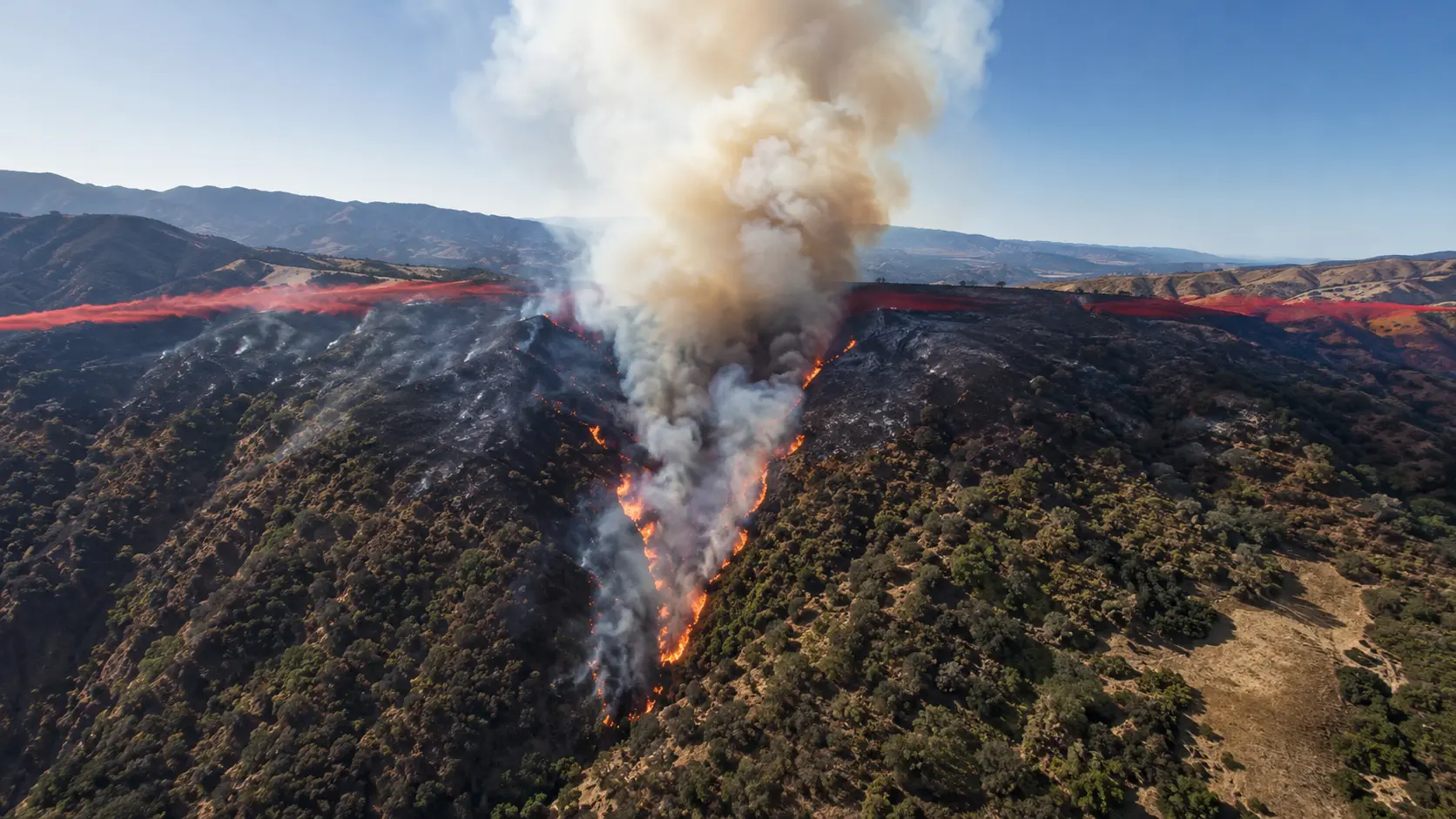
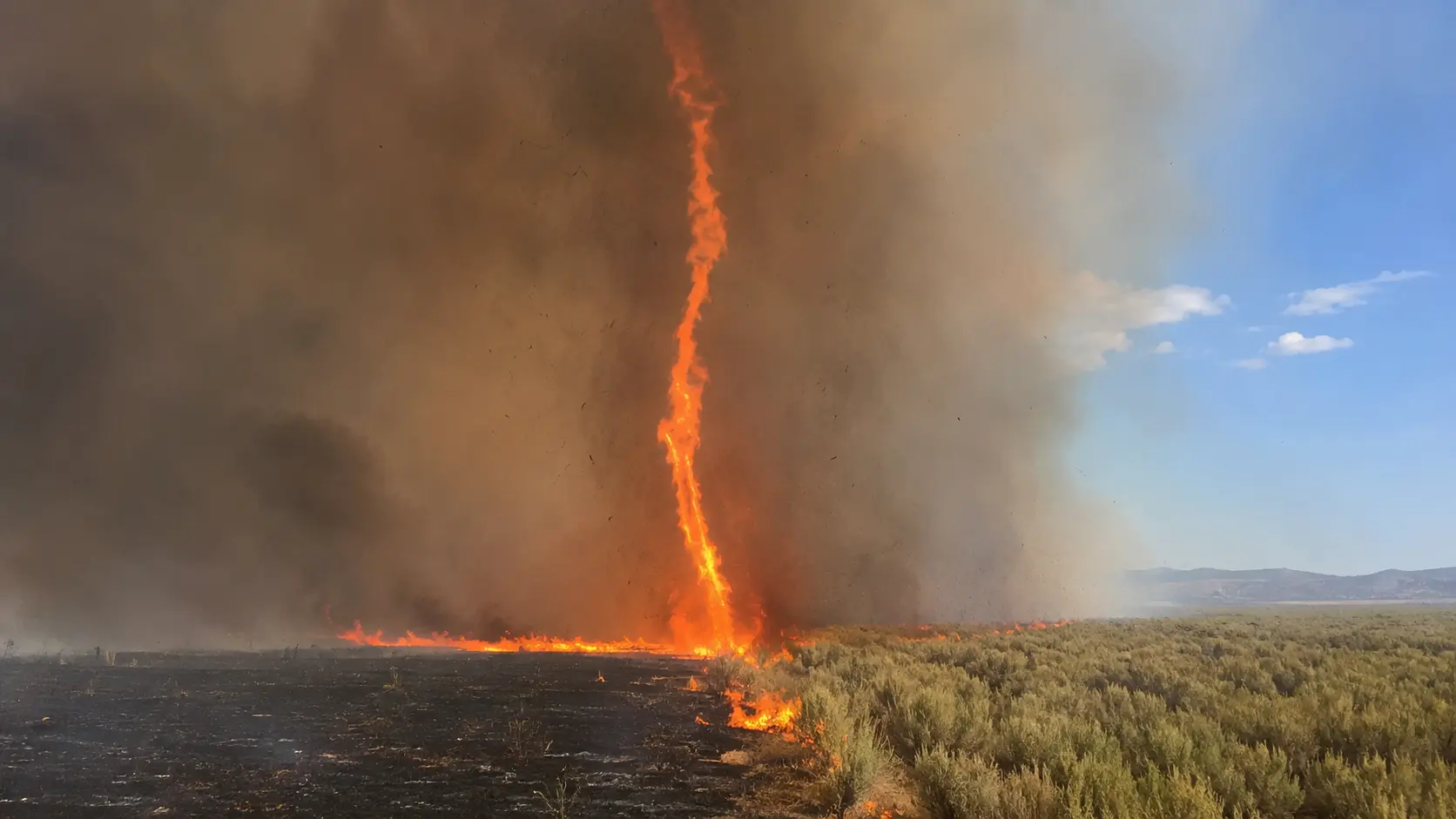
Wildland fire behavior is governed by three interacting variables: topography, weather, and fuels. These are represented as the fire environment triangle. Change any one variable and fire behavior changes. When all three shift simultaneously in the dangerous direction — steep slope, dry wind, low-moisture fine fuels — the result can be a fire that transitions from linear spread to area ignition in minutes.
The triangle is a framework for prediction, not a formula. No single variable determines fire behavior in isolation. A steep slope with wet fuel and no wind produces a slow, manageable fire. The same slope with critically dry fuel and a 25 mph afternoon wind is a different category of event. The value of the triangle is the discipline of assessing all three before committing to a tactical position that puts a crew between the fire and the most dangerous combination of those variables.
Slope: Why Uphill Fires Are Categorically Different
Fire on a flat surface spreads outward from the ignition point in all directions at roughly equal rates, governed primarily by wind. Fire on a slope has an asymmetry: it spreads uphill significantly faster than it spreads downhill or laterally. The reason is direct and physical — preheating.
Flame from a fire on a slope leans toward the unburned fuel above it. The heat from the flame zone preheats the fuel directly ahead on the slope — drying it, driving off volatile gases — before the flame front actually arrives. On a 30-degree slope, the flame tip may be within inches of unburned fuel. On flat ground, that same flame tip is pointing up and away from the fuel surface. Preheating is more efficient on the slope, ignition happens faster, and the fire moves faster.
The rate-of-spread relationship with slope is not linear — it doubles approximately every 10 degrees of slope increase. A fire spreading at 5 chains per hour on flat ground spreads at roughly 10 chains per hour on a 10-degree slope, 20 chains per hour on a 20-degree slope, and 40 chains per hour on a 30-degree slope. A crew cutting hand line across a 30-degree slope has a different margin of safety than a crew doing the same work on flat ground — and the margin changes every time the slope increases.
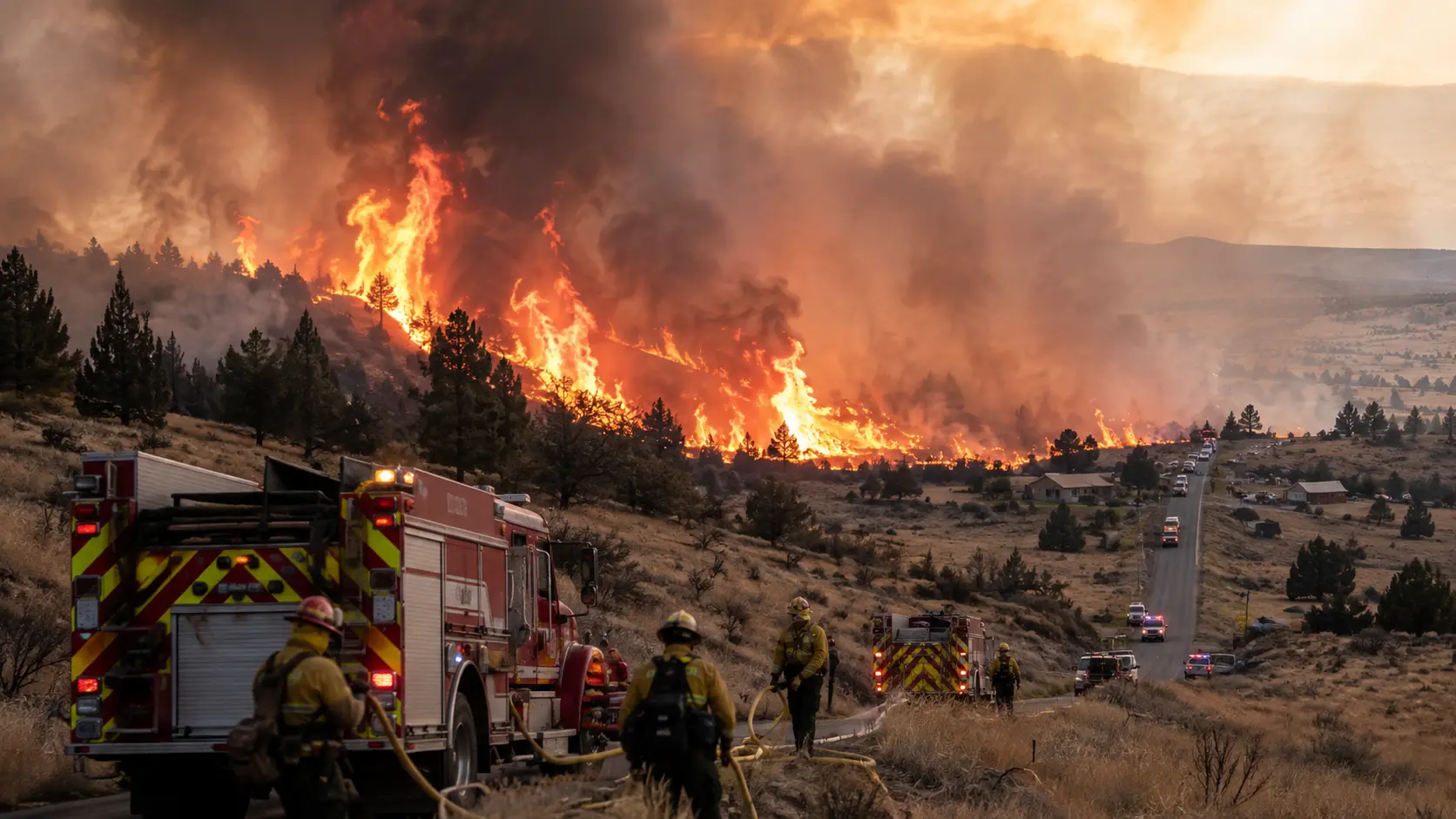
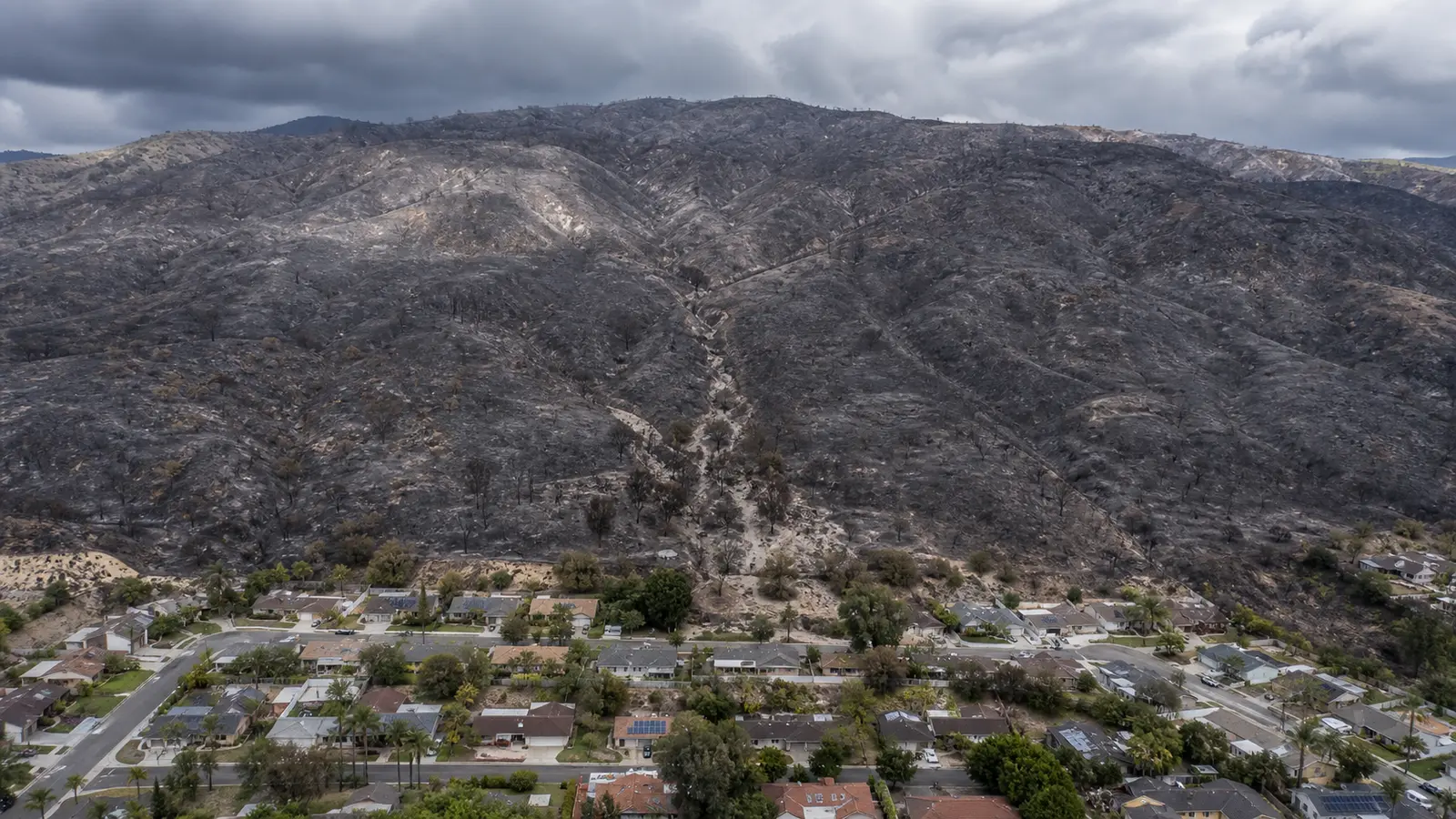
Canyons and chimneys — narrow drainages running upslope — concentrate and accelerate this effect. Hot air rising from a fire below is funneled upward through the canyon, drying fuel above the fire and reducing ignition time. Canyon fires can produce rates of spread that are effectively impossible to escape on foot if a crew is caught between the fire and the head of the canyon. The South Canyon fire in 1994, which killed 14 firefighters on Storm King Mountain in Colorado, is the defining case study for this specific fire behavior scenario.
Wind: Fuel Drying, Oxygen Supply, and Ember Transport
Wind affects wildfire behavior through three separate mechanisms, all of which make fire more dangerous but through different pathways.
Fuel drying
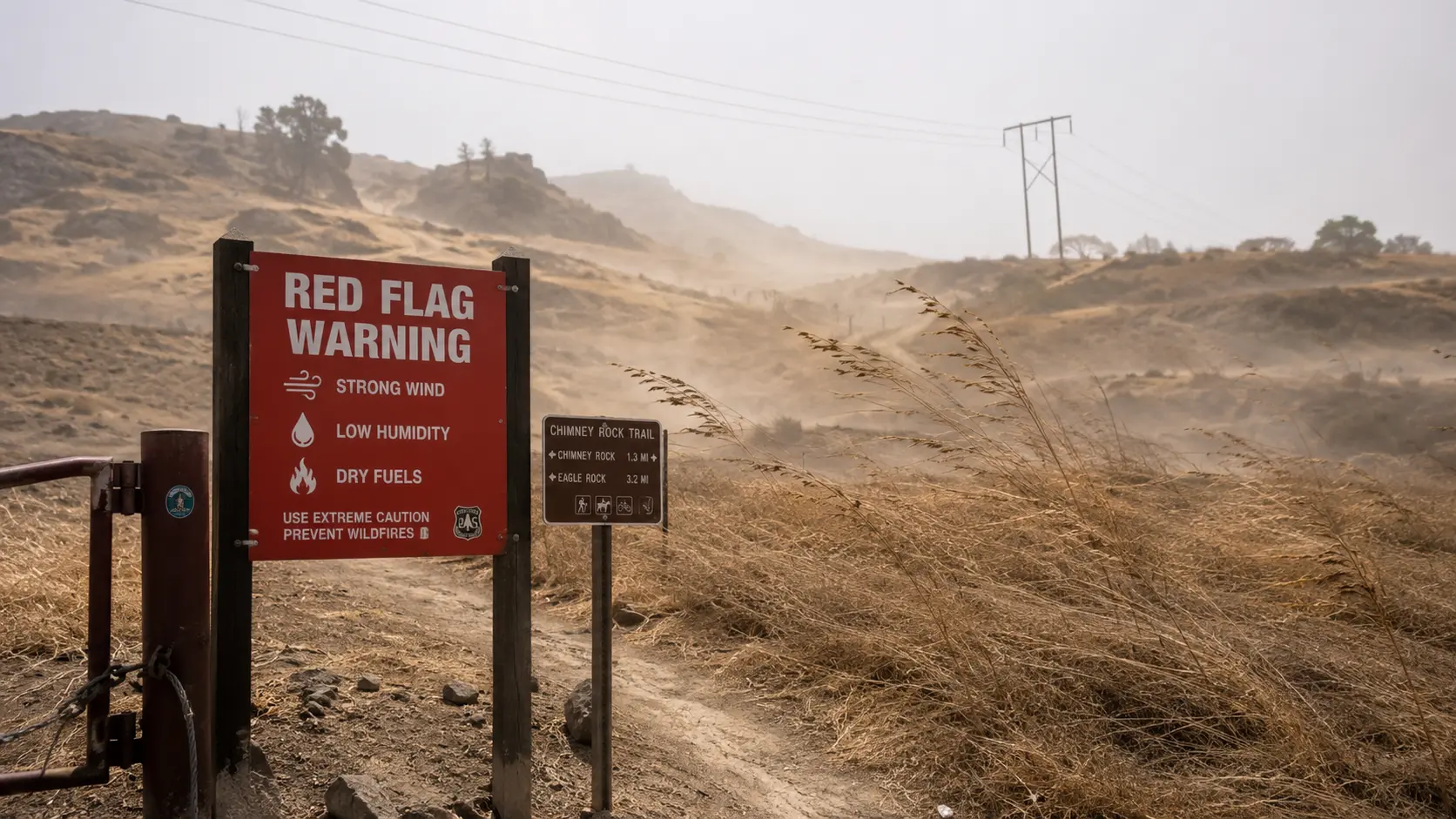
Wind accelerates evaporation from fuel surfaces. Fine fuels — grass, leaves, small twigs under a quarter inch in diameter — respond to atmospheric moisture conditions within hours. A fuel that has a moisture content of 20 percent at 7am, when the air is cool and humid from overnight recovery, may have a moisture content of 8 percent by 2pm after hours of warm, dry, windy conditions. Below roughly 15 percent moisture, fine fuels ignite readily from a spark. Below 8 percent, they are considered critically dry and will sustain combustion with minimal ignition energy.
Oxygen supply
Wind pushes fresh oxygen continuously into the combustion zone. A fire burning in calm conditions consumes the oxygen near the flame front and temporarily reduces local concentration. Wind replaces that oxygen immediately, sustaining and accelerating combustion. This is why the same fire that looks manageable in the morning, when winds are typically calm, can transition to extreme behavior in the afternoon when diurnal heating drives increased surface winds.
Ember transport
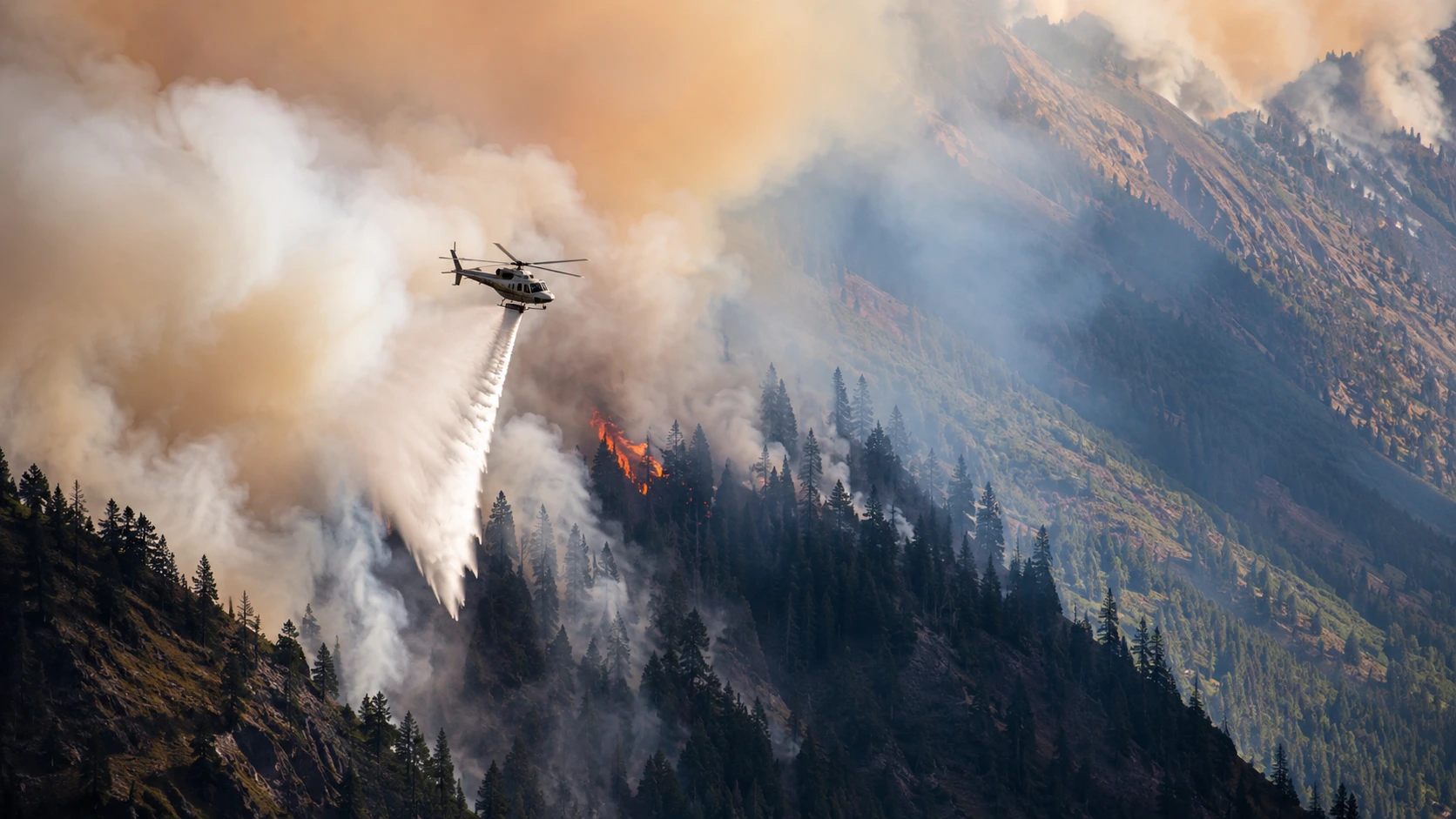
Burning embers lifted by the fire's convection column are carried horizontally by wind and land ahead of the fire front — sometimes well ahead of it. Each ember is a potential new ignition point. In extreme wind conditions during a fire with a developed convection column, embers can travel two miles or more from the fire front. A community that believes it is safely separated from a fire by distance and terrain is not separated if the wind is carrying embers. The 2018 Camp Fire in Paradise, California, which killed 85 people and burned 18,804 structures, involved ember transport as a primary mechanism of structure ignition well ahead of the main fire front.
Fuel Type and Moisture: The Match and the Matchbook
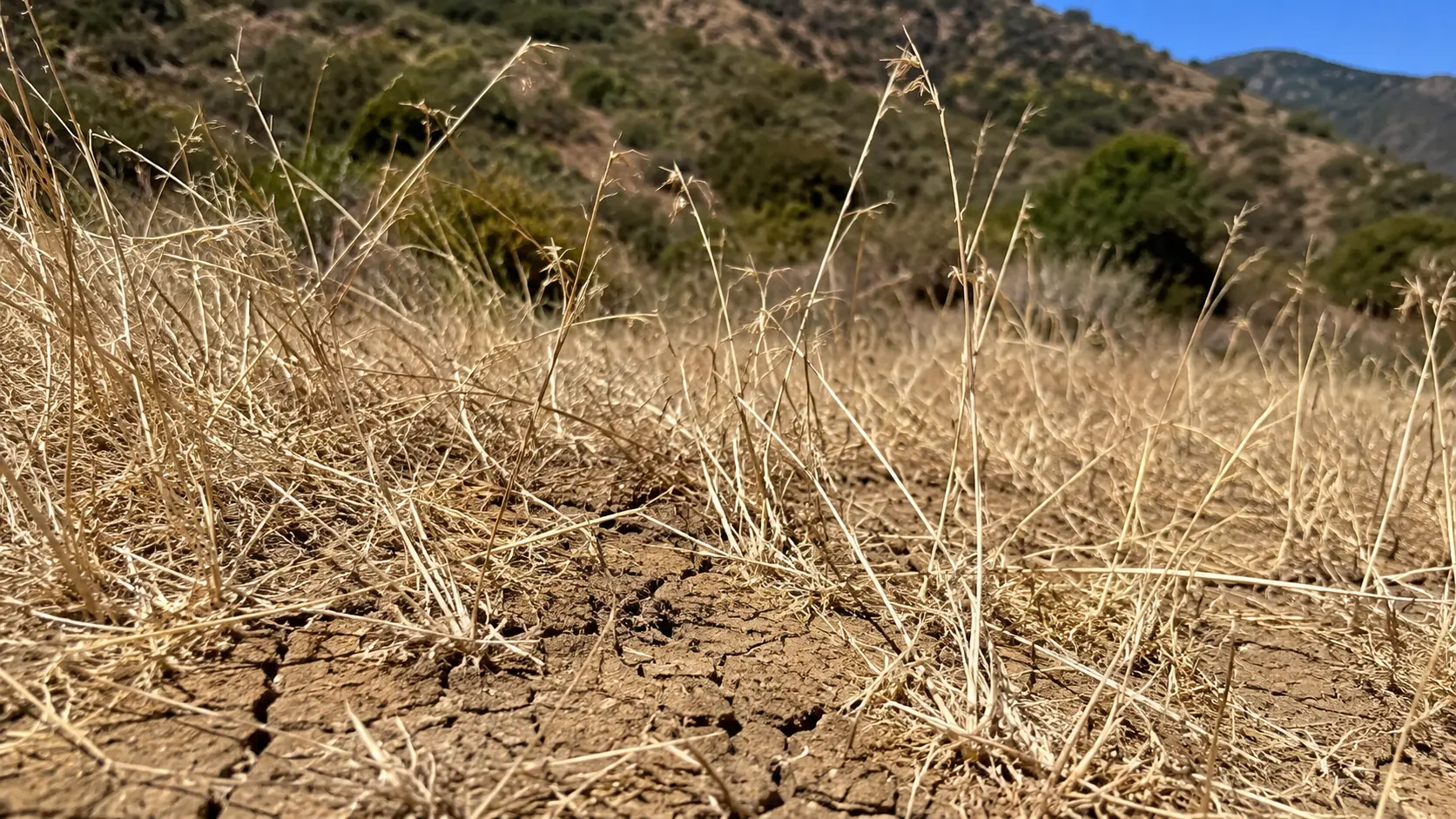
Not all fuel is equal. Fire behavior specialists categorize fuels by their size and response time to atmospheric conditions — the time it takes for fuel moisture to equilibrate with the surrounding air. Fine fuels (grass, dead needles, small twigs) respond within hours. Medium fuels (one-inch diameter branches) respond within days. Heavy fuels (large logs, stumps) respond within weeks. In a wildland fire context, the fine fuels are the primary carrier — they are what sustains the fire front and what determines the initial rate of spread.
Fuel loading — the total weight of combustible material per acre — determines how much energy the fire releases per unit area. A low-fuel grassland fire produces less heat per acre than a heavy chaparral fire, but it spreads faster because fine grass fuels ignite and burn more rapidly. A heavy timber fire moves more slowly but produces far more heat, burns for longer, and is harder to suppress because the fuel particles are too large to be interrupted by the passage of a fire line without burning through.
Spotting: How Fires Jump Containment Lines
A containment line — whether a hand line cut by a crew or a road used as a natural firebreak — is effective only as long as the fire does not cross it. Spotting bypasses containment lines entirely. Embers land ahead of the fire, ignite unburned fuel, and create new fire starts on the safe side of the line. The new starts grow, merge with the approaching main fire, and the line is flanked or surrounded before crews realize the line has been compromised.
Short-range spotting — embers landing within a few hundred feet of the fire front — happens in almost every wildland fire. It is manageable when there are enough resources to patrol ahead of the fire front and suppress new starts before they grow. Long-range spotting — embers traveling a half mile or more — occurs when a fire develops a significant convection column and wind aloft carries the embers at altitude before they descend. Long-range spotting at high wind speeds produces a fire environment that containment lines cannot reliably address.
Blow-Up Conditions: The Specific Combination That Produces Extreme Fire
A blow-up is a sudden, dramatic increase in fire intensity and spread rate that catches even experienced crews off guard. It is not simply a fire getting bigger — it is a qualitative transition in fire behavior driven by a specific alignment of conditions:
- Critically dry fine fuels across a significant area
- A wind event — a passing front, a downslope wind, an afternoon thermal wind — that increases speed or shifts direction
- Topography that channels the wind or the fire's own convection column
- A fire that has been building heat in a drainage or on a slope and suddenly finds an outlet
The blow-up can convert a fire that was progressing at a manageable 5 chains per hour into one running at 80 chains per hour in the span of a few minutes. Hand crews in the path of a blow-up on a slope cannot outrun it. Escape route and safety zone identification — mandated by the Ten Standard Firefighting Orders — is the primary protection, because suppression tactics cannot address a fire moving at that speed.
When Crews Deploy Fire Shelters
A fire shelter is the last resort — a foil-and-fiberglass tent that a wildland firefighter deploys when caught by fire with no escape route available. It reflects radiant heat and provides a small pocket of breathable air for a short time. It is not a survival guarantee. It is the final option when all other options have closed.
NFPA and USFS data on shelter deployments is consistent: most shelter deployments happen in conditions that violated one or more of the Standard Firefighting Orders — the crew was in a position where the fire could trap them, on a slope without a viable escape route, or working without a cleared safety zone within reach. The shelter works best in grass fires producing lower radiant heat; it provides limited protection in heavy chaparral or timber fires with sustained high temperatures. Shelters have been deployed in fires where occupants survived. They have also been deployed in fires where occupants did not.
The Diurnal Cycle: Why Afternoon Is the Most Dangerous Time
Wildland fire behavior follows a predictable daily pattern driven by temperature and humidity. In the morning, overnight cooling has allowed relative humidity to recover, fuels have absorbed some atmospheric moisture, and winds are typically calm. Fire behavior is at its daily minimum. This is when most tactical firefighting happens — attacking the fire perimeter while conditions are most favorable.
As the day progresses, solar heating increases temperature and decreases relative humidity. Fine fuel moisture drops. Diurnal winds — surface winds driven by temperature differentials — increase through the afternoon. By early to mid-afternoon, all three factors are at their daily worst simultaneously: hottest temperatures, lowest humidity, highest wind speeds, driest fuels. Fire behavior reaches its daily peak. Suppression becomes less effective, escape route margins tighten, and the probability of transition to extreme behavior is at its highest point.
The fire that looked like a containment candidate at 9am and looks like an escaped fire at 2pm did not change character randomly. It followed the diurnal cycle that fire weather forecasters publish every morning as part of the operational forecast. The window between when conditions allow effective suppression and when they do not is predictable and finite.
Comments 0
No comments yet. Be the first to share your thoughts!
Leave a Comment