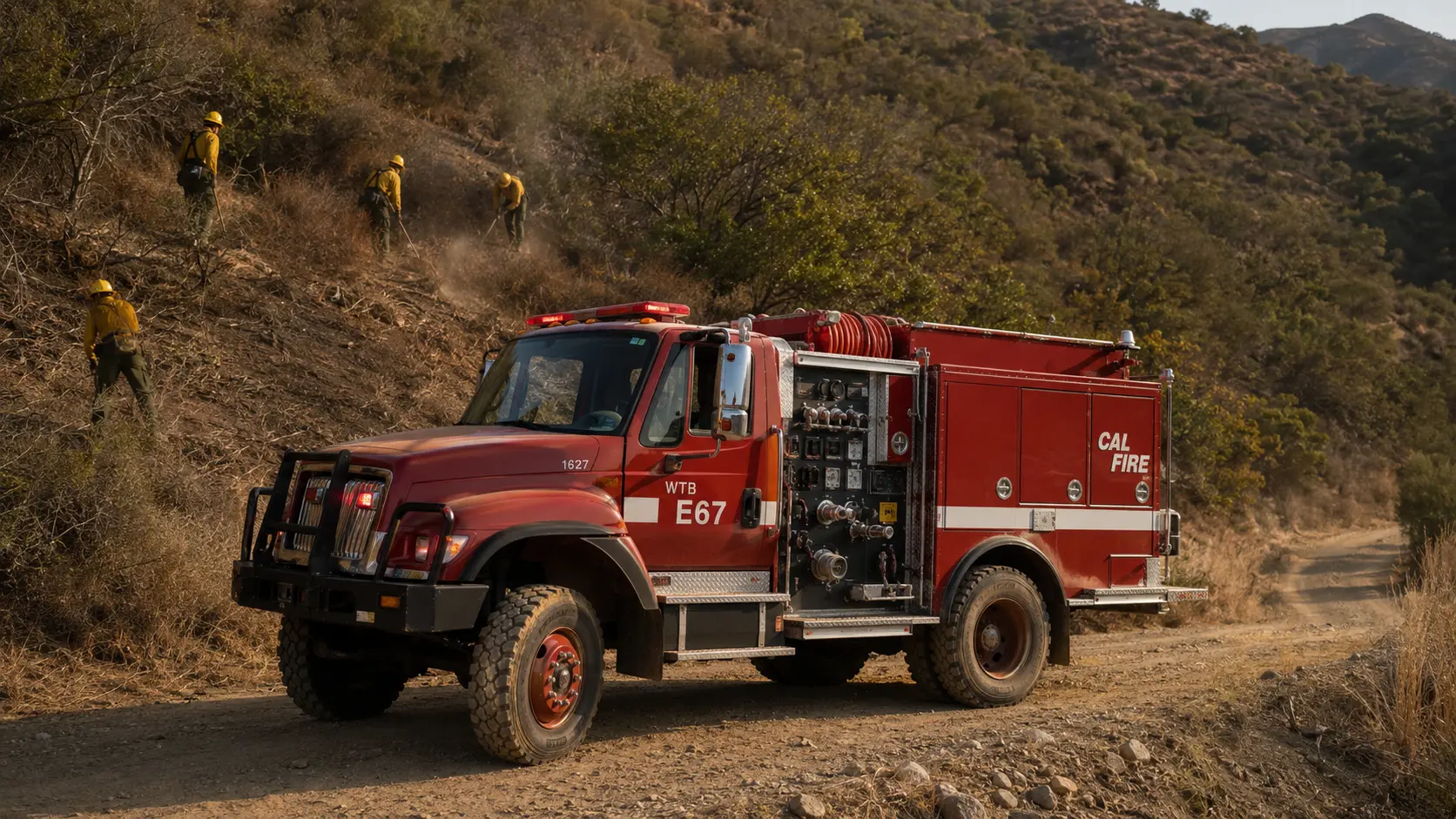
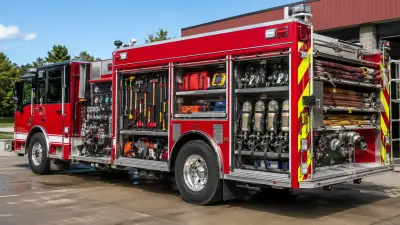
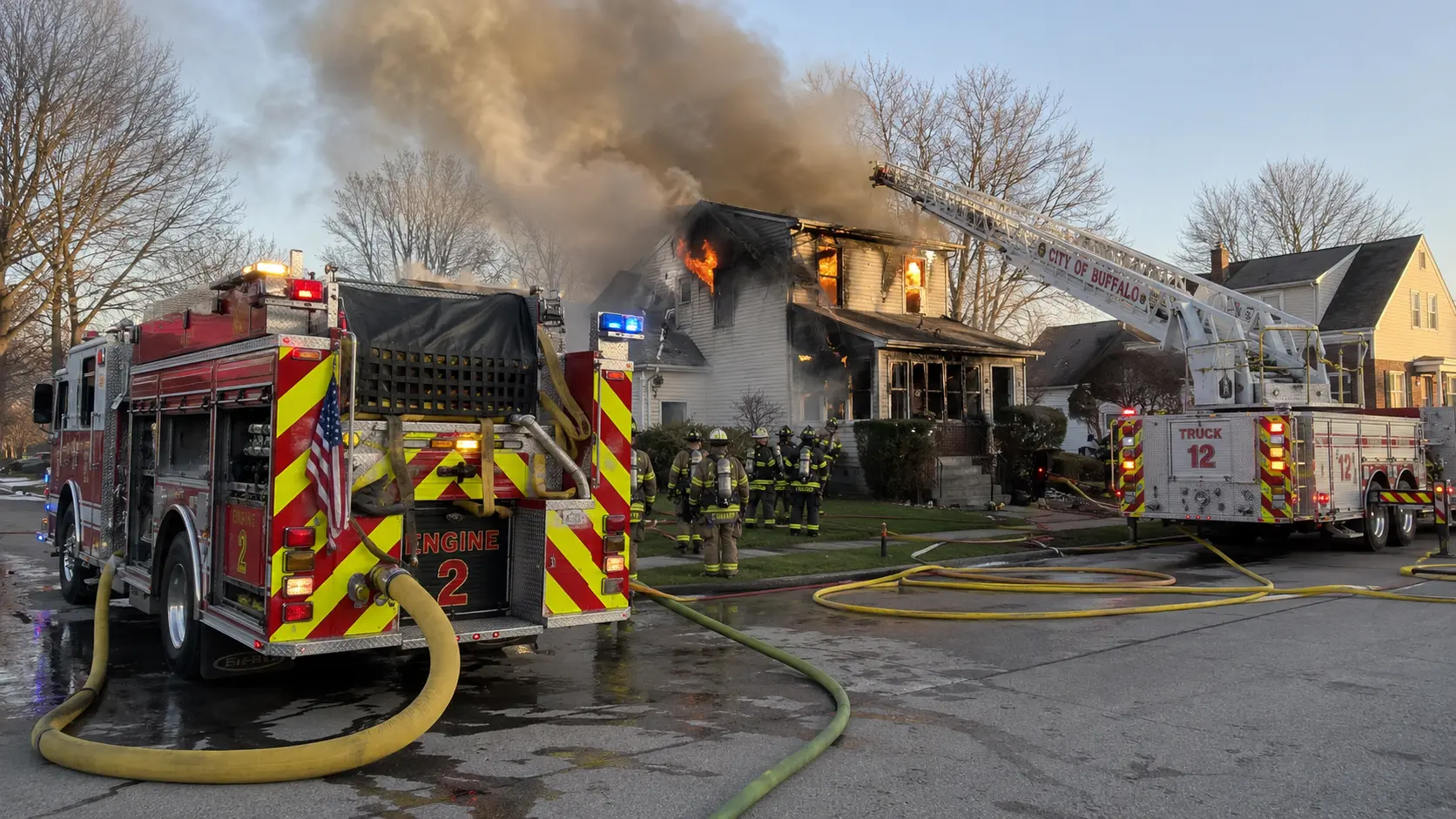
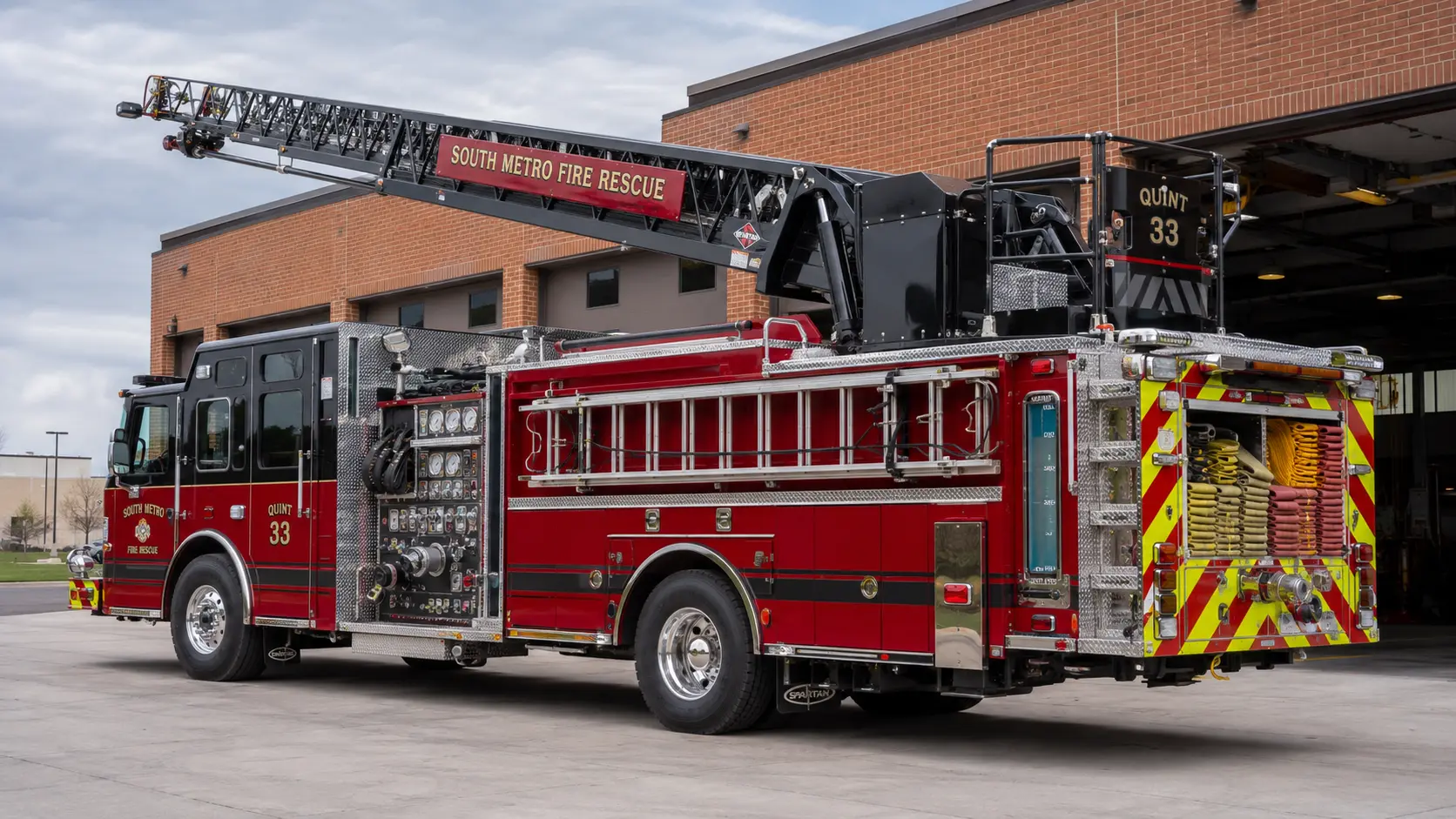
The standard structural fire engine is a purpose-built machine for connecting to a hydrant and delivering large volumes of water through a pump that operates while the apparatus is stationary. It weighs 35,000 to 50,000 pounds, has a ground clearance of a few inches, and is optimized for paved roads and urban environments. Send it down an unpaved fire road in steep terrain and it may not come back on its own power. Ask it to pump while driving along a brushy hillside and the pump design does not allow it.
Type 3 engines and brush trucks exist because wildland and interface firefighting requires capabilities that structural apparatus cannot provide. The trade-offs are real — less water, smaller hose, lower pump capacity — but those trade-offs are the price of off-road mobility, pump-and-roll capability, and the ability to reach fires at the location where they actually are rather than where a road happens to be.
In this article:
The NIMS Apparatus Typing System
The National Incident Management System (NIMS) classifies fire apparatus by type on a scale from Type 1 (heaviest, most capable structurally) to Type 7 (lightest). The typing system allows requesting agencies to specify exactly what capability they need when ordering mutual aid resources, and supplying agencies to know precisely what they are sending. A request for "five Type 3 engines" carries specific minimum specifications that every department filling that request must meet.
| Type | Tank (min) | Pump (min GPM) | Hose (1¾") | Primary use |
|---|---|---|---|---|
| Type 1 | 400 gal | 1,000 GPM | 1,200 ft | Structural — urban/suburban |
| Type 2 | 400 gal | 500 GPM | 1,000 ft | Structural/interface |
| Type 3 | 500 gal | 150 GPM | 1,000 ft | Wildland/interface — off-road capable |
| Type 4 | 750 gal | 50 GPM | 300 ft | Wildland — patrol and mop-up |
| Type 6 | 150 gal | 50 GPM | 300 ft | Brush truck — initial attack, off-road |
| Type 7 | 50 gal | 10 GPM | 200 ft | Patrol vehicle — reconnaissance |
The typing system creates interoperability: a California incident management team ordering resources from Montana knows exactly what specifications those Montana Type 3 engines will meet. Without standardized typing, mutual aid resource orders would require individual negotiation of capability specifications for every resource requested.
Type 3 Engine: Construction and Capability
A Type 3 engine is typically built on a medium-duty commercial truck chassis — Ford F-550 through F-750 range, or similar — with four-wheel drive as a standard requirement. The water tank (minimum 500 gallons, often 750 to 1,000 gallons in agency-spec builds) is mounted midship on the chassis, and the pump (minimum 150 GPM, often 250 to 500 GPM in practice) is mid-ship or front-mounted for pump-and-roll capability.
The critical difference from structural apparatus is ground clearance and drivetrain. A Type 3 engine on a 4WD chassis with high ground clearance can navigate unpaved roads, soft terrain, and moderate off-road conditions. It will high-center on steep terrain or large obstacles that a dedicated off-road brush truck handles, but it goes places that a 40,000-pound structural engine cannot safely follow.
The body carries forestry hose (1-inch) on reels and in packs alongside standard 1¾-inch attack hose, a complement of hand tools (pulaskis, McLeods, shovels, fusees), a portable water tank, medical kit, and wildland PPE for the crew. The tool complement reflects that a Type 3 crew may need to function as a fire suppression resource and as a support resource for hand crews working in adjacent terrain simultaneously.
Pump-and-Roll Operations
Pump-and-roll is the capability that most clearly distinguishes wildland from structural fire apparatus. A Type 3 engine can pump water through its hose system while the engine is moving — driving slowly along a fire perimeter, applying water directly to the fire edge through a bumper-mounted turret or through a hand line extended from the moving apparatus.
This capability is possible because the pump is mechanically independent of the drive train on properly equipped apparatus — the power take-off (PTO) drives the pump while the transmission drives the wheels simultaneously. On a structural apparatus, the pump is typically engaged by shifting into pump gear, which disengages the drive axle. Pump-and-roll requires a split-shaft PTO configuration or a separate pump drive that allows simultaneous operation.
Pump-and-roll is used for direct attack on low-intensity grass and light brush fires where the crew can drive the fire perimeter while applying water, for mop-up operations along contained fire lines, and for structure protection at interface fires where the apparatus must move between multiple threatened structures. A two-person crew in a pump-and-roll capable Type 3 can protect multiple structures in a neighborhood during an approaching fire front, moving between positions, that a stationary structural engine deployed at a single address cannot match.
Brush Trucks: Lighter and More Mobile
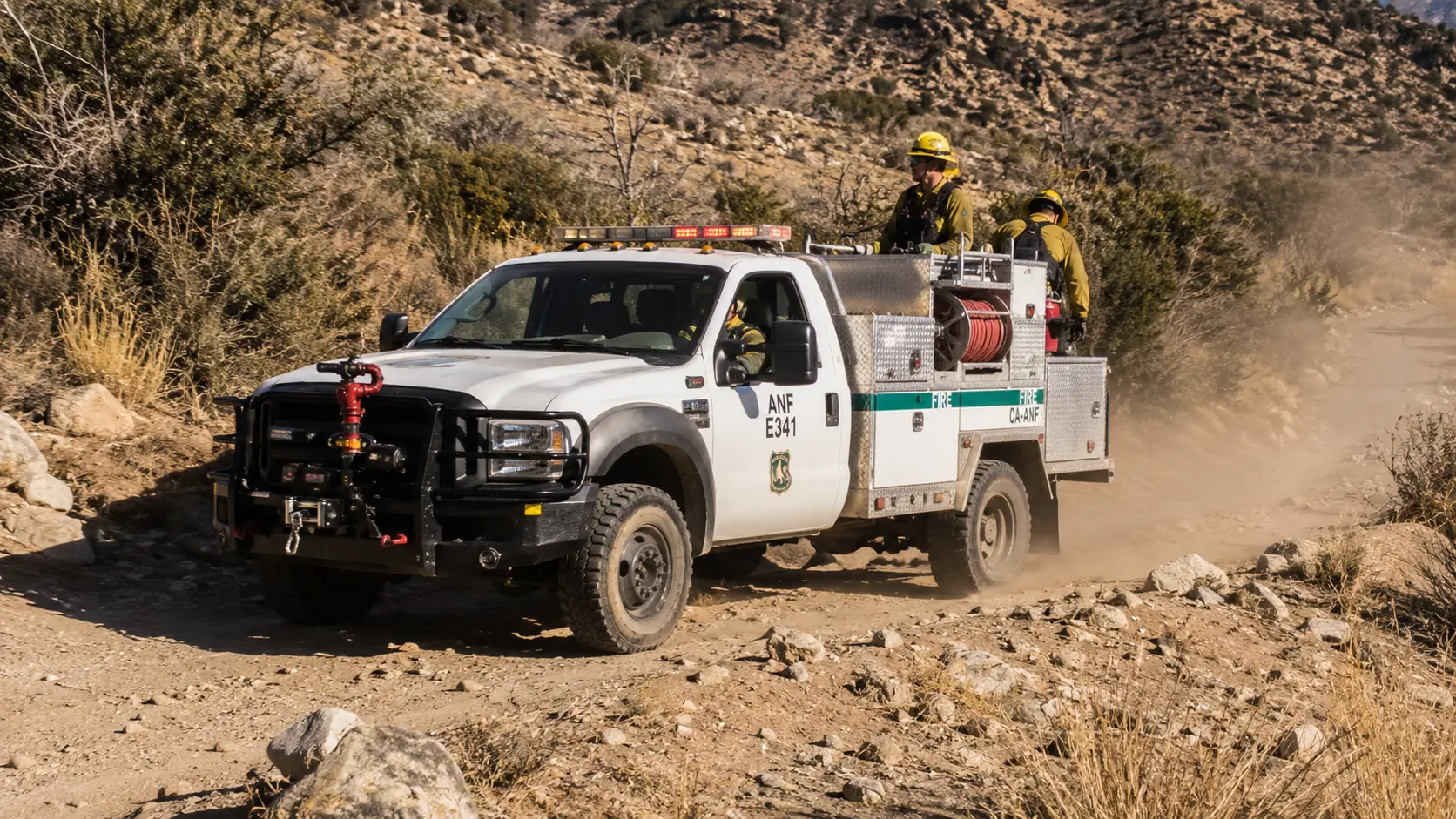
Brush trucks — NIMS Type 6 and Type 7 apparatus — are the lightest wildland fire vehicles, typically built on full-size pickup truck chassis with small water tanks (50 to 200 gallons) and correspondingly small pumps. Their primary value is terrain access: a Type 6 on a 4WD pickup platform can follow a trail that a Type 3 cannot navigate, reaching fire perimeters in their earliest stages before they grow to the scale that requires the heavier apparatus.
The trade-off is obvious: 150 gallons of water lasts less than 5 minutes at 30 GPM. A brush truck crew cannot sustain attack on a growing fire without refill support. They are initial attack tools — they reach the fire fast, apply water to knock down the head before it runs, and call for refill or reinforcement while holding what they can with the water they have. Used for initial attack in the first minutes after ignition, before a fire has grown beyond initial attack capability, a brush truck is highly effective. Deployed against a fire that is already in full run, it is outclassed.
Hose Configurations for Wildland Attack
Type 3 engines carry a mix of hose types that reflects the varied tactical requirements of wildland and interface operations. Forestry hose — 1-inch diameter, lightweight, packable — is used for extended operations where crews are carrying hose on foot through terrain where driving is not possible. Standard 1¾-inch attack hose is used for higher-flow operations at the fire-structure interface and for engine-based direct attack where the higher flow rate is needed. A bumper-mounted turret connected directly to the tank allows the driver or officer to apply water from the cab without a crew member needing to manage a hand line.
The hose load on a Type 3 typically includes a pre-connected bumper line (the turret), one or two 1¾-inch pre-connected attack lines for structure protection or higher-flow direct attack, and 500 to 1,000 feet of 1-inch forestry hose in packs or on a reel. This configuration allows the crew to shift between tactical modes — turret for mobile direct attack, 1¾-inch for structure protection, forestry hose for extended hand crew support — without re-configuring the apparatus.
Crew Configuration and Staffing
A Type 3 engine crew is typically three people: the driver/operator, an officer, and one additional firefighter. All three must be trained in wildland firefighting — holding their red cards (Incident Qualification Cards certifying their wildland training and fitness) — as well as in standard structural firefighting if the apparatus is deployed in an interface department that responds to both fire types.
The smaller crew compared to a structural engine (which may have four to six personnel) reflects the pump-and-roll operational mode where one person drives and pumps, one manages the bumper turret or hand line, and one maintains situational awareness, manages communications, and handles tools. More than three crew members in a Type 3 cab is unnecessary for most wildland operations and would require a larger vehicle.
Why Interface Departments Run Both Types
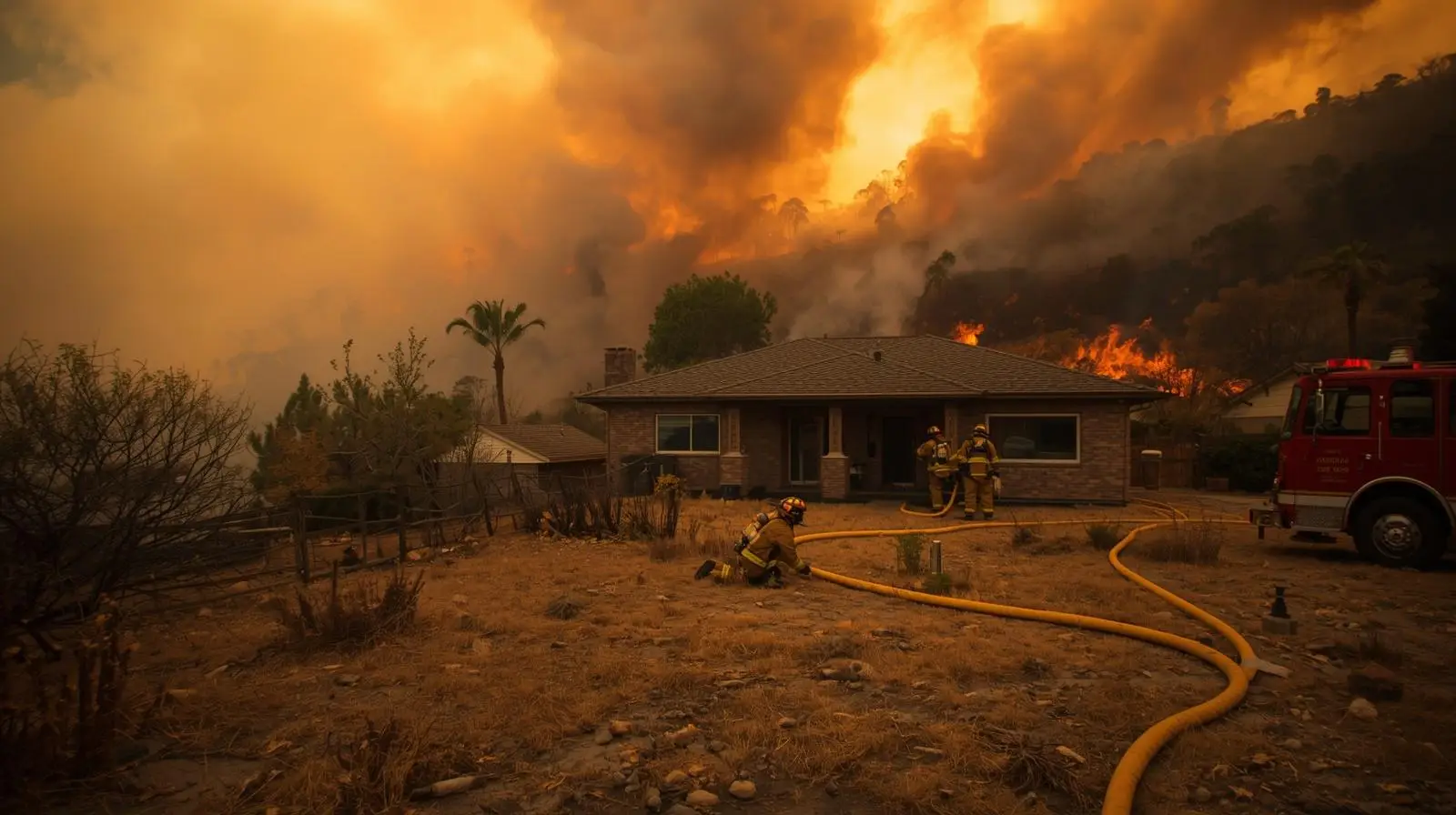
A department serving a community at the wildland-urban interface cannot choose between structural and wildland apparatus — it needs both. A house fire requires the flow rates, hydrant supply, and extended operations that a Type 1 or Type 2 structural engine provides. A grass fire threatening that same house from the adjacent hillside requires the off-road access and pump-and-roll capability of the Type 3. The apparatus that excels at one mission is limited at the other.
Interface departments that run only structural engines handle wildland fires defensively — protecting structures from a road position while the fire burns the surrounding vegetation. Departments that run both types can address the fire in the vegetation before it reaches the structure, using the Type 3 to push into the terrain and slow or stop the fire's advance while the structural engines protect the structure perimeter. The combination produces significantly better outcomes at interface incidents than either apparatus type alone.
Mutual Aid and Typing Compatibility
The NIMS typing system's value becomes most apparent at large wildfire events requiring resources from multiple states and agencies. When the California Department of Forestry requests mutual aid Type 3 engines from Oregon and Washington, every engine that responds meets the same minimum specifications: 500-gallon tank, 150 GPM pump, 4WD, 1,000 feet of 1¾-inch hose. The receiving incident management team can assign those resources to positions based on their type without needing to individually assess each apparatus's capability.
Departments that want their apparatus to be eligible for mutual aid deployment — and the associated reimbursement — must ensure their equipment meets the NIMS typing specifications for the type they report. An apparatus that is listed as Type 3 but does not have pump-and-roll capability or does not meet the minimum pump capacity is ineligible for positions that require Type 3 capability, which creates complications at the resource check-in point when the discrepancy is discovered.
Comments 0
No comments yet. Be the first to share your thoughts!
Leave a Comment