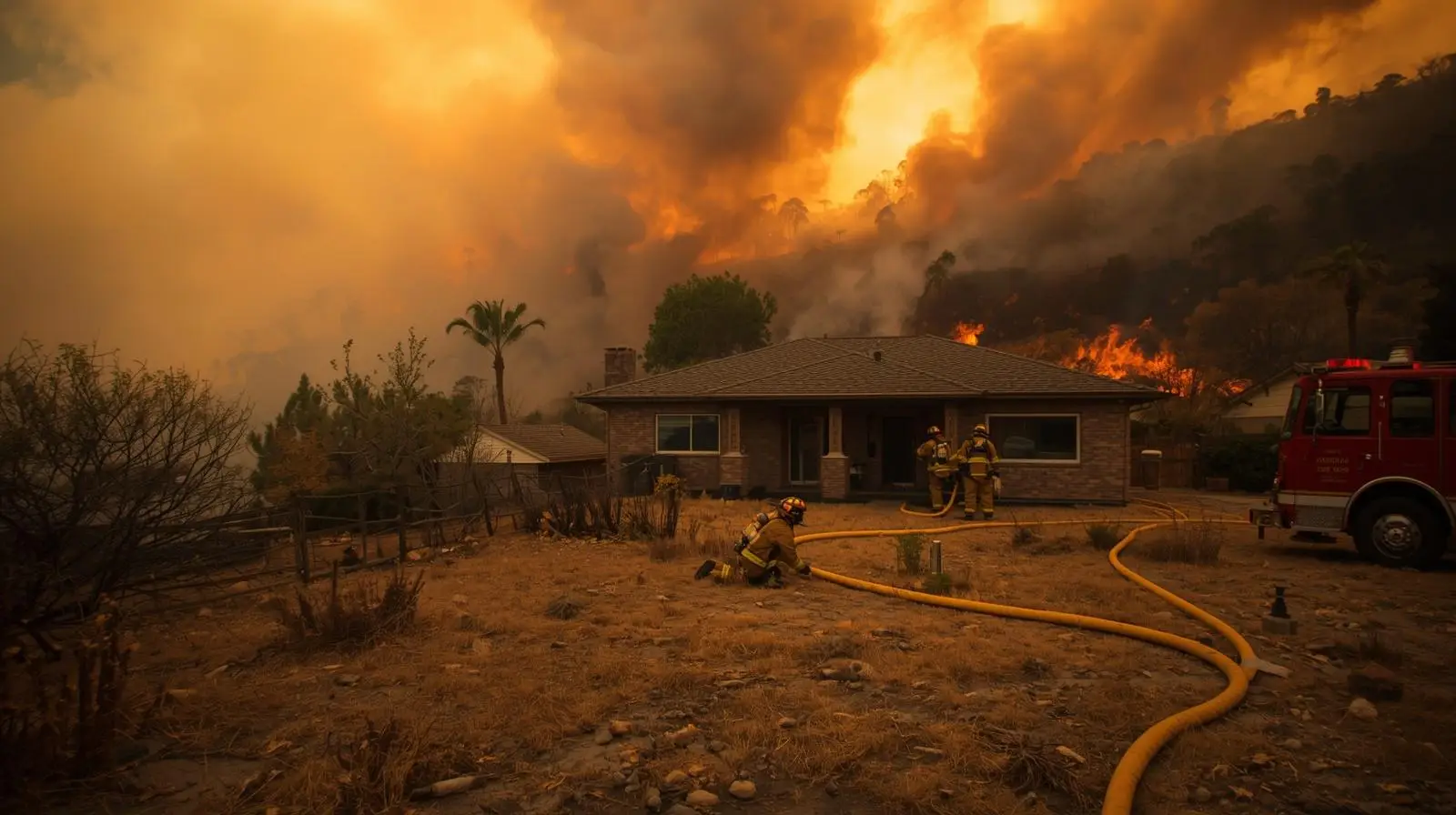

Wildfire Structure Defense: Triage, Defensible Space & Home Hardening for Engine Companies
When wildfire threatens a community, engine companies face a situation unlike any structural fire: multiple structures simultaneously at risk, rapidly changing fire behavior, limited water supply, and the constant possibility of entrapment. Structure defense in the wildland-urban interface (WUI) requires a completely different tactical mindset than residential firefighting — one built around triage, survivability assessment, and the decision of where to fight and where to withdraw. This guide covers the operational fundamentals of wildfire structure defense.
Jump to:The WUI challenge · Structure triage · Survivable vs. non-survivable · LCES · Structure preparation · Attack tactics · Defensible space assessment · Home hardening factors · Water supply in WUI · FAQ
The WUI Challenge: Why It Is Different
Wildland-urban interface firefighting differs from structural firefighting in four critical ways:
- Scale: A single WUI incident can simultaneously threaten dozens or hundreds of structures across miles of terrain. No engine company can protect everything.
- Fire behavior: Wildfire moves with wind, topography, and fuel moisture. Ember cast can ignite structures far ahead of the flame front. A structure that appears safe can ignite from ember shower 20 minutes before the fire arrives.
- Water supply: Most WUI areas lack hydrant systems. Each engine carries its booster tank — typically 500–1,000 gallons. Every gallon matters.
- Entrapment risk: Fire behavior can change faster than crew evacuation speed. Routes can be cut off by fire. The risk of crew entrapment is real and must be managed proactively, not reactively.
Structure Triage: The Most Important Decision
When multiple structures are threatened simultaneously, engine companies must triage — prioritize which structures to defend and which to bypass. This is the most operationally consequential decision in WUI firefighting, and it must be made quickly based on observable factors.
Triage factors
| Factor | Defend | Bypass |
|---|---|---|
| Defensible space | 30+ feet cleared; sparse, low vegetation adjacent | Dense vegetation to the foundation; no clearance |
| Structure ignitability | Metal roof, enclosed eaves, dual-pane windows, masonry or stucco exterior | Wood shake roof, open eaves, wood siding, large deck attached |
| Fire position relative to structure | Fire will arrive uphill or from the flat; adequate time for prep | Fire approaching downhill from above; structure already in flame front path |
| Occupancy | Occupied structure with people who cannot self-evacuate | Vacant structure; occupants already out |
| Water availability | Pool, tank, or other supplemental supply on property | No supplemental supply; booster tank only |
| Crew safety | Clear escape route; identified safety zone; LCES in place | No escape route; no safety zone; crew would be committed with no out |
No structure is worth a crew. The triage decision is always weighed against crew safety. A structure that cannot be defended safely is bypassed. Engine companies that become entrapped trying to defend a non-survivable structure add to the casualties instead of preventing them.
Survivable vs. Non-Survivable Structures
The Cal Fire / NWCG structure triage framework categorizes structures as survivable or non-survivable based on observable conditions at arrival:
Survivable indicators
- Adequate defensible space (30+ feet in most situations)
- Fire-resistant exterior: metal roof, composition shingles, fiber cement or stucco siding
- Enclosed soffits and eaves (no open vents where embers can enter)
- No large attached deck or wood fencing connecting structure to wildland fuels
- Dual-pane windows or smaller window area
- Propane tanks and combustible storage away from structure
Non-survivable indicators
- Active flame contact with structure at arrival
- Fire already through the roof or in the attic
- Combustible vegetation to the foundation on the fire approach side
- Wood shake or wood shingle roof with active ember cast nearby
- No escape route or safety zone available for the engine crew
- Structure already fully involved
LCES: The Non-Negotiable Safety Framework
LCES is the foundational safety protocol for all wildland and WUI operations. Every engine crew must establish LCES before committing to structure defense.
- L — Lookout: A designated person monitoring fire behavior and approach. The lookout communicates changes to the crew before they can see the fire themselves. Can be a crew member with radio contact or a lookout from another company or aircraft.
- C — Communications: Reliable radio contact with your lookout, your supervisor, and command. Know the channel plan. Know what frequencies are active for fire behavior updates.
- E — Escape routes: Two pre-identified routes out of the area, confirmed to be passable before committing. Routes must be checked and rechecked as fire conditions change. A route that was clear 10 minutes ago may not be clear now.
- S — Safety zones: Pre-identified areas large enough for the entire crew where the fire can pass without injuring anyone. A paved parking lot, a cleared agricultural field, a large body of water. The safety zone must be accessible via the escape route without crossing active fire.
If LCES cannot be established, do not commit. A crew without a confirmed lookout, communications, escape route, and safety zone has no margin for error if fire behavior changes. The 10 Standard Firefighting Orders and 18 Watch Out Situations both identify LCES failure as the leading precondition to firefighter fatalities in wildland fire.
Structure Preparation: What to Do Before the Fire Arrives
If triage determines a structure is survivable and crew safety is established, the prep sequence before the fire front arrives:
- Clear combustibles from the immediate structure perimeter. Doormats, patio furniture, woodpiles, propane cylinders, and stored combustibles within 5 feet of the structure are removed or relocated. These items are primary ignition points for ember contact.
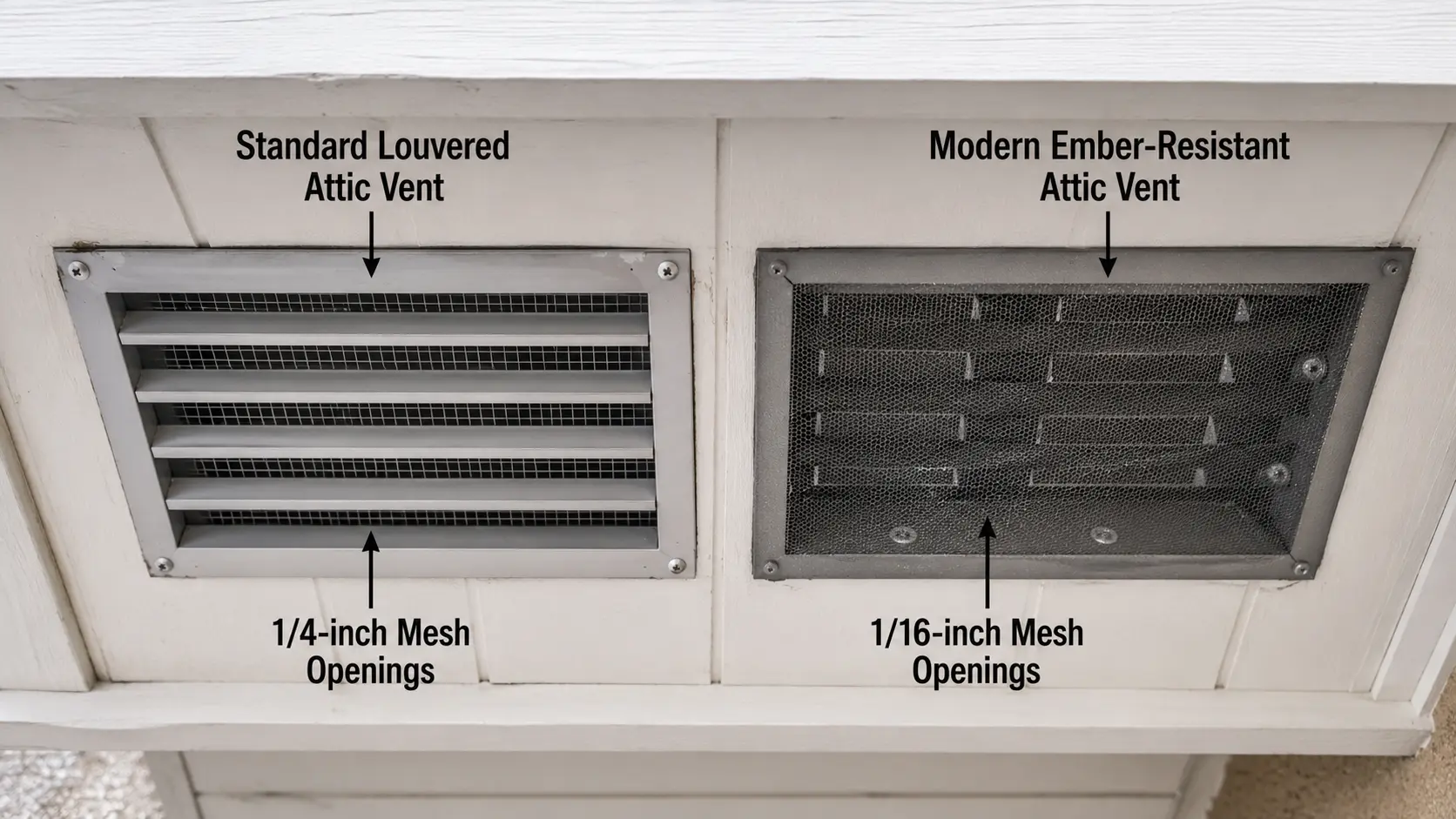
- Close all windows, doors, and vents. Embers enter through open windows, pet doors, attic vents, and any gap in the structure envelope. Close everything. Stuff towels under doors if possible.
- Turn off propane at the tank. An impinging flame on a propane tank creates an explosive hazard. Turning it off at the source eliminates this risk.
- Turn on exterior lights. If power is still on, turning on exterior lighting makes the structure more visible in the smoke and helps crews locate it.
- Pre-wet the structure exterior (if water allows). Wetting wood siding, decks, and combustible materials before the fire arrives delays ignition. Prioritize areas facing the fire approach. This is not an unlimited option — water must be conserved for active suppression.
- Position engine for a fast exit. The engine should be positioned for forward drive out, not requiring a turnaround. The engine is also a potential shelter if the crew cannot evacuate.
Attack Tactics During Fire Passage
When the fire front arrives, engine companies have a brief window to suppress structure ignition:
- Attack spot ignitions aggressively and immediately. Embers landing on wood surfaces, decks, and vegetation adjacent to the structure can be extinguished quickly with small amounts of water. A 1-gallon spot fire left unattended becomes a 10,000 gallon problem in minutes.
- Prioritize the roof and eaves. The roof and enclosed soffits are the primary ember entry points for attic ignition. Embers in the attic spread fire throughout the structure from inside before exterior flames ever contact the walls.
- Use water conservatively. In WUI operations, each gallon must do maximum work. Use fog for burning vegetation surrounding the structure; use straight stream for knockdown of active structure ignition points. Do not flow water into smoke — only onto confirmed ignition points.
- Work as a team: one on the nozzle, one watching escape. Never fully focus on suppression to the exclusion of situational awareness. The person not on the nozzle monitors fire behavior, crew safety, and escape route status continuously.
- Know your trigger point. Before committing, establish the specific fire behavior or environmental change that triggers immediate withdrawal. "If the fire gets to that ridgeline, we go." Stick to it.
Defensible Space: The 0-5-30-100 Framework
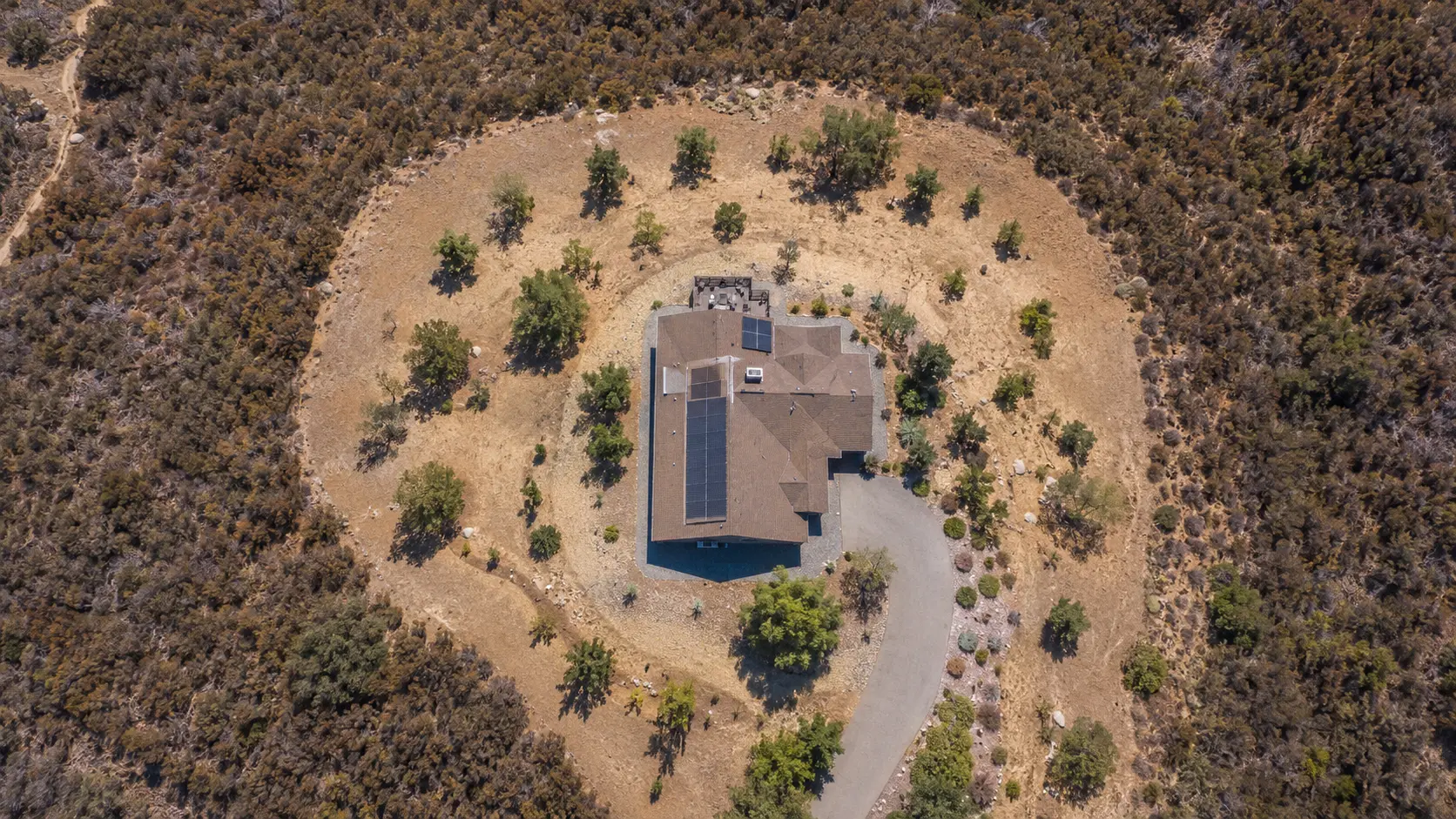
Defensible space refers to the buffer between a structure and wildland fuels that gives firefighters room to work and reduces the intensity of fire reaching the structure. The standard framework:
- 0–5 feet (ember-resistant zone): Non-combustible materials only. Gravel, concrete, or bare ground. No plants, mulch, or wood materials. This zone prevents ember accumulation next to the foundation.
- 5–30 feet (lean, clean, and green zone): Plants kept low, green, and well-spaced. No ladder fuels (brush under trees that allows ground fire to climb to crowns). Trees pruned to 10 feet off the ground. No dead wood or dry material.
- 30–100 feet (reduced fuel zone): Thinned vegetation with spacing between shrubs and trees. Branches pruned from tree crowns. Dead material removed. The goal is to reduce fire intensity so it cannot crown and produce the ember cast that ignites structures.
Home Hardening: What Makes a Structure Survivable
Home hardening refers to construction features that reduce a structure's susceptibility to wildfire ignition. When educating homeowners or doing pre-incident planning, these are the features with the highest protective value:
| Component | High risk | Low risk (hardened) |
|---|---|---|
| Roof | Wood shake, wood shingle | Metal, clay tile, composition (Class A) |
| Eaves/soffits | Open eaves with exposed rafters | Enclosed soffits, no gaps |
| Vents | Unscreened attic and foundation vents | 1/16-inch metal mesh screens on all vents |
| Windows | Single-pane glass, large window areas | Dual-pane tempered glass, smaller openings |
| Exterior walls | Wood siding, vinyl siding | Stucco, fiber cement, masonry |
| Decks | Wood decking connecting to wildland fuels | Composite or concrete decking; enclosed underside |
| Gutters | Open gutters accumulating leaf debris | Covered or metal gutters; cleaned regularly |
Water Supply in WUI Operations
Water conservation is the central constraint of WUI structure defense. Planning for your water supply before committing to a structure:
- Know your booster tank capacity before arrival. How many gallons do you have? At typical WUI attack flow rates (25–50 GPM), a 500-gallon tank gives you 10–20 minutes of sustained flow. Plan accordingly.
- Identify supplemental water on the property. Pools (can draft), hot tubs, horse troughs, rain catchment tanks, irrigation ponds — any water source can be accessed with hard suction or portable pump. This is part of your structure triage assessment.
- Do not flow water into smoke. Every gallon wasted on smoke instead of flame is a gallon unavailable for actual ignition suppression. Flow only on confirmed ignition points.
- Coordinate with water tenders. In organized WUI operations, water tenders (tankers) shuttle water to engine companies. Know the shuttle plan and your refill location before committing to a structure that will require more water than your booster tank carries.
Use the Tanker Shuttle Calculator to pre-plan sustainable GPM for your water tender resources in your response area.
Frequently Asked Questions
What is structure triage in wildfire operations?
Structure triage is the process of rapidly assessing multiple threatened structures and prioritizing which to defend, which to monitor, and which to bypass based on survivability, crew safety, and available resources. It recognizes that no engine company can protect every structure simultaneously and that choosing where to fight is as important as how to fight.
What is LCES in wildland firefighting?
LCES stands for Lookouts, Communications, Escape routes, and Safety zones. It is the mandatory safety framework for all wildland and WUI fire operations. Every engine crew must establish all four components before committing to any tactical position. Failure to maintain any single component is a recognized precondition to firefighter fatalities.
How much defensible space do I need around my home?
The standard framework requires 100 feet of defensible space divided into zones: 0–5 feet (ember-resistant, non-combustible), 5–30 feet (lean, clean, and green), and 30–100 feet (reduced fuel). Requirements vary by state and local jurisdiction — California, Colorado, and other high-risk states have specific legal requirements. Check your local fire department's current requirements.
Can firefighters defend any structure from wildfire?
No. Structures without adequate defensible space, with highly combustible roofing and siding, already in flame contact, or where crew safety cannot be maintained are bypassed. Engine companies cannot create defensible space on arrival or change a structure's construction materials. The pre-fire mitigation done by the homeowner determines what is defensible on the day of the fire.

Comments 0
No comments yet. Be the first to share your thoughts!
Leave a Comment