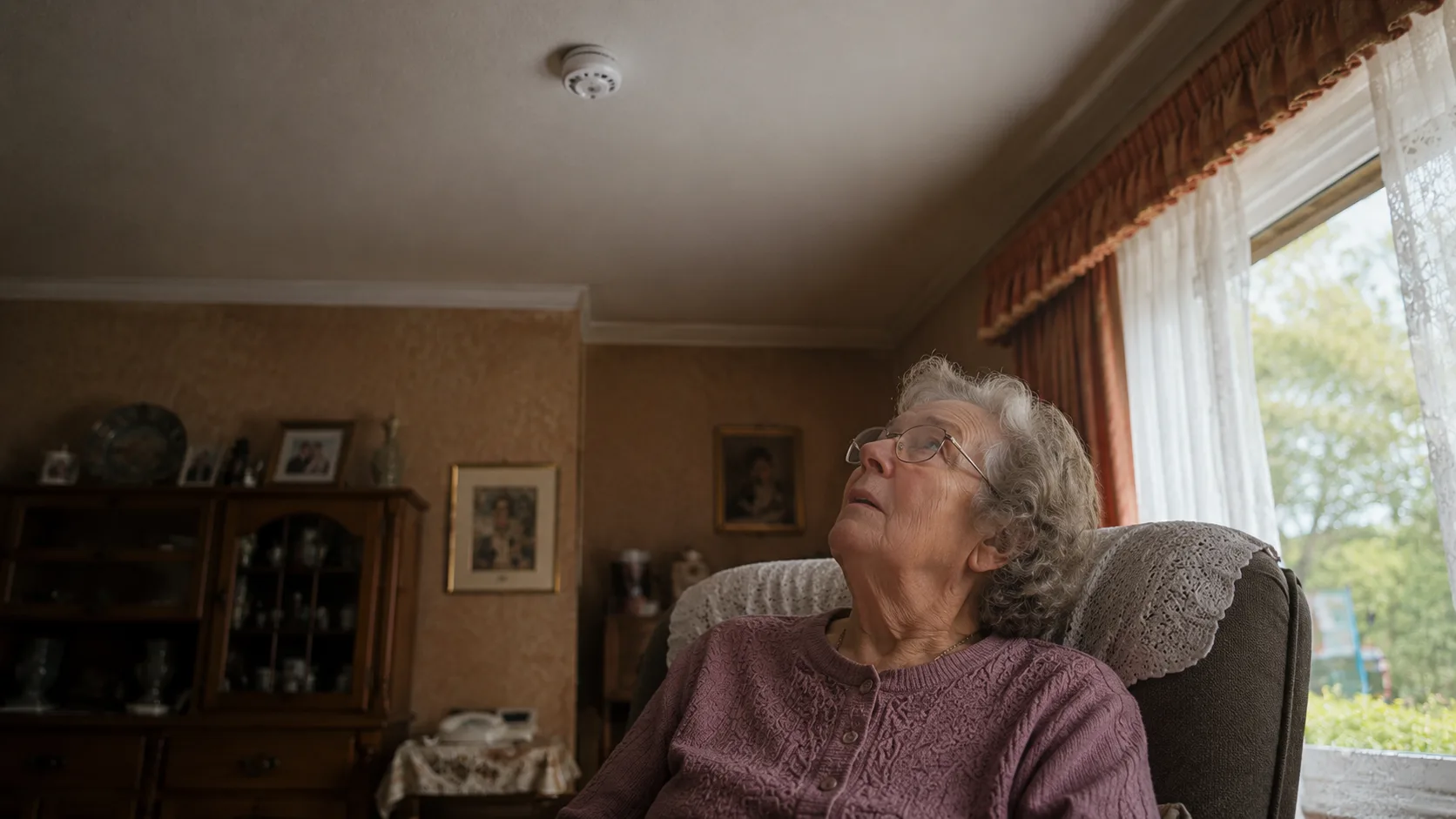

The NFPA numbers have been consistent for years: adults 65 and older die in home fires at nearly three times the rate of the general population. Push that to adults 85 and older and the rate is closer to four and a half times. These are not people who lack fire safety knowledge. Many of them installed their own smoke detectors, raised families with fire escape plans, and remember a time when fire safety was taught in schools. The problem is not awareness. It is a set of physiological changes — in reaction time, sleep depth, mobility, and sensory perception — that make the same fire more lethal for an older adult than for a younger one.
If you are an older adult living alone, or an adult child thinking about a parent's home, this is the piece that covers what actually changes with age and what specifically to do about it.
In this article:
- Why age increases fire risk: the specific mechanisms
- Cooking fires and cognitive change
- Smoking in the home: still the deadliest ignition source
- Oxygen concentrators: a hazard most families don't know about
- Hearing loss and smoke detectors
- Mobility, escape time, and what that math actually looks like
- What families and caregivers should do
- Senior fire safety checklist
Why Age Increases Fire Risk: The Specific Mechanisms
Older adults do not burn in fires at higher rates because they are careless. They burn at higher rates because several things change with age that directly affect fire survival — and most of those changes are invisible until they matter.
Reaction time and decision-making under stress
Processing speed slows with age. Under the stress of a fire alarm at 2am, the extra two to four seconds it takes to orient, assess the situation, and make a decision are not trivial — they happen during the fastest-changing phase of a fire. A person who wakes up and immediately moves has a materially different outcome than one who wakes up confused, sits up slowly, and takes time to understand what they are hearing.
Medication effects
A significant percentage of adults over 65 take medications that affect alertness, balance, or reaction time — sedatives, sleep aids, certain blood pressure medications, and antihistamines among them. A person taking a sedating medication who is awakened by a fire alarm at night is starting from a deeper cognitive hole than they would be otherwise. This is not a reason to stop medication. It is a reason for everything else in this article to be done correctly so that the response margin required is as small as possible.
Deeper sleep phases and harder waking
Counterintuitively, older adults who have difficulty with light or fragmented sleep at night often have phases of very deep sleep that make them harder to rouse with a standard smoke detector tone. The NFPA has studied this specifically: high-pitched 3,100 Hz tones — the standard for most smoke detectors — are less effective at waking older adults, particularly those with high-frequency hearing loss, than lower-frequency signals or voice alarms. This has practical implications covered in the hearing section below.
Cooking Fires and Cognitive Change
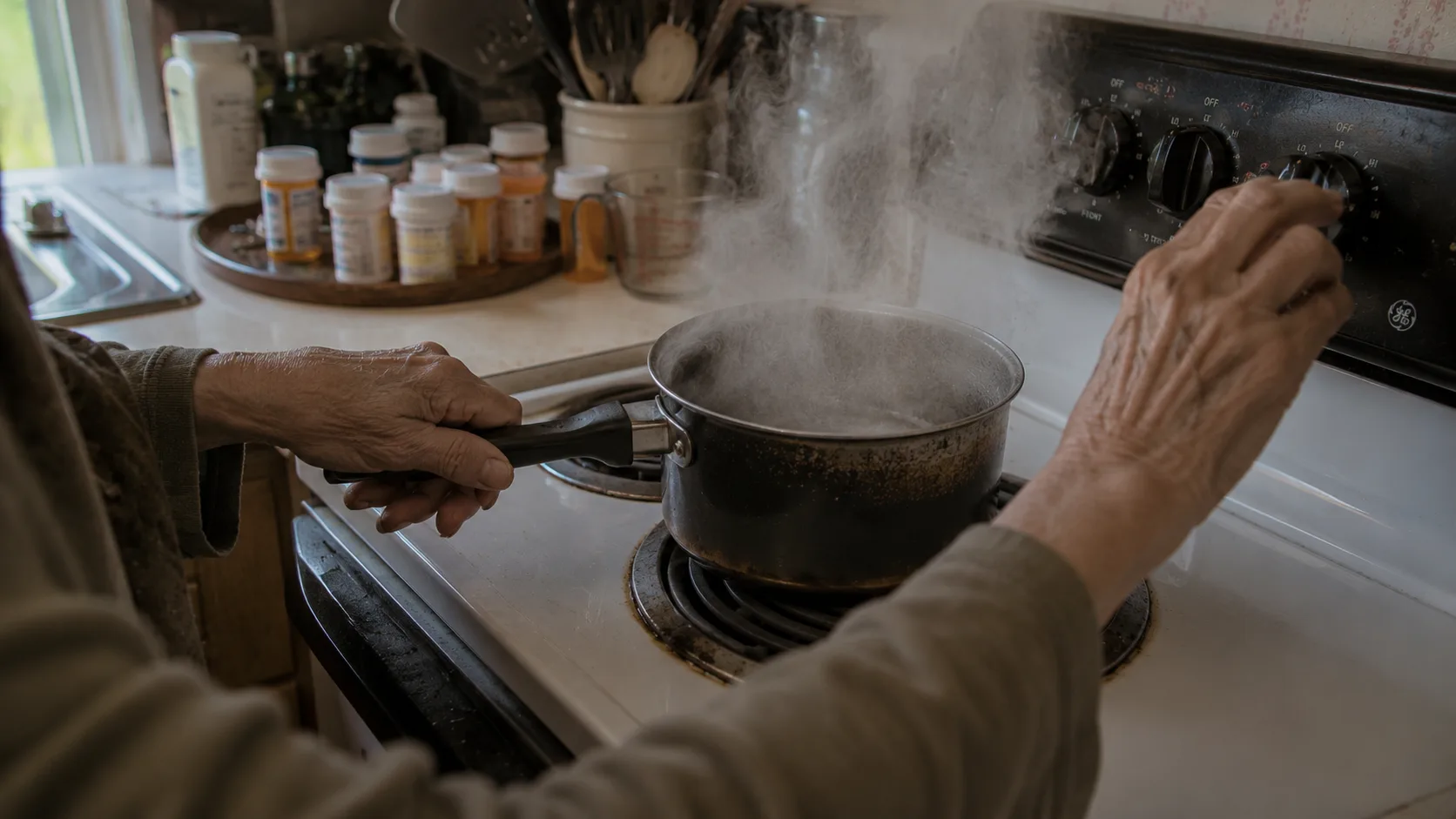
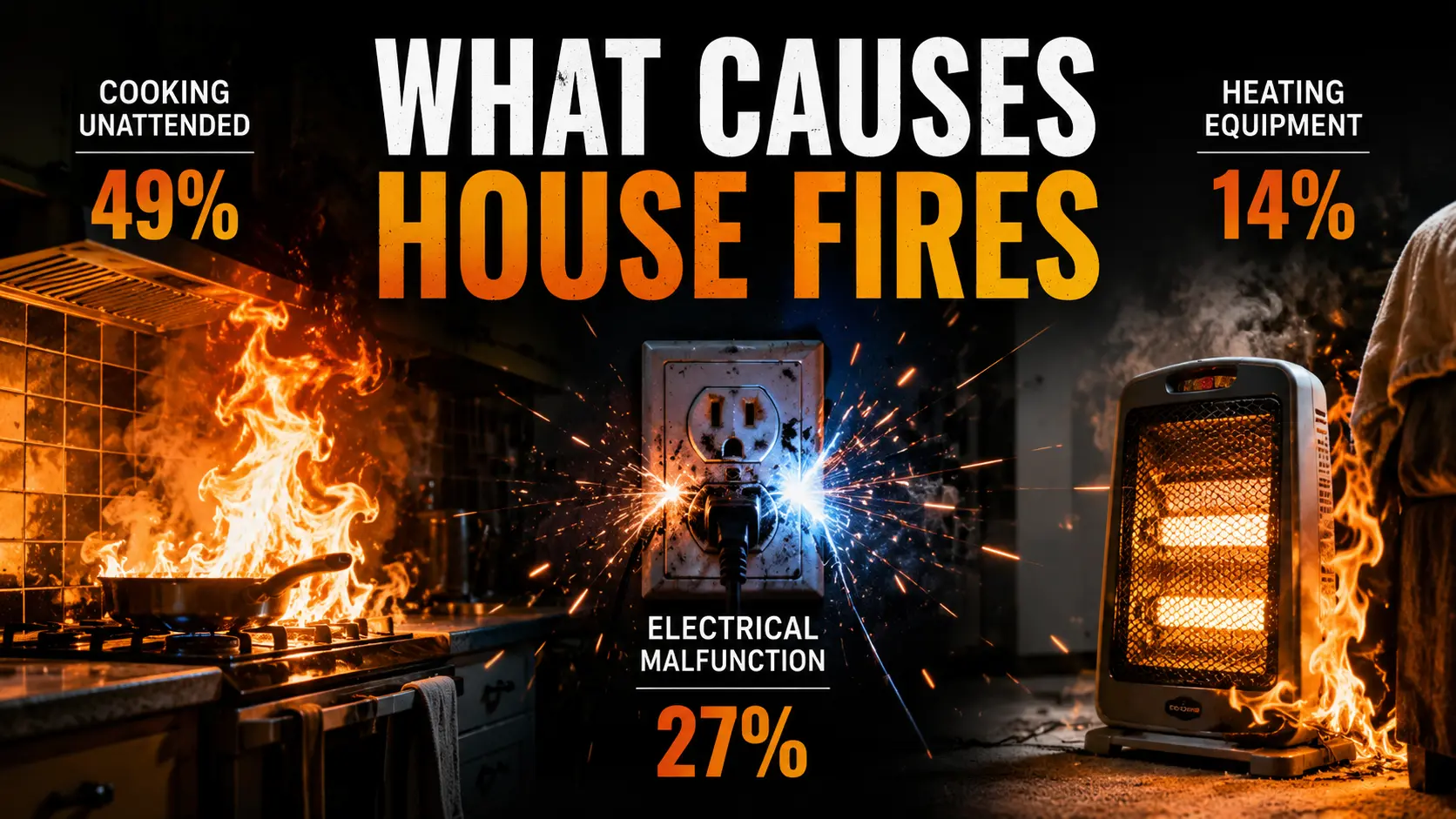
Cooking fires are the leading cause of home fire injuries across all ages, but for older adults they carry additional weight. Unattended cooking — leaving the stove on while moving to another room, forgetting a pot is on, falling asleep in a chair while something is cooking — is the mechanism behind most of them.
Early-stage cognitive decline, which may not be formally diagnosed, affects the ability to track multiple things simultaneously. A person who has cooked competently for 50 years may start a pot of water, get distracted by the phone or the television, and simply not remember. The stove does not care how experienced the cook is. When the water boils off and the dry pot hits 500°F, the oil residue on the bottom ignites.
What actually helps
Automatic stove shutoff devices exist and cost between $30 and $150. They attach to the stove and cut power after a set time — typically 30 minutes — if no motion is detected in the kitchen. For a person living alone with mild cognitive concerns, this is not an indignity. It is a smoke detector for the one appliance most likely to start a fire. Induction cooktops are worth considering for the same reason — the cooking surface itself does not get hot enough to ignite a towel or paper left on it, which removes one of the most common kitchen fire initiation points.
Microwave cooking carries far lower fire risk than stovetop or oven cooking. For an older adult whose cooking needs are simple, shifting toward microwave-based meals is not a dietary downgrade — it is a practical risk reduction that most families do not think to suggest until after something goes wrong.
Smoking in the Home: Still the Deadliest Ignition Source
Smoking-related fires kill more Americans than any other single ignition source. The majority of those victims are older adults. The combination that appears repeatedly in fire investigation reports: a person smoking in a recliner or in bed, a sedating medication, and a moment of sleep. The cigarette falls. The upholstered furniture ignites. The person does not wake up in time.
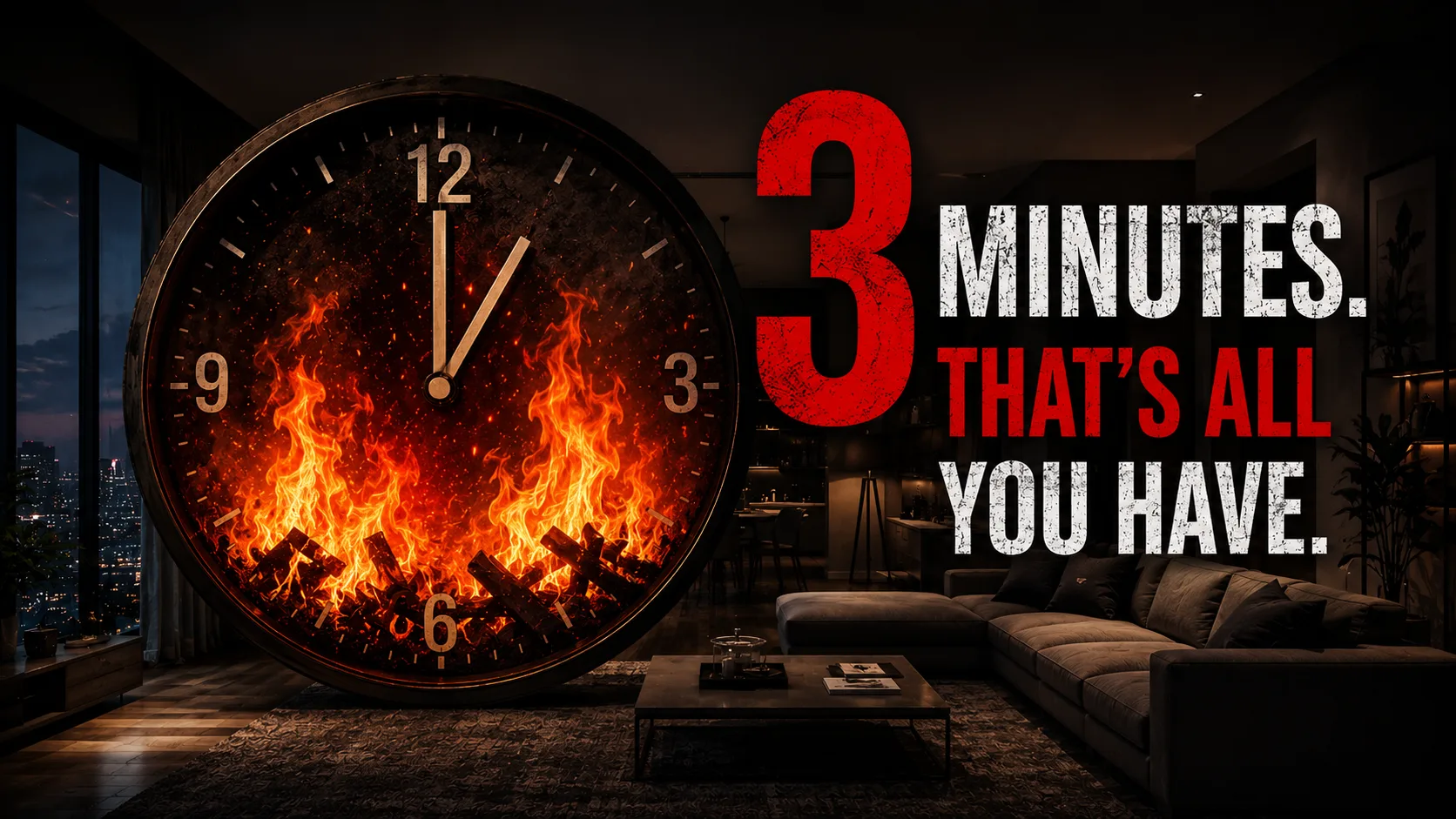
Upholstered furniture fire is among the fastest-developing residential fires there is — from ignition to untenable room conditions can be under three minutes with modern synthetic foam furniture. A fire that starts while someone is asleep in that furniture is, in most cases, unsurvivable.
The interventions here are direct. Smoking outside is the most effective single change. If that is not happening, fire-safe cigarettes — required by law in the U.S. since 2010 — reduce but do not eliminate the risk. Smoking in a room with a working smoke detector directly outside the door reduces response time. Smoking while taking any sedating medication is in a different risk category entirely and should be discussed with a physician.
Recliners and upholstered chairs are not safe places to smoke. The geometry of a recliner — the gap between the footrest and the seat cushion — is one of the most common locations where a dropped cigarette lands and smolders undetected. By the time there is visible smoke, the chair may already be beyond extinguishing with a kitchen fire extinguisher.
Oxygen Concentrators: A Hazard Most Families Don't Know About
Roughly 1.5 million Americans use home oxygen therapy — concentrators or tanks that deliver supplemental oxygen for COPD, heart failure, and other conditions. The majority of those users are older adults. And the fire risk associated with home oxygen is something most families are never clearly told.
Oxygen does not burn. But it accelerates combustion in everything around it dramatically. In a room with elevated oxygen concentration from a concentrator or a leaking tank, materials that would normally smolder — a cigarette ash, a candle flame, a spark from a faulty electrical connection — burn faster and hotter. The primary cause of home oxygen fire deaths in the U.S. is smoking while using supplemental oxygen. The secondary cause is an open flame — candles — near the equipment.
If someone in the home uses supplemental oxygen, the following are not suggestions: no smoking anywhere in the home, no open flames within at least 5 feet of the equipment, no petroleum-based products (Vaseline, certain lotions) near the delivery tubing or cannula. Medical oxygen suppliers are required to provide this guidance at setup — but it is frequently delivered as a printed sheet that gets set aside. The consequences of ignoring it are severe.
Hearing Loss and Smoke Detectors
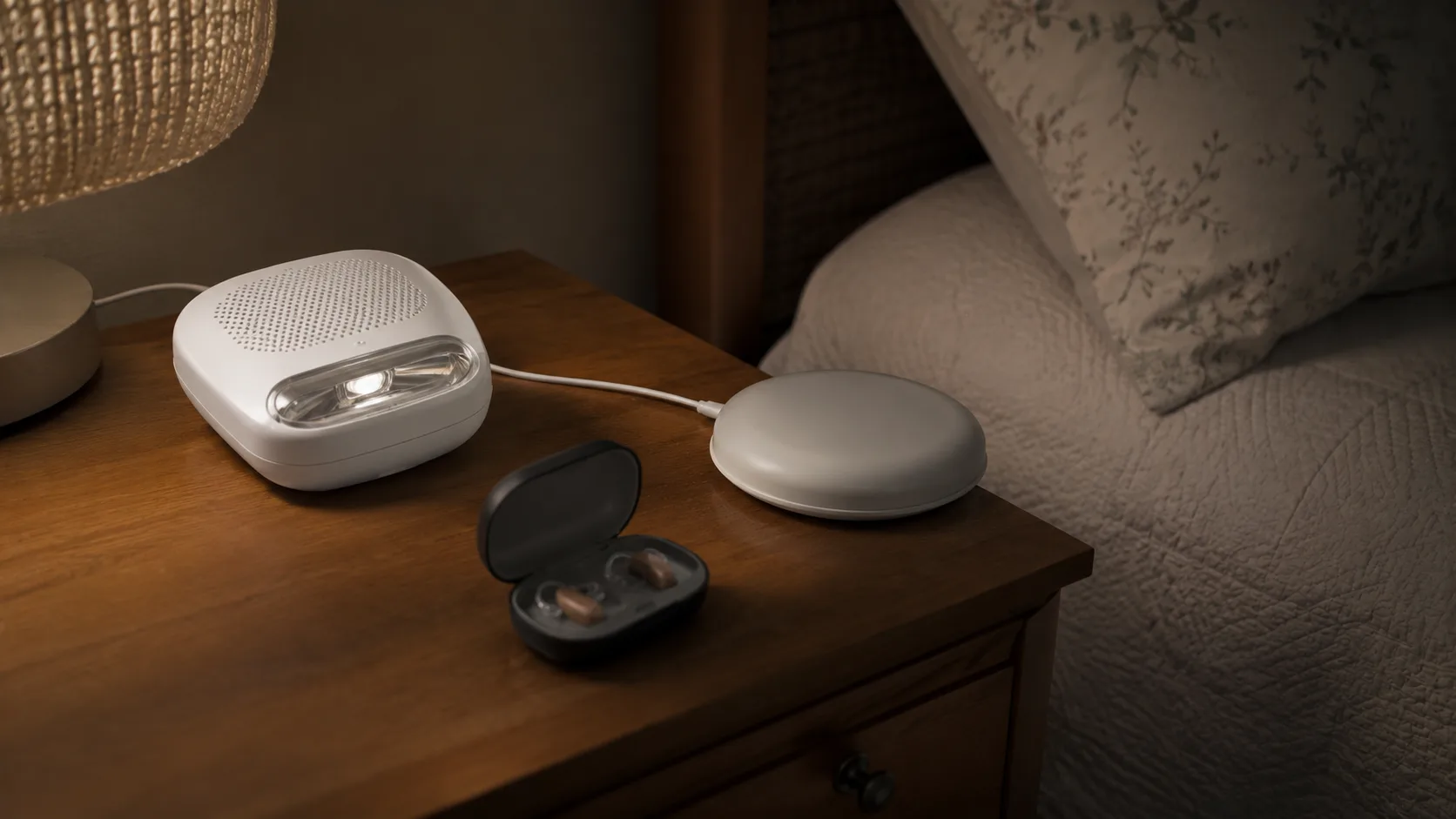
About one in three adults over 65 has some degree of hearing loss. That number climbs to roughly half for adults over 75. Most of them remove their hearing aids at night. A standard smoke detector emitting a 3,100 Hz tone to a person sleeping without hearing aids is not a reliable early warning system.
Research from the National Fire Protection Association and fire research laboratories has consistently shown that low-frequency alarms — specifically a 520 Hz square wave signal — are significantly more effective at waking sleeping adults with high-frequency hearing loss than the standard tone. The difference in waking rates in controlled studies is substantial enough that the NFPA updated its standards to address this.
What to use instead
Low-frequency combination alarms are available from multiple manufacturers and cost between $40 and $80. For someone with significant hearing loss or who sleeps with hearing aids removed, these should replace standard detectors in the bedroom. Bed shaker systems connect to a smoke alarm and place a vibrating disc under the pillow or mattress — the physical vibration wakes people who would sleep through any audible alarm. Strobe light systems serve a similar function for visual wake-up. None of these are unusual accommodations. They are the correct alarm for the situation.
Mobility, Escape Time, and What That Math Actually Looks Like
A standard house fire gives occupants roughly two to four minutes from alarm to untenable conditions in the room of origin — and less time in adjacent rooms depending on building construction and ventilation. That timeline assumes modern synthetic-content furniture and typical residential construction. It is not a generous window for anyone, and it is a particularly tight one for a person using a walker or wheelchair, navigating unfamiliar night conditions, or dealing with a painful joint that affects how quickly they can rise from bed.
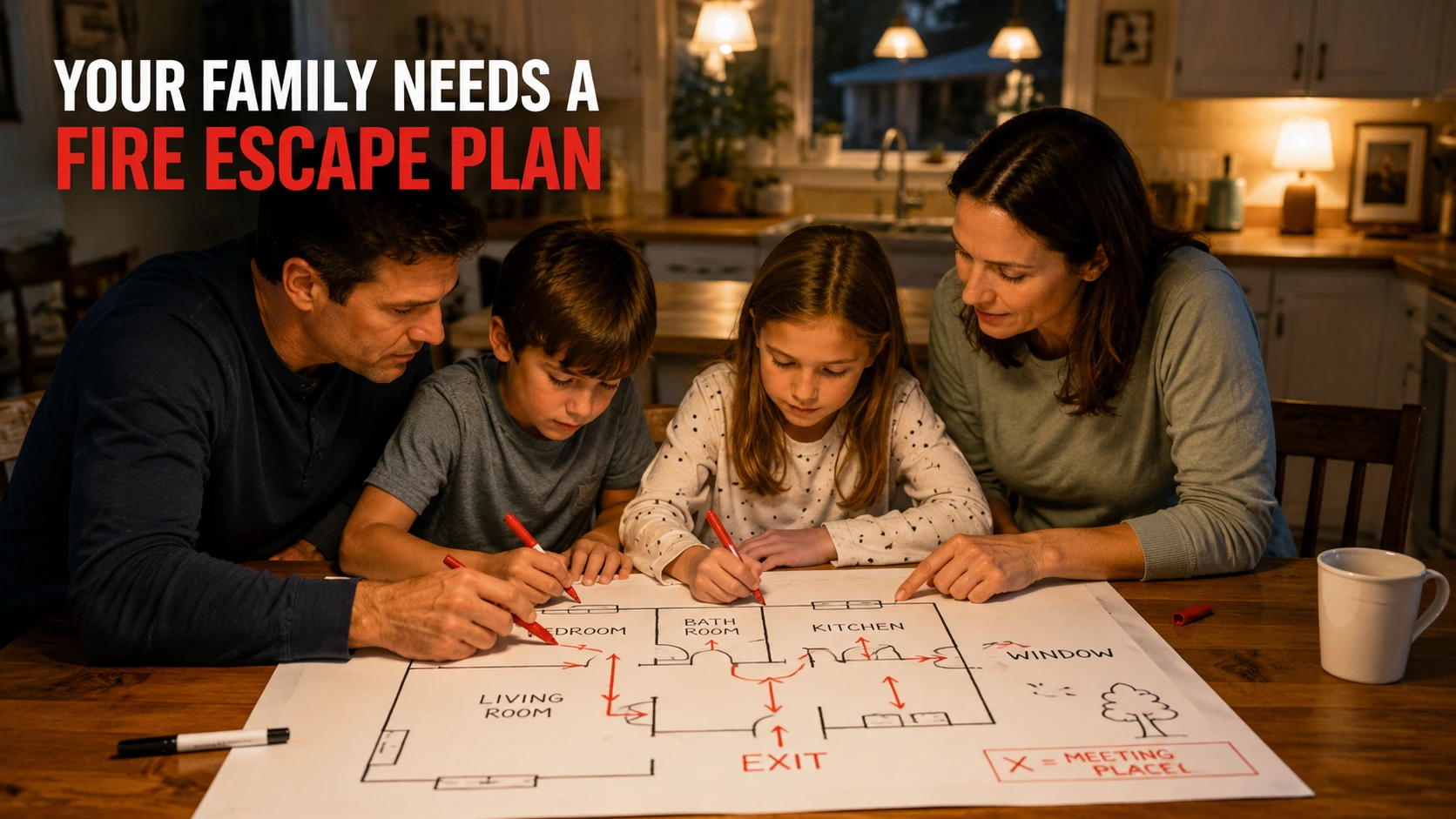
The practical implication: the escape plan has to account for actual mobility. Walking the escape route while healthy and fast is not the same as walking it at night, half-awake, with arthritic hips. If the escape route from a bedroom involves stairs, what happens if those stairs are on the smoke side? Is there a bedroom on the ground floor? Is there a window accessible from a wheelchair? These are not hypothetical questions — they are the specific questions that determine whether an escape plan works for the actual person using it.
For people using wheelchairs or with very limited mobility in a multi-story home, the conversation with the fire department is worth having proactively. Many departments will do a free home fire safety visit and help identify realistic escape options given the layout and the occupant's actual abilities. The visit takes 45 minutes and could be the most useful thing on this list.
What Families and Caregivers Should Do
The instinct is to have a conversation about fire safety. That conversation matters less than the physical walk-through. When you visit an older parent or relative, do these things, not just talk about them:
- Press the test button on every smoke detector. If it chirps or does not respond, replace the battery or the unit on the spot.
- Check the manufacture date on each detector — older than 10 years means replace it, regardless of whether it tests as functional.
- Walk the escape route from the bedroom. Identify what the obstacles actually are at night, with limited visibility, at the pace the person actually moves.
- Look at the stove. Are there towels, paper bags, or curtains close to the burners? Is there a heavy buildup of grease on the range hood or the burner grates?
- If the person smokes, see where they smoke. A chair next to a full ashtray, with medication bottles on the table next to it, tells you everything you need to know.
- If the person uses supplemental oxygen, verify that no smoking happens in the home and that there are no candles or open flames anywhere near the equipment.
Visiting once and checking these things takes twenty minutes. Doing it annually — or every six months if there are cognitive concerns — is the level of attention this risk requires.
Senior Fire Safety Checklist
- ✓Smoke detectors in every bedroom and outside every sleeping area — tested monthly, replaced if older than 10 years.
- ✓Low-frequency or bed-shaker alarm in the bedroom for anyone who removes hearing aids at night or has documented hearing loss.
- ✓Automatic stove shutoff device installed if living alone or if there are any cognitive concerns.
- ✓Escape route walked at night — at actual pace, with actual mobility aids, to the actual exit.
- ✓Ground-floor bedroom if stairs cannot be navigated quickly under stress.
- ✓No open flames or smoking near supplemental oxygen equipment — minimum 5-foot clearance from any ignition source.
- ✓Fire department home safety visit requested — free in most jurisdictions, call the non-emergency line.
- ✗No smoking in recliners, armchairs, or in bed — under any circumstances.
- ✗No smoking while using supplemental oxygen or within 30 minutes of using it.
- ✗Do not leave cooking unattended — not even briefly, not even "just for a minute."
The statistics about seniors and fire are not destiny. They reflect a set of known, specific risks that have known, specific countermeasures. Almost none of those countermeasures require significant physical ability, significant money, or significant inconvenience. They require someone to decide they are worth doing.

Comments 0
No comments yet. Be the first to share your thoughts!
Leave a Comment