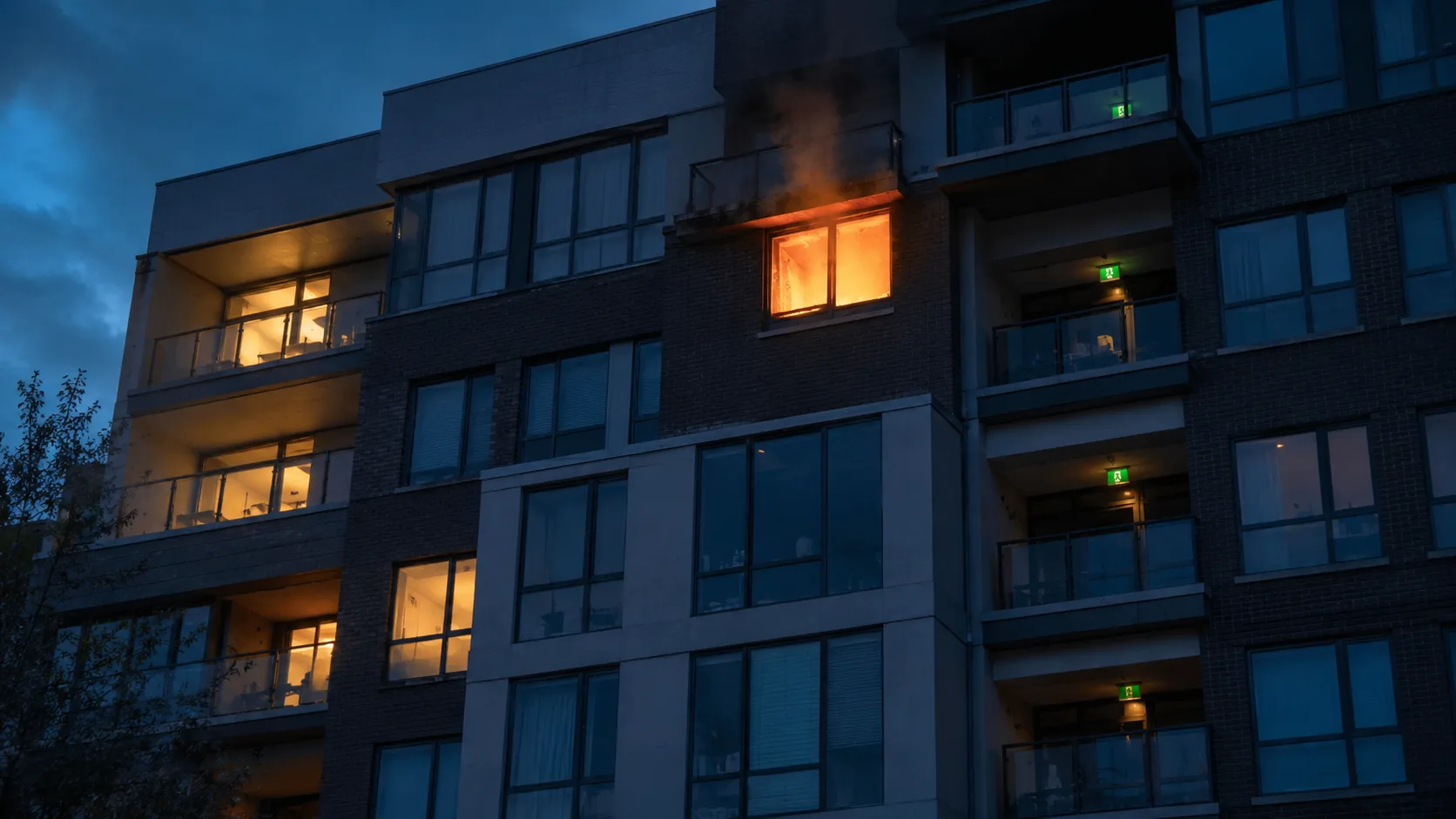

Most renters assume that fire safety in an apartment is the landlord's problem. The building has sprinklers, the hallways have exit signs, and there's a smoke detector on the ceiling — so what else is there to know? A lot, as it turns out. Apartment fires kill roughly 2,500 people every year in the United States, and the majority of those deaths happen not because the building systems failed, but because the occupants did not know what to do in the first 60 seconds after smoke appeared.
Apartments burn differently than houses. Smoke travels through shared walls, elevator shafts, and stairwells in ways that can cut off your escape before you are even aware there is a fire. Your decisions in the first minute — whether to evacuate or stay put, whether to open a door or leave it closed — determine your outcome more than almost any other factor.
In this article:
- Why apartment fires are different from house fires
- What is the landlord's job vs. yours
- Smoke detectors: what renters need to check
- Know your exits before you need them
- When the alarm goes off: your decision tree
- Balcony and kitchen hazards specific to apartments
- High-floor considerations
- Renter fire safety checklist
Why Apartment Fires Are Different From House Fires
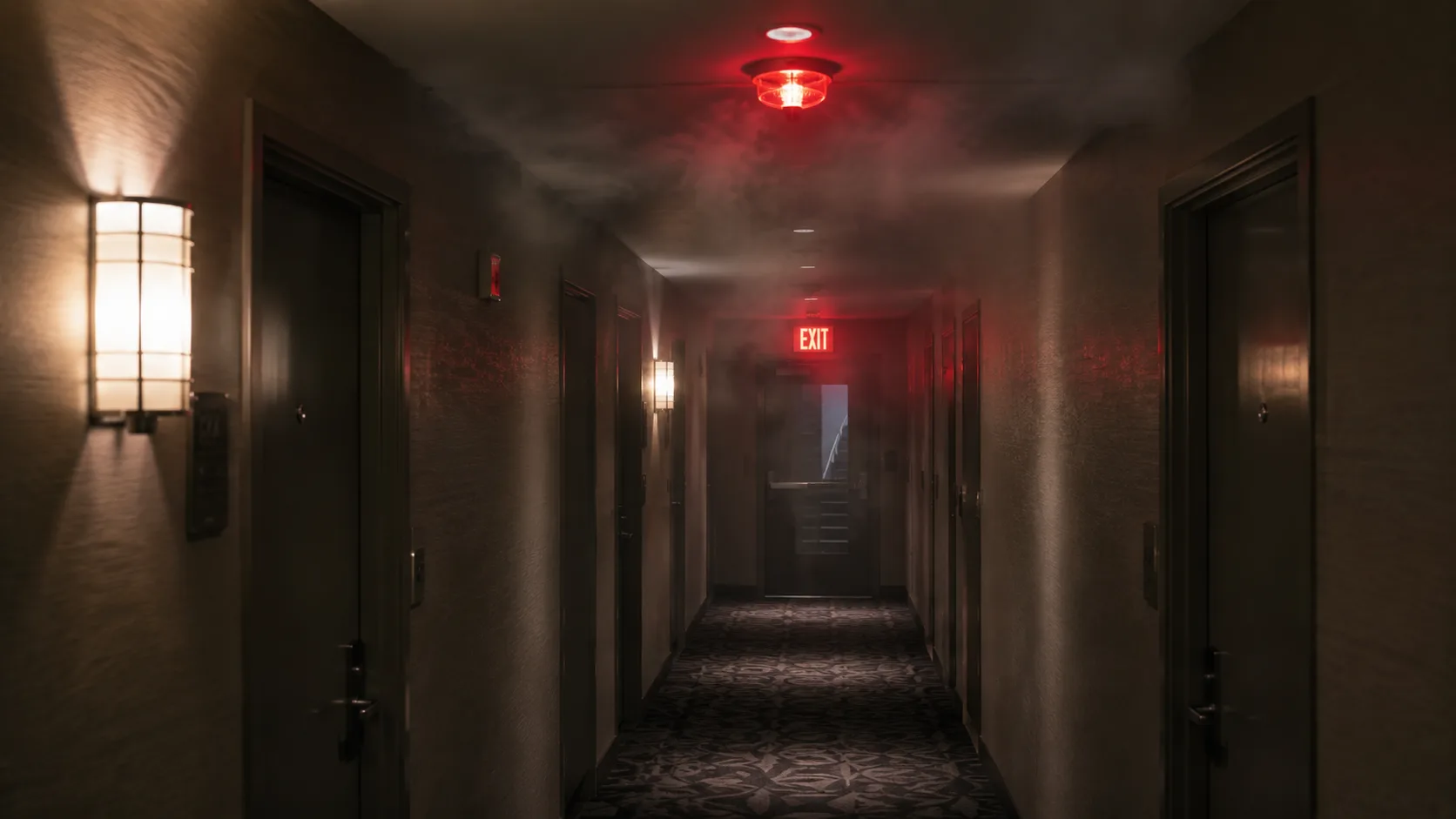
In a house fire, the primary risk is the fire itself spreading room to room. In an apartment building, the fire may never reach your unit — but the smoke will. Apartment buildings are connected systems: HVAC ducts, elevator shafts, stairwells, and the gaps around pipes and electrical conduits all become smoke pathways the moment a fire starts anywhere in the building.
The second critical difference is vertical spread. Smoke and heat rise. If you are on the 8th floor and the fire is on the 3rd floor, your hallway may fill with smoke before the residents directly above the fire are even aware of it. This is why the evacuation decision in an apartment building is not automatic — sometimes the safest place to be is inside your unit with the door sealed.
The third difference is shared egress. In a house, you have multiple exterior exits at ground level. In an apartment, you have one or two stairwells that every other resident on your floor is also trying to reach. A stairwell filled with smoke is not a viable escape route. Knowing where the second stairwell is — and knowing before the alarm ever goes off — is the difference between having options and having none.
What Is the Landlord's Job vs. Yours
| Responsibility | Landlord | Renter |
|---|---|---|
| Install smoke detectors | ✓ Required by law in all U.S. states | — |
| Replace smoke detector batteries | Varies by state — many require working batteries at move-in | Ongoing battery replacement is typically tenant responsibility |
| Replace malfunctioning detector | ✓ Landlord must replace defective unit when notified in writing | Notify landlord in writing promptly |
| Maintain building sprinkler system | ✓ Required in most multi-family buildings | — |
| Keep exit stairwells clear | ✓ Code requirement | Do not store items in hallways or stairwells |
| Fire extinguisher in unit | Not universally required | ✓ Strongly recommended — your unit, your choice |
| Test smoke detectors | At move-in in most states | ✓ Monthly testing is the tenant's job |
The most important thing to understand about this table: a landlord who fails to maintain fire safety systems is legally liable, but that does not help you in the moment. Document everything. If a smoke detector is broken, send a written notice (email is sufficient and creates a record). If the landlord does not respond within a reasonable time, your local housing authority or fire marshal can compel compliance. Do not disable or remove a malfunctioning detector and leave it that way — replace the battery, test it, and document if it still fails.
Smoke Detectors: What Renters Need to Check
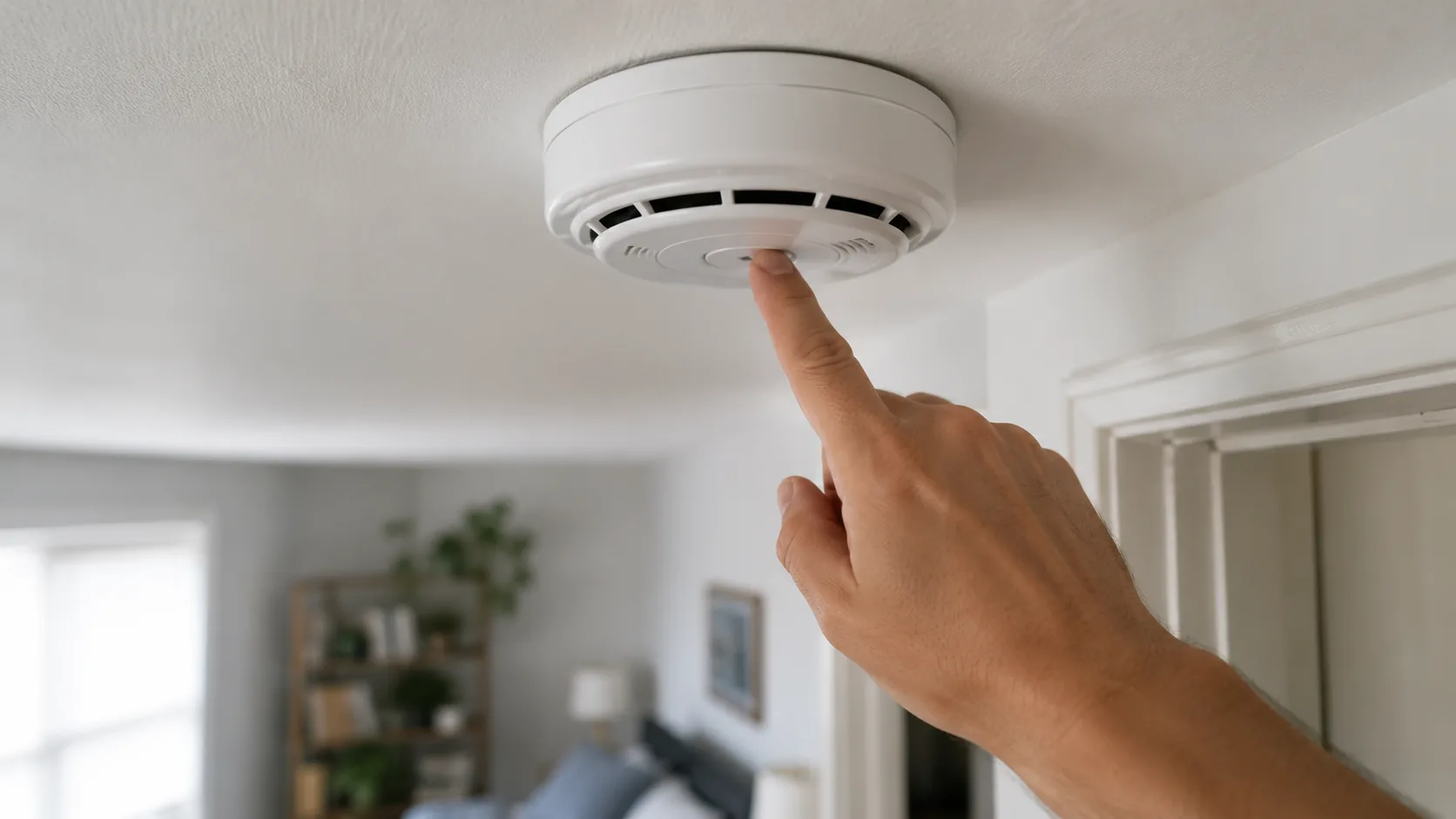
Smoke detectors in apartments follow the same rules as in houses, with one additional complication: you may not control all of them. Building corridors and common areas have detectors that the building manages. Your individual unit may have detectors that are your responsibility under the lease.
What to check when you move in
Press the test button on every detector in your unit. It should emit a loud alarm tone. If it chirps, the battery is low — replace it before anything else. If it does not respond at all, notify the landlord in writing and document the date. Check the manufacture date on the back of the detector: smoke detectors have a lifespan of 10 years. A detector older than 10 years may test as functional but fail to detect slow-build smoke (the kind from a smoldering fire, which is when you most need early warning).
Placement matters
There should be a detector inside each bedroom, outside each sleeping area, and on each level of the unit. If your apartment has a detector only in the kitchen or only in the hallway, the coverage is inadequate. A fire starting in a bedroom while you sleep may not trigger the hallway detector until the room is already untenable. If you find coverage gaps, you can install additional battery-operated detectors yourself without landlord permission in most jurisdictions — it is your life, not a lease violation.
Ionization vs. photoelectric
Ionization detectors respond faster to fast-flaming fires. Photoelectric detectors respond faster to slow, smoldering fires — the kind that produce heavy smoke before visible flame and that account for the majority of residential fire deaths. If you have only one type, consider adding the other. Combination detectors exist and are increasingly the standard.
Know Your Exits Before You Need Them
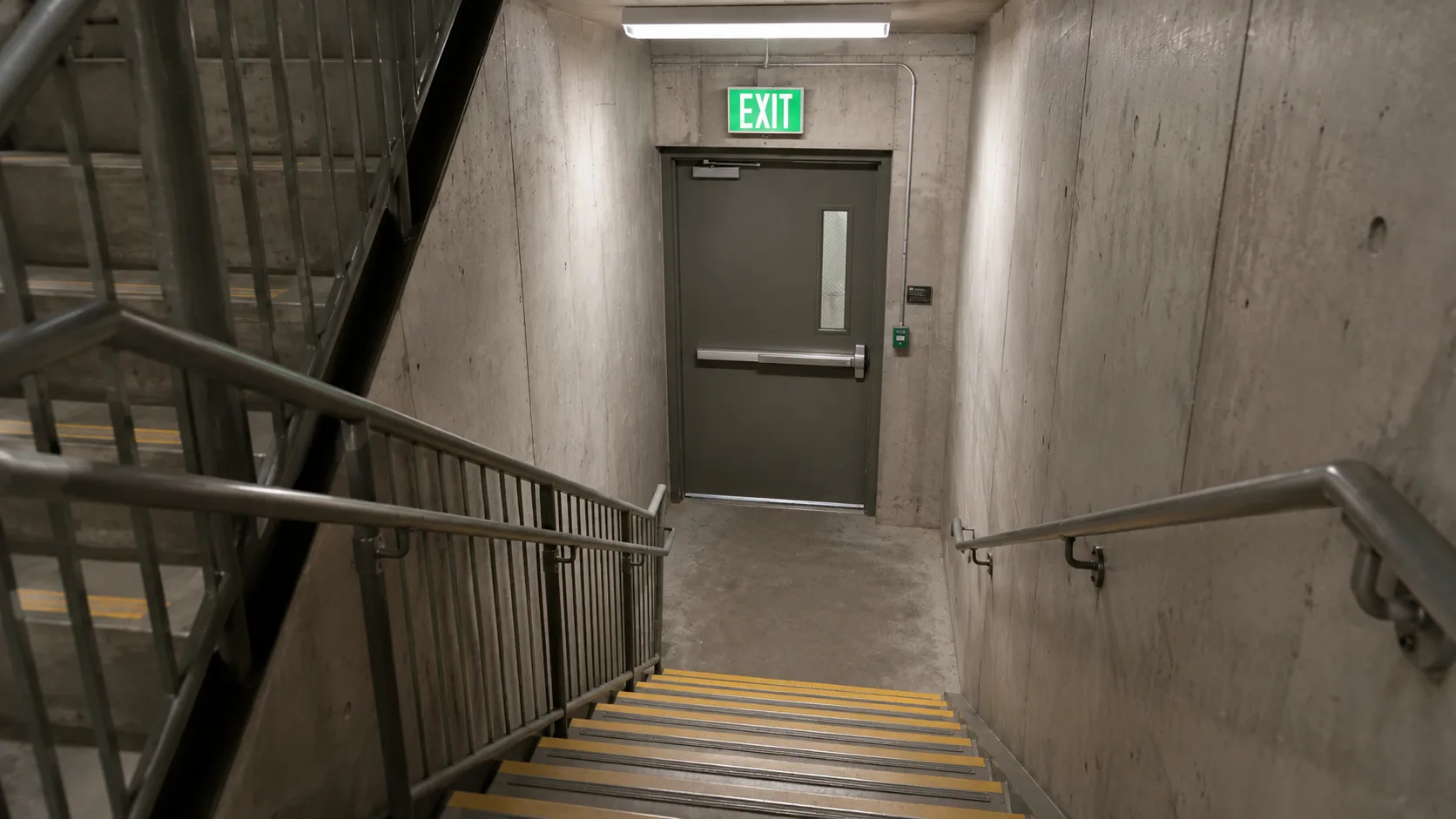
This is the step that almost nobody does, and it is the step that most separates fire survivors from fire victims in apartment buildings: walking your escape route before an emergency.
Within the first week of moving in, do this: walk to the nearest stairwell exit from your unit, counting the doors as you go. Then find the second stairwell (most buildings have two) and walk that route as well. Note which stairwells discharge to the exterior and which may empty into an interior lobby. At some point, do it once with your eyes nearly closed — simulating smoke conditions — to understand whether you could navigate the route by feel and memory alone.
While you are in the stairwell, check that it is clear of storage, bikes, boxes, or anything that could block passage or fuel a fire. If it is not clear, report it to building management. A blocked stairwell is a code violation and a potentially fatal obstacle during evacuation.
Also locate: the fire extinguisher closest to your unit (required in most corridor locations), the building's fire alarm pull station on your floor, and the location of any fire escape ladder access if your building has exterior fire escapes.
When the Alarm Goes Off: Your Decision Tree
In an apartment building, "the alarm goes off" does not automatically mean "run for the stairs." The correct action depends on what you can assess in the first 15 seconds.
Step 1: Feel your door before opening it
Before opening your apartment door, place the back of your hand against it — not your palm, which could stick if the door is hot. Then touch the door frame. Then look at the gap at the bottom of the door for light, smoke, or heat shimmer. A hot door or visible smoke at the bottom means the hallway is compromised. Do not open the door.
If the door is cool and no smoke is visible at the gap
Open the door slowly, staying low and behind the door frame. Look both directions in the hallway. If the hallway is clear of smoke, proceed to the nearest stairwell — do not use elevators under any circumstances during a fire alarm. Take your keys. Close (do not lock) your apartment door behind you — a closed door provides significant fire resistance to your unit and may help others. Take the stairs down and exit the building. Do not return until the fire department clears the building.
If the door is hot or smoke is at the base
Stay in your unit. This is shelter-in-place, and it is the correct decision. Call 911 immediately, tell them your floor and unit number, and open a window slightly if you can do so without drawing smoke in. Seal the door gap with towels, clothing, or tape. Signal from the window if possible. Stay low. The fire department will reach you — a sealed room in a fire-resistant apartment building can remain survivable for significantly longer than most people expect.
Never use the elevator during a fire alarm. Elevators may travel to the fire floor, doors may fail to open, and elevator shafts act as smoke chimneys. The stairs are always the answer — or staying put if the stairs are compromised.
Balcony and Kitchen Hazards Specific to Apartments
Balcony fires
Balconies are among the most underappreciated fire risks in apartment living. Outdoor furniture — particularly the cheap plastic resin chairs found on most apartment balconies — ignites easily, burns intensely, and produces toxic smoke. A balcony fire can enter the unit through the sliding door within minutes. More dangerously, balcony fires spread vertically: flames from your balcony can reach the balcony above, and from there, the one above that. Never use a propane or charcoal grill on an apartment balcony — this is prohibited in most lease agreements and local fire codes for exactly this reason.
Kitchen fires
Kitchen fires account for roughly half of all apartment fires. The majority start with unattended cooking. If a grease fire starts on the stovetop, slide a lid over the pan and turn off the burner — do not move the pan, and do not use water. A fire in the oven: close the oven door and turn it off. If a kitchen fire is beyond a pan with a lid, get out and call 911. The standard apartment kitchen fire extinguisher (if you have one) is appropriate for small contained fires — not for a fire that has spread to the cabinets or range hood.
High-Floor Considerations
Above the 7th floor, aerial ladders cannot reach you. This is not a reason to panic — it is a reason to understand that your survival in a high-floor fire depends on the building's fire protection systems (sprinklers, compartmentalization, stairwells) and your own decision-making, not on being rescued from a ladder outside your window.
High-floor residents should be especially familiar with shelter-in-place procedures. Modern high-rise construction is specifically designed for this — fire-rated assemblies between floors and units, pressurized stairwells, and dedicated fire command centers give high-rise occupants better protection inside than attempting evacuation through a smoke-filled stairwell. When you call 911 from a high floor, give your exact floor and unit number and stay on the line. Firefighters going to a high-rise will go to you — your job is to stay calm, seal the door, and stay low.
Renter Fire Safety Checklist
- ✓Test smoke detectors monthly — press the test button, replace battery if chirping.
- ✓Check detector manufacture date — replace any unit older than 10 years.
- ✓Walk both exit stairwell routes — from your unit to the exterior, counting doors.
- ✓Locate the nearest fire extinguisher in your corridor and know how to use it.
- ✓Keep your apartment door key accessible at night — you need it to re-enter if you evacuate.
- ✓Keep a flashlight or phone charged for smoke-condition navigation.
- ✓Have a CO detector if your building uses gas appliances.
- ✓Document any broken detector in writing to your landlord immediately.
- ✗Never disable or remove a smoke detector — not even temporarily while cooking.
- ✗Never prop open stairwell fire doors — they exist to keep smoke out of the stairs.
- ✗Never use a grill on an apartment balcony.
- ✗Never use the elevator during a fire alarm.
The most expensive lesson in apartment fire safety is the one taught by a real fire. The cheap version is a 30-minute walk of your building and a monthly test of your smoke detector. One of those options is available right now.

Comments 0
No comments yet. Be the first to share your thoughts!
Leave a Comment