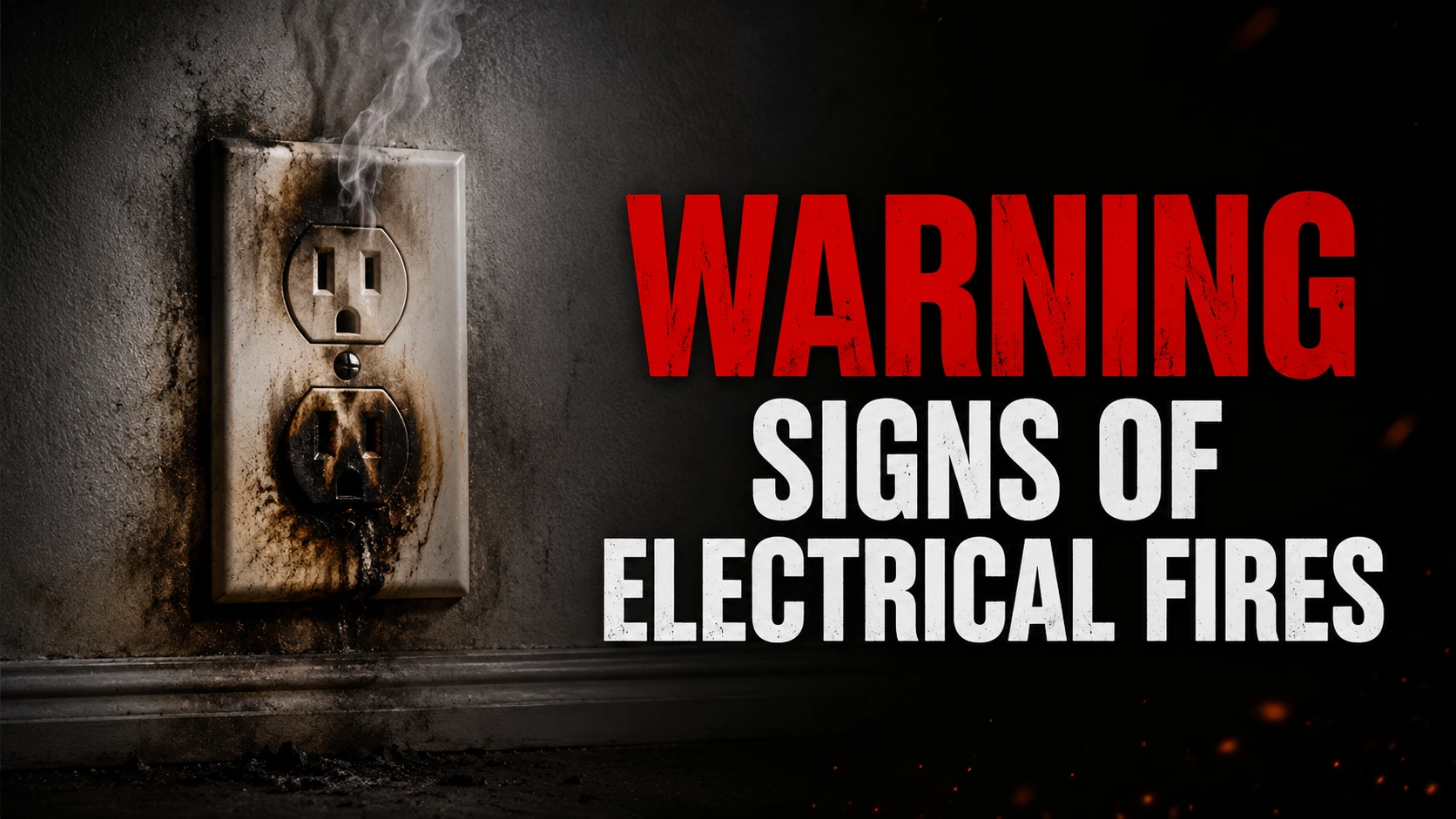

Electrical fires are the second leading cause of home fires in the United States, responsible for roughly 51,000 fires and 500 deaths annually. Almost none of them start without warning. The problem is that the warnings — a smell that comes and goes, a light that flickers occasionally, a breaker that trips once or twice — are easy to dismiss, explain away, or simply note and forget to do anything about. By the time the fire starts, the warning was weeks or months ago.
This is a breakdown of the specific signs a home's electrical system gives before a fire occurs: what each one indicates, which ones require immediate action versus professional evaluation within days or weeks, and the situations where the correct response is to turn off the circuit at the breaker right now and not use it until an electrician has looked at it.
Warning signs covered:
- Burning smell from outlets, switches, or walls
- Flickering or dimming lights
- Breaker that trips repeatedly
- Sparks from outlets or switches
- Discolored or warm outlets and switch plates
- Buzzing, humming, or crackling sounds from walls
- Power cords that run hot
- Older home electrical hazards
- When to call an electrician vs. when to call 911
Extension Cord Hazards: The Most Overlooked Electrical Fire Cause
Extension cords are one of the most misused pieces of electrical equipment in the home. They are designed for temporary use — powering a lamp across the room while you rearrange furniture, running a tool to a work area for a day. They are used as permanent wiring substitutes in millions of American homes, and this is where fires start.
What makes extension cords dangerous as permanent wiring
An extension cord's current rating is based on the wire gauge inside it. Most residential extension cords use 16-gauge wire, rated for about 13 amps continuous. A 14-gauge cord handles 15 amps. A 12-gauge cord handles 20 amps. These ratings assume the cord is lying flat, uncoiled, in open air. When a cord is coiled, bundled, run under a rug, or pushed against a wall, its ability to dissipate heat decreases significantly — meaning the effective safe current rating drops below what is printed on the box.
A cord that is undersized for its load, coiled, or run under a rug will build up heat at its weakest point. The weakest point is usually at the plug connection, at a kink, or at a splice. That heat build-up degrades the insulation around the wire. Degraded insulation can arc. Arcing ignites the surrounding material. This process can take months — which is why a cord that has been in place and working without incident for a year suddenly becomes a fire hazard.
The under-rug problem
Running an extension cord under a carpet or rug is one of the more reliable ways to create a long-term fire hazard. The rug prevents heat dissipation, protects the cord from being noticed when it is damaged, and provides the combustible material immediately adjacent to the cord when the insulation fails. Foot traffic compresses and eventually cracks the cord insulation. Once cracked, moisture and debris work into the conductor area and the arcing begins. The rug catches. The fire is inside the floor covering before the smoke alarm sounds.
Never run any cord under a rug or carpet, including flat cords marketed as safe for this use. Move the furniture, add an outlet, or use a different room layout before running cords under floor coverings.
The right cord for the load
- Lamps, clocks, phone chargers, electronics: 16-gauge cord adequate
- Power tools (moderate draw), fans, small appliances: 14-gauge cord minimum
- High-draw appliances (space heaters, air conditioners, refrigerators): Do not use extension cords. Plug directly into a wall outlet.
- Outdoor use: Outdoor-rated cord only — marked with a W on the label. Indoor cords used outdoors degrade rapidly from UV and moisture.
AFCI and GFCI Protection: What They Are and Where You Need Them
Two types of specialized circuit protection prevent electrical fires and electrocution at a level standard breakers cannot provide. Understanding what they do and where they are required helps you assess your home's actual electrical safety status.
GFCI (Ground Fault Circuit Interrupter)
A GFCI outlet or breaker monitors the current going out through the hot wire and returning through the neutral. If there is a difference of more than about 5 milliamps — meaning current is finding an alternate path, such as through a person — the GFCI trips in about 1/40th of a second. This is fast enough to prevent electrocution in most scenarios.
GFCI protection is required by current code in all wet locations: bathrooms, kitchens (within 6 feet of a sink), garages, outdoors, basements, and near swimming pools. Older homes may not have GFCI outlets in these areas. If your bathroom or kitchen outlets are standard three-prong outlets with no TEST/RESET button, they are not GFCI protected. This is both a code compliance issue and a safety issue. GFCI outlets cost $15–25 and replace standard outlets with no rewiring required.
AFCI (Arc Fault Circuit Interrupter)
A standard circuit breaker trips on overload or short circuit — conditions with high current. An arc fault produces intermittent current at levels a standard breaker does not detect, but which generates enough heat over time to ignite insulation and adjacent material. An AFCI breaker detects the specific electrical signature of arcing and trips the circuit before ignition occurs.
Current NEC code requires AFCI protection in bedrooms and most living areas of new construction. Homes built before these requirements were adopted — most homes in the U.S. — do not have AFCI protection unless it has been added as an upgrade. Adding AFCI breakers to an existing panel is one of the highest-value electrical safety upgrades for an older home, particularly because arcing inside walls is one of the leading causes of electrical fires that kill people in their sleep.
Practical Electrical Safety Checklist
- ✓GFCI outlets in all wet areas — bathrooms, kitchen near sinks, garage, basement, outdoors. Test monthly with the TEST button.
- ✓No extension cords as permanent wiring. If you need a cord permanently, you need an outlet.
- ✓No cords under rugs, furniture, or through walls.
- ✓Power strips only for electronics — not for high-draw appliances. Never daisy-chain power strips.
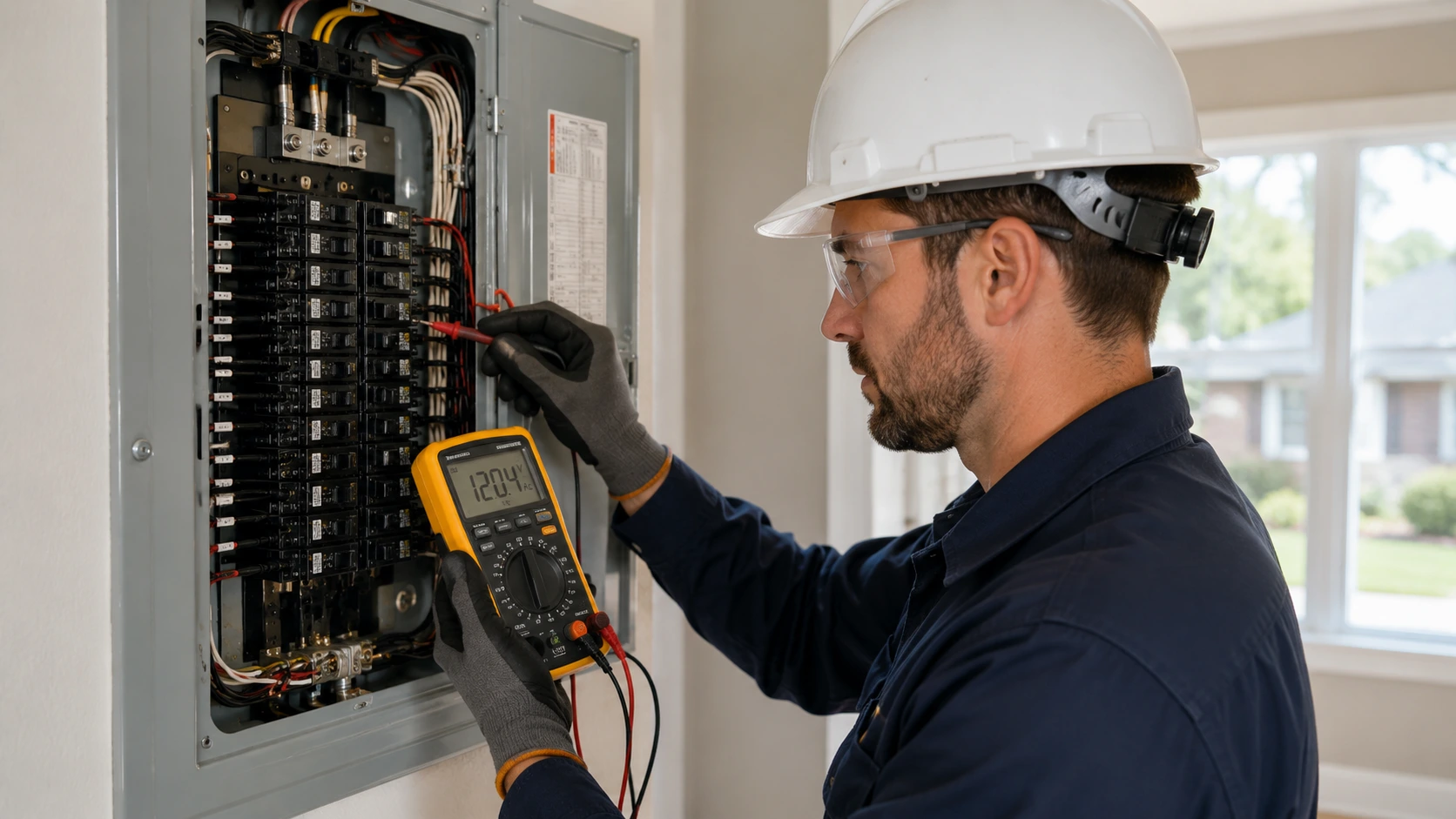
- ✓Panel inspection if the home is 30+ years old or has never been inspected by a licensed electrician.
- ✓Act on warning signs immediately. Burning smell, sparks, discoloration, buzzing — these are not maintenance items for eventually. They are this week or today, depending on the sign.
- ✗Never use damaged cords — frayed, cracked, or repaired with electrical tape under load.
- ✗Never remove the ground prong from a three-prong plug to fit a two-prong outlet. The ground is a safety conductor.
- ✗Never ignore a burning smell from an outlet or wall, even if it comes and goes.
Electrical fires are silent in the early stages, growing inside walls where no one can see them. The warning signs they produce before becoming fires are the only opportunity to prevent them. Taking those signs seriously — not filing them away as something to watch — is what keeps an aging electrical system from becoming a late-night emergency.
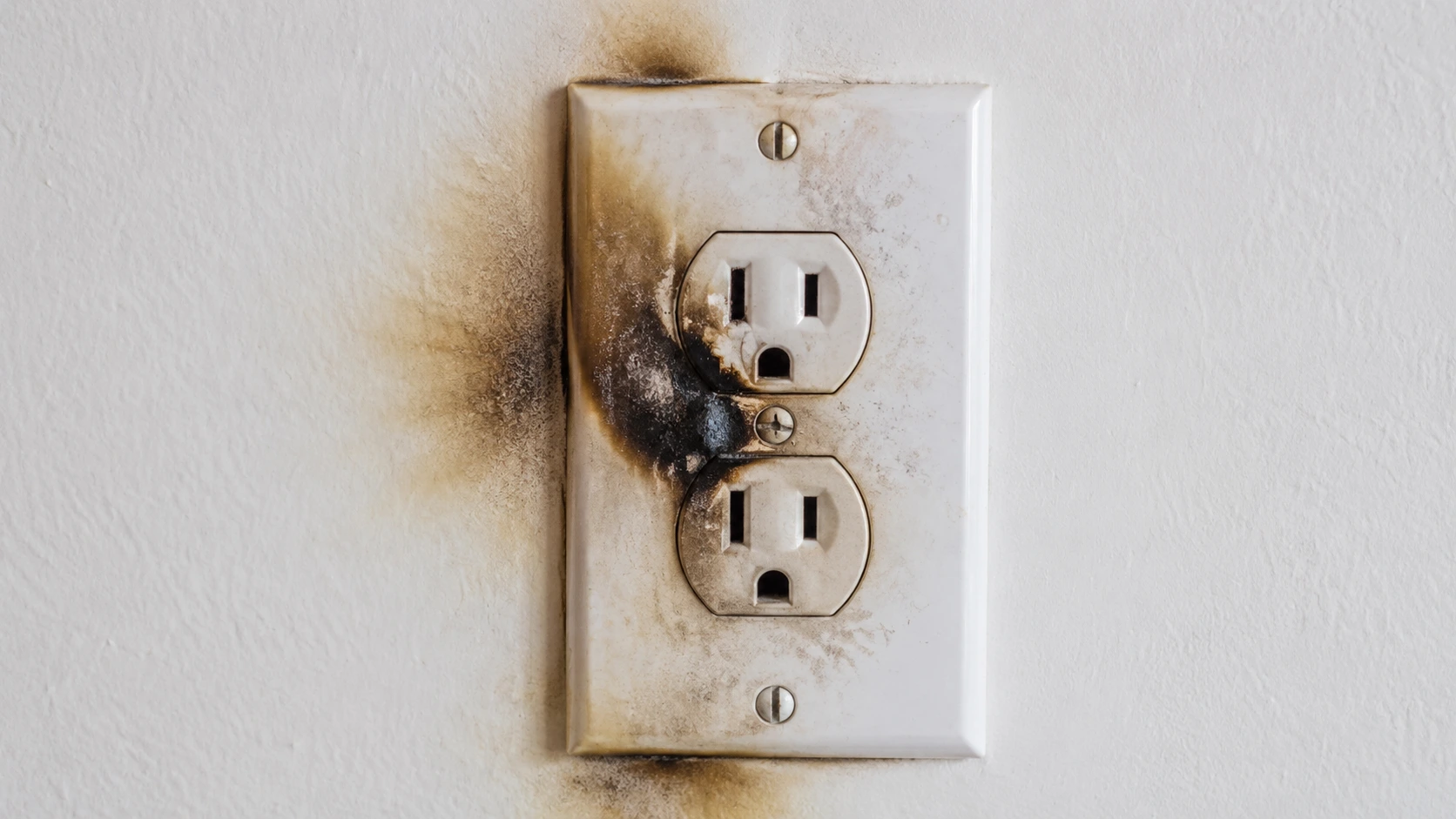
A burning smell from an electrical outlet, a light switch, a panel, or a wall — particularly a burning plastic or hot metal smell — means electrical components are overheating. This is not a smell that comes and then the problem resolves itself. The component that is overheating is continuing to do so every time the circuit is energized.
What to do: Identify which outlet or switch the smell is coming from. Turn off that circuit at the main breaker panel. Do not use it again until an electrician has inspected it. If the smell is coming from inside a wall without a clear outlet source, or if you cannot identify the source, turn off all power to the affected area of the home and call an electrician immediately. A burning smell from inside a wall means a wire connection has been arcing and may have already ignited insulation material — this is pre-fire behavior.
If you see smoke or visible discoloration — call 911, not just an electrician.
A brief blue spark when you plug something into an outlet is sometimes normal — it is the initial current surge as the circuit connects. But sparks that are large, white or yellow, accompanied by a popping sound, or that occur when you touch the wall switch (not when plugging in) are not normal. Neither is an outlet that sparks repeatedly or one where you see sparks without plugging anything in.
Large sparks indicate either an overloaded circuit, a loose or failing connection, or a faulty outlet. Any of these conditions can cause arcing — sustained electrical discharge — that generates enough heat to ignite surrounding material. Turn off the circuit, stop using the outlet or switch, and have it inspected. An outlet that sparked once significantly and smelled burned afterward is an outlet that needs to be replaced before it is used again.
Brown or black marks around an outlet or switch plate, any scorch pattern on the cover, or a cover plate that is noticeably warm to the touch — these indicate that heat has already been produced at this location. The discoloration is physical evidence of a fault event. The warmth is evidence of an ongoing one.
Stop using this outlet or switch. Turn off the circuit at the panel. Call an electrician. Do not wait for it to do something more alarming — it has already told you what it is going to do.
Occasional light flickering when a large appliance (refrigerator compressor, air conditioner, washing machine motor) starts is normal — these devices draw significant current on startup and cause a brief voltage dip on the circuit. This is a nuisance but not a direct fire hazard.
What is not normal: lights that flicker when nothing large has started, flickering that is persistent rather than momentary, flickering that affects multiple rooms or circuits simultaneously, or lights that dim steadily during normal use. These patterns indicate a loose connection somewhere in the circuit path — in the panel, in the junction box, at the fixture — or a problem with the main utility connection. Loose connections produce arcing. Arcing produces heat. Heat starts fires. Have an electrician find the loose connection before it becomes an arc fault event.
A circuit breaker that trips once when you overload it — running the microwave, toaster, and coffee maker simultaneously on the same 15-amp kitchen circuit — is doing its job. Reset it, redistribute the load, and that is the end of it.
A breaker that trips repeatedly, trips under normal load, or trips without obvious cause is telling you something different. Either the circuit is consistently overloaded (you need a dedicated circuit for the device drawing the excess current), or the breaker itself is failing, or there is a fault in the wiring on that circuit. A failing breaker is a serious hazard because a breaker that does not trip when it should allows overload current to flow through the wiring — which heats the wiring beyond its rated temperature. Get it looked at this week.
A GFCI outlet that trips repeatedly, or that trips immediately when reset, indicates a ground fault somewhere on the circuit — a wire touching a grounded surface, water intrusion in an outlet, or a fault in a connected appliance. Identify the cause before resetting and using the circuit again.
Electrical wiring and properly functioning connections are silent. A buzzing or humming from an outlet, a switch, or from inside a wall means current is not flowing cleanly. The most common cause is a loose wire connection that allows arcing — the current jumps a small gap in the connection, producing both sound and heat. Crackling specifically suggests active arcing.
This is one of the more serious warning signs because it indicates an ongoing fault rather than a past one. The arcing that produces buzzing is generating heat every time that circuit is energized. If the sound is new, consistent, and coming from inside a wall, turn off the circuit and call an electrician. Do not wait to see if it gets worse.
A power cord that is warm during use is normal — current passing through wire resistance generates heat. A power cord that is hot to the touch, or noticeably hot at the plug or at the device connection, is not normal. It means the cord is drawing more current than it is rated for, or there is a resistance fault in the cord.
The most common cause is an extension cord used for a load it is not rated for — a 16-gauge lamp cord used for a space heater, or a long thin extension cord powering a power tool that draws significant current. The resistance of the undersized wire produces heat proportional to the current flowing through it. Replace the cord with one appropriately rated for the load, or eliminate the extension cord and plug directly into the wall outlet.
A cord that runs hot at a specific point — at a kink, at the plug connection, at a splice — has a local resistance fault at that point. Replace the cord. Do not repair a cord with electrical tape and continue using it under load.
Older Home Electrical Hazards: What To Know by Decade
| Home Era | Likely Electrical System | Key Hazards | Priority Actions |
|---|---|---|---|
| Pre-1940s | Knob-and-tube wiring (no ground wire) | Insulation degradation, no grounding, not rated for modern loads. Frequently modified incorrectly over the decades. | Full electrical assessment by licensed electrician. Consider rewiring. Do not add insulation over knob-and-tube without electrical clearance — it causes overheating. |
| 1940s–1960s | Early copper wiring, fuse boxes (not circuit breakers) | Fuse boxes have been replaced with pennies and improper fuses — bypassing overcurrent protection entirely. Original wiring may be undersized for modern loads. | Inspect fuse box for improper fuses. Replace fuse box with modern breaker panel if overloaded. Have wiring assessed. |
| 1965–1973 | Aluminum branch circuit wiring | Aluminum expands and contracts more than copper with temperature changes, loosening connections over time. Aluminum-to-copper connections without proper fittings oxidize and arc. This era's wiring has caused documented house fires. | Have home inspected for aluminum wiring. Install CO/ALR rated outlets and switches at all connection points. Consider copper pigtailing by a licensed electrician. |
| 1970s–1980s | Modern copper wiring, 100-amp service | 100-amp service is typically adequate but may be undersized for homes with electric HVAC, EV charging, or significant expansion. Wiring connections age and loosen. | Assess service capacity if adding large loads. Consider whole-home AFCI protection. Have panel inspected if 30+ years old. |
| 1990s–present | 200-amp service, modern code wiring | Generally safer, but not immune to installation defects, DIY modifications, and age-related connection loosening. | Periodic panel inspection. GFCI in wet areas, AFCI in bedrooms per current code. No DIY electrical work beyond fixture swaps. |
The aluminum wiring issue deserves specific attention
Homes built between approximately 1965 and 1973 may have aluminum branch circuit wiring. This was a response to copper price increases at the time and was legal and common. The problem that emerged over decades: aluminum expands and contracts more significantly with temperature changes than copper does. This movement loosens connections at outlets, switches, and fixtures over time. Loosened aluminum connections oxidize. Oxidized aluminum has higher resistance. Higher resistance produces heat. And this process is gradual enough that it may take 20 or 30 years before a connection becomes dangerous — which is why aluminum wiring homes that were fine for decades are suddenly exhibiting problems.
If you have aluminum wiring, this is not a reason to panic. Many aluminum-wired homes have operated safely for 50+ years with proper maintenance. It is a reason to have the wiring assessed by an electrician familiar with aluminum wiring, to replace any standard outlets and switches with CO/ALR rated ones designed for aluminum connections, and to have any aluminum-to-copper connections checked for proper fittings.
Electrician vs. 911: Knowing the Difference
| Situation | Correct Response |
|---|---|
| Burning smell from outlet or switch, no smoke visible | Turn off circuit at panel. Call electrician — today. |
| Smoking outlet, visible scorch marks with smoke | Turn off power if safe. Call 911. Do not use the outlet again until inspected. |
| Burning smell from inside wall, no visible source | Turn off circuits in that area. Call electrician immediately. If smell intensifies or smoke appears — 911. |
| Sparks from outlet — large, white/yellow, with sound | Turn off circuit. Call electrician today. |
| Flickering lights, multiple rooms | Electrician within the week. Avoid using high-draw appliances until resolved. |
| Breaker trips repeatedly under normal load | Electrician within the week. Do not reset and continue loading the circuit. |
| Buzzing from wall or outlet | Turn off circuit. Electrician today. |
| Actual fire — flames, significant smoke, heat in walls | Evacuate. Call 911. Do not try to fight an electrical fire in a wall. |
Electrical problems are not like a leaking faucet — they do not stay stable while you wait for a convenient time to address them. An arcing connection continues to arc every time the circuit is energized, and the char it produces accumulates. The insulation it contacts degrades further. At some point the thermal progression reaches ignition. The interval between first symptom and fire can be days or months. The warning signs are telling you where you are in that progression. Act on them when they appear, not when the situation escalates.
Comments 0
No comments yet. Be the first to share your thoughts!
Leave a Comment