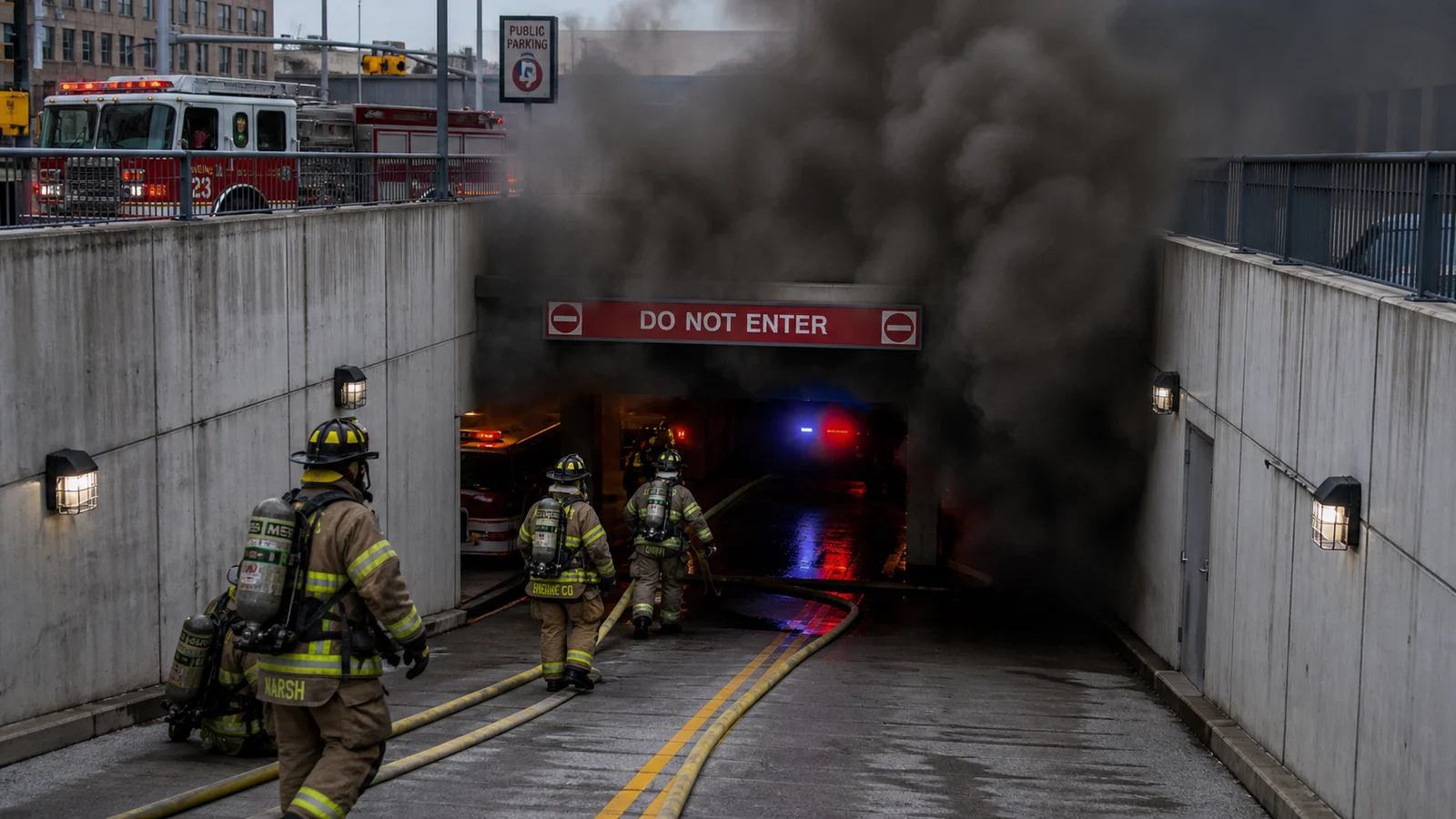

Parking Garage Fire Operations: Tactics for Below and Above Grade
Parking garages are a fixture of the modern built environment, and parking garage fires are a fixture of the modern fireground — yet they receive far less tactical training attention than residential fires despite their distinct and serious hazards. The combination of high vehicle fire load, limited natural ventilation, complex multi-level geometry, and the growing prevalence of electric vehicles creates conditions that demand a specific tactical framework.
Jump to:Unique hazards · Above-grade operations · Below-grade operations · Ventilation · EV battery fires · Water supply · FAQ
Unique Hazards of Parking Garage Fires
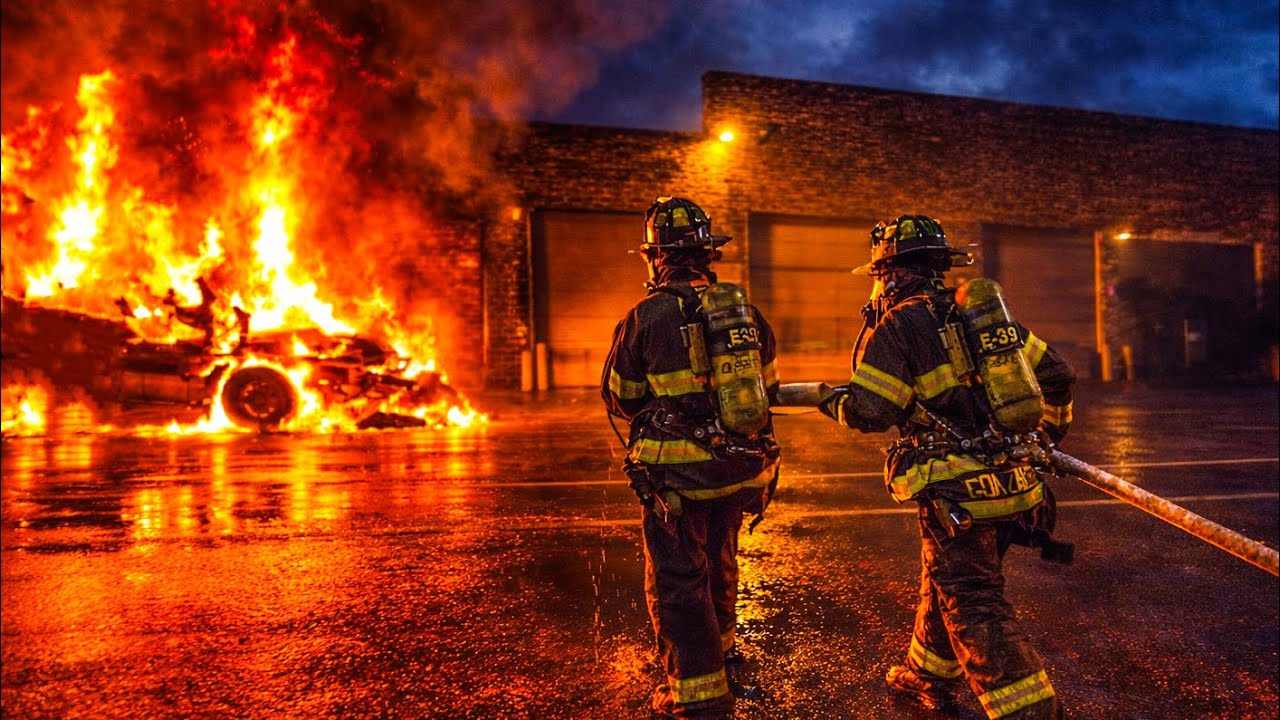
- High fire load. A single vehicle fire can involve 200–400 lbs of combustible materials. Multiple vehicles involved produces a fire load exceeding most residential structures.
- Rapid fire spread vehicle to vehicle. Radiant heat from one burning vehicle ignites adjacent vehicles. In tightly packed garages, fire can spread to 3–4 vehicles within minutes.
- Smoke accumulation. Parking garages — particularly below-grade structures — accumulate thick toxic smoke rapidly with limited natural ventilation. Visibility can drop to near zero within 2–3 minutes.
- Limited access points. Ramps, vehicle entrances, and stairwells are the primary entry and egress routes. Many garages have limited pedestrian access that becomes critical for firefighter egress under emergency conditions.
- Structural concerns. Concrete construction in most garages is fire-resistive, but spalling from heat and water can create falling hazards. Steel-framed garages are at greater risk of early structural compromise.
- HVAC and mechanical hazards. Sprinkler systems may be present (required in newer construction); older garages may have no suppression system.
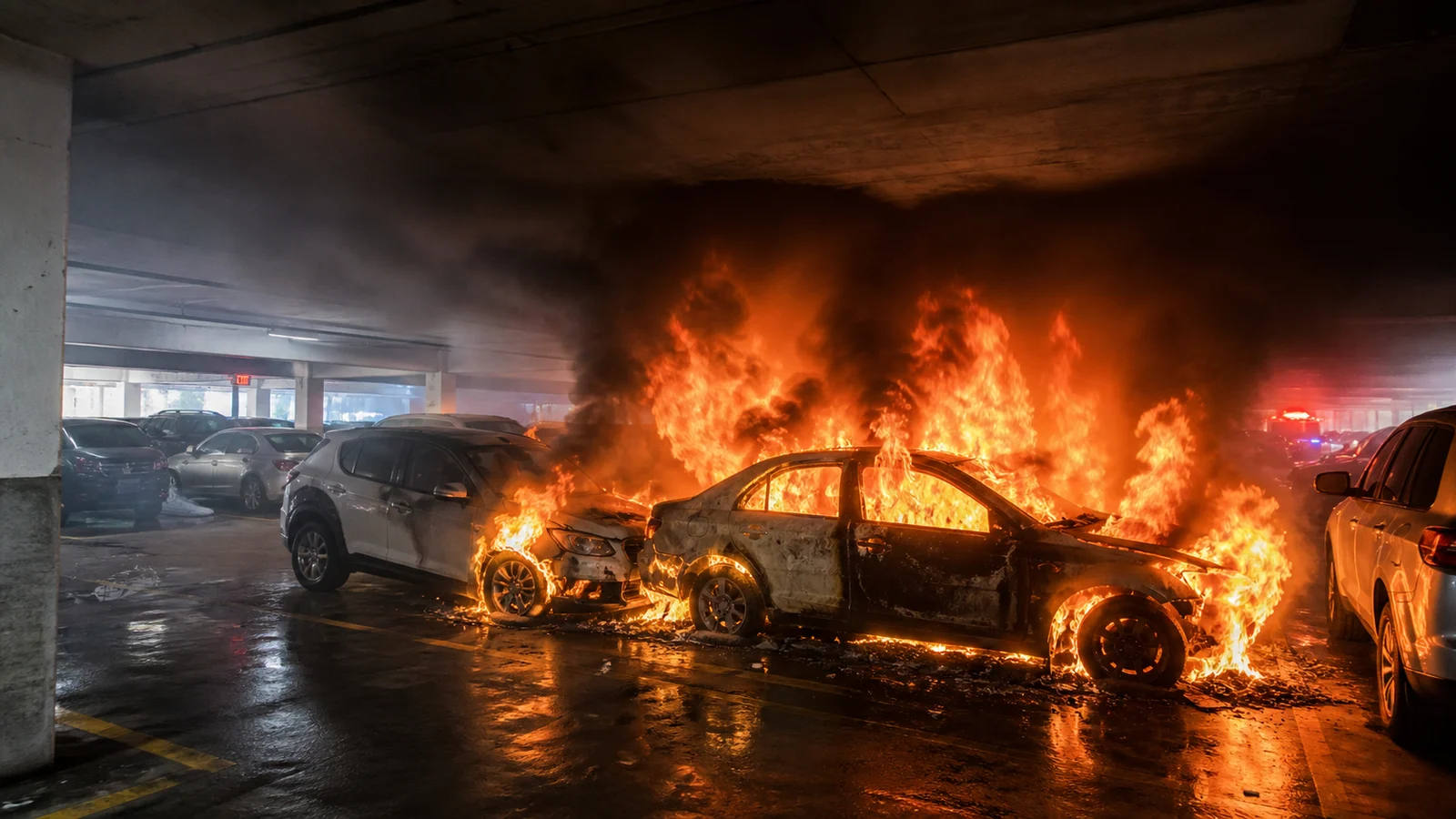
Above-Grade Parking Garage Operations
Above-grade garages (open-deck surface lots, multi-level decks with open sides) offer significant tactical advantages:
- Natural ventilation through open sides dramatically improves visibility and reduces heat buildup
- Aerial apparatus can access upper levels directly
- Egress routes are more numerous and less complicated
- Master streams can be directed into fire areas from exterior positions
Tactical approach for above-grade garages:
- Size up from all accessible sides — identify fire location, number of vehicles involved, and spread direction
- Position apparatus to allow aerial access to upper levels if needed
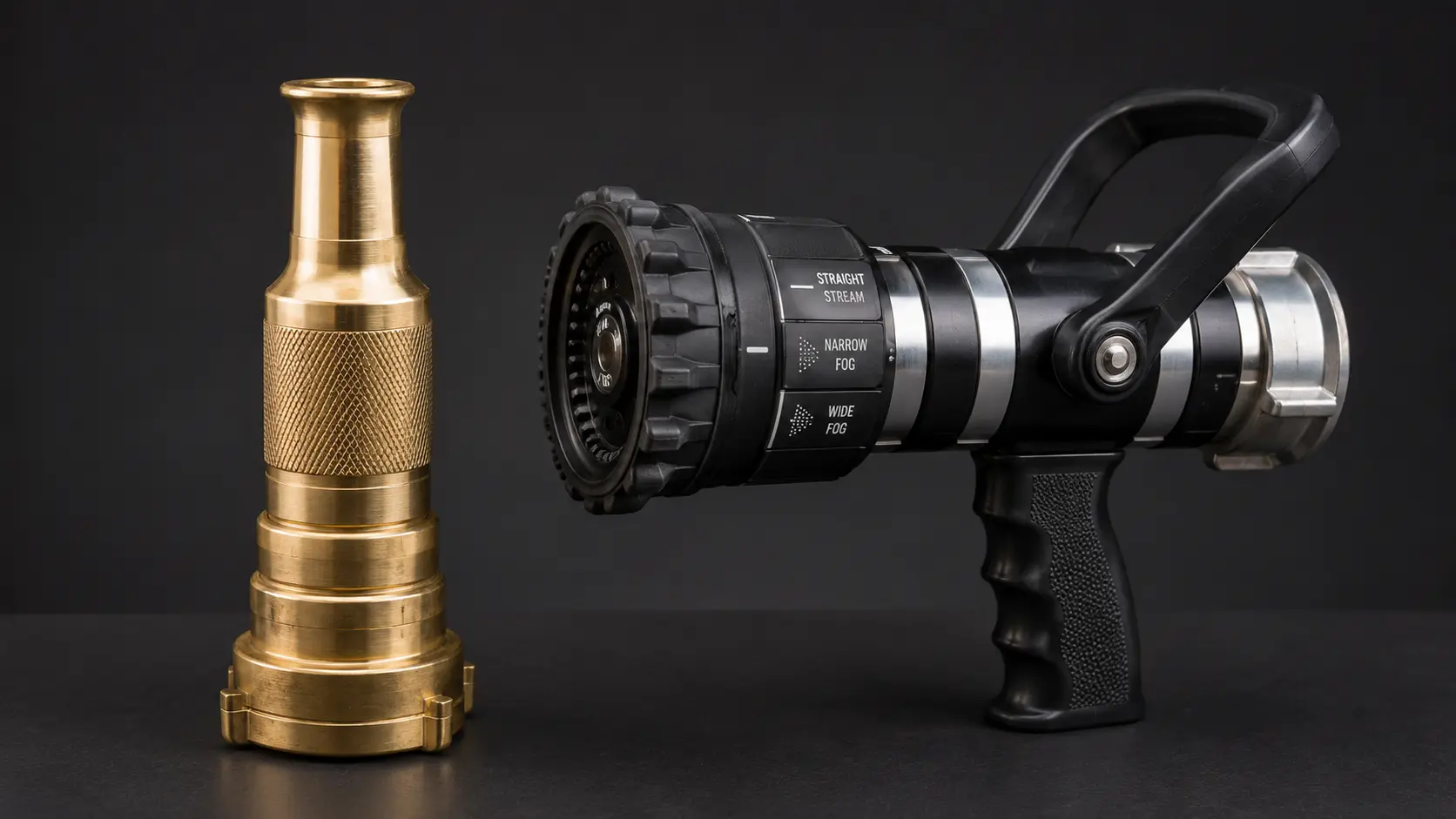
- Advance 2½" lines (or 1¾" with higher flow rates) — vehicle fires require more water than residential room-and-contents fires
- Protect exposures — vehicles not yet involved that are in the path of fire spread
- Establish water supply early — vehicle fires consume significant water volume
Below-Grade Parking Garage Operations
Underground parking garages are among the most challenging structural firefighting environments. Every tactical consideration is amplified:
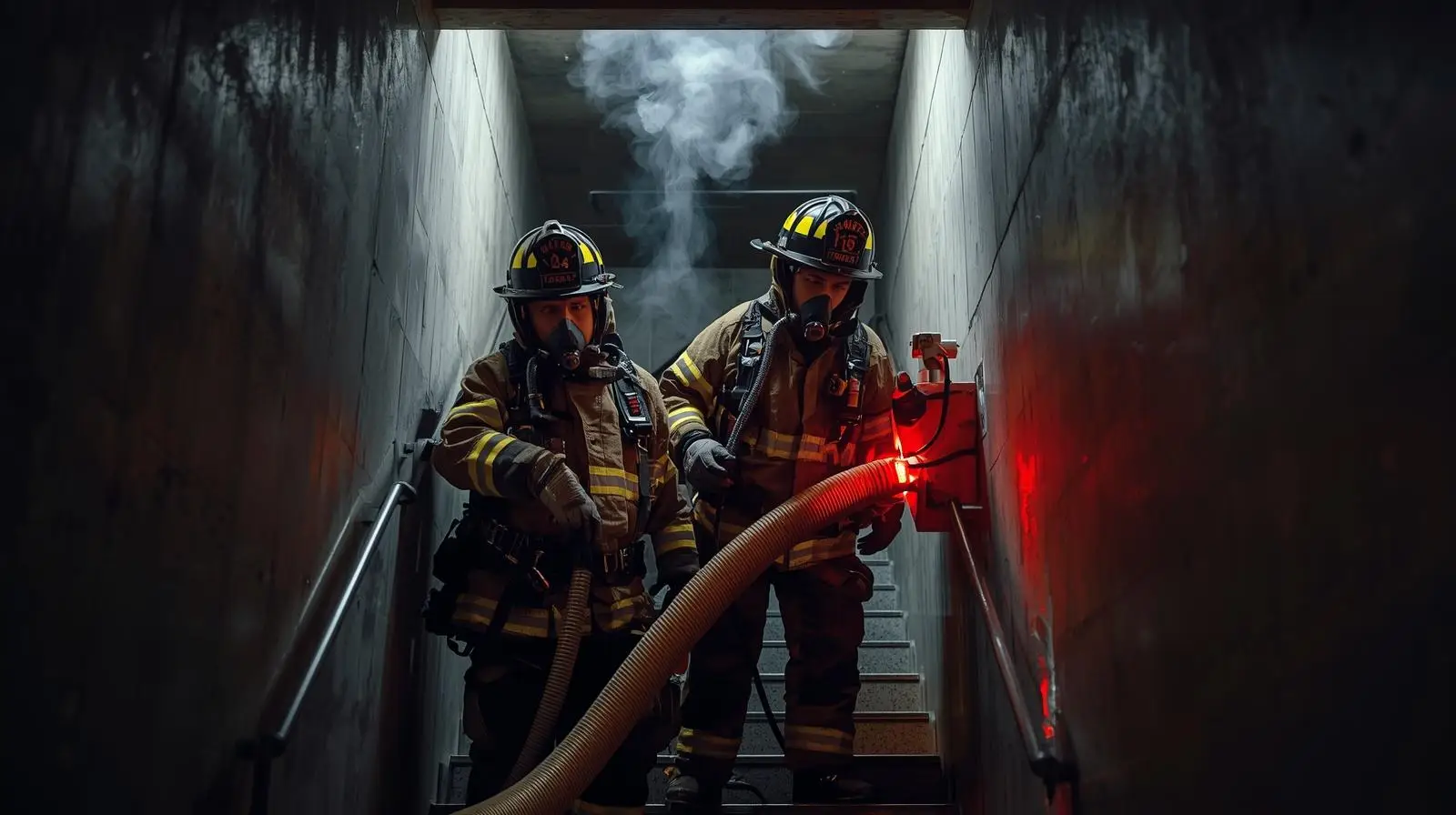
Below-grade parking garages are immediately IDLH. The combination of toxic vehicle combustion products, zero natural ventilation, and the physical impossibility of exterior ventilation until mechanical systems are operating creates untenable conditions faster than almost any above-grade scenario. SCBA goes on before any crew enters the access point — not at the bottom of the ramp.
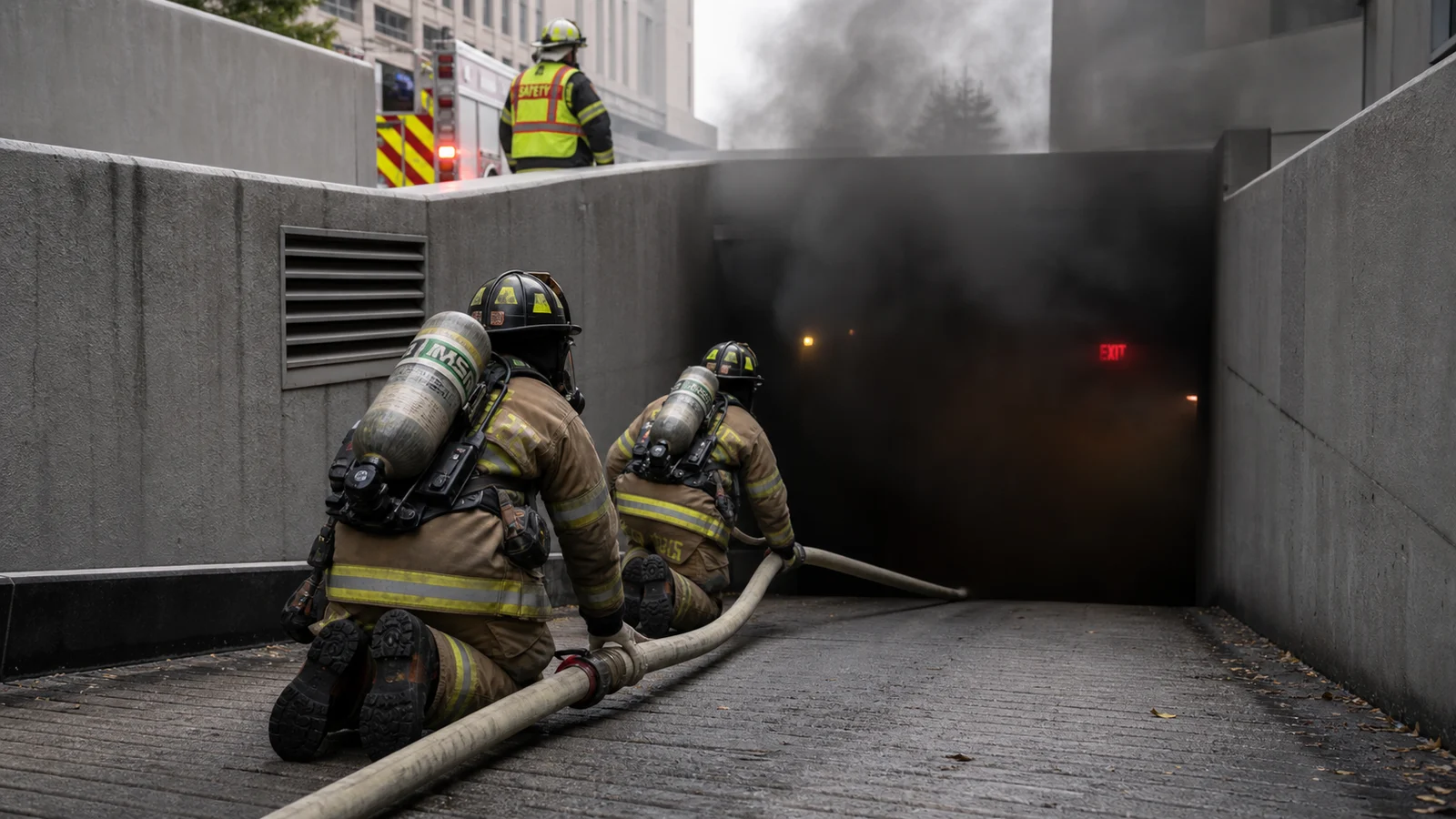
Key considerations for below-grade operations:
- RIT staged at the entry point — not interior. The access ramp or stairwell is the only egress. RIT must be positioned where they can extract a downed crew.
- SCBA air management is critical. The travel distance to the seat of fire in a large underground garage can consume significant air. Calculate air time against travel distance before entry.
- Mechanical ventilation before interior commitment. If the garage has a mechanical smoke exhaust system, activating it before interior entry dramatically improves conditions. Coordinate with building management or use the building's fire control room.
- Hose deployment considerations. Ramps and turns consume hose rapidly. Pre-plan how much hose is needed to reach the fire level.
- Defensive operations are often appropriate. When fire involves multiple vehicles in a below-grade garage with poor visibility and limited egress, defensive exterior master stream operations through access openings may be safer than interior attack.
Ventilation Challenges
Parking garage ventilation requires a completely different approach than residential ventilation:
- Above-grade open-deck garages: natural ventilation through open sides; no active ventilation required
- Enclosed above-grade garages: mechanical exhaust systems; PPV fans at entry with exhaust openings at the far end
- Below-grade garages: mechanical exhaust systems are the only effective option; PPV fans at the top of access ramps with exhaust at other stairwell openings
Do not place PPV fans at the bottom of access ramps into below-grade garages — this pressurizes the entry point and directs smoke back into the ramp, blocking the only egress route for interior crews.
Electric Vehicle Battery Fires in Parking Garages
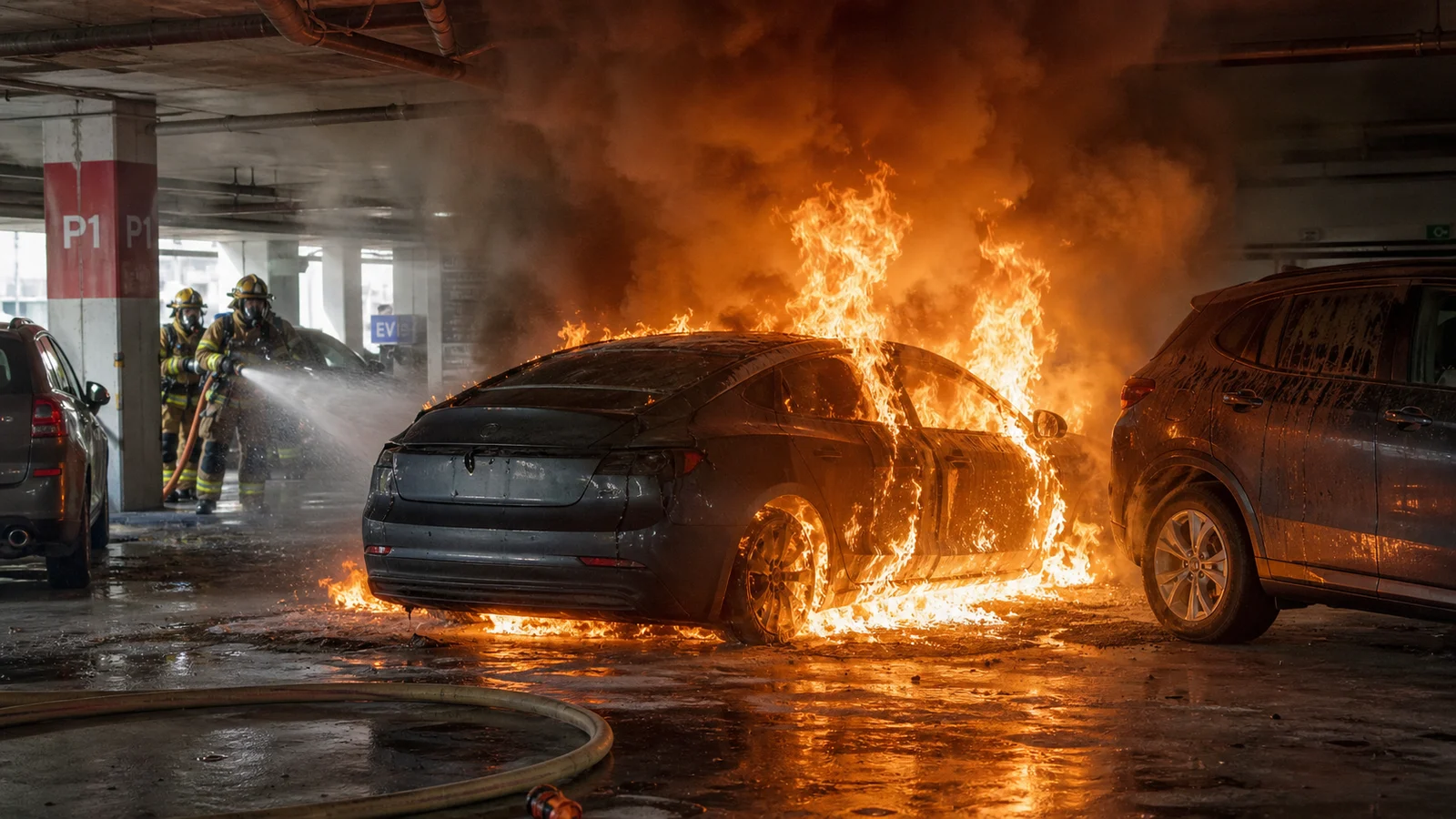
EV battery fires in parking garages introduce challenges beyond conventional vehicle fires:
- Thermal runaway requires massive water volumes to cool. NFPA and UL FSRI research indicates EV battery fires may require 3,000–8,000+ gallons of water for complete extinguishment — far exceeding typical vehicle fire water consumption.
- Reignition risk. Battery fires that appear extinguished can reignite hours or days later. Extended monitoring is required before the vehicle can be cleared.
- Toxic off-gassing. Lithium-ion battery fires produce hydrogen fluoride, hydrogen cyanide, and other highly toxic compounds. Full respiratory protection is mandatory throughout all operations and overhaul.
- Structural concerns from water volume. 8,000 gallons of water weighs approximately 66,000 lbs. Water accumulation on upper garage levels can exceed structural load capacity. Monitor for signs of stress and have a water removal plan.
See our complete electric vehicle fire response guide for detailed EV tactics.
Frequently Asked Questions
Are parking garage fires more dangerous than residential fires?
In many ways, yes — particularly below-grade garages. The combination of high vehicle fire load, toxic smoke accumulation, zero natural ventilation, and limited egress creates conditions that escalate faster and are harder to escape than most residential fires. Above-grade open-deck garages are more manageable due to natural ventilation.
What size hoseline should be used for a parking garage fire?
A 2½-inch line with a smooth bore nozzle is the recommended minimum for vehicle fires in parking garages. The higher flow rate (250+ GPM) is necessary to absorb heat from multiple burning vehicles and control fire spread. A 1¾-inch line with a typical 150-180 GPM fog nozzle is insufficient for a well-involved vehicle fire.
How do firefighters ventilate a below-grade parking garage?
Primarily through mechanical exhaust systems built into the structure. Activating the building's smoke exhaust system before interior entry is the most effective ventilation action. PPV fans can supplement by pressurizing the access ramp to push smoke toward mechanical exhaust outlets on the far side of the structure.
Comments 0
No comments yet. Be the first to share your thoughts!
Leave a Comment