Electric Vehicle Fire Response Guide: Lithium Battery Hazards, Suppression & Scene Safety
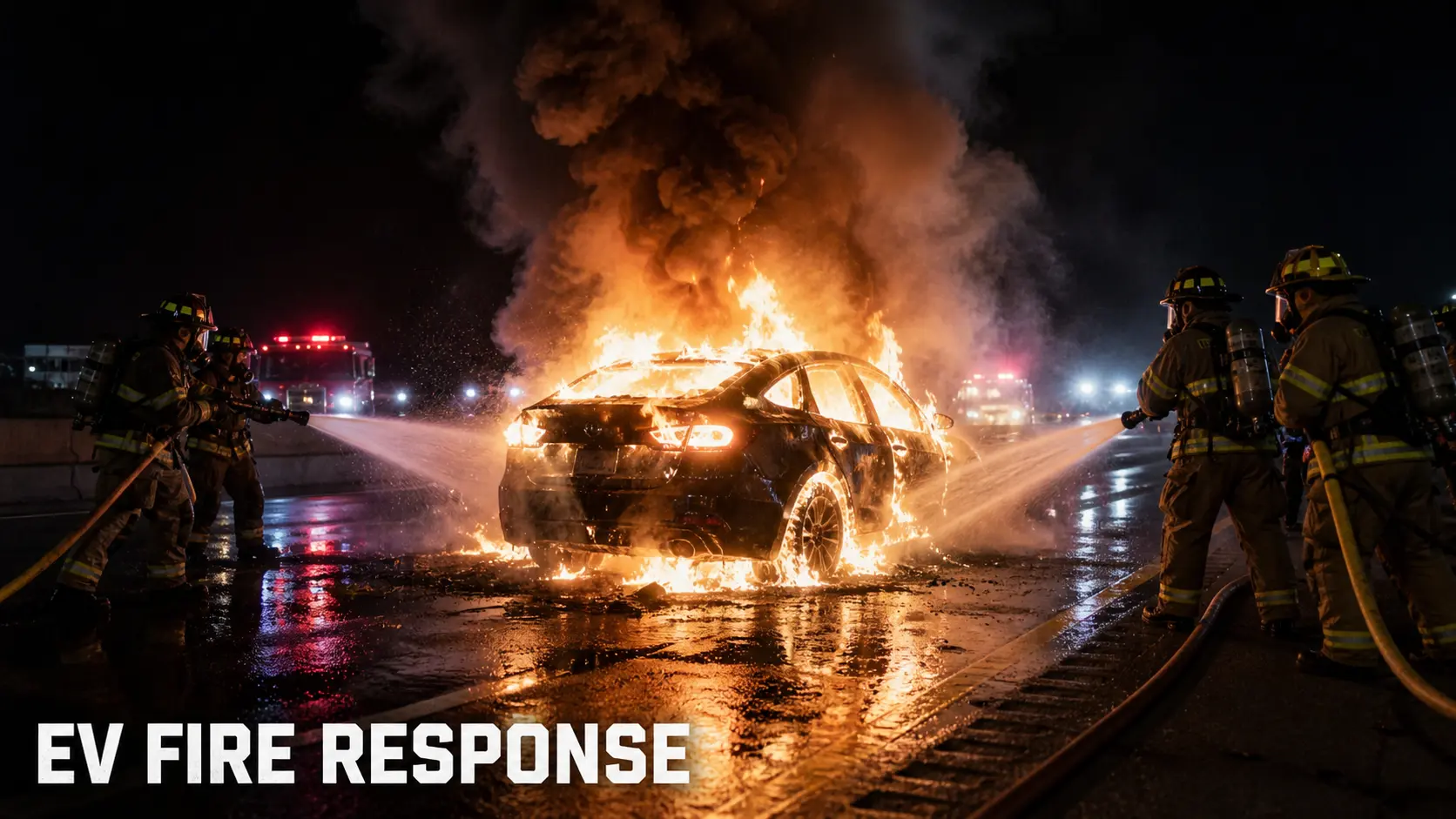
Electric vehicle fires are one of the most rapidly evolving operational challenges in the U.S. fire service. EV registrations have grown dramatically — over 4 million EVs are now on U.S. roads, with that number increasing every year. The lithium-ion battery packs in these vehicles burn differently from conventional vehicle fires, require different suppression approaches, and present hazards that do not exist in gasoline or diesel vehicle fires. This guide covers what every firefighter responding to a vehicle fire needs to know about EV identification, battery fire behavior, suppression tactics, and scene safety.
Jump to:EV identification on scene · Lithium battery hazards · Thermal runaway · Suppression tactics · Water volume requirements · High-voltage safety · Extrication in EVs · Post-fire hazards · ERG resources for EVs · FAQ
EV Identification on Scene
Identifying an electric vehicle before applying water or attempting extrication is critical. Key identification methods:
Visual identification
- Badge/emblem: EV, ELECTRIC, Zero Emission, or model-specific badging (Tesla, Bolt, Leaf, Ioniq, Lightning, Rivian, etc.)
- Charge port: A charging port door on the side of the vehicle (similar to a fuel door but with an electrical connector inside) confirms EV or plug-in hybrid
- Exhaust pipe: Pure BEV (battery electric vehicles) have no exhaust pipe. Plug-in hybrids (PHEVs) have both a charge port and an exhaust pipe.
- Engine compartment: No internal combustion engine under the hood (front trunk "frunk" on some EVs); electric motor and power electronics visible
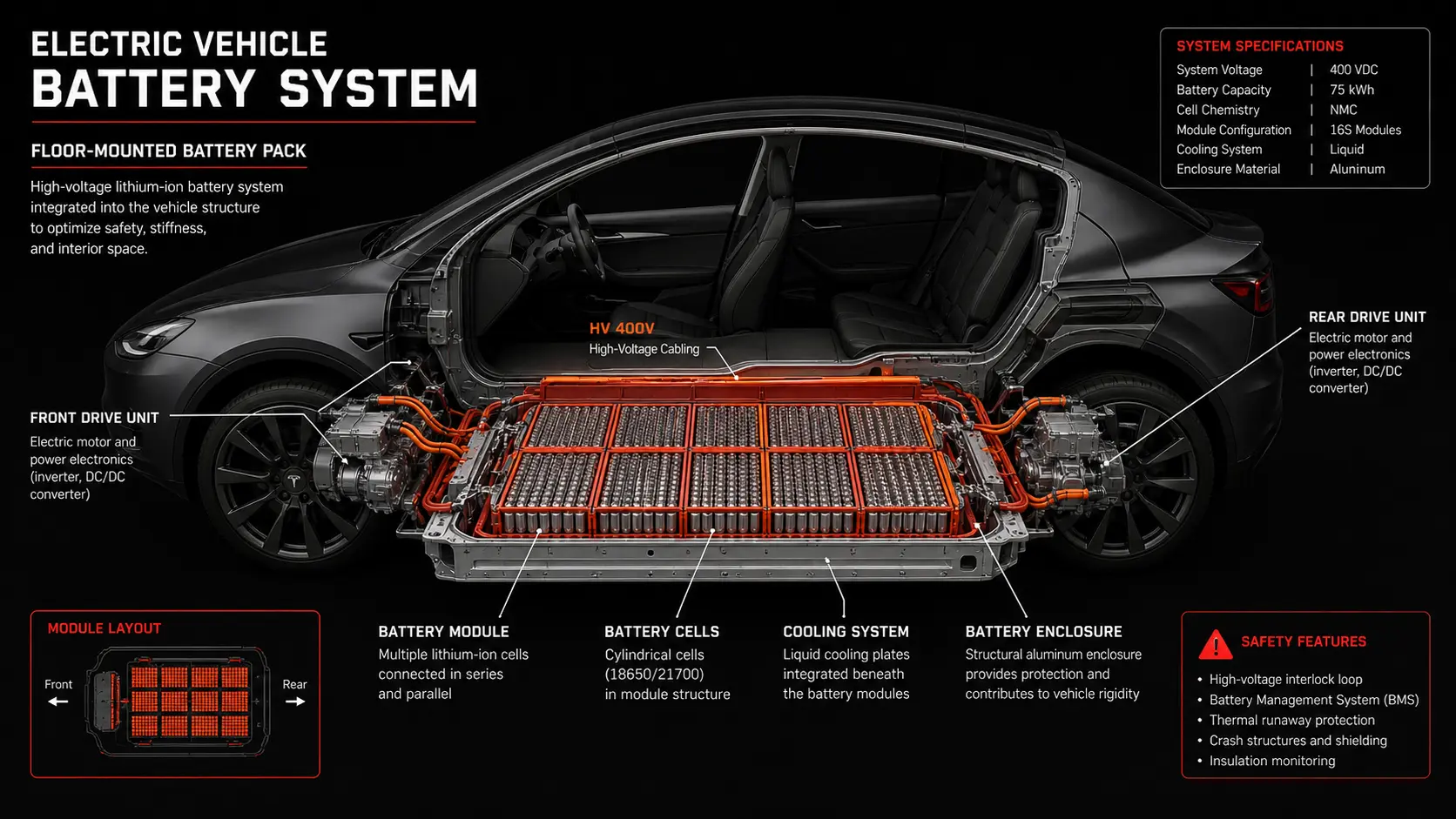
- Orange high-voltage cables: High-voltage system wiring is coded orange by SAE standard. Visible orange cables confirm high-voltage presence.
Dispatch and pre-arrival
Callers frequently mention the vehicle brand (Tesla, Rivian, etc.) which confirms EV status. Increasingly, CAD systems flag EV registrations at specific addresses. Train dispatchers to ask about vehicle type when MVA or vehicle fire calls come in.
Lithium-Ion Battery Hazards: What Makes EV Fires Different
A conventional gasoline vehicle fire is dangerous but relatively straightforward: the fuel burns, you apply water or foam, the fire goes out. A lithium-ion battery pack fire behaves fundamentally differently:
Battery pack structure
EV battery packs consist of thousands of individual lithium-ion cells (cylindrical, prismatic, or pouch format) arranged in modules within an enclosure mounted in the vehicle floor. The enclosure is designed to be structurally protected — getting water into the battery pack to reach burning cells is physically difficult. On some vehicles, the pack is armored and extremely difficult to breach.
Energy content
Modern EV battery packs contain 60–120+ kWh of stored electrical energy. For comparison, 1 kWh is equivalent to approximately 3,600,000 joules of energy. A fully charged 100 kWh battery pack contains more stored energy than 8.5 gallons of gasoline — in a sealed pack that cannot be easily discharged or safely vented during a fire.
Toxic combustion products
Lithium-ion battery fires produce a different and more hazardous gas mix than hydrocarbon fires. Battery combustion products include:
- Hydrogen fluoride (HF): Highly toxic; produced from the fluorinated electrolyte. HF is corrosive to the respiratory tract, eyes, and skin, and is immediately dangerous to life at very low concentrations. SCBA is mandatory at all EV battery fires.
- Carbon monoxide (CO): At concentrations higher than typical gasoline fires due to incomplete combustion of the organic electrolyte
- Volatile organic compounds (VOCs): From the burning electrolyte and polymer separator
- Hydrogen gas: Combustible; produced during certain failure modes and can accumulate in enclosed spaces
- Carbon dioxide and other decomposition gases: Some battery formulations release CO2 as a cell venting product
SCBA is mandatory at all EV battery fires, including small and apparently contained fires. Even a single burning cell produces sufficient HF to be immediately dangerous. Do not approach an EV battery fire without full structural PPE and SCBA. Bystanders and unprotected responders must be kept at minimum 100 feet upwind from any burning EV.
Thermal Runaway: Why EV Fires Are So Difficult
Thermal runaway is the most dangerous characteristic of lithium-ion battery fires. It is a chain reaction failure mode where:
- One cell overheats due to damage, overcharge, short circuit, or external fire exposure
- The failing cell vents and ignites, producing heat that raises the temperature of adjacent cells
- Adjacent cells reach their thermal runaway threshold and begin failing in sequence
- The cascade spreads through the module, then through the pack, in a self-sustaining chain reaction
Once thermal runaway begins in a pack, it cannot be stopped by external suppression — only contained and cooled. The reaction continues until all affected cells have failed. This can take hours. An EV fire that appears extinguished may re-ignite hours or days later as additional cells reach runaway temperature.
Re-ignition timeline
Re-ignition is not a theoretical concern — it has caused significant property damage and firefighter injuries at incidents that appeared to be extinguished. Documented re-ignition timelines range from 20 minutes to more than 24 hours after apparent suppression. EVs that have been in fires must be treated as potential re-ignition hazards for a minimum of 24–48 hours.
Suppression Tactics for EV Fires
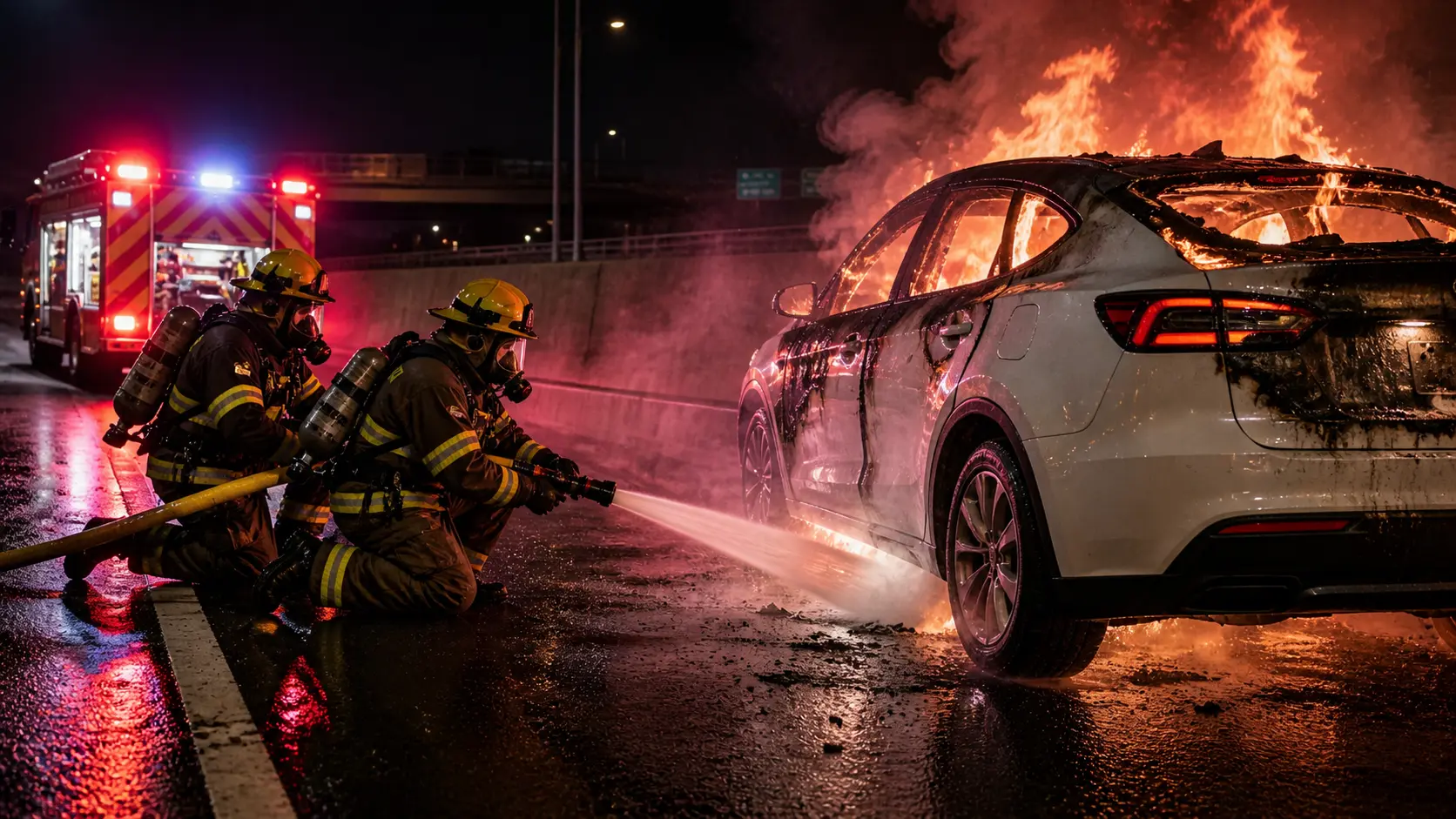
The goal of EV battery fire suppression is cooling the pack to stop the thermal runaway cascade — not extinguishing flames in the conventional sense. Current best-practice suppression approaches:
Large volume water application
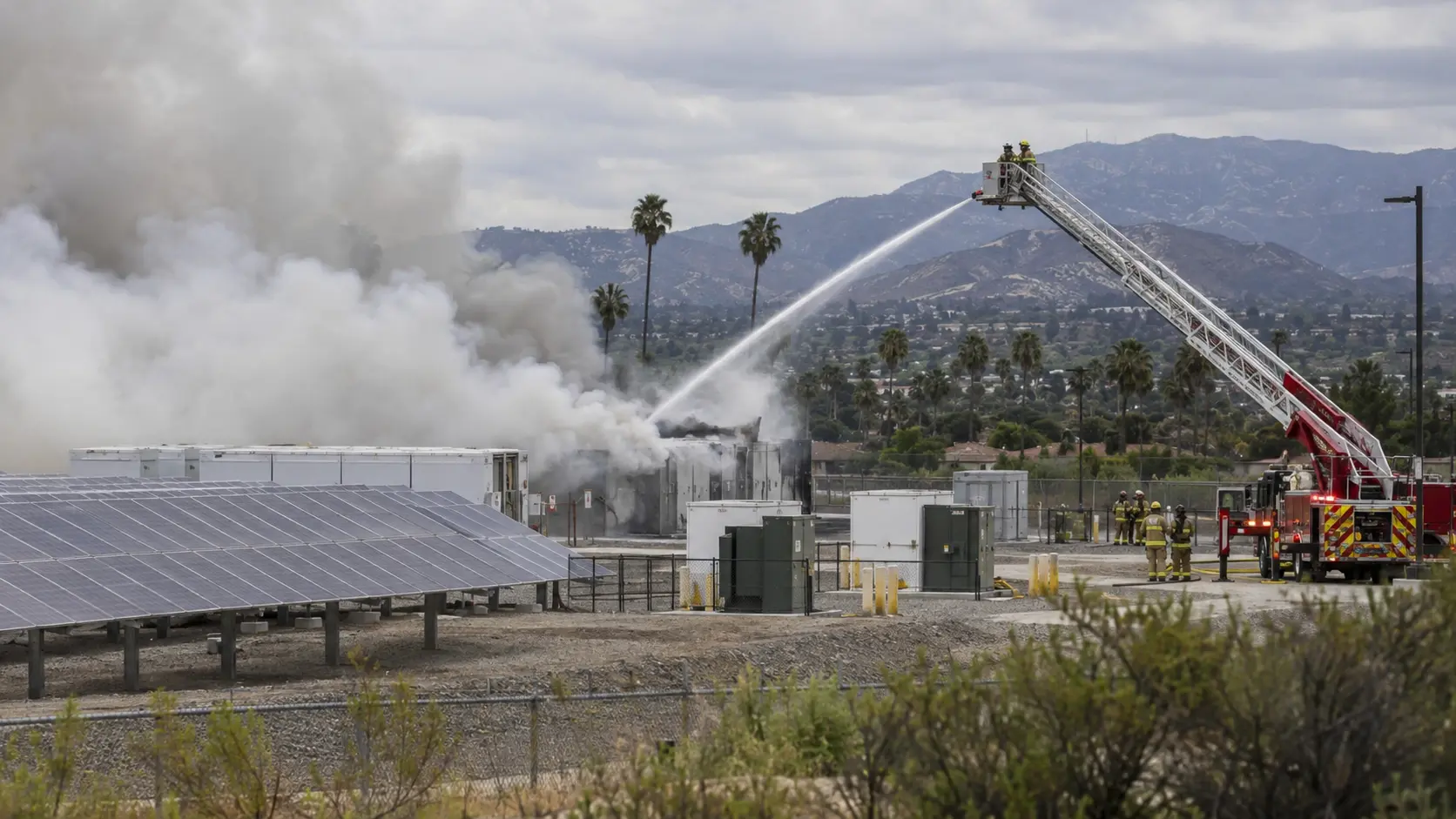
Water is currently the most effective and available suppression agent for EV battery fires. Water applied to the pack absorbs heat and can slow or halt the thermal runaway cascade if applied early and in sufficient volume. However, getting water to the burning cells inside the pack enclosure is the core challenge.
Water application methods in order of effectiveness:
- Direct pack immersion: Most effective but requires the vehicle to be moved to a containment pit or container filled with water. FDNY and several large departments have developed immersion containers for this purpose. Complete immersion stops the fire and prevents re-ignition.
- Underbody application through pack vents: Water aimed at the pack vents, drain holes, or damaged areas of the pack enclosure reaches internal cells more effectively than surface application. Requires getting a stream under the vehicle.
- Surface cooling: Water applied to the exterior surface of the pack reduces the rate of heat spread and may prevent additional cells from reaching runaway temperature, but does not suppress burning cells inside the pack.
Foam application
Foam is effective for suppressing fires in EV cabin and tire areas but provides minimal additional benefit for battery pack fires over water alone. Foam does not penetrate pack enclosures. Apply foam to burning cabin or exterior surfaces as needed while water is applied to the pack area.
Water Volume Requirements
EV battery fires require dramatically more water than conventional vehicle fires. Research and documented incidents suggest:
| Scenario | Estimated water needed | Source |
|---|---|---|
| Typical gasoline vehicle fire (exterior) | 500–1,000 gallons | Standard fire service practice |
| EV fire (battery not fully involved) | 3,000–8,000 gallons | NFPA research and incident reports |
| EV fire (fully involved pack) | 10,000–30,000+ gallons | Documented major EV fire incidents |
| EV fire with immersion | ~3,000 gallons for containment volume | FDNY and research data |
Water supply planning for EV fires. A fully involved EV battery pack fire at a roadway incident can exhaust all available tanker resources in a rural area and significantly tax hydrant supply in an urban area. Request tanker support early for any confirmed EV battery fire. Use the Tanker Shuttle Calculator to pre-plan water supply for EV incidents in your response area.
High-Voltage Safety
EV high-voltage systems operate at 300–800+ volts DC. The high-voltage system presents electrocution hazards distinct from conventional 12V vehicle electrical systems:
Disabling the HV system
Disconnecting the 12V accessory battery (conventional battery, typically in the trunk or engine compartment) cuts power to the HV system's contactor relays, which should disconnect the HV battery from the drivetrain and charging circuits. This is not the same as making the HV battery itself safe — the battery remains charged internally. Steps:
- Identify the vehicle make and model for ERG and manufacturer emergency response guide
- Locate the 12V accessory battery (manufacturer ERG specifies location)
- Disconnect the negative terminal of the 12V battery OR cut the 12V cable using insulated cutters
- Wait the manufacturer-specified time for the HV system to discharge (typically 5–10 minutes)
- Do not touch orange cables or components marked with HV warning labels
What cannot be de-energized from outside
The HV battery pack itself remains internally charged at full voltage even after the 12V battery is disconnected. The connectors and internal bus bars of the pack remain at full HV. The pack cannot be safely de-energized from the exterior. Any penetration of the pack enclosure during extrication (cutting, spreading) with live cells inside creates an arc flash and electrocution hazard.
Protective measures
- Wear Class 0 or Class 1 electrical insulating gloves (rated 1,000V or 7,500V respectively) when working near any orange cables or HV components
- Do not cut orange cables
- Do not cut within 18 inches of HV components unless the manufacturer ERG specifically authorizes cutting at a specific location
- Water applied to a HV system is a potential conduction pathway — approach from the side, not in a direct stream that could conduct from the pack to the nozzle
EV Extrication: What's Different
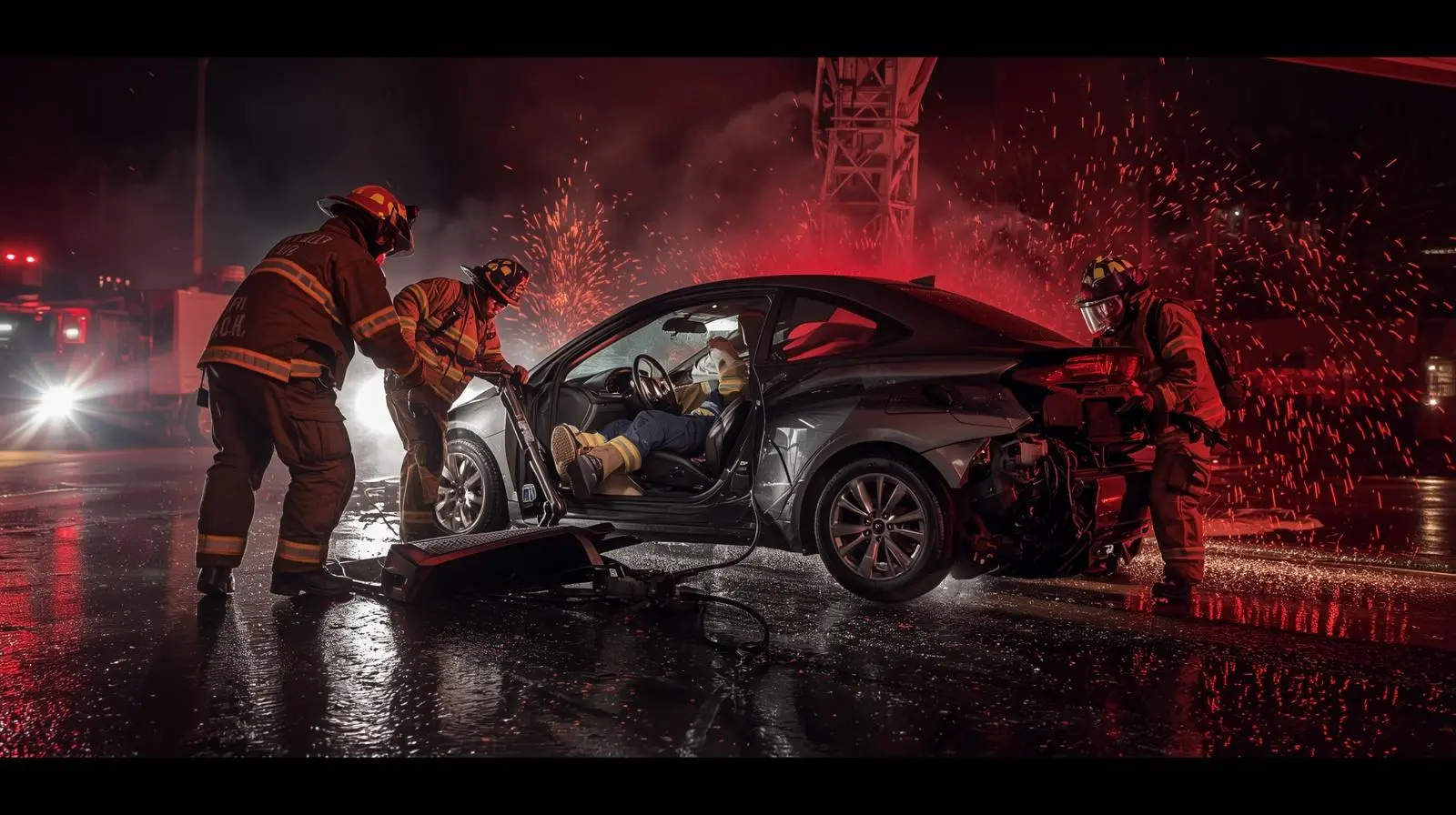
See the Vehicle Extrication Basics guide for general extrication procedures. EV-specific considerations:
- High-strength steel in EV structures: EV manufacturers extensively use UHSS (ultra-high-strength steel) and aluminum in their structural designs. Hydraulic cutters that handle conventional vehicle B-pillars may stall on EV structural members.
- HV battery location awareness: In most EVs, the battery pack is in the floor. Any cut or spread operation that penetrates the floor must account for the pack below it. Manufacturer ERGs show battery boundary lines that must not be cut.
- Airbag multiplicity: EVs often have more airbag systems than conventional vehicles (door airbags, curtain airbags, knee airbags, seat airbags). Additional inflator cylinders throughout the structure increase cut hazard zones.
- Emergency response guides (ERGs): Access manufacturer-specific EV emergency response guides at electricvehiclesafety.org and through the manufacturer's website before cutting. Many guides are available as QR codes on the vehicle's interior doorframes.
Post-Fire Hazards and Vehicle Disposition
After suppression of an EV fire, the incident is not closed:
- Mandatory 24-48 hour re-ignition watch: EVs that have had battery involvement should not be released to civilian custody without a minimum 24-hour monitoring period. Some authorities recommend 48 hours.
- Storage and transport: EV fire vehicles must not be stored in enclosed structures (garages, tow yards with roofs) during the re-ignition watch period. Store in an open area with a water source immediately accessible.
- No towing to enclosed storage: Tow operators must be warned that the vehicle is a re-ignition hazard and must not be stored in an enclosed structure.
- Battery pack disposition: Severely damaged lithium-ion packs must be handled by qualified EV dismantlers or returned to the manufacturer. Damaged packs that are not on fire but have been compromised continue to present hazards.
- Contaminated water runoff: Water used to suppress an EV battery fire is contaminated with HF, heavy metals (cobalt, nickel, manganese), and organic electrolyte compounds. This water must not be allowed to enter storm drains or waterways. Establish containment early in the incident.
EV Emergency Response Resources
- electricvehiclesafety.org: Free database of manufacturer-specific EV emergency response guides searchable by make, model, and year. Updated regularly. Bookmark on apparatus MDTs.
- DOT/NHTSA EV Emergency Response: Federal guidance on emergency response to EV incidents at transportation.gov
- Manufacturer 24-hour emergency lines: Tesla, GM, Ford, Rivian, and other manufacturers maintain emergency response lines for first responders. Numbers are in manufacturer ERGs.
- NFPA EV Fire Research: NFPA has published research and guidance on EV fire behavior at nfpa.org/research
Frequently Asked Questions
How do you put out an electric vehicle fire?
Large volumes of water applied to the battery pack area. The goal is cooling the pack to stop the thermal runaway chain reaction, not conventional flame suppression. A fully involved EV battery fire may require 10,000–30,000+ gallons of water for complete cooling. Vehicle immersion in a water container is the most effective method when available. Full structural PPE and SCBA are mandatory — EV battery fires produce hydrogen fluoride and other immediately dangerous gases.
Can an EV fire re-ignite after being extinguished?
Yes. Re-ignition is one of the most significant hazards of EV battery fires. Documented re-ignition events have occurred 20 minutes to more than 24 hours after apparent suppression as additional cells reach thermal runaway temperature. EVs involved in battery fires must be monitored for a minimum of 24–48 hours and stored in an open area with water access, not in enclosed structures.
Is water safe to use on electric vehicle fires?
Yes, when applied correctly. Water is the most effective and accessible suppression agent for EV battery fires. Apply from the side, not directly at the pack in a way that would conduct electricity toward the nozzle operator. Wear full PPE and SCBA. The contaminated runoff water must be contained to prevent it from entering storm drains. Do not touch the vehicle or standing water near it without protection — there is an electrocution hazard from the HV system.
What gases are produced in an EV battery fire?
Hydrogen fluoride (HF) is the most dangerous — highly toxic and immediately dangerous at very low concentrations. Additionally: carbon monoxide, volatile organic compounds from the electrolyte and separator, hydrogen gas, and carbon dioxide. SCBA is mandatory at all EV battery fires. Bystanders must be kept minimum 100 feet upwind.

Comments 0
No comments yet. Be the first to share your thoughts!
Leave a Comment