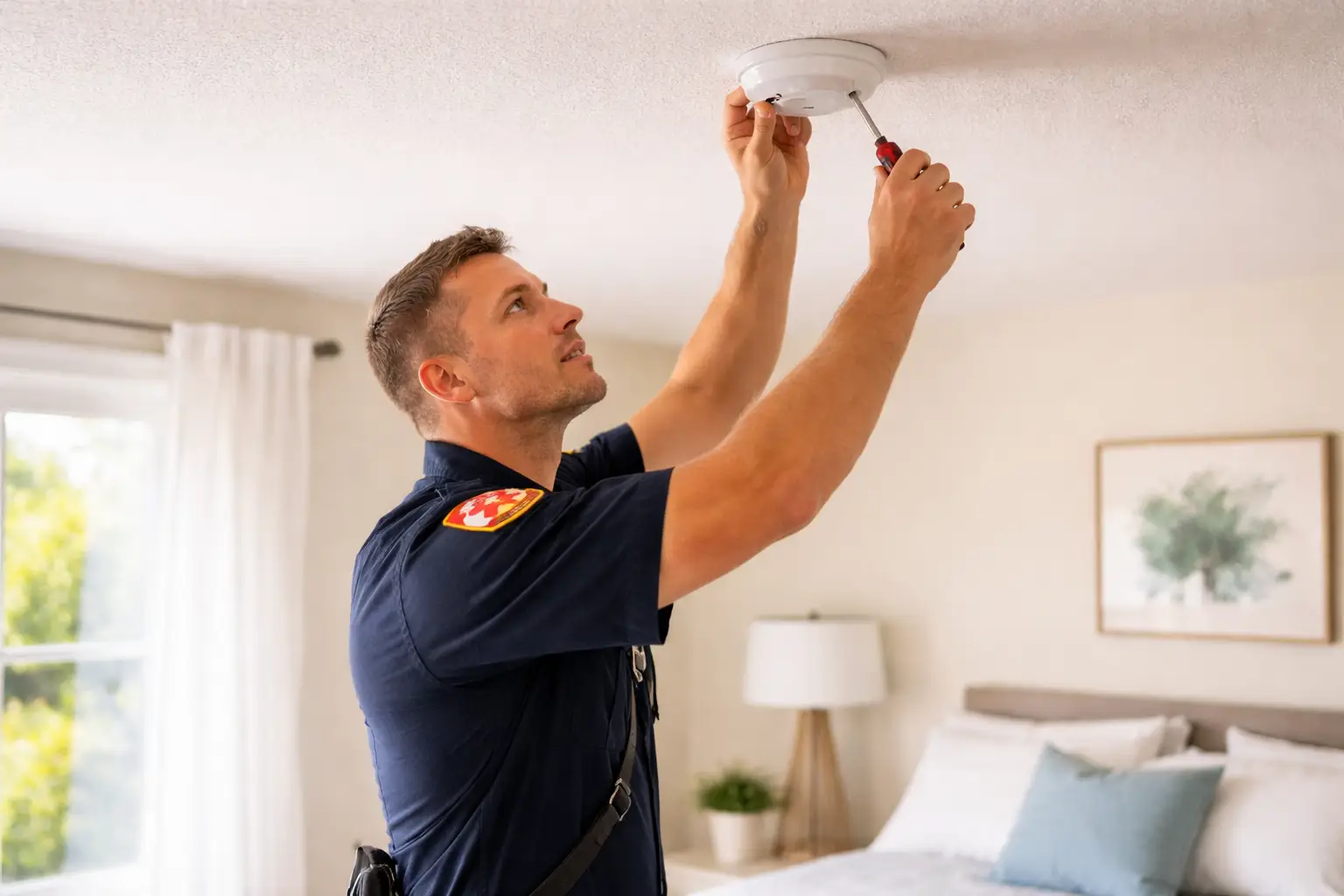

Smoke Alarm Guide: Ionization vs Photoelectric, Placement Rules & What Firefighters Tell Homeowners
Smoke alarms are the single most effective fire safety technology ever developed for residential occupancies. Working smoke alarms cut the risk of dying in a home fire in half. Yet approximately 3 out of 5 home fire deaths occur in homes with no smoke alarms or with alarms that do not work. Firefighters who respond to fatal residential fires see the same pattern repeatedly: no alarms, dead batteries, or alarms that were disconnected because of nuisance activations. This guide covers everything homeowners need to know and everything firefighters need to communicate during fire prevention education.
Jump to:Ionization vs photoelectric · Which type is best · Combination alarms · NFPA 72 placement requirements · Bedroom placement · Interconnection · Testing and maintenance · Nuisance alarm management · When to replace · FAQ
Ionization vs Photoelectric: How Each Works
Ionization smoke alarms
Ionization alarms contain a small amount of radioactive material (Americium-241) that ionizes the air inside a sensing chamber, creating a small continuous electric current between two electrodes. When smoke particles enter the chamber, they disrupt the ionization current, reducing the current flow. When the current drops below a threshold, the alarm activates.
Ionization alarms respond fastest to fast-flaming fires — fires with rapid combustion, small smoke particles, and high energy release rate. Kitchen fires that flash to full involvement and paper/wood fires in their early flaming stage produce the particle size profile that ionization chambers detect most rapidly.
Photoelectric smoke alarms
Photoelectric alarms use a light source (LED) and a light sensor in a sensing chamber arranged so that the sensor does not receive light directly from the source in normal conditions. When smoke particles enter the chamber, they scatter the light beam, directing some light toward the sensor. When the sensor receives enough scattered light, the alarm activates.
Photoelectric alarms respond fastest to slow-smoldering fires — fires with large smoke particles (visible smoke) before significant flames develop. Smoldering fires from upholstery, mattresses, wiring faults, and smoking materials in the early stages produce the particle size profile that photoelectric chambers detect most rapidly.
Which Type Is Best? The Research Answer
The research on alarm type performance is clear and the NFPA, UL, and most fire safety authorities have reached the same conclusion: neither type alone is optimal for all fire scenarios. The key findings:
| Ionization | Photoelectric | |
|---|---|---|
| Fast-flaming fires | Responds fastest (often 30–90 seconds faster) | Responds somewhat slower |
| Slow-smoldering fires | Responds significantly slower (sometimes more than 20 minutes slower) | Responds fastest |
| Nuisance alarm rate | Higher (more sensitive to cooking steam and aerosols) | Lower in most installations |
| Fatal fire type | Most residential fire deaths occur in smoldering-origin fires, particularly during sleeping hours | Better matched to the deadliest fire scenarios |
What the NFPA recommends: NFPA recommends using both photoelectric AND ionization alarms, or a single combination alarm that uses both technologies. This is the approach endorsed by fire safety researchers based on the documented failure of single-technology alarms in specific fire scenarios. If forced to choose one type, the emerging consensus is photoelectric — because smoldering fires kill more sleeping occupants than fast-flaming fires during sleeping hours.
Combination Alarms: Both Technologies in One
Combination smoke alarms include both ionization and photoelectric sensing chambers in a single unit. They activate when either technology reaches its alarm threshold. Combination alarms are the preferred solution when budget allows only one alarm per location, because they provide the fastest response across the full range of fire types.
Look for the UL 217 listing mark on any combination alarm — this confirms both sensing technologies have been tested. Major brands offering combination alarms include Kidde (Dual Sensor series), First Alert (SA320CN), and Google Nest (which uses both heat and optical sensing).
CO combination alarms
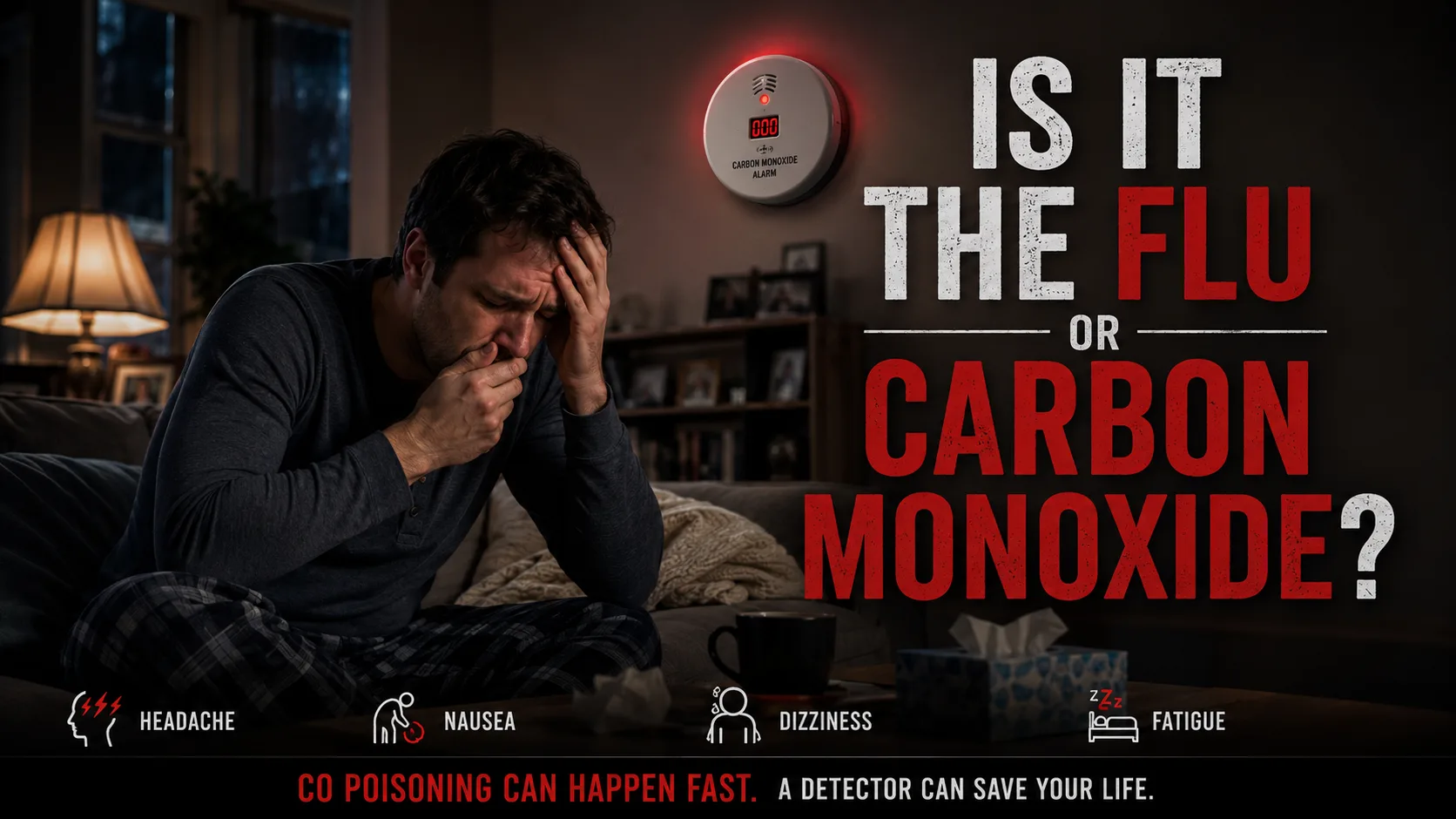
Combination smoke/CO alarms detect both smoke and carbon monoxide. They are required by code in most states for new residential construction and recommended everywhere. If purchasing a replacement smoke alarm, the additional cost of the combination version is modest and eliminates the need for a separate CO detector in the same location. See the Carbon Monoxide guide for CO detector placement requirements.
NFPA 72 Placement Requirements
NFPA 72 (National Fire Alarm and Signaling Code) specifies minimum smoke alarm placement for residential occupancies. These are the requirements firefighters should communicate during prevention education:
Minimum required locations
- Inside every bedroom (sleeping room)
- Outside every sleeping area (in the hallway immediately outside each bedroom door or group of bedrooms)
- On every level of the home including the basement
- At the top of each stairway for homes with multiple levels
Inside the bedroom is now required — not just outside it. The older guidance of one alarm per floor or one alarm per sleeping area is no longer the NFPA standard. Research has shown that bedroom doors significantly reduce the alarm sound level heard by sleeping occupants. An alarm inside the bedroom provides earlier warning with less attenuation of the alarm signal. This is a critical fire prevention education point — many homeowners do not know this requirement.
Height and position on the ceiling or wall
- Ceiling mounting is preferred. Smoke rises, so a ceiling-mounted alarm reaches alarm concentration fastest.
- Wall mounting (if ceiling is not possible): Mount 4–12 inches below the ceiling (between 4 and 12 inches from the top of the alarm to the ceiling).
- Avoid dead air spaces: Do not mount alarms in corners or in areas with irregular airflow that may delay smoke reaching the alarm.
- Avoid peak ceiling areas: In cathedral or sloped ceilings, smoke can stratify at the apex. Mount within 3 feet horizontally from the peak for peaked ceilings, not directly at the peak where dead air may trap cool air away from the alarm.
Where NOT to place alarms
- Within 10 feet of cooking appliances (prevents nuisance alarms from cooking steam)
- In bathrooms, extremely dusty or dirty areas, or areas with excessive humidity
- Within 3 feet of air supply registers or return vents that could dilute smoke reaching the alarm
- In garages (vehicle exhaust causes nuisance alarms; temperature extremes reduce battery life)
- Where insects could enter and create false alarms
Bedroom Placement: The Most Important Location
A closed bedroom door reduces the audibility of an alarm in the hallway by 20–25 dB — enough that a sleeping person in a room with a closed door may not wake to an alarm outside the door. Research and fatal fire incident data consistently show that victims in fires die in rooms where:
- No alarm was present inside the room
- The alarm outside failed to wake the occupant before conditions became untenable
- The alarm was disabled due to nuisance activations
The inside-bedroom requirement is the single most important placement change in modern fire alarm standards. When doing fire prevention education or home safety surveys, confirm that every bedroom has an alarm inside it — not just nearby in the hallway.
Interconnection: Why It Matters
Interconnected alarms activate all alarms simultaneously when any single alarm triggers. When a fire starts in the basement, the interconnected alarm system activates the alarm in every bedroom simultaneously — giving occupants on upper floors maximum warning time.
NFPA 72 requires interconnection in new residential construction. In existing homes, interconnection is strongly recommended but not always required by local codes. Types of interconnection:
- Hardwired interconnect: Alarms connected by a wire that carries the alarm signal. Requires running wire through walls — easiest in new construction or major renovation.
- Wireless interconnect (RF): Alarms communicate via radio frequency. No wire required; can be retrofitted in existing homes. Requires that all alarms in the system be the same brand and model series for compatibility.
- Smart home integration: Wi-Fi connected alarms (Nest, Ring, Kidde Smart) can alert via smartphone and interconnect through the home network.
Testing and Maintenance
- Test every alarm monthly. Use the test button — hold it until the alarm sounds. A working alarm should sound immediately and loudly. An alarm that sounds weakly or briefly may have a low battery or internal fault.
- Replace batteries annually (or use 10-year sealed battery alarms that eliminate the annual replacement requirement). A common approach: change batteries when clocks change for daylight saving time as a calendar prompt.
- Do not use alkaline batteries that have already been partially discharged in another device. Start with fresh batteries.
- Vacuum gently around the alarm. Dust accumulation inside the sensing chamber can reduce sensitivity or cause nuisance alarms. Use a vacuum with a soft brush attachment around the alarm vents annually.
- Do not paint smoke alarms. Paint clogs the sensing chamber vents and can disable the alarm.
Managing Nuisance Alarms
The most dangerous smoke alarm is the one that has been disabled because of nuisance activations. When an alarm repeatedly activates from cooking, shower steam, or other non-fire sources, occupants frequently remove the battery or disconnect the alarm entirely — which leaves them unprotected when there is an actual fire.
Solutions for nuisance alarms:
- Relocate the alarm further from cooking sources (maintain minimum 10 feet from the stove)
- Switch from ionization to photoelectric in kitchen-adjacent areas (photoelectric is less sensitive to steam and cooking aerosols)
- Use a range hood exhaust fan during cooking to direct steam and cooking aerosols toward the exterior
- Never disable a smoke alarm permanently. If you must temporarily disable one (during a major cooking project), set a phone reminder to re-enable it within 15 minutes. Consider using a magnetic alarm cover (detector shield) that muffles the alarm for a set time period and then automatically removes itself.
When to Replace Smoke Alarms
Smoke alarms have a limited service life. The sensing chambers degrade over time, reducing sensitivity. Most manufacturers recommend:
- Replace alarms every 10 years from date of manufacture (check the manufacture date stamped on the back or inside the alarm cover — not the purchase date)
- Replace immediately if the alarm fails its monthly test
- Replace if the alarm chirps (low battery warning) and the chirping continues after battery replacement — this may indicate an internal fault
- Replace if the alarm has been exposed to fire, excessive smoke, or humidity damage
A common finding on fire scene investigations is smoke alarms with manufacture dates 12–15 years old that failed to alarm in the actual fire. Regular replacement on schedule is not optional — an old alarm that tests well with the test button may still fail under actual smoke conditions due to internal sensor degradation.
Frequently Asked Questions
What is the difference between ionization and photoelectric smoke alarms?
Ionization alarms respond fastest to fast-flaming fires with small smoke particles. Photoelectric alarms respond fastest to slow-smoldering fires with large smoke particles. Because smoldering fires kill the most sleeping occupants, photoelectric is the preferred single-technology choice. Combination alarms using both technologies are the most comprehensive protection.
Where should smoke alarms be placed in a home?
Per NFPA 72: inside every bedroom, outside every sleeping area (in the adjacent hallway), on every level including the basement, and at the top of each stairway. Ceiling mounting is preferred. Do not place within 10 feet of cooking appliances. The inside-bedroom requirement is the most critical and most overlooked placement rule.
How often should smoke alarms be tested?
Every month using the test button. Batteries should be replaced annually in battery-operated alarms, or when the low-battery warning chirp activates. The entire alarm should be replaced every 10 years from the manufacture date (not purchase date) stamped on the unit.
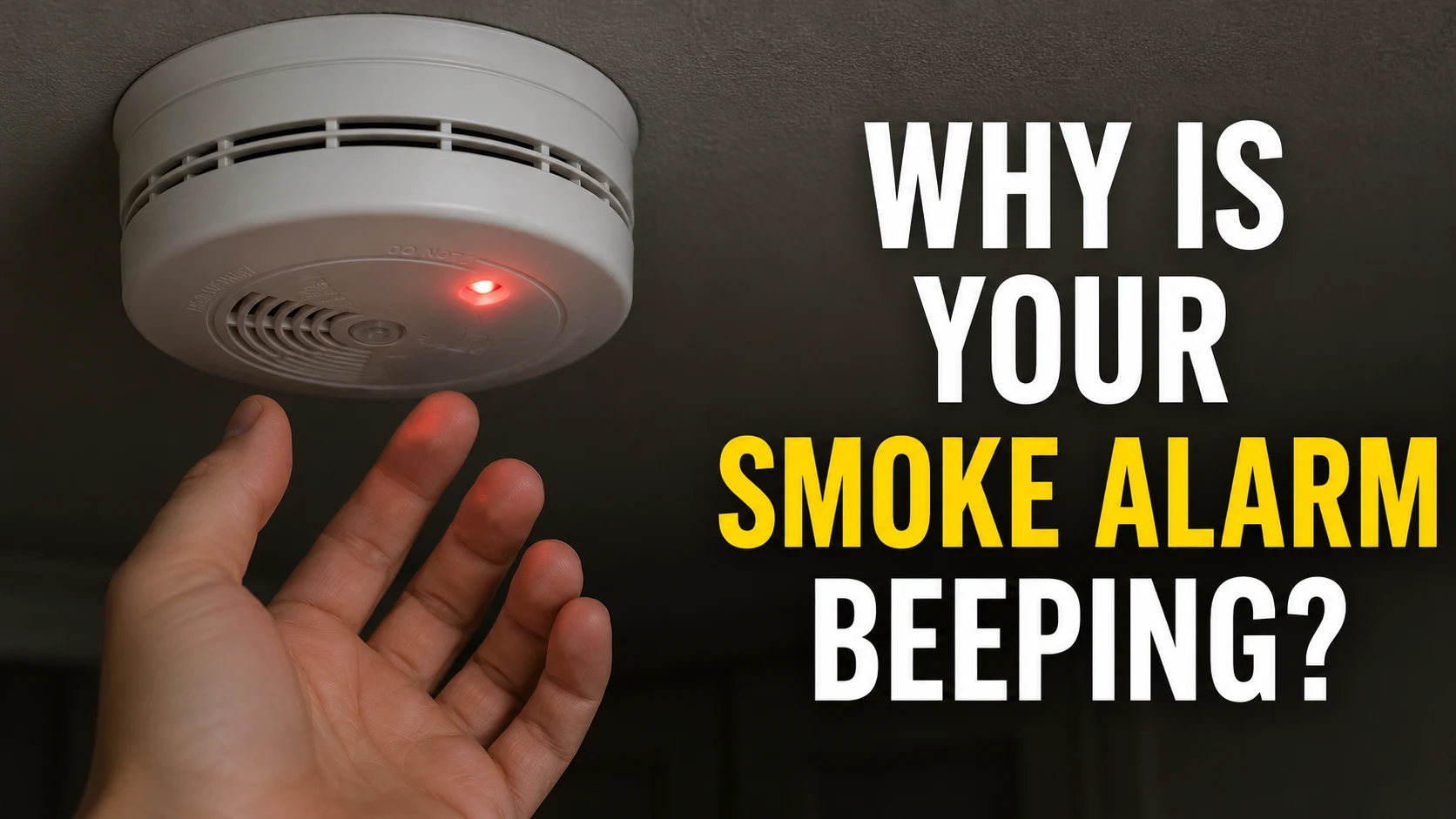
Why is my smoke alarm beeping?
A steady alarm means smoke detection. A chirp every 30–60 seconds means low battery — replace the battery. A chirp after battery replacement indicates the alarm may need to be fully reset (hold the test button for 10–20 seconds after battery installation) or may have reached end of life and needs replacement.




Comments 0
No comments yet. Be the first to share your thoughts!
Leave a Comment