Firefighter Boots Guide: Structural, Rubber & Wildland — Selection & Comparison
Firefighter boots are the foundation of your protective ensemble — literally. They protect your feet from heat, sharp debris, chemical exposure, electrical hazards, and the physical fatigue of a 24-hour shift in demanding environments. The U.S. fire service uses two primary structural boot styles (leather station boots and rubber pull-on boots) plus specialized wildland and technical rescue boots. This guide covers NFPA standards, the leather-vs-rubber debate, key features to evaluate, and a model comparison of the most widely used boots in the U.S. fire service.
Jump to:NFPA 1971 boot requirements · Rubber pull-on boots · Leather station boots · Rubber vs leather: the comparison · Wildland boots · Key features to evaluate · Model comparison · Fit and sizing · Care and replacement · FAQ
NFPA 1971 Boot Requirements
Structural firefighting boots must meet NFPA 1971. Key performance requirements:
- Thermal protection: Boot must protect against conductive heat from hot surfaces and resist flame contact. Outer sole must resist melting, deforming, or igniting.
- Cut and puncture resistance: The midsole must contain a steel or composite puncture-resistant plate protecting against nails, rebar, and sharp debris. The upper must resist cut penetration.
- Electrical hazard protection: Boot must provide secondary protection against electrical shock (tested at 18,000V for leather boots; 14,000V for rubber boots).
- Chemical resistance: Outer sole must resist degradation from common chemicals encountered in structural fire environments (fuels, cleaning agents, hydraulic fluids).
- Ankle support: Minimum height requirements for ankle coverage; structural firefighting boots must extend above the ankle to provide protection and support.
- Liquid penetration resistance: Upper must resist liquid penetration from water and common liquid hazards.
Rubber Pull-On Boots
Rubber pull-on boots (commonly called "hip boots" or just "rubbers") have been the dominant structural firefighting boot style in the United States for over a century. They pull on over the station boot and pants, and pull off quickly for turnout — hence the term "donning and doffing." Modern rubber firefighting boots use vulcanized rubber construction over a steel or composite toe and steel shank, with an interior liner for comfort and moisture management.
Ranger Rubber Firefighter Boot (Honeywell)
Manufacturer: Honeywell Safety (formerly Ranger)
Height: 14 inches
Standard: NFPA 1971 certified
Standout feature: The most widely issued rubber firefighting boot in the U.S. fire service. Steel toe, steel shank, puncture-resistant midsole. Interior moisture-wicking lining. Replaceable insole. Sizes available in half sizes for better fit. The de facto "standard" rubber boot at many departments. Cost: $200–$280.
Best for: Departments that issue rubber boots; firefighters who want the fastest don/doff time; traditional American fire service boot preference.
Red Ball Rubber Boot (Tingley)
Manufacturer: Tingley Rubber
Height: 14 inches
Standard: NFPA 1971 certified
Standout feature: Competitive with the Ranger at a slightly lower price point. Known for durability of the rubber compound. Wide availability through fire service distributors. Steel toe and shank. Cost: $180–$250.
Best for: Budget-conscious departments; volunteer departments issuing rubber boots.
Leather Station/Structural Boots
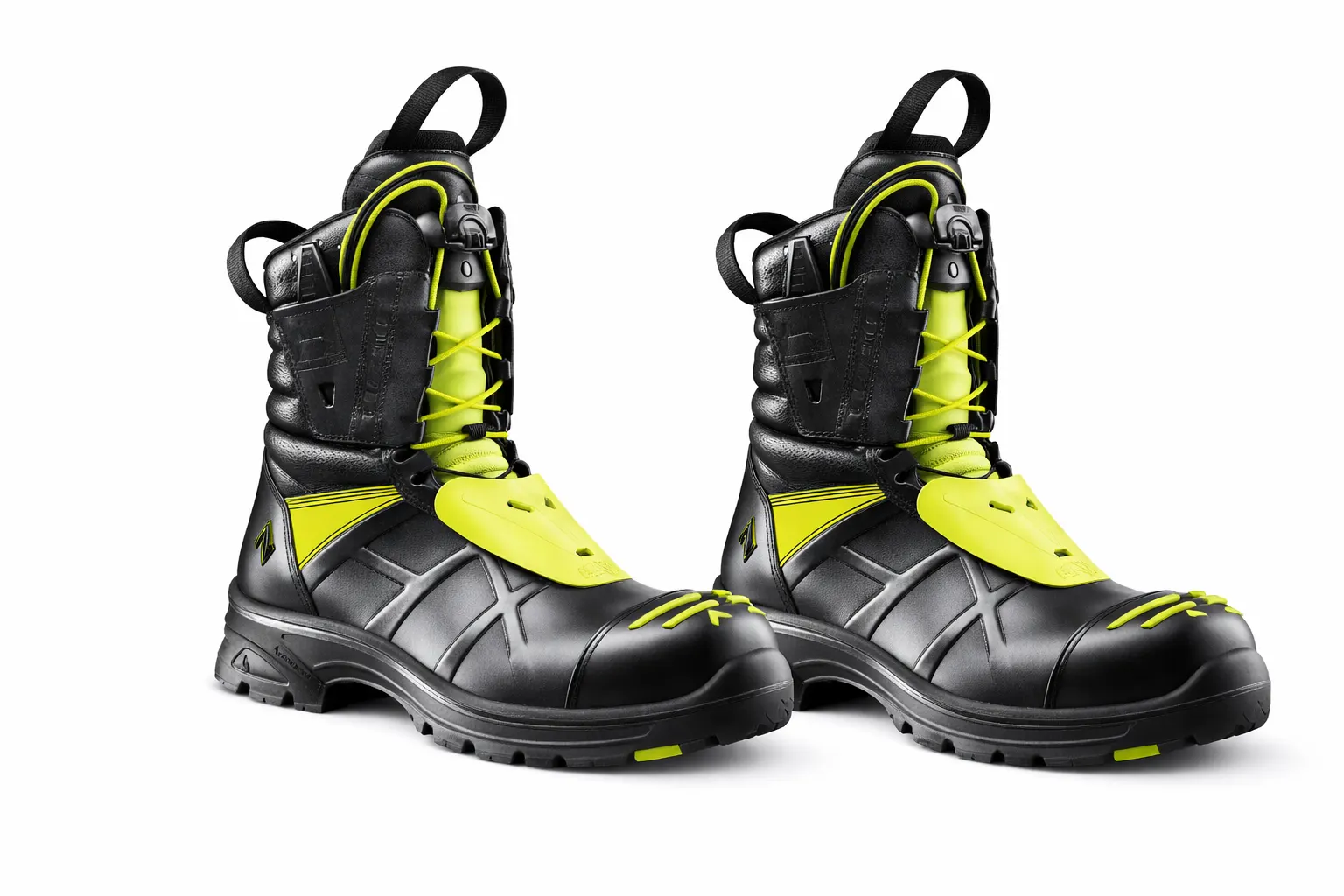
Leather pull-on or lace-up structural firefighting boots look similar to military or work boots and are worn as the primary boot — not over a station boot. They are lighter, more supportive, and more ergonomically sound than rubber pull-ons, but require more time to don and doff. Leather structural boots have become the dominant boot style in career departments and are increasingly specified by progressive volunteer departments.
Haix Fire Hero Xtreme
Manufacturer: Haix (Germany)
Height: 9 inches
Standard: NFPA 1971 certified
Standout feature: Among the most widely purchased leather structural boots in the U.S. fire service. Full-grain leather upper with Gore-Tex moisture barrier liner. Steel toe and composite plate. Side zipper for fast donning. Anatomic last with excellent ankle support. Durable and comfortable across a full 24-hour shift. Cost: $350–$450.
Best for: Career firefighters who want a lightweight, ergonomic boot they can wear all shift; side-zip fans.
Haix Fire Flash Xtreme
Manufacturer: Haix
Height: 9 inches
Standard: NFPA 1971 certified
Standout feature: Lighter-weight variant of the Haix structural line with a carbon composite (non-metallic) toe and midsole plate for reduced weight. No metal in the boot — passes metal detectors and is slightly more flexible than steel-component alternatives. Excellent for high-activity departments. Cost: $380–$500.
Best for: Firefighters who prioritize weight reduction; high-activity departments; EMS calls requiring extended walking.
Danner Quarry USA Structural
Manufacturer: Danner (Portland, Oregon, USA)
Height: 8 inches
Standard: NFPA 1971 certified
Standout feature: American-made structural boot with premium full-grain leather and Danner's handcrafted construction. Side zip. Steel toe and plate. Gore-Tex waterproof liner. Known for exceptional durability and longevity — many firefighters get 5–7 years from a pair with proper care. Cost: $400–$520.
Best for: Firefighters who prioritize American manufacturing, long service life, and premium construction.
Lion Apparel Janesville Leather Structural
Manufacturer: Lion Apparel
Standard: NFPA 1971 certified
Standout feature: Often bundled with Lion turnout gear at the department purchase level. Matched PPE system option. Competitive pricing. Standard structural features. Cost: $280–$380.
Best for: Departments purchasing Lion turnout gear as a matched system.
Rubber vs Leather: The Comparison
| Rubber pull-on | Leather structural | |
|---|---|---|
| Don/doff time | Very fast — pull on and off over station boot | Slower — lacing or side-zip; worn as primary boot |
| Weight | Heavier (1.5–2.5 kg/boot) | Lighter (0.7–1.2 kg/boot) |
| Ankle support | Limited — rubber construction provides less biomechanical support | Excellent — leather and lace/zip construction provides strong ankle support |
| Comfort (extended wear) | Less comfortable for all-day wear; many firefighters wear station sneakers in the station and switch to rubbers for calls | More comfortable for all-day wear; can be worn throughout the shift |
| Chemical resistance | Excellent — vulcanized rubber resists most common chemical hazards | Good — depends on leather treatment and moisture barrier quality |
| Cost | Lower initial cost ($180–$280) | Higher initial cost ($280–$520) but may have longer service life |
| Repairability | Limited — rubber construction is difficult to repair | Resoleable and repairable — good-quality leather boots can be rebuilt |
| Department tradition | Dominant in volunteer and smaller departments; some large urban departments | Dominant in career departments; growing adoption everywhere |
Wildland Boots
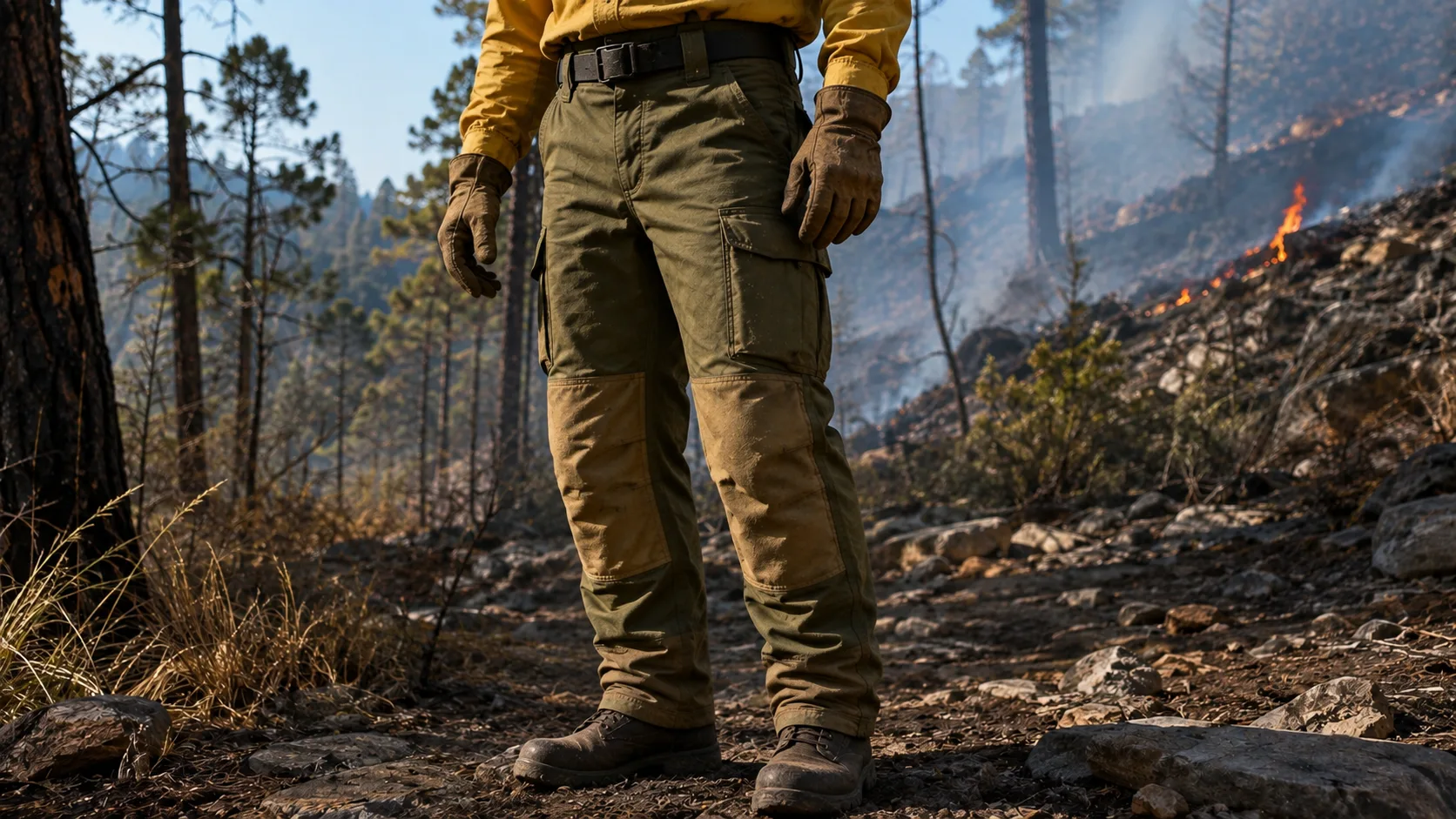
Wildland firefighting boots must meet NFPA 1977. They are designed for extended outdoor hiking and ground work in rough terrain — very different demands from structural operations. Key wildland boot requirements: minimum 8-inch height; Vibram or equivalent lug sole for grip on steep terrain; leather upper; no steel toe (reduces weight for long hiking distances); insulation only if appropriate for expected conditions (uninsulated preferred for most wildland work to prevent overheating).
White's Boots Smokejumper
Manufacturer: White's Boots (Spokane, Washington, USA)
Standard: Meets NFPA 1977; used by smokejumpers and hotshots
Standout feature: Handcrafted semi-custom leather boots considered the gold standard in wildland firefighting footwear. Vibram sole; unlined or lightly lined for breathability. Designed for 16-hour fire line days across extreme terrain. Resoleable and fully rebuildable — many firefighters wear the same pair for 10+ years. Cost: $500–$800.
Best for: Hotshots, smokejumpers, experienced wildland firefighters who prioritize durability over cost.
Haix Airpower R7
Manufacturer: Haix
Standard: NFPA 1977 certified
Standout feature: Modern wildland structural hybrid — provides NFPA 1977 wildland certification with structural-adjacent construction. Good for departments that need one boot to handle both wildland response and some structural exposure. Lighter than White's. Cost: $300–$400.
Best for: WUI (wildland-urban interface) firefighters who need one boot for both environments.
Key Features to Evaluate
Toe cap material
Steel toe: Maximum impact protection; heaviest option; conducts cold in low-temperature environments; sets off metal detectors. Composite (non-metallic) toe: Lighter; does not conduct cold; passes metal detectors; slightly less impact-resistant than steel but meets ASTM F2413 safety requirements. Composite is increasingly preferred in structural leather boots for weight and ergonomics.
Midsole puncture plate
Steel plate: Maximum puncture resistance; adds weight; can conduct cold. Composite plate: Lighter; no cold conduction; still meets NFPA 1971 puncture resistance requirements. Some newer boots use woven material plates that are flexible while maintaining puncture resistance.
Waterproofing and moisture management
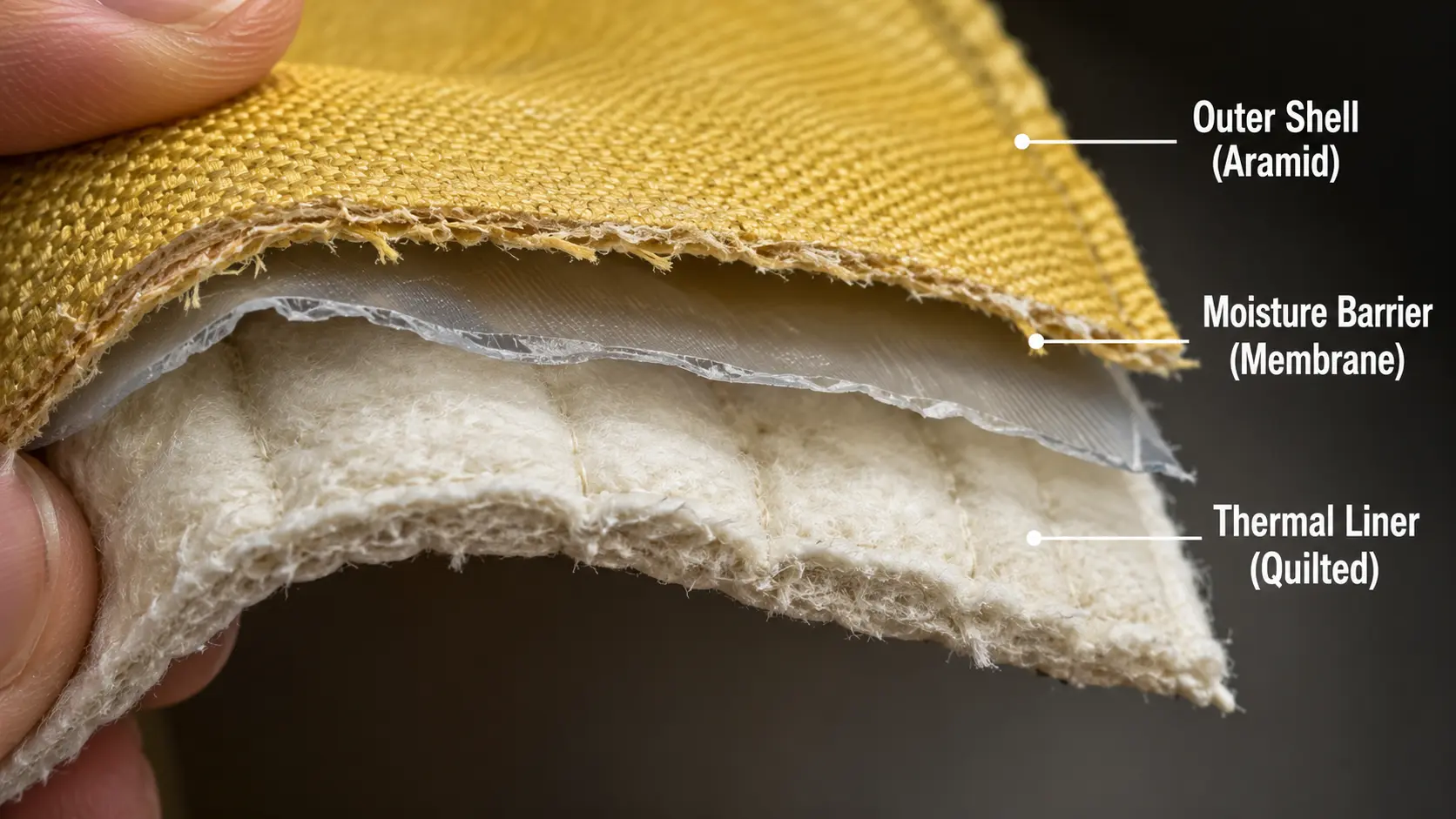
Gore-Tex or ePTFE waterproof-breathable liner membranes keep water out while allowing sweat vapor to escape. This is important for long-duration operations in wet conditions. Fully waterproof boots without breathable liners accumulate internal moisture during extended activity, leading to blisters and discomfort. Look for boots with waterproof-breathable liners, not just water-resistant leather.
Height
Structural boots must provide adequate ankle coverage. Most structural leather boots are 8–9 inches. Higher boots provide more ankle protection and coverage overlap with pants but increase weight and reduce ankle mobility. Rubber structural boots are typically 14 inches, providing extensive lower-leg coverage for liquid protection.
Quick Model Comparison
| Model | Type | Weight (pair) | Price | Best for |
|---|---|---|---|---|
| Honeywell Ranger | Rubber | ~3.5 kg | $200–$280 | Traditional rubber; fast don/doff |
| Tingley Red Ball | Rubber | ~3.2 kg | $180–$250 | Budget rubber option |
| Haix Fire Hero Xtreme | Leather structural | ~1.8 kg | $350–$450 | Most popular leather structural |
| Haix Fire Flash Xtreme | Leather structural (light) | ~1.5 kg | $380–$500 | Lightweight; composite toe |
| Danner Quarry USA | Leather structural | ~1.9 kg | $400–$520 | American made; longest service life |
| White's Smokejumper | Wildland | ~1.6 kg | $500–$800 | Premium wildland; hotshot/smokejumper |
| Haix Airpower R7 | WUI hybrid | ~1.4 kg | $300–$400 | WUI one-boot solution |
Boot Care and Replacement
- Clean after every fire. Boots accumulate the same carcinogenic soot as other PPE. Wipe down the exterior and clean the interior per manufacturer instructions.
- Dry naturally. Never use direct heat (radiator, heat gun, oven) to dry leather or rubber boots. High heat degrades rubber compounds and dries out leather, causing cracking. Air dry at room temperature, stuffed with newspaper to absorb interior moisture.
- Condition leather regularly. Leather boots require conditioning to maintain flexibility and waterproofing. Use a manufacturer-approved conditioner — avoid petroleum-based products that can degrade stitching and adhesives.
- Inspect the sole. Rubber sole separation from the upper is a common failure mode in rubber pull-on boots. Any separation, cracking, or significant wear on the tread pattern warrants inspection and possible replacement.
- Replace the insole annually. The insole compresses over time, reducing cushioning, arch support, and fatigue resistance. Replacing the insole annually is an inexpensive way to significantly improve comfort on long shifts.
- Resole leather boots rather than replace. Quality leather structural boots (Danner, White's, Haix) can be resoled by the manufacturer or certified cobblers, significantly extending service life at a fraction of replacement cost.
Frequently Asked Questions
What is the difference between rubber and leather firefighter boots?
Rubber pull-on boots are faster to don and doff, provide excellent chemical resistance, and have a lower initial cost. Leather structural boots are lighter, more supportive, more comfortable for all-day wear, and generally more ergonomic — but take more time to put on and cost more initially. Career departments have largely transitioned to leather; rubber boots remain common in volunteer departments and those with strong tradition preferences.
Do firefighter boots need to be NFPA 1971 certified?
Yes, for interior structural firefighting. NFPA 1971 certification confirms the boot meets minimum performance requirements for thermal protection, cut and puncture resistance, electrical hazard protection, and chemical resistance. Wildland firefighting boots must meet NFPA 1977. Using non-certified boots in structural interior operations is a violation of NFPA standards and a serious safety risk.
How long do firefighter boots last?
Rubber pull-on boots typically last 3–7 years depending on use and care. Quality leather structural boots (Danner, Haix, White's) can last 7–15 years with resoling and proper maintenance. Both types should be inspected regularly and retired when they fail inspection criteria regardless of age.
What are wildland firefighter boot requirements?
Wildland boots must meet NFPA 1977. Key requirements: minimum 8-inch leather upper, Vibram or equivalent lug sole for terrain grip, no requirement for steel toe (saves weight for hiking), and flame resistance. White's Boots Smokejumper is the gold standard; Haix Airpower R7 offers a more affordable certified alternative.

Comments 0
No comments yet. Be the first to share your thoughts!
Leave a Comment