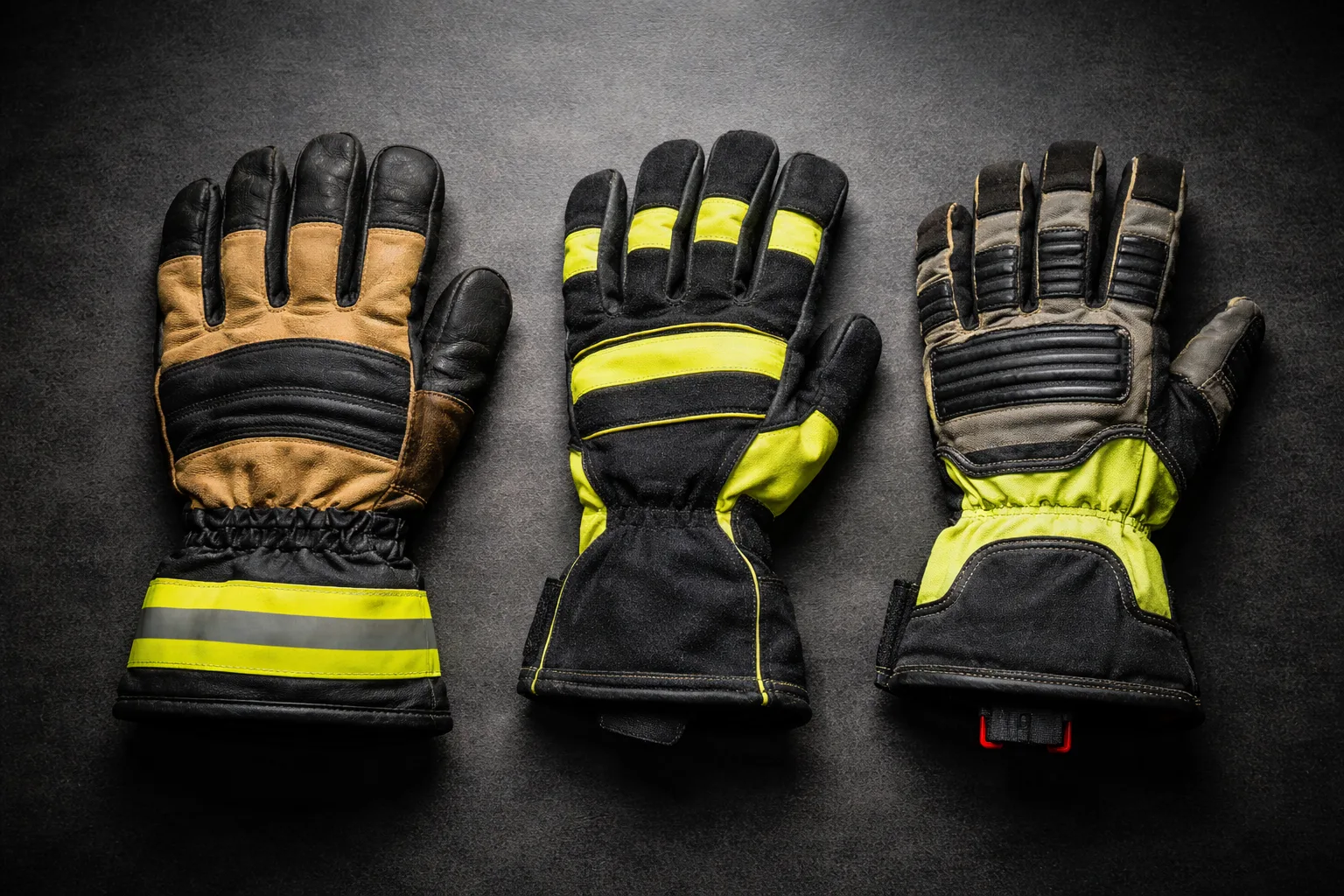

Firefighter Gloves Guide: Structural, Extrication & Wildland — Selection & Comparison
Firefighter gloves are the most frequently replaced piece of structural PPE and one of the most personal. Your hands are in contact with tools, hose, debris, and victims on every call. The right gloves balance thermal protection, dexterity, grip, durability, and moisture management. The wrong gloves can impair your ability to operate tools, feel what you are grasping in zero visibility, or fail under thermal exposure. This guide covers NFPA glove standards, the three primary glove categories used in the fire service, key features to evaluate, and a model comparison.
Jump to:NFPA 1971 glove requirements · Structural firefighting gloves · The dexterity-protection trade-off · Extrication gloves · Wildland gloves · Key features · Model comparison · Care and replacement · FAQ
NFPA 1971 Glove Requirements
Structural firefighting gloves must meet NFPA 1971 to be used in interior structural operations. Key performance requirements for compliant gloves:
- Flame resistance: Outer shell and liner materials must not ignite, melt, drip, or propagate flame
- Heat resistance: Glove must resist conductive heat transfer (Thermal Protective Performance requirement)
- Cut resistance: Must pass ASTM F2992 cut resistance testing — protects against sharp debris, broken glass, and metal edges encountered during structural operations
- Liquid penetration resistance: Must prevent liquid penetration including blood-borne pathogens per ASTM F1670
- Grip: Must provide adequate grip when wet
- Wrist coverage: Must extend to protect the wrist area between the glove and coat sleeve
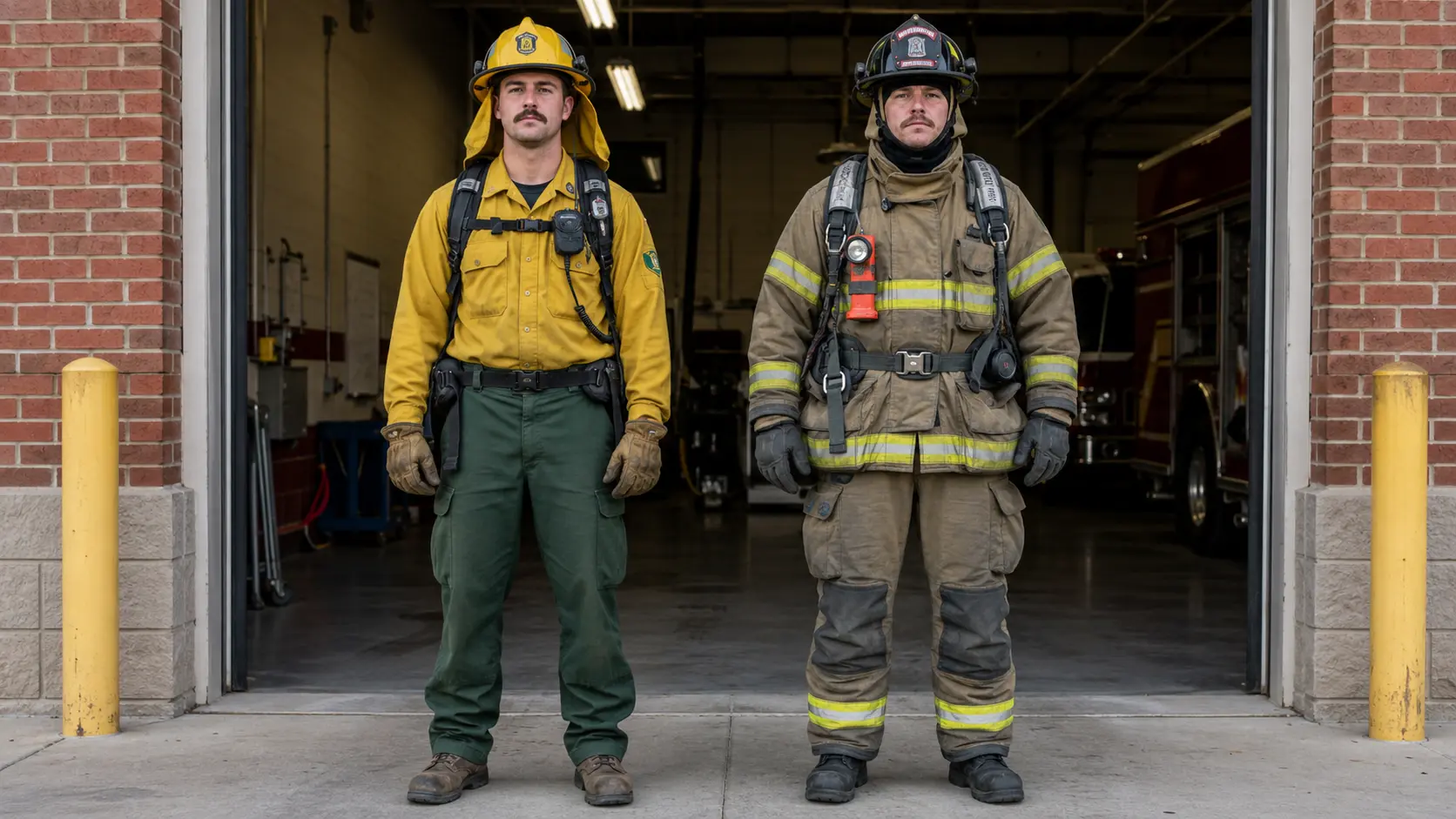
Extrication and wildland gloves are governed by different standards (NFPA 1971 for rescue gloves; NFPA 1977 for wildland) and have different performance profiles. Do not substitute an extrication or wildland glove for an NFPA 1971 structural glove in interior fire operations.
Structural Firefighting Gloves
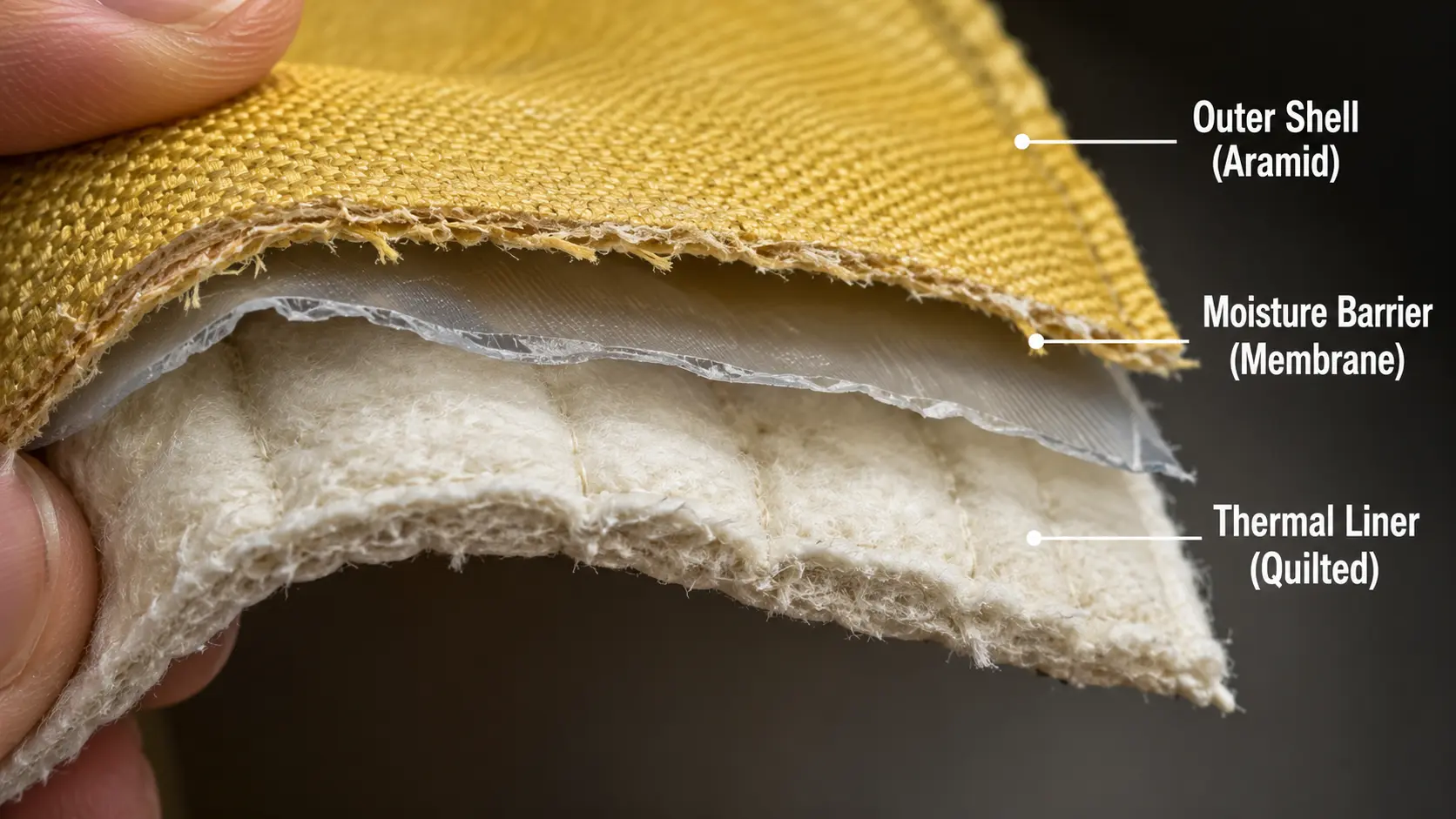
Structural gloves must provide thermal protection for interior fire attack while allowing the firefighter to operate tools, handle hose, open doors, and perform search and rescue. The construction of an NFPA 1971 structural glove typically includes:
- Outer shell: Leather (most common — cowhide, pigskin, or goatskin) or aramid fabric. Leather provides excellent abrasion resistance, grip when wet, and natural heat resistance. Aramid fabric shells provide better thermal protection but less abrasion durability.
- Moisture barrier: Thin ePTFE or similar membrane preventing liquid penetration while allowing vapor transmission.
- Thermal liner: Aramid or other flame-resistant insulation layer protecting against conductive heat.
- Wrist closure: Hook-and-loop (Velcro) or pull-on extended wrist cuff for sealing the gap between glove and coat sleeve.
Shelby Glove StrongHold
Shell: Full grain cowhide leather
Standard: NFPA 1971 certified
Standout feature: Among the most popular structural firefighting gloves in the U.S. fire service. Full leather construction with reinforced palm and fingertips. Gauntlet cuff with hook-and-loop closure. Excellent durability and grip. Available in multiple sizes including half-sizes. Cost: $60–$90.
Best for: Firefighters who prioritize durability, grip, and price over dexterity.
Black Diamond Firefighter Glove (Morning Pride / Honeywell)
Shell: Split leather palm with reinforced wear zones
Standard: NFPA 1971 certified
Standout feature: Contoured ergonomic fit for reduced hand fatigue. Moisture wicking liner. Extended gauntlet cuff. One of the better gloves for combined dexterity and protection at its price point. Cost: $65–$95.
Best for: Firefighters who do significant tool work and want some dexterity without sacrificing protection.
Lion Apparel Janesville Hot Glove
Shell: Pigskin leather
Standard: NFPA 1971 certified
Standout feature: Pigskin leather provides natural dexterity advantage over cowhide while maintaining structural protection standards. Moisture barrier integrated. Popular in departments where pigskin is preferred for feel and fit conformance. Cost: $70–$100.
Best for: Firefighters who find cowhide gloves too stiff; pigskin fans.
Ringers R-301 (High-Dexterity Structural)
Shell: Leather palm with fabric back; ergonomic pre-curved fit
Standard: NFPA 1971 certified
Standout feature: Designed specifically to maximize dexterity within NFPA 1971 requirements. Pre-curved fingers reduce fatigue. Thinner construction than traditional structural gloves. Better for tool operation, radio handling, and patient care. Somewhat less durable than full-leather structural options. Cost: $75–$110.
Best for: Firefighter-medics; firefighters who prioritize dexterity for tool and equipment operation.
The Dexterity-Protection Trade-Off
No topic in firefighter glove selection generates more debate than the balance between thermal protection and dexterity. The physics are straightforward: more insulating material between your hand and the environment means more thermal protection and less tactile sensitivity. The question is where your department's operations place the greater risk.
Arguments for maximum dexterity:
- Modern firefighting relies heavily on tool operation, radio use, and EMS patient care — all of which are impaired by thick, stiff gloves
- SCBA operation (particularly emergency procedures like bypass valve activation) requires fine motor control that thick gloves impair
- A firefighter who cannot operate tools effectively due to gloves may create a different safety problem than the thermal protection addresses
Arguments for maximum protection:
- Interior structural firefighting exposes hands to high radiant and conductive heat, live wires, sharp debris, and direct flame contact
- Hand burns are common in firefighters who use thin gloves; hand injuries end careers
- NFPA 1971 sets minimum protection standards for a reason — hands are directly exposed to the fireground environment on every operation
Practical approach: Carry two pairs. Use high-dexterity structural gloves (still NFPA 1971 certified) for most operations. Change to full structural gloves during interior attack in high-heat environments. Many experienced firefighters also carry a pair of extrication gloves for EMS work and tool operations that do not require full thermal protection.
Extrication Gloves
Extrication gloves (also called rescue gloves or technical rescue gloves) are designed for vehicle extrication, technical rescue, and patient care situations where the primary hazard is cuts and punctures from sharp metal, glass, and debris rather than intense heat. They are NOT rated for interior structural fire operations.
Ringers R-840 Extrication
Shell: Goatskin leather with cut-resistant reinforcement
Standard: NFPA 1971 Rescue Glove (not structural)
Standout feature: The most widely used extrication glove in the U.S. fire service. Excellent cut and puncture resistance. High dexterity for patient care and tool operation. Pre-curved ergonomic fit. Wrist protection with hook-and-loop closure. Cost: $50–$75.
Best for: All vehicle extrication, technical rescue, and EMS/patient care operations.
Hatch Specialist All-Around
Shell: Synthetic leather/Kevlar blend
Standard: ANSI cut resistance; not NFPA 1971
Standout feature: Excellent cut resistance with high dexterity. Popular in EMS-heavy operations. Cost: $40–$65.
Best for: Combined EMS/light rescue use.
Wildland Gloves
Wildland firefighting gloves must meet NFPA 1977. They are designed for extended outdoor use, primarily protection from embers, heat, and vegetation hazards during wildland operations. They are lighter and more dexterous than structural gloves but less thermally protective.
Elk Ridge Wildland Glove (Standard Issue)
Shell: Leather or Nomex-backed leather
Standard: NFPA 1977 certified
Standout feature: Standard federal wildland firefighter issue glove. Lightweight, durable, and designed for all-day wear during hand tool operations. Cost: $25–$50.
Best for: All wildland fire operations, engine crew, handcrew.
Key Features to Evaluate
Shell material
Leather type significantly affects fit, feel, and durability: cowhide is the most durable and provides excellent abrasion resistance but is stiffer and requires break-in. Pigskin conforms to the hand more quickly, is naturally softer, and is more breathable. Goatskin is the most dexterous natural leather option and is used in many high-dexterity designs. Deerskin is extremely soft and conforms well but is less durable than cowhide. Synthetic and aramid fabric shells provide better thermal protection in some cases but typically less abrasion durability than quality leather.
Wrist closure and cuff length
The cuff must create a complete seal with your coat sleeve when the arm is extended. Hook-and-loop (Velcro) closures allow adjustment but can catch on debris; pull-on extended cuffs (gauntlet style) provide a simpler and more reliable seal. Measure the overlap between your glove cuff and coat sleeve with your arm fully extended and your arm raised overhead — if skin is exposed in either position, the glove-coat interface is inadequate.
Pre-curved vs. flat construction
Pre-curved gloves have fingers that curl naturally toward the palm at rest, matching the hand's natural grip position. This reduces fatigue during extended tool use and grip work. Flat-construction gloves require constant muscular effort to close the fingers. If you spend significant time gripping tools, hose, or equipment, pre-curved construction significantly reduces hand fatigue over a shift.
Moisture management
Sweat accumulation inside a glove reduces grip, accelerates material degradation, and creates a medium for bacterial growth (a hygiene and odor issue on long shifts). Look for gloves with moisture-wicking liner materials that pull sweat away from the skin toward the glove exterior.
Quick Comparison
| Model | Type | Shell | Dexterity | Price | Best for |
|---|---|---|---|---|---|
| Shelby StrongHold | Structural | Full-grain cowhide | Moderate | $60–$90 | Durability, grip, value |
| Morning Pride Black Diamond | Structural | Split leather | Moderate-high | $65–$95 | Tool work, ergonomic fit |
| Lion Janesville Hot | Structural | Pigskin | Moderate-high | $70–$100 | Natural dexterity, fit |
| Ringers R-301 | Structural (high-dex) | Leather/fabric combo | High | $75–$110 | Medic-firefighters, tool ops |
| Ringers R-840 | Extrication | Goatskin | Very high | $50–$75 | Extrication, EMS, patient care |
| Elk Ridge Wildland | Wildland | Leather/Nomex | High | $25–$50 | All wildland operations |
Care and Replacement
- Clean after every fire. Gloves accumulate carcinogenic soot. Wipe down the exterior and wash the interior lining per manufacturer instructions. Do not machine wash unless the manufacturer specifically allows it — agitation can delaminate moisture barriers and distort leather.
- Dry naturally, not with direct heat. Drying leather gloves near a radiator or with a heat gun causes the leather to shrink, harden, and crack. Air dry at room temperature.
- Condition leather regularly. Leather conditioning (using a manufacturer-approved conditioner) prevents cracking and maintains flexibility. Over-conditioning makes leather slippery; under-conditioning causes cracking and failure.
- Replace when worn through or structurally compromised. A hole in the leather outer shell or any visible damage to the moisture barrier layer means the glove should be retired. Worn fingertips and palm patches reduce cut resistance and thermal protection at the points of highest contact.
- Do not wear contaminated gloves without cleaning. Gloves in contact with patient body fluids or hazmat must be decontaminated per protocol before reuse. Biohazard-contaminated gloves may need to be discarded per department protocol.
Frequently Asked Questions
Can you use extrication gloves for structural firefighting?
No. Extrication gloves are not rated to the thermal protection levels required for interior structural firefighting under NFPA 1971. They provide excellent cut protection and dexterity for vehicle rescue and EMS work but do not provide adequate protection against the radiant and conductive heat of structural fire operations. Using extrication gloves in interior structural fire operations is a serious safety risk.
What leather is best for firefighter gloves?
It depends on your priorities. Cowhide provides the best durability and abrasion resistance — preferred for heavy structural use. Pigskin is softer, conforms faster, and is more breathable — preferred by firefighters who prioritize fit and comfort. Goatskin provides the most natural dexterity of the leather options — preferred in high-dexterity designs. All three are used in NFPA 1971 certified structural gloves.
How often should firefighter gloves be replaced?
There is no fixed lifespan — replace when they fail inspection, show wear through, have holes in the outer shell, or have visible moisture barrier damage. Heavily used gloves in high-call-volume departments may need annual replacement. Lightly used gloves in low-volume departments may last several years with proper care. Inspect every shift and replace at any sign of structural compromise.

Comments 0
No comments yet. Be the first to share your thoughts!
Leave a Comment