
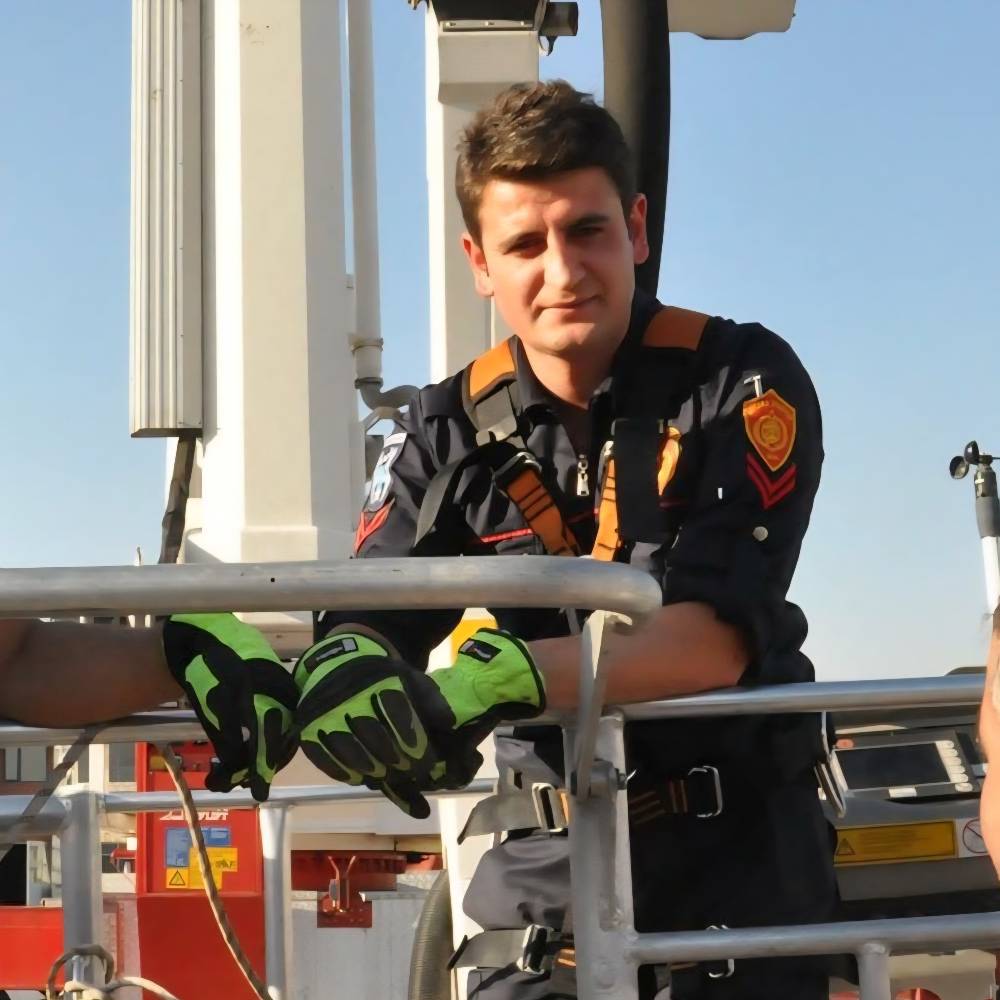
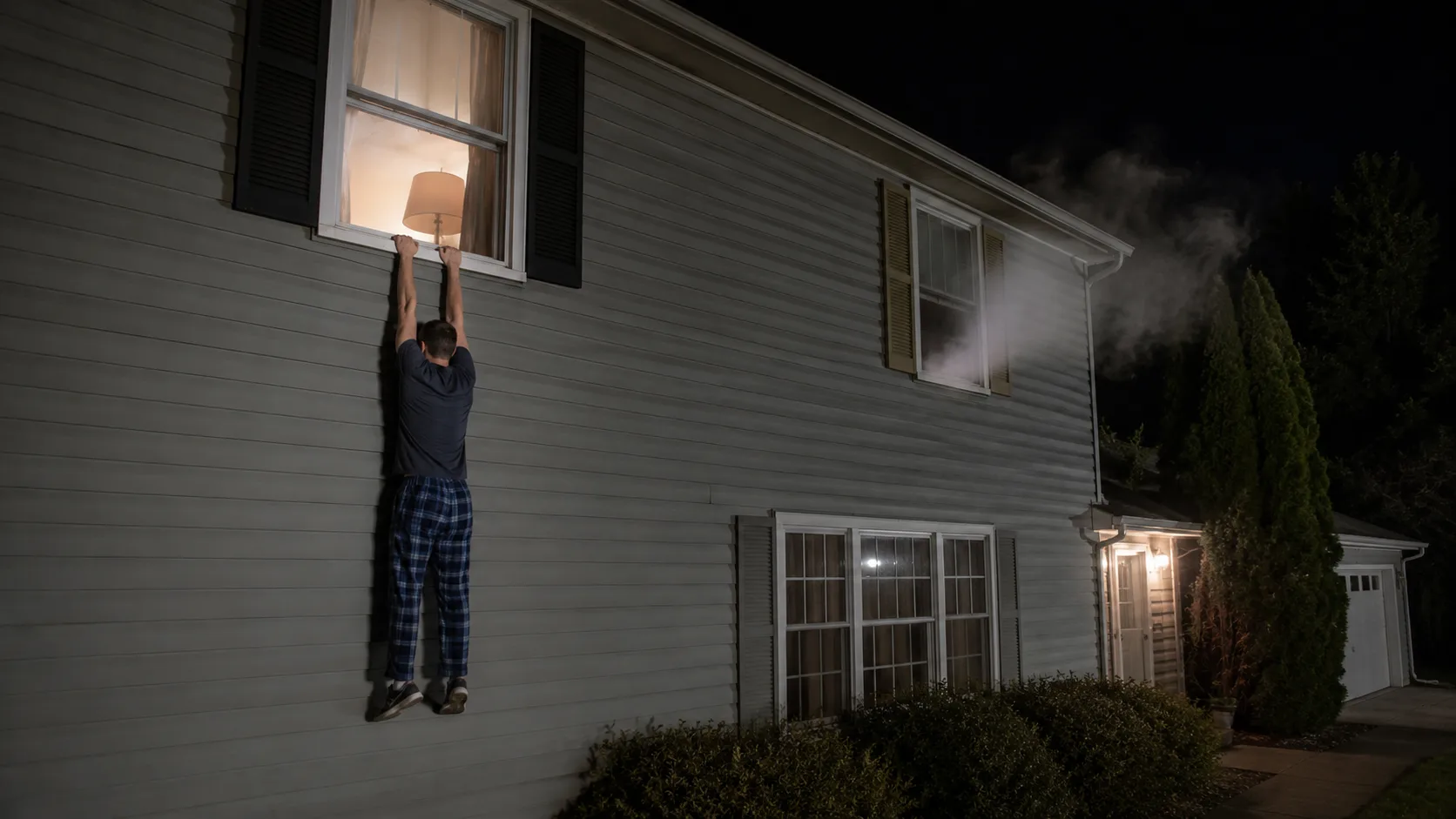
A firefighter who is trapped on an upper floor with their egress path cut off and no ladder at their window has two options: stay and hope for rescue, or use a personal escape system to self-rescue. The third option — jumping without a rope — is not a survival option from most second-floor or higher windows. The PES exists as the bridge between having no option and having a controlled descent option.
Every department that has adopted PES as standard personal equipment made the decision based on a documented firefighter fatality where a PES might have changed the outcome: a firefighter who bailed from a window without a rope, a firefighter found burned on an upper floor with a window that had been accessible. The departments that have not adopted PES universally have made a different calculation — that the training burden, the additional equipment cost, and the risk of improper deployment under real conditions do not produce a reliable improvement in outcome relative to RIT rescue and strong bail-out training without the rope system. Both positions reflect genuine operational experience and real data.
In this article:
What a PES Is and What It Contains
A personal escape system is a compact package — typically carried in a pouch attached to the turnout coat or stored in a dedicated pocket — that contains:
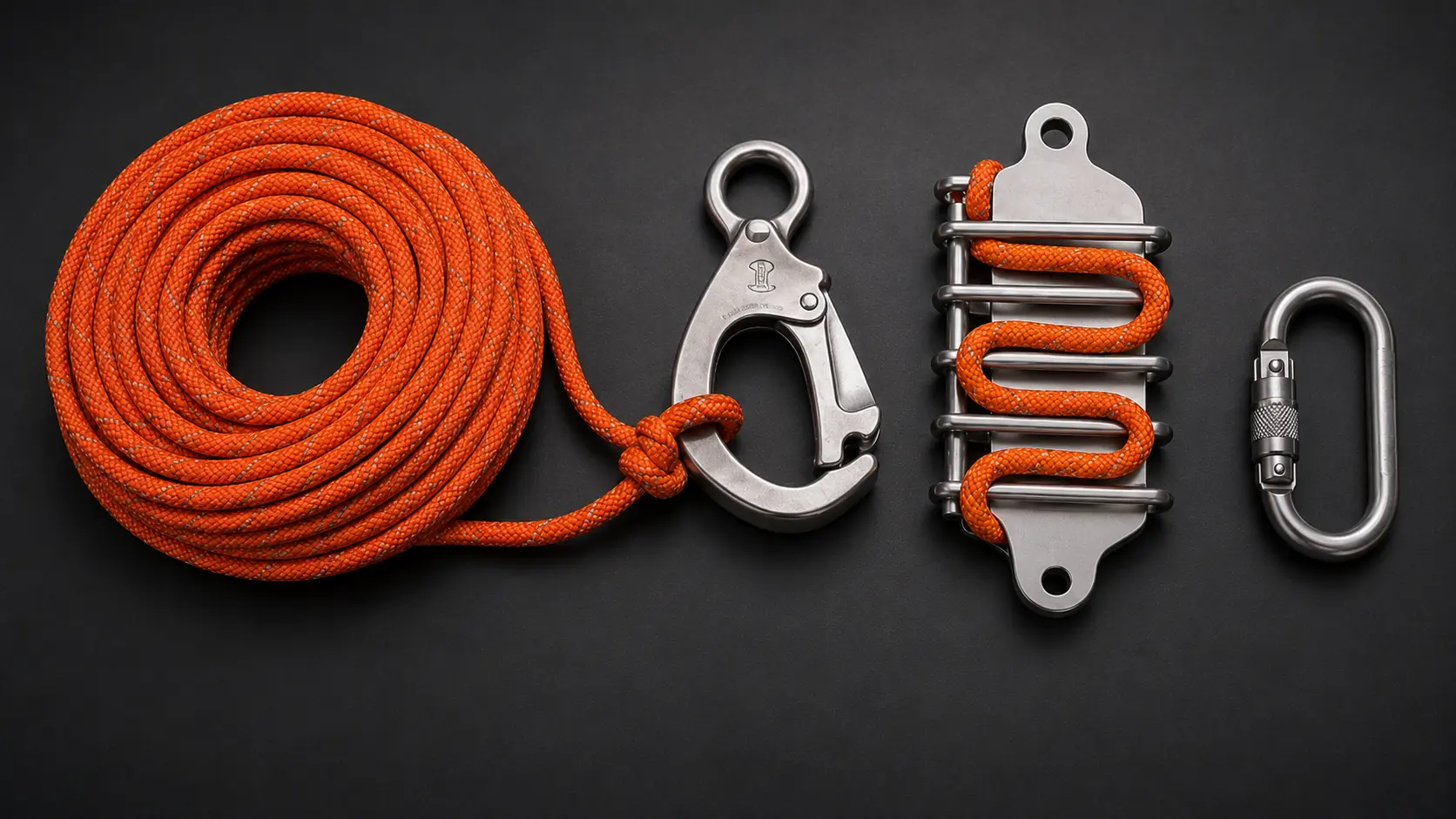
- Life safety rope: Typically 50 feet of kernmantle rope rated to NFPA 1983 escape rope standard — a minimum breaking strength of 5,000 pounds (for a single person system). Escape rope under NFPA 1983 is for one-time use only — it is not rated for the repeated use that rescue rope is designed for, and must be retired after any load-bearing deployment.
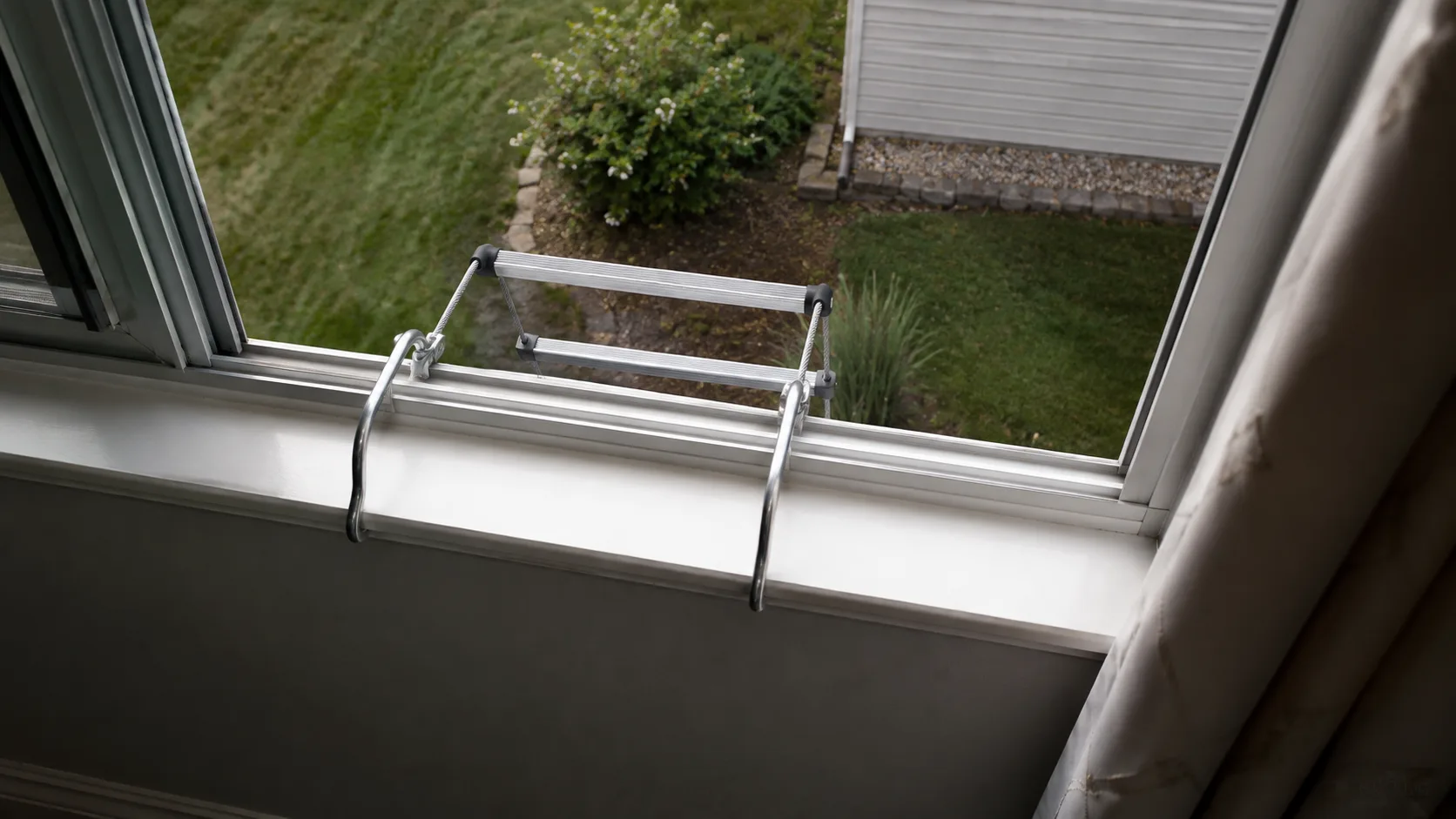
- An anchor device: A hook, carabiner, or purpose-built anchor that can be rigged to a window sill, door frame, radiator, or other structural feature to create the high point for the descent.
- A descent device: A friction brake that controls the rate of descent — typically a friction rack, a figure-8 descender, or a purpose-designed descent control device. The device must be operable with one hand while the other maintains the firefighter's position at the window.
- A connection to the harness: The PES connects to the firefighter's SCBA harness D-ring or to a dedicated harness loop — the connection point that allows the descent device to support the firefighter's full weight.
NFPA 1983 Requirements
NFPA 1983 — Standard on Life Safety Rope and Equipment for Emergency Services — classifies rope and system components by their intended use. Escape rope (Class III) is specifically defined for individual self-rescue descent: one-person load, one-time use, tested to a minimum 5,000-pound breaking strength. The classification distinguishes it from rescue rope (Class I and II) that is designed for repeated use, multi-person loads, and the dynamic loads of rescue scenarios.
The escape rope classification also carries specific construction requirements: the rope must be kernmantle construction (a braided core with a woven sheath), must meet specific elongation limits under load, and must maintain its rated strength characteristics after field exposure conditions. Departments that issue escape rope must track usage — a rope that has been loaded to its working limit is retired regardless of visual appearance.
Anchor Options: Window Sill vs. Door Frame
The anchor — the structural point that the descent rope is attached to — determines whether the PES deployment will hold the firefighter's weight or fail. The anchor must support a dynamic load, not just a static one: a firefighter who is not perfectly controlled in their departure from the window will apply a load significantly higher than their static weight as the rope comes taut.
Window sill anchor: The hook or carabiner is placed around the window sill — the structural element at the bottom of the window opening. This is typically the fastest anchor to rig because it requires only looping the hook around the sill edge. The limitation is that window sills in different construction types provide very different load capacity — a masonry window sill is a structural member that can support significant load; a wood-frame window sill may be nailed construction that fails at lower loads. Assessment of anchor quality is part of the anchor rigging step.
Door frame anchor: The hook is placed over the top of the door frame, which typically provides a stronger structural anchor than a window sill. The trade-off is that the rope runs over the top of the door, and the fire-exposed door frame may be compromised in the fire condition that is driving the PES deployment. A door frame anchor positions the firefighter to descend from the window adjacent to the door — if the window is not accessible from the door frame, the door frame anchor is not viable.
Descent Devices: Friction Rack vs. Other Designs
The friction rack is a bar-and-D-ring device that winds rope through a series of friction bars, providing variable braking by the number of bars the rope is threaded through. It is compact, relatively simple to use, and can be operated with one hand once rigged. The limitation is that rigging it correctly — threading the rope through the correct bars in the correct sequence — requires fine motor control that is degraded by heat stress, disorientation, and cold or wet conditions.
Purpose-designed PES descent devices have moved toward simplified rigging requirements: devices where the rope connects in a single motion and the braking function is built into the device geometry rather than requiring correct threading. The trade-off is that simplified devices may have less range of braking force adjustment, which matters when the user needs to control descent speed to land precisely or to avoid a specific obstacle below.
The Deployment Sequence
The trained deployment sequence for a PES from a window:
- Deploy the rope from the pouch — remove the system from storage and verify the anchor hook and descent device are accessible.
- Rig the anchor — hook the anchor to the window sill or door frame, verify it is secure by applying body weight in the direction of descent before committing to the window.
- Connect the descent device carabiner to the SCBA harness D-ring — verify the carabiner is locked.
- Throw the rope out the window — ensure the rope extends to the floor below or to a safe landing point.
- Position in the window opening — feet over the sill, facing into the room (not facing outward), with the descent device accessible to one hand.
- Control the descent device and lower off — releasing weight from the window sill onto the rope and controlling descent speed with the friction device.
In training on a clean, lit, clear burn building with supervision and time to complete each step, this sequence takes approximately 30 to 60 seconds for a trained firefighter. Under actual fire conditions — disoriented in smoke, working in zero visibility, with heat driving urgency and degrading fine motor control — the sequence time increases and the error probability increases with it.
Training Requirements and the Real-Condition Gap
The fire service debate about PES is substantially a debate about this gap. Proponents argue: any controlled descent option is better than no option, the training requirement is manageable, and the incidents where PES have been successfully used demonstrate real survival value. Opponents argue: the real-condition deployment failure rate is high enough that PES creates a false sense of security, that RIT capability and strong bail-out training without PES produce better overall outcomes, and that the departments most likely to issue PES are not the departments with the RIT capability to rescue a firefighter who deploys PES incorrectly.
Departments that have adopted PES universally — including several major metropolitan departments and FDNY — pair the equipment issue with mandatory training that goes beyond supervised correct-condition deployment. Training scenarios include PES deployment in limited-visibility conditions, with heat stress present, with one hand occupied, and in sequence with other emergency procedures. The training standard required for reliable real-condition performance is substantially higher than what a basic PES introduction provides.
The Debate: PES Adoption vs. Alternatives
The strongest argument for PES adoption is the documented cases where a firefighter died or was seriously injured in an upper-floor window situation that a PES would have addressed. The cases exist, they are documented in NIOSH fatality reports, and they provide a concrete argument for the equipment. The strongest argument against universal adoption is that the equipment investment and training burden produce marginal benefit in departments with strong RIT programs and rapid aerial response, and that the marginal benefit may be negative if the PES is deployed incorrectly in conditions that a well-trained bail-out technique would have managed.
The specific department characteristics that favor PES adoption: older building stock with more frequent upper-floor entrapment scenarios, longer aerial ladder response intervals, departments with strong ongoing training infrastructure that can maintain PES proficiency, and departments where the firefighter fatality record includes upper-floor window scenarios. The characteristics that make alternative approaches more defensible: fast aerial response, strong RIT programs, lower-story residential building stock where the height advantage of a second-story window does not require rope management, and departments where the training burden of PES would reduce training time available for other critical skills.
SCBA Compatibility During Descent
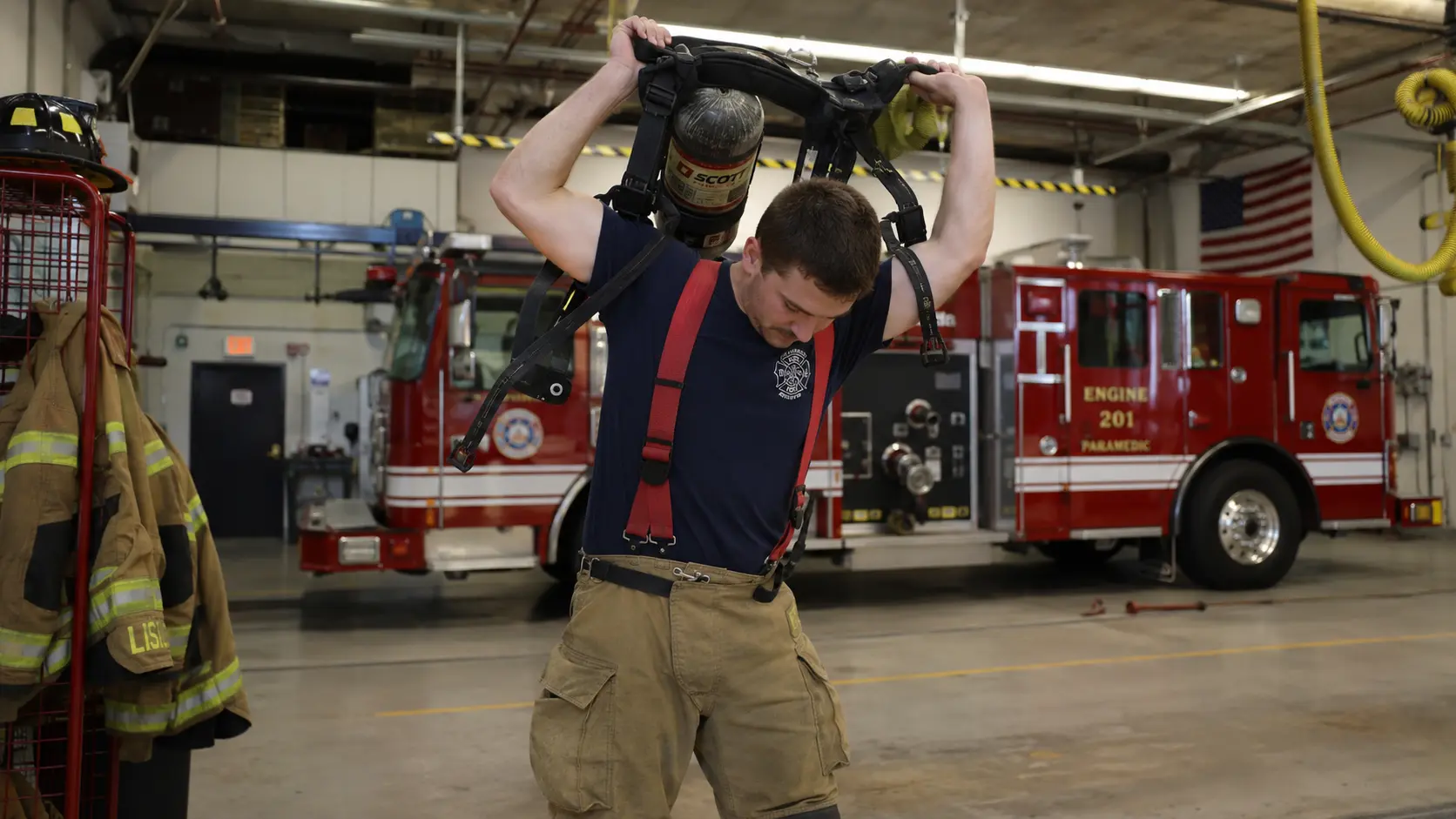
A firefighter who deploys a PES while wearing a charged SCBA — the most likely operational scenario — descends with the full weight of the SCBA adding to the load on the descent system and changing the center of gravity during descent. The SCBA cylinder on the back creates a rearward weight bias that affects body position against the building face during descent. The low-pressure hose to the facepiece may catch on window frame or exterior building features during the descent.
PES training that does not include descent with a charged SCBA produces proficiency in a condition that differs from the actual deployment scenario. Training with the full gear load — including charged SCBA — is the standard required before any department issues PES as operational equipment. The additional weight and balance change are manageable with training; they are disorienting to a firefighter who has only practiced without them.

Comments 0
No comments yet. Be the first to share your thoughts!
Leave a Comment