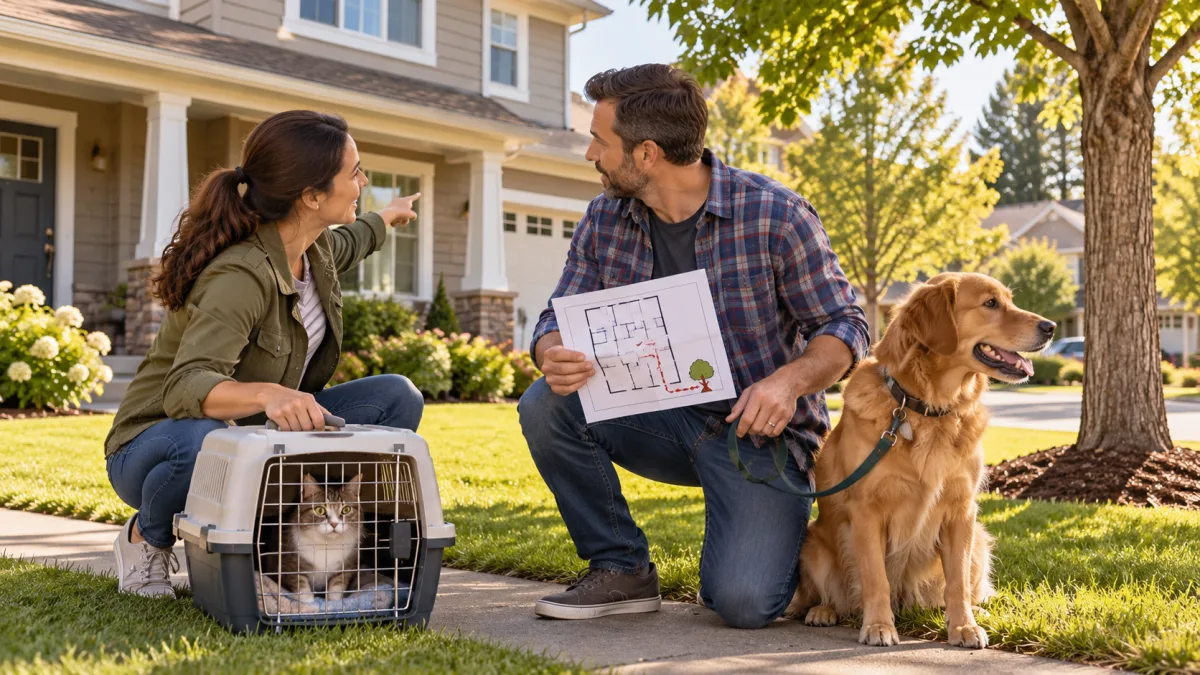
The cat carrier is useful only if someone can find it. A leash on the wrong floor is not part of an escape plan. Pet fire safety starts with these small household details, long before anyone hears an alarm.
Include animals in the family's preparation, but keep the emergency priority clear: do not delay escape or re-enter a burning building to retrieve a pet. Once outside, tell firefighters which animals may still be inside and where they were last seen.
Give each animal a place in the plan
The American Red Cross pet fire-safety guidance recommends including pets in household planning and practice while warning against endangering people to rescue them. Apply that boundary to every task you assign. “Take the dog if the dog is beside the exit” is different from “search every bedroom for the dog.”
Write down the animals in the home, where they normally sleep and the equipment needed to move them. Include the times when the routine changes. A pet that stays downstairs during the day may sleep behind a closed bedroom door at night.
Do not make a child's escape depend on finding or controlling an animal. Adults should explain that getting outside and staying outside is the child's job. Pet arrangements should support that instruction rather than compete with it.
Put the equipment where it can be used
Choose an accessible storage location for leashes, harnesses and carriers without obstructing a doorway or aisle. If an animal needs a carrier, make sure it is suitable, serviceable and familiar before an emergency. A flat-packed carrier buried behind holiday decorations is a storage item, not a ready escape aid.
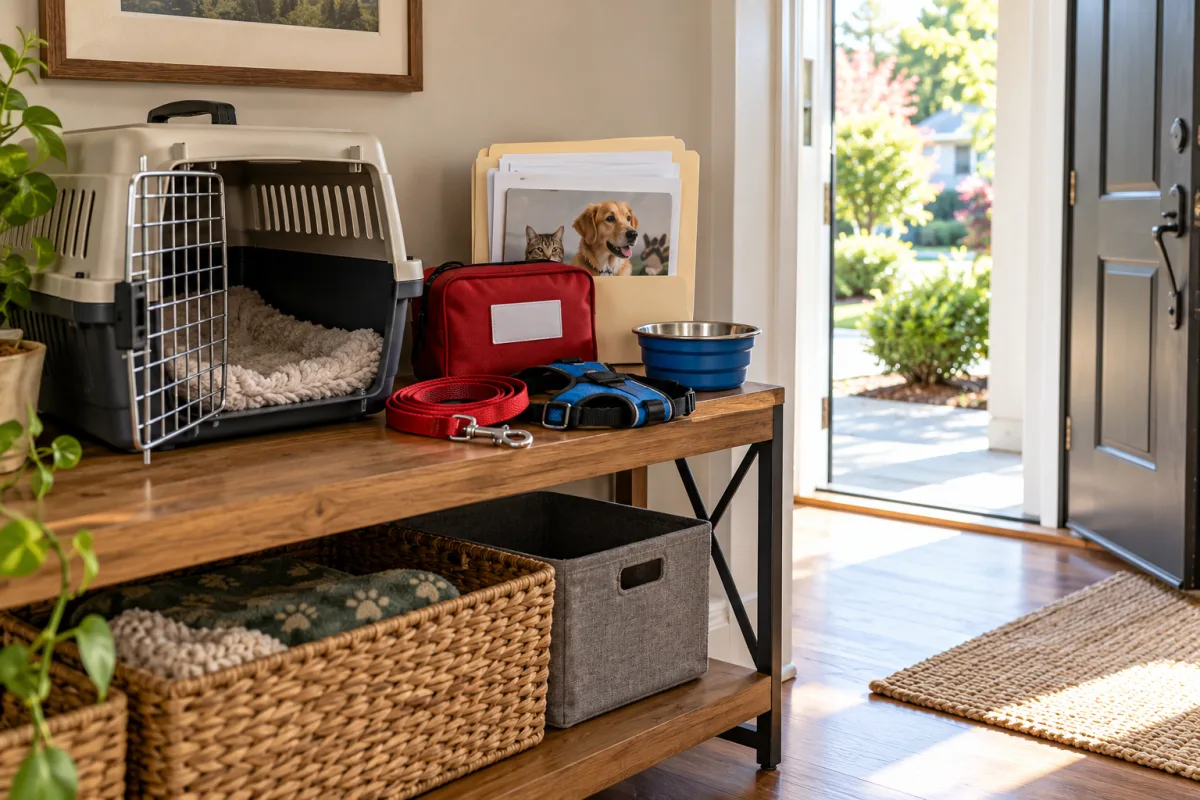
Introduce carriers and handling routines gradually, with advice from a veterinarian or qualified animal professional where needed. Avoid frightening alarm simulations or forcing an animal through a stressful drill. The purpose is familiarity, not proof that a pet will behave predictably during smoke and noise.
| Household detail | Preparation task | Boundary during a fire |
|---|---|---|
| Dog near the normal exit | Keep a suitable leash and know who can handle the dog. | Do not go toward smoke to collect equipment. |
| Cat or small animal requiring a carrier | Keep an appropriate carrier assembled and accessible. | Do not turn an escape into an extended search. |
| Multiple animals | Assign realistic adult responsibilities and identify equipment for each. | Account for people first at the meeting point. |
| Animal with medical or handling needs | Discuss transport with the veterinarian before an emergency. | Do not improvise medication or risky handling during escape. |
Practice the handoff, not a rescue mission
During an ordinary household walk-through, ask who would take an immediately accessible animal, where the equipment is and where everyone would meet outside. Then discuss what happens if the animal is not there. That last question prevents the plan from silently depending on a dangerous search.
Practice carrying or leading an animal only in calm, suitable conditions. Test the human arrangements separately if handling would stress the pet. A written plan can say “carrier beside hall cupboard; adult A handles cat if immediately accessible; otherwise tell responders” without staging a frightening exercise.
Use the existing family escape-plan guide for the people, exits and meeting-point decisions. The pet plan is an addition to that plan, not a separate procedure that sends family members in opposite directions.
If a pet is missing after you escape
Stay outside. Give responders clear information: species, approximate size, number of animals, last known location and any handling concerns. Separate facts from possibilities. “The cat was in the back bedroom when we went to bed” is more useful than claiming the cat is definitely still there.
Do not take a missing animal as permission to re-enter. Fire conditions can change while a familiar room still looks reachable. Responders must make rescue decisions within the conditions they encounter; a window sticker or a phone call cannot guarantee a pet rescue.
If an animal has escaped with you, maintain control away from apparatus and access routes. A frightened pet can bolt into traffic or back toward the building. Choose the meeting point with this in mind and ask for help if handling the animal is becoming unsafe.
Plan for the hours after the fire
Escape is only the first transport problem. You may need somewhere suitable for animals to stay, access to medication information and a way to identify an animal separated from the household. Ready.gov's pet preparedness sheet covers contacts, identification, records and supplies.
Prepare a small document packet with current contact details, veterinary information, needed records and recent photographs. Confirm possible accommodation before it is urgent; policies and arrangements vary. Keep the packet available outside a single vulnerable location, such as a digital copy that can be reached from another device.
For birds, reptiles and other animals with specialized needs, obtain species-appropriate transport guidance in advance. A generic dog-and-cat checklist cannot establish safe temperature, ventilation or handling arrangements for every animal.
An original household pet-plan card
Fill in the following during a calm discussion. Keep the card with the family's emergency information and update it when an animal, address or routine changes.
- Animals: names, species, distinguishing details and current identification information.
- Usual locations: normal daytime and sleeping areas, with any room names visitors would not recognize.
- Equipment: exact leash/carrier location and who can use it.
- Adult responsibility: who handles an immediately accessible animal; the fallback when that person is absent.
- Escape limit: no delayed escape, no searching in danger and no re-entry.
- Meeting point: a location clear of responding vehicles, with a way to keep animals controlled.
- Afterward: veterinary contact, alternate carer and potential accommodation.
A neighbor arrangement can help when you are away, but it must not ask a neighbor to enter smoke or fire. The Red Cross preparedness guidance also discusses keeping animals under control after displacement. Agree on safe contact and assistance arrangements without assigning someone a rescue obligation.
Reduce the chance of a pet-related ignition
Look at the home from the animal's reach: cooking controls, candles, accessible heat sources and damaged cords deserve attention. Use appropriate prevention measures and qualified advice rather than improvised covers that could interfere with appliance safety. The familiar pet climbing on the counter is still capable of reaching equipment you do not expect it to touch.
Keep prevention and escape as separate checks. A tidier kitchen does not replace working smoke alarms. A prepared carrier does not replace an unobstructed human exit.




Comments 0
No comments yet. Be the first to share your thoughts!
Leave a Comment