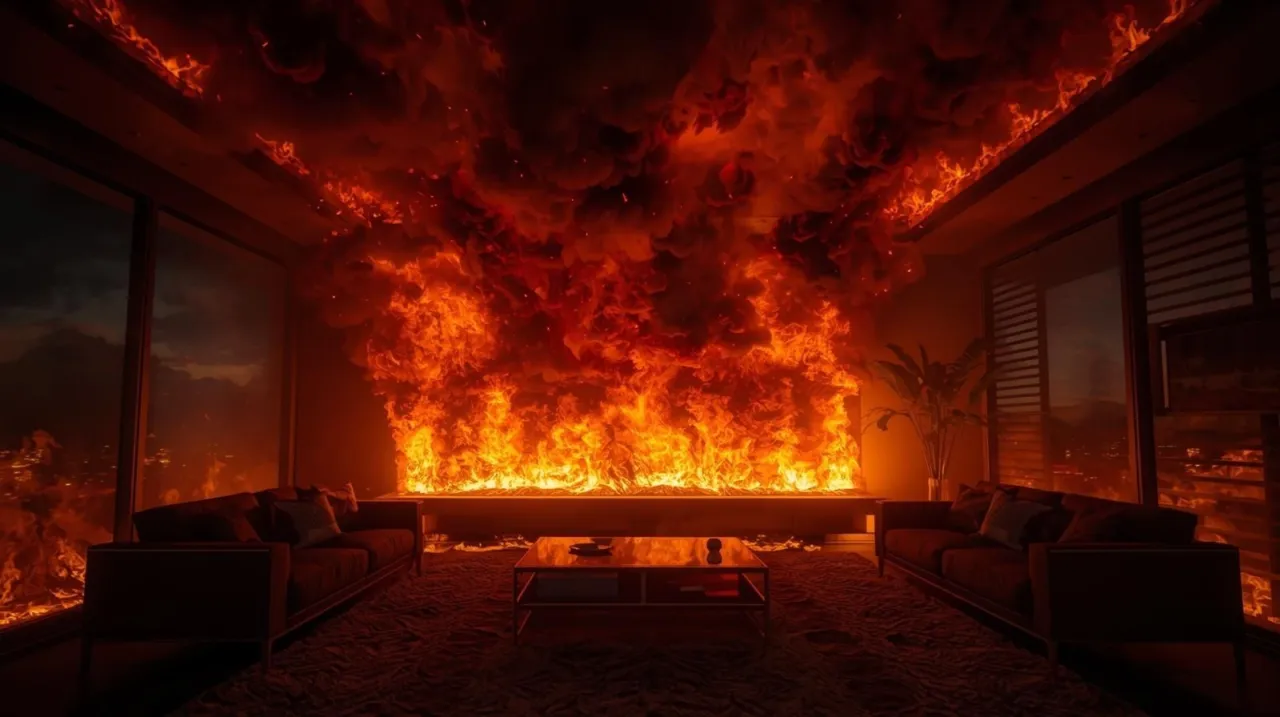

The 3-Minute Window That Changes Everything
In the 1970s, fire investigators and safety researchers estimated that occupants of a burning home had approximately 17 minutes to escape after a fire started. Today, that window has collapsed to 2–3 minutes from the moment a smoke alarm sounds in a modern home. That is not a rough estimate — it is the result of controlled burn experiments conducted by UL's Fire Safety Research Institute (FSRI) comparing furnished rooms from different eras under identical ignition conditions.
The difference is not better or worse firefighting. It is the material in your house. Modern synthetic furniture, open floor plans, and engineered wood construction have fundamentally changed the physics of residential fires. Understanding how fast a house fire spreads — and why — is the single most important piece of information any family can have about fire survival.
Minute by Minute: How a House Fire Actually Spreads
Fire behavior in a residential structure follows a predictable progression. Each phase builds on the last with increasing speed. Here is what actually happens from ignition to flashover in a modern home:
sec
Ignition — fire is small and containable
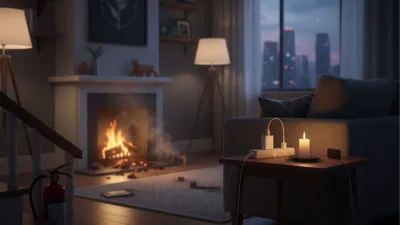
The fire starts at a point source — an overloaded outlet, a candle, a stovetop. At this stage it is still small enough to be extinguished with a fire extinguisher. Smoke production is minimal. Most people at this stage are unaware there is a fire unless they are in the room.
90s
Early growth — smoke fills upper portion of room
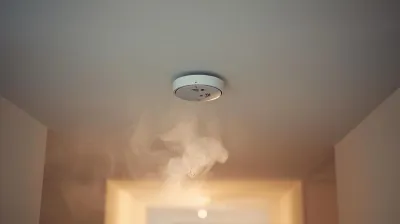
The fire is growing and feeding on available fuel. Hot gases and smoke rise to the ceiling and begin banking downward. A smoke alarm in the room should activate. Visibility begins to drop in the upper half of the room. CO and toxic gases are building. This is your best escape window.
min
Rapid growth — room becomes increasingly untenable
The synthetic furniture is now fully involved. Heat output is escalating rapidly. The hot gas layer banks down to 4–5 feet from the floor. Temperatures at ceiling level can exceed 600°F. Breathing the upper gas layer is immediately fatal. Moving low is essential. Smoke is migrating through the home via any opening.
min
Pre-flashover — the point of no return approaches
Radiant heat from the superheated ceiling gas layer is now heating all combustible surfaces in the room — floors, walls, other furniture — toward their ignition temperature. Skin exposed to this radiant heat receives burns within seconds. Anyone still in the room of origin has effectively no survival probability without immediate firefighter intervention. Smoke alarm in adjacent rooms should be sounding.
min
Flashover — entire room ignites simultaneously
All combustible surfaces in the room reach ignition temperature at nearly the same moment and ignite simultaneously. Floor-level temperatures can reach 1,000–1,200°F within seconds of flashover. This event is unsurvivable without full structural firefighting gear. Fire now rapidly extends into adjoining rooms and hallways. The entire floor can reach flashover conditions within minutes of the first room flashing over.
min
Full involvement — structural failure begins
Fire extends throughout the structure. Engineered wood floor joists — thinner than dimensional lumber — begin failing. Roof structures are compromised. The entire home is now a high-hazard environment for firefighters as well as occupants. Search and rescue operations shift to increasingly defensive risk calculus.
Why Modern Homes Burn So Much Faster
🪵 1970s Home — 17-Minute Window
- Solid wood furniture — slower to ignite, lower energy release
- Natural fiber upholstery (cotton, wool) — lower flame spread
- Dimensional lumber framing (2×8, 2×10) — maintains structural integrity longer
- Smaller rooms, more compartmentalization — limits fire spread rate
- Lower total fuel load per room
- Less synthetic material = fewer toxic gases
🛋️ Modern Home — 3-Minute Window
- Polyurethane foam furniture — ignites fast, extremely high energy release rate
- Synthetic fabric coverings — accelerate flame spread across furniture surface
- Engineered wood (LVL, OSB, I-joists) — thin flanges fail structurally much faster
- Open floor plans — fire and hot gases spread without compartment barriers
- Higher fuel load — more electronics, plastics, and synthetic materials per room
- Synthetic combustion = HCN (hydrogen cyanide) + CO in high concentrations
Smoke Travels Faster Than Flames
The most dangerous misconception about house fires is that you need to see flames to be in danger. In the majority of fatal residential fires, victims are overcome by smoke and toxic gases before flames ever reach them. Here is how smoke compares to fire in terms of spread speed and lethality:
| Hazard | Spread Rate | Primary Danger | Time to IDLH* |
|---|---|---|---|
| Flames | Room to room — minutes; floor to floor — 5–10 min in open structure | Thermal burns, structural failure | Immediate on contact |
| Hot gas layer (smoke) | Fills a room in 60–90 sec; spreads through floor in 2–3 min | Radiant heat burns even below flame level; thermal layer forces occupants lower | 1–2 minutes in smoke-filled upper layer |
| Carbon monoxide (CO) | Travels with smoke — reaches all areas of home rapidly | Colorless, odorless; causes disorientation, unconsciousness, death | 2–5 min at high concentrations produced by modern material combustion |
| Hydrogen cyanide (HCN) | Produced by burning synthetic materials; travels with smoke | Inhibits cellular oxygen use; synergistically lethal with CO | Under 1 minute at concentrations found in modern residential fires |
*IDLH = Immediately Dangerous to Life or Health concentration
The Closed Door Effect: Your Most Underrated Protection
Of all the fire safety measures available to a homeowner, closing bedroom doors before sleep is among the most impactful and most overlooked. UL FSRI conducted documented side-by-side experiments in identical rooms — one with the door open, one with the door closed — under the same fire conditions:
| Condition | Temperature at 5 min | CO Level at 5 min | Survivability |
|---|---|---|---|
| Room with open door | >1,000°F | Extreme — IDLH exceeded | Not survivable |
| Room with closed door | ~100°F | Elevated but survivable | Survivable — rescue possible |
Room-by-Room Fire Spread Risk
| Room | Primary Ignition Sources | Spread Risk | Key Factor |
|---|---|---|---|
| Kitchen | Cooking equipment (leading cause — 49% of home fires per NFPA), grease buildup, electrical appliances | 🔴 High | Grease fires spread instantly to cabinets; open layout spreads to adjacent areas fast |
| Living room | Upholstered furniture, electronics, candles, electrical outlets | 🔴 High | Highest synthetic fuel load in home; largest open area; direct path to stairways |
| Bedroom | Bedding, space heaters, smoking materials, electrical cords | 🔴 High — especially at night | Occupants asleep = delayed detection; closed door is the primary protection |
| Garage | Vehicle fuel, chemicals, power tools, dryer lint | 🟠 Very high spread potential | High ignitable liquid storage; often path into home structure |
| Basement | Electrical panels, furnaces, laundry equipment, storage | 🔴 High — backdraft risk | Limited ventilation; fire burns upward through structure; stairway acts as chimney |
| Attic | Electrical wiring, insulation, roof structure | 🟠 Moderate ignition, high structure risk | Rapidly destroys roof structure; fire spreads through rafter bays |
Your Family Survival Checklist
- Install interconnected smoke alarms on every level, inside every bedroom, and outside every sleeping area — all alarms sound when any one detects smoke
- Install combination smoke/CO detectors or separate CO alarms near sleeping areas
- Test all alarms monthly; replace batteries annually; replace entire unit every 10 years
- Close all bedroom doors before sleeping — every night, without exception
- Create a written home fire escape plan with two exits from every room
- Designate an outdoor meeting point away from the structure where all family members go immediately
- Practice the escape plan with all household members — including children — at least twice per year
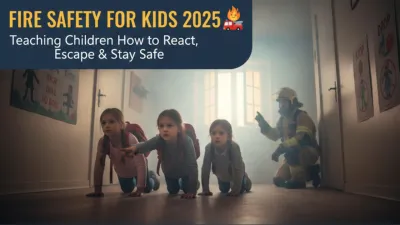
- Teach children that on hearing a smoke alarm, they exit immediately — they do not investigate, they do not gather belongings
- Sleep with bedroom doors closed if anyone in the home smokes or uses candles
- Never re-enter a burning building for any reason — call 911 from outside
For a room-by-room breakdown of the specific ignition hazards hiding in the average American home, see our complete guide to hidden home fire hazards. For the fire science behind how these events develop — including flashover, backdraft, and compartment fire stages — see our fire behavior guide. For placement guidance on exactly where smoke alarms should go in your home, see our smoke alarm placement guide.



Comments 0
No comments yet. Be the first to share your thoughts!
Leave a Comment