Firefighter Rehabilitation (NFPA 1584): Rehab Standards, Setup & Operations
Firefighter cardiac events are the leading cause of line-of-duty deaths, responsible for approximately 45% of all LODDs annually. The majority of cardiac LODDs occur during or immediately following fire suppression. Many are preventable. Proper rehabilitation — rest, rehydration, medical monitoring, and medical evaluation during and after fireground operations — directly reduces the risk of cardiac events and heat-related illness. NFPA 1584 provides the standard framework. This guide covers when rehab is required, what it must include, how to set it up, and the medical evaluation criteria that determine when a firefighter can return to duty.
Jump to:Why rehab matters · NFPA 1584 requirements · Rehab triggers · Rehab sector setup · Rehab components · Medical evaluation criteria · Return-to-duty criteria · Heat illness recognition · Accountability in rehab · FAQ
Why Rehabilitation Matters: The Physiology
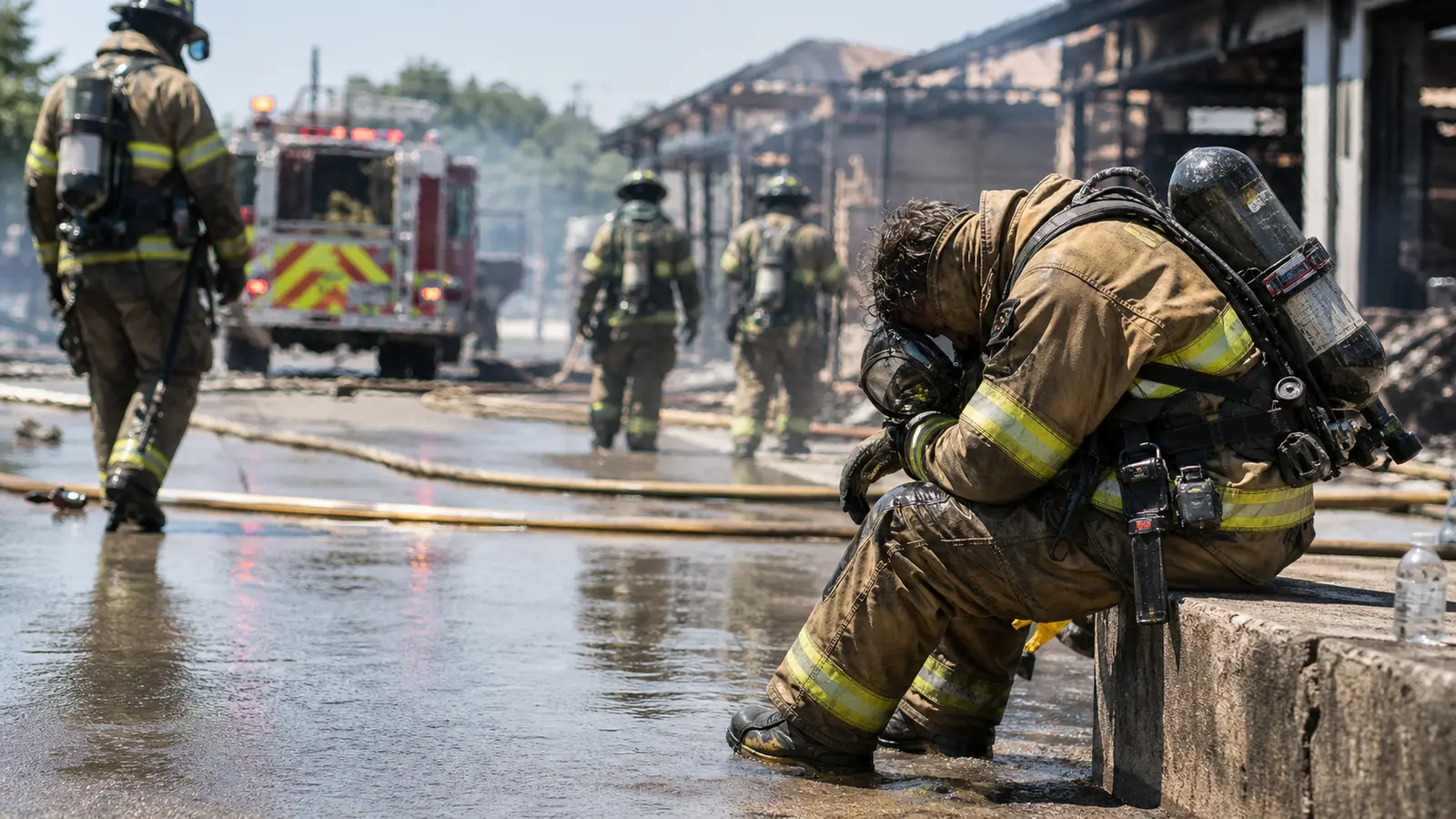
Structural firefighting in full PPE is one of the most physiologically demanding activities a human body can perform. The combination of heavy protective clothing, SCBA weight, physical exertion, heat stress, and psychological stress creates a unique and severe physiological burden:
- Core body temperature: Can reach 38–40°C (100–104°F) within a single SCBA cylinder in full PPE during active suppression
- Sweat loss: 1–2 liters per hour in full PPE; dehydration begins within a single working period
- Cardiovascular demand: Heart rates of 160–190 BPM during interior attack are documented; sustained at these rates, the cardiac muscle is under extreme stress
- Catecholamine surge: Alarm activation produces a rapid epinephrine and norepinephrine surge that increases heart rate and blood pressure, increasing cardiac demand before physical work even begins
- Recovery lag: Even after exiting the fire building, core temperature, heart rate, and blood pressure continue rising for several minutes before beginning to decrease — the "afterload" effect
Firefighters who return to interior operations without adequate recovery from the first working period enter the second period physiologically compromised: elevated baseline heart rate, reduced plasma volume from sweating, and elevated core temperature. Each subsequent entry carries higher risk than the last.
NFPA 1584: The Standard
NFPA 1584 (Standard on the Rehabilitation Process for Members During Emergency Operations and Training Exercises) establishes minimum requirements for firefighter rehabilitation. Key requirements:
- Rehabilitation must be provided at all emergency operations and training exercises whenever members are exposed to strenuous work or hazardous conditions
- The IC must establish a rehabilitation sector when rehab is needed; this is a mandatory ICS function, not optional
- Members must be evaluated by medically trained personnel before re-entry to operations
- Minimum rest period of 20 minutes in the rehab sector after two consecutive SCBA cylinder changes, or sooner if indicated by physical distress
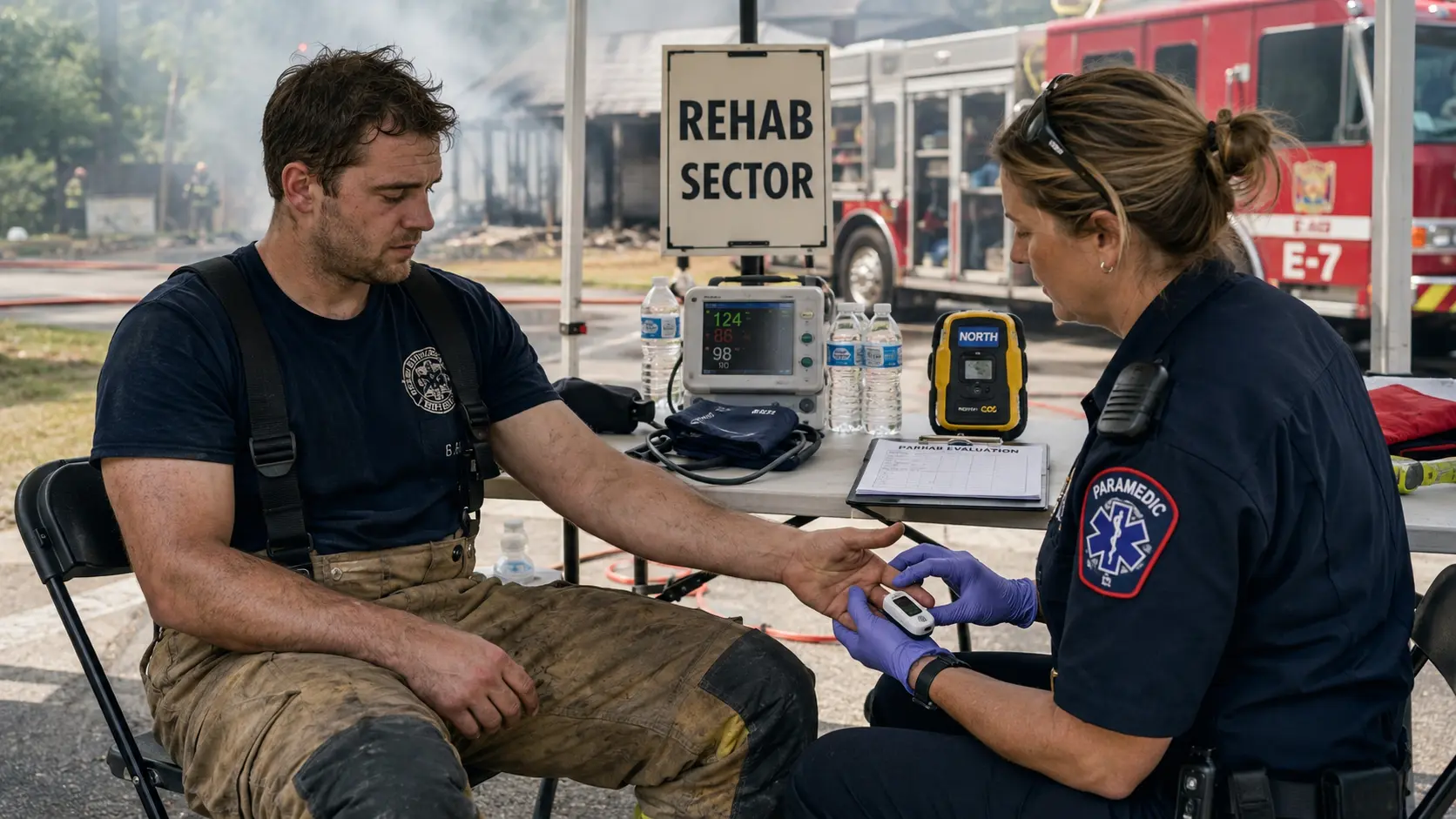
- Medical evaluation must include at minimum: pulse rate, blood pressure, SpO2, and assessment for heat illness or other medical conditions
- Members who fail evaluation criteria must not return to operations and must be evaluated by EMS
When to Establish Rehabilitation
NFPA 1584 specifies triggers for formal rehab establishment. Most departments have SOGs that define specific thresholds. Common triggers:
- Any incident requiring two or more SCBA cylinder changes per member (indicating extended operations)
- Any incident lasting more than 20–30 minutes of active firefighting
- Any incident in which the IC determines that conditions are causing physiological stress (high heat, extended exertion, multiple alarm)
- Any incident classified as a "working fire" by department SOG
- Any training evolution involving live fire or SCBA use of more than 20 minutes
- Any member who requests rehab or shows signs of heat illness or cardiac distress
Never deny a firefighter's request for rehab. A firefighter who says they need a break is providing the IC with critical safety information. Denying that request or creating cultural pressure against requesting rehab has directly contributed to firefighter cardiac LODDs. The rehab sector is not weakness — it is evidence-based prevention.
Rehab Sector Setup
The rehab sector must be located in a safe area away from the hazard zone, with adequate space for the expected number of personnel. Key setup requirements:
Location criteria
- Upwind and uphill from the incident to avoid smoke inhalation during rest
- Out of the collapse zone and away from all operational hazards
- Accessible by ambulance for emergency transport if needed
- Sheltered from extremes: shade in summer; wind protection in winter
- Separate from command post and media staging — rehab personnel need rest, not supervision
Resources needed
| Resource | Quantity / specification | Purpose |
|---|---|---|
| Water (plain) | 1 quart per member minimum; ongoing supply | Rehydration |
| Sports/electrolyte drink | Available; not carbonated, not caffeinated | Electrolyte replacement |
| Food (light) | Carbohydrate-based; avoid heavy protein/fat initially | Energy replacement in extended operations |
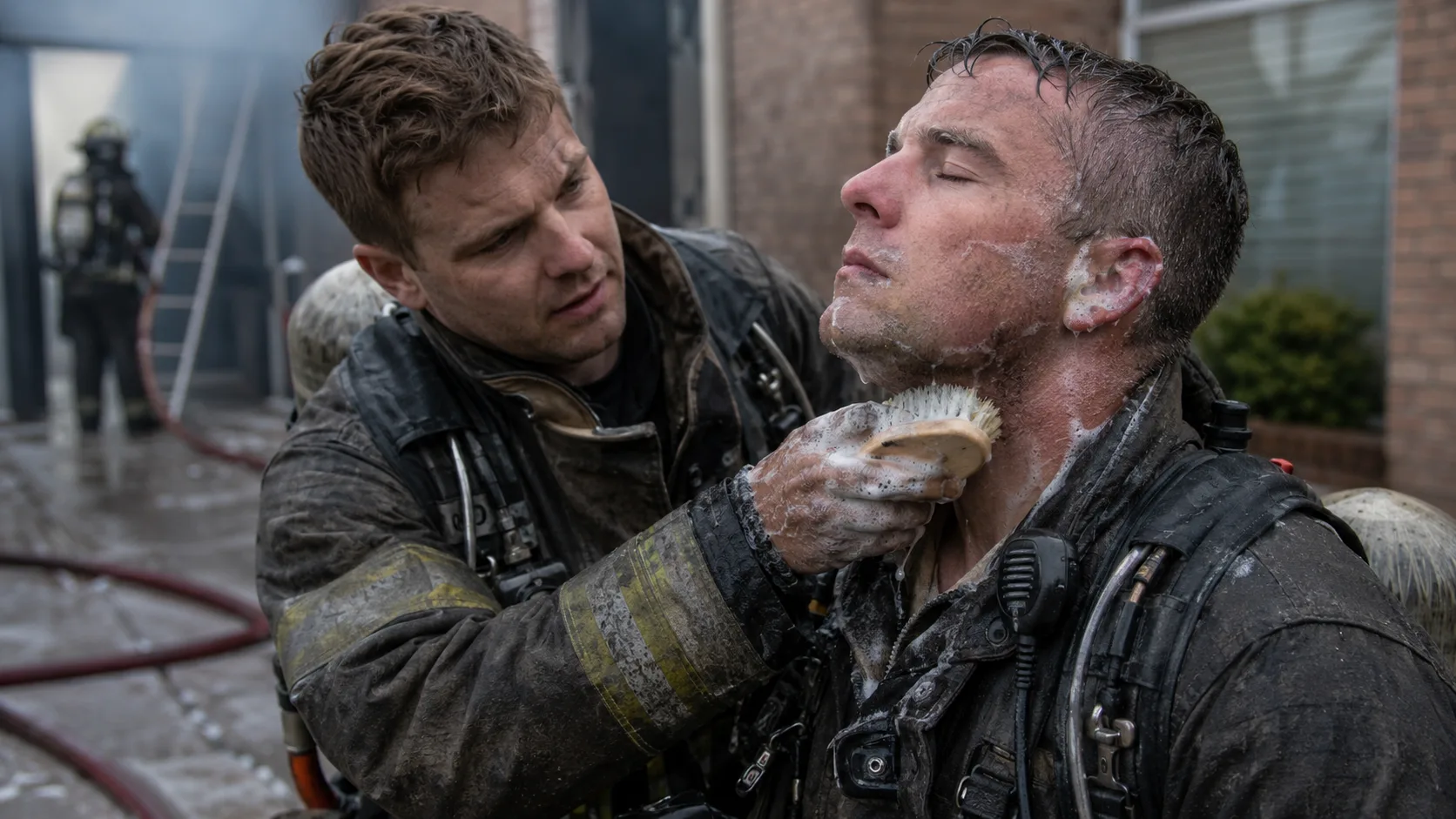
| Active cooling resources | Fans, cool water, cold packs, misting, cool towels | Core temperature reduction |
| Seating | Chairs, benches, or tailboard seating for all expected personnel | Rest in seated position to reduce cardiac work |
| Medical evaluation equipment | BP cuff, pulse ox, thermometer, AED, O2 | Monitoring and emergency response |
| EMS personnel | EMT or paramedic assigned to rehab sector | Medical evaluation and emergency response |
| Accountability system | Tag or electronic system tracking members in/out | Personnel accountability during rehab |
The Four Components of Rehabilitation
1. Rest and relief from operations
Minimum 20 minutes in the rehab sector after two cylinder changes or one cylinder of intense exertion. During rest, members should:
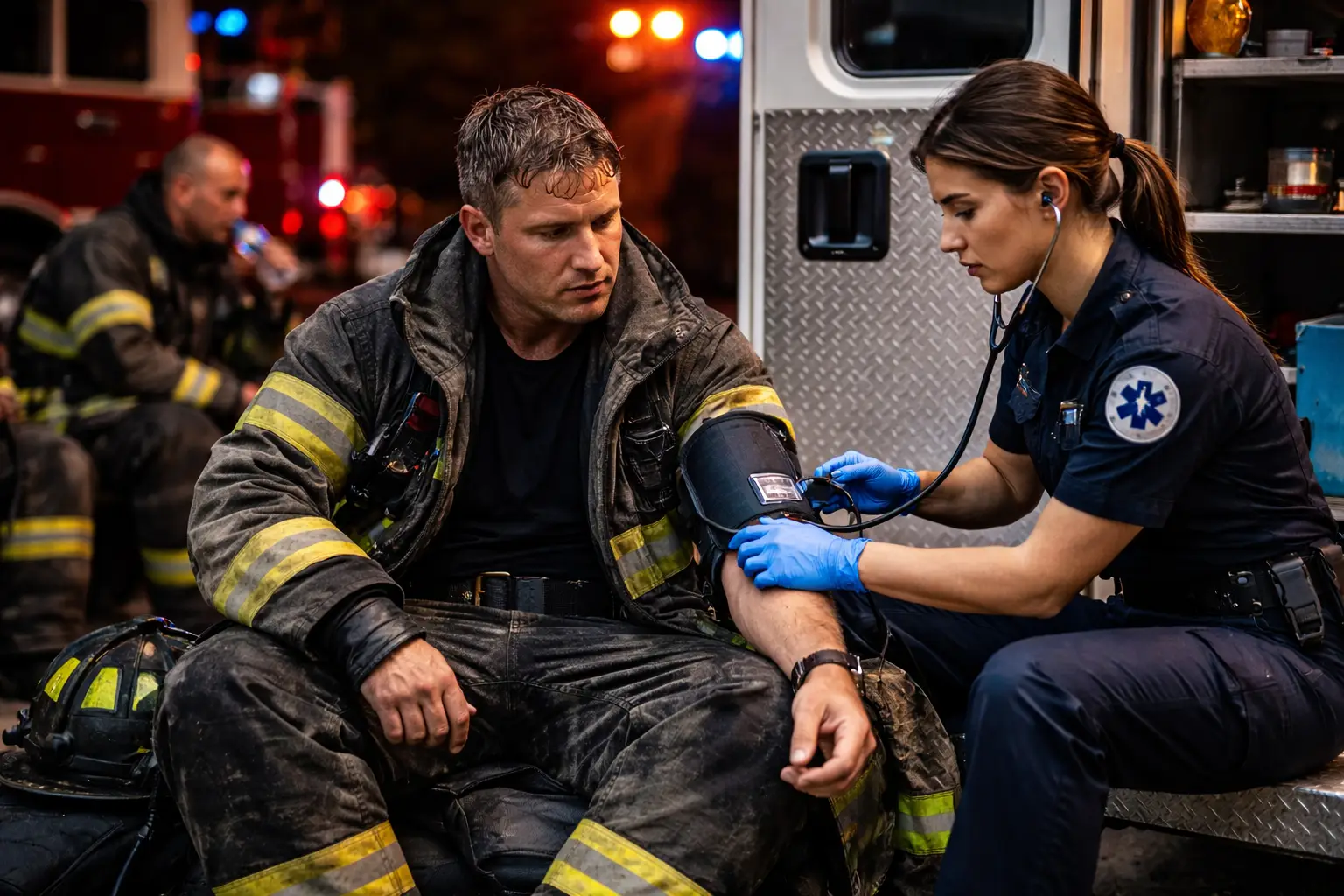
- Remove SCBA and helmet
- Open or remove the turnout coat collar and top to allow heat dissipation from the upper body
- Sit in a position of comfort — do not stand (standing increases the cardiac work of pumping blood from the lower extremities)
- Avoid returning to full exertion immediately — the afterload effect means heart rate and core temperature continue rising for 3–5 minutes after stopping work
2. Active cooling
Passive rest alone is insufficient for rapid core temperature reduction in a firefighter who has been in full PPE. Active cooling methods in order of effectiveness:
- Cold water immersion (forearm immersion in cool water): Most effective practical active cooling method for operational use. Cold water bins for forearm immersion can reduce core temperature significantly faster than ambient rest alone.
- Cool towel application to neck and head: Effective and practical; applies cooling where large superficial blood vessels are close to the skin surface
- Fan and misting: Effective in low-humidity environments; less effective in high humidity where evaporation is limited
- Cool water consumption: Cold fluids consumed internally reduce core temperature as they are absorbed
- Shade and air conditioning: Moving firefighters into a shaded or air-conditioned rehabilitation vehicle significantly accelerates cooling
3. Rehydration
Sweat losses of 1–2 liters per working period require active rehydration. Guidelines:
- Drink a minimum of 8 ounces (240 mL) of water or sports drink immediately upon entering rehab
- Continue drinking throughout the 20-minute minimum rest period
- Plain water is adequate for rehydration up to approximately 1 liter; beyond that, electrolyte replacement becomes important to prevent hyponatremia (dilutional low sodium)
- Avoid carbonated drinks (impair fluid absorption), caffeinated drinks (diuretic effect), and very cold fluids in large volumes (can cause gastric cramping during continued work)
- Sports drinks with electrolytes (not energy drinks) are the preferred rehydration choice for extended operations
4. Medical evaluation
Every member exiting rehab and returning to operations should receive a brief medical evaluation. In longer operations, evaluation should occur during the rest period, not only at exit. See the Medical Evaluation Criteria section below.
Medical Evaluation Criteria
NFPA 1584 requires medically trained personnel to evaluate each member. Minimum evaluation parameters:
| Parameter | Method | Return-to-duty threshold | Concern threshold |
|---|---|---|---|
| Heart rate | Radial pulse or pulse oximeter | ≤100 BPM after 20-min rest | >100 BPM — extended rest; >120 BPM — EMS eval |
| Blood pressure | BP cuff (manual or automated) | Systolic ≤160 / Diastolic ≤100 after rest | Systolic >160 or diastolic >100 — extended rest; >180/110 — EMS eval |
| SpO2 | Pulse oximeter | ≥94% on room air | <94% — supplemental O2; <90% — emergency |
| Temperature | Oral, tympanic, or temporal thermometer | ≤38.5°C (101.3°F) | >38.5°C — active cooling; >40°C — heat emergency |
| Mental status | Clinical assessment: orientation, speech, coordination | Normal baseline | Any altered mental status — immediate EMS evaluation |
| Reported symptoms | Direct questioning | No cardiac, heat, or neurological symptoms | Chest pain, palpitations, severe headache, nausea — EMS eval; do not return to duty |
Return-to-Duty Criteria
A member may return to operations from rehab only when ALL of the following are met:
- Minimum 20 minutes of rest completed (longer if vitals have not normalized)
- Heart rate at or below 100 BPM
- Blood pressure within acceptable range (systolic ≤160, diastolic ≤100 for most guidelines)
- SpO2 ≥94% on room air
- Core temperature ≤38.5°C
- No cardiac, heat illness, or neurological symptoms reported
- Member reports feeling able to return (self-assessment matters; members should not self-report ready if they do not feel ready)
A member who does not meet return criteria after extended rest (typically 30–60 minutes) should be evaluated by EMS and considered for transport to a medical facility. Do not return a member to operations who has not met all criteria regardless of operational need.
Heat Illness Recognition in Rehab
| Condition | Signs and symptoms | Rehab treatment | Action |
|---|---|---|---|
| Heat cramps | Painful muscle cramps (calves, abdomen); heavy sweating; no altered LOC | Rest; oral electrolyte replacement; stretch affected muscles | Rest in rehab; return to duty when resolved and meets criteria |
| Heat exhaustion | Heavy sweating; weakness; cool/pale/moist skin; normal or slightly elevated temperature; headache; nausea; may faint | Remove from heat; cooling; oral rehydration if alert; loosen PPE; supine position | EMS evaluation; do not return to duty that shift |
| Heat stroke (classic) | High core temperature (>40°C/104°F); hot/dry or sweating skin; altered mental status; possible loss of consciousness; rapid strong pulse | Immediate aggressive cooling (ice bath, ice packs to neck/groin/axillae); IV fluid; supplemental O2 | Life-threatening emergency; immediate transport; activate ALS |
| Exertional heat stroke | Same as heat stroke but may occur even with sweating; follows intense exertion | Same as heat stroke | Life-threatening; immediate ALS/transport |
Personnel Accountability in Rehab
Rehab creates a specific accountability challenge: members are out of the hazard zone but not back in service. Every member entering rehab must be tracked, and their return to operations must be cleared through the rehab officer and command. Key accountability steps:
- Each member entering rehab checks in with the Rehab Officer (name, company, time in)
- Members do not leave rehab to return to operations without Rehab Officer clearance
- Rehab Officer communicates the rehab status and member clearances to Command
- If PASS systems are deactivated during rehab for inspection/testing, document the deactivation and ensure they are re-armed before returning to the hazard zone
Frequently Asked Questions
What is NFPA 1584?
NFPA 1584 is the Standard on the Rehabilitation Process for Members During Emergency Operations and Training Exercises. It establishes minimum requirements for firefighter rehabilitation including when rehab must be established, what it must include (rest, cooling, rehydration, medical evaluation), and the criteria that must be met before a member returns to operations.
How long should a firefighter rest in rehab?
NFPA 1584 specifies a minimum of 20 minutes of rest in the rehab sector after two consecutive SCBA cylinder changes. Rest should be extended if vital signs have not normalized within 20 minutes. A member whose heart rate remains above 100 BPM after 20 minutes of rest should continue resting until the rate normalizes or be evaluated by EMS.
What vitals are checked in firefighter rehab?
At minimum: heart rate (pulse), blood pressure, SpO2 (oxygen saturation), and core temperature. Mental status is also assessed through clinical observation and direct questioning. These parameters determine whether a member meets return-to-duty criteria or requires extended rest, additional medical evaluation, or transport to an emergency department.
Can a firefighter refuse rehab?
Fireground operations are subject to the chain of command. A firefighter who refuses rehab when directed by the IC or Rehab Officer is refusing a lawful order. However, the cultural issue is usually the opposite — departments must actively create a culture where requesting and accepting rehab is normal and expected, not stigmatized. The majority of cardiac LODDs involve firefighters who continued operating when physiologically compromised.


Comments 0
No comments yet. Be the first to share your thoughts!
Leave a Comment