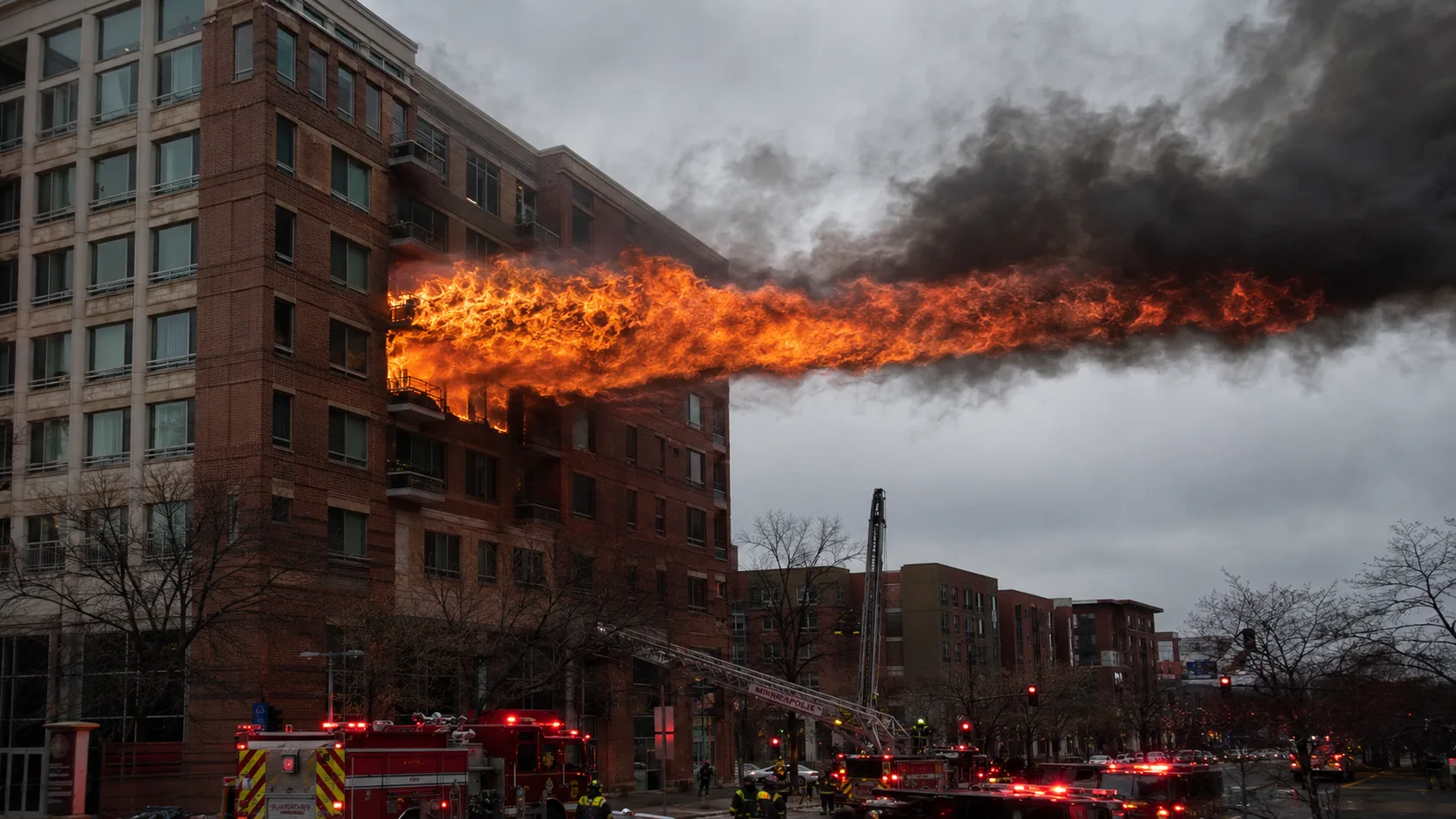

Wind changes a fire in ways that are not intuitive until you have been inside one when the wind shifts. In a calm-air residential fire, smoke and heat rise, fire spreads outward from the ignition point, and crews can predict with reasonable confidence where the fire is going and how long they have. Add a sustained wind of 20 or 30 miles per hour and none of those predictions hold. The fire moves horizontally. It follows the wind path, not the fuel path. It comes toward the door a crew just came through. It enters a room that had been searched and cleared two minutes earlier.
Wind-driven fire is not a rare event. Any time a window fails in a burning structure on a windy day, any time a door is opened on the windward side, any time an interior fire finds a wind path through the structure, the dynamic changes. For firefighters, understanding what wind does to a fire — and how tactics must adapt — is the difference between a controlled operation and a crew in trouble.
In this article:
- What wind actually does to fire behavior
- High-rise wind-driven fires: the specific problem
- PPV in wind conditions: when ventilation makes it worse
- Door control as a tactical tool
- Leeward approach and stream placement
- SCBA and thermal exposure in wind-driven conditions
- Size-up indicators for wind-driven fire
- Tactical transitions: when the wind shifts
What Wind Actually Does to Fire Behavior
In a standard room fire with no significant air movement, the fire plume rises vertically. Heat and combustion gases accumulate at the ceiling and the fire spreads outward along ceiling-level fuel. Firefighters operating below the thermal layer can work with a margin of time that is relatively predictable based on the room's fuel load and ventilation.
Wind introduces a horizontal force component that pushes the plume laterally. Instead of rising, the fire flattens and extends in the direction of the wind. In a building where the wind is entering through a failed window or an open door, the fire inside does not behave like a room fire — it behaves like a blowtorch oriented toward the leeward side of the structure. Flame velocities measured in documented wind-driven events have exceeded 100 feet per second through interior spaces. That is not a fire you advance a hose line toward. That is a fire that advances toward you.
The second effect is oxygen supply. Wind provides essentially unlimited fresh air to the combustion zone. A normal room fire is limited by the oxygen available in the space — as the fire consumes oxygen and produces combustion gases, the burn rate is self-regulating to a degree. A wind-driven fire does not have that limitation. Fresh air is continuously supplied at whatever rate the wind delivers it, and the fire burns as hot and as fast as the fuel load permits.
The third effect is the most dangerous for crews: fire can travel against the expected spread direction. In a multi-room structure, a fire that is pushed by wind can extend through doorways and corridors in the direction the wind is blowing — which may be back toward where the crew entered. A crew that advanced through a hallway toward a fire has the wind at their back. If the fire finds a path on the windward side, the crew is now between the wind inlet and the fire.
High-Rise Wind-Driven Fires: The Specific Problem
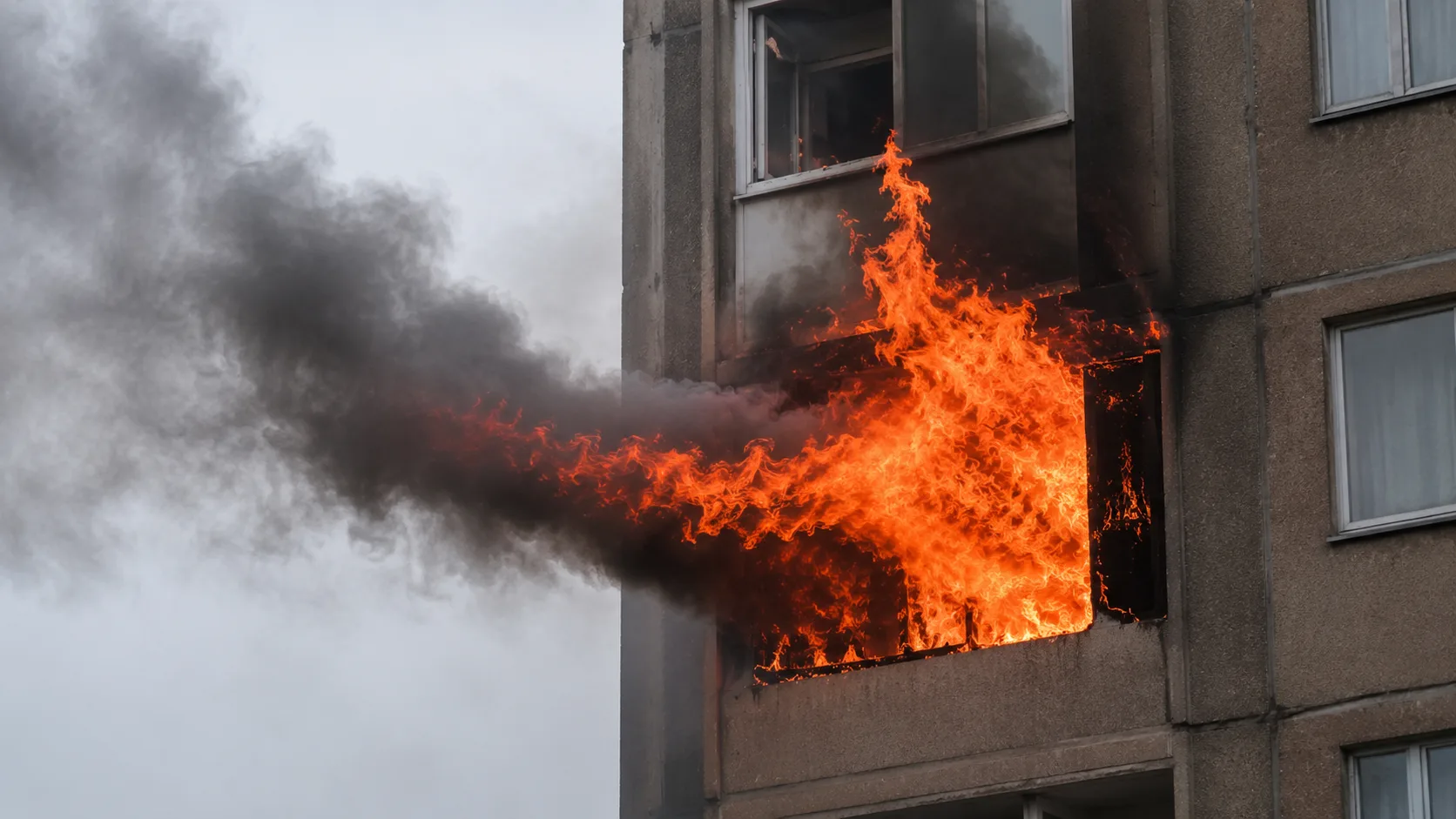
High-rise buildings experience wind-driven fire differently than low-rise structures because the wind conditions at height are categorically different. A ground-level residential fire may see gusts of 20 mph on a windy day. The same storm may produce sustained winds of 40 to 50 mph at the 20th floor of a residential tower. The geometry of a high-rise also concentrates wind pressure — the Venturi effect between buildings can accelerate wind at specific floors significantly above ambient conditions.
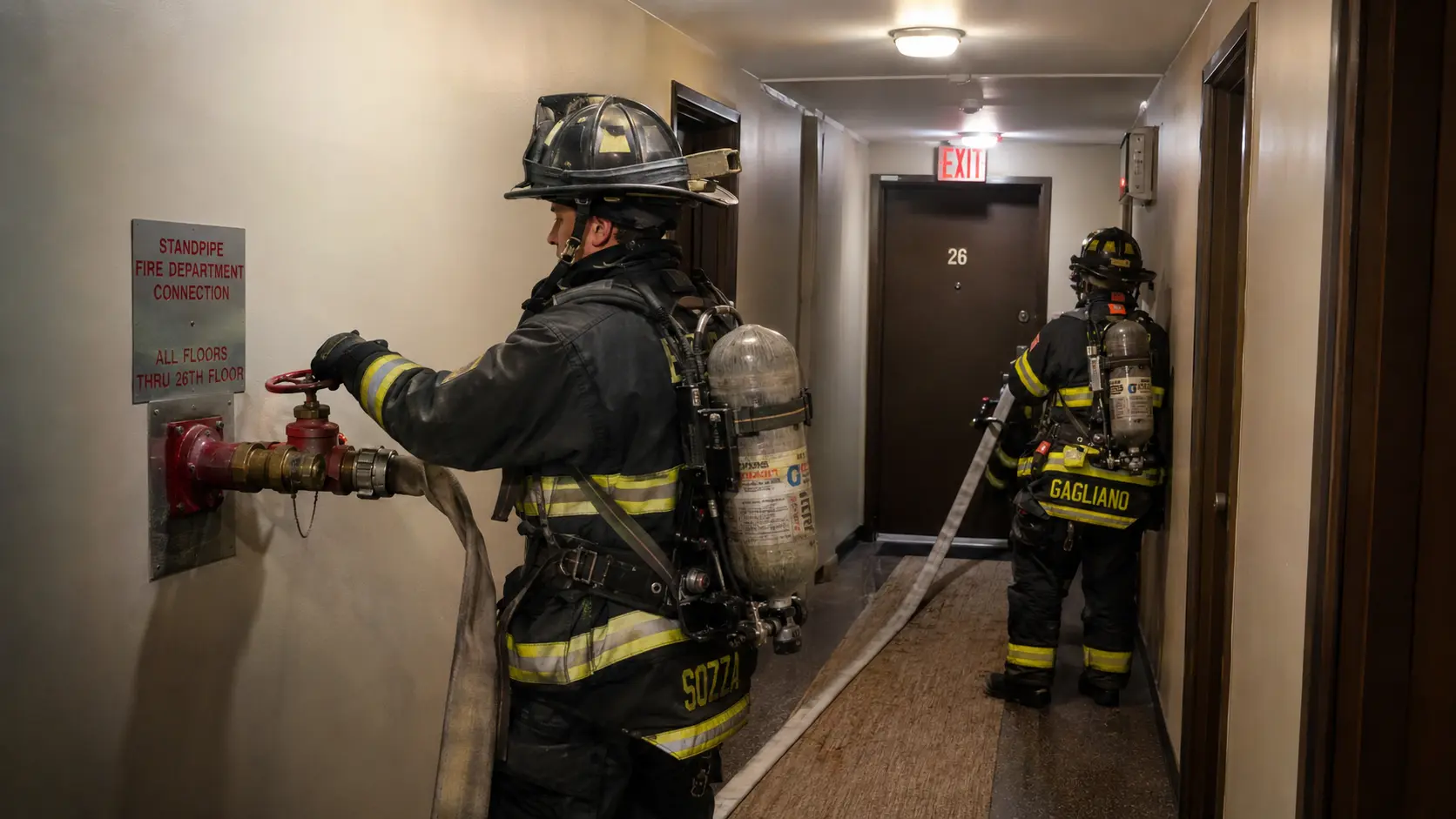
The 2005 FDNY wind-driven fire deaths at 1651 Park Avenue — two firefighters killed during interior operations in a high-rise apartment fire — produced a significant body of research and tactical revision around wind-driven fire in high-rise structures. The investigation documented how wind entering a failed apartment window pushed fire out the apartment door and into the corridor with a velocity and heat release rate that standard high-rise suppression tactics were not designed for. The crews in the corridor were in the fire's wind path with no warning of the wind condition change.
The FDNY and NIST research that followed that incident established specific protocols for wind-driven high-rise fires — protocols that have since been adopted by departments across the country. The central tactical shifts are covered in the sections below.
PPV in Wind Conditions: When Ventilation Makes It Worse
Positive Pressure Ventilation — using a fan to push fresh air into a structure and force smoke out — is a standard and effective tactic in many residential fires. It improves visibility for crews, helps control smoke spread, and can push a fire toward a controlled exhaust point where it is more easily suppressed.
In wind-driven conditions, PPV can make the fire significantly worse. The reason is straightforward: PPV adds air movement to a fire that already has more air than it can use. If the wind is already pushing air through the structure faster than the fire can consume it, adding a PPV fan does not help — it adds to the airflow on the windward side and increases the velocity of fire spread on the leeward side. In worst-case scenarios, PPV in a wind-driven fire has pushed fire into areas of the structure that the wind alone had not yet reached.
The tactical rule: positive pressure ventilation is contraindicated in confirmed wind-driven fire conditions until the wind path through the structure is controlled — meaning the inlet opening (the failed window or the windward door) has been addressed. The fan goes in after the inlet is managed, not before.
Starting PPV before controlling the wind inlet in a wind-driven fire is a documented cause of fire extension and crew injury. Size-up for wind conditions before committing to any ventilation tactic — and if conditions indicate wind-driven fire, hold the fan until the inlet is controlled.
Door Control as a Tactical Tool
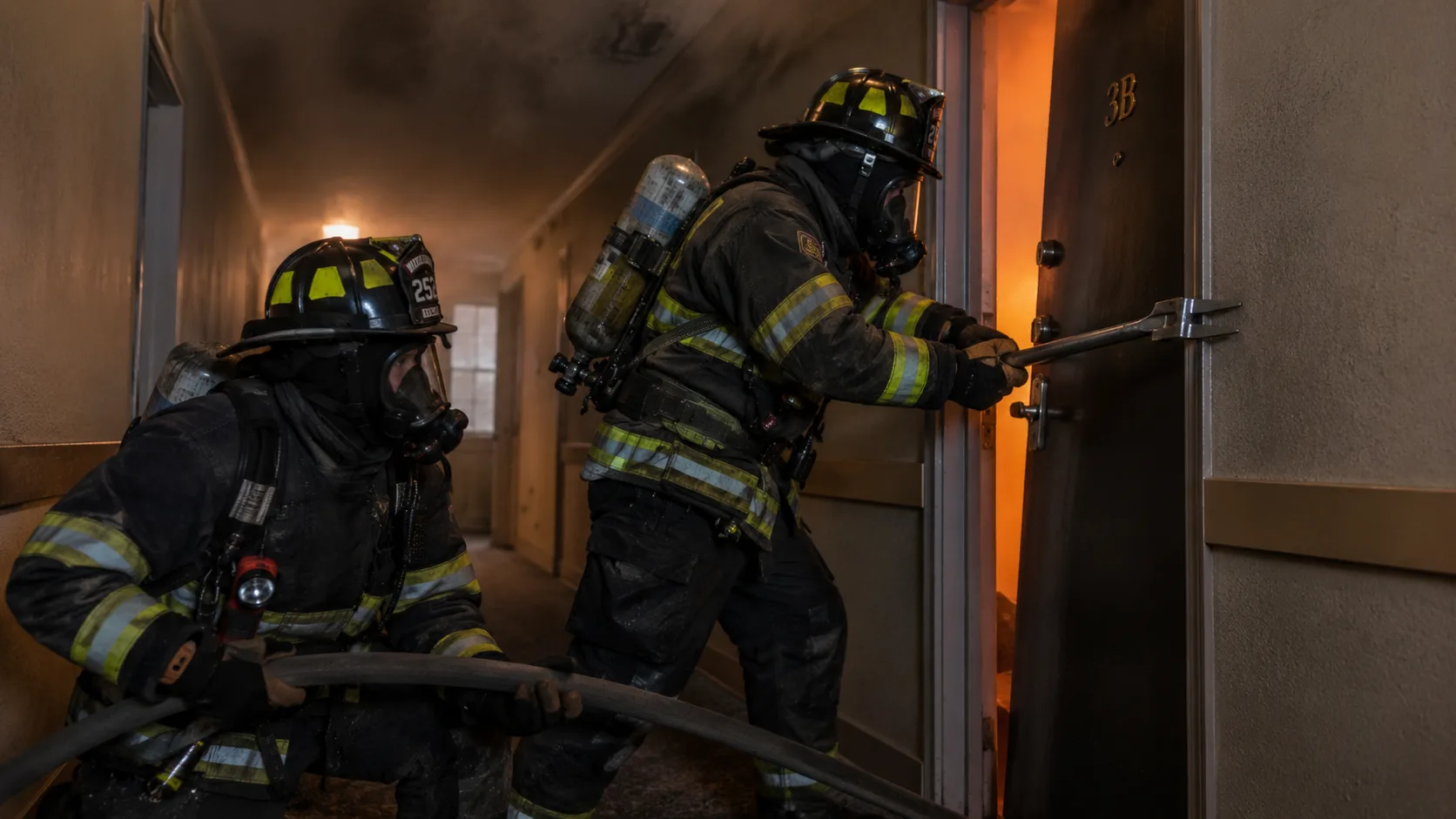
In a standard apartment fire, the attack line advances through the apartment door, pushes the fire back toward the window it is venting from, and suppresses it. Door control — managing how wide the door is opened and when — matters, but the fire's momentum is generally against the crew's direction of travel only at the immediate fire origin.
In a wind-driven fire, the apartment door is the dividing point between survivable corridor conditions and a wind-accelerated fire compartment. Opening that door fully and immediately connects the wind inlet to the egress corridor and drives fire directly toward the crew. The door control technique — opening the door partially, advancing the line through the narrowest possible opening, and having a designated crew member manage the door — is the standard tactical response.
The door control firefighter's job is specific: hold the door at the minimum opening needed for the attack line to advance, and be prepared to pull it closed entirely if the crew must retreat. In a wind-driven scenario, the door pulled closed between the crew and the fire compartment buys the seconds needed to move down the corridor to a safe distance. That firefighter does not advance into the fire room. They manage the door.
Window barriers — specifically the FDNY-developed external door control device that allows a firefighter outside the building to control the failed window opening from the exterior — extend this concept to the inlet point. By controlling the wind inlet at the failed window simultaneously with door control at the apartment entry, crews can significantly reduce the wind-driven effect during suppression.
Leeward Approach and Stream Placement
The windward side of a burning structure — the face the wind is hitting — is the inlet side. The leeward side is the exhaust side, where fire and smoke are being pushed out. For crews approaching a wind-driven structure fire, these designations matter immediately.
Advancing a hose line from the windward side means walking into the wind and toward the fire's inlet — the direction fire wants to move if it finds a new path. Entry from the leeward side places the crew in the exhaust stream, which is smoke and hot gases but not the fire front itself. In a high-rise with a single stairwell or a structure where the stairwell is on the windward face, leeward approach may require a different entry point than the primary stairwell — a tactical decision that has to be made before crews commit to an entry route.
Stream placement in wind conditions also changes. A straight stream or solid bore nozzle directed at the base of a wind-driven fire gives the water a chance to reach the fuel before the wind deflects it. Fog patterns in a wind-driven fire compartment can be blown back toward the crew or deflected past the fire entirely. Many departments operating in high-wind areas default to solid bore operations in wind-driven conditions specifically because of stream control.
SCBA and Thermal Exposure in Wind-Driven Conditions
Standard SCBA facepieces are rated for thermal exposure, but wind-driven fires produce heat flux conditions at points in the structure that can approach or exceed those ratings. The wind is not just moving fire — it is moving superheated air at high velocity through the spaces crews are operating in. Radiant heat plus convective heat from fast-moving hot gases produces a combined thermal load that is higher than what firefighters experience in a standard room fire at the same distance from the fire origin.
The practical implication is that crew survival margins in wind-driven conditions are narrower than in standard residential fires at the same apparent stage of involvement. A crew that can work a standard room fire for eight to ten minutes before conditions become untenable may have three to four minutes in the same structure under wind-driven conditions. Air management becomes more aggressive, PAR intervals shorter, and the abort condition triggers earlier.
Size-Up Indicators for Wind-Driven Fire
Arriving crews can identify wind-driven fire conditions before interior operations begin. The indicators:
- Horizontal smoke and flame projection from windows — fire and smoke that exits a window laterally rather than rising indicates significant wind pressure on the windward face.
- Flame extending above the floor of origin on the leeward face — wind-pushed fire exits windows and can reach floors above through their windows on the same face. Active flame on a floor above the fire floor, on the leeward side, is a wind-driven indicator.
- Rapid fire spread across floors — wind-driven fire in a high-rise can extend vertically on the leeward face faster than crews can track. Conditions reported on the fire floor and the floor above simultaneously within a short period indicate wind is the driver.
- Smoke banking low on the leeward side — in calm conditions, smoke rises. Wind-driven smoke banks lower on the exhaust side of the structure because the wind is depressing the plume.
- Documented wind conditions — if the weather service or local wind monitoring shows sustained winds above 20 mph, treat any structure fire with a failed window as a potential wind-driven event until the interior confirms otherwise.
Tactical Transitions: When the Wind Shifts
Wind-driven fire is not a static condition. Wind direction and speed change during an incident, and a fire that was being pushed toward the leeward side can shift when the wind direction rotates. A crew that has established a safe entry and attack position based on a specific wind direction now has a different problem when that direction changes 45 degrees.
Incident commanders on wind-driven fires assign a dedicated weather monitor — a crew member or officer tasked with tracking wind conditions throughout the incident and reporting changes to command. This is not a formality. A 20-degree wind shift that redirects the fire inlet from the B-side to the A-side can make a safe entry corridor into a fire path within the time it takes to transmit one radio message.
The transition from offensive to defensive operations on a wind-driven fire can happen fast. The trigger is not just fire behavior — it is the wind condition itself. If wind speed increases significantly during interior operations, or if the wind shifts to put the entry corridor on the windward face, the tactical default is withdrawal and reassessment. Wind-driven fire is one of the conditions where the risk-benefit calculation for interior operations is revisited continuously, not just at the initial size-up.

Comments 0
No comments yet. Be the first to share your thoughts!
Leave a Comment