Fireground Ventilation Guide: Vertical, Horizontal, PPV & When to Use Each
Ventilation is one of the most consequential decisions on the fireground — and one of the most misunderstood. Ventilating at the wrong time, in the wrong location, or with the wrong method can accelerate fire spread, push fire toward trapped occupants, and create flashover conditions faster than any other single action. This guide covers vertical, horizontal, and positive pressure ventilation: what each accomplishes, when each is appropriate, and the coordination requirements that make ventilation safe.
Jump to:Why ventilation matters · Vertical ventilation · Horizontal ventilation · Positive pressure ventilation (PPV) · Attack-vent coordination · When NOT to ventilate · Reading ventilation effectiveness · FAQ
Why Ventilation Matters: The Fire Triangle of Tactics
Every fire needs three things to sustain combustion: fuel, heat, and oxygen. Suppression removes heat. Ventilation manages the oxygen and gas pressure equation. When done correctly, ventilation:
- Removes heat, smoke, and toxic gases from the structure
- Improves visibility for search and attack crews
- Reduces the risk of flashover by removing the hot gas layer
- Allows firefighters to advance deeper into the structure with better conditions
- Improves survivability for trapped occupants
When done incorrectly, ventilation introduces oxygen to a fuel-rich environment, accelerates combustion, pushes fire toward occupants or crews, and can trigger rapid fire progression events.
Ventilation without coordination is dangerous. Opening a window or cutting a hole in a roof changes the pressure dynamics of the entire building. If attack crews are not positioned and ready to flow water when ventilation occurs, you may be feeding the fire rather than controlling it.
Vertical Ventilation
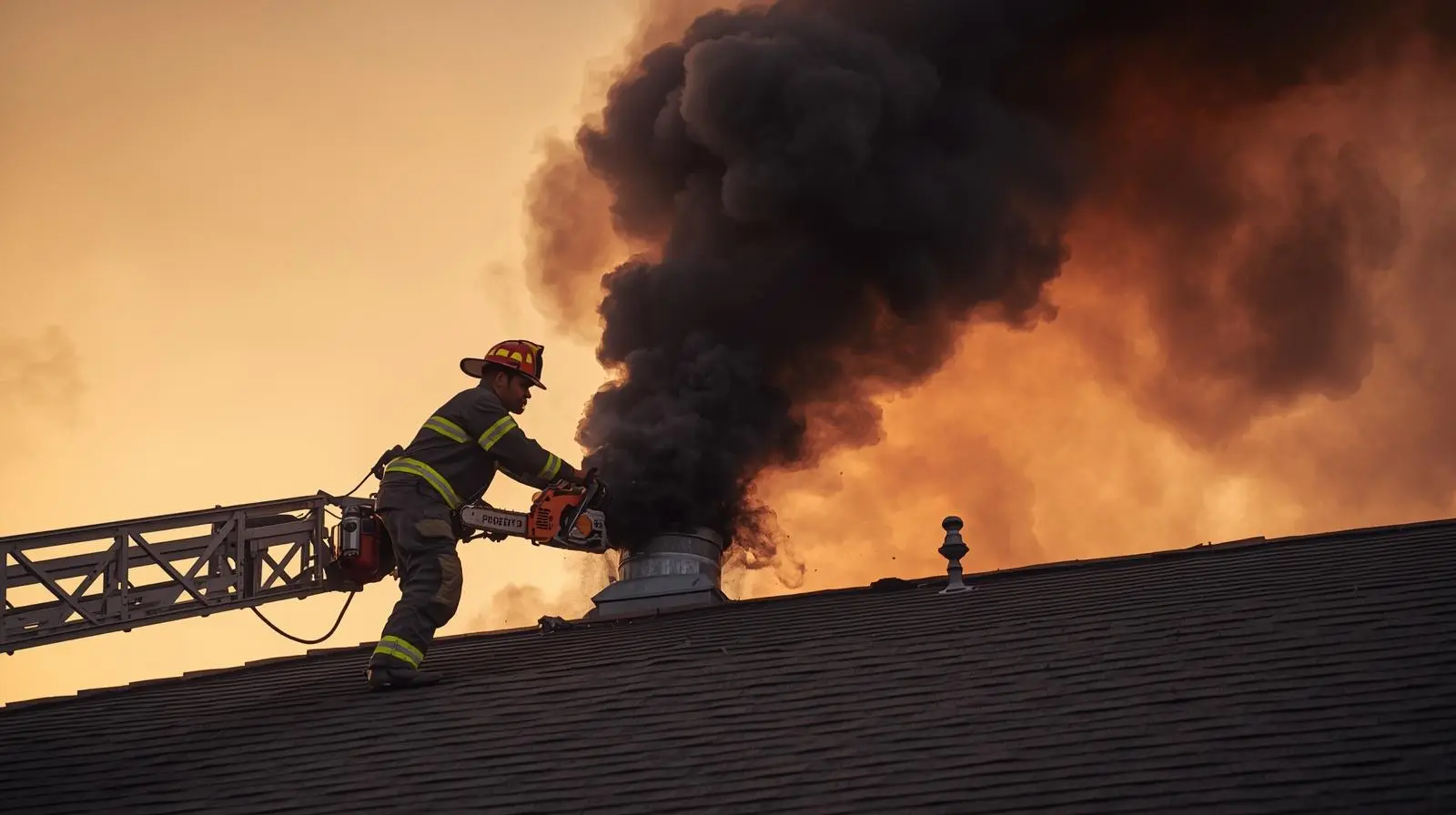
Vertical ventilation uses the natural buoyancy of hot gases to create upward airflow. By opening the roof above the fire, hot gases and smoke exhaust upward while cooler air enters through lower openings. This is the most effective ventilation method for removing the hot gas layer in a structure with an established fire.
When to use vertical ventilation
- Established working fire with significant smoke and heat buildup in the structure
- Attic involvement where fire is traveling through the roof space
- Suspected backdraft conditions — vertical vent above the fire allows fuel-rich gases to exhaust safely before entry
- Search conditions where heavy smoke on all floors is limiting victim survival window
How vertical ventilation works
The roof is opened directly above the fire — not adjacent to it, and not over uninvolved portions of the structure. The opening size should be proportional to the fire: a small bedroom fire may only need a 4×4 foot opening; a large commercial fire may require multiple large openings. Hot gases exhaust through the roof opening, drawing cooler air from lower entry points (doors, windows).
Safety considerations for roof operations
- Sound the roof before committing. Use a roof hook or pike pole to test the roof surface before stepping onto it. A spongy or soft surface indicates fire involvement below. Never commit personnel to a compromised roof.
- Know the construction type. Type II (metal deck) and Type V (lightweight truss) roofs can fail catastrophically with minimal warning. Verify construction type before any crew goes up. See the Building Construction Types guide.
- Establish a secondary egress. Every firefighter on a roof needs two ways off. A single ladder is not acceptable. Roof ladder plus a second ground ladder, or two separate positions.
- Position upwind. Work from the upwind side so smoke and heat exhaust away from personnel.
- Cut over the fire, not adjacent to it. The opening must be directly over the fire compartment to create effective draw.
Lightweight truss roofs: no roof operations. Any indication of lightweight truss construction (post-1990s residential, metal deck commercial) with an established fire means no personnel on the roof. Period. The failure mode is catastrophic and fast.
Horizontal Ventilation
Horizontal ventilation removes smoke and gases through openings on the same level as the fire: windows, doorways, and wall openings. It does not rely on buoyancy — it relies on cross-ventilation (wind-driven flow) or manual fan-assisted movement.
Natural horizontal ventilation
Opening windows on the leeward (downwind) side of a structure while maintaining the windward side as the entry point allows wind to push through the building and carry smoke out. This is the most basic form of horizontal ventilation and works well in light to moderate fire conditions with favorable wind.
Coordinated horizontal ventilation
In structural firefighting, horizontal ventilation is most often done in coordination with the attack:
- Attack crew positions at the entry point with charged line, ready to flow
- On command from the attack officer, the ventilation crew opens windows above and/or opposite the fire
- Attack crew immediately advances toward the fire as conditions improve
The sequence matters: ventilation without an immediate attack wastes the improved conditions and gives the fire more oxygen.
Wind-driven fire risk
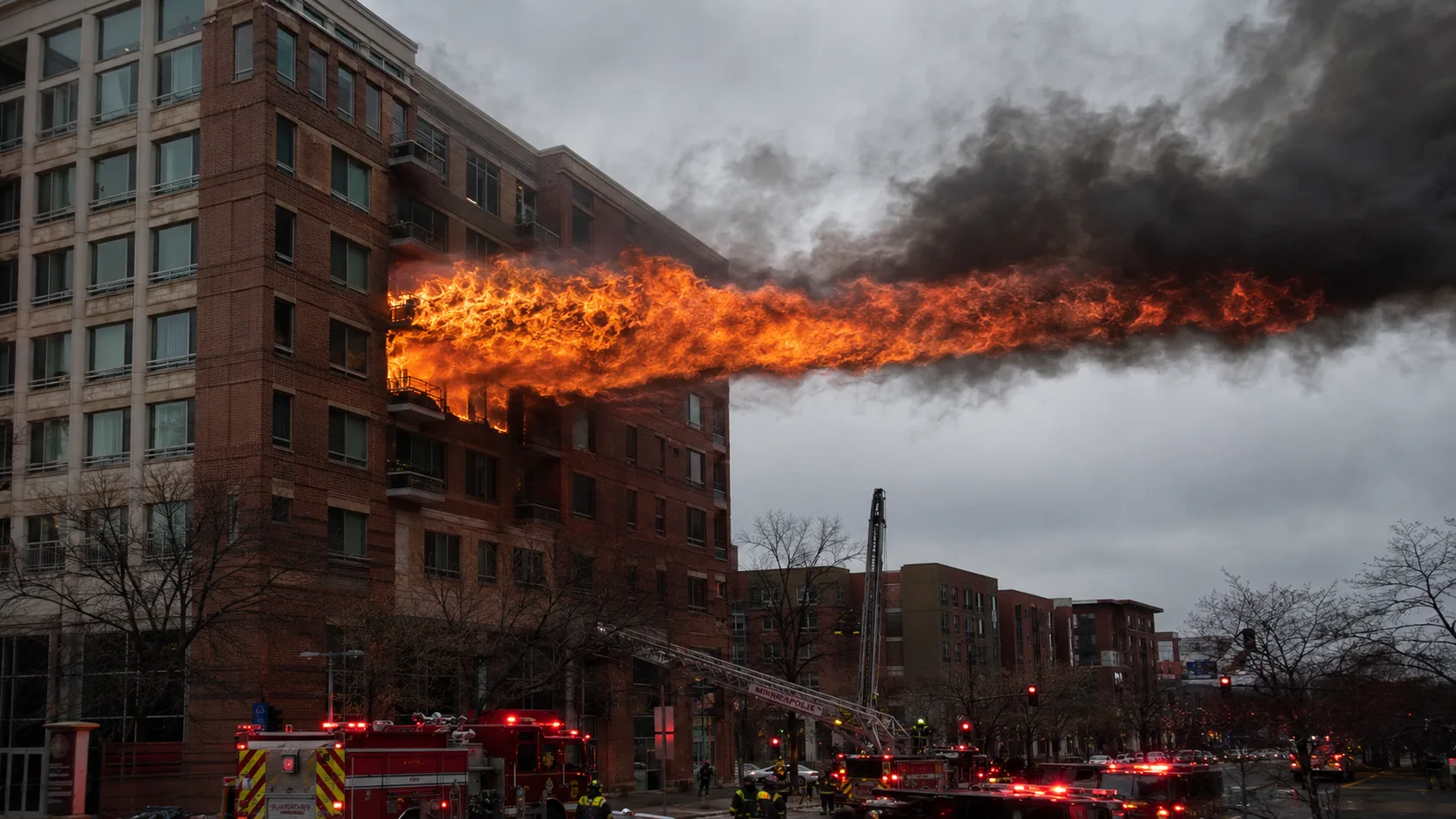
High winds (25+ mph) create a specific danger in horizontal ventilation. In a wind-driven fire, opening windows on the windward side can push fire at hurricane force toward interior crews. High-rise residential fires with wind-driven conditions require a completely different tactical approach — door control and windward-side entry are critical.
Positive Pressure Ventilation (PPV)
Positive pressure ventilation uses a high-volume fan positioned at an entry door to pressurize the structure, pushing smoke and gases out through designated exhaust openings. PPV can achieve complete smoke removal from a structure in 3–10 minutes when used correctly.
PPV setup: the critical geometry
When PPV is appropriate
- Post-knockdown smoke removal to support search and overhaul
- Pre-entry smoke removal in a structure with a confirmed small or contained fire
- Occupant protection in a multi-unit building where smoke has spread from a contained fire
When PPV is NOT appropriate
- Active, uncontrolled fire — PPV gives the fire more oxygen and can accelerate spread
- Basement fires — pressurizing the structure pushes smoke and fire upward toward occupants and crews
- Unknown fire location — if you don't know where the fire is, you don't know where you're pushing it
- Wind-driven fire conditions — fan-assisted ventilation in high wind creates unpredictable pressure dynamics
PPV during active fire is a tactical decision, not a default. Some departments use PPV aggressively during attack with trained crews and specific protocols. Others restrict it to post-knockdown operations. Know your department's protocol and the reasoning behind it before using PPV offensively.
Attack-Vent Coordination: The Rule That Saves Lives
The single most important principle in ventilation tactics: ventilation and water application must be coordinated. Opening a ventilation point without water on the fire gives the fire more air without removing its heat. The sequence:
| Scenario | Correct sequence | Why |
|---|---|---|
| Vertical vent + interior attack | 1. Attack crew at door with charged line ready → 2. Roof crew cuts opening → 3. Attack crew advances immediately | Vent improves conditions; attack exploits the window before the fire uses the new air |
| Horizontal vent + attack | 1. Attack crew positioned, line charged → 2. Vent crew opens windows on command → 3. Simultaneous advance and flow | Same principle: vent creates an opportunity; water must immediately follow |
| PPV post-knockdown | 1. Confirmed knockdown → 2. Set exhaust → 3. Start fan → 4. Search/overhaul under improving conditions | PPV after control removes smoke safely without feeding active fire |
| Suspected backdraft | 1. Vertical vent above fire first → 2. Wait for conditions to change → 3. Entry with charged line when fuel-rich gases have had path to exhaust | Vertical vent allows combustible gases to escape upward without mixing at firefighter level |
When NOT to Ventilate
Ventilation always has a cost — it changes the pressure and oxygen dynamics of the fire environment. There are situations where the cost exceeds the benefit:
- Fire in decay (oxygen-limited): Adding ventilation to a smoldering, oxygen-limited fire can trigger rapid re-ignition. If smoke conditions suggest a fire in decay, assess carefully before opening anything.
- No attack crew ready: Never ventilate without water on the line and a crew positioned to advance. The improved conditions last seconds to minutes before the fire uses the new oxygen.
- Unknown fire location: You must know where the fire is before you create a ventilation exhaust. Otherwise you may be channeling fire toward occupants.
- Compromised structure: If structural integrity is in question, roof operations are off the table regardless of ventilation benefit.
Reading Ventilation Effectiveness
Once ventilation begins, conditions should improve. Signs that ventilation is working:
- Smoke darkening at the exhaust point as hot gases exit (indicates draw is established)
- Improving visibility at the attack entry point
- Smoke banking rising rather than descending in the attack corridor
- Reduction in temperature at floor level in the attack position
Signs that ventilation is NOT working or is counterproductive:
- Fire increases in intensity after ventilation begins (new air feeding the fire)
- Smoke is drawn back into the structure (wrong pressure differential, or backdraft conditions)
- Smoke begins showing from new areas not previously involved (fire pushed to new locations)
Frequently Asked Questions
What is the difference between vertical and horizontal ventilation?
Vertical ventilation opens the roof above the fire, using heat buoyancy to draw hot gases upward and out. Horizontal ventilation opens windows and doors on the same level as the fire, using wind or pressure differentials to move smoke laterally. Both remove smoke and heat but work on different principles and suit different situations.
When should you use PPV in firefighting?
PPV is most effective and safest for post-knockdown smoke removal and for clearing smoke from uninvolved areas of a building during a contained fire. Using PPV against an active uncontrolled fire risks feeding it more oxygen and pushing fire toward occupants and crews.
Why is ventilation coordination with attack so important?
Ventilation without simultaneous water application gives the fire more oxygen without removing its heat source. The fire intensifies and uses the improved conditions before your crew can. Coordinated attack and ventilation exploit the improved conditions together, keeping the tactical advantage with the suppression crews.
Is it ever safe to operate on a lightweight truss roof?
Not during an established working fire. Lightweight truss roofs can fail in 5–6 minutes of direct fire exposure without visible warning. No vertical ventilation operation justifies putting personnel on a lightweight roof with fire below. Alternative: exterior master stream to suppress attic involvement, or allow the building to burn defensively if the roof is compromised.
What is wind-driven fire and how does it affect ventilation?
Wind-driven fire occurs when high winds push fire through a structure at velocities that overwhelm normal ventilation tactics. Opening windows on the windward side in a wind-driven fire can push a wall of flame at interior crews. High-rise residential fires in high-wind conditions require door control, windward-side approach, and often a different attack strategy entirely.

Comments 0
No comments yet. Be the first to share your thoughts!
Leave a Comment