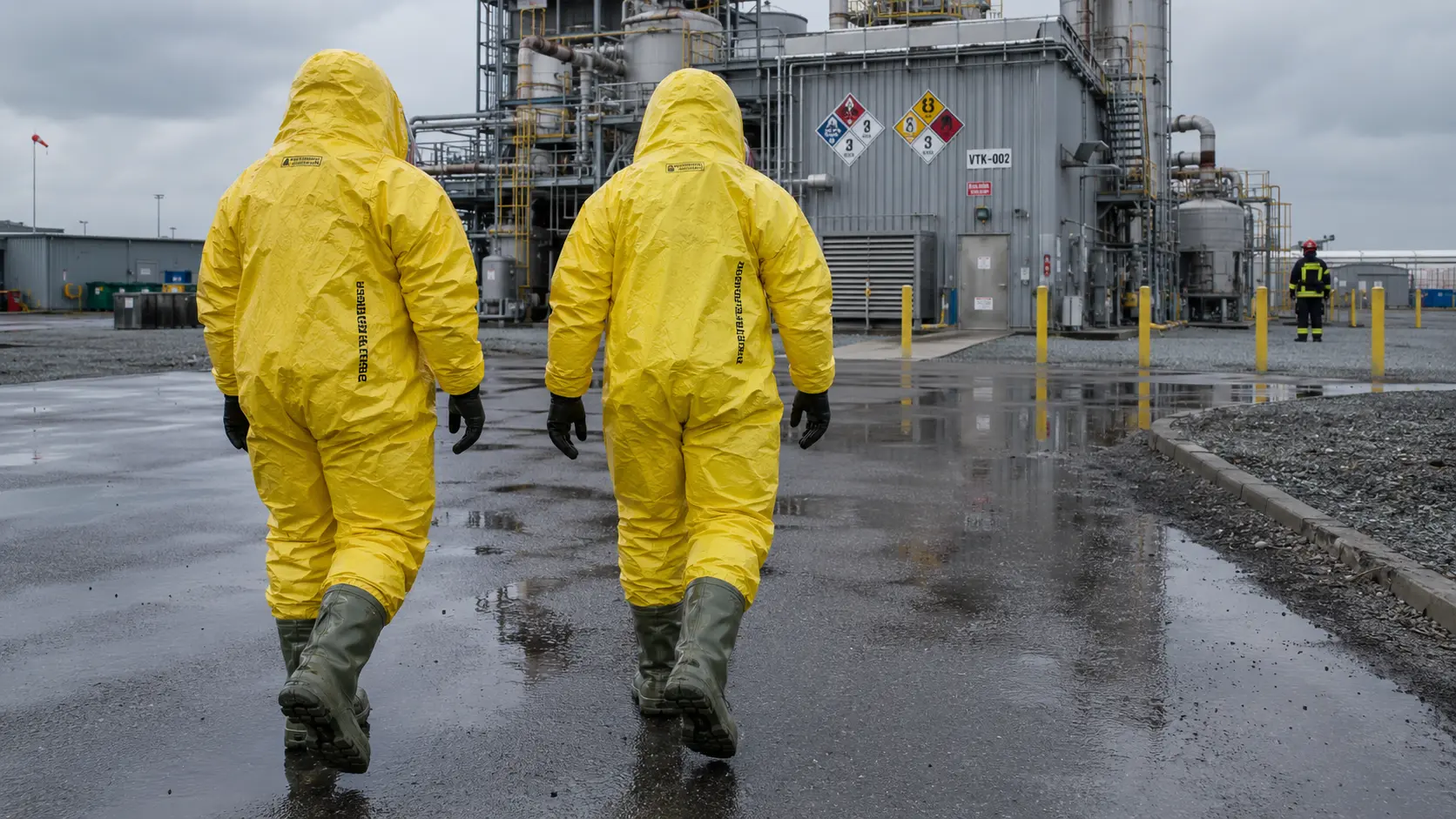
The image most people have of hazmat response is a silver-suited responder sealed inside a full-body encapsulating suit that looks like it belongs on a space mission. That is Level A — the highest protection available in hazardous materials response. It is also not always the right choice, and selecting it when Level B or Level C is appropriate introduces its own risks. The selection of protection level is a technical decision driven by what the atmosphere monitoring tells you, not by how serious the situation looks from the outside.
The EPA and OSHA framework for hazardous materials personal protective equipment divides protection into four levels — A through D — based on the type and degree of hazard protection required. Each level is defined by its respiratory protection and its skin protection simultaneously. Selecting a level means selecting both components together, because the hazards from inhalation and from skin and eye contact may require different or identical protection strategies depending on what the monitoring data shows.
In this article:
Level A: Full Encapsulation

Level A protection consists of a fully encapsulating, vapor-tight chemical protective suit with the SCBA worn inside the suit — not outside it. The suit seals completely around the wrists, ankles, and neck, and the SCBA facepiece is worn inside the enclosure. No part of the body is exposed to the surrounding atmosphere. The suit material is selected for chemical resistance to the specific hazard — no single material resists all chemicals, and Level A suit selection requires knowing what chemical is present or selecting the suit with the broadest resistance profile when the identity is unknown.
Level A provides the highest available protection against vapor, gas, and liquid chemical hazards. It is selected when the hazard involves a chemical that is toxic by inhalation at very low concentrations, when the substance is readily absorbed through skin in dangerous amounts, when vapor concentrations are unknown and potentially IDLH, or when the chemical is a carcinogen or reproductive hazard that requires absolute skin exclusion.
The cost of Level A is significant. The suit severely limits mobility, field of vision, and dexterity. Communication with the outside requires radio — voice is muffled to the point of unintelligibility through the enclosure. Heat stress accumulates rapidly because the suit provides no cooling and prevents evaporative heat loss from sweat. Working time in Level A is typically 20 to 30 minutes before heat stress requires exit and cool-down. Entry teams always work in pairs, with a suited backup team staged ready to enter for rescue if either entry team member goes down.
Level B: Splash Protection With SCBA
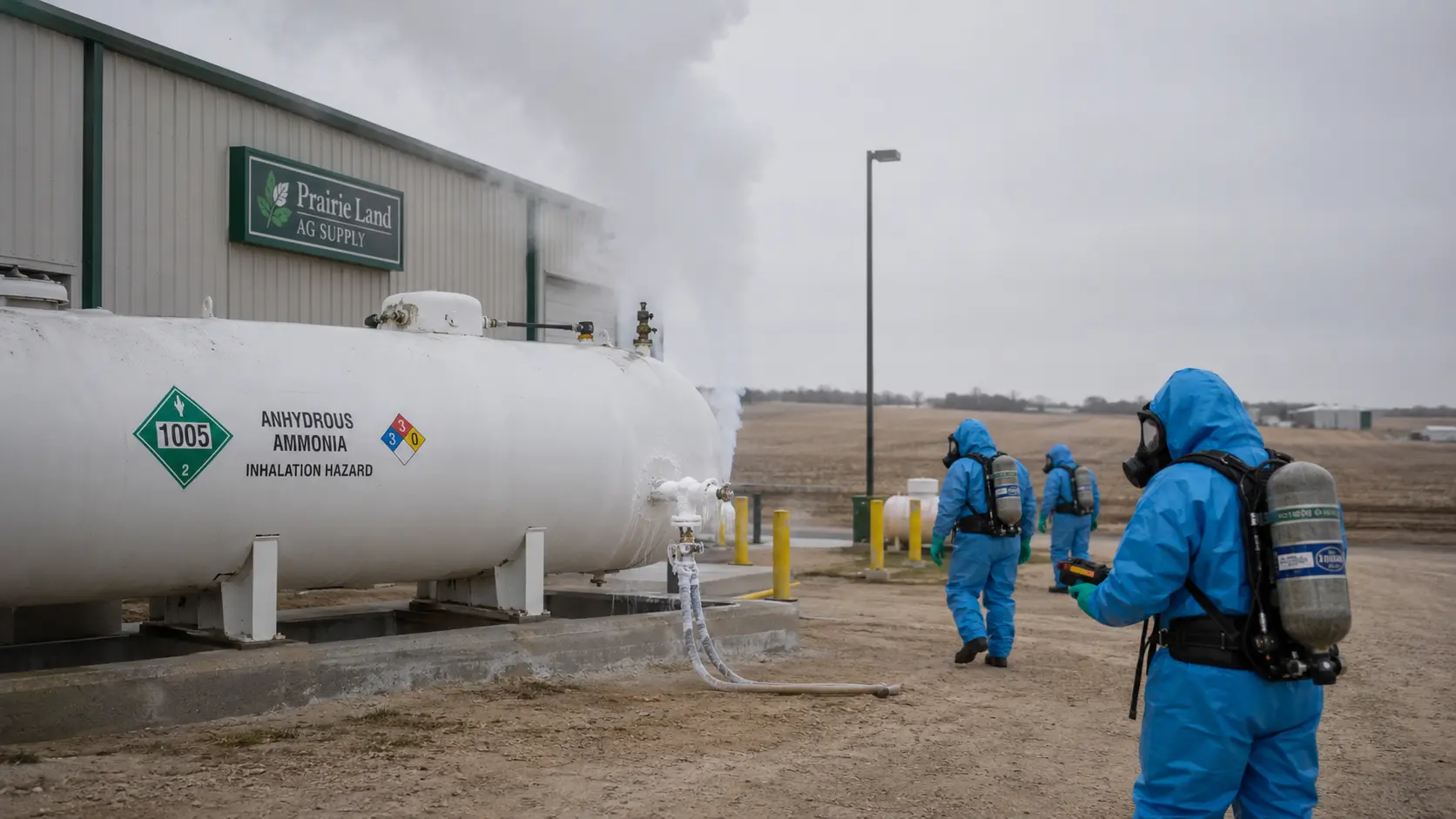
Level B consists of SCBA worn outside a non-encapsulating chemical protective suit. The suit provides splash protection — protection against liquid chemical contact — but is not vapor-tight. The distinction from Level A is that Level B does not provide protection against chemical vapors that can penetrate through the suit material. It is appropriate when respiratory protection requires SCBA (atmosphere is IDLH or oxygen-deficient) but when skin vapor absorption is not a primary concern — either because the vapor concentration is below skin-toxic levels, the chemical does not readily absorb through skin, or the suit material has been selected to provide adequate vapor protection for the specific chemical present.
Level B offers better mobility than Level A because the SCBA is worn outside the suit, weight distribution is more natural, and the suit is less restrictive. It is the most commonly selected level for hazmat entry operations where full vapor encapsulation is not required but respiratory IDLH conditions are present — fuel spills with vapor above LEL, unknown chemical releases where atmosphere is being monitored, corrosive acid or base spills where skin splash is the primary hazard.
Level C: Air-Purifying Respirator
Level C replaces the supplied-air SCBA with an air-purifying respirator (APR) — a respirator that filters ambient air through a canister containing sorbents and filters rather than supplying air from a pressurized cylinder. Level C also includes chemical splash-protective clothing, but the clothing requirement is less stringent than Level B because the overall hazard profile is lower — Level C is not selected for IDLH atmospheres.
Level C is appropriate when the atmosphere is not IDLH, the specific chemical(s) present are known and their airborne concentrations are known to be below IDLH levels, and appropriate APR cartridges are available for the specific chemicals. The last condition is critical: APR cartridges are chemical-specific. An organic vapor cartridge provides no protection against acid gases. A combination cartridge provides broader coverage but still has breakthrough times beyond which it no longer filters effectively. The selection of APR cartridge type for Level C operations requires knowing what chemicals are present — if the identity is unknown, Level C is not appropriate.
Level C offers significantly better mobility, communication, and working duration than Level A or B. It is commonly used for chemical spill cleanup operations in the warm zone after the hot zone has been addressed, for monitoring operations in areas with known but sub-IDLH contamination, and for extended operations where the shorter working times of SCBA would limit effectiveness.
Level D: Standard Work Protection
Level D is the work uniform with minimum safety equipment — safety glasses, hard hat, steel-toed boots, standard work gloves. No respiratory protection beyond what the ambient air provides. Level D is appropriate when the atmosphere contains no known hazards above permissible exposure limits and no potential for splash exposure to chemicals requiring higher protection. It is the baseline level for operations in the cold zone of a hazmat incident where contamination has been confirmed absent.
Level D is not a hazmat protection level in the operational sense — it is the absence of hazmat-specific protection, used when the area has been confirmed safe. Emergency responders arriving at the perimeter of a hazmat incident in Level D are operating in the cold zone on the assumption that their monitoring data confirms no hazard at that distance. If conditions change and contamination reaches the cold zone, Level D provides no protection against it.
What Drives the Selection Decision
| Condition | Appropriate level |
|---|---|
| Unknown chemical, unknown concentration, potential vapor hazard | Level A until identification |
| IDLH atmosphere confirmed, chemical does not absorb dermally at toxic concentrations | Level B |
| Non-IDLH atmosphere, chemical identity and concentration known, appropriate APR cartridge available | Level C |
| No atmospheric hazard confirmed, cold zone operation | Level D |
| Vapor concentration unknown, chemical known to cause severe skin effects at trace concentrations | Level A |
| Oxygen-deficient atmosphere without toxic vapor | Level B minimum (SCBA required for oxygen deficiency) |
Atmospheric Monitoring and Level Assignment
The principle that connects monitoring to level selection is straightforward: you cannot select a protection level that is appropriate for conditions you have not measured. A visual assessment of a chemical spill does not tell you whether the vapor concentration is IDLH. A trained nose does not tell you whether a colorless, odorless gas is present. An incident that looks manageable from the perimeter can have a hot zone with concentrations that produce incapacitation within seconds of unprotected exposure.
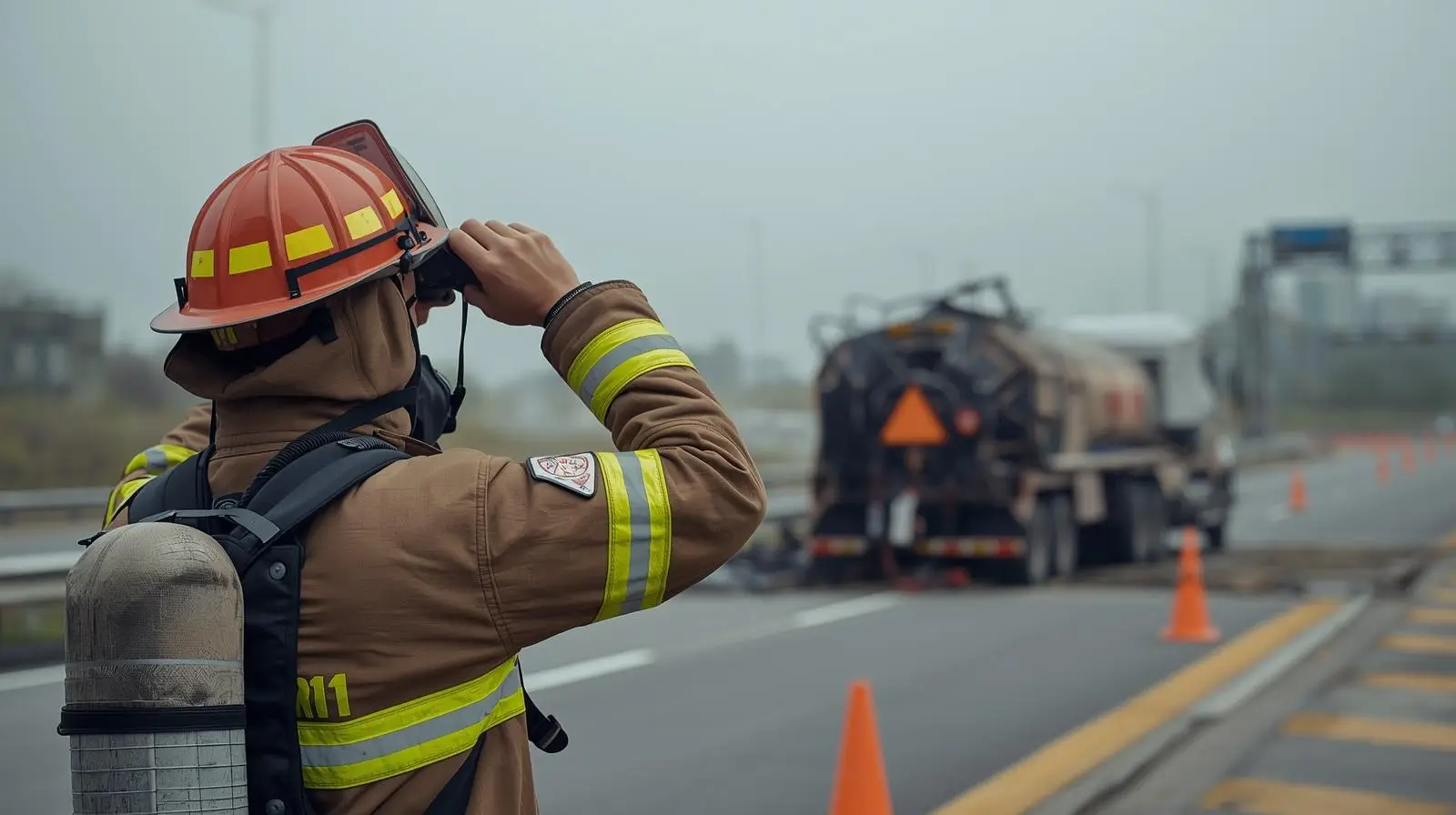
The monitoring sequence at a hazmat incident: approach from upwind at a safe distance, deploy monitoring equipment on a pole or via a remotely operated vehicle into the hot zone area before any personnel enter, record the readings at multiple distances and heights, and select protection level based on the highest concentration encountered. If SCBA-equipped entry is required to get close enough to monitor, the initial approach is made in Level A or B until sufficient data exists to justify downgrading.
Upgrading and Downgrading During an Incident
Protection level can be upgraded during an incident if monitoring shows conditions are worse than initially assessed, or downgraded if conditions improve. Both changes require documented monitoring data and incident commander approval. Upgrading mid-incident — because a crew entered in Level B and monitoring now shows vapor concentrations requiring Level A — requires immediate withdrawal of the Level B team, decontamination, suit exchange, and re-entry in appropriate protection. It is disruptive, time-consuming, and potentially dangerous for the team that is already inside. Getting the initial selection right based on worst-case assumptions for unknown chemicals is more efficient and safer than optimistic initial selection followed by an upgrade under operational pressure.
Decontamination Requirements by Level
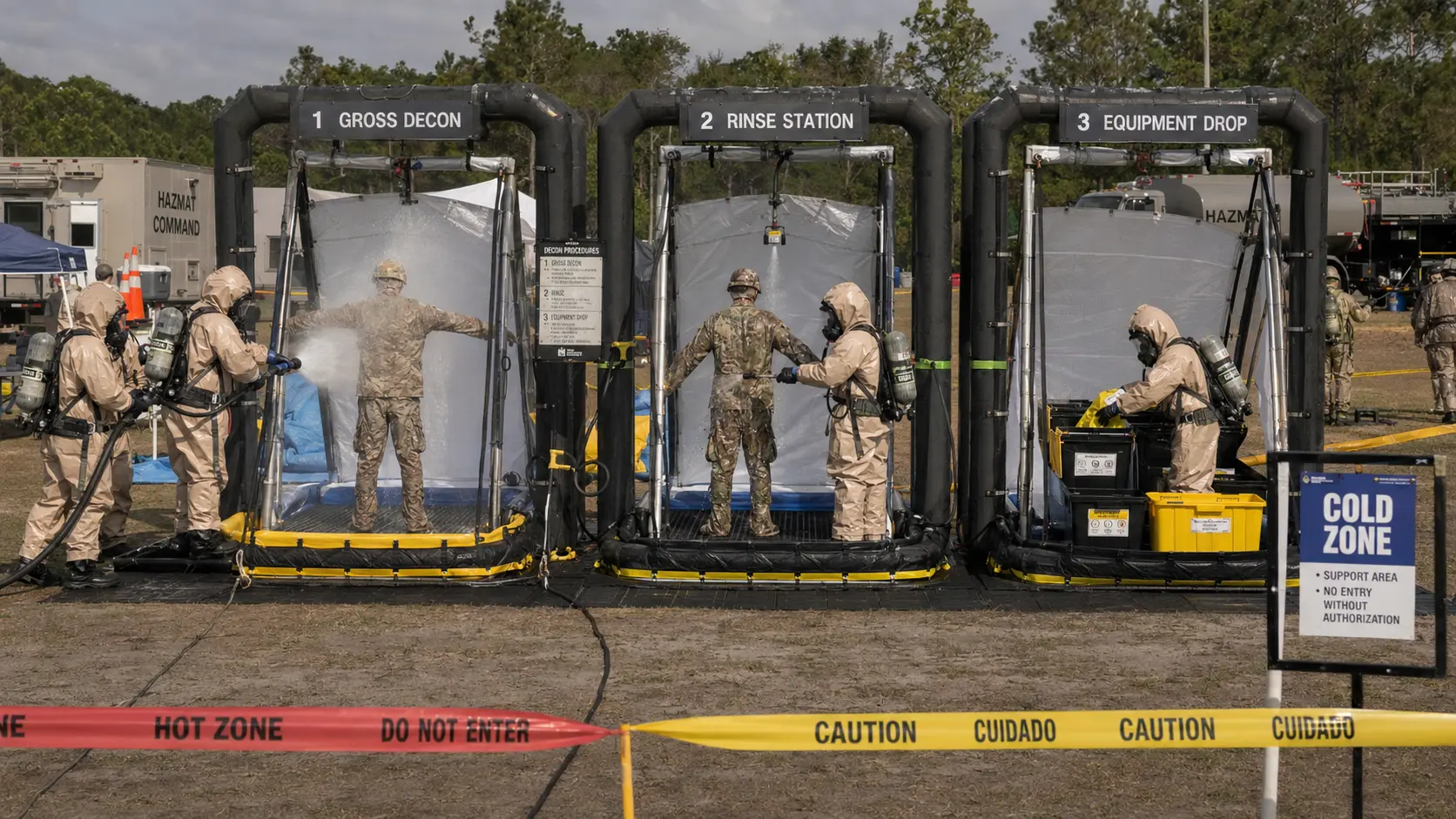
All personnel exiting the hot zone require decontamination before entering the warm zone or the cold zone, regardless of protection level. The thoroughness and steps of decontamination vary with the hazard and the protection level used.
Level A exit decontamination involves gross decon of the suit exterior — typically a thorough wash with appropriate solution while the suit is still sealed — before any removal of the suit begins. The suit remains on until the exterior has been decontaminated, because removing a contaminated Level A suit without exterior decon exposes the person assisting with the removal to the hazard on the suit surface.
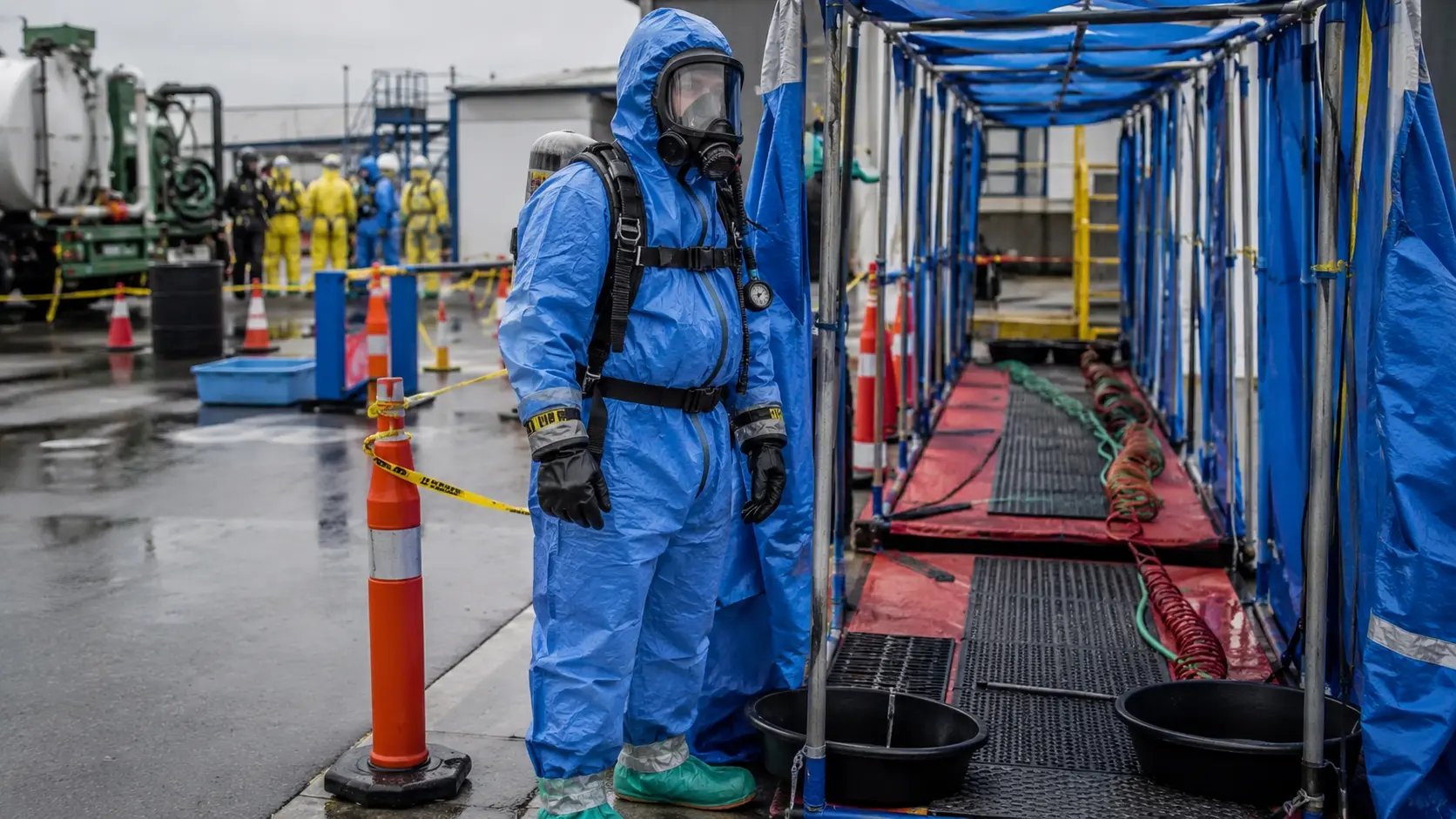
Level B and C decontamination follows a similar sequence at reduced complexity — exterior suit wash, removal in a defined sequence that prevents contamination transfer, respiratory protection removal last. The decontamination corridor is established as part of the hazmat zone setup, between the hot zone and the warm zone, before any entry operations begin. A hazmat operation without a functioning decon corridor is an operation without an exit plan for the entry team.
Comments 0
No comments yet. Be the first to share your thoughts!
Leave a Comment