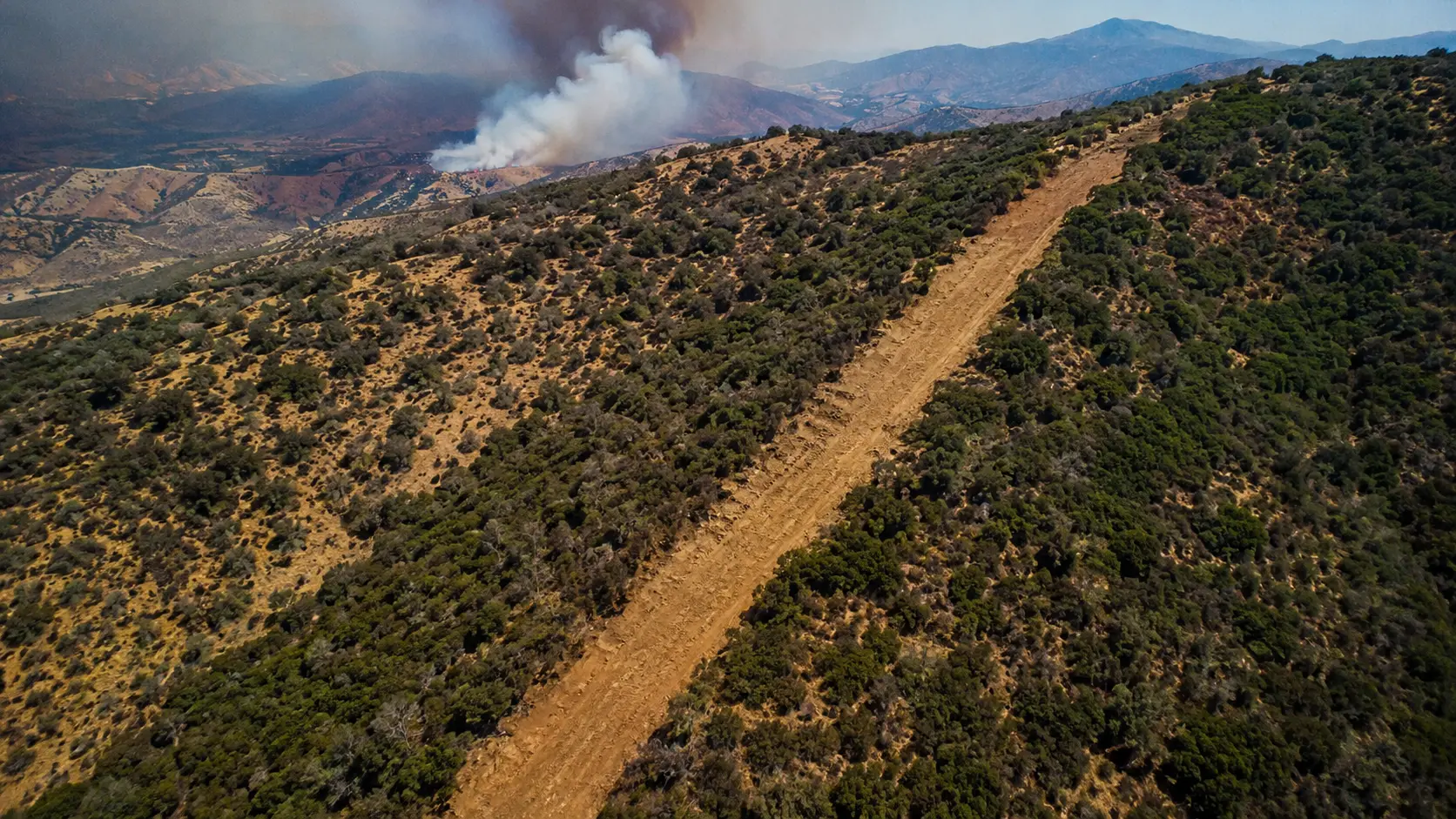

A firebreak is not a wall. It is a gap in the fuel supply — a strip of ground where combustible vegetation has been removed so that a fire advancing toward it runs out of material to burn before it can cross. Whether the break holds depends on whether the fire reaches it at a behavior level the break can contain, whether spotting carries embers past it before suppression resources can respond, and whether the weather conditions during the fire's arrival match the conditions under which the break was designed to work. A break that holds a fire in the morning may fail spectacularly in the afternoon when the same fire returns under higher wind conditions.
In this article:
- The mechanism: why removing fuel stops fire
- Hand lines vs. dozer lines vs. natural breaks
- Width requirements and the flame height rule
- Burnout operations: making the break actually work
- The Black Line concept
- Three ways a held line fails
- Aerial retardant as a firebreak tool
- Historical line failures and what they changed
The Mechanism: Why Removing Fuel Stops Fire
Fire requires continuous fuel to advance. When a strip of mineral soil — no organic material, no root mat, no grass, no debris — interrupts the fuel continuity, the fire front reaches it, consumes the last available fuel, and self-extinguishes at the break edge in the absence of spotting. The break does not stop fire by physical blocking. It stops fire by ending the supply chain that fire depends on.
The key phrase is "mineral soil." A line that cuts through the surface vegetation but leaves the organic soil layer — the layer of roots, decomposed organic matter, and duff — intact is not a firebreak. Smoldering fire can travel through organic soil material beneath the surface, cross the apparent break, and emerge on the other side hours later. Every effective firebreak requires cutting to bare mineral earth — the inorganic layer where no combustion can be sustained.
Hand Lines vs. Dozer Lines vs. Natural Breaks
Hand lines are firebreaks constructed by hand crews using McLeod tools, pulaskis, and shovels. A standard hand line is 18 inches wide — scraped to mineral soil — and built at the pace the crew can manage: typically 0.5 to 2 chains (33 to 132 feet) per hour depending on fuel density, terrain, and crew conditioning. Hand lines are used where equipment cannot go — steep terrain, dense forest, areas where dozer access would cause unacceptable resource damage. They are slow and physically exhausting, and their 18-inch width is effective only against relatively low-intensity fires.
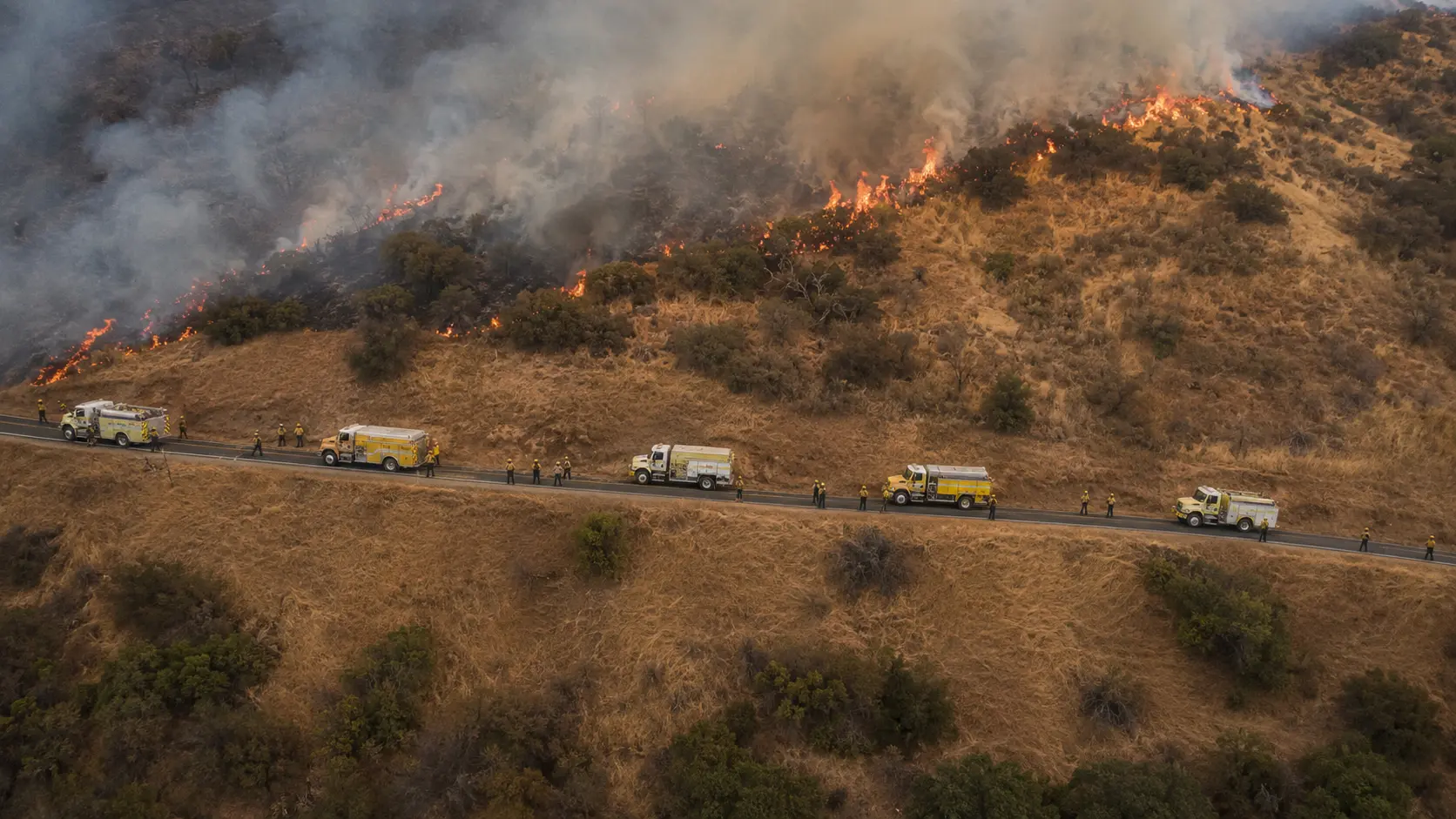
Dozer lines are constructed by a bulldozer scraping a path to mineral soil at widths of 10 to 30 feet or more. A D6 dozer can build 10 to 20 chains per hour on moderate terrain — roughly 10 to 20 times the rate of a hand crew. Dozer lines are the primary direct attack tool on accessible terrain and are typically built wider than hand lines specifically to address higher fire intensity and spotting risk. The limitation is terrain: slopes above 35 degrees, rocky areas, and protected or sensitive lands are off-limits for dozer operations.
Natural breaks — roads, rivers, ridgelines, cliff edges, previously burned areas — provide fuel gaps without construction cost. A two-lane road through a forest provides a natural firebreak of 24 to 30 feet if the shoulders and ditches are cleared. A river provides a break equal to its width. Both serve as anchor points for hand or dozer line construction, extending the break along terrain features that already provide some containment value.
Width Requirements and the Flame Height Rule
The width of a firebreak that will hold a fire depends on the flame height of the fire when it arrives at the break. The rule of thumb used in wildland fire: the break width should be 1.5 to 2 times the expected flame height. A grass fire with 3-foot flame heights requires a 4.5 to 6-foot effective break width — achievable with a properly constructed hand line. A chaparral fire with 10 to 15-foot flame heights requires 15 to 30 feet of cleared break — requiring dozer construction. A timber fire with 30 to 50-foot flame heights requires 45 to 100 feet of cleared break — generally impractical to construct in the time available, which is why these fires are typically addressed with burnout operations rather than direct line construction.
Flame height at the break is not the flame height in the main fire body — it is the flame height after the fire has been burning for a period and is approaching the line under the conditions at time of arrival. A fire that was producing 8-foot flames in morning conditions may arrive at an afternoon-constructed break with 20-foot flames if afternoon winds have developed. The break width that was planned for morning conditions may be inadequate for afternoon arrival.
Burnout Operations: Making the Break Actually Work
A newly constructed break with unburned fuel between the break and the fire front is called a "cold break." The fuel on the fire side of the break is still combustible — if the fire reaches the break and spotting carries embers across, the unburned fuel on the safety side allows the spot fires to establish and grow. A cold break is a starting point, not a finished product.
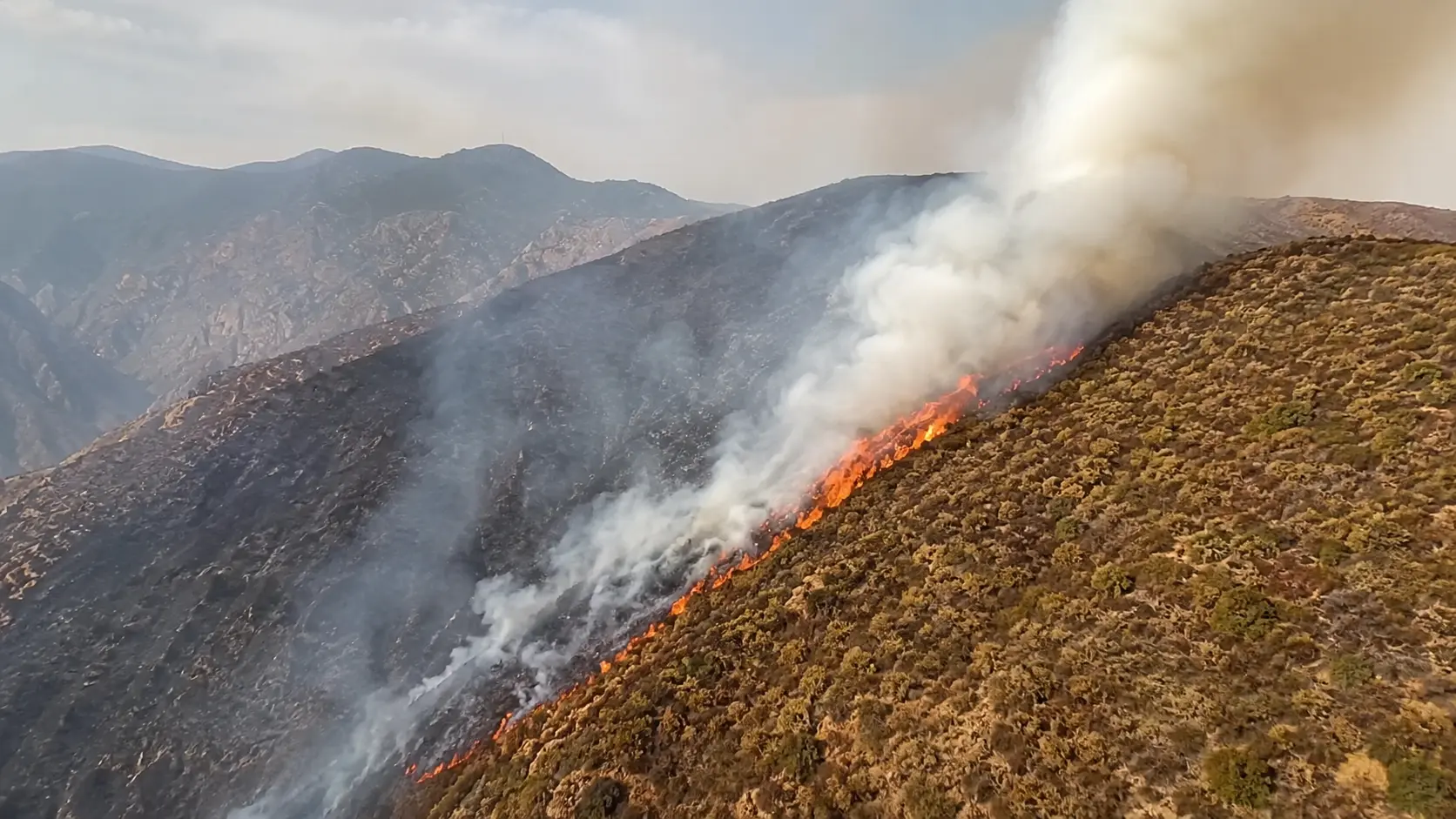
Burnout operations address this by intentionally burning the fuel between the constructed break and the fire front — under controlled conditions, while crews have some control over the ignition and progression. The burned-out area creates a "black" — a zone of consumed fuel that the main fire cannot burn through. The break now has both the physical gap of the line and the burned zone as a buffer, significantly increasing the probability that the line holds when the main fire arrives.
Burnout is conducted under specific weather conditions — winds that carry the intentional fire toward the main fire, not away from crews on the break. The ignition sequence and firing pattern are managed to prevent the burnout from exceeding the crew's ability to control it. A burnout that escapes and grows into the unburned area on the wrong side of the break is a significant problem — it becomes a fire in an area where resources expected to find safety.
The Black Line Concept
The Black Line is a defensive perimeter of burned fuel around a community or structure in the path of a wildfire — established before the fire arrives to eliminate the fuel that would otherwise allow the fire to reach the structure or community. Black Line preparation is done during the pre-fire period, when conditions are manageable, rather than in the final minutes before fire arrival.
For a community, a Black Line operation involves burning or removing vegetation along the community perimeter while weather conditions are benign — typically in the early morning of high-fire-risk days. The result is a fuel-free or low-fuel buffer that is in place when the afternoon wind-driven fire arrives. The arriving fire finds the Black Line and, if it is wide and complete, cannot bridge it without spotting.
The Black Line concept shifts the defensive posture from reactive (building a break in front of an active fire) to proactive (establishing the break before the threat arrives). It requires pre-positioning resources and accepting the fire risk of the intentional ignition, but it produces a more reliable break because it is established at a time when conditions allow deliberate, controlled work.
Three Ways a Held Line Fails
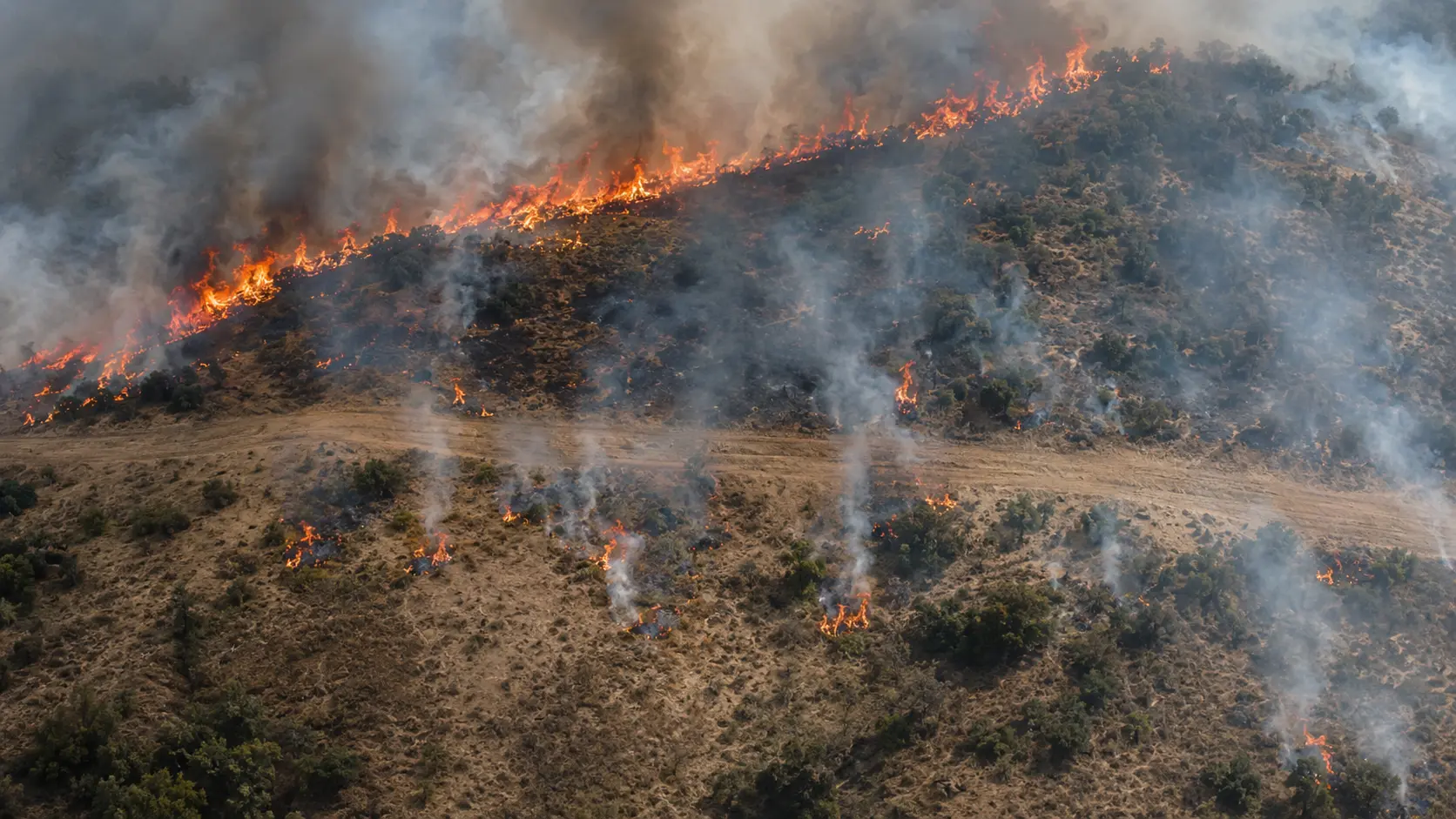
Spotting: Embers carried over the break by wind or convection column. A break that is physically adequate to stop the surface fire front cannot stop a burning ember that travels through the air above it. In high-wind conditions with a developed convection column, embers can travel miles before landing. Once spot fires are established on the unburned side of the break, the break's containment value is lost unless the spots can be suppressed before they grow.
Crowning: Fire that moves from the surface fuel into the tree canopy bypasses the cleared break entirely — the break interrupts surface fuel, not airborne canopy fuel. A fire that is running in the crowns of trees can carry across a 30-foot dozer line without touching the mineral soil surface. Breaks are effective against surface fire; they are less effective against active crown fire except as a boundary for burnout operations.
Wind shift: A line that was constructed with the fire approaching from one direction, and resources positioned accordingly, can be undermined instantly by a wind direction change that brings the fire from a new angle. The resources positioned on the safe side of the line relative to the original fire direction may now be on the fire side relative to the new direction. Historical entrapment incidents — Mann Gulch 1949, South Canyon 1994 — involved unexpected wind shifts that cut off escape routes that had been identified under the original fire direction.
Aerial Retardant as a Firebreak Tool
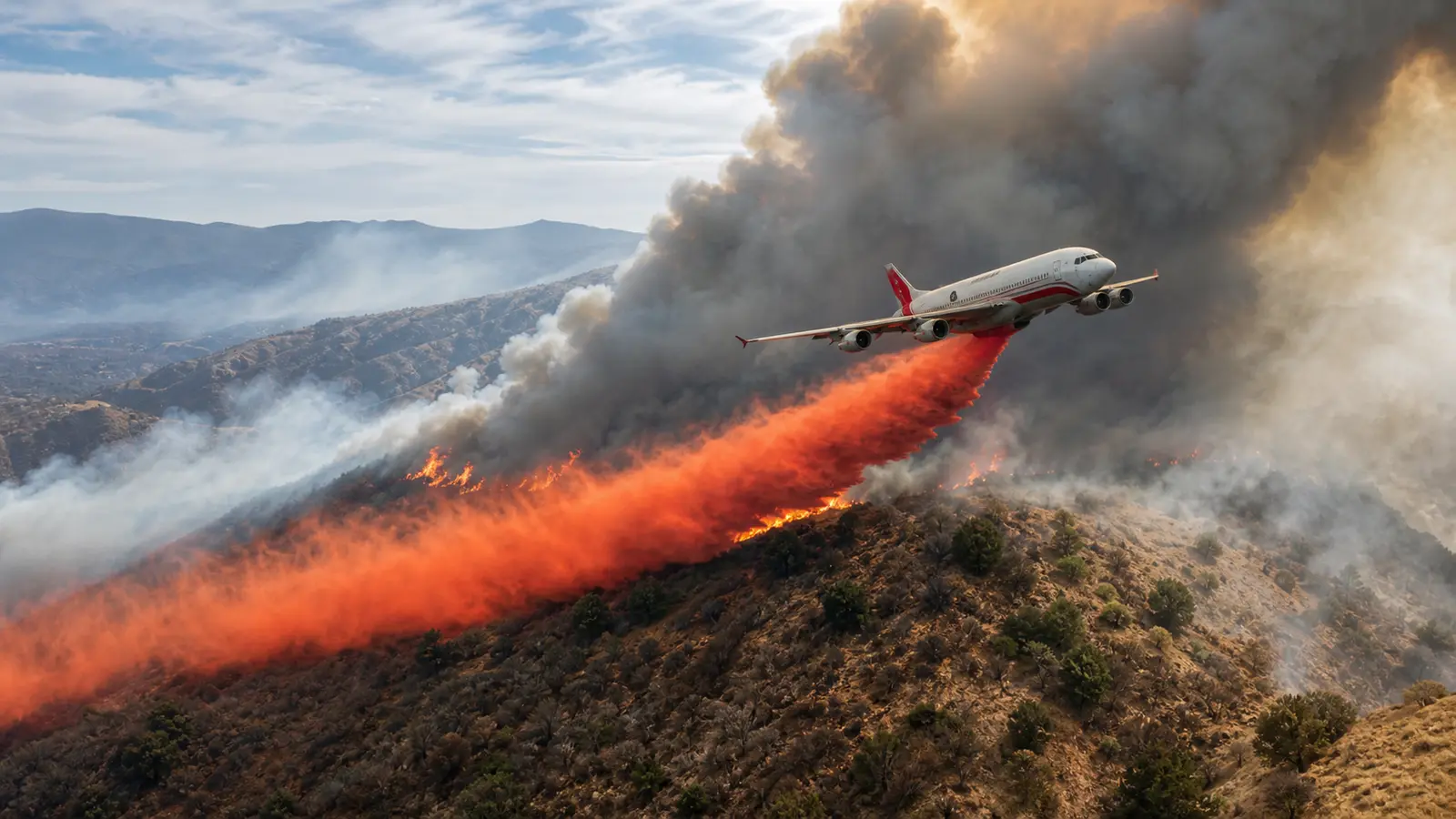
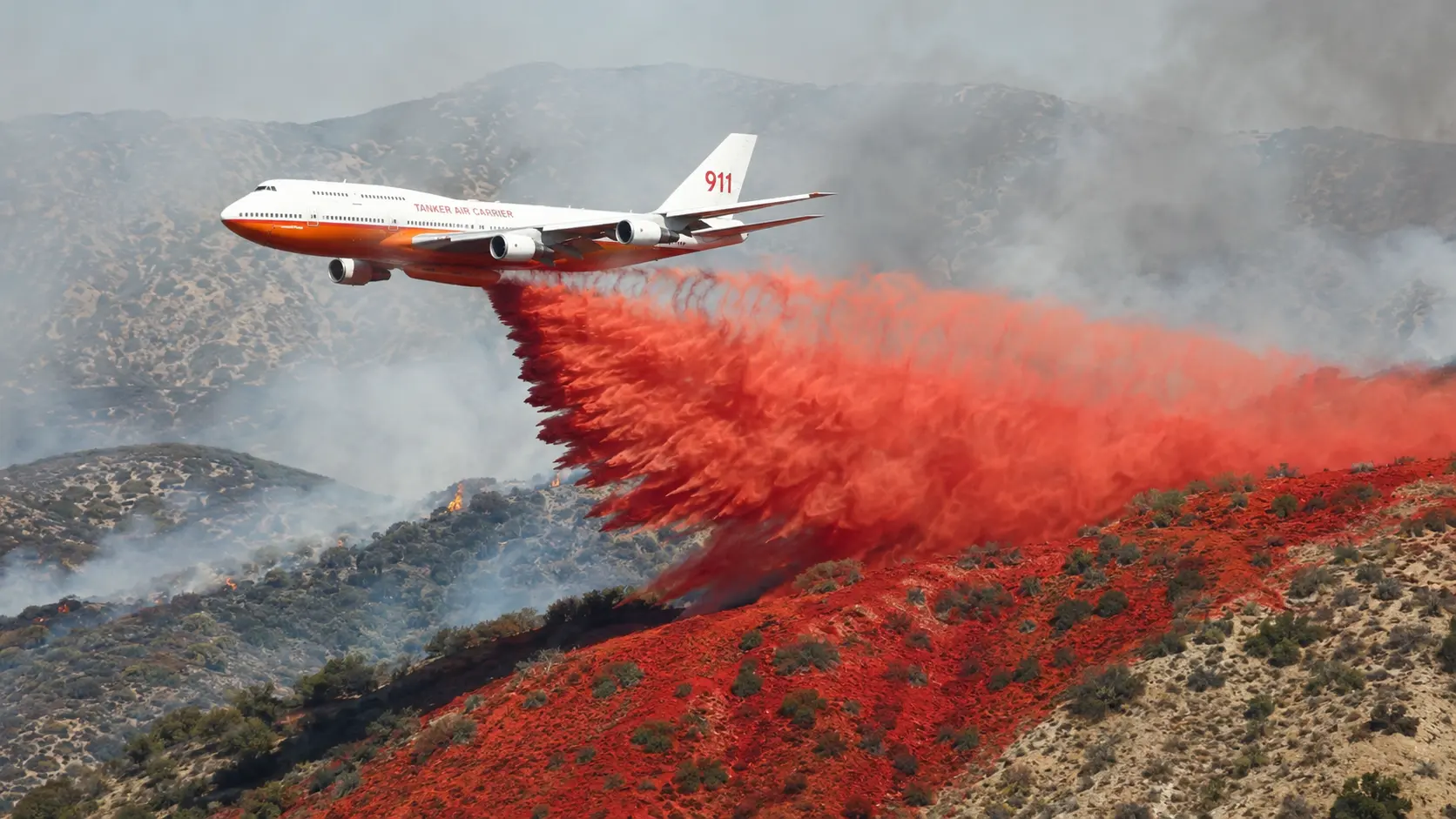
Aerial retardant — the red slurry dropped by airtankers — is not a firebreak in the physical sense but serves a similar function: it reduces the flammability of vegetation it coats, slowing or stopping fire spread through treated areas. A retardant drop along a planned control line can reinforce or substitute for a hand or dozer line, particularly on terrain where ground-based construction is impractical or would take longer than available time allows.
Retardant is most effective when applied to unburned fuel ahead of the fire, not on the fire front itself. A drop on the fire front cools the fire temporarily but does not prevent it from burning through once the retardant is consumed. A drop on unburned fuel in the path of the fire creates a treated zone that the fire approaches more slowly, giving ground crews time to complete line construction or conduct burnout on the reinforced line.
Historical Line Failures and What They Changed
The 1949 Mann Gulch fire in Montana killed 13 smokejumpers and forest service crew members when a wind-driven fire overtook their escape route on a steep slope. The investigation and subsequent research produced the Ten Standard Firefighting Orders and the Eighteen Watch-Out Situations — the foundational safety framework for wildland firefighting that defined escape routes and safety zones as non-negotiable before any tactical commitment.
The 1994 South Canyon fire in Colorado killed 14 firefighters. The investigation found that the crew was working on a slope in deteriorating conditions, with an escape route that was uphill and longer than it appeared on the map, and that a wind-driven fire overtook them before they could reach safety. South Canyon produced substantial revisions to the application of the Ten Orders and Watch-Outs, specifically around how "escape route" and "safety zone" are defined — a route that is too long or too steep to actually escape by is not a viable escape route, regardless of what the map shows.
Comments 0
No comments yet. Be the first to share your thoughts!
Leave a Comment