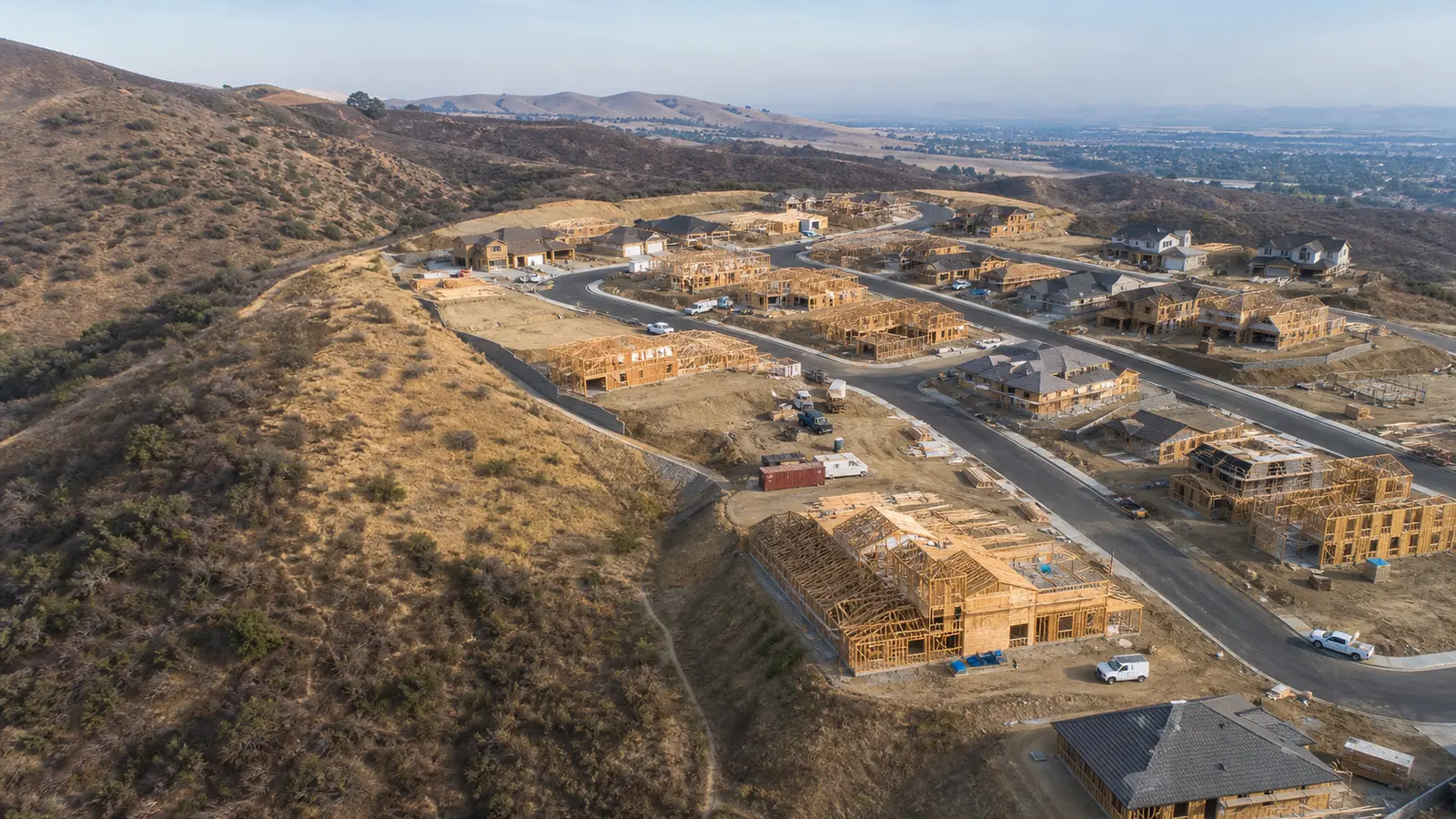
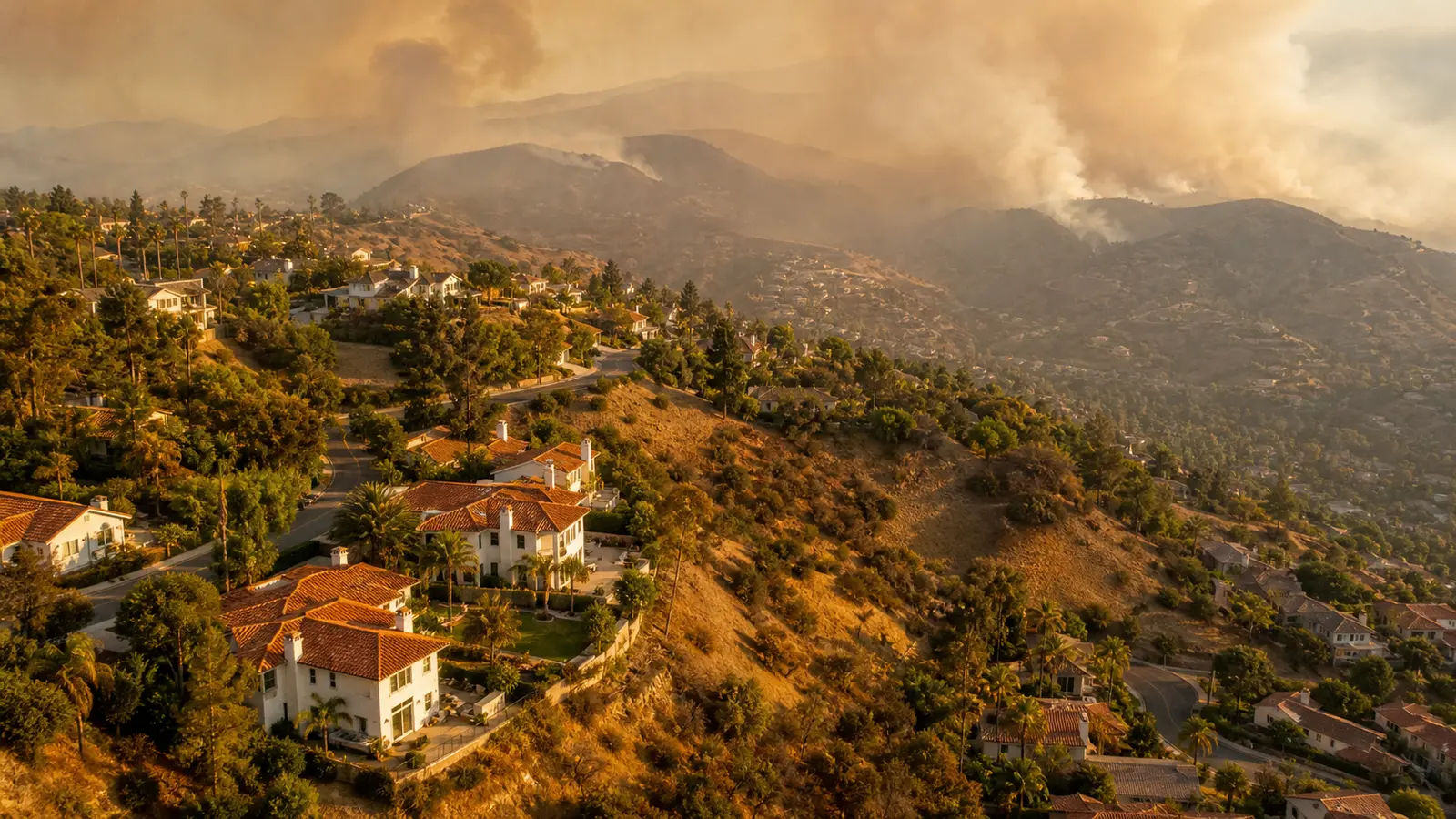
Between 1990 and 2020, more than 32 million new homes were built in the United States in areas classified as wildland-urban interface — terrain where residential development directly abuts or intermixes with wildland vegetation. More than 4.5 million of those homes were in what researchers classify as the intermix zone: not just adjacent to wildland but embedded within it, surrounded by continuous natural vegetation on multiple sides. These are not rural outposts. They are suburban subdivisions, retirement communities, and vacation properties built into forested terrain and chaparral-covered hills by people who wanted proximity to nature and affordable land.
They are also the homes that are currently burning. The structure loss statistics that define the modern era of wildfire — the 2018 Camp Fire destroying 18,804 structures, the 2020 Creek Fire burning through mountain resort communities, the 2026 Palisades Fire consuming 12,000+ structures in an area most Americans thought of as simply "Los Angeles" — are the direct consequence of 30 years of WUI construction in terrain that has always burned, in a climate that is burning more aggressively, in communities that were built assuming the fire service could protect them.
What the fire service actually knows about WUI development — what it means for response capability, for structure survivability, and for the communities being built in fire terrain right now in 2026 — is a conversation that rarely reaches the people buying those homes before they buy them.
In this article:
- Why people keep building in fire terrain
- What WUI density means for fire department response
- Building codes vs. fire reality — what California, Colorado, and Oregon require
- The access road problem — why some WUI communities can't be defended
- How new WUI development is accelerating the insurance crisis
- What homebuyers in WUI areas are not being told
- What the fire service thinks the next decade looks like
Why People Keep Building in Fire Terrain
WUI development is driven by the same forces that drive all suburban and exurban development: land prices, desire for space, proximity to natural amenities, and the outward pressure of housing markets in urban cores. Forested and chaparral-covered terrain is typically less expensive than urbanized land. It offers the aesthetic appeal of living near nature — views, quiet, trees — that commands a premium in lifestyle marketing but reflects a discount in raw land cost relative to the urban areas they adjoin.
Remote work adoption post-2020 significantly accelerated WUI growth in mountain and foothill communities. Workers who no longer needed to commute daily discovered they could afford significantly more house — on significantly more land — in communities that the prior generation associated with vacation cabins and retirement. Between 2020 and 2023, population growth in WUI-adjacent mountain counties in Colorado, California, Montana, and Idaho significantly outpaced national averages.
The people buying these homes are not ignoring fire risk consciously. Most have simply never been given accurate information about it. A real estate disclosure that lists "wildfire hazard area" as a checkbox item does not communicate what it means operationally — that the single-access road to the subdivision can be blocked by fire in the same event that triggers mandatory evacuation, that the fire department response time from the nearest station is 20 minutes in a vehicle, or that the water supply for suppression may be a static tank rather than a hydrant.
What WUI Density Means for Fire Department Response
Fire departments serving WUI communities face a resource math problem that has no clean solution. The number of structures that need protection during a major wildfire event scales with the number of structures built. The fire department's capacity — engines, personnel, water supply, access roads — is determined by budget, geography, and the population density that justifies a given level of staffing. In WUI development, population density is low — that is part of the appeal — which means the tax base supports a limited department serving a large geographic area with widely dispersed structures.
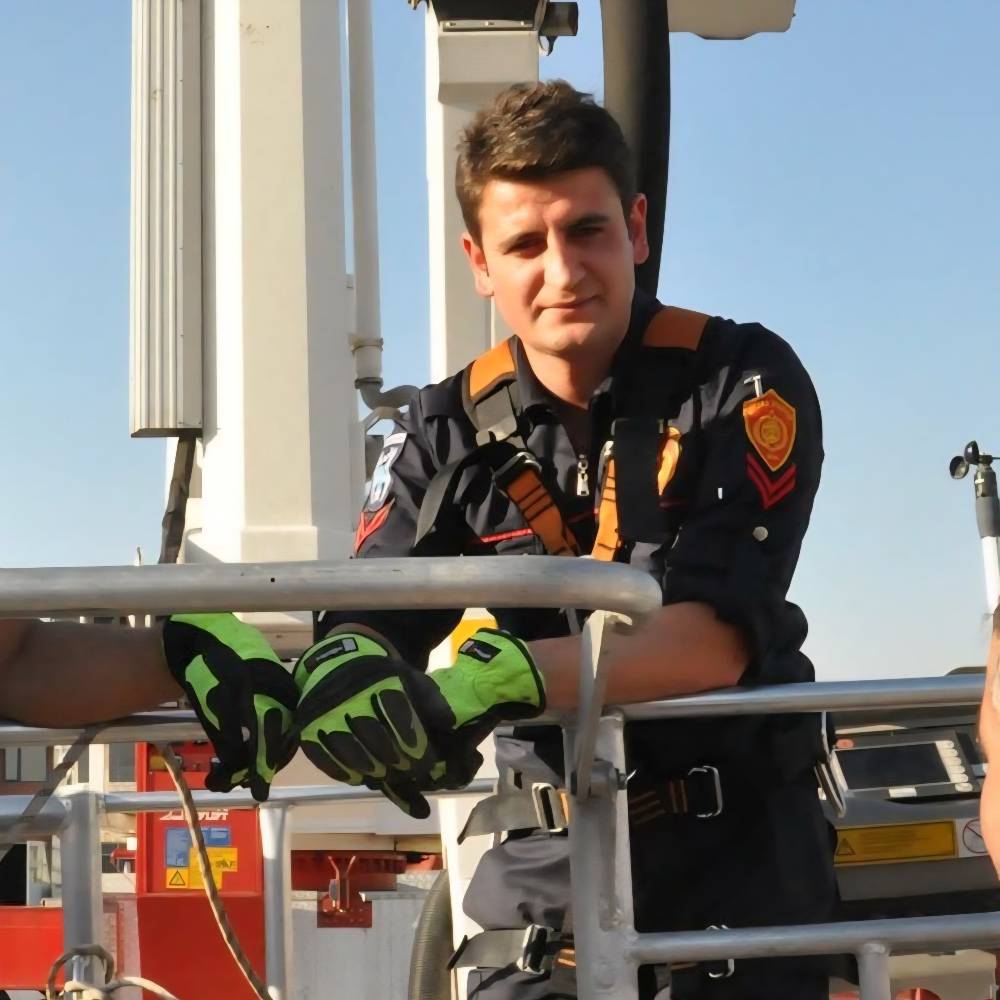
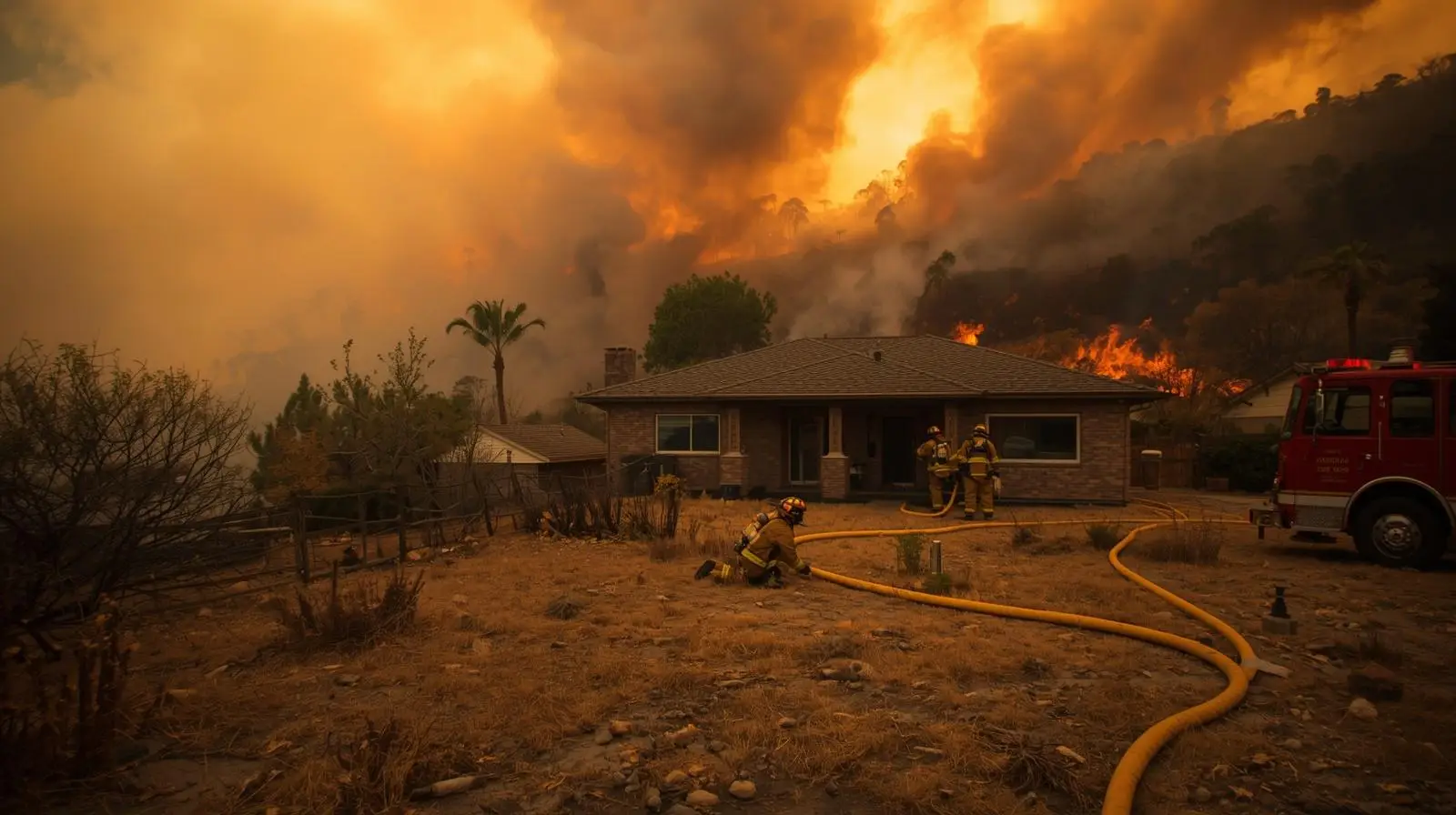
During a wildfire that threatens multiple structures simultaneously, this math becomes acute. A department with four engines cannot simultaneously defend forty homes. Structure triage — the process of choosing which structures to defend and which to drive past — is not a policy failure. It is the inevitable consequence of building more structures in fire terrain than the local department can simultaneously protect during an extreme event.
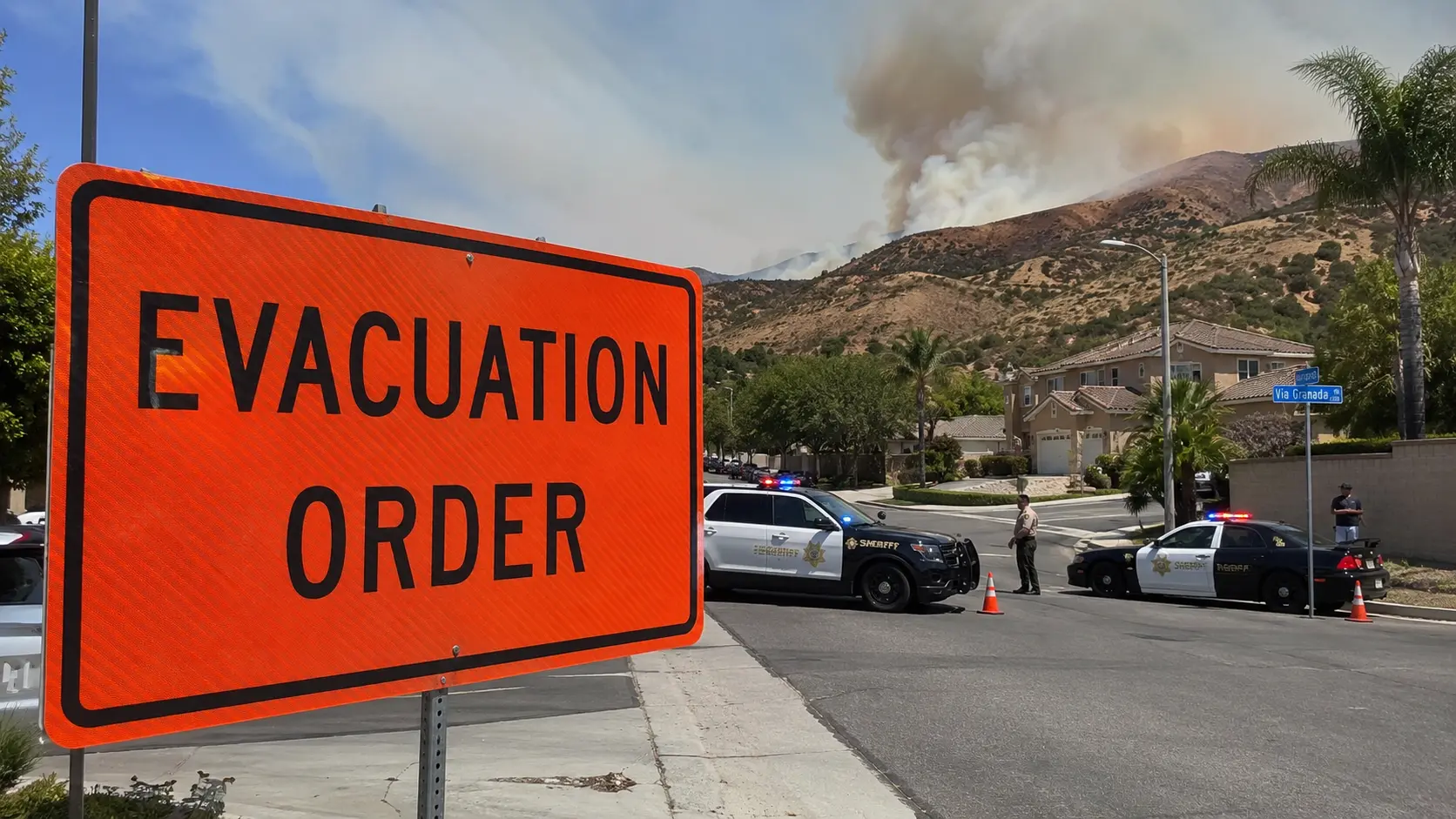
WUI development also creates access challenges that affect response independent of staffing. New subdivisions in fire terrain frequently have single-access roads — one way in, one way out. When that road is needed simultaneously for incoming fire apparatus and outgoing evacuation traffic, it becomes a bottleneck. When fire crosses that road, it becomes a trap. The access road geometry of a subdivision is fixed at construction and is rarely designed with worst-case fire response in mind.
Building Codes vs. Fire Reality — What California, Colorado, and Oregon Require
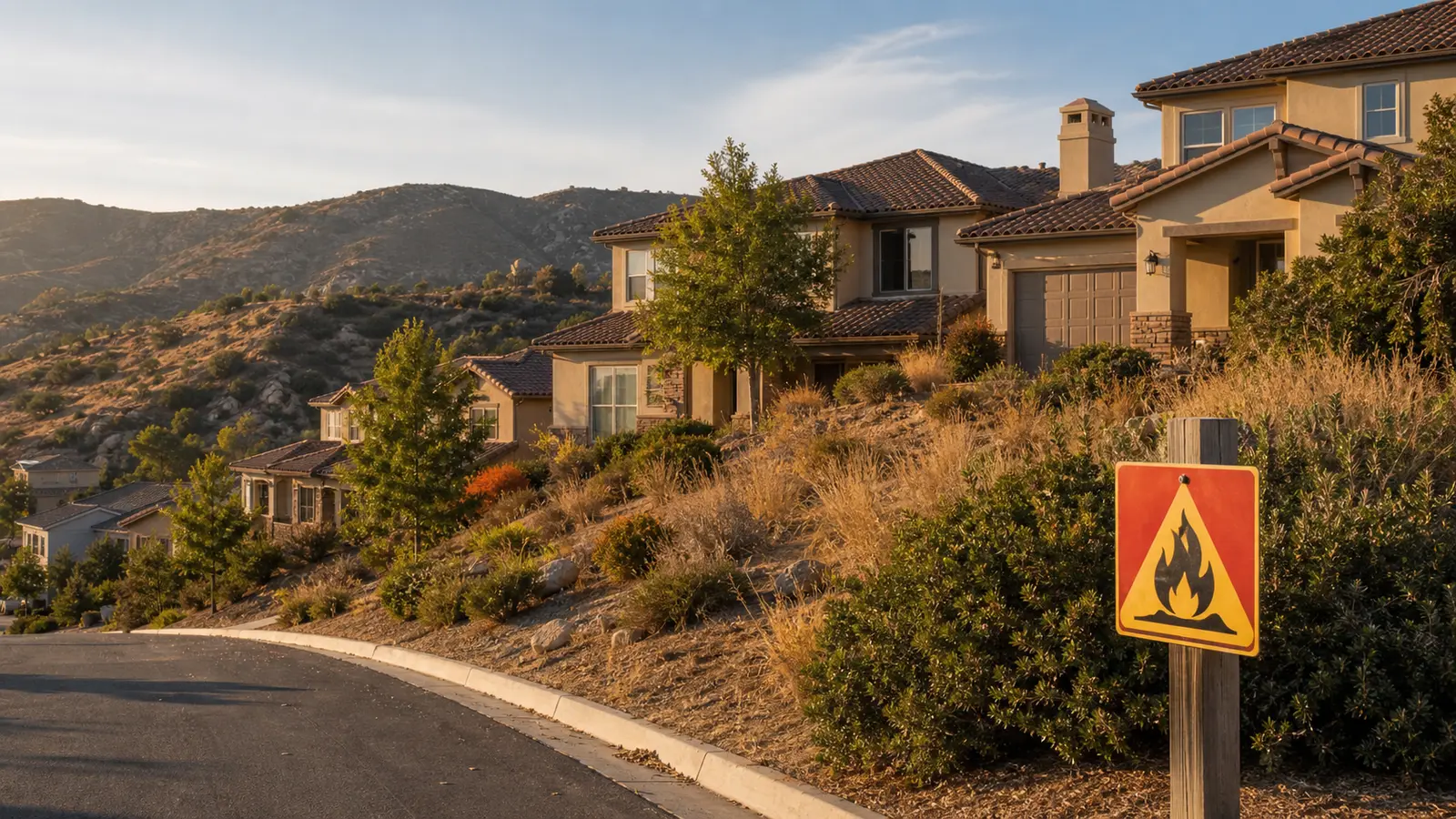
California's Chapter 7A of the Building Code applies to new construction in State Responsibility Areas and Very High Fire Hazard Severity Zones. It requires ignition-resistant construction including Class A fire-rated roofing, ember-resistant vents, non-combustible exterior wall assemblies, and multi-pane windows. It is one of the most comprehensive wildfire construction standards in the country and — when applied to new construction in high-hazard areas — produces homes that are substantially more survivable than pre-code structures.
The limitations are significant. Chapter 7A applies to new construction, not to existing homes. The California WUI is dominated by housing stock built decades before the standard existed. In communities where new construction abuts older homes — the neighborhood pattern that defines most WUI development — the new home with Class A roofing and ember-resistant vents sits next to a 1975 home with wood shake and open eave vents. The ember cast from a wildfire does not distinguish between compliant and non-compliant structures.
Colorado enacted wildfire building codes in 2023 that apply to new construction in the most hazardous interface areas, following the 2021 Marshall Fire that destroyed nearly 1,100 structures — many of them new homes in suburban subdivisions adjacent to open grassland. The Marshall Fire occurred in December, during a wind event, demonstrating that wildfire in WUI terrain is not seasonally constrained in the way that traditional fire management planning assumed.
Oregon's 2021 wildfire legislation created a framework for WUI construction standards, but implementation has been slower than the fire risk trajectory warrants. As of 2026, Oregon's WUI building standards are less comprehensive than California's, and the rapid growth of WUI communities in the southern Oregon Cascades and Coast Range in recent years has expanded the area subject to fire risk faster than the regulatory framework has kept pace.
What Homebuyers in WUI Areas Are Not Being Told
Real estate disclosure requirements in California require sellers to disclose if a property is in a State Fire Hazard Severity Zone. Oregon, Colorado, and other western states have similar requirements at various levels of specificity. What none of these disclosures communicate effectively:
Water supply for suppression. Properties outside the range of municipal water systems rely on fire department water tenders or static tanks. A home with no hydrant within practical reach cannot receive the same level of structural defense as a home in a hydrant-served area. The fire department response includes a water supply constraint that is invisible in the property listing.
Response time under fire conditions. The fire department response time listed in a community's marketing materials reflects normal conditions. During a major wildfire event, response time to any individual structure is governed by the incident command structure, resource availability, and the triage decisions made at the operational level — not by station location. A fire station five miles away may not reach your structure during a major event for 45 minutes or more.
Insurance trajectory. The property may be insurable today at a quoted rate. That rate is not guaranteed at renewal. Buyers purchasing in high-risk WUI areas should research what is happening to insurance availability in that specific county before completing a purchase — not after they receive a non-renewal notice in year two of homeownership.
Evacuation route viability. The single road in and out of many WUI subdivisions is not disclosed as a limitation. Buyers should drive the route during commute hour, identify alternate routes, and ask the local fire department whether that road has ever been compromised during a fire event in the area.
What the Fire Service Thinks the Next Decade Looks Like
Fire chiefs and wildfire researchers who spend their careers in WUI terrain are not optimistic about the trajectory. The combination of continued WUI development, escalating fire seasons, and insurance market contraction is producing communities that are simultaneously growing in population, more exposed to fire risk, and less financially protected against loss than at any prior point.
The resource math gets worse, not better, as development continues. A fire department serving a WUI community of 5,000 homes faces a different scale of structure triage problem than one serving 2,000 homes in the same terrain. The homes added since the department's staffing level was last adjusted are homes the department cannot defend simultaneously without mutual aid from a large-scale incident response — which takes hours to assemble while the fire moves in minutes.
The most realistic long-term trajectory for WUI communities involves a combination of stricter building codes for new construction, mandatory defensible space compliance for existing structures tied to real estate transactions and insurance, and honest public communication about what fire department response can and cannot guarantee in extreme fire conditions. Some researchers argue that certain areas should not be rebuilt after major fires — that the combination of terrain, fuel, and ignition probability makes repeated development a cycle of loss that community members and taxpayers cannot sustain indefinitely.
The fire service is not against WUI development categorically. Fire departments in interface communities have been protecting those communities for generations. What fire chiefs consistently advocate for is development that is built to survive the fire environment it is built into — with access roads wide enough for simultaneous response and evacuation, water supply that supports suppression, building materials that don't ignite from ember exposure, and occupants who understand what the fire hazard disclosure on their purchase contract actually means.
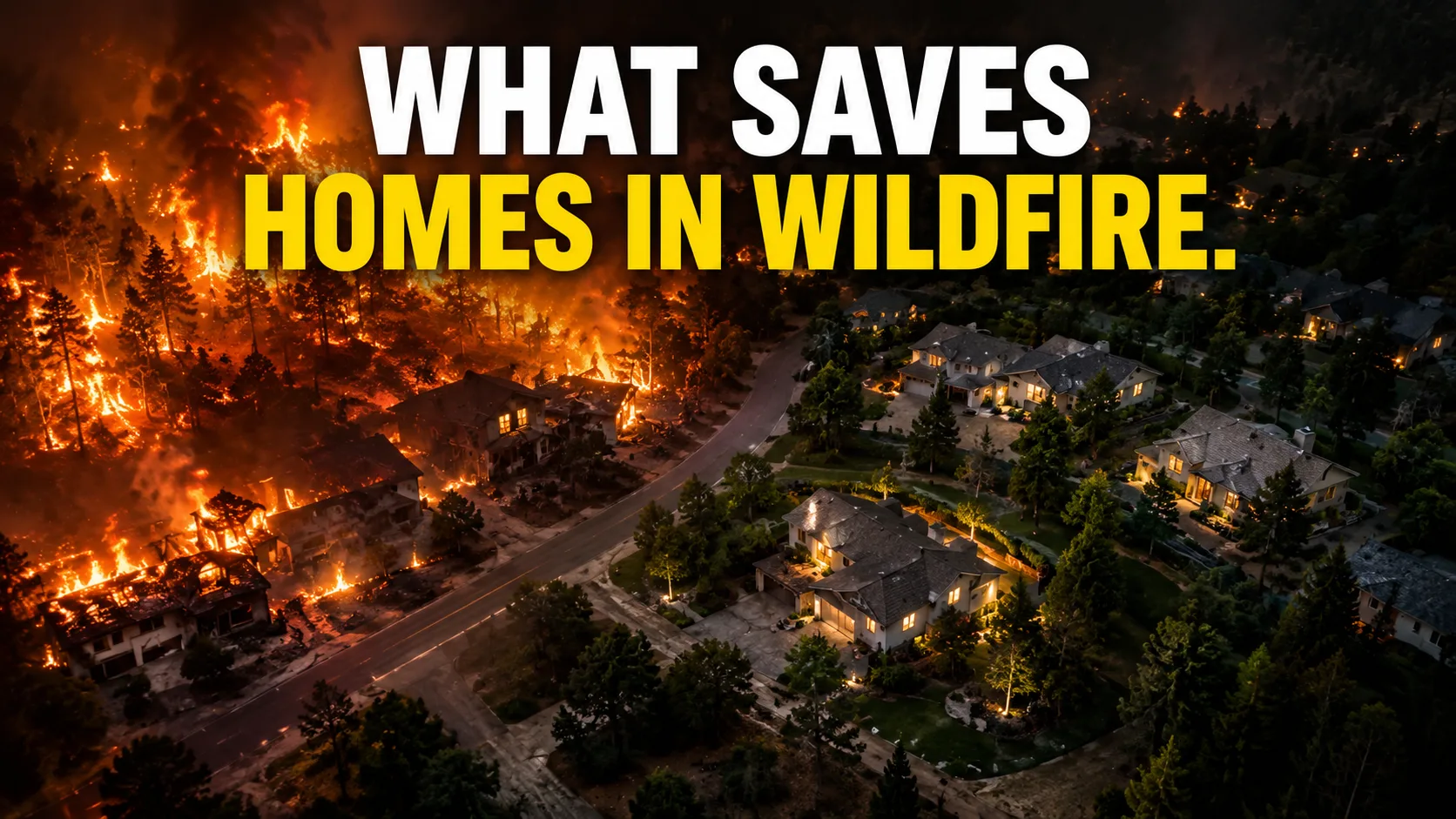
The home that was built in 1985 with wood shake roofing and no defensible space on a single-access road in a steep drainage is a different problem than the home built in 2026 to current California Chapter 7A standards with a 100-foot cleared zone and two access routes. Both are in the WUI. Only one is built for it.
Comments 0
No comments yet. Be the first to share your thoughts!
Leave a Comment