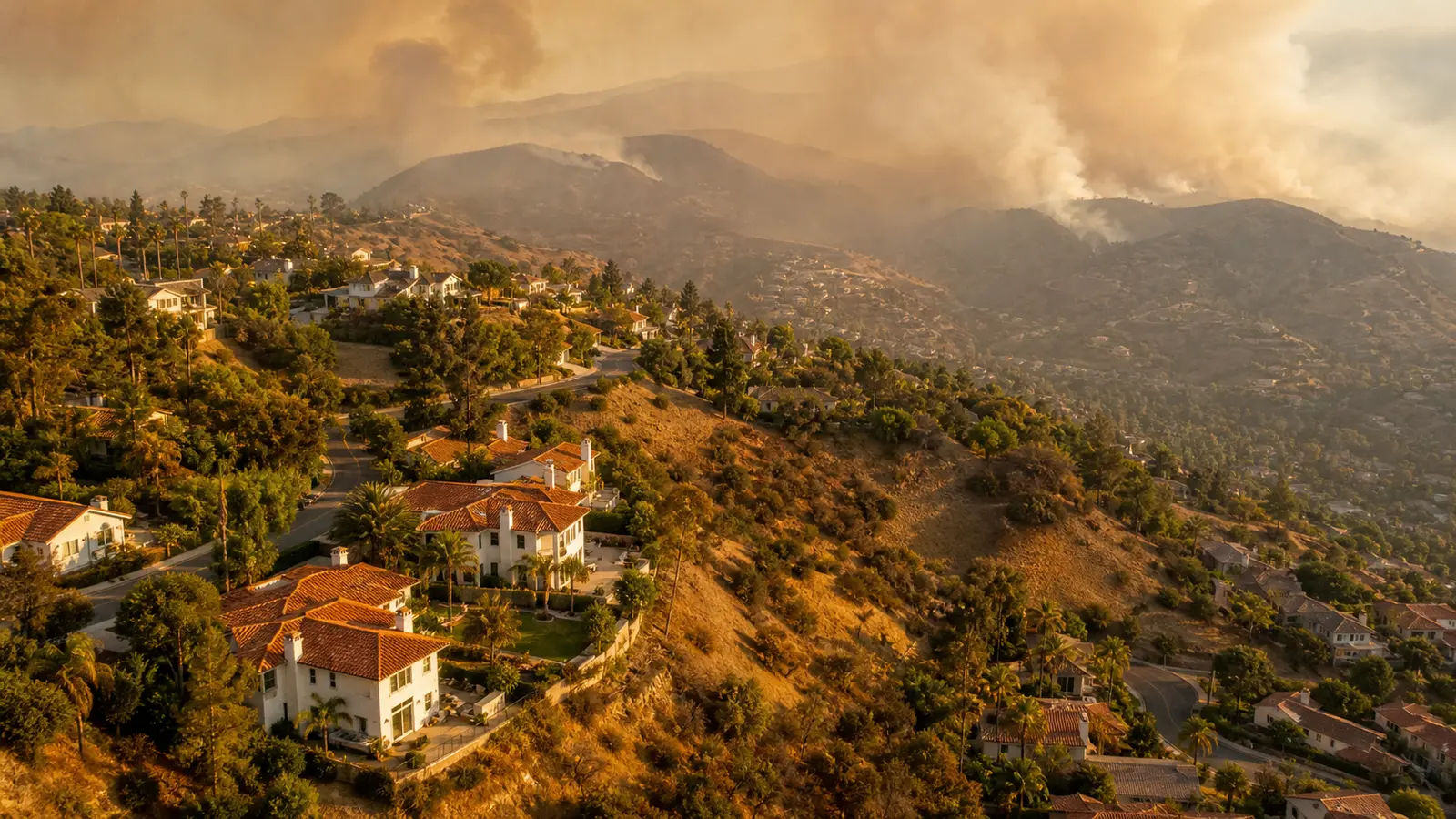

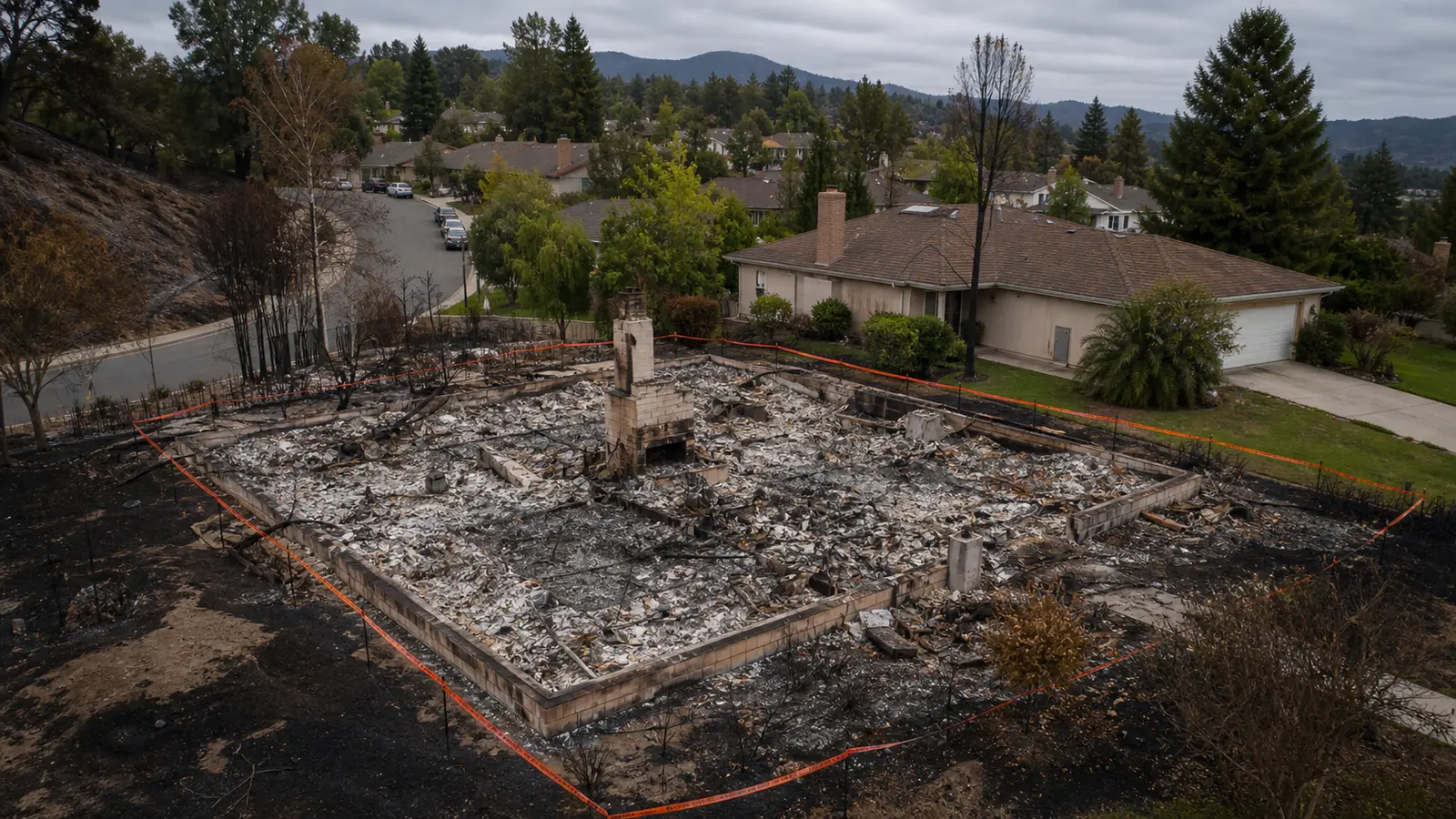
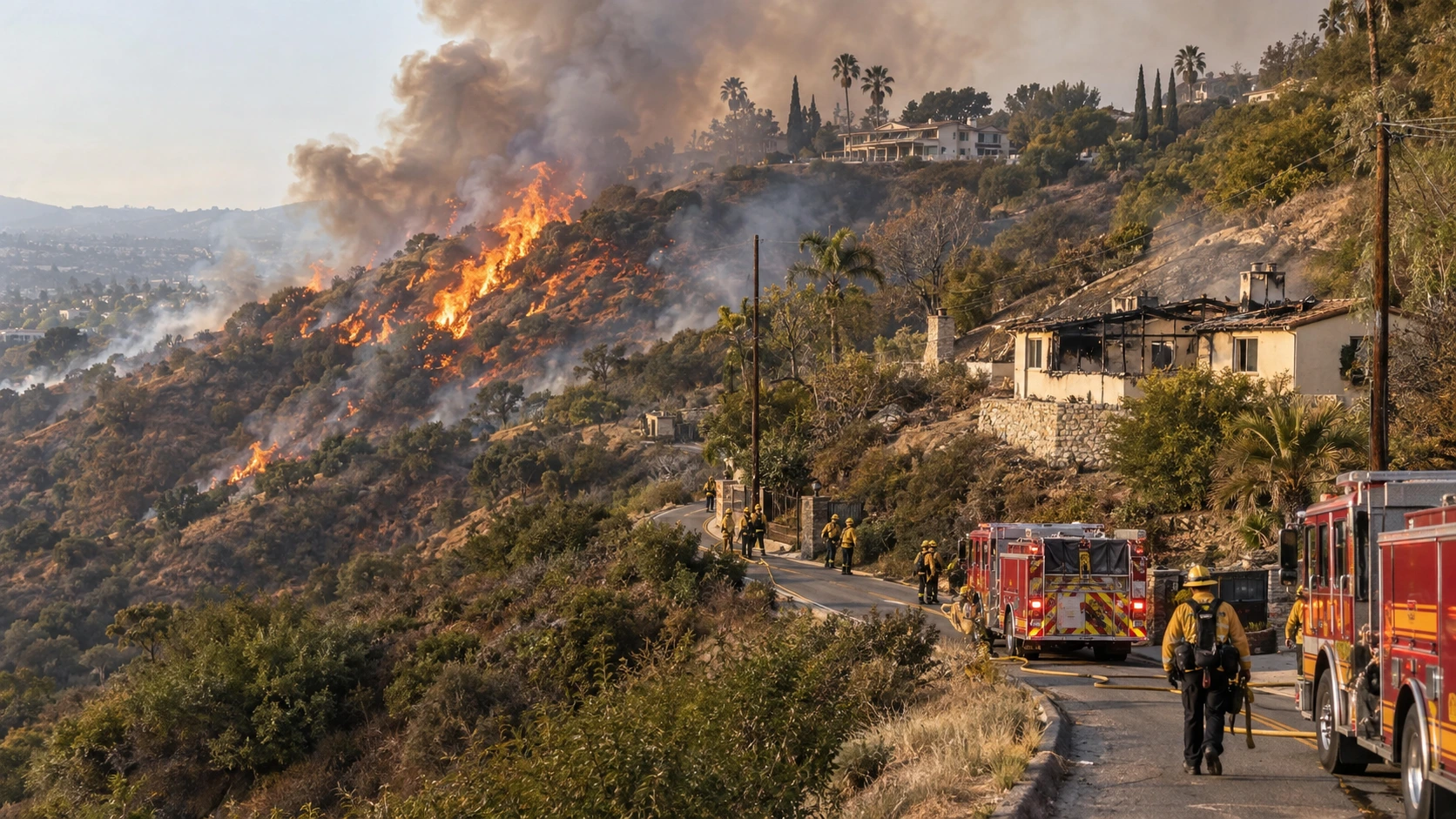
State Farm. Allstate. Tokio Marine. Farmers. The list of major insurers that have stopped writing new homeowners' policies in California — or have begun nonrenewing existing ones — now includes most of the companies that American homeowners grew up assuming were permanent institutions. Oregon followed. Colorado is watching. And the January 2026 Los Angeles wildfires, which destroyed more than 12,000 structures across 23,700 acres in the Palisades Fire alone, demonstrated at scale exactly why the insurance math no longer works for carriers in the highest-risk western states.
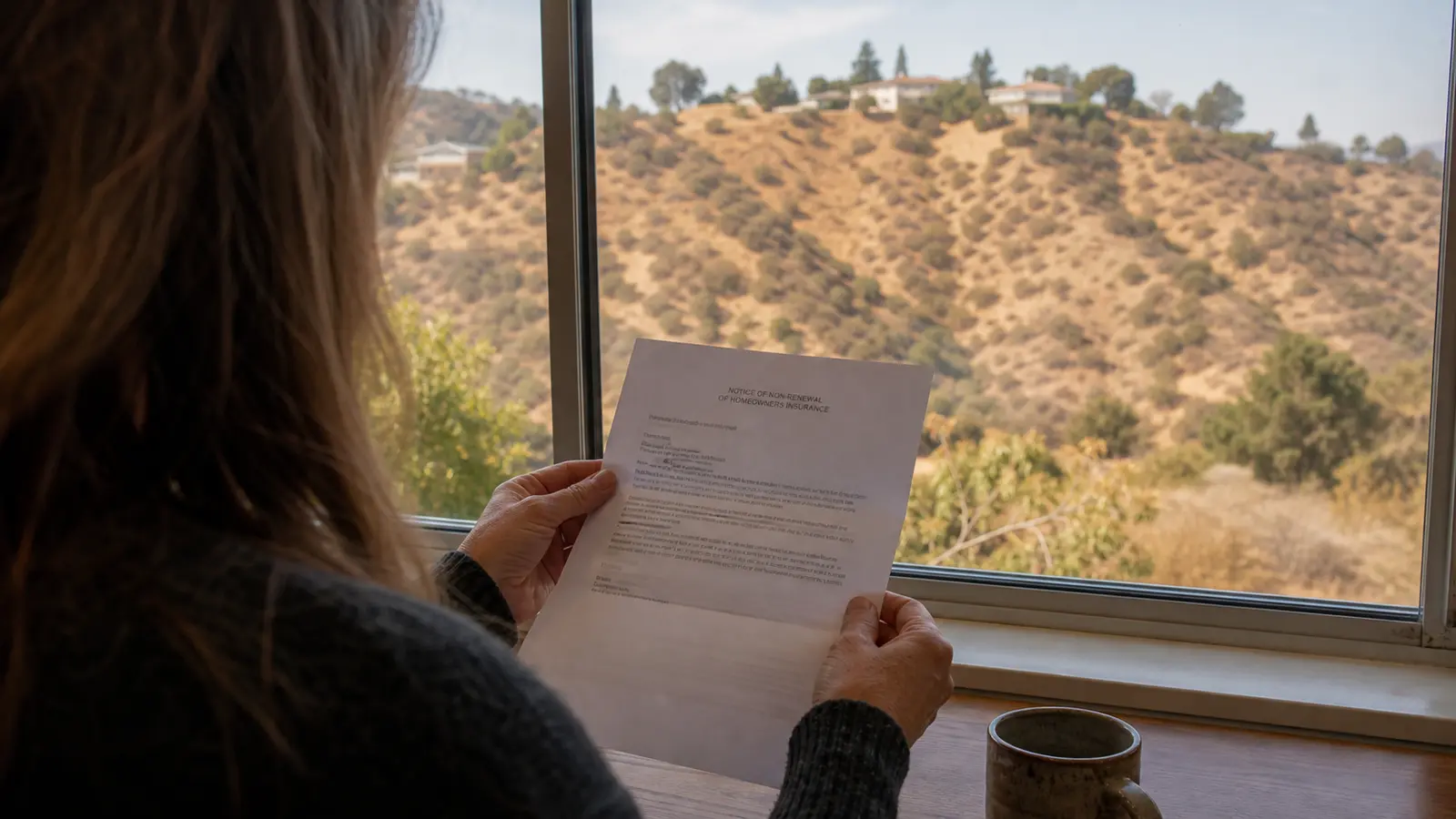
For homeowners who open a letter and discover their wildfire coverage has been canceled or not renewed, the immediate question is urgent: what happens if I can't get insurance and my mortgage requires it? What is the California FAIR Plan and is it real insurance? Oregon is doing something different — is that better? What can I actually do to keep coverage, lower my premium, or find a carrier that will still insure my home?
From a fire service perspective, the insurance crisis is also a fire safety crisis. Homeowners who lose coverage and cannot afford FAIR Plan premiums may defer the defensible space work and home hardening that makes structures survivable — creating a feedback loop where the homes least prepared for fire are also the ones without the financial backstop that makes recovery possible. Here is what the 2026 landscape actually looks like, what options exist, and what the fire service perspective adds to the financial picture.
In this article:
- Why insurers are leaving — and why it's not going to reverse
- California 2026: the moratorium, the FAIR Plan, and what Newsom's order actually covers
- Oregon's different approach — Senate Bill 82 and the 2026 legislation
- The FAIR Plan: what it covers, what it doesn't, and how to use it
- Your wildfire risk score — what insurers actually assess
- How to lower your risk score and keep or recover coverage
- The fire service perspective: why this is also a safety crisis
Why Insurers Are Leaving — and Why It's Not Going to Reverse
Insurance works by spreading risk across a large pool of policyholders such that the premiums collected exceed the claims paid in any given period. The model breaks down when losses become so concentrated geographically and so large in individual events that no realistic premium can cover them without pricing homeowners out of the market.
California's regulatory environment compounded the actuarial problem. State regulations limited how much insurers could raise premiums relative to projected future risk — a policy designed to keep insurance affordable that had the opposite effect: carriers who could not price to actual risk exited instead. The California Department of Insurance has been restructuring its regulatory framework to address this, allowing carriers to use forward-looking risk models in their pricing for the first time. Whether that brings carriers back to the market remains an open question in 2026.
The January 2026 Los Angeles fires accelerated the crisis. State Farm, which had already notified 72,000 California homeowners of non-renewal in 2024, faced the simultaneous reality of being the state's largest home insurer while managing claims from one of the most destructive urban wildfire events in U.S. history. The financial exposure created by those fires will affect carrier willingness to write new California policies for years.
California 2026: The Moratorium, the FAIR Plan, and What Newsom's Order Actually Covers
Following the January 2026 Los Angeles fires, Governor Newsom issued an executive order and California Insurance Commissioner Ricardo Lara issued a one-year moratorium preventing insurers from canceling or nonrenewing policies for homeowners in the affected neighborhoods and adjoining ZIP codes. The moratorium applies regardless of whether the homeowner suffered a direct loss. It covers all residential property policies active as of January 7, 2026 — the date the state of emergency was declared.
What the moratorium does not do: it does not apply statewide, and it does not apply to homeowners in high-risk areas who did not receive notice by January 7. A homeowner in Marin County or the Sierra Nevada foothills whose carrier has decided not to renew their policy is not covered by the Los Angeles moratorium. The moratorium is geographically and temporally limited — it protects LA-adjacent policyholders for one year, after which the underlying market conditions reassert themselves.
The California FAIR Plan — Fair Access to Insurance Requirements — is the state's insurer of last resort. It was designed as a temporary bridge for homeowners who cannot find coverage in the standard market. In practice, it has become the primary insurer for an increasing number of Californians in high-risk areas, which was not what it was designed to do and which strains both its capital reserves and its ability to pay large-scale claims from major fire events.
The FAIR Plan provides basic fire coverage — dwelling coverage for the structure — but does not include the liability coverage, additional living expenses coverage, or personal property coverage that a standard homeowners' policy includes. Most insurance advisors recommend pairing a FAIR Plan policy with a "difference in conditions" (DIC) policy from a separate carrier to fill the coverage gaps. This two-policy arrangement costs more than a standard policy and requires managing two separate carriers, but it provides coverage that the FAIR Plan alone does not.
Oregon's Different Approach — Senate Bill 82 and the 2026 Legislation
Oregon took a different regulatory path from California. Senate Bill 82, passed in 2023, prohibits insurers from using state-produced wildfire risk maps to cancel policies, decline renewals, or increase premiums. Insurers in Oregon still assess wildfire risk — but they use their own proprietary models rather than the state's hazard maps. The result is that Oregon has retained over 100 insurance companies writing policies in the market, avoiding the mass exodus that California experienced under its previous regulatory structure.
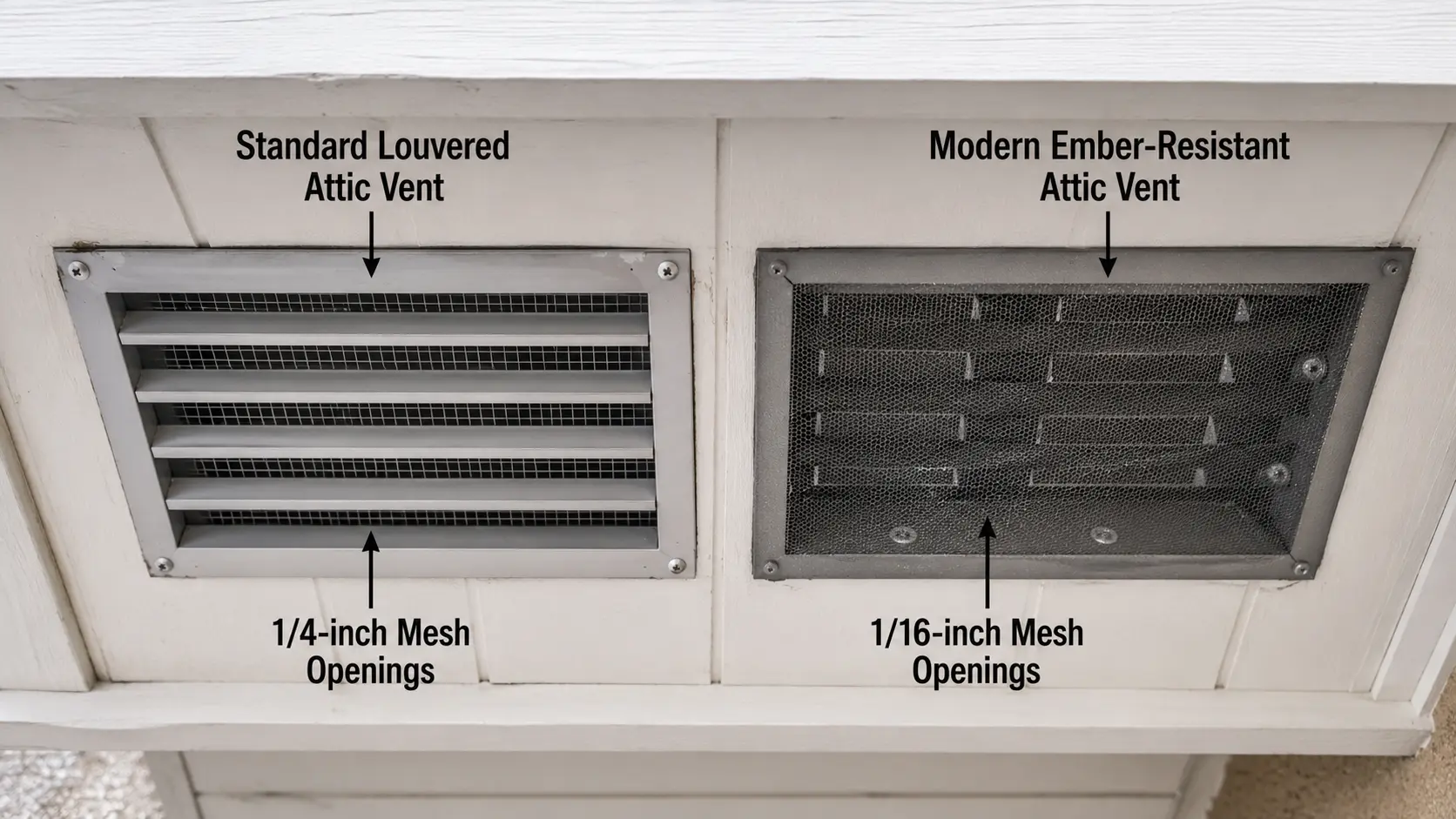
The 2026 Oregon legislative session included a proposal modeled on Colorado law: require insurers to consider wildfire mitigation work when setting rates, creating a direct financial incentive for the defensible space and home hardening investments that reduce a property's actual fire risk. Senator Jeff Golden, who introduced the bill, argued that insurers currently price based on geographic risk without accounting for individual property preparation — a homeowner who has completed Zone 0 through 2 work and installed ember-resistant vents should pay less than an identical home with combustible mulch against the foundation and open vents. The bill would require insurers to recognize that difference.
Oregon's FAIR Plan serves the same last-resort function as California's but operates in a market that has retained more competition, which has reduced the number of homeowners who need it. Oregon's model — regulatory protections combined with market retention — is being watched by other western states as a potential alternative to California's outcome.
The FAIR Plan: What It Covers, What It Doesn't, and How to Use It
If you have been non-renewed and cannot find a standard carrier that will write a policy on your property, the FAIR Plan is the coverage of last resort. Understanding what you are and are not buying is essential before relying on it.
What FAIR Plan covers: The dwelling structure itself, up to the plan's coverage limits. In California, FAIR Plan coverage limits were expanded in 2023 to allow up to $3 million in dwelling coverage for most properties. It covers fire, lightning, and internal explosion. It is real insurance — backed by all admitted California insurers, who are required to participate proportionally in the FAIR Plan pool.
What FAIR Plan does not cover: Personal property (contents of the home), liability (someone injured on your property), additional living expenses if you have to relocate during repairs, and other-structures coverage for detached garages, fences, or other buildings on the property. A FAIR Plan policy alone leaves substantial gaps that a standard homeowners' policy would fill.
The DIC policy solution: A difference in conditions policy is a supplemental policy sold by specialty carriers that fills the gaps the FAIR Plan leaves. You carry both — FAIR Plan for the structure, DIC for everything else. The combined premium is typically higher than a comparable standard policy was before non-renewal, but the coverage is functionally equivalent. An independent insurance broker who specializes in high-risk properties can source DIC coverage; standard insurance agents often do not have access to these markets.
Your Wildfire Risk Score — What Insurers Actually Assess
Insurance carriers now use sophisticated property-level risk models from vendors like Verisk to assess individual properties. The model integrates multiple data streams: topographic data including slope and aspect, satellite and aerial imagery of vegetation density and structure proximity, historical fire perimeter data, weather pattern records, and increasingly, imagery-based assessment of the property's defensible space condition and structural materials.
The output is a property-specific wildfire risk score. Properties above a threshold score are flagged for non-renewal or premium surcharge. Properties with improving scores — documented mitigation work completed, structural upgrades, defensible space clearing — can move below the threshold.
The variables a property owner can influence, in roughly descending order of impact on the risk score:
- Vegetation within five feet of the structure (Zone 0) — the highest-weight variable. Wood mulch against the foundation, combustible shrubs touching the siding, debris in gutters are all visible in aerial imagery and scored accordingly.
- Roof material and condition — Class A fire-rated roofing (asphalt shingle, metal, concrete, tile) scores significantly better than wood shake. The roofline's visibility in satellite imagery makes this an automatically scored variable in many models.
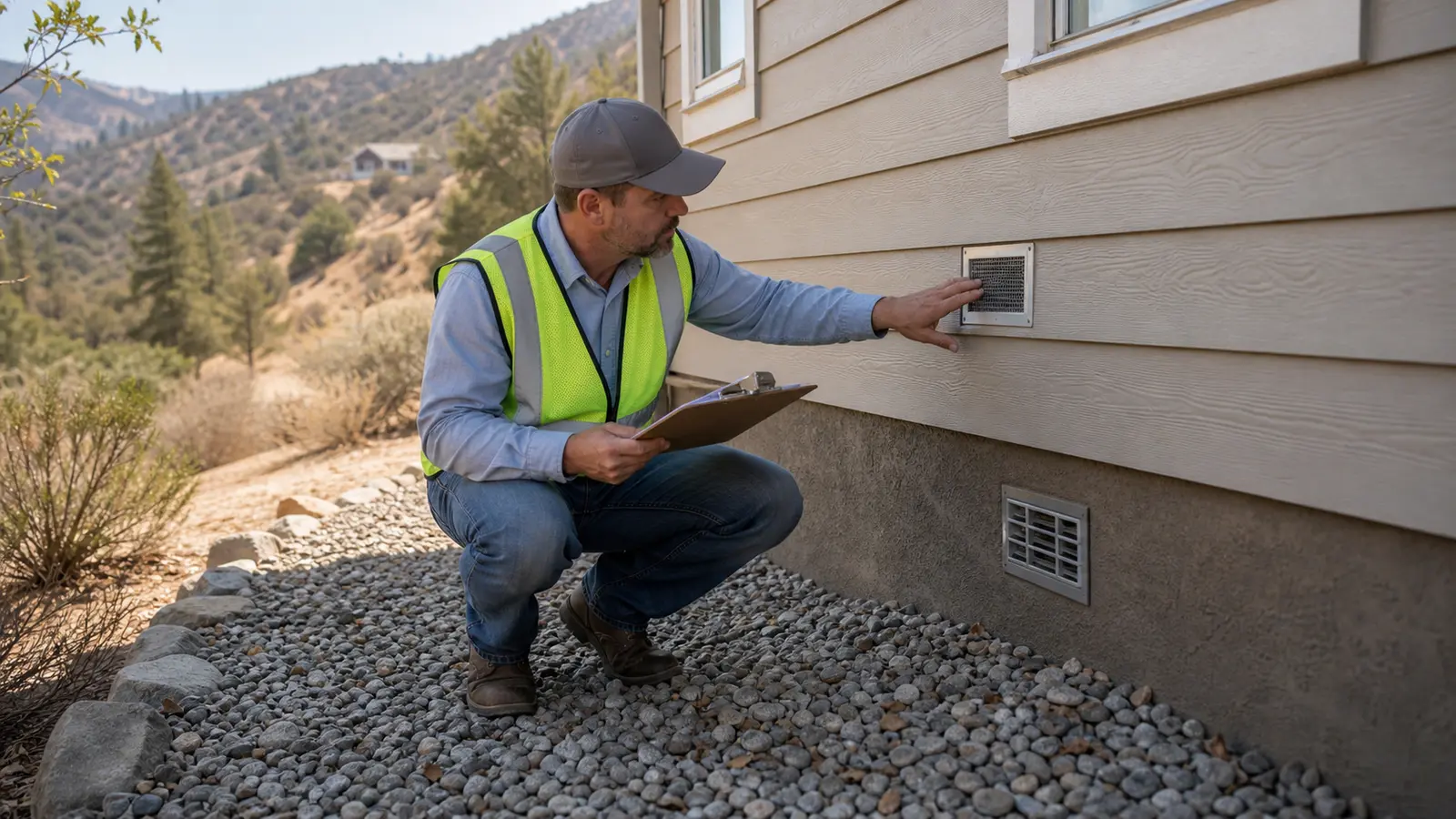
- Vent and opening protection — ember-resistant vents are increasingly identifiable in high-resolution imagery but may require documentation to the insurer.
- Access road width and surface — a driveway accessible to fire apparatus without turnaround problems scores better than a narrow dead-end with no turnaround.
- Slope of the property — not controllable, but properties on steep slopes or in canyon drainages score worse regardless of other improvements.
How to Lower Your Risk Score and Keep or Recover Coverage
- ✓Request an IBHS Wildfire Prepared Home certification. The Insurance Institute for Business and Home Safety certification program provides a documented, third-party assessment of your property's wildfire readiness. Oregon and multiple carriers explicitly recognize this certification for premium discounts. It converts subjective mitigation claims into documented evidence a carrier can act on.
- ✓Complete and document Zone 0 work before contacting carriers. The five-foot ember-resistant zone is the highest-impact, lowest-cost mitigation investment. Remove wood mulch, clear debris from foundation and gutters, move combustible items away from the structure. Photograph the completed work before and after with GPS-tagged images.
- ✓If your roof is wood shake, prioritize replacement. This is the highest-dollar structural change with the most direct impact on risk score. Class A fire-rated alternatives — architectural asphalt shingle, standing-seam metal, concrete or clay tile — all score significantly better and reduce your actual fire risk simultaneously.
- ✓Work with an independent broker, not a captive agent. A captive agent represents a single carrier. An independent broker has access to the surplus lines and specialty markets — admitted carriers that write high-risk properties as their specialty. These are not household names but they are legitimate, admitted insurers. An independent broker with wildfire market experience is the difference between having options and believing the FAIR Plan is your only choice.
- ✗Do not let your mortgage lender force-place insurance without exploring all options. If your policy lapses and you have a mortgage, your lender will force-place insurance — expensive, limited coverage that protects the lender's interest in the structure, not yours. Force-placed insurance typically costs three to five times what you would pay for equivalent coverage on the open market and provides inferior coverage. Exhaust the FAIR Plan and independent broker options before allowing force placement.
The Fire Service Perspective: Why This Is Also a Safety Crisis
The connection between wildfire insurance and fire safety is not just financial. Fire departments that serve wildland-urban interface communities see the consequences of the insurance crisis in the properties they respond to: deferred maintenance, postponed defensible space work, roofs that should have been replaced years ago still in place because the homeowner cannot afford both the roof and the insurance premium that would follow.
A homeowner who has lost coverage and is relying on FAIR Plan minimums has less financial incentive to make the mitigation investments that would lower their risk score — because there is no premium discount tied to their specific property's improvements in a FAIR Plan context the way there would be in a competitive insurance market. The Oregon approach — requiring carriers to price mitigation work into premiums — creates the financial incentive that moves homeowners to do the work. California's version of that mechanism is still developing.
The wildfire risk score that insurers use to make coverage decisions is also, functionally, a proxy for structure defensibility. A property that scores well on an insurer's model — cleared Zone 0, Class A roof, ember-resistant vents, accessible driveway — is also a property that fire crews can work on more safely and effectively during a wildfire event. The financial and operational perspectives align: the work that keeps your insurance is the work that gives a fire crew a reason to stop at your address.
The wildfire insurance crisis is not going to resolve quickly. The January 2026 LA fires added claims on top of a market already strained by years of escalating losses. The carriers who left California are not coming back until the regulatory environment and loss projections align in a way that makes the business viable. That alignment is being worked on — but it will take years, not months.
What homeowners can control right now is the risk score their property presents. The work is not complicated. It is time-consuming and in some cases expensive, but every component of it — from the five feet of gravel around the foundation to the ember-resistant vent covers — makes the property more survivable, more defensible by a fire crew, and more insurable. Those three things are not separate goals. They are the same goal.
Comments 0
No comments yet. Be the first to share your thoughts!
Leave a Comment