Firefighter Resume Writing Guide: Stand Out in a Competitive Hiring Pool
Fire department hiring is brutally competitive. A mid-size city department may receive 400–1,000 applications for 10 open positions. Your resume has roughly 30 seconds to survive the first cut before a human even reads it — and in many departments, an Applicant Tracking System (ATS) filters it before any human sees it at all. This guide tells you exactly how to format, write, and tailor a firefighter resume that clears both hurdles.
Jump to:How resumes are screened · Format and length · Every section explained · Certifications · Skills section · Entry-level with no experience · 10 fatal mistakes · Cover letter · FAQ
How Fire Department Resumes Are Actually Screened
Understanding the process tells you exactly what to optimize for. Most departments follow a similar sequence:
- ATS scan (many departments): Software checks for required certifications, keywords, and minimum qualifications. Resumes missing these get auto-rejected.
- HR minimum qualifications review: A human confirms you meet the listed requirements — age, license, EMT certification if required, education level.
- Battalion chief or hiring captain review: 20–30 seconds per resume. Looking for clean format, relevant experience, and anything that stands out.
- Scored ranking: Many departments score your resume on a rubric before inviting candidates to the written or physical agility test.
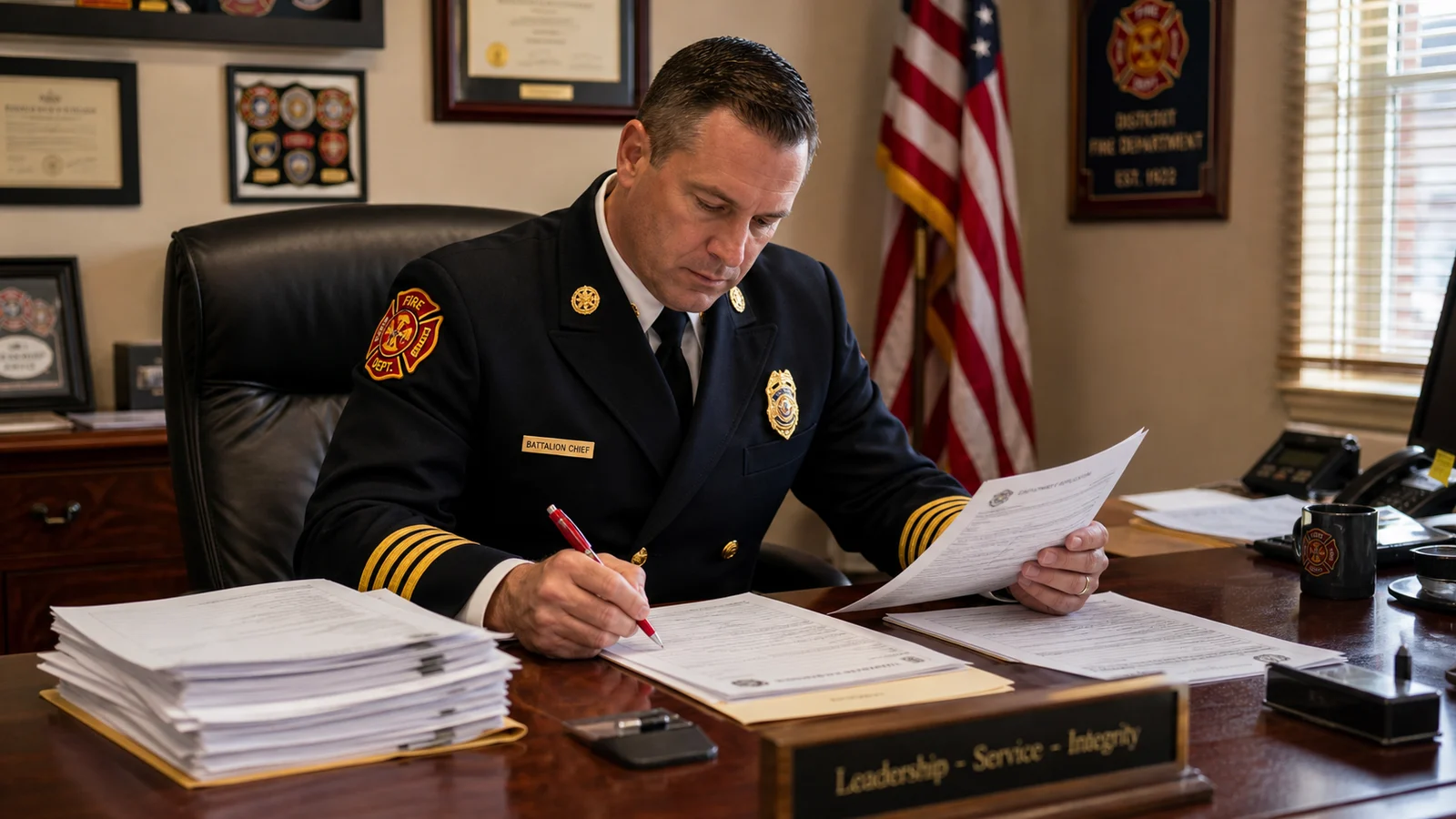
Key implication: Your resume must first pass machine screening, then survive a 30-second human scan, then potentially be scored. Write for all three audiences simultaneously.
Format and Length
Length
One page for candidates with fewer than five years of fire service experience. Two pages are acceptable for experienced firefighters with multiple departments, significant certifications, or officer experience. Never go beyond two pages.
File format
Submit as a PDF unless the job posting specifically requires a Word document. PDFs preserve formatting across all systems. Word documents can shift dramatically depending on the version of Office used to open them.
Font and layout
- Font: Arial, Calibri, or Garamond at 10–12pt body text
- Margins: 0.75–1 inch on all sides
- No photos, no graphics, no colored text
- No tables or text boxes — ATS systems often cannot read text inside these
- Standard section headers (EXPERIENCE, EDUCATION, CERTIFICATIONS)
ATS warning: Creative resume templates with columns, icons, and graphics look impressive to a human but are unreadable by most ATS software. The system sees a blank page and rejects you. Use a clean single-column format for fire department applications.
Every Resume Section Explained
Professional Summary (2–4 lines)
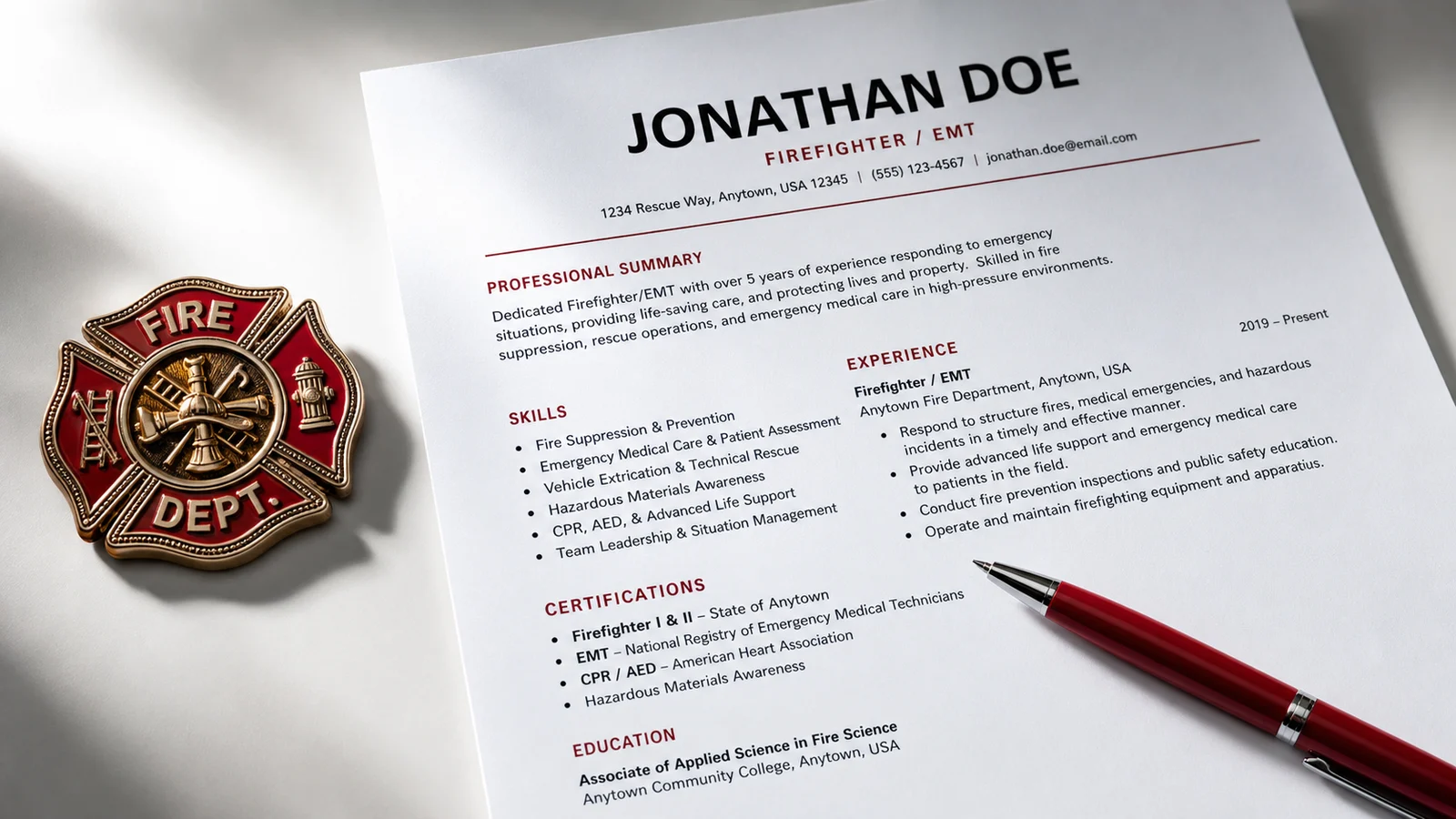
A targeted summary directly below your name. This is the first thing a hiring captain reads. It should state: who you are, your certification level, years of experience, and one specific strength. Tailor this to each department.
Firefighter/EMT-Basic with 3 years of career experience at [Department Name], Firefighter I & II certified, experienced in structural firefighting, vehicle extrication, and EMS first response. Seeking a position with [Target Department] to contribute to community-focused fire suppression and prevention operations.
Work Experience
List positions in reverse chronological order. For each position include: job title, department name, city/state, dates of employment, and 4–6 bullet points describing duties and accomplishments. Use action verbs at the start of every bullet: Responded, Performed, Executed, Assisted, Trained, Maintained, Operated. Quantify wherever possible.
Strong: Responded to 600+ emergency calls annually including structural fires, vehicle accidents, and medical emergencies; operated Engine 3 as nozzle firefighter on working residential fires.
Volunteer Experience
If you have volunteer fire or EMS experience, list it in the same format as paid work. Hiring panels value hands-on fire service experience regardless of whether you were paid. Many successful career hires have years of volunteer experience before their first career position.
Certifications and Training Section
This is one of the most important sections on a firefighter resume. List every relevant certification by its full official name, the issuing body, and the expiration date or date earned.
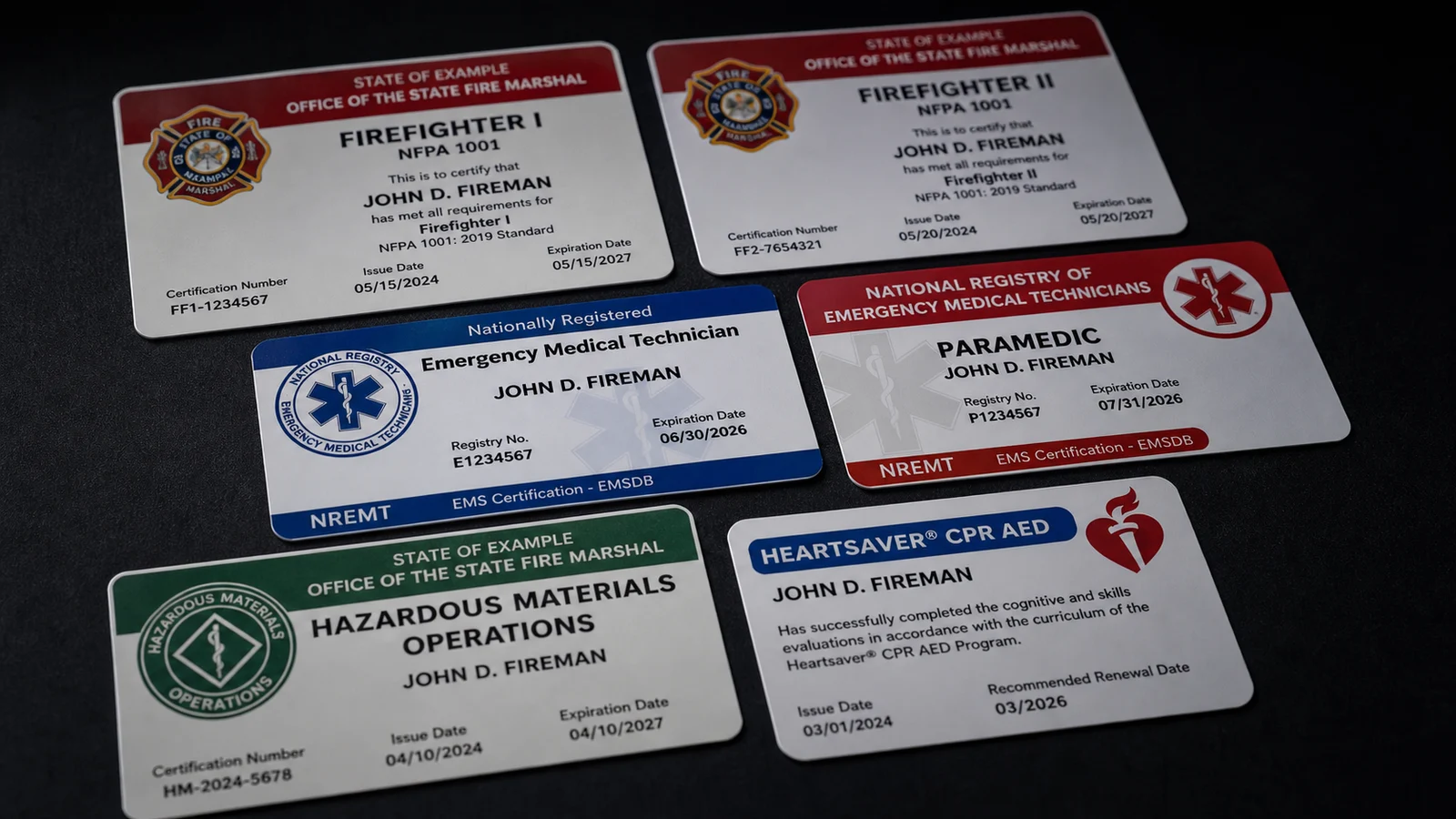
| Certification | How to list it | Priority |
|---|---|---|
| Firefighter I & II | Firefighter I & II, NFPA 1001, [State Fire Marshal], [Year] | Essential |
| EMT-Basic | Emergency Medical Technician-Basic, [State EMS Authority], Exp: [Date] | Essential if required |
| Paramedic | National Registry Paramedic (NRP), Exp: [Date] | Major advantage |
| HazMat Operations | Hazardous Materials First Responder Operations, NFPA 472, [Year] | High value |
| Wildland S-130/S-190 | Firefighter Training S-130/S-190, NWCG, [Year] | Valuable in WUI areas |
| CPR/AED | CPR/AED, American Heart Association, Exp: [Date] | Required baseline |
| Driver/Operator | Fire Apparatus Driver/Operator, NFPA 1002, [Year] | Adds significant value |
Never abbreviate certifications in the certifications section. ATS systems search for the full name. Write "Emergency Medical Technician-Basic" not just "EMT." Write "Firefighter I & II" not "FF I/II."
Entry-Level Resume: No Career Experience
Most firefighter applicants are entry-level. Hiring panels know this. What they are looking for is evidence that you have taken initiative to prepare yourself for the job.
- Volunteer fire or EMS experience. Even 6–12 months at a volunteer department shows real commitment.
- Fire academy graduation. List your fire academy with the dates, location, and any honors.
- EMT certification. Many departments require it. Get it before applying.
- CPAT completion. List it with your date. Demonstrates physical readiness.
- Related civilian work. Military service, EMS, construction, or wildland firefighting are all directly relevant.
10 Resume Mistakes That Kill Fire Department Applications
- Objective statement instead of a professional summary. Replace with a focused summary of your qualifications.
- No certifications section. Burying your Firefighter II in a bullet point means ATS may not find it.
- Generic language. "Responsible for responding to fires" describes every firefighter on the planet.
- Listing references on the resume. Assumed. Remove it — the space is wasted.
- Unprofessional email address. Sounds trivial. Costs candidates every cycle.
- Using tables or columns. ATS systems fail to read these correctly.
- Spelling and grammar errors. Fire departments screen for attention to detail.
- One resume for all departments. Tailor the summary and skills for each posting.
- Leaving off volunteer work. Volunteer fire and EMS experience counts.
- Inconsistent date formatting. Pick one format and use it throughout.
Cover Letter Basics
Keep it to one page, three to four paragraphs. State which position you are applying for, summarize your top two or three qualifications, explain why this specific department, and close with a professional thank-you. Research the department before writing — mention a specific program or recent initiative. Hiring panels notice when a cover letter could have been sent to any department.

Next Steps in the Hiring Process
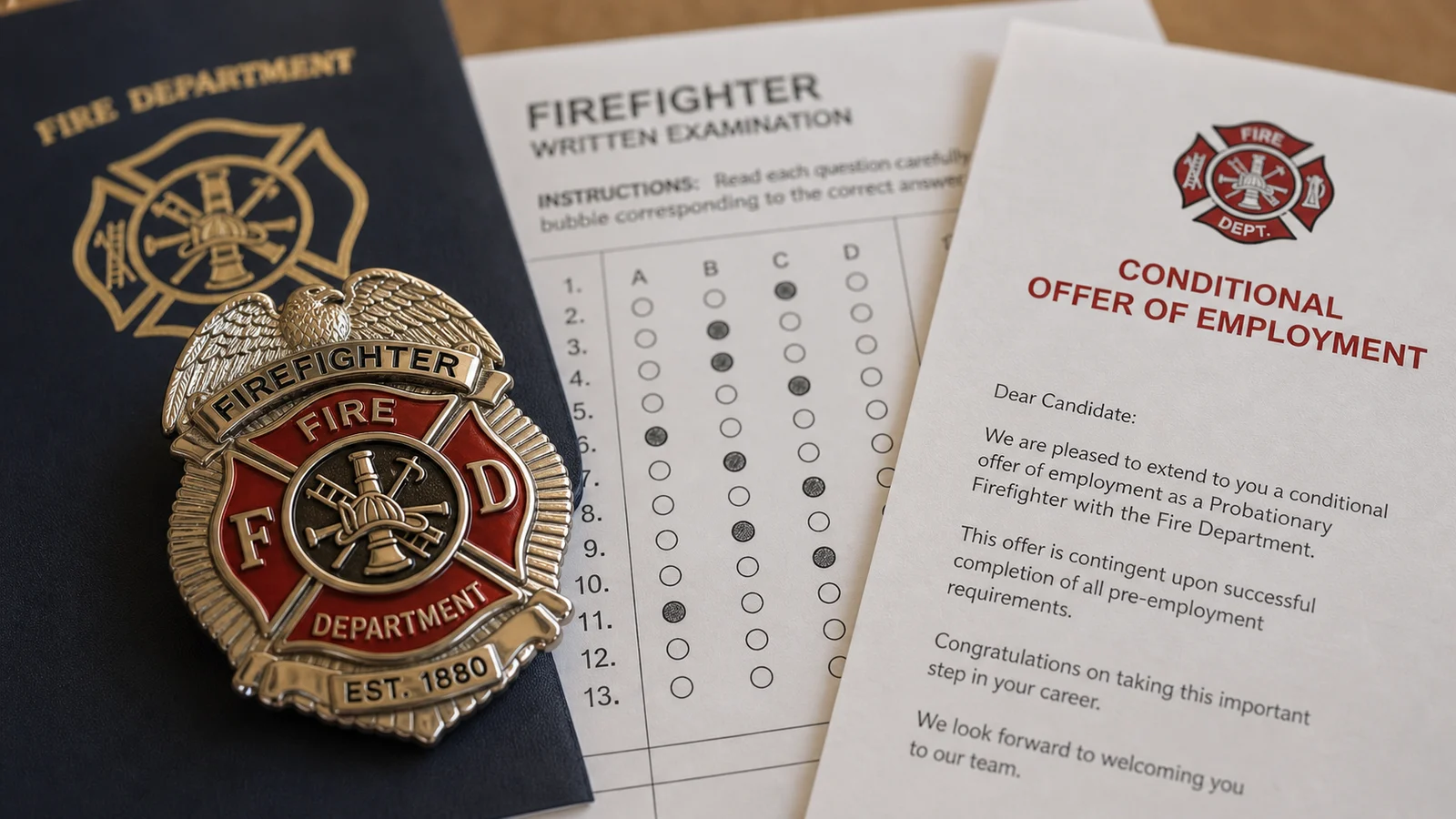
A strong resume gets you through the first gate. The process continues through the written exam, the CPAT physical agility test, oral board interview, background investigation, and polygraph examination at departments that require one.
Frequently Asked Questions
Do fire departments use ATS software to screen resumes?
Many medium and large departments use applicant tracking systems or online application portals that scan for keywords and required qualifications. Write your resume with both machine and human readers in mind.
How long should a firefighter resume be?
One page for entry-level and early-career candidates. Two pages maximum for experienced firefighters. Anything longer gets skimmed, not read.
Should I list my CPAT results on my resume?
Yes, if you have passed. Include the date of completion, testing agency, and passing status. Some candidates with exceptional times list their time as well.
What if I have no fire service experience at all?
Get volunteer experience before applying. Six months to a year at a volunteer department, combined with Firefighter I & II and an EMT-Basic card, puts you in a genuinely competitive position at most departments.
Should I include a photo on my firefighter resume?
No. U.S. fire department resumes should never include a photo. Photos open the door for unconscious bias claims and are not standard practice in American public safety hiring.
Comments 0
No comments yet. Be the first to share your thoughts!
Leave a Comment