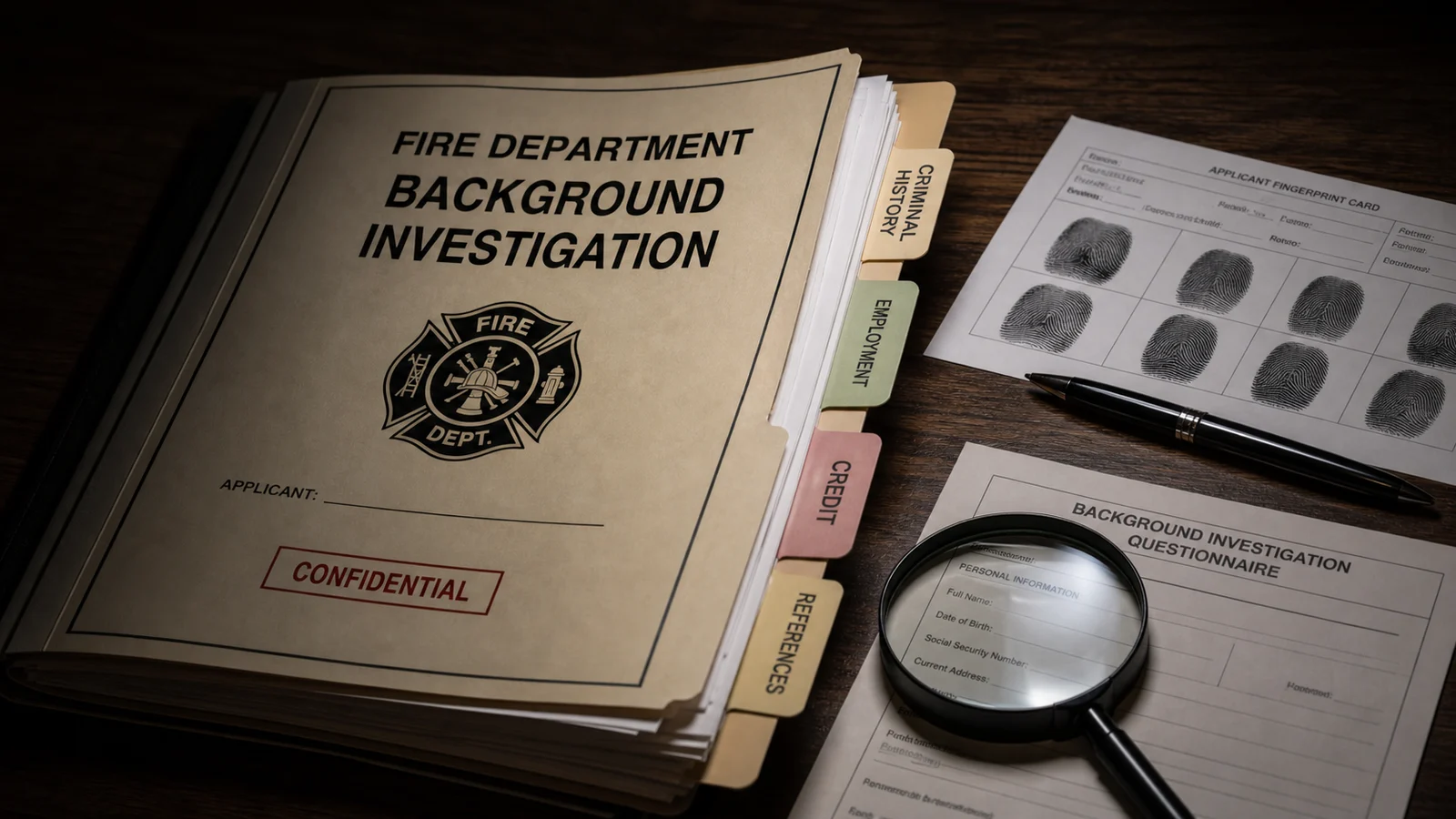

Firefighter Background Check: What to Expect and How to Prepare
The background investigation (BI) is one of the most comprehensive personal audits most people will ever experience. Fire departments are public safety agencies, and they hold candidates to a high standard of integrity, judgment, and trustworthiness. Understanding exactly what investigators examine — and what you can do to prepare — is the difference between moving forward and being disqualified at the final stage after months of testing.
Jump to:What the background investigation is · Criminal history · Driving record · Employment history · Finances · Social media · Drug testing · Automatic disqualifiers · Addressing past issues · FAQ
What the Fire Department Background Investigation Is
The background investigation is a formal, multi-week process conducted by a trained investigator who verifies every claim on your application and digs into your history across multiple dimensions. It is not a simple criminal records check. A full fire department BI typically includes:
- Criminal history (local, state, federal)
- Driving record (DMV history for the past 5–10 years)
- Employment verification and reference interviews — including employers you did not list
- Education verification
- Credit and financial history
- Social media screening
- Drug and alcohol history
- Neighborhood canvass interviews (some departments)
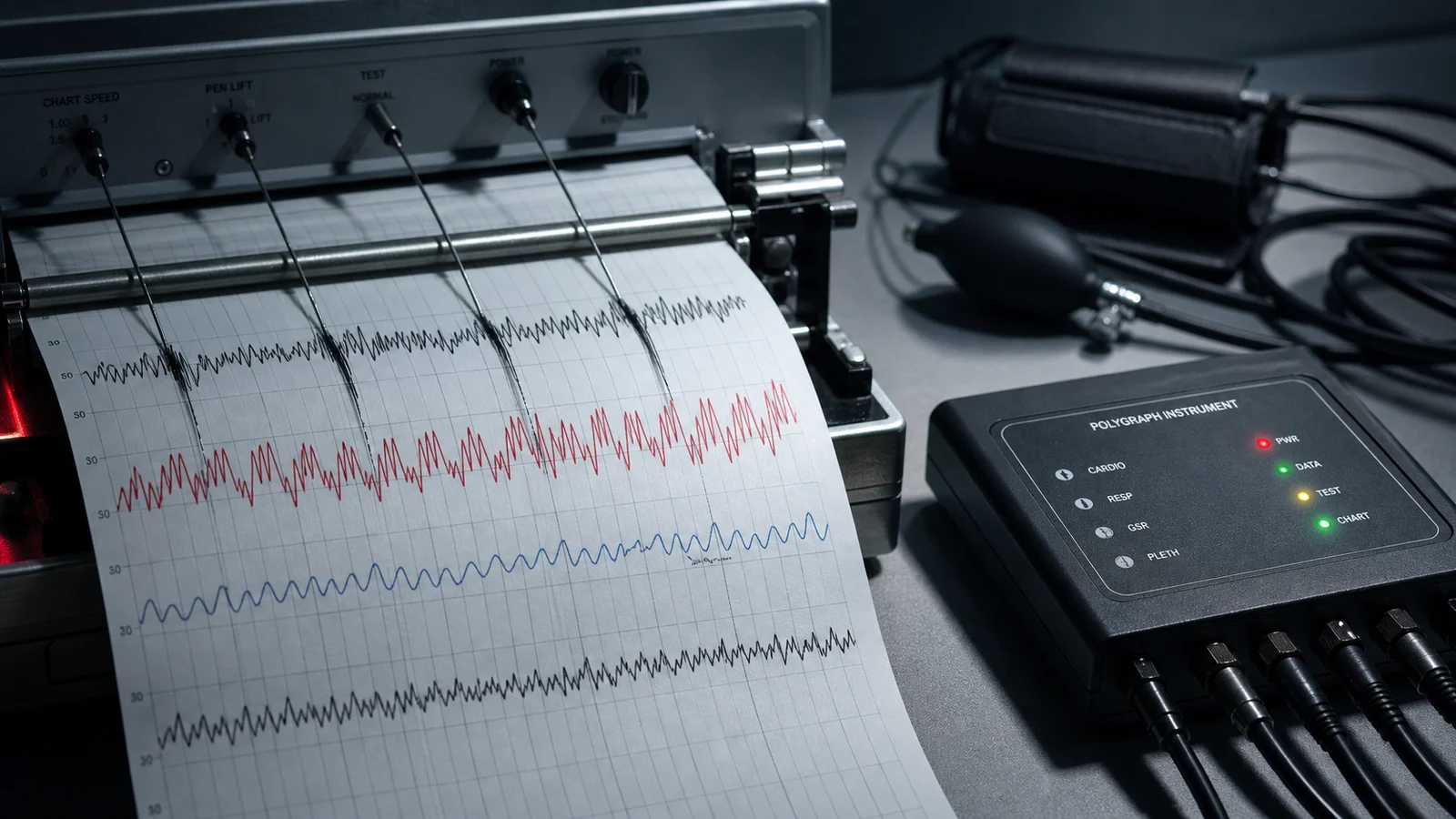
- Polygraph examination (many departments — see our polygraph guide)
- Psychological evaluation
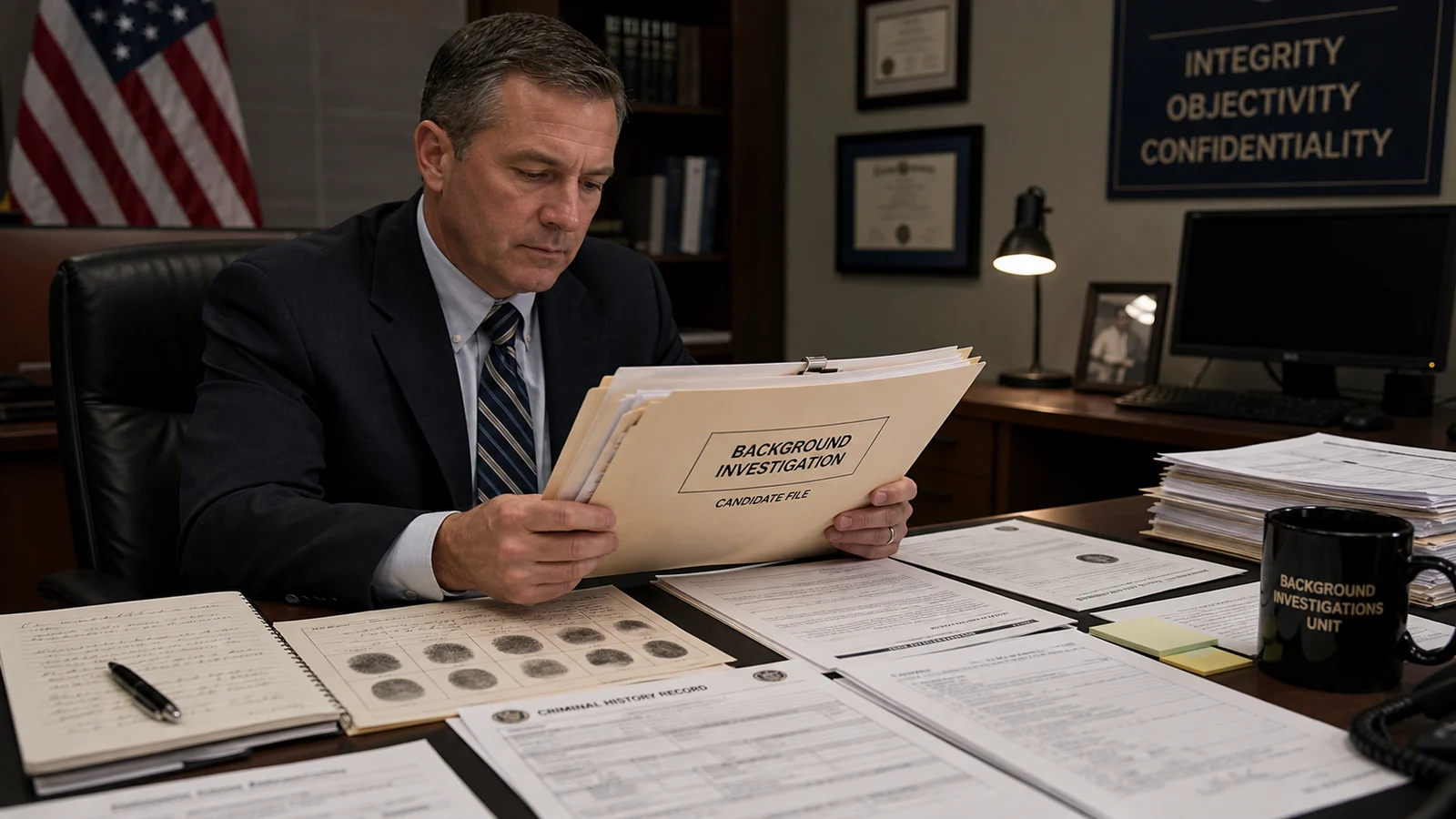
The golden rule: Never lie, omit, or minimize anything on your background packet. Investigators are experienced at detecting inconsistencies, and being caught in a lie — even about something minor — is an automatic disqualifier at virtually every department.
Criminal History
A criminal record does not automatically disqualify you from becoming a firefighter, but the type of offense, how long ago it occurred, and how you have demonstrated growth since then all matter enormously.
| Offense type | Likely outcome | Notes |
|---|---|---|
| Felony conviction (violent crime) | Automatic disqualifier at most departments | Federal law bars convicted felons from carrying firearms |
| Felony conviction (non-violent, older) | Depends on department policy and time elapsed | Some consider felonies older than 7–10 years with demonstrated rehabilitation |
| DUI/DWI (single, older than 5 years) | Often survivable; varies by department | Recency, BAC level, and driving record since all factor in |
| Multiple DUIs | Likely disqualifier | Pattern of poor judgment is a serious red flag for apparatus operators |
| Drug possession (minor, older) | Survivable at many departments | Marijuana history increasingly treated more leniently post-legalization |
| Domestic violence conviction | Automatic federal disqualifier (Lautenberg Amendment) | Federal law bans firearm possession |
| Theft/fraud/dishonesty | High risk of disqualification | Integrity is paramount; dishonesty offenses taken very seriously |
Driving Record
Firefighters drive emergency apparatus that can weigh 35,000–75,000 pounds through traffic at speed. Departments take driving history very seriously. Most look at the past 5–7 years of your DMV record. Red flags include multiple speeding violations, reckless driving charges, license suspension, at-fault accidents, DUI/DWI, and hit and run.
Employment History
Investigators will contact past employers — including employers you did not list — using your Social Security records and credit history. Common questions asked of former employers: Was this person punctual and reliable? Did they get along with coworkers? Were there disciplinary actions? Would you rehire this person?
Never omit prior employment, even jobs you were fired from, short-term positions, or jobs where you had conflicts. Being caught omitting employment history — especially terminations — ends applications immediately.
Finances and Credit
A perfect credit score is not required. Investigators look for patterns suggesting financial irresponsibility or potential vulnerability. Key concerns: bankruptcy from avoidable causes, outstanding judgments, wage garnishments, history of bounced checks, and student loan default.
Before submitting your background packet: Pull your free credit report from annualcreditreport.com and review it for errors or unresolved issues. Address what you can before the investigation begins.
Social Media Screening
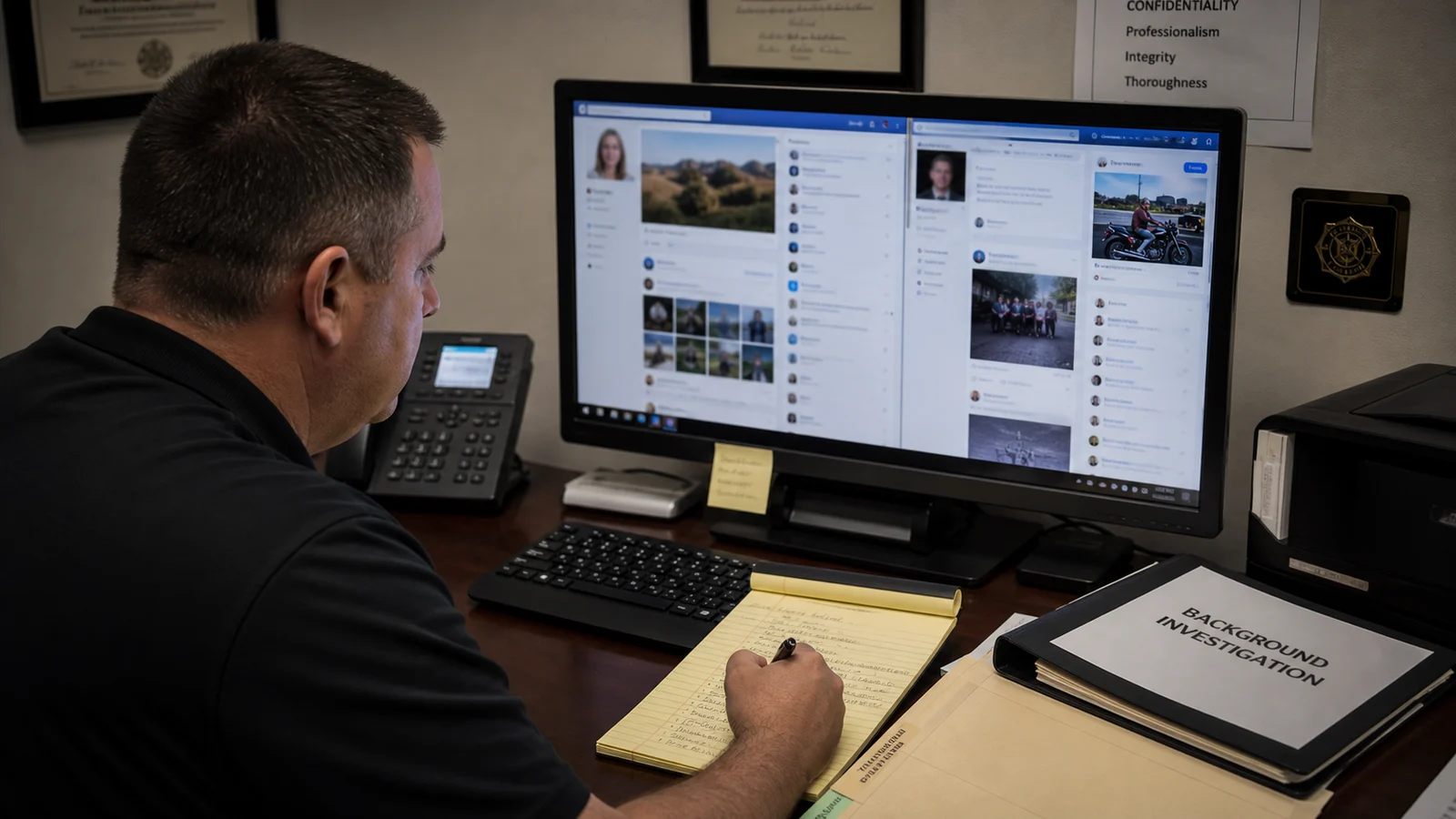
Investigators routinely review publicly accessible social media profiles. What they look for:
- Posts demonstrating bias or intolerance toward any group
- Evidence of alcohol abuse or drug use in photos or posts
- Content showing violent attitudes or extremist viewpoints
- Posts that contradict information on your application
- Conduct that would embarrass the fire department
Before applying: Audit your entire social media history. Search your own name on Google. Review old posts and photos going back several years. Delete or set to private anything that could raise questions.
Drug Testing
All fire departments conduct pre-employment drug testing, typically a urine panel covering marijuana (THC), cocaine, opioids, amphetamines, and PCP. Even in states where recreational marijuana is legal, most departments still require a negative pre-employment test. Check the specific policies of your target department — they vary significantly.
Common Automatic Disqualifiers
- Felony conviction involving violence, weapons, or sexual offenses
- Domestic violence conviction (federal Lautenberg Amendment)
- Sex offender registration
- Dishonorable discharge from military service
- Being caught lying or omitting information during the background investigation
- History of fire-setting or arson
- Repeated serious driving offenses
How to Address Past Issues
If you have something in your history that could raise a question, disclose it honestly before the investigator finds it, with a clear and accountable explanation. When writing an explanation letter for a past issue: state the facts clearly and briefly, take full responsibility without excuses, describe what you learned, and point to concrete evidence of changed behavior.
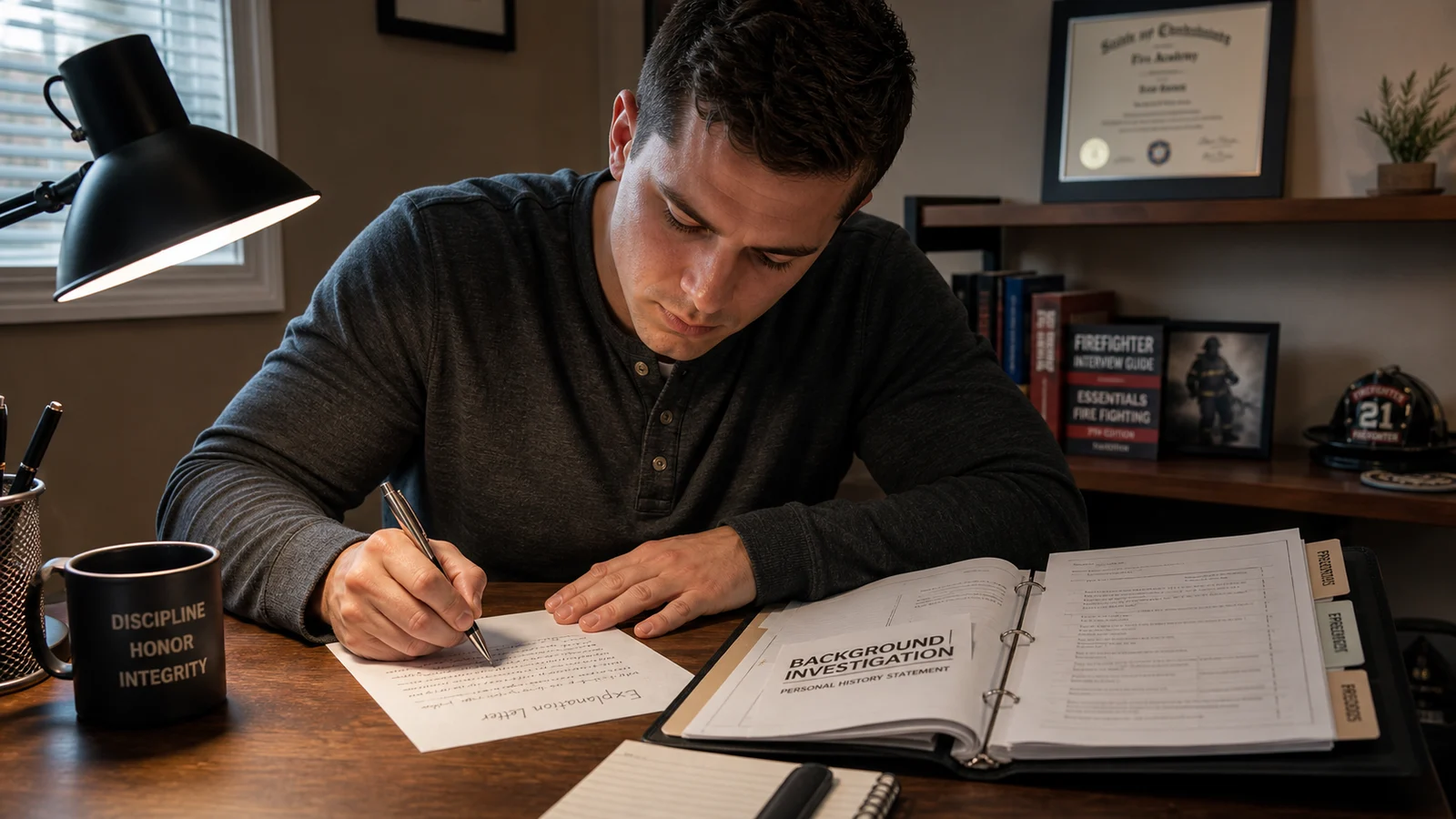
Integrity is the core value being evaluated. Candidates who demonstrate honesty, accountability, and growth pass background investigations with imperfect histories all the time. The cover-up is always worse than the crime.
Frequently Asked Questions
Can I become a firefighter with a criminal record?
It depends on the nature of the offense, when it occurred, and the specific department's policies. Non-violent misdemeanors and minor drug possession from years ago do not automatically disqualify candidates at many departments. Violent felonies and domestic violence convictions disqualify at virtually all departments.
How far back does a fire department background check go?
Criminal history typically goes back 7–10 years for misdemeanors, but felony convictions are generally permanent records. Driving records usually cover 5–7 years. Some investigations go back to age 16 for juvenile records, depending on state law.
Will a DUI disqualify me from becoming a firefighter?
A single DUI, especially one several years old, is not an automatic disqualifier at most departments. Multiple DUIs or a recent DUI significantly reduce your chances. Recency, BAC level, and your driving record since the incident are all weighed.
Do fire departments check social media?
Yes. Background investigators routinely review publicly accessible social media on Facebook, Instagram, X/Twitter, TikTok, and LinkedIn. Review and clean up your social media presence before applying to any department.
What happens if I fail the background check?
You will be notified you are not eligible for this hiring cycle. Most departments allow reapplication after 1–3 years. If a factual error in a background report caused your disqualification, you have the right to dispute the information under the Fair Credit Reporting Act (FCRA).
Comments 0
No comments yet. Be the first to share your thoughts!
Leave a Comment