Firefighter Diet and Nutrition Guide: Fueling for Performance and Longevity
Nutrition is a front-line firefighter health issue, not a wellness afterthought. Cardiovascular disease is the leading cause of firefighter line-of-duty deaths — accounting for nearly 50% of all LODD fatalities. Poor diet is a primary modifiable risk factor for cardiovascular disease, type 2 diabetes, obesity, and several cancers that affect firefighters at elevated rates. The fire station kitchen, the shift meal culture, and the unpredictable eating patterns of 24-hour duty are the terrain where firefighter nutrition is won or lost.
Jump to:Unique nutritional demands · Macronutrient basics · Shift eating strategy · Navigating station food culture · Weight management · Eating for heart health · FAQ
The Unique Nutritional Demands of Firefighting
Firefighters face a nutritional challenge unlike most occupations: long periods of low-activity waiting punctuated by extremely high-intensity physical exertion with no warning. This means:
- You cannot schedule eating around exertion the way an athlete can — a call can come any time
- Post-call metabolism is elevated for hours, but appetite and eating patterns are disrupted by the call itself
- 24-hour shifts involve at least two full meals and often middle-of-the-night eating after late calls
- Chronic sleep disruption from overnight calls impairs hunger hormone regulation, increasing appetite for high-calorie foods
- Communal cooking in a station environment creates social pressure around food choices

Macronutrient Basics for Firefighters
| Macronutrient | Firefighter targets | Best sources |
|---|---|---|
| Protein | 0.7–1.0g per pound of body weight daily | Chicken, turkey, fish, eggs, Greek yogurt, legumes, lean beef |
| Carbohydrates | 40–50% of total calories; prioritize complex carbs | Oats, sweet potatoes, brown rice, quinoa, whole grain bread, fruit |
| Fats | 25–35% of total calories; emphasize unsaturated fats | Avocado, olive oil, nuts, fatty fish (salmon, mackerel), seeds |
Protein is particularly important for firefighters for two reasons: it supports muscle maintenance during the irregular exercise patterns of shift work, and it increases satiety — reducing the tendency to overeat during long, sedentary periods on shift.
Shift Eating Strategy
A practical eating framework for a 24-hour shift:
- Pre-shift meal (night before or morning before): High protein, moderate carbohydrate, low refined sugar. Sets your metabolic baseline entering the shift.
- Breakfast on shift: Eggs, oats, or Greek yogurt with fruit. Avoid high-sugar pastries that spike insulin and produce mid-morning energy crashes.
- Station lunch: Lean protein + vegetables + moderate complex carbohydrate. This is the meal most influenced by station culture — see below.
- Dinner on shift: Lean protein + vegetables. Lighter carbohydrate load in the evening unless a training session or significant physical activity is planned.
- Post-call eating: If you respond to a call after midnight and are hungry afterward, a small protein-dominant snack (Greek yogurt, cottage cheese, protein shake) is preferable to high-carb options that disrupt sleep.
Hydration is non-negotiable. Firefighters working structure fires can lose 1–2 liters of sweat per hour inside full PPE. Chronic dehydration impairs cognitive performance, cardiovascular function, and heat tolerance. Aim for 3–4 liters of water daily; more on active shift days.
Navigating Station Food Culture

Station meal culture is one of the most significant determinants of firefighter nutrition — and one of the most difficult to change. Traditional fire station cooking trends toward high-fat, high-calorie comfort food. Strategies for navigating this constructively:
- Be a positive contributor, not a disruptor. Offer to cook occasionally and make meals that are both nutritious and genuinely good — not punishing diet food. Good food that happens to be healthy wins the culture faster than lectures.
- Control your portions, not just your menu items. In communal eating, you often cannot control what is served but you can control how much you eat of it.
- Keep individual healthier options available. Have protein bars, Greek yogurt, nuts, and fruit in your personal storage for when station meals do not align with your goals.
- Do not eat out of boredom. The station kitchen is often a congregating point during downtime. Be intentional about when and what you eat there.
Eating for Long-Term Cardiovascular Health
Given that cardiovascular disease kills more firefighters than all other causes combined, dietary choices that reduce cardiovascular risk deserve specific attention. Evidence-based dietary patterns for cardiovascular health:
- Reduce sodium: High sodium intake directly elevates blood pressure. Fire station cooking and processed foods are major sodium sources. Target under 2,300mg daily.
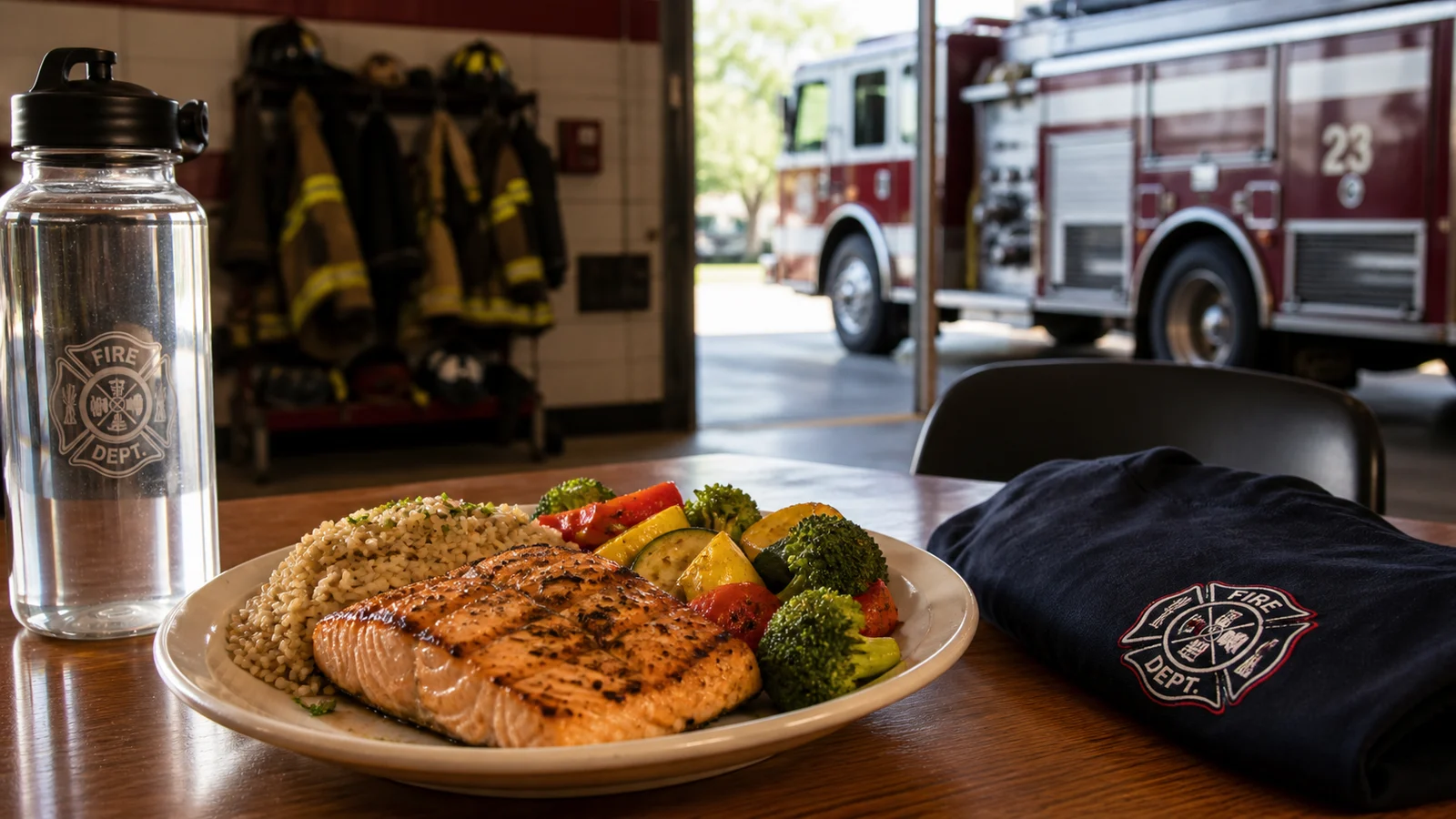
- Increase omega-3 fatty acids: Salmon, mackerel, sardines, and walnuts reduce triglycerides and inflammatory markers. Aim for fatty fish 2–3 times per week.
- Minimize ultra-processed foods: Packaged snacks, fast food, processed meats, and sugary beverages drive inflammation, weight gain, and dyslipidemia. These are the dominant foods in many station environments.
- Increase fiber: Vegetables, legumes, and whole grains reduce LDL cholesterol and support gut health. Most firefighters are significantly under their fiber targets.
- Limit alcohol: Regular alcohol consumption elevates blood pressure, adds significant empty calories, and impairs sleep quality — all directly relevant to firefighter cardiovascular risk.
Frequently Asked Questions
What should firefighters eat during a 24-hour shift?
Focus on lean proteins, vegetables, and complex carbohydrates at each meal. Avoid high-sugar foods that cause energy crashes, limit fried and processed foods that contribute to cardiovascular risk, and stay consistently hydrated. Keep healthy snacks available for between-meal hunger without relying on whatever the station kitchen offers.
How do firefighters manage weight gain from shift work?
Shift work disrupts hunger hormones (ghrelin and leptin) and increases appetite for high-calorie foods. Consistent protein intake at each meal, avoiding eating out of boredom during station downtime, controlling carbohydrate portion sizes at evening meals, and maintaining a regular off-duty exercise routine are the most effective strategies.
Is intermittent fasting appropriate for firefighters?
Intermittent fasting can work well during off-duty days, but is not recommended on shift days where emergency response may require maximal physical performance at any time. Responding to a working structure fire in a fasted state impairs heat tolerance, cognitive function, and physical output. Maintain regular fueling on duty days.



Comments 0
No comments yet. Be the first to share your thoughts!
Leave a Comment